Mr. Speaker, I rise in opposition to the bill and recognize myself for such time as I may consume. (Mr. BARTON of Texas asked and was given permission to revise and extend his remarks.) Mr. Speaker,…
Mr. Speaker, I rise in opposition to the bill and recognize myself for such time as I may consume.
(Mr. BARTON of Texas asked and was given permission to revise and extend his remarks.)
Mr. Speaker, let me say at the beginning that I speak for myself, I don't necessarily speak for the House Republican leadership. I have asked if we had a minority position on the bill, and as of 30 minutes ago we did not. So I am speaking for myself as the ranking member of the committee of jurisdiction, the Energy and Commerce Committee.
And let me say at the beginning that I think it is good to have a piece of energy legislation on the floor at this point in time. I think the American people are fed up with high gasoline prices, they're fed up with increasing imports, they're fed up with rising food prices that are caused, at least in part, by higher energy prices. So I think it's a good thing that we are beginning to debate energy legislation on the floor of the House of Representatives. I think it is a good thing that the chairman of the committee with primary jurisdiction, my good friend, John Dingell, is leading that debate on the majority side.
Having said that, I don't think it's a good thing that we bring a bill on the Strategic Petroleum Reserve to the floor with no process at all. Chairman Dingell and Subcommittee Chairman Boucher and I have spoken informally in the last 2 weeks about doing something on the Strategic Petroleum Reserve. And I am very open to having a full vetting of the issue of the Strategic Petroleum Reserve.
I am fully supportive of the underlying policy in this bill, which is to suspend taking shipments into the Strategic Petroleum Reserve when oil prices are at record levels. I am not supportive of doing that in a way that there is absolutely no input from the minority side. We've had no legislative hearing, no committee hearing, no markup, no nothing. We were notified late yesterday afternoon that the bill would be on the floor this morning, and as far as I can tell the bill wasn't printed until some time this morning. So one reason I'm opposed to the bill is because of process.
Now I want to talk about the substance of the bill. Again, the Strategic Petroleum Reserve was created in the 1970s in response to a coordinated Arab Oil Embargo against the United States of America when shipments of oil were suspended by the OPEC cartel for political reasons. We created the Strategic Petroleum Reserve. And my guess is, although I wasn't in Congress at that time, that John Dingell, who was a member of the committee--I don't believe he was chairman in the seventies--probably had a very positive influence on creating the Strategic Petroleum Reserve. It was a good idea then and it's a good idea now. So that's a good thing.
Now, we have been filling the Strategic Petroleum Reserve since the late seventies. Most of the oil was put in under President Reagan's tenure from 1980 to 1988, but even since then we have continued to fill the Reserve. There have been little appropriated funds appropriated to fill it, and in the last 5 or 6 years most of the increase has been by taking what this bill would suspend, which is the royalty-in-kind oil, and putting that into the Reserve. Royalty-in-kind oil is oil that, instead of the oil companies that produce on Federal lands and the Federal OCS, instead of giving money to the Federal Government and to the taxpayer, they give royalty-in-kind oil. And that right now is about 62,000 barrels a day. So it is not a bad idea to suspend taking the royalty-in-kind oil.
Where I have a policy difference with this bill is that the bill is either silent or ambiguous on what happens to the royalties that continue to accrue. The fact that you're not taking oil doesn't mean that the Federal Government doesn't have a royalty that should be paid.
So one of the questions I would have is, do we receive the money, which 62,000 barrels of oil at $120 a barrel is, over the life of this bill, over a billion dollars. What happens to that billion dollars? Does it just go to the general revenue? Does it just go to the general treasury?
If I were drafting the bill, I would direct that some of that royalty, in terms of cash, go into a LIHEAP fund for low-income heating and cooling assistance. I would direct that some of the funds go into a reserve to buy oil for the Strategic Petroleum Reserve when oil falls below the target price in this bill, which I believe is $75 a barrel. I would direct that some of the funds go to an alternative energy fund. Those are things that we would have discussed in committee. Those were the things that we would have had amendments on. And those are the things that we're not allowed to do because this bill is being considered under suspension.
As Chairman Dingell has pointed out, the fact that we're not going to take royalty-in-kind oil and put it in the Strategic Petroleum Reserve is probably not going to affect the price much on the world market. I think we would have as much impact on prices, if that's our goal, if all the Members on both sides of the aisle went out on the steps of the Capitol and we all clapped our hands three times and said, ``Down prices. Down prices. Down prices.'' That would probably have as much impact as passing this bill. It would be a lot more fun, too. We would all get a little exercise. And it would be a pretty good photo op, the united Congress, you know, dictating that oil prices go down. But it would have about the same impact that this bill does.
So, Mr. Speaker, again, I don't quarrel with the fact that we are directing to suspend shipments of the Strategic Petroleum Reserve. We need to do a lot more than that, however, if we really want to bring oil prices down. And even in doing something on the SPR, I think we should go through committee, we should have a legislative hearing, we should have a markup, and we should really rethink the strategy of the Strategic Petroleum Reserve.
In the 1970s, the oil markets and the U.S. economy were significantly different than they are today. And the size of the Reserve, the uses of the Reserve are at least subject to a real debate today. And what we're getting is a bill that apparently was drafted in Majority Leader Hoyer's office late last night or early this morning that several Members have put their names on. And we're on a suspension calendar that we have no ability to amend it or do anything about it except vote ``yes'' or ``no,'' so I'm going to encourage Members to vote ``no.'' If we were somehow to get 146 ``no'' votes, then we could have the debate and have the markup process that I've asked about and we could come back next week sometime and do it the right way.
Mr. Speaker, I rise in opposition to H.R. 6022, the Strategic Petroleum Reserve Fill Suspension and Consumer Protection Act of 2008. I am opposed to this bill for two reasons: process and substance.
First, let's talk about process: I found out that this bill was going to be on the floor today less than 24 hours ago. I am the ranking member of the Energy and Commerce Committee, which has jurisdiction over energy in general and the Strategic Petroleum Reserve, SPR, in particular. While there has been a lot of talk and press recently about the SPR, it has not been the subject of any committee briefings, hearings, or markups at all. I am not even aware of any discussions about this SPR bill at the staff level, except for Chairman Dingell's staff notifying my staff yesterday afternoon that this bill would be on the suspension calendar today.
And now we are on the suspension calendar, where we get an up or down vote, with no chance for any amendments. It seems that, once again, the majority leadership of the House is shamelessly dictating the legislative process of the House in a way that demeans the jurisdiction of the Energy & Commerce Committee in order to make us vote on a bill before Memorial Day so the Democrats can send out press releases about how they are addressing the Pelosi Premium.
Which leads me to my second point--the substance of this bill. When it comes to dealing with high energy prices, there are two groups in Congress. Those who want to say they are doing something, and those who want to do something. Today's bill is for those who want to say they are doing something.
This bill tells the President, as long as oil prices stay above $75 a barrel, to quit filling the SPR for the rest of calendar year 2008, but do it in a way that does not affect current contracts. So, if this bill is signed into law, the real world effect will be to prevent about 11.4 million barrels of oil from going into the SPR between August 1 and December 31 of this year--or about 76 thousand barrels a day for the rest of the year.
Will this help with gas prices? We could probably have more effect on lowering gas prices if we stood on the steps of the Capitol and clapped our hands three times and shouted, ``Lower, lower, lower.'' It certainly won't do anything for prices for Memorial Day weekend because it will not start having any effect until August 1st. If the Majority wanted to have an immediate effect, they should have considered a provision to direct the Department of Energy to sell the SPR oil it is currently receiving into the open market.
The title of this bill also indicates that it somehow protects consumers, but I cannot find anything in the bill that actually does that. The bill says to quit filling the SPR which would happen in August, but the bill is silent about a number of things: What happens to the Royalty-in-Kind oil that the Departments of Interior and Energy are currently getting? Do these departments sell it? Do the lessees sell it and give the proceeds to the Departments? I assume the lessees still owe the government the royalty payments, so I assume any cash would go into the general treasury. How does this help protect consumers?
A better way to protect consumers, or at least help consumers by offsetting the current record energy prices would have been to do something useful with the revenue generated with the SPR oil. Perhaps we could have dedicated a portion of it to low income heating assistance. Or perhaps we could have dedicated a portion of it to developing alternative energy sources. Or, we even could have reserved a portion of it to start replenishing the SPR again sometime in the future when oil prices are not at $125 a barrel.
But, since we had no process for this bill, we will never know what could have been. We're faced with an up or down vote, with no chance to discuss the policy of either this bill, or the policy of the SPR generally.
I, for one, am in favor of having a policy discussion on the entire Strategic Petroleum Reserve. I think the circumstances of today's energy markets are much different than they were when we created the SPR, and therefore I think it would be a good idea to have a policy debate about the future of the SPR. Ultimately I may end up wanting to continue to have a billion barrel SPR, but I think the policy discussion would be a good thing to have. Unfortunately, the process for this bill does not foster such a debate.
So where does this leave those of who want to not just say we're doing something about energy costs, but actually want to do something?
In 1985 we produced 9 million barrels of oil per day and imported another 3 million per day. Since 1995 we've cut our domestic production in half and tripled our imports. Why? Because we continue to lock up our domestic resources, particularly in Alaska and in the OCS.
Two of the most unstable foreign sources of oil today are Nigeria and Venezuela. That instability is a big factor in high oil prices because of the risk of supply cut-off. ANWR alone could be replacing all our imports from Venezuela or all our imports from Nigeria and only use a few thousand acres of a vast tundra.
Better legislation comes from the deliberative process, a process that's inclusive. No sooner will this bill become law than people will be either calling for its repeal or wondering why we bothered at all. But that was true of the 2007 no-energy bill, as well.
Let's go back to Committee and do the job we are capable of doing with SPR. Let it do some good for somebody. And let's let Congress turn to the real energy issue facing this country, domestic production.
With that, Mr. Speaker, I reserve the balance of my time.
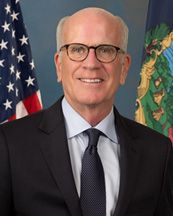
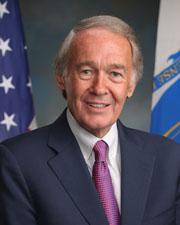
Mr. Speaker, if it's possible, I'd like to enter into a dialogue with any of the three sponsors of the bill. Mr. Markey is on the floor. Mr. Lampson is on the floor. Mr. Welch is on the floor. I'd like to ask them some questions if one of them would like to try to respond on my time. I'm not going to use their time. So Mr. Markey, Mr. Welch or Mr. Lampson. I just want to ask some questions about the bill to the main sponsors.
My question, Mr. Speaker, and this is on my time, if either of those three gentlemen would like to respond. I'm not trying to be cute. I'm way too old to be cute.
The bill is silent on whether or not the money that is the equivalent cash of the royalty in kind to oil is what's done with it. So my first question I would like one of the sponsors to answer is, instead of getting 62,000 barrels of oil a day, if this bill becomes law, does the general treasury get the equivalent of 62,000 barrels of oil times whatever the market price of oil that day is, which right now is over $120 a barrel? Is that revenue generated, and does it come to the Federal treasury, or do the oil companies keep it? That's my first question.
I would be happy to yield to my good friend from Massachusetts.
It goes back to the general Treasury. All right.
And my next question is the bill's effective date is upon termination of the contract. I think it goes into effect on July 31 and it runs through December 31 of 2008; is that correct?
What happens after December 31, 2008?
My next question is, if this bill were to become law, does the Secretary of Energy or the Secretary of the Interior have any discretion about accepting royalty in kind to oil or the cash equivalent, or is it a flat suspension with no exceptions?
I thank my good friend from Massachusetts for those answers.
Mr. Speaker, I reserve the balance of my time.
Mr. Speaker, I am going to recognize Mr. Shimkus, a member of the committee.
But before I do that, I just want the record to show that the last day that I was chairman of the Energy and Commerce Committee, the price of gasoline in my district was $2 a gallon.
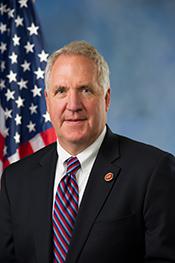
Mr. Speaker, I recognize the gentleman from Illinois (Mr. Shimkus) for 3 minutes, a member of the committee.
(Mr. SHIMKUS asked and was given permission to revise and extend his remarks.)
Mr. Speaker, I am going to yield myself 1 minute.
I want to just comment on what I think is the goal of the legislation, and that would be to lower prices for the American consumer. At least I think that is what I think the goal is.
Having said that, 62,000 barrels a day in an 85-million-barrel-a-day oil market is about one twelve hundredth of 1 percent. So if you assume that oil markets are linear, the additional 62,000 barrels on an 85- million-barrel-per-day oil market is going to lower the price perhaps two cents. Maybe.
Again, if we just go outside and clap our hands, we would probably have a 2 percent chance of lowering the price of oil by two cents a barrel. Just by clapping our hands. So I don't think this bill does anything except show the American people that we want to do something, but we still don't know exactly what it is we can do that makes any sense.
And I reserve the balance of my time.
I yield myself 1 additional minute.
I would like to ask the speaker who just spoke if he can show me the economic study by Goldman Sachs that says that suspending shipments is going to lower prices 25 cents a gallon. It won't even lower prices a penny a barrel. Is there a study?
I believe that there is no study. And I guarantee you, this just won't lower prices 25 cents.
I would be happy to yield to my good friend from Texas.
I sure hope so.
I yield myself 30 additional seconds just to respond to my good friend, Mr. Lampson.
I do not oppose suspension of oil shipments into the Strategic Petroleum Reserve. But to say that that, by itself, is going to lower prices 25 cents a gallon in an 85-million-barrel-a-day oil market is ludicrous.
I sure hope that there is additional legislation besides this feel- good legislation. I hope it is bipartisan. I hope it is substantive. And I hope it has a supply component to it.
I want to yield 2 minutes to the distinguished Congressman from the great State of Connecticut (Mr. Shays).
Mr. Speaker, could I inquire how much time is remaining in the debate?
Mr. Speaker, I yield myself 30 seconds.
To the extent we have an historical record on what this would do, on April 25, 2006, President Bush announced suspension of 67,000-barrels- a-day acquisition for the SPR for the summer driving season. The day before he made that announcement, the price of oil was $70.19. The day he made the announcement, it fell to $67.43 per barrel. And the day after he made the announcement, it went back up to $71.71 per barrel, which was a net increase of 62 cents a barrel. So to say that this is going to lower the price based on the historical record would be inaccurate.
Mr. Speaker, how much time do I have remaining?
I am going to yield myself 1 minute.
I want my friends on the majority side to listen, because at the end of this, I am going to ask for a unanimous consent request. And this is language that we have shared with the majority staff.
I am going to offer a unanimous consent request that at the end of the bill, insert the following new section:
Section 3. Use of Funds.
The Secretary of the Interior shall transfer to the Secretary of Energy an amount equal to the value of the petroleum that would have been deposited in the Strategic Petroleum Reserve from royalty-in-kind payments but for the suspension required under section 2(a)(1). Such amount shall be available for obligation by the Secretary of Energy without further appropriation as follows:
(1) 50 percent shall be retained for future acquisition of petroleum products for the Strategic Petroleum Reserve during any period when the price of oil is less than $75 per barrel.
(2) 25 percent shall be transferred to the Secretary of Health and Human Services as an additional amount for use in carrying out the Low- Income Home Energy Assistance Act of 1981.
(3) 25 percent shall be available for use by the Secretary of Energy to carry out alternative energy projects the Secretary is authorized by law to carry out.
Mr. Speaker, I would ask unanimous consent that this be added to the bill. And if it is, I will vote for the bill.
Mr. Speaker, it's a unanimous consent request, and the body can work its will by unanimous consent at any time.
Mr. Speaker, I am not asking that we withdraw the bill. I am just asking unanimous consent to add this to the bill, and we shared the language with the majority staff.
Mr. Speaker, I reserve the balance of my time.
Parliamentary Inquiry
Mr. Speaker, I yield myself the balance of my time.
Mr. Speaker, I want to reiterate once more, I am not opposed to the generic policy of suspending shipments in the Strategic Petroleum Reserve. I am opposed to doing it with no input from the minority and absolutely no process and no alternatives made in order to amend the specific language, which we just tried to do, which wasn't allowed.
I do hope that this is the start of a serious effort to look at our strategic energy policy for this country. But for this bill, I would ask for a ``no'' vote.