Homeowners' Defense Act of 2007
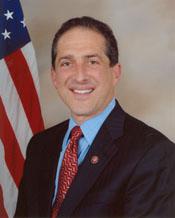 Rep. Ron Klein (D-FL)
Legislative Activity
Stay on top of the latest movement without scrolling through every action
Received in the Senate and Read twice and referred to the Committee on Banking, Housing, and Urban Affairs.
November 13, 2007
View full timeline
Introduced in House
August 3, 2007
Referred to the House Committee on Financial Services.
August 3, 2007
Referred to the Subcommittee on Housing and Community Opportunity.
September 5, 2007
Referred to the Subcommittee on Capital Markets, Insurance and Government Sponsored Enterprises.
September 5, 2007
Committee Consideration and Mark-up Session Held.
September 25, 2007
Committee Consideration and Mark-up Session Held.
September 26, 2007
Ordered to be Reported (Amended) by the Yeas and Nays: 36 - 27.
September 26, 2007
Reported (Amended) by the Committee on Financial Services. H. Rept. 110-419.
October 31, 2007
Placed on the Union Calendar, Calendar No. 264.
October 31, 2007
Rules Committee Resolution H. Res. 802 Reported to House. Rule provides for consideration of H.R. 3355 with 1 hour of general debate. Previous question shall be considered as ordered without intervening motions except motion to recommit with or without instructions. Measure will be considered read. Specified amendments are in order. All points of order against consideration of the bill are waive except those arising under clause 9 or 10 of rule XXI. It shall be in order to consider as an original bill for the purpose of amendment under the five-minute rule the amendment in the nature of a substitute recommended by the Committee on Financial Services now printed in the bill.
November 6, 2007 • 9:35 PM
Rule H. Res. 802 passed House.
November 8, 2007 • 2:58 PM
Considered under the provisions of rule H. Res. 802. (consideration: CR H13337-13370)
November 8, 2007 • 3:08 PM
Rule provides for consideration of H.R. 3355 with 1 hour of general debate. Previous question shall be considered as ordered without intervening motions except motion to recommit with or without instructions. Measure will be considered read. Specified amendments are in order. All points of order against consideration of the bill are waive except those arising under clause 9 or 10 of rule XXI. It shall be in order to consider as an original bill for the purpose of amendment under the five-minute rule the amendment in the nature of a substitute recommended by the Committee on Financial Services now printed in the bill.
November 8, 2007 • 3:08 PM
House resolved itself into the Committee of the Whole House on the state of the Union pursuant to H. Res. 802 and Rule XVIII.
November 8, 2007 • 3:08 PM
The Speaker designated the Honorable Mike Ross to act as Chairman of the Committee.
November 8, 2007 • 3:08 PM
GENERAL DEBATE - The Committee of the Whole proceeded with one hour of general debate on H.R. 3355.
November 8, 2007 • 3:09 PM
DEBATE - The Committee of the Whole proceeded with debate on the Klein amendment under the five-minute rule.
November 8, 2007 • 4:02 PM
POSTPONED PROCEEDINGS - At the conclusion of debate on the Klein amendment, the Chair put the question on adoption of the amendment and by voice vote, announced that the ayes had prevailed. Mrs. Capito demanded a recorded vote and the Chair postponed further proceedings on the question of adoption of the amendment until later in the legislative day.
November 8, 2007 • 4:14 PM
DEBATE - The Committee of the Whole proceeded with debate on the Roskam amendment under the five-minute rule.
November 8, 2007 • 4:15 PM
POSTPONED PROCEEDINGS - At the conclusion of debate on the Roskam amendment, the Chair put the question on adoption of the amendment and by voice vote, announced that the noes had prevailed. Mr. Roskam demanded a recorded vote and the Chair postponed further proceedings on the question of adoption of the amendment until later in the legislative day.
November 8, 2007 • 4:26 PM
DEBATE - The Committee of the Whole proceeded with debate on the Murphy (CT) amendment under the five-minute rule.
November 8, 2007 • 4:28 PM
DEBATE - The Committee of the Whole proceeded with debate on the Castor amendment under the five-minute rule.
November 8, 2007 • 4:53 PM
DEBATE - The Committee of the Whole proceeded with debate on the Manzullo amendment under the five-minute rule.
November 8, 2007 • 4:57 PM
POSTPONED PROCEEDINGS - At the conclusion of debate on the Manzullo amendment, the Chair put the question on adoption of the amendment and by voice vote, announced that the noes had prevailed. Mr. Manzullo demanded a recorded vote and the Chair postponed further proceedings on the question of adoption of the amendment until later in the legislative day.
November 8, 2007 • 5:11 PM
DEBATE - The Committee of the Whole proceeded with debate on the Matheson amendment under the five-minute rule.
November 8, 2007 • 5:12 PM
The Committee of the Whole rose informally to receive a communication from the President.
November 8, 2007 • 5:16 PM
The Committee resumed its sitting.
November 8, 2007 • 5:17 PM
DEBATE - The Committee of the Whole proceeded with debate on the Brown-Waite (FL) amendment under the five-minute rule.
November 8, 2007 • 5:19 PM
DEBATE - The Committee of the Whole proceeded with debate on the Putnam amendment under the five-minute rule.
November 8, 2007 • 5:27 PM
POSTPONED PROCEEDINGS - At the conclusion of debate on the Putnam amendment, the Chair put the question on adoption of the amendment and by voice vote, announced that the ayes had prevailed. Mr. Putnam demanded a recorded vote and the Chair postponed further proceedings on the question of adoption of the amendment until later in the legislative day.
November 8, 2007 • 5:33 PM
DEBATE - The Committee of the Whole proceeded with debate on the Shays amendment in the nature of a substitute under the five-minute rule.
November 8, 2007 • 5:34 PM
POSTPONED PROCEEDINGS - At the conclusion of debate on the Shays amendment, the Chair put the question on adoption of the amendment and by voice vote, announced that the noes had prevailed. Mr. Shays demanded a recorded vote and the Chair postponed further proceedings on the question of adoption of the amendment until later in the legislative day.
November 8, 2007 • 5:48 PM
VACATING REQUEST FOR RECORDED VOTE - Mr. Putnam asked unanimous consent to vacate his earlier request for a recorded vote on his amendment, to the end that the Chair put the question de novo. Agreed to without objection.
November 8, 2007 • 5:48 PM
DEBATE - The Committee of the Whole proceeded with debate on the Campbell amendment under the five-minute rule.
November 8, 2007 • 5:51 PM
The House rose from the Committee of the Whole House on the state of the Union to report H.R. 3355.
November 8, 2007 • 7:06 PM
The previous question was ordered pursuant to the rule. (consideration: CR H13367)
November 8, 2007 • 7:07 PM
The House adopted the amendment in the nature of a substitute as agreed to by the Committee of the Whole House on the state of the Union. (text: CR H13345-13348)
November 8, 2007 • 7:07 PM
Mrs. Capito moved to recommit with instructions to Financial Services. (consideration: CR H13367-13368; text: CR H13367)
November 8, 2007 • 7:08 PM
DEBATE - The House proceeded with 10 minutes of debate on the Capito motion to recommit with instructions. The instructions contained in the motion see to require the bill to be reported back to the House with amendments adding a new section pertaining to prohibiting cross-subsidization from middle america.
November 8, 2007 • 7:09 PM
The previous question on the motion to recommit with instructions was ordered without objection. (consideration: CR H13368)
November 8, 2007 • 7:20 PM
On motion to recommit with instructions Failed by recorded vote: 175 - 239 (Roll no. 1073).
November 8, 2007 • 7:38 PM
Passed/agreed to in House: On passage Passed by recorded vote: 258 - 155 (Roll no. 1074).
November 8, 2007 • 7:45 PM
On passage Passed by recorded vote: 258 - 155 (Roll no. 1074).
November 8, 2007 • 7:45 PM
Motion to reconsider laid on the table Agreed to without objection.
November 8, 2007 • 7:46 PM
The Clerk was authorized to correct section numbers, punctuation, and cross references, and to make other necessary technical and conforming corrections in the engrossment of H.R. 3355.
November 8, 2007 • 7:46 PM
Received in the Senate and Read twice and referred to the Committee on Banking, Housing, and Urban Affairs.
November 13, 2007
Voting History
7 votes recorded • Roll call available
HOUSE
Roll Call AvailableNovember 8, 2007 at 7:46 PM
On Passage
Majority required: 1/2 (50%)
258 - 155
HOUSE
Roll Call AvailableNovember 8, 2007 at 7:38 PM
On Motion to Recommit with Instructions
Majority required: 1/2 (50%)
175 - 239
HOUSE
Roll Call AvailableNovember 8, 2007 at 7:06 PM
On Agreeing to the Amendment
Majority required: 1/2 (50%)
166 - 246
Show 4 more votes
HOUSE
Roll Call AvailableNovember 8, 2007 at 7:00 PM
On Agreeing to the Amendment
Majority required: 1/2 (50%)
176 - 242
HOUSE
Roll Call AvailableNovember 8, 2007 at 6:50 PM
On Agreeing to the Amendment
Majority required: 1/2 (50%)
172 - 245
HOUSE
Roll Call AvailableNovember 8, 2007 at 6:42 PM
On Agreeing to the Amendment
Majority required: 1/2 (50%)
168 - 249
HOUSE
Roll Call AvailableNovember 8, 2007 at 6:22 PM
On Agreeing to the Amendment
Majority required: 1/2 (50%)
253 - 159
Amendments
12 amendmentsOffered to this bill
Amendments
12 amendmentsOffered to this bill
No matches
An amendment numbered 3 printed in the Congressional Record to provide for inclusion of business owners under the provisions of the bill.
By unanimous consent, the Campbell (CA) amendment was withdrawn. · Sponsored by John Campbell
An amendment in the nature of a substitute numbered 5 printed in the Congressional Record to insert a complete new text.
On agreeing to the Shays amendment (A011) Failed by recorded vote: 166 - 246 (Roll no. 1072). · Sponsored by Christopher Shays
An amendment numbered 15 printed in the Congressional Record to insert language prohibiting use of Federal funds of any kind or from any Federal source (including any disaster or other financial assistance, loan proceeds, and any other assistance or subsidy) to repay a loan.
On agreeing to the Putnam amendment Agreed to by voice vote. · Sponsored by Adam H. Putnam
An amendment to modify the instruction prohibiting price gouging by replacing it with language discouraging price gouging.
On agreeing to the Klein (FL) amendment (A009) Agreed to by voice vote. · Sponsored by Ron Klein · Amends H.Amdt. 892
An amendment numbered 12 printed in the Congressional Record to insert clarifying language relating to price gouging.
On agreeing to the Brown-Waite, Ginny amendment (A008) as amended Agreed to by voice vote. · Sponsored by Ginny Brown-Waite
An amendment numbered 4 printed in the Congressional Record to require that annual reports shall include an assessment of the costs to states and regions associated with catastrophe risk and an analysis of the costs and benefits, for states not participating in the consortium.
On agreeing to the Matheson amendment Agreed to by voice vote. · Sponsored by Jim Matheson
An amendment numbered 1 printed in the Congressional Record to insert clarifying language relating to delinquency of loans made for assistance in connection with a natural or other major disaster.
On agreeing to the Manzullo amendment (A006) Failed by recorded vote: 176 - 242 (Roll no. 1071). · Sponsored by Donald A. Manzullo
An amendment numbered 2 printed in the Congressional Record to insert provisions which help to limit developer overbuilding in areas subject to risk of catastrophic financial loss.
By unanimous consent, the Castor amendment was withdrawn. · Sponsored by Kathy Castor
An amendment numbered 13 printed in the Congressional Record to insert clarifying language with respect to catastrophic loans and losses covered by such loans.
On agreeing to the Roskam amendment (A004) Failed by recorded vote: 172 - 245 (Roll no. 1070). · Sponsored by Peter J. Roskam
An amendment numbered 14 printed in the Congressional Record to include language which clarifies mitigation measures and encourages state and local governments to develop comprehensive land use and zoning plans that include natural hazard mitigation.
On agreeing to the Murphy (CT) amendment (A003) Agreed to by voice vote. · Sponsored by Christopher Murphy
An amendment numbered 6 printed in the Congressional Record to insert clarifying language to the bill relating to best practices in building codes.
On agreeing to the Roskam amendment (A002) Failed by recorded vote: 168 - 249 (Roll no. 1069). · Sponsored by Peter J. Roskam
An amendment numbered 17 printed in the Congressional Record to make technical and conforming changes; add a new title which inserts new provisions on reinsurance coverage for qualified reinsurance programs; and to insert provisions requiring a study on the need for conditional coverage of commercial residential lines of insurance.
On agreeing to the Klein (FL) amendment (A001) Agreed to by recorded vote: 253 - 159 (Roll no. 1068). · Sponsored by Ron Klein
Floor Debate
21 membersWhat members said about H.R. 3355 on the floor

 +16
+16
Floor Debate
21 membersWhat members said about H.R. 3355 on the floor
Mr. Chairman, I yield myself such time as I may consume. Mr. Chairman, I rise today to discuss H.R. 3355, the Homeowners' Defense Act. This bill responds to the growing crisis in the availability and…
I thank the gentlewoman for yielding. I want to commend our colleagues on the other side of the aisle from Florida as good advocates for their districts in recognizing that Florida has a serious…
Mr. Speaker, today is a turning point for how the Federal Government responds to natural catastrophes. Today, the House of Representatives has the ability to ensure that homeowners across the country…
Mr. Speaker, by direction of the Committee on Rules, I call up House Resolution 802 and ask for its immediate consideration. Mr. Speaker, for the purpose of debate only, I yield the customary 30…
Mr. Chairman, I yield myself such time as I may consume. First of all, I would like to thank the two gentlemen from Financial Services from Florida for bringing this bill forward. Mr. Chairman, we…
Show 8 more

I thank the gentleman for yielding. Mr. Speaker, on Monday the House will meet at 12:30 p.m. for morning- hour debate and 2 p.m. for legislative business, with votes rolled until 6:30 p.m. We will…

Mr. Speaker, I rise today in opposition to this rule and to the underlying legislation which asks taxpayers from across the country to subsidize the risky housing choices of residents of one State at…
Mr. Speaker, I yield to my friend, the majority leader, for information about next week's schedule. I appreciate my friend's comment there, and I agree totally that a leader of France who has been so…

Mr. Chairman, I move to strike the last word. Mr. Chairman, I want to make clear my motivations here for the purposes of debate. I certainly am in support of the Roskam amendment, but with or without…

Mr. Chairman, many of us are sympathetic to the insurance rate increases coastal catastrophe-prone areas have experienced recently, but there is no consensus that H.R. 3355 would offer any long-term…
Mr. Chairman, I offer an amendment. Mr. Chairman, H.R. 3355 requires the Treasury Department to offer low-cost subsidized Federal loans to State reinsurance funds. This bill employs the lesser used…
Mr. Chairman, I want to thank my colleagues from Florida for devising this great program which will be national, voluntary, and fiscally sound for the people that are experiencing problems with…

Mr. Chairman, I offer an amendment. Mr. Chairman, I'd like to applaud my colleagues, Representative Klein, Representative Mahoney and Representative Ginny Brown-Waite, for bringing this measure…
Show 11 more
Mr. Chairman, I offer an amendment. Mr. Chairman, I rise to offer an amendment that, over time, will keep insurance rates down by directing that State and local governments not approve intensified…

Mr. Chairman, I move to strike the last word. Mr. Chairman, I rise today to ask my colleagues to support the Murphy, Matsui, Bean and Larson amendment. I am sponsoring this amendment because it…
Offered By: Mr. Klein of Florida Amendment No. 16: Page 2, after line 7, in the item in the table of contents relating to section 202, strike ``State and Regional'' and insert ``Qualified''. Page 4,…
Offered By: Mr. Klein of Florida Amendment No. 17: Page 2, after line 7, in the item in the table of contents relating to section 202, strike ``State and Regional'' and insert ``Qualified''. Page 4,…
I appreciate it and I appreciate the gentleman's cooperation. I would just say, to move this along, as the gentleman from Florida responds, he will be speaking for the committee leadership. These are…

Madam Speaker, I voted against H.R. 2255, which would create a Federally-backed national catastrophe risk consortium and provide below-market catastrophic loans to State reinsurance and insurance…
Mr. Chairman, opponents of the Homeowners' Defense Act suggest we should not get caught up in the emotion of the moment. But, Mr. Chairman, our Nation is suffering from a property insurance crisis…
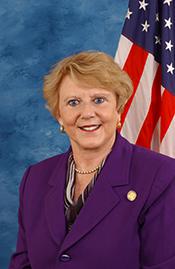
I thank the gentlewoman for yielding time. The bill that we have before us today is one that is not just about Florida. The bill that is before us today is about the availability of any State being…
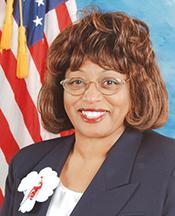
Mr. Chairman, as a Member from Florida, I rise in strong support of the Homeowners' Defense Act, H.R. 3355. The terribly high cost for homeowners paying property insurance in my State of Florida, as…
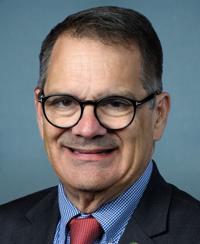
Mr. Chairman, in the early morning hours of August 29, 2005, a catastrophe obliterated New Orleans. The ocean had breached the city's levees and our Nation looked on while tens of thousands clung to…

Mr. Chairman, I rise in support and thank Congressmembers Klein and Mahoney for their leadership. I have long held the belief that we need solutions to the growing crisis of availability and…
Bill Text
4 versions available
        [Congressional Bills 110th Congress]
[From the U.S. Government Publishing Office]
[H.R. 3355 Referred in Senate (RFS)]

1st Session
H. R. 3355

_______________________________________________________________________

IN THE SENATE OF THE UNITED STATES

November 13, 2007

Received; read twice and referred to the Committee on Banking, Housing,
and Urban Affairs

_______________________________________________________________________

AN ACT

To ensure the availability and affordability of homeowners' insurance
coverage for catastrophic events.

Be it enacted by the Senate and House of Representatives of the
United States of America in Congress assembled,

SECTION 1. SHORT TITLE; TABLE OF CONTENTS.

(a) Short Title.--This Act may be cited as the ``Homeowners'
Defense Act of 2007''.
(b) Table of Contents.--The table of contents for this Act is as
follows:

Sec. 1. Short title; table of contents.
Sec. 2. Findings and purposes.
TITLE I--NATIONAL CATASTROPHE RISK CONSORTIUM

Sec. 101. Establishment; status; principal office; membership.
Sec. 102. Functions.
Sec. 103. Powers.
Sec. 104. Nonprofit entity; conflicts of interest; audits.
Sec. 105. Management.
Sec. 106. Staff; experts and consultants.
Sec. 107. Federal liability.
Sec. 108. Authorization of appropriations.
TITLE II--NATIONAL HOMEOWNERS' INSURANCE STABILIZATION PROGRAM

Sec. 201. Establishment.
Sec. 202. Liquidity loans and catastrophic loans for qualified
reinsurance programs.
Sec. 203. Reports and audits.
Sec. 204. Funding.
TITLE III--REINSURANCE COVERAGE FOR QUALIFIED REINSURANCE PROGRAMS

Sec. 301. Program authority.
Sec. 302. Contract principles.
Sec. 303. Terms of reinsurance contracts.
Sec. 304. Maximum Federal liability.
Sec. 305. Federal Natural Catastrophe Reinsurance Fund.
Sec. 306. Regulations.
TITLE IV--GENERAL PROVISIONS

Sec. 401. Qualified reinsurance programs.
Sec. 402. Study and conditional coverage of commercial residential
lines of insurance.
Sec. 403. Definitions.
Sec. 404. Regulations.

SEC. 2. FINDINGS AND PURPOSES.

(a) Findings.--The Congress finds that--
(1) the United States has a history of catastrophic natural
disasters, including hurricanes, tornadoes, flood, fire,
earthquakes, and volcanic eruptions;
(2) although catastrophic natural disasters occur
infrequently, they will continue to occur and are predictable;
(3) such disasters generate large economic losses and a
major component of those losses comes from damage and
destruction to homes;
(4) for the majority of Americans, their investment in
their home represents their single biggest asset and the
protection of that investment is paramount to economic and
social stability;
(5) historically, when a natural disaster eclipses the
ability of the private industry and a State to manage the loss,
the Federal Government has stepped in to provide the funding
and services needed for recovery;
(6) the cost of such Federal ``bail-outs'' are borne by all
taxpayers equally, as there is no provision to repay the money
and resources provided, which thereby unfairly burdens citizens
who live in lower risk communities;
(7) as the risk of catastrophic losses grows, so do the
risks that any premiums collected by private insurers for
extending coverage will be insufficient to cover future
catastrophes, and private insurers, in an effort to protect
their shareholders and policyholders (in the case of mutually-
owned companies), have thus significantly raised premiums and
curtailed insurance coverage in States exposed to major
catastrophes;
(8) such effects on the insurance industry have been
harmful to economic activity in States exposed to major
catastrophes and have placed significant burdens on residents
of such States;
(9) Hurricanes Katrina, Rita, and Wilma struck the United
States in 2005, causing over $200,000,000,000 in total economic
losses, and insured losses to homeowners in excess of
$50,000,000,000;
(10) since 2004, the Congress has appropriated more than
$58,000,000,000 in disaster relief to the States affected by
natural catastrophes;
(11) the Federal Government has provided and will continue
to provide resources to pay for losses from future
catastrophes;
(12) when Federal assistance is provided to the States,
accountability for Federal funds disbursed is paramount;
(13) the Government Accountability Office or other
appropriate agencies must have the means in place to confirm
that Federal funds for catastrophe relief have reached the
appropriate victims and have contributed to the recovery effort
as efficiently as possible so that taxpayer funds are not
wasted and citizens are enabled to rebuild and resume
productive activities as quickly as possible;
(14) States that are recipients of Federal funds must be
responsible to account for and provide an efficient means for
distribution of funds to homeowners to enable the rapid
rebuilding of local economies after a catastrophic event
without unduly burdening taxpayers who live in areas seldom
affected by natural disasters;
(15) State insurance and reinsurance programs can provide a
mechanism for States to exercise that responsibility if they
appropriately underwrite and price risk, and if they pay claims
quickly and within established contractual terms; and
(16) State catastrophe reinsurance programs, if
appropriately structured and regulated, assume catastrophic
risk borne by private insurers without incurring many of the
additional costs imposed on private insurers, and thus enable
all insurers within the State to underwrite and price coverage
at rates designed to encourage property owners to acquire
levels of insurance appropriate to their individual risks.
(b) Purposes.--The purposes of this Act are to establish a program
to provide Federal support for State-sponsored insurance programs to
help homeowners prepare for and recover from the damages caused by
natural catastrophes, to encourage mitigation and prevention for such
catastrophes, to promote the use of private market capital as a means
to insure against such catastrophes, to expedite the payment of claims
and better assist in the financial recovery from such catastrophes.

TITLE I--NATIONAL CATASTROPHE RISK CONSORTIUM

SEC. 101. ESTABLISHMENT; STATUS; PRINCIPAL OFFICE; MEMBERSHIP.

(a) Establishment.--There is established an entity to be known as
the ``National Catastrophe Risk Consortium'' (in this title referred to
as the ``Consortium'').
(b) Status.--The Consortium is not a department, agency, or
instrumentality of the United States Government.
(c) Principal Office.--The principal office and place of business
of the Consortium shall be such location within the United States
determined by the Board of Directors to be the most advantageous for
carrying out the purpose and functions of the Consortium.
(d) Membership.--Any State that has established a reinsurance fund
or has authorized the operation of a State residual insurance market
entity, or State-sponsored provider of natural catastrophe insurance,
shall be eligible to participate in the Consortium.

SEC. 102. FUNCTIONS.

The Consortium shall--
(1) work with all States, particularly those participating
in the Consortium, to gather and maintain an inventory of
catastrophe risk obligations held by State reinsurance funds,
State residual insurance market entities, and State-sponsored
providers of natural catastrophe insurance;
(2) at the discretion of the affected members and on a
conduit basis, issue securities and other financial instruments
linked to the catastrophe risks insured or reinsured through
members of the Consortium in the capital markets;
(3) coordinate reinsurance contracts between participating,
qualified reinsurance funds and private parties;
(4) act as a centralized repository of State risk
information that can be accessed by private-market participants
seeking to participate in the transactions described in
paragraphs (2) and (3) of this section;
(5) use a catastrophe risk database to perform research and
analysis that encourages standardization of the risk-linked
securities market;
(6) perform any other functions, other than assuming risk
or incurring debt, that are deemed necessary to aid in the
transfer of catastrophe risk from participating States to
private parties; and
(7) submit annual reports to Congress describing the
activities of the Consortium for the preceding year, and the
first such annual report shall include an assessment of the
costs to States and regions associated with catastrophe risk
and an analysis of the costs and benefits, for States not
participating in the Consortium, of such nonparticipation.

SEC. 103. POWERS.

The Consortium--
(1) may make and perform such contracts and other
agreements with any individual or other private or public
entity however designated and wherever situated, as may be
necessary for carrying out the functions of the Consortium; and
(2) shall have such other powers, other than the power to
assume risk or incur debt, as may be necessary and incident to
carrying out this Act.

SEC. 104. NONPROFIT ENTITY; CONFLICTS OF INTEREST; AUDITS.

(a) Nonprofit Entity.--The Consortium shall be a nonprofit entity
and no part of the net earnings of the Consortium shall inure to the
benefit of any member, founder, contributor, or individual.
(b) Conflicts of Interest.--No director, officer, or employee of
the Consortium shall in any manner, directly or indirectly, participate
in the deliberation upon or the determination of any question affecting
his or her personal interests or the interests of any Consortium,
partnership, or organization in which he or she is directly or
indirectly interested.
(c) Audits.--
(1) Annual audit.--The financial statements of the
Consortium shall be audited annually in accordance with
generally accepted auditing standards by independent certified
public accountants.
(2) Reports.--The report of each annual audit pursuant to
paragraph (1) shall be included in the annual report submitted
in accordance with section 102(7).

SEC. 105. MANAGEMENT.

(a) Board of Directors; Membership; Designation of Chairperson.--
(1) Board of directors.--The management of the Consortium
shall be vested in a board of directors (referred to in this
title as the ``Board'') composed of not less than 3 members.
(2) Chairperson.--The Secretary of Treasury, or the
designee of the Secretary, shall serve as the chairperson of
the Board.
(3) Membership.--The members of the Board shall include--
(A) the Secretary of Homeland Security and the
Secretary of Commerce, or the designees of such
Secretaries, respectively, but only during such times
as there are fewer than two States participating in the
Consortium; and
(B) a member from each State participating in the
Consortium, who shall be appointed by such State.
(b) Bylaws.--The Board may prescribe, amend, and repeal such bylaws
as may be necessary for carrying out the functions of the Consortium.
(c) Compensation, Actual, Necessary, and Transportation Expenses.--
(1) Non-federal employees.--A member of the Board who is
not otherwise employed by the Federal Government shall be
entitled to receive the daily equivalent of the annual rate of
basic pay payable for level IV of the Executive Schedule under
section 5315 of title 5, United States Code, as in effect from
time to time, for each day (including travel time) during which
such member is engaged in the actual performance of duties of
the Consortium.
(2) Federal employees.--A member of the Board who is an
officer or employee of the Federal Government shall serve
without additional pay (or benefits in the nature of
compensation) for service as a member of the Consortium.
(3) Travel expenses.--Members of the Consortium shall be
entitled to receive travel expenses, including per diem in lieu
of subsistence, equivalent to those set forth in subchapter I
of chapter 57 of title 5, United States Code.
(d) Quorum.--A majority of the Board shall constitute a quorum.
(e) Executive Director.--The Board shall appoint an executive
director of the Consortium on such terms as the Board may determine.

SEC. 106. STAFF; EXPERTS AND CONSULTANTS.

(a) Staff.--
(1) Appointment.--The Board of the Consortium may appoint
and terminate such other staff as are necessary to enable the
Consortium to perform its duties.
(2) Compensation.--The Board of the Consortium may fix the
compensation of the executive director and other staff.
(b) Experts and Consultants.--The Board shall procure the services
of experts and consultants as the Board considers appropriate.

SEC. 107. FEDERAL LIABILITY.

The Federal Government and the Consortium shall not bear any
liabilities arising from the actions of the Consortium. Participating
States shall retain all catastrophe risk until the completion of a
transaction described in paragraphs (2) and (3) of section 102.

SEC. 108. AUTHORIZATION OF APPROPRIATIONS.

There are authorized to be appropriated to carry out this title
$20,000,000 for each of fiscal years 2008 through 2013.

TITLE II--NATIONAL HOMEOWNERS' INSURANCE STABILIZATION PROGRAM

SEC. 201. ESTABLISHMENT.

The Secretary of the Treasury shall carry out a program under this
title to make liquidity loans and catastrophic loans under section 202
to qualified reinsurance programs to ensure the solvency of such
programs, to improve the availability and affordability of homeowners'
insurance, to incent risk transfer to the private capital and
reinsurance markets, and to spread the risk of catastrophic financial
loss resulting from natural disasters and catastrophic events.

SEC. 202. LIQUIDITY LOANS AND CATASTROPHIC LOANS FOR QUALIFIED
REINSURANCE PROGRAMS.

(a) Contracts.--The Secretary may enter into a contract with a
qualified reinsurance program to carry out the purposes of this Act as
the Secretary may deem appropriate. The contract shall include, at a
minimum, the conditions for loan eligibility set forth in this section.
(b) Conditions for Loan Eligibility.--A loan under this section may
be made only to a qualified reinsurance program and only if--
(1) before the loan is made--
(A) the qualified reinsurance program submits to
the Secretary a report setting forth, in such form and
including such information as the Secretary shall
require, how the program plans to repay the loan;
(B) based upon the report of the program, the
Secretary determines that the program can meet its
repayment obligation under the loan and certifies that
the program can meet such obligation; and
(C) the State or regional reinsurance program
enters into an agreement with the Secretary, as the
Secretary shall require, that the State will not use
Federal funds of any kind or from any Federal source
(including any disaster or other financial assistance,
loan proceeds, and any other assistance or subsidy) to
repay the loan;
(2) the program cannot access capital in the private market
at a commercially reasonable rate, including through
catastrophe bonds and other securities sold through the
facility created in title I of this Act, as determined by the
Secretary, and a loan may be made to such a qualified
reinsurance program only to the extent that such program cannot
access capital in the private market at a commercially
reasonable rate;
(3) the Secretary determines that an event has resulted in
insured losses in a State with a qualified reinsurance program;
(4) the loan complies with the requirements under
subsection (d) or (e), as applicable; and
(5) the State demonstrates to the Secretary that it has the
ability to repay the loans.
(c) Mandatory Assistance for Qualified Reinsurance Programs.--The
Secretary shall upon the request of a qualified reinsurance program and
subject to subsection (b), make a loan under subsection (d) or (e) for
such program in the amount requested by such program (subject to the
limitations under subsections (d)(2) and (e)(2), respectively).
(d) Liquidity Loans.--A loan under this subsection for a qualified
reinsurance program shall be subject to the following requirements:
(1) Preconditions.--The Secretary shall have determined
that the qualified reinsurance program--
(A) has a capital liquidity shortage, in accordance
with regulations that the Secretary shall establish;
and
(B) cannot access capital in the private markets at
a commercially reasonable rate.
(2) Amount.--The principal amount of the loan may not
exceed the ceiling coverage level for the qualified reinsurance
program.
(3) Rate of interest.--The loan shall bear interest at an
annual rate 3 percentage points higher than marketable
obligations of the Treasury having the same term to maturity as
the loan and issued during the most recently completed month,
as determined by the Secretary, or such higher rate as may be
necessary to ensure that the amounts of interest paid under
such loans exceed the sum of the costs (as such term is defined
in section 502 of the Federal Credit Reform Act of 1990 (2
U.S.C. 661a)) of such loans, the administrative costs involved
in carrying out a program under this title for such loans, and
any incidental effects on governmental receipts and outlays.
(4) Term.--The loan shall have a term to maturity of not
less than 5 years and not more than 10 years.
(e) Catastrophic Loans.--A loan under this subsection for a
qualified reinsurance program shall be subject to the following
requirements:
(1) Preconditions.--The Secretary shall have determined
that an event has resulted in insured losses in a State with a
qualified reinsurance program and that such insured losses in
such State are in excess of 150 percent of the aggregate amount
of direct written premium for property and casualty insurance,
for risks located in that State, over the calendar year
preceding such event, in accordance with regulations that the
Secretary shall establish.
(2) Amount.--The principal amount of the loan made pursuant
to an event referred to in paragraph (1) may not exceed the
amount by which the insured losses sustained as a result of
such event exceed the ceiling coverage level for the qualified
reinsurance program.
(3) Rate of interest.--The loan shall bear interest at an
annual rate 0.20 percentage points higher than marketable
obligations of the Treasury having a term to maturity of not
less than 10 years and issued during the most recently
completed month, as determined by the Secretary, or such higher
rate as may be necessary to ensure that the amounts of interest
paid under such loans exceed the sum of the costs (as such term
is defined in section 502 of the Federal Credit Reform Act of
1990 (2 U.S.C. 661a)) of such loans, the administrative costs
involved in carrying out a program under this title for such
loans, and any incidental effects on governmental receipts and
outlays.
(4) Term.--The loan shall have a term to maturity of not
less than 10 years.
(f) Use of Funds.--Amounts from a loan under this section shall
only be used to provide reinsurance or retrocessional coverage to
underlying primary insurers or reinsurers for losses arising from all
personal residential lines of insurance, as defined in the Uniform
Property & Casualty Product Coding Matrix published and maintained by
the National Association of Insurance Commissioners. Such amounts shall
not be used for any other purpose.

SEC. 203. REPORTS AND AUDITS.

The Secretary shall submit a report to the President and the
Congress annually that identifies and describes any loans made under
this title during such year and any repayments during such year of
loans made under this title, and describes actions taken to ensure
accountability of loan funds. The Secretary shall provide for regular
audits to be conducted for each loan made under this title and shall
make the results of such audits publicly available.

SEC. 204. FUNDING.

(a) Program Fee.--
(1) In general.--The Secretary may establish and collect,
from qualified reinsurance programs that are precertified
pursuant to section 401(d), a reasonable fee, as may be
necessary to offset the expenses of the Secretary in connection
with carrying out the responsibilities of the Secretary under
this title, including--
(A) costs of developing, implementing, and carrying
out the program under this title; and
(B) costs of providing for precertification
pursuant to section 401(d) of State and regional
reinsurance programs as qualified reinsurance programs.
(2) Adjustment.--The Secretary may, from time to time,
adjust the fee under paragraph (1) as appropriate based on
expenses of the Secretary referred to in such paragraph.
(3) Use.--Any fees collected pursuant to this subsection
shall be credited as offsetting collections of the Department
of the Treasury and shall be available to the Secretary only
for expenses referred to in paragraph (1).
(b) Costs of Loans; Administrative Costs.--To the extent that
amounts of negative credit subsidy are received by the Secretary in any
fiscal year pursuant to loans made under this title, such amounts shall
be available for costs (as such term is defined in section 502 of the
Federal Credit Reform Act of 1990 (2 U.S.C. 661a)) of such loans and
for costs of carrying out the program under this title for such loans.
(c) Full Taxpayer Repayment.--The Secretary shall require the full
repayment of all loans made under this title. If the Secretary
determines at any time that such full repayment will not be made, or is
likely not to be made, the Secretary shall promptly submit a report to
the Congress explaining why such full repayment will not be made or is
likely not to be made. The Secretary may not accept any repayment of
any loan made under this title that does not comply with the agreement
for such loan entered into in accordance with section 202(b)(1)(C).

TITLE III--REINSURANCE COVERAGE FOR QUALIFIED REINSURANCE PROGRAMS

SEC. 301. PROGRAM AUTHORITY.

Subject to section 304(c), the Secretary of the Treasury, shall
make available for purchase, only by qualified reinsurance programs (as
such term is defined in section 401), contracts for reinsurance
coverage under this title.

SEC. 302. CONTRACT PRINCIPLES.

Contracts for reinsurance coverage made available under this
title--
(1) shall not displace or compete with the private
insurance or reinsurance markets or the capital market;
(2) shall minimize the administrative costs of the Federal
Government; and
(3) shall provide coverage based solely on insured losses
covered by the qualified reinsurance program purchasing the
contract.

SEC. 303. TERMS OF REINSURANCE CONTRACTS.

(a) Minimum Attachment Point.--Notwithstanding any other provision
of this title, a contract for reinsurance coverage under this title for
a qualified reinsurance program may not be made available or sold
unless the contract requires that the qualified reinsurance program
sustain an amount of retained losses from events in an amount, as
determined by the Secretary, that is equal to the amount of losses
projected to be incurred from a single event of such magnitude that it
has a 0.5 percent chance of being equaled or exceeded in any year.
(b) Ninety Percent Coverage of Insured Losses in Excess of Retained
Losses.--Each contract for reinsurance coverage under this title shall
provide that the amount paid out under the contract shall, subject to
section 304, be equal to 90 percent of the amount of insured losses of
the qualified reinsurance program in excess of the amount of retained
losses that the contract requires, pursuant to subsection (a), to be
incurred by such program.
(c) Maturity.--The term of each contract for reinsurance coverage
under this title shall not exceed 1 year or such other term as the
Secretary may determine.
(d) Payment Condition.--Each contract for reinsurance coverage
under this title shall authorize claims payments to the qualified
reinsurance program purchasing the coverage only for insured losses
provided under the contract.
(e) Multiple Events.--The contract shall cover any insured losses
from one or more events that may occur during the term of the contract
and shall provide that if multiple events occur, the retained losses
requirement under subsection (a) shall apply on a calendar year basis,
in the aggregate and not separately to each individual event.
(f) Timing of Claims.--Claims under a contract for reinsurance
coverage under this title shall include only insurance claims that are
reported to the qualified reinsurance program within the 3-year period
beginning upon the event or events for which payment under the contract
is provided.
(g) Actuarial Pricing.--The price of coverage under a reinsurance
contract under this title shall be an amount, established by the
Secretary at a level that annually produces expected premiums that
shall be sufficient to pay the reasonably anticipated cost of all
claims, loss adjustment expenses, all administrative costs of
reinsurance coverage offered under this title, and any such outwards
reinsurance, as described in section 305(c)(3), as the Secretary
considers prudent taking into consideration the demand for reinsurance
coverage under this title and the limits specified in section 304.
(h) Information.--Each contract for reinsurance coverage under this
title shall contain a condition providing that the Secretary may
require the qualified reinsurance program that is covered under the
contract to submit to the Secretary all information on the qualified
reinsurance program relevant to the duties of the Secretary under this
title.
(i) Others.--Contracts for reinsurance coverage under this title
shall contain such other terms as the Secretary considers necessary to
carry out this title and to ensure the long-term financial integrity of
the program under this title.

SEC. 304. MAXIMUM FEDERAL LIABILITY.

(a) In General.--Subject to subsection (b) and notwithstanding any
other provision of law, the aggregate potential liability for payment
of claims under all contracts for reinsurance coverage under this title
sold in any single year by the Secretary shall not exceed
$200,000,000,000 or such lesser amount as is determined by the
Secretary based on review of the market for reinsurance coverage under
this title.
(b) Limitation.--The authority of the Secretary to enter into
contracts for reinsurance coverage under this title shall be effective
for any fiscal year only to such extent or in such amounts as are or
have been provided in appropriation Acts for such fiscal year for the
aggregate potential liability for payment of claims under all contracts
for reinsurance coverage under this title.

SEC. 305. FEDERAL NATURAL CATASTROPHE REINSURANCE FUND.

(a) Establishment.--There is established within the Treasury of the
United States a fund to be known as the Federal Natural Catastrophe
Reinsurance Fund (in this section referred to as the ``Fund'').
(b) Credits.--The Fund shall be credited with--
(1) amounts received annually from the sale of contracts
for reinsurance coverage under this title;
(2) any amounts appropriated under section 304; and
(3) any amounts earned on investments of the Fund pursuant
to subsection (d).
(c) Uses.--Amounts in the Fund shall be available to the Secretary
only for the following purposes:
(1) Contract payments.--For payments to purchasers covered
under contracts for reinsurance coverage for eligible losses
under such contracts.
(2) Administrative expenses.--To pay for the administrative
expenses incurred by the Secretary in carrying out the
reinsurance program under this title.
(3) Outwards reinsurance.--To obtain retrocessional or
other reinsurance coverage of any kind to cover risk reinsured
under contracts for reinsurance coverage made available under
this title.
(d) Investment.--If the Secretary determines that the amounts in
the Fund are in excess of current needs, the Secretary may invest such
amounts as the Secretary considers advisable in obligations issued or
guaranteed by the United States.

SEC. 306. REGULATIONS.

The Secretary shall issue any regulations necessary to carry out
the program for reinsurance coverage under this title.

TITLE IV--GENERAL PROVISIONS

SEC. 401. QUALIFIED REINSURANCE PROGRAMS.

(a) In General.--For purposes of this Act only, a program shall be
considered to be a qualified reinsurance program if the program--
(1) is authorized by State law for the purposes described
in this section;
(2) is an entity in which the authorizing State maintains a
material, financial interest;
(3) provides reinsurance or retrocessional coverage to
underlying primary insurers or reinsurers for losses arising
from all personal residential lines of insurance, as defined in
the Uniform Property & Casualty Product Coding Matrix published
and maintained by the National Association of Insurance
Commissioners;
(4) has a governing body, a majority of whose members are
public officials;
(5) provides reinsurance or retrocessional coverage to
underlying primary insurers or reinsurers for losses in excess
of such amount that the Secretary has determined represents a
catastrophic event in that particular State;
(6) is authorized by a State that has in effect such laws,
regulations, or other requirements, as the Secretary shall by
regulation provide, that--
(A) ensure, to the extent that reinsurance coverage
made available under the qualified reinsurance program
results in any cost savings in providing insurance
coverage for risks in such State, such cost savings are
reflected in premium rates charged to consumers for
such coverage;
(B) require that an appropriate public body within
the State shall have adopted adequate mitigation
measures (with effective enforcement provisions) which
the Secretary finds are consistent with the criteria
for construction described in the International Code
Council building codes;
(C) require State authorized insurance entities
within that State to establish an insurance rate
structure that takes into account measures to mitigate
insurance losses;
(D) require State authorized insurance and
reinsurance entities within that State to establish
rates at a level that annually produces expected
premiums that shall be sufficient to pay the reasonably
anticipated cost of all claims, loss adjustment
expenses, and all administrative costs of the insurance
or reinsurance coverage offered by such entities, and
any such outwards reinsurance as the program
administrator deems prudent; and
(E) discourage price gouging in any disaster area
located within the State;
(7) to the extent possible, seeks to encourage appropriate
State and local government units to develop comprehensive land
use and zoning plans that include natural hazard mitigation;
(8) to the extent possible, seeks to avoid cross-
subsidization between any separate property and casualty lines
covered under the State authorized insurance or reinsurance
entity;
(9) complies with the risk-based capital requirements under
subsection (b);
(10) complies with such additional organizational,
underwriting, and financial requirements as the Secretary
shall, by regulation, provide to carry out the purposes of this
Act; and
(11) has been certified by the Secretary, for such year, in
accordance with an annual certification process established by
the Secretary for such purpose, as being in compliance with the
requirements under paragraphs (1) through (10).
(b) Risk-Based Capital Requirements.--
(1) In general.--Except for programs deemed to be qualified
reinsurance programs pursuant to subsection (c), each qualified
reinsurance program shall maintain risk-based capital in
accordance with requirements established by the Secretary, in
consultation with the National Association of Insurance
Commissioners and consistent with the Risk-Based Capital Model
Act of the National Association of Insurance Commissioners, and
take into consideration asset risk, credit risk, underwriting
risk, and such other relevant risk as determined by the
Secretary.
(2) Treatment of access to liquidity loans.--
(A) In general.--To the extent that a qualified
reinsurance program is deficient in complying with any
aspect of the risk-based capital requirements
established pursuant to this subsection, the Secretary
shall recognize and give credit for the ability of such
qualified reinsurance program to access capital through
the liquidity loan program established under section
202(d).
(B) Annual diminution.--The extent of credit
recognized and given for a qualified reinsurance
program pursuant to subparagraph (A) shall diminish
annually in a proportion equal to the earned premium
for the program for the prior calendar year.
(C) Reset upon occurrence of catastrophe.--To the
extent that a qualified reinsurance program is
obligated to pay losses as a result of the occurrence
of a catastrophe, the Secretary shall increase the
credit recognized and given for the program pursuant to
subparagraph (A) by an amount equal to the losses paid
by the program as a result of the catastrophe.
(D) Resumption after catastrophe.--After a reset
occurs pursuant to subparagraph (C) for a qualified
reinsurance program, the diminution described in
subparagraph (B) shall resume and continue until the
program has accumulated capital sufficient to satisfy
the risk-based capital requirement determined by the
Secretary to be appropriate given the ceiling coverage
level of that particular qualified reinsurance program.
(3) Report.--For each calendar year, each qualified
reinsurance program shall prepare and submit to the Secretary a
report identifying its risk based capital, at such time after
the conclusion of such year, and containing such information
and in such form, as the Secretary shall require.
(c) Transitional Mechanisms.--For the five-year period beginning on
the date of the enactment of this Act, in the case of a State that does
not have a qualified reinsurance program for the State, a State
residual insurance market entity, or State-sponsored provider of
natural catastrophe insurance, for such State shall be considered to be
a qualified reinsurance program, but only if such State residual
insurance market entity, or State-sponsored provider of natural
catastrophe insurance, was in existence before such date of enactment.
(d) Precertification.--The Secretary shall establish procedures and
standards for State and regional reinsurance programs and the State
residual insurance market entities described in section (b) to apply to
the Secretary at any time for certification (and recertification) as
qualified reinsurance programs.
(e) Reinsurance To Cover Exposure.--This section may not be
construed to limit or prevent any insurer from obtaining reinsurance
coverage for insured losses retained by insurers pursuant to this
section, nor shall the obtaining of such coverage affect the
calculation of the amount of any loan under this title.

SEC. 402. STUDY AND CONDITIONAL COVERAGE OF COMMERCIAL RESIDENTIAL
LINES OF INSURANCE.

(a) Study.--The Secretary shall study, on an expedited basis, the
need for and impact of expanding the programs established by this Act
to apply to insured losses of qualified reinsurance programs for losses
arising from all commercial insurance policies which provide coverage
for properties that are composed predominantly of residential rental
units. The Secretary shall consider the catastrophic insurance and
reinsurance market for commercial residential properties, and
specifically the availability of adequate private insurance coverage
when an insured event occurs, the impact any such capacity restrictions
has on housing affordability for renters, and the likelihood that such
an expansion of the program would increase insurance capacity for this
market segment.
(b) Conditional Coverage.--To the extent that the Secretary
determines that there is such a need to expand such programs and such
expansion will be effective in increasing insurance capacity for the
commercial residential insurance market, the Secretary shall, in
consultation with the National Association of Insurance Commissioners--
(1) apply the provisions of this Act, as appropriate, to
insured losses of a qualified reinsurance program for losses
arising from commercial insurance policies which provide
coverage for properties that are composed predominantly of
residential rental units, as described in paragraph (a); and
(2) provide such restrictions, limitations, or conditions
with respect to the programs under this Act that the Secretary
deems appropriate, based on the study under subsection (a).

SEC. 403. DEFINITIONS.

For purposes of this Act, the following definitions shall apply:
(1) Ceiling coverage level.--The term ``ceiling coverage
level'' means, with respect to a qualified reinsurance program,
the maximum liability that could be incurred at any time by the
qualified reinsurance program.
(2) Insured loss.--The term ``insured loss'' means any loss
insured by a qualified reinsurance program.
(3) Price gouging.--The term ``price gouging'' means the
providing of any consumer good or service by a supplier related
to repair or restoration of property damaged from a catastrophe
for a price that the supplier knows or has reason to know is
greater, by at least the percentage set forth in a State law or
regulation prohibiting such act (not withstanding any real cost
increase due to any attendant business risk and other
reasonable expenses that result from the major catastrophe
involved), than the price charged by the supplier for such
consumer good or service immediately before the disaster.
(4) Qualified reinsurance program.--The term ``qualified
reinsurance program'' means a State or regional program that
meets the requirements under section 401.
(5) Secretary.--The term ``Secretary'' means the Secretary
of the Treasury.
(6) State.--The term ``State'' includes the several States,
the District of Columbia, the Commonwealth of Puerto Rico,
Guam, the Commonwealth of the Northern Mariana Islands, the
United States Virgin Islands, and American Samoa.

SEC. 404. REGULATIONS.

The Secretary shall issue such regulations as may be necessary to
carry out this Act.

Passed the House of Representatives November 8, 2007.

Attest:

LORRAINE C. MILLER,

Clerk.