Mr. Speaker, I ask unanimous consent that all Members may have 5 legislative days within which to revise and extend their remarks, and include extraneous material on the subject of my special order.…
Mr. Speaker, I ask unanimous consent that all Members may have 5 legislative days within which to revise and extend their remarks, and include extraneous material on the subject of my special order.
Mr. Speaker, I would like to call upon my colleague, Ms. Bordallo, who hails from Guam.
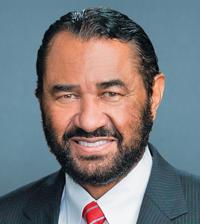
Mr. Speaker, I would like to call upon our good friend, colleague from Texas, Representative Al Green.
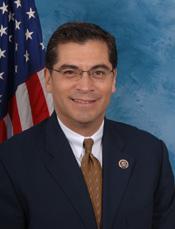
Mr. Speaker, I would like to call upon our good friend from California, Congressman Xavier Becerra.
Just to comment about both Congressmen Al Green and Xavier Becerra, they too are also members of the Congressional Black Caucus and the Hispanic Caucus, and so they serve dual roles in their leadership. And I think CAPAC, the Congressional Asian Pacific American Caucus, enjoys the leadership, experience and the insights of these two gentlemen, and it makes our caucus stronger and partners with the other caucuses.
And it's no wonder that they come to Congress on behalf of the community because the communities there trust these two men and they trust their leadership and their insights and their conscience. So to both I say, thank you.
I'd like to call upon a Congresswoman who hails from the Aloha State who, I think, is probably the re-incarnation of the spirit of Patsy Mink, Mazie Hirono.
Mahalo. Thank you very much.
Mr. Speaker, I rise today to recognize the Asian American Pacific Islander community and to commemorate Asian Pacific American Heritage Month.
As Chair of the Congressional Asian Pacific American Caucus, commonly known as CAPAC, I feel privileged to be here tonight to speak of the Asian and Pacific Islander American history and accomplishments.
And before I continue, I would also like to recognize you, Mr. Speaker, for presiding over this Special Order and also knowing that you too have worked with other Asian American leaders in your home State, specifically Senator Stan Matsunaga. For that we are grateful.
Additionally, I will be highlighting those isues affecting our community and the priorities for CAPAC.
The history of APA Heritage Month: In celebrating APA Heritage Month, I want to give thanks to the late Representative Frank Horton from New York and my good friend Secretary Norman Mineta, along with Senators Daniel Inouye and Spark Masayuki Matsunaga, that May is now designated as Asian Pacific American Heritage Month.
The first 10 days of May coincide with two important anniversaries: the arrival of the first Japanese immigrants on May 7, 1843, to the U.S. and the completion of the transcontinental railroad on May 10, 1869.
In 1992 Congress passed public law No. 102-450, the law that officially designated May of each year as ``Asian Pacific American Heritage Month.'' The first AAPI settlement in this country dates back to 1763, when Filipinos escaped imprisonment aboard Spanish galleons and established a community near New Orleans.
The AAPI community quickly expanding. Currently, there are approximately 14.6 million AAPIs living in the United States, comprising just over 5 percent of the total U.S. population. By the year 2050, there will be an estimated 33.4 million individuals living in the United States who identify as Asian alone, representing a 213 percent increase from 2000, comprising 8 percent of the total U.S. population. My home State of California has both the largest AAPI population, 4.9 million, and the largest numerical increase of AAPIs since 2000.
There are some needs. Mr. Speaker, this year's theme for Asian Pacific American Heritage Month, ``Meeting the Challenges for Asian Pacific Americans,'' reflects hardships overcome by the AAPI community while highlighting the hope we maintain as we contribute to the prosperity of this great Nation. As our community expands, we must also continue to educate our fellow citizens about the uniqueness of our experiences.
The AAPI community is often misperceived as monolithic. Our community is extremely diverse in our languages, ethnicities, culture, and challenges. Aggregating such a large and diverse group makes it difficult to understand the unique problems faced by the individual ethnicities and subgroups, such as the Southeast Asian Americans, who are refugees that fled their home countries during the late 1970s and the early 1980s. As a country, we need to better address the needs of the AAPI community when we discuss comprehensive immigration reform, education, health issues, and veterans' affairs.
Comprehensive immigration reform: Mr. Speaker, our Nation was founded by immigrants who valued freedom and liberty, who sought to be free from persecution and from tyranny. Families fled their home countries to seek refuge in this great Nation because they too believed in ``liberty, justice, and freedom for all.'' It is in this spirit that
CAPAC supports immigration legislation that shifts the debate from an exclusionary, anti-immigrant, enforcement-only approach to one that confronts the social and economic realities behind immigration; honors the dignity of all families and communities; and recognizes the economic, social, and cultural contributions of immigrants to our great country.
Today, AAPIs constitute a growing and vibrant piece of the American fabric. In 2005 close to 9 million of this Nation's foreign born were born in Asia, constituting approximately one quarter of the foreign- born population and over one half of the total AAPI population. Even with a relatively high naturalization rate, there are approximately 1.5 million Asian undocumented immigrants living, working, or studying in the U.S., representing 14 percent of the undocumented immigrants in the United States. These include victims of immigration fraud, who have become undocumented due to no fault of their own. Many work and study hard, pay taxes, and yet live in fear with no hope of gaining a path to legal permanent resident status. Let's give these workers and these students an opportunity.
In addition to an earned pathway to citizenship, family reunification is a high priority in the AAPI community. Immigration reform must espouse the family values that are so fundamental to our national ideals. Family members provide care for the sick, for their children, and for their elderly. Family members are crucial for small businesses and educational opportunities. Close to 2 million AAPIs wait years, sometimes even decades, in order to reunite with their families in the United States. AAPI families who seek to be reunited with their family members overseas have not seen their dreams come true because of our dysfunctional immigration system. We need comprehensive immigration reform to address these backlogs.
And education: In addition to immigration reform, expanding educational access for all Americans is also a high priority for CAPAC. Mr. Speaker, as Americans, we need to ensure that our children receive a quality education by providing adequate teacher training, funds for after-school and extra-curricular activities, and ensuring that college is affordable for every student who desires to receive a higher education.
According to the U.S. Census, 41 percent of Asians age 25 and over have a bachelor's degree or higher level of education. However, when the data is disaggregated for AAPI subgroups, we find that the ``model minority'' stereotype is, in fact, a myth. According to the 2000 Census, only 9.1 percent of Cambodian Americans, 7.4 percent of Hmong Americans, 7.6 percent of Lao Americans, 19.5 percent of Vietnamese Americans, and 16.5 percent of Native Hawaiians and Pacific Islanders who are 25 years and older have a bachelor's degree or higher degrees.
These numbers show that we must do a better job of disaggregating the data and information about our communities to assess the needs of those hardworking Americans who still falter behind.
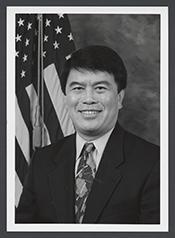
To address the disparities between subgroups of the larger AAPI community, we need Congress to pass the Asian American Pacific Islander Serving Institutions bill, which my colleague from Oregon, Representative David Wu, has introduced in January. This legislation will provide Federal grants to colleges and universities that have an enrollment of undergraduate students that is at least 10 percent AAPI and at least 50 percent of its degree-seeking students receive financial assistance.
As a caucus, we will work to increase the availability of loan assistance, scholarships, and programs to allow AAPI students to attend a higher education institution; to ensure full funding for teachers and bilingual education programs under the No Child Left Behind law to support English language learners; and to support full funding of minority outreach programs for access to higher education such as the TRIO programs to expand services to serve AAPI students.
In health, Mr. Speaker, a common misperception of AAPIs is that as a group, we face fewer health problems than other racial and ethnic groups. But, in fact, AAPI as a group, and specific populations within this group, do experience disparities in health and health care. For example, AAPIs have the highest hepatitis B rates of any racial group in the United States.
This week, health advocates from around the country will be participating in a National Awareness Campaign to bring attention to and educate their communities about prevention of hepatitis B through testing and vaccination. In the United States, 12 million people have been infected at some time in their lives with the hepatitis B virus, and more than 5,000 Americans die from hepatitis B related liver complications each year.
Asian Americans and Pacific Islanders account for more than half of the chronic hepatitis B cases and half of the deaths resulting from chronic hepatitis B infections in the United States. In order to break the silence surrounding this deadly disease and bring awareness to the American people, Congressman Edolphus Towns, Congressman Charlie Dent and I have introduced H.R. 366, which supports the goals and ideals of National Hepatitis B Awareness Week. I hope my colleagues will join me in educating our communities about the dangers of this disease.
AAPIs are also five times more likely to develop cervical and liver cancer than any other ethnic and racial group. Furthermore, according to the Census Bureau, 18 percent of AAPIs went without insurance for the entire year in 2000. This means that the uninsured are not only more likely to go without health care for serious medical conditions, they are also more likely to go without routine care, less likely to have a regular source of care, less likely to use preventive services, and have viewer visits per year.
At the same time, without appropriate language translation services or properly translated materials, limited English proficient immigrants cannot receive adequate care as well as State and Federal benefits for which they may be eligible. In the AAPI community, 76 percent of Hmong Americans, 61 percent of Vietnamese Americans, 62 percent of Korean Americans and 39 percent of Tongans speak limited English. Therefore, eliminating health care disparities in the AAPI community must include data collection, linguistically appropriate and culturally competent services and access to health insurance.
CAPAC has been working with both the Congressional Hispanic and Black Caucuses on the Health Care Equity and Accountability Act to eliminate ethnic and racial health disparities for all of our communities. The act would expand the health care safety net, diversify the health care workforce, combat diseases that disproportionately affect racial and ethnic minorities, emphasize prevention and behavioral health, and promote the collection and dissemination of data and enhance medical research.
Mr. Speaker, I would also like to extend my gratitude to the patriotic men and women serving our country in the military, including the 62,378 AAPIs who are on active duty in the military, and the 7,904 AAPIs who are currently deployed in the global war on terrorism. I also commend and thank the 446,000 AAPI veterans who have fought for our country.
I would like to highlight and honor the Filipino veterans who have not been compensated or recognized for their service, which I believe is a national disservice to these brave veterans. As a country, it is our duty to ensure these veterans have equal access to all of the benefits and treatment that other veterans receive. We believe that our troops should be taken care of when we send them into battle and that they should be given the respect when they return home. Therefore, CAPAC endorses H.R. 760, the Filipino Veterans Equity Act introduced by Representative Bob Filner, who chairs the House Committee on Veterans' Affairs. CAPAC thanks Representaive Filner for his leadership on this issue.
H.R. 760 would do justice by providing the full benefits promised to all Filipino veterans who fought in World War II under the command of the U.S. military. The Filipino Veterans Equity Act would eliminate the disparities and
benefits between some Filipino veterans and restore the honor and dignity they so deserve. With Congressman Filner as the Chair of the Veterans' Affairs Committee, we have a great chance to get this bill to the floor.
There are many firsts among the AAPIs. I am proud of our community's accomplishments, and I would like to recognize many of the AAPIs first in areas of art, film, sports, science, academia and politics, but also emphasize that they should not be the last.
In 1847, Yung Wing, a Chinese American, graduated from Yale University and became the first AAPI to graduate from an American university.
In 1863, William Ah Hang, a Chinese American, became the first AAPI to enlist in the U.S. Navy during the Civil War.
In 1922, Anna May Wong, in her lead role in ``The Toll of the Sea,'' at the age of 17 became the first AAPI female to become a movie star, achieving stardom at a time when prejudice against the Chinese in the United States was rampant.
In 1944, An Wang, a Chinese American who invented the magnetic core memory, revolutionized computing and served as a standard method for memory retrieval and storage. And today we have iPods that are smaller than a deck of cards that can hold up to four gigabytes of information, all coming from this 1944 invention by An Wang.
During World War II, the 442nd Regimental Combat Team of the United States Army, comprised mostly of Japanese Americans, became the most highly decorated unit of its size in the history of the U.S. Army, including 22 Medal of Honor recipients, Senator Daniel Inouye being one of them.
In 1946, Wing F. Ong, a Chinese American of Arizona, became the first AAPI to be elected to State office.
In 1947, Wataru ``Wat'' Misaka became the first ethnic minority and the first AAPI to play in the National Basketball Association for the New York Knicks. How about that?
In 1948, two Californian divers, Dr. Samuel Lee, a Korean American, and Victoria Manalo Draves, a Filipina American, became the first AAPIs to win Olympic gold medals for the U.S.
In 1956, Dalip Singh Saud, an Indian American, became the very fist AAPI to be elected to the U.S. Congress.
In 1959, Hiram Leong Fong, a Chinese American, became the first AAPI to be elected as a United States Senator and is the only AAPI to actively seek the Presidential nomination of a major party.
In 1965, Patsy Takemoto Mink, a Japanese American, becames the first AAPI woman and woman of color elected to the United States Congress.
In 1971, Judge Herbert Choy, late Ninth Circuit Court judge, became the first AAPI to sit on the Federal bench.
In 1985, Haing Ngor, a Cambodian American survivor of the Khmer Rouge regime, became the first AAPI to win an Academy Award for his role in ``The Killing Fields'' movie.
In 1985, Ellison Onizuka, grandson of a Japanese immigrant, became the first AAPI astronaut to reach outer space, and in 1986 died in the space shuttle explosion of the Challenger.
In 2000, Secretary Norman Mineta was confirmed as Secretary of Commerce under President Clinton and became the very first AAPI to hold a cabinet post; then continued his service to America as Secretary of Transportation under President Bush.
In 2001, Secretary Elaine Chao was confirmed as Secretary of Labor under President George W. Bush, becoming the first AAPI female to hold a cabinet position.
Mr. Speaker, the Asian and Pacific Islander American community continues to fight for our civil rights as Americans. Even after the internment of Japanese Americans during World War II, we as a community did not grow embittered or cowed by discrimination; instead, we progressed and moved forward.
I am a proud member of the AAPI community, and I am proud to be one because we continue to serve as positive contributors to our many communities by investing in education, business and cultural opportunities for all Americans.
In closing, this Asian Pacific American Heritage Month we take pride in our history, accomplishments and the promise of our future as we continue to pave the way for a better tomorrow and a better America.