Employment Non-Discrimination Act of 2007
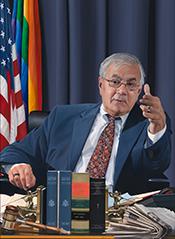 Rep. Barney Frank (D-MA)
Legislative Activity
Stay on top of the latest movement without scrolling through every action
Read the second time. Placed on Senate Legislative Calendar under General Orders. Calendar No. 479.
November 13, 2007
View full timeline
Introduced in House
September 27, 2007
Referred to the Committee on Education and Labor, and in addition to the Committees on House Administration, Oversight and Government Reform, and the Judiciary, for a period to be subsequently determined by the Speaker, in each case for consideration of such provisions as fall within the jurisdiction of the committee concerned.
September 27, 2007
Referred to the Subcommittee on the Constitution, Civil Rights, and Civil Liberties.
October 12, 2007
Committee Consideration and Mark-up Session Held.
October 18, 2007
Ordered to be Reported by the Yeas and Nays: 27 - 21.
October 18, 2007
Reported by the Committee on Education and Labor. H. Rept. 110-406, Part I.
October 22, 2007
Committee on House Administration discharged.
October 22, 2007
Committee on Oversight and Government discharged.
October 22, 2007
Placed on the Union Calendar, Calendar No. 257.
October 22, 2007
Rules Committee Resolution H. Res. 793 Reported to House. Rule provides for consideration of H.R. 3685 with 1 hour of general debate. Previous question shall be considered as ordered without intervening motions except motion to recommit with or without instructions. Measure will be considered read. Specified amendments are in order. All points of order against consideration of the bill are waived except those arising under clause 9 or 10 of rule XXI.
November 5, 2007 • 6:51 PM
Rule H. Res. 793 passed House.
November 7, 2007 • 2:58 PM
Considered under the provisions of rule H. Res. 793. (consideration: CR H13216-13253)
November 7, 2007 • 2:59 PM
Rule provides for consideration of H.R. 3685 with 1 hour of general debate. Previous question shall be considered as ordered without intervening motions except motion to recommit with or without instructions. Measure will be considered read. Specified amendments are in order. All points of order against consideration of the bill are waived except those arising under clause 9 or 10 of rule XXI.
November 7, 2007 • 2:59 PM
The Speaker designated the Honorable Ellen O. Tauscher to act as Chairwoman of the Committee.
November 7, 2007 • 2:59 PM
House resolved itself into the Committee of the Whole House on the state of the Union pursuant to H. Res. 793 and Rule XVIII.
November 7, 2007 • 2:59 PM
GENERAL DEBATE - The Committee of the Whole proceeded with one hour of general debate on H.R. 3685.
November 7, 2007 • 3:00 PM
DEBATE - Pursuant to the provisions of H.Res. 793, the Committee of the Whole proceeded with 20 minutes of debate on the George Miller (CA) amendment.
November 7, 2007 • 4:22 PM
POSTPONED PROCEEDINGS - At the conclusion of debate on the George Miller (CA) amendment, the Chair put the question on adoption of the amendment and by voice vote, announced that the ayes had prevailed. Mr. George Miller (CA) demanded a recorded vote and the Chair postponed further proceeding on the question of adoption of the amendment until later in the legislative day.
November 7, 2007 • 4:45 PM
DEBATE - Pursuant to the provisions of H.Res. 793, the Committee of the Whole proceeded with 10 minutes of debate on the Souder amendment.
November 7, 2007 • 4:45 PM
POSTPONED PROCEEDINGS - At the conclusion of debate on the Souder amendment, the Chair put the question on adoption of the amendment and by voice vote, announced that the ayes had prevailed. Mr. George Miller (CA) demanded a recorded vote and the Chair postponed further proceeding on the question of adoption of the amendment until later in the legislative day.
November 7, 2007 • 4:57 PM
DEBATE - Pursuant to the provisions of H.Res. 793, the Committee of the Whole proceeded with 10 minutes of debate on the Baldwin amendment.
November 7, 2007 • 4:57 PM
UNFINISHED BUSINESS - The Chair announced that the unfinished business was the question of adoption of amendments which had been debated earlier and on which further proceedings had been postponed.
November 7, 2007 • 5:09 PM
The House rose from the Committee of the Whole House on the state of the Union to report H.R. 3685.
November 7, 2007 • 5:43 PM
The previous question was ordered pursuant to the rule. (consideration: CR H13250)
November 7, 2007 • 5:43 PM
The House adopted the amendments en gross as agreed to by the Committee of the Whole House on the state of the Union. (text: CR H13241-13243)
November 7, 2007 • 5:43 PM
Mr. Forbes moved to recommit with instructions to Education and Labor. (consideration: CR H13250-13252; text: CR H13250)
November 7, 2007 • 5:45 PM
DEBATE - The House proceeded with 10 minutes of debate on the Forbes motion to recommit with instructions. The instructions contained in the motion seek to require the bill to be reported back to the House with an amendment to add at the end of section 8(c) that "nothing in this Act may be construed to modify, limit, restrict, or in any way overturn any State or Federal definition of marriage as between one man and one woman, including the use of this Act as a legal predicate in litigation on the issue of marriage."
November 7, 2007 • 5:46 PM
The previous question on the motion to recommit with instructions was ordered without objection. (consideration: CR H13252)
November 7, 2007 • 5:58 PM
On motion to recommit with instructions Failed by the Yeas and Nays: 198 - 222 (Roll no. 1056).
November 7, 2007 • 6:16 PM
Passed/agreed to in House: On passage Passed by the Yeas and Nays: 235 - 184 (Roll no. 1057).
November 7, 2007 • 6:23 PM
On passage Passed by the Yeas and Nays: 235 - 184 (Roll no. 1057).
November 7, 2007 • 6:23 PM
Motion to reconsider laid on the table Agreed to without objection.
November 7, 2007 • 6:23 PM
Received in the Senate. Read the first time. Placed on Senate Legislative Calendar under Read the First Time.
November 8, 2007
Read the second time. Placed on Senate Legislative Calendar under General Orders. Calendar No. 479.
November 13, 2007
Voting History
4 votes recorded • Roll call available
HOUSE
Roll Call AvailableNovember 7, 2007 at 6:23 PM
On Passage
Majority required: 1/2 (50%)
235 - 184
HOUSE
Roll Call AvailableNovember 7, 2007 at 6:16 PM
On Motion to Recommit with Instructions
Majority required: 1/2 (50%)
198 - 222
HOUSE
Roll Call AvailableNovember 7, 2007 at 5:44 PM
On Agreeing to the Amendment
Majority required: 1/2 (50%)
325 - 101
Floor Debate
21 membersWhat members said about H.R. 3685 on the floor
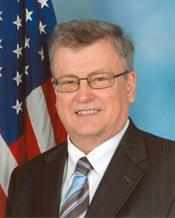


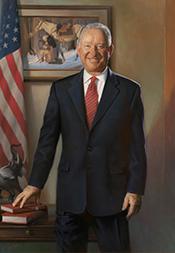
 +16
+16
Floor Debate
21 membersWhat members said about H.R. 3685 on the floor
I thank my distinguished friend from Washington. Rather than comment generally on the bill here, I am going to focus on the rule. I will talk later on the bill itself. As a senior member of the…
Mr. Speaker, I want to thank the gentlewoman from Florida (Ms. Castor) for yielding me the customary 30 minutes, and I yield myself such time as I may consume. (Mr. HASTINGS of Washington asked and…
I thank the Chair, and I yield myself 3 minutes. Madam Chairman and Members of the House, it is disgraceful but true that in much of the United States, it is perfectly legal for employers to fire…
I thank our distinguished ranking member. ``Perceived'' is, in fact, a real problem because many businesses simply won't go to court. Obviously they will negotiate or not bother with it. That's the…
Madam Chairman, I yield myself such time as I may consume. I rise in opposition to H.R. 3685, a proposal fraught with burdensome mandates, litigation traps, and constitutional concerns. This bill…
Show 8 more
Mr. Speaker, by direction of the Committee on Rules, I call up House Resolution 793 and ask for its immediate consideration. Mr. Speaker, for the purpose of debate only, I yield the customary 30…

I thank my chairman and friend for yielding. Madam Chairman, we very often hear people say in this House that they oppose discrimination. Today there's a chance to do something more than just say…

I thank my colleague, the gentleman from California, for yielding the time. Madam Chair, I rise today in opposition to the Employment Non- Discrimination Act, H.R. 3685. As the ranking member of the…
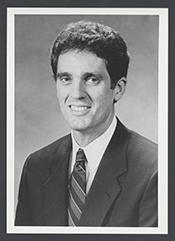
Madam Chairman, I rise to express my concerns about H.R. 3685, the Employment Non-Discrimination Act (ENDA). Unfortunately, this bill goes far beyond simply providing protections against…

Madam Chairman, I thank the gentleman from California, the chairman of the committee, for yielding the time. Madam Chairman, America was regaled today by the President of France, and he talked about…
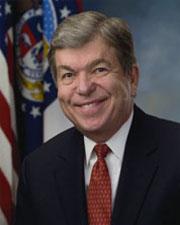
I yield to my good friend, the gentleman from South Carolina, for the purpose of inquiring about next week's schedule. I thank the gentleman for that information. There are really a couple of bills I…
Mr. Speaker, I am impressed by the sincerity of the gentleman from Washington's advocacy on people who are transgender, and I hope that as we contemplate this strategy today people will fully examine…

Mr. Speaker, I rise in strong support of the underlying bill and the Baldwin amendment. ENDA will offer real protections to tens of millions of Americans now. Right now, far too many workers go to…
Show 11 more
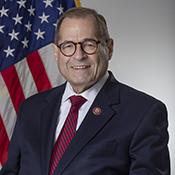
I thank the gentlewoman for yielding. Mr. Speaker, I am committed to the passage of an ENDA that protects lesbian, gay, bisexual and transgender employees. I have been a lead sponsor for proposals…
Madam Chairman, I thank the gentleman for yielding. Madam Chairman, I am in opposition to the bill. It goes without saying that the authors of our Nation's founding document understood better than…

Mr. Speaker, as a strong supporter of inclusive ENDA that provides employment protections for sexual orientation as well as gender identity, I am an original cosponsor of the original ENDA that was…
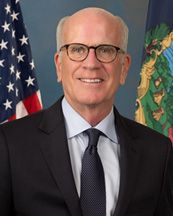
Mr. Speaker, I rise in strong support of H.R. 3685, the Employment Non-Discrimination Act, or ENDA, which prohibits employment discrimination on the basis of sexual orientation. Unfortunately, in 31…
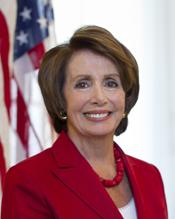
Madam Chairman, I thank the gentleman for yielding and I thank Mr. Andrews of New Jersey for his leadership on this important issue. He knows, as does the chairman of the full committee, Mr. Miller,…
I am grateful for the obscurity of the opposition's argument. I first filed a bill 35 years ago to say that you couldn't fire someone because he was gay or she was a lesbian, and at the time people…

Madam Chairman, at the outset, I'd like to note that I did not vote for this bill in Committee, not because I don't support its goals--I do--but because I strongly believe that we could have done…

Madam Chairman, my time is short. I'll get right to some of these issues. I just have a copy of the bill here. Under the definition of ``religious organization,'' it actually excludes by definition…
Madam Chairman, I rise in strong support of H.R. 3685, the Employment Non-Discrimination Act. This important measure demonstrates Congress's commitment to combating prejudice and ensures that…

Madam Chairman, today, the House will consider H.R. 3685, the Employment Non-Discrimination Act of 2007. In essence, the bill would expand the protections of Title VII of the Civil Rights Act that…

Madam Chairman, I thank the chairman of the committee. I rise in support of the Miller-Stupak amendment to the Employment Non-Discrimination Act of 2007. This amendment makes two important…
Bill Text
4 versions available
        [Congressional Bills 110th Congress]
[From the U.S. Government Publishing Office]
[H.R. 3685 Placed on Calendar Senate (PCS)]

Calendar No. 479
110th CONGRESS
1st Session
H. R. 3685

_______________________________________________________________________

IN THE SENATE OF THE UNITED STATES

November 8, 2007

Received; read the first time

November 13, 2007

Read the second time and placed on the calendar

_______________________________________________________________________

AN ACT

To prohibit employment discrimination on the basis of sexual
orientation.

Be it enacted by the Senate and House of Representatives of the
United States of America in Congress assembled,

SECTION 1. SHORT TITLE.

This Act may be cited as the ``Employment Non-Discrimination Act of
2007''.

SEC. 2. PURPOSES.

The purposes of this Act are--
(1) to provide a comprehensive Federal prohibition of
employment discrimination on the basis of sexual orientation;
(2) to provide meaningful and effective remedies for
employment discrimination on the basis of sexual orientation;
and
(3) to invoke congressional powers, including the powers to
enforce the 14th amendment to the Constitution, and to regulate
interstate commerce and provide for the general welfare
pursuant to section 8 of article I of the Constitution, in
order to prohibit employment discrimination on the basis of
sexual orientation.

SEC. 3. DEFINITIONS.

(a) In General.--In this Act:
(1) Commission.--The term ``Commission'' means the Equal
Employment Opportunity Commission.
(2) Covered entity.--The term ``covered entity'' means an
employer, employment agency, labor organization, or joint
labor-management committee.
(3) Employee.--
(A) In general.--the term ``employee'' means--
(i) an employee as defined in section
701(f) of the Civil Rights Act of 1964 (42
U.S.C. 2000e(f);
(ii) a Presidential appointee or State
employee to which section 302(a)(1) of the
Government Employee Rights Act of 1991 (42
U.S.C. 2000e-16(a)(1) applies;
(iii) a covered employee, as defined in
section 101 of the Congressional Accountability
Act of 1995 (2 U.S.C. 1301) or section 411(c)
of title 3, United States Code; or
(iv) an employee or applicant to which
section 717(a) of the Civil Rights Act of 1964
(42 U.S.C. 2000e-16(a)) applies.
(B) Exception.--The provisions of this Act that
apply to an employee or individual shall not apply to a
volunteer who receives no compensation.
(4) Employer.--The term ``employer'' means--
(A) a person engaged in an industry affecting
commerce (as defined in section (701)(h) of the Civil
Rights Act of 1964 (42 U.S.C. 2000e(h)) who has 15 or
more employees (as defined in subparagraphs (A)(i) and
(B) of paragraph (3)) for each working day in each of
20 or more calendar weeks in the current or preceding
calendar year, and any agent of such a person, but does
not include a bona fide private membership club (other
than a labor organization) that is exempt from taxation
under section 501(c) of the Internal Revenue Code of
1986;
(B) an employing authority to which section
302(a)(1) of the Government Employee Rights Act of 1991
applies;
(C) an employing office, as defined in section 101
of the Congressional Accountability Act of 1995 or
section 411(c) of title 3, United States Code; or
(D) an entity to which section 717(a) of the Civil
Rights Act of 1964 applies.
(5) Employment agency.--The term ``employment agency'' has
the meaning given the term in section 701(c) of the Civil
Rights Act of 1964 (42 U.S.C. 2000e(c)).
(6) Labor organization.--The term ``labor organization''
has the meaning given the term in section 701(d) of the Civil
Rights Act of 1964 (42 U.S.C. 2000e(d)).
(7) Person.--The term ``person'' has the meaning given the
term in section 701(a) of the Civil Rights Act of 1964 (42
U.S.C. 2000e(a)).
(8) Sexual orientation.--The term ``sexual orientation''
means homosexuality, heterosexuality, or bisexuality.
(9) State.--The term ``State'' has the meaning given the
term in section 701(i) of the Civil Rights Act of 1964 (42
U.S.C. 2000e(i)).
(b) Application of Definitions.--For purposes of this section, a
reference in section 701 of the Civil Rights Act of 1964--
(1) to an employee or an employer shall be considered to
refer to an employee (as defined in paragraph (3)) or an
employer (as defined in paragraph (4)), respectively, except as
provided in paragraph (2) below; and
(2) to an employer in subsection (f) of that section shall
be considered to refer to an employer (as defined in paragraph
(4)(A)).

SEC. 4. EMPLOYMENT DISCRIMINATION PROHIBITED.

(a) Employer Practices.--It shall be an unlawful employment
practice for an employer--
(1) to fail or refuse to hire or to discharge any
individual, or otherwise discriminate against any individual
with respect to the compensation, terms, conditions, or
privileges of employment of the individual, because of such
individual's actual or perceived sexual orientation; or
(2) to limit, segregate, or classify the employees or
applicants for employment of the employer in any way that would
deprive or tend to deprive any individual of employment or
otherwise adversely affect the status of the individual as an
employee, because of such individual's actual or perceived
sexual orientation.
(b) Employment Agency Practices.--It shall be an unlawful
employment practice for an employment agency to fail or refuse to refer
for employment, or otherwise to discriminate against, any individual
because of the actual or perceived sexual orientation of the individual
or to classify or refer for employment any individual on the basis of
the actual or perceived sexual orientation of the individual.
(c) Labor Organization Practices.--It shall be an unlawful
employment practice for a labor organization--
(1) to exclude or to expel from its membership, or
otherwise to discriminate against, any individual because of
the actual or perceived sexual orientation of the individual;
(2) to limit, segregate, or classify its membership or
applicants for membership, or to classify or fail or refuse to
refer for employment any individual, in any way that would
deprive or tend to deprive any individual of employment, or
would limit such employment or otherwise adversely affect the
status of the individual as an employee or as an applicant for
employment because of such individual's actual or perceived
sexual orientation; or
(3) to cause or attempt to cause an employer to
discriminate against an individual in violation of this
section.
(d) Training Programs.--It shall be an unlawful employment practice
for any employer, labor organization, or joint labor-management
committee controlling apprenticeship or other training or retraining,
including on-the-job training programs, to discriminate against any
individual because of the actual or perceived sexual orientation of the
individual in admission to, or employment in, any program established
to provide apprenticeship or other training.
(e) Association.--An unlawful employment practice described in any
of subsections (a) through (d) shall be considered to include an action
described in that subsection, taken against an individual based on the
actual or perceived sexual orientation of a person with whom the
individual associates or has associated.
(f) No Preferential Treatment or Quotas.--Nothing in this Act shall
be construed or interpreted to require or permit--
(1) any covered entity to grant preferential treatment to
any individual or to any group because of the actual or
perceived sexual orientation of such individual or group on
account of an imbalance which may exist with respect to the
total number or percentage of persons of any actual or
perceived sexual orientation employed by any employer, referred
or classified for employment by any employment agency or labor
organization, admitted to membership or classified by any labor
organization, or admitted to, or employed in, any
apprenticeship or other training program, in comparison with
the total number or percentage of persons of such actual or
perceived sexual orientation in any community, State, section,
or other area, or in the available work force in any community,
State, section, or other area; or
(2) the adoption or implementation by a covered entity of a
quota on the basis of actual or perceived sexual orientation.
(g) Disparate Impact.--Only disparate treatment claims may be
brought under this Act.

SEC. 5. RETALIATION PROHIBITED.

It shall be an unlawful employment practice for a covered entity to
discriminate against an individual because such individual (1) opposed
any practice made an unlawful employment practice by this Act; or (2)
made a charge, testified, assisted, or participated in any manner in an
investigation, proceeding, or hearing under this Act.

SEC. 6. EXEMPTION FOR RELIGIOUS ORGANIZATIONS.

This Act shall not apply to a corporation, association, educational
institution, or society that is exempt from the religious
discrimination provisions of title VII of the Civil Rights Acts of 1964
pursuant to section 702(a) or 703(e)(2) of such Act (42 U.S.C. 2000e-
1(a); 2000e-2(e)(2)).

SEC. 7. NONAPPLICATION TO MEMBERS OF THE ARMED FORCES; VETERANS'
PREFERENCES.

(a) Armed Forces.--
(1) Employment.--In this Act, the term ``employment'' does
not apply to the relationship between the United States and
members of the Armed Forces.
(2) Armed forces.--In paragraph (1) the term ``Armed
Forces'' means the Army, Navy, Air Force, Marine Corps, and
Coast Guard.
(b) Veterans' Preferences.--This title does not repeal or modify
any Federal, State, territorial, or local law creating a special right
or preference concerning employment for a veteran.

SEC. 8. CONSTRUCTION.

(a) Employer Rules and Policies.--
(1) In general.--Nothing in this Act shall be construed to
prohibit a covered entity from enforcing rules and policies
that do not intentionally circumvent the purposes of this Act,
if the rules or policies are designed for, and uniformly
applied to, all individuals regardless of actual or perceived
sexual orientation.
(2) Sexual harassment.--Nothing in this Act shall be
construed to limit a covered entity from taking adverse action
against an individual because of a charge of sexual harassment
against that individual, provided that rules and policies on
sexual harassment, including when adverse action is taken, are
designed for, and uniformly applied to, all individuals
regardless of actual or perceived sexual orientation.
(b) Employee Benefits.--Nothing in this Act shall be construed to
require a covered entity to treat a couple who are not married in the
same manner as the covered entity treats a married couple for purposes
of employee benefits.
(c) Definition of Marriage.--As used in this Act, the term
``married'' or ``marry'' refer to marriage as such term is defined in
section 7 of title I, United States Code (referred to as the Defense of
Marriage Act).

SEC. 9. COLLECTION OF STATISTICS PROHIBITED.

The Commission shall not collect statistics on actual or perceived
sexual orientation from covered entities, or compel the collection of
such statistics by covered entities.

SEC. 10. ENFORCEMENT.

(a) Enforcement Powers.--With respect to the administration and
enforcement of this Act in the case of a claim alleged by an individual
for a violation of this Act--
(1) the Commission shall have the same powers as the
Commission has to administer and enforce--
(A) title VII of the Civil Rights Act of 1964 (42
U.S.C. 2000e et seq.); or
(B) sections 302 and 304 of the Government Employee
Rights Act of 1991 (42 U.S.C. 2000e-16b and 2000e-16c),
in the case of a claim alleged by such individual for a
violation of such title, or of section 302(a)(1) of the
Government Employee Rights Act of 1991 (42 U.S.C. 2000e-
16b(a)(1)), respectively;
(2) the Librarian of Congress shall have the same powers as
the Librarian of Congress has to administer and enforce title
VII of the Civil Rights Act of 1964 (42 U.S.C. 2000e et seq.)
in the case of a claim alleged by such individual for a
violation of such title;
(3) the Board (as defined in section 101 of the
Congressional Accountability Act of 1995 (2 U.S.C. 1301)) shall
have the same powers as the Board has to administer and enforce
the Congressional Accountability Act of 1995 (2 U.S.C. 1301 et
seq.) in the case of a claim alleged by such individual for a
violation of section 201(a)(1) of such Act (2 U.S.C.
1311(a)(1));
(4) the Attorney General shall have the same powers as the
Attorney General has to administer and enforce--
(A) title VII of the Civil Rights Act of 1964 (42
U.S.C. 2000e et seq.); or
(B) sections 302 and 304 of the Government Employee
Rights Act of 1991 (42 U.S.C. 2000e-16b and 2000e-16c);
in the case of a claim alleged by such individual for a
violation of such title, or of section 302(a)(1) of the
Government Employee Rights Act of 1991 (42 U.S.C. 2000e-
16b(a)(1)), respectively;
(5) the President, the Commission, and the Merit Systems
Protection Board shall have the same powers as the President,
the Commission, and the Board, respectively, have to administer
and enforce chapter 5 of title 3, United States Code, in the
case of a claim alleged by such individual for a violation of
section 411 of such title; and
(6) a court of the United States shall have the same
jurisdiction and powers as the court has to enforce--
(A) title VII of the Civil Rights Act of 1964 (42
U.S.C. 2000e et seq.) in the case of a claim alleged by
such individual for a violation of such title;
(B) sections 302 and 304 of the Government Employee
Rights Act of 1991 (42 U.S.C. 2000e-16b and 2000e-16c)
in the case of a claim alleged by such individual for a
violation of section 302(a)(1) of such Act (42 U.S.C.
2000e-16b(a)(1));
(C) the Congressional Accountability Act of 1995 (2
U.S.C. 1301 et seq.) in the case of a claim alleged by
such individual for a violation of section 201(a)(1) of
such Act (2 U.S.C. 1311(a)(1)); and
(D) chapter 5 of title 3, United States Code, in
the case of a claim alleged by such individual for a
violation of section 411 of such title.
(b) Procedures and Remedies.--The procedures and remedies
applicable to a claim alleged by an individual for a violation of this
Act are--
(1) the procedures and remedies applicable for a violation
of title VII of the Civil Rights Act of 1964 (42 U.S.C. 2000e
et seq.) in the case of a claim alleged by such individual for
a violation of such title;
(2) the procedures and remedies applicable for a violation
of section 302(a)(1) of the Government Employee Rights Act of
1991 (2 U.S.C. 1202(a)(1)) in the case of a claim alleged by
such individual for a violation of such section;
(3) the procedures and remedies applicable for a violation
of section 201(a)(1) of the Congressional Accountability Act of
1995 (2 U.S.C. 1311(a)(1)) in the case of a claim alleged by
such individual for a violation of such section; and
(4) the procedures and remedies applicable for a violation
of section 411 of title 3, United States Code, in the case of a
claim alleged by such individual for a violation of such
section.
(c) Other Applicable Provisions.--With respect to a claim alleged
by a covered employee (as defined in section 101 of the Congressional
Accountability Act of 1995 (2 U.S.C. 1301)) for a violation of this
Act, title III of the Congressional Accountability Act of 1995 (2
U.S.C. 1381 et seq.) shall apply in the same manner as such title
applies with respect to a claim alleged by such a covered employee for
a violation of section 201(a)(1) of such Act (2 U.S.C. 1311(a)(1)).

SEC. 11. STATE AND FEDERAL IMMUNITY.

(a) State Immunity.--A State shall not be immune under the 11th
amendment to the Constitution from a suit described in subsection (b)
and brought in a Federal court of competent jurisdiction for a
violation of this Act.
(b) Remedies for State Employees.--
(1) In general.--
(A) Waiver.--A State's receipt or use of Federal
financial assistance for any program or activity of a
State shall constitute a waiver of sovereign immunity,
under the 11th amendment to the Constitution or
otherwise, to a suit brought by an employee or
applicant for employment of that program or activity
under this Act for a remedy authorized under subsection
(c).
(B) Definition.--In this paragraph, the term
``program or activity'' has the meaning given the term
in section 606 of the Civil Rights Act of 1964 (42
U.S.C. 2000d-4a).
(2) Officials.--An official of a State may be sued in the
official capacity of the official by any employee or applicant
for employment who has complied with the applicable procedures
of section 10, for equitable relief that is authorized under
this Act. In such a suit the court may award to the prevailing
party those costs authorized by section 722 of the Revised
Statutes of the United States (42 U.S.C. 1988).
(3) Effective date.--With respect to a particular program
or activity, paragraphs (1) and (2) apply to conduct occurring
on or after the day, after the date of enactment of this Act,
on which a State first receives or uses Federal financial
assistance for that program or activity.
(c) Remedies Against the United States and the States.--
Notwithstanding any other provision of this Act, in an action or
administrative proceeding against the United States or a State for a
violation of this Act, remedies (including remedies at law and in
equity, and interest) are available for the violation to the same
extent as the remedies are available for a violation of title VII of
the Civil Rights Act of 1964 (42 U.S.C. 2000e et seq.) by a private
entity, except that--
(1) punitive damages are not available; and
(2) compensatory damages are available to the extent
specified in section 1977A(b) of the Revised Statutes (42
U.S.C. 1981a(b)).

SEC. 12. ATTORNEYS' FEES.

Notwithstanding any other provision of this Act, in an action or
administrative proceeding for a violation of this Act, an entity
described in section 10(a) (other than paragraph (4) of such section),
in the discretion of the entity, may allow the prevailing party, other
than the Commission or the United States, a reasonable attorney's fee
(including expert fees) as part of the costs. The Commission and the
United States shall be liable for the costs to the same extent as a
private person.

SEC. 13. POSTING NOTICES.

A covered entity who is required to post notices described in
section 711 of the Civil Rights Act of 1964 (42 U.S.C. 2000e-10) shall
post notices for employees, applicants for employment, and members, to
whom the provisions specified in section 10(b) apply, that describe the
applicable provisions of this Act in the manner prescribed by, and
subject to the penalty provided under, section 711 of the Civil Rights
Act of 1964.

SEC. 14. REGULATIONS.

(a) In General.--Except as provided in subsections (b), (c), and
(d), the Commission shall have authority to issue regulations to carry
out this Act.
(b) Librarian of Congress.--The Librarian of Congress shall have
authority to issue regulations to carry out this Act with respect to
employees and applicants for employment of the Library of Congress.
(c) Board.--The Board referred to in section 10(a)(3) shall have
authority to issue regulations to carry out this Act, in accordance
with section 304 of the Congressional Accountability Act of 1995 (2
U.S.C. 1384), with respect to covered employees, as defined in section
101 of such Act (2 U.S.C. 1301).
(d) President.--The President shall have authority to issue
regulations to carry out this Act with respect to covered employees, as
defined in section 411(c) of title 3, United States Code.

SEC. 15. RELATIONSHIP TO OTHER LAWS.

This Act shall not invalidate or limit the rights, remedies, or
procedures available to an individual claiming discrimination
prohibited under any other Federal law or regulation or any law or
regulation of a State or political subdivision of a State.

SEC. 16. SEVERABILITY.

If any provision of this Act, or the application of the provision
to any person or circumstance, is held to be invalid, the remainder of
this Act and the application of the provision to any other person or
circumstances shall not be affected by the invalidity.

SEC. 17. EFFECTIVE DATE.

This Act shall take effect 6 months after the date of the enactment
of this Act and shall not apply to conduct occurring before the
effective date.

Passed the House of Representatives November 7, 2007.

Attest:

LORRAINE C. MILLER,

Clerk.
Calendar No. 479

110th CONGRESS

1st Session

H. R. 3685

_______________________________________________________________________

AN ACT

To prohibit employment discrimination on the basis of sexual
orientation.

_______________________________________________________________________

November 13, 2007

Read the second time and placed on the calendar