SAFE Act of 2007
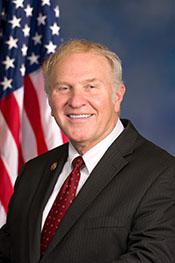
 Rep. Nick Lampson (D-TX)
Legislative Activity
Stay on top of the latest movement without scrolling through every action
Received in the Senate and Read twice and referred to the Committee on the Judiciary.
December 6, 2007
View full timeline
Introduced in House
October 10, 2007
Referred to the House Committee on the Judiciary.
October 10, 2007
Referred to the Subcommittee on Crime, Terrorism, and Homeland Security.
November 2, 2007
Mr. Conyers moved to suspend the rules and pass the bill, as amended.
December 5, 2007 • 2:04 PM
Considered under suspension of the rules. (consideration: CR H14190-14193, H14224-14225)
December 5, 2007 • 2:04 PM
DEBATE - The House proceeded with forty minutes of debate on H.R. 3791.
December 5, 2007 • 2:04 PM
At the conclusion of debate, the Yeas and Nays were demanded and ordered. Pursuant to the provisions of clause 8, rule XX, the Chair announced that further proceedings on the motion would be postponed.
December 5, 2007 • 2:20 PM
Passed/agreed to in House: On motion to suspend the rules and pass the bill, as amended Agreed to by the Yeas and Nays: (2/3 required): 409 - 2 (Roll no. 1131).(text: CR H14190-14192)
December 5, 2007 • 5:43 PM
On motion to suspend the rules and pass the bill, as amended Agreed to by the Yeas and Nays: (2/3 required): 409 - 2 (Roll no. 1131). (text: CR H14190-14192)
December 5, 2007 • 5:43 PM
Motion to reconsider laid on the table Agreed to without objection.
December 5, 2007 • 5:43 PM
Received in the Senate and Read twice and referred to the Committee on the Judiciary.
December 6, 2007
Voting History
1 vote recorded • Roll call available
Floor Debate
9 membersWhat members said about H.R. 3791 on the floor


 +4
+4
Floor Debate
9 membersWhat members said about H.R. 3791 on the floor
Mr. Speaker, I rise today to urge my colleagues to support Senate bill 1738, the PROTECT Our Children Act of 2008. Mr. Speaker, I don't have to tell you that children today are growing up in a…
Mr. Speaker, I thank the honorable Mr. Conyers from Michigan for yielding me the time and for the great work that you've done on the Judiciary Committee and particularly on this particular issue, and…
Mr. Speaker, I stand today in support of the ``Protect our Children Act,'' a bill that will authorize funding for law enforcement and the Department of Justice to fight the sexual exploitation of…
Thank you, Mr. Chairman, for allowing me to speak and also for the good work that has been done on this bill and everything that you and your committee has done. Mr. Speaker, I do rise today to ask…
Mr. Speaker, I rise in support of H.R. 3791, the Securing Adolescents From Exploitation-Online Act of 2007. The bill's author, the distinguished gentleman from Texas (Mr. Lampson) and I have worked…
Show 7 more
Madam Speaker, on Wednesday December 5, 2007 and Thursday, December 6, 2007, I was unavoidably detained due to a prior obligation. That prior obligation was to join hundreds of Oklahomans for the…

Mr. Speaker, I yield myself such time as I may consume. Mr. Speaker, first of all, credit goes to the gentlewoman from Florida, Congresswoman Wasserman Schultz, for introducing this bill in the House…

Mr. Speaker, I move to suspend the rules and pass the bill (H.R. 3791) to modernize and expand the reporting requirements relating to child pornography, to expand cooperation in combating child…

Mr. Speaker, I'd like to, at this time yield so much time as he may consume to the gentleman from Ohio, Congressman Chabot, who was an original cosponsor of this legislation. Mr. Speaker, I yield…
Mr. Speaker, I rise in strong support of 1738, the PROTECT Act, and in particular those provisions taken from the Securing Adolescents From Exploitation-Online Act of 2107, which passed the House…

Mr. President, today I joined as a cosponsor of two bills to protect children: S. 1738, the Combating Child Exploitation Act; and S. 519, the Securing Adolescents from Exploitation-Online--…
Mr. Speaker, I move to suspend the rules and pass the Senate bill (S. 1738) to establish a Special Counsel for Child Exploitation Prevention and Interdiction within the Office of the Deputy Attorney…
Bill Text
3 versions available
        [Congressional Bills 110th Congress]
[From the U.S. Government Publishing Office]
[H.R. 3791 Referred in Senate (RFS)]

1st Session
H. R. 3791

_______________________________________________________________________

IN THE SENATE OF THE UNITED STATES

December 6, 2007

Received; read twice and referred to the Committee on the Judiciary

_______________________________________________________________________

AN ACT

To modernize and expand the reporting requirements relating to child
pornography, to expand cooperation in combating child pornography, and
for other purposes.

Be it enacted by the Senate and House of Representatives of the
United States of America in Congress assembled,

SECTION 1. SHORT TITLE.

This Act may be cited as the ``Securing Adolescents From
Exploitation-Online Act of 2007'' or the ``SAFE Act of 2007''.

SEC. 2. REPORTING REQUIREMENTS OF ELECTRONIC COMMUNICATION SERVICE
PROVIDERS AND REMOTE COMPUTING SERVICE PROVIDERS.

(a) In General.--Chapter 110 of title 18, United States Code, is
amended by inserting after section 2258 the following:

``SEC. 2258A. REPORTING REQUIREMENTS OF ELECTRONIC COMMUNICATION
SERVICE PROVIDERS AND REMOTE COMPUTING SERVICE PROVIDERS.

``(a) Duty To Report.--
``(1) In general.--Whoever, while engaged in providing an
electronic communication service or a remote computing service
to the public through a facility or means of interstate or
foreign commerce, obtains actual knowledge of any facts or
circumstances described in paragraph (2) shall, as soon as
reasonably possible--
``(A) complete and maintain with current
information a registration with the CyberTipline of the
National Center for Missing and Exploited Children, or
any successor to the CyberTipline operated by such
center, by providing the mailing address, telephone
number, facsimile number, electronic mail address of,
and individual point of contact for, such electronic
communication service provider or remote computing
service provider; and
``(B) make a report of such facts or circumstances
to the CyberTipline, or any successor to the
CyberTipline operated by such center.
``(2) Facts or circumstances.--The facts or circumstances
described in this paragraph are any facts or circumstances that
appear to indicate a violation of--
``(A) section 2251, 2251A, 2252, 2252A, 2252B, or
2260 that involves child pornography; or
``(B) section 1466A.
``(b) Contents of Report.--To the extent available to an electronic
communication service provider or a remote computing service provider,
each report under subsection (a)(1) shall include the following
information:
``(1) Information about the involved individual.--
Information relating to the Internet identity of any individual
who appears to have violated a Federal law in the manner
described in subsection (a)(2), which shall, to the extent
reasonably practicable, include the electronic mail address,
website address, uniform resource locator, or any other
identifying information, including self-reported identifying
information.
``(2) Historical reference.--Information relating to when
any apparent child pornography was uploaded, transmitted,
reported to, or discovered by the electronic communication
service provider or remote computing service provider, as the
case may be, including a date and time stamp and time zone.
``(3) Geographic location information.--Information
relating to the geographic location of the involved individual,
hosting website, or uniform resource locator, which shall
include the Internet Protocol Address or verified billing
address, or, if not reasonably available, at least one form of
geographic identifying information, including area code or zip
code. The information shall also include any self-reported
geographic information.
``(4) Images of apparent child pornography.--Any image of
any apparent child pornography relating to the incident such
report is regarding.
``(5) Commingled images.--Any images, data, or other
digital files (collectively referred to as `digital files')
which are commingled or interspersed among the images of
apparent child pornography. If it would impose an undue
hardship to provide these commingled digital files as part of
the report, because of the volume of the digital files or for
other reasons, the reporting company shall, in lieu of
providing those digital files, inform the CyberTipline of the
existence of such digital files, and retain those digital files
as if they were part of the report as required pursuant to
subsection (h).
``(c) Forwarding of Report to Law Enforcement.--
``(1) In general.--The National Center for Missing and
Exploited Children shall forward each report made under
subsection (a)(1) to any appropriate law enforcement agency
designated by the Attorney General under subsection (d)(2).
``(2) State and local law enforcement.--The National Center
for Missing and Exploited Children may forward any report made
under subsection (a)(1) to an appropriate official of a State
or political subdivision of a State for the purpose of
enforcing State criminal law.
``(3) Foreign law enforcement.--The National Center for
Missing and Exploited Children may forward any report made
under subsection (a)(1) to any appropriate foreign law
enforcement agency designated by the Attorney General under
subsection (d)(3), subject to the conditions established by the
Attorney General under subsection (d)(3).
``(d) Attorney General Responsibilities.--
``(1) In general.--The Attorney General shall enforce this
section.
``(2) Designation of federal agencies.--The Attorney
General shall designate promptly the Federal law enforcement
agency or agencies to which a report shall be forwarded under
subsection (c)(1).
``(3) Designation of foreign agencies.--The Attorney
General shall promptly--
``(A) designate the foreign law enforcement
agencies to which a report may be forwarded under
subsection (c)(3);
``(B) establish the conditions under which such a
report may be forwarded to such agencies; and
``(C) develop a process for foreign law enforcement
agencies to request assistance from Federal law
enforcement agencies in obtaining evidence related to a
report referred under subsection (c)(3).
``(e) Failure To Report.--An electronic communication service
provider or remote computing service provider that knowingly and
willfully fails to make a report required under subsection (a)(1) shall
be fined--
``(1) in the case of an initial knowing and willful failure
to make a report, not more than $150,000; and
``(2) in the case of any second or subsequent knowing and
willful failure to make a report, not more than $300,000.
``(f) Protection of Privacy.--Nothing in this section shall be
construed to require an electronic communication service provider or a
remote computing service provider to--
``(1) monitor any user, subscriber, or customer of that
provider;
``(2) monitor the content of any communication of any
person described in paragraph (1); or
``(3) affirmatively seek facts or circumstances described
in subsection (a)(2).
``(g) Conditions of Disclosure Information Contained Within
Report.--
``(1) In general.--Except as provided in paragraph (2), a
law enforcement agency that receives a report under subsection
(c) shall not disclose any information contained in that
report.
``(2) Permitted disclosures.--A law enforcement agency may
disclose information in a report received under subsection
(c)--
``(A) to an attorney for the government for use in
the performance of the official duties of that
attorney;
``(B) to such officers and employees of that law
enforcement agency, as may be necessary in the
performance of their investigative and recordkeeping
functions;
``(C) to such other government personnel (including
personnel of a State or subdivision of a State) as are
determined to be necessary by an attorney for the
government to assist the attorney in the performance of
the official duties of the attorney in enforcing
Federal criminal law;
``(D) if the report discloses a violation of State
criminal law, to an appropriate official of a State or
subdivision of a State for the purpose of enforcing
such State law;
``(E) to a defendant in a criminal case or the
attorney for that defendant, to the extent the
information relates to a criminal charge pending
against that defendant;
``(F) to an electronic communication service
provider or remote computing provider if necessary to
facilitate response to legal process issued in
connection to that report. The electronic communication
service provider or remote computing service provider
shall be prohibited from disclosing the contents of
that report to any person, except as necessary to
respond to the legal process; and
``(G) as ordered by a court upon a showing of good
cause and pursuant to any protective orders or other
conditions that the court may impose.
``(h) Evidence Preservation.--
``(1) In general.--For the purposes of this section, the
notification to an electronic communication service provider or
a remote computing service provider by the CyberTipline of
receipt of a report under subsection (a)(1) shall be treated as
notice to preserve, as if such notice was made pursuant to
section 2703(f).
``(2) Preservation of report.--Pursuant to subsection
(h)(1), an electronic communication service provider or a
remote computing service shall preserve the contents of the
report provided pursuant to subsection (b) as well as the
information in subsection (c)(2) of section 2703 pertaining to
the involved individual for not less than 180 days after such
notification by the CyberTipline.
``(3) Authorities and duties not affected.--Nothing in this
section shall be construed as replacing, amending, or otherwise
interfering with the authorities and duties under section 2703.

``SEC. 2258B. LIMITED LIABILITY FOR ELECTRONIC COMMUNICATION SERVICE
PROVIDERS, REMOTE COMPUTING SERVICE PROVIDERS, OR DOMAIN
NAME REGISTRAR.

``(a) In General.--Except as provided in subsections (b) and (c), a
civil claim or criminal charge against an electronic communication
service provider, a remote computing service provider, or domain name
registrar, including any director, officer, employee, or agent of such
electronic communication service provider, remote computing service
provider, or domain name registrar arising from the performance of the
reporting responsibilities of such electronic communication service
provider, remote computing service provider, or domain name registrar
under this section, section 2258A, or section 2258C may not be brought
in any Federal or State court.
``(b) Intentional, Reckless, or Other Misconduct.--Subsection (a)
shall not apply to a claim if the electronic communication service
provider, remote computing service provider, or domain name registrar,
or a director, officer, employee, or agent of that electronic
communication service provider, remote computing service provider, or
domain name registrar--
``(1) engaged in intentional misconduct; or
``(2) acted, or failed to act--
``(A) with actual malice;
``(B) with reckless disregard to a substantial risk
of causing injury without legal justification; or
``(C) for a purpose unrelated to the performance of
any responsibility or function under this section,
section 2258A, or section 2258C.
``(c) Ordinary Business Activities.--Subsection (a) shall not apply
to an act or omission relating to an ordinary business activity of an
electronic communication service provider, a remote computing service
provider, or domain name registrar, including general administration or
operations, the use of motor vehicles, or personnel management.
``(d) Minimizing Access.--An electronic communication service
provider, a remote computing service provider, and domain name
registrar shall--
``(1) minimize the number of employees that are provided
access to any image provided under section 2258A or 2258C; and
``(2) ensure that any such image is permanently destroyed,
upon notification from a law enforcement agency.

``SEC. 2258C. USE OF IMAGES FROM THE CYBERTIPLINE TO COMBAT CHILD
PORNOGRAPHY.

``(a) In General.--The National Center for Missing and Exploited
Children is authorized to provide elements relating to any image
reported to its CyberTipline to an electronic communication service
provider or a remote computing service provider for the sole and
exclusive purpose of permitting that electronic communication service
provider or remote computing service provider to stop the further
transmission of images. Such elements may include unique identifiers
associated with a specific image, Internet location of images, and
other technological elements that can be used to identify and stop the
transmission of child pornography.
``(b) Use by Electronic Communication Service Providers and Remote
Computing Service Providers.--Any electronic communication service
provider or remote computing service provider that receives elements
relating to an image from the National Center for Missing and Exploited
Children under this section may use such information only for the
purposes described in this section, provided that such use shall not
relieve that electronic communication service provider or remote
computing service provider from its reporting obligations under section
2258A.

``SEC. 2258D. LIMITED LIABILITY FOR THE NATIONAL CENTER FOR MISSING AND
EXPLOITED CHILDREN.

``(a) In General.--Except as provided in subsections (b) and (c), a
civil claim or criminal charge against the National Center for Missing
and Exploited Children, including any director, officer, employee, or
agent of such center, arising from the performance of the CyberTipline
responsibilities or functions of such center, as described in this
section, section 2258A or 2258C of this title, or section 404 of the
Missing Children's Assistance Act (42 U.S.C. 5773), or from the effort
of such center to identify child victims may not be brought in any
Federal or State court.
``(b) Intentional, Reckless, or Other Misconduct.--Subsection (a)
shall not apply to a claim or charge if the National Center for Missing
and Exploited Children, or a director, officer, employee, or agent of
such center--
``(1) engaged in intentional misconduct; or
``(2) acted, or failed to act--
``(A) with actual malice;
``(B) with reckless disregard to a substantial risk
of causing injury without legal justification; or
``(C) for a purpose unrelated to the performance of
any responsibility or function under this section,
section 2258A or 2258C of this title, or section 404 of
the Missing Children's Assistance Act (42 U.S.C. 5773).
``(c) Ordinary Business Activities.--Subsection (a) shall not apply
to an act or omission relating to an ordinary business activity,
including general administration or operations, the use of motor
vehicles, or personnel management.
``(d) Minimizing Access.--The National Center for Missing and
Exploited Children shall--
``(1) minimize the number of employees that are provided
access to any image provided under section 2258A; and
``(2) ensure that any such image is permanently destroyed
upon notification from a law enforcement agency.

``SEC. 2258E. DEFINITIONS.

``In sections 2258A through 2258D--
``(1) the terms `attorney for the government' and `State'
have the meanings given those terms in rule 1 of the Federal
Rules of Criminal Procedure;
``(2) the term `electronic communication service' has the
meaning given that term in section 2510;
``(3) the term `electronic mail address' has the meaning
given that term in section 3 of the CAN-SPAM Act of 2003 (15
U.S.C. 7702);
``(4) the term `Internet' has the meaning given that term
in section 1101 of the Internet Tax Freedom Act (47 U.S.C. 151
note);
``(5) the term `remote computing service' has the meaning
given that term in section 2711; and
``(6) the term `website' means any collection of material
placed in a computer server-based file archive so that it is
publicly accessible, over the Internet, using hypertext
transfer protocol or any successor protocol.''.
(b) Conforming Amendments.--
(1) Repeal of superceded provision.--Section 227 of the
Crime Control Act of 1990 (42 U.S.C. 13032) is repealed.
(2) Table of sections.--The table of sections for chapter
110 of title 18, United States Code, is amended by inserting
after the item relating to section 2258 the following:

``2258A. Reporting requirements of electronic communication service
providers and remote computing service
providers.
``2258B. Limited liability for electronic communication service
providers and remote computing service
providers.
``2258C. Use of images from the CyberTipline to combat child
pornography.
``2258D. Limited liability for the National Center for Missing and
Exploited Children.
``2258E. Definitions.''.

Passed the House of Representatives December 5, 2007.

Attest:

LORRAINE C. MILLER,

Clerk.