Government Funding Transparency Act of 2008

Legislative Activity
Stay on top of the latest movement without scrolling through every action
Received in the Senate and Read twice and referred to the Committee on Homeland Security and Governmental Affairs.
April 24, 2008
View full timeline
Introduced in House
October 23, 2007
Sponsor introductory remarks on measure. (CR H11853)
October 23, 2007
Referred to the House Committee on Oversight and Government Reform.
October 23, 2007
Referred to the Subcommittee on Government Management, Organization, and Procurement.
November 2, 2007
Subcommittee Consideration and Mark-up Session Held.
March 11, 2008
Forwarded by Subcommittee to Full Committee by Voice Vote .
March 11, 2008
Committee Consideration and Mark-up Session Held.
March 13, 2008
Ordered to be Reported (Amended) by Voice Vote.
March 13, 2008
Reported (Amended) by the Committee on Oversight and Government. H. Rept. 110-594.
April 17, 2008
Placed on the Union Calendar, Calendar No. 367.
April 17, 2008
Mr. Towns moved to suspend the rules and pass the bill, as amended.
April 23, 2008 • 12:24 PM
Considered under suspension of the rules. (consideration: CR H2574-2577)
April 23, 2008 • 12:25 PM
DEBATE - The House proceeded with forty minutes of debate on H.R. 3928.
April 23, 2008 • 12:25 PM
Passed/agreed to in House: On motion to suspend the rules and pass the bill, as amended Agreed to by voice vote.(text: CR H2575)
April 23, 2008 • 12:40 PM
On motion to suspend the rules and pass the bill, as amended Agreed to by voice vote. (text: CR H2575)
April 23, 2008 • 12:40 PM
Motion to reconsider laid on the table Agreed to without objection.
April 23, 2008 • 12:40 PM
The title of the measure was amended. Agreed to without objection.
April 23, 2008 • 12:40 PM
Received in the Senate and Read twice and referred to the Committee on Homeland Security and Governmental Affairs.
April 24, 2008
Floor Debate
22 membersWhat members said about H.R. 3928 on the floor
 DRO
DRO DD
DD SJL
SJL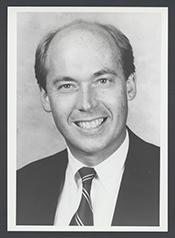 JW
JW JL+17
JL+17
Floor Debate
22 membersWhat members said about H.R. 3928 on the floor
Mr. Speaker, pursuant to House Resolution 1197, I call from the Speaker's table the bill (H.R. 2642) making appropriations for military construction, the Department of Veterans Affairs, and related…
Mr. Speaker, pursuant to House Resolution 1197, I call from the Speaker's table the bill (H.R. 2642) making appropriations for military construction, the Department of Veterans Affairs, and related agencies for the fiscal year ending September 30, 2008, and for other purposes, and ask for its immediate consideration in the House.
Mr. Speaker, I offer the motion at the desk.
Mr. Speaker, the gentleman may be reciting the PAYGO rule as he wishes it were, but that's not the way it is.
The legislation before the House fully complies with the PAYGO rule. That rule deals with direct spending and revenues.
As to revenues, the revenue effects of this package reduce the deficit, rather than increasing it. As to spending, none of the spending in this package falls into the direct spending category, which is basically defined as spending outside the appropriations process.
Even though not technically required to do so, the Medicaid provisions and the expansion of veterans' education benefits fully meet the PAYGO standard. Both sets of provisions contain offsets to ensure that they do not increase the deficit over the 5- and 10-year periods used by the PAYGO rule.
The rest of the bill consists mostly of emergency appropriations for defense and other security-related needs, largely for things requested by the President. And the other major spending item, relating to extended unemployment compensation benefits, is temporary in nature and responds to current hardships created by the economic downturn.
So I believe that we ought to abide by the House rules as they are, not as some Members wish they were.
Mr. Speaker, I ask unanimous consent all Members may have 5 legislative days to revise and extend their remarks and include extraneous material on the pending legislation.
Mr. Speaker, I yield myself such time as I may consume.
Mr. Speaker, we have a tough problem before the House today. We have a war which the majority of this House despises. We have a war that we do not have the power to end so long as the President is as obstreperous as he has been on the subject. That means that we have to find a way to try to manage this problem in a way that sends a clear message to the public that they are the only ones who can, in fact, muster the power to change direction on this war by electing a President who will get us out of this war. It also means we have to manage it in such a way that we set the table for the new President to give him at least a few months to think through how he is going to proceed to extricate us from this war and to get his ducks in a row on Iraqi policy. Therefore, we are taking the Senate bill and we are asking the House to consider three amendments and work their will on it.
The first amendment is very simple. It's an up-or-down vote on providing the funding to pay for the equipment and to pay for the salaries for the troops as long as they are going to be in the war situation. That money will be estimated to run out by June of 2009.
The second amendment would simply be an up-or-down vote on the conditions that the House believes should appropriately be attached to the spending of that money, many of which the House has seen before. Those conditions will, among other things, require that virtually every unit sent to the war be fully combat ready. They will provide that no one who works for the United States may engage in interrogation techniques that are at variance with the Army Field Manual. In plain language, no torture. The conditions will also say that there shall be no long-term security agreements entered into with Iraq without submission of those agreements to the United States Senate for their consideration. It will establish a timetable for extricating ourselves from combat by setting a goal, not a firm date but a goal, of 18 months from the date of enactment.
Also, we have added two conditions which would have the effect of requiring Iraq to provide a dollar-for-dollar match for any of the redevelopment and reconstruction activities that are being carried out by the United States Government. The effect of that would be the functional equivalent of turning 50 percent of what we provide to Iraq into loans. We've done it this way because we have faith that the loans would ever be repaid, and this way we guarantee that the Iraqis, who are now about to develop very large surpluses in their own budget--they will have to meet these costs up front on an equal basis before the United States proceeds to expend its own money. And it would also require that the American military be provided gasoline in Iraq at the same subsidized price as the Iraqis are being subsidized. We don't see why the United States troops who are defending that country ought to have to pay a premium.
Then we will have a third amendment, again up or down, on the other administration requests. Those include food aid. We've increased the international food aid recommended by the President by $745 million. Anybody who has read the newspapers or watched television for the last 2 weeks understands why that is a moral necessity. We have also included the administration request for the Louisiana levies exactly as they have requested it as fiscal 2009 money. We have responded to a request from the Bureau of Prisons to provide $178 million so that they do not have to lay off prison guards and other personnel in the U.S. prison system. The Secretary of Commerce has requested that we provide additional funding because they run into technology problems at the U.S. Census Bureau; so we have responded to that with a $210 million appropriation. We have also added $2.2 billion in military construction funds above the President's request to fully fund the administration's 2008 BRAC requests. We have also included $210 million for military child care centers, which the President from that rostrum told the country he was for but neglected to ask the money for in his budget this year.
There are no Members' projects whatsoever in this bill. In the military construction portion of the bill, for instance, there are 121 facilities that are provided for; 111 of those were specifically asked for by the White House, and the others were identified by the committee as top service priorities after testimony from the military services.
There's only one proposal that could be really considered a specific project earmark, and that is one hospital which the Assistant Secretary of Defense asked to be included in the recommendations, and we're providing planning funds for that facility.
In addition, the other items in that third amendment to be considered would deal with the following:
If we're going to fight the war, we happen to believe that we ought to provide a ``thank you'' to the people who have fought it, especially because there has been no sense of shared sacrifice in this country. The only people who have been asked to sacrifice are military families again and again and again. So what we are doing is including the Webb bill, which would provide for the equivalent of a full-boat 4-year education at a public university for persons who have spent 36 months on active duty, and the benefits are scaled down in accordance with time served. It's long past time that we do that.
We have also included emergency funding for unemployment compensation so that for persons who have exhausted their unemployment benefits, they will have an additional 13 weeks available to them.
We have also in this amendment recommended delaying the administration's rules changes in Medicaid that have been so controversial, and we include two contractor reforms which the House had already passed.
The main difference, Mr. Speaker, between this bill and the administration's bill is that we pay for everything in the bill except the unemployment compensation provision and the President pays for virtually none of his requests.
Now I prefer to pay for the entire war if we are going to have it. I don't think we ought to have it. But if we were going to have it, I thought we ought to pay for the whole thing. So did Mr. Murtha and Mr. McGovern. So we introduced legislation to pay for the whole war with the war surtax. We lost that argument. That is not in this bill.
I felt that if we weren't going to pay for the war up front, then there should be no requirement to provide an offset to provide the additional GI Bill expanded benefits, which are the equivalent of only about 6 percent of the cost of this war so far. But I lost that argument, too.
And so this bill does pay for the expansion of GI benefits. And it pays for that in probably the best way possible, by asking the most fortunate citizens in our society, those who individually make $500,000 or more a year, or as a couple who make $1 million or more a year, we are asking them to help out in the form of a patriot premium by, in essence, asking them to pay a one-half of 1 percent surtax in order to finance the GI Bill expansion.
As I look at this bill, what we are doing is we are asking people who, on average, have gotten a $126,000 annual tax cut to take a tiny portion of that
tax cut to help us make life better for the persons who have been doing the most in order to preserve the way of life which has enabled those people to do so well in life. And I make no apology for it.
Ninety-nine percent of the appropriated dollars in the bill--99 percent of the appropriated dollars in this bill--are being requested by the administration.
This war, Mr. Speaker, has screwed up our economy. This war has injected chaos in the lives of military families all across the country. We make no apology in trying to use this vehicle to respond to the needs of the two groups in society who have been hit the hardest by this war; one being those who have lost their jobs because of the turmoil we have had in the economy because of the war and other factors, and second, the military families whom we believe ought to be treated about as well as the GIs were when they came back from World War II. This war has now lasted longer than World War II. And we think we have an obligation to respond to what is actually out there on the ground in communities all across the country.
We can debate our political philosophies. We can debate our economic theories. We can behave like little budgeteers, arguing about this comma and that comma, this offset and that offset. But in the end, we are dealing with the lives of human beings. We are dealing with the lives of families. We are dealing with people who have sacrificed incredibly much with their family members being sent to Iraq and Afghanistan once, twice, three times. Kids are not seeing their parents.
I represent a city of 37,000 people. We have had almost 35,000 casualties in this country. It is as if 4,000 people in my hometown were killed, and virtually every other person in that hometown wound up in a VA hospital. That is the human toll that has been paid so far just by Americans on this war.
So this is a process which will give Members the opportunity to vote up or down on the major pieces that comprise this legislation.
And I urge the House to move forward.
I, myself, will be intending to vote against the first amendment. I will be voting for the second and the third amendment. I hope that every Member here today exercises his conscience. That is what they are supposed to do.
With that, I reserve the balance of my time.
Mr. Speaker, I yield myself 2 minutes.
Mr. Speaker, I want to thank the gentleman from California. Those are some of the nicest words he has ever said about me, and I appreciate them deeply.
Let me also say that I think his speech simply bears out that because they can find no real substantive fault with the legislation, they have to fall back on whining about process.
I would suggest that the gentleman from California is the last person I will take lectures from when it comes to talking about an open appropriations process. I was not chairman when the Appropriations Committee when, after the conference was closed and the work was done and the names are on the conference report, I was not the chairman of the committee who allowed 30 pages of unrelated new language not seen by anybody to be inserted in that conference report which insulated the pharmaceutical industry from suit if their products damaged their customers.
I was not the chairman of the committee when the committee, after the conference was closed, and after it was finished, inserted anonymously, anonymously, in the dead of night, language which changed the definition of organic foods on the agriculture bill and led to nicely enriched profits for certain people in this society.
All I can say is that the gentleman may not like the fact that we couldn't finish discussions as fast as we wanted to on this bill. He says he has only been able to see the text for the last day or so. Let me simply suggest that at least the text he reads is the text that will be in the bill after we vote on the bill, which is more than you can say for what happened under his stewardship on several locations.
Mr. Speaker, I yield myself 1 additional minute.
Let me simply make the point, there is virtually nothing in this bill that hasn't been around here for months. This is not new material. The President's war request has been around here for months, as the gentleman himself has indicated.
The unemployment compensation provision that we are providing in this bill already passed the House on one occasion. The Webb bill has been around for months, and it has the support, and, in fact, the sponsorship of the majority of the House and wide bipartisan support in the Senate as well.
I would suggest, I think the question is, the Pentagon is saying you've got to get the money to the troops, because they're about to run out of money and won't get paid. Yet our friends on the other side are asking us to follow a process which would have taken a much longer period of time.
You can't have it both ways. This is a fair process.
Mr. Speaker, I yield myself another minute.
I am personally opposed to the first amendment which we are presenting to the House. But out of courtesy to the minority, who support it, and out of courtesy to the White House, who supports it, we are allowing that to come to a vote. Our party has not even whipped on that question. We told Members, vote your conscience. I don't see how you could be more fair than that.
Mr. Speaker, I reserve the balance of my time.
Mr. Speaker, I yield 5 minutes to the distinguished gentleman from Pennsylvania (Mr. Murtha), the chairman of the Defense Appropriations Subcommittee.
Mr. Speaker, I yield 3 minutes to the distinguished chairman of the Military Construction Subcommittee, the gentleman from Texas (Mr. Edwards).
Mr. Speaker, I yield 1 minute to the distinguished gentleman from Virginia (Mr. Scott).
I yield 1 minute to the distinguished gentlewoman from South Dakota.
I yield myself 2 minutes.
Mr. Speaker, I just cannot allow the impression to continue that somehow we have violated House rules or committee rules by this procedure. The fact is that despite some Members having not been around here long enough to remember, the House used to often proceed in this way, moving amendments back and forth between the Senate and the House as a device by which to reach agreement on legislation. That happened routinely during the old abortion debates back in the seventies when amendments offered by Mr. Magnuson and Mr. Flood were bounced back and forth between the Houses.
The fact is also that I offered, and my staff director specifically offered, to have the minority staff participate in every discussion related to appropriation items. We pointed out, we were not drafting, in our committee, the unemployment insurance issues. That was drafted by the authorizing committee. And we were not drafting the language with respect to Medicaid rules. That was done by the Energy and Commerce Committee.
But we offered to have the minority staff participate in all of the staff meetings that were going on with respect to anything over which the Appropriations Committee had direct jurisdiction. If they chose not to exercise that right, that's their responsibility, not ours.
I would also point out that my understanding is that in the 109th and 110th Congress, fully 12 percent of legislation that was passed was passed using this process of moving amendments back and forth between the Senate and the House. So this may be an unusual procedure, but it is far from unprecedented.
I yield 1 minute to the distinguished gentleman from Illinois (Mr. Jackson).
I yield 1 minute to the distinguished gentlewoman from California (Ms. Woolsey).
I yield 1 minute to the gentlewoman from California (Ms. Lee).
I yield 2 minutes to the distinguished majority caucus chairman, the gentleman from Illinois (Mr. Emanuel).
Mr. Speaker, the gentleman is yielded 1 additional minute.
Mr. Speaker, I yield myself 1 minute.
I cannot believe what I just heard.
The gentleman just indicated that somehow we're adding $72 billion to a bill ``that has nothing whatsoever to do with the welfare of soldiers.'' I would point out by far the largest item that we are adding to this bill, $51 billion over 10 years, is devoted to help those very same soldiers so that the people who fought, when they come home, get treated the same way that the GIs did at the end of World War II. That isn't on the backs of the soldiers. That's trying to enhance their lives. It's trying to enable Reservists and Guard members and regular forces who have had their lives disrupted, who have gone to Iraq two and three times. We're trying to say, Okay, you can stay home for a while. Get yourself a college education.
The GI Bill paid back this country $7 for every dollar it cost.
I yield myself 1 additional minute.
The GI Bill paid back to this society $7 for every dollar that it cost. There are unfortunately some people in this House who know the cost of everything and the value of nothing. Fortunately, the people who support this third amendment today will not be among them.
Mr. Speaker, I yield 1 minute to the distinguished gentleman from Tennessee (Mr. Tanner).
I yield the gentleman 1 additional minute.
Mr. Speaker, I yield 2 minutes to the distinguished chairman of the Veterans' Affairs Committee, the gentleman from California (Mr. Filner).
Mr. Speaker, I yield 2 minutes to the gentleman from Minnesota (Mr. Walz).
Mr. Speaker, I yield myself 1 minute.
Mr. Speaker, Just Imagine! The mortal sin that we're accused of committing on this side of the aisle is believing that we ought to provide some additional economic assistance to people
who have been hit the hardest by economic dislocation and have been unemployed until their benefits have expired and haven't been able to find a job.
It's suggested that we're doing this ``on the backs'' of our fighting men and women who return home. I'd suggest it's just the opposite. When a man or a woman returns home from Iraq, when we find out that in addition to their having their reentry problem, they also, some of them, may have post-trauma stress reaction, they find out in addition to what they have to worry about for themselves, they also have to worry about the fact that their sister or their brother-in-law is now unemployed, adding to the burden on that family.
I yield myself 30 seconds.
I think those GIs recognize this is supposed to be a seamless society. We're supposed to help take care of the people who are in the most trouble, and I don't apologize for using some of the money that we use for veterans benefits. I don't apologize for getting that money from some of the people in this society who have had the least stress in their lives.
It seems to me that that's what the Judeo-Christian ethic is all about, and we plead fully guilty on this side of the aisle.
Mr. Speaker, I yield 1\1/2\ minutes to the distinguished gentlewoman from Connecticut (Ms. DeLauro).
I yield myself 30 seconds, and I yield to the gentleman from Texas.
I would like the gentleman from Texas to point out a single piece of Member pork in this bill.
Yes.
Name one.
Can you name one or can't you? The fact is there's not a single piece of Member pork in this bill. You ought to know.
I yield myself 1 additional minute.
And through the Chair, I would invite the Member to name a specific piece of congressional pork in this bill. He cannot because there is none. He's at least had enough time to read the bill to know that.
The only possible piece of pork in this bill is one which we inserted at the request of the Deputy Secretary of Defense for a military hospital in Guam that came here at the request of the Secretary of Defense's office.
You can find no Member's pork in this package, and you know it as well as I do.
Mr. Speaker, I yield 1 minute to the distinguished gentleman from Washington (Mr. McDermott).
(Mr. McDERMOTT asked and was given permission to revise and extend his remarks.)
Mr. Speaker, I yield myself 1 minute to answer the gentleman's question.
The gentleman wants to know why do we have money in this bill for the census? Simple. It's because the Secretary of Commerce asked us to put it in because they've had a huge technical screw-up in the Department of the Census. The last time I looked, the Secretary of Commerce was appointed by the President of the United States, Mr. George W. Bush.
He wants to know why we have money in this bill for prisons. Simple. We've been told by the Bureau of Prisons--last time I looked, it's run by the Bush Administration--that if we didn't provide this money, because of cost overruns they're going to have to fire guards and lay off people in Federal prisons. Anybody interested in law and order I don't think is going to be happy about that.
So it seems to me it is responsible to respond to emergencies on both the domestic side and on the international side.
I'm sorry that the gentleman doesn't seem to be aware of the fact that we have, in writing, requests from both of those agencies, but that happens to be the fact. And that's the answer.
We got requests in writing from the agencies.
They testified before the committees. I don't know if you were there or not, but they testified.
Announcement By the Speaker Pro Tempore
I yield myself 10 seconds.
Once again, when they can't argue about the substance, they whine about process. That's not going to impress very many people. It certainly didn't in Mississippi yesterday.
With that, I would like to yield 1 minute to the distinguished Speaker of
the House, the gentlewoman from California.
Mr. Speaker, I yield 1 minute to the distinguished gentleman from Georgia (Mr. Johnson).
Madam Speaker, I yield myself such time as I may consume. I would like to begin by expressing my great appreciation to my very dear friend, the distinguished and very able Chair of the Committee on…
Madam Speaker, I yield myself such time as I may consume.
I would like to begin by expressing my great appreciation to my very dear friend, the distinguished and very able Chair of the Committee on Rules, my friend from Rochester (Ms. Slaughter).
And with all due respect to my distinguished committee Chair, I am compelled, not surprisingly, to rise in the strongest possible opposition to this rule.
Over the last 1\1/2\ years, my colleagues Messrs. Diaz-Balart, Hastings, and Sessions have stood right here at this lectern and opposed many, many deeply flawed rules. We began this Congress very inauspiciously as the leadership jammed through the opening week agenda before even bothering to set up the Rules Committee, allowing Ms. Slaughter to become Chair of that committee. From the very outset, there has been no pretense of concern for due process, not an inkling of respect for the rules of this House.
While we started at a low point, we have sunk lower and lower with each subsequent rule. One by one the Democratic leadership has trampled the rules and traditions of this body in an effort to shut down debate, cut both Republicans and Democrats out of the process, and jam through poorly constructed bills that rarely, rarely, if ever, become public law. I frequently marvel at each new low and assume that we have reached the rock bottom. As we have considered new forms of restrictive rules crafted under an ever-more restrictive process, I have often thought, ``This one takes the cake. The Democratic leadership couldn't possibly stoop any lower than this.'' Until the next comes, shutting down due process to an even greater degree.
So this time I'm not going to say that this rule is the absolute bottom of the barrel. I don't doubt that with a little more time and effort, based on the track record we've seen, the Democratic leadership will find a way to trample the rules and traditions of this House even more thoroughly. I will say that this is clearly the worst example that we've seen in the last 17 months since they have been in charge.
But before I get into the details of this egregious rule, Madam Speaker, I think it's important to discuss why it even matters what kind of a process is used to craft legislation and hold votes. I know the inner workings of the Rules Committee are thought to be so arcane that even some of our colleagues consider them to be a little too ``inside baseball.'' In fact, the distinguished Chair just spent all of her time talking about the bill itself. She didn't talk about the fact that they're trampling on the rights of Republicans and Democrats. Start talking about rules and procedure and regular order, and most Americans' eyes, and even some of our colleagues', start to glaze over.
So to illustrate why process matters, I will use another set of rules that are
more widely understood as an example. Even before the advent of the television show Law & Order, most of us were familiar with the basics of our criminal justice system. We're all familiar with our basic rights enshrined in the Constitution. We cannot be held without a charge. We're protected from self-incrimination and unlawful searches and seizures. We must be read our Miranda rights when placed under arrest. These basic rights are fundamental, fundamental, Madam Speaker, to American democracy. We know that there can be no justice without a fair process, and we know that the protection of the rights of the individual is more important than the outcome of any one particular case.
The Bill of Rights and the laws that have been enacted to uphold it aren't just a cryptic system of rules and regulations. They guarantee, Madam Speaker, they guarantee our civil rights and they guard against tyranny. Without a fair process, power is abused and rights are abridged. Process matters, Madam Speaker. Process matters because process is democracy.
The rules of the House were established for the very same reason. They ensure that the American people, through their elected representatives, have a say in the crafting of laws that govern them. The rules guard against abuses of power, and they ensure that the legislative process is transparent and fair. Thwarting due process is not just arcane political maneuvering around obscure, complicated rules that no one should care about. It subverts the principles of representative democracy. Let me say again, Madam Speaker, the rule that we are considering at this moment very clearly subverts the principles of representative democracy.
The Democratic leadership's casual disregard for these rules and principles has faced growing criticism in the media. Last week the Politico accused them of ``breaking promises,'' promises for an open legislative process that followed regular order and the rules of the House. Not surprisingly, the paper cited today's underlying bill, the supplemental appropriations, as Exhibit A in the Democrats' assault on an open and inclusive process, which was promised at the beginning of this Congress. That's not my saying that; that's an independent newspaper that made that statement.
Even before the new lows of the supplemental, another publication, Investors Business Daily, reported recently on the leadership's ``widening power grab,'' accusing them of ``anti-democratic'' behavior, running a ``dictatorship,'' and ``showing little or no concern for holding actual votes or building consensus on issues.'' Now, Madam Speaker, those are pretty harsh charges coming from a newspaper that is clearly a very independent publication. And they go on to say that this is all being done in an effort to ``manipulate Congress.'' Madam Speaker, ``dictatorship'' and ``anti-democratic,'' those are pretty harsh words, but they are clearly warranted.
The process used to craft the underlying supplemental appropriations bill has been atrocious. Committee work was completely abandoned. Without a single hearing, without a markup, without so much as consulting Mr. Lewis and the committee members, this bill was concocted behind closed doors. Zero input, zero deliberation, zero consultation. The Senate, of course, won't stand for that kind of treatment and intends to hold a markup later today before proceeding with its floor debate. But the Democratic leaders in this House apparently deem this to be a lesser body, with no right to due process.
The Democratic leadership intended to bring this bill up last week. They had to pull it from the schedule because fiscally conservative Members within their own caucus were outraged at the contents. A week later, Madam Speaker, a backroom deal has now been struck, bringing the remaining Democratic Members on board. How? Bringing Members on board by imposing a tax on small businesses in this country, which is exactly what this is. You see, Democrats love to stir up class warfare by justifying the small business tax as just a tax on the rich. Unless, of course, we are talking about millionaire farmers, and then they like to give them massive government payouts, which is what they did just yesterday in the farm bill.
To add to their inconsistency, they actually waived their own PAYGO rule to fund the farm bill subsidies, and today they refuse to waive the same PAYGO rule and use it as an excuse to levy massive tax increases on small businessmen and women in this country. Only in Washington would such logic be employed.
We became aware of the rough outline of this tax increase, along with every other provision of this bill, only through press reports. Some have reported a $183 billion price tag on this bill. Others have said it would be costing at least $250 billion. Various outlets reported on various provisions. But we didn't get a chance to see for ourselves what was in this massive bill until 3 p.m. yesterday. In fact, the distinguished former Chair of the Committee on Appropriations, the now ranking member, my good friend, Mr. Lewis, came before us. Within the hour before that 3 p.m. meeting, he had just gotten the copy of the measure.
Most egregious of all, we're not actually considering a bill here today. We will be voting on three amendments to a Senate amendment to an old House bill that has already passed but was never enacted. Did you catch that? If it sounds gimmicky and underhanded, that's because that's exactly what it is. In fact, this morning I heard our colleague Mr. McDermott on National Public Radio, where he said the crafting of this is tantamount to John Kerry's very famous line in which he said ``I voted for it before I voted against it.'' The Democratic leadership knows that a vote on their full package would never pass; so they plotted a way around an actual vote on final passage.
For anyone who missed that, let me repeat. The House of Representatives will not be permitted a vote on the full underlying proposal. When Investors Business Daily calls this a dictatorship, they seem to have a point.
So what exactly is in this $183-250 billion bill that comes to us without any due process and will pass without a vote? Who can say for sure? But I know that at least $62 billion in new entitlements are included; $11 billion in unemployment insurance, and our friend Mr. Weller will be talking about this in a few minutes; and at least $51 billion in benefits for veterans. Clearly, these are very, very important issues that need to be addressed.
I don't doubt that the Democratic majority will try to claim that Republicans don't care about our veterans or those facing economic hardship. We hear that time and time again. To the contrary, these are such critically important issues for us that we passionately believe that we must address them in a serious and deliberative way. It is simply not good enough to slap together a proposal without a single moment of testimony or debate, throw some money at our problems, and call it a day.
The very critical issues addressed in this bill, from funding for Iraq and Afghanistan to international food assistance to the tremendously important domestic programs, all of these deserve a substantive, deliberative process. We should have an opportunity to examine which of these are truly emergencies and which should be included in the regular appropriations process. And all of them should have the benefit of an open debate to ensure that we are addressing our priorities effectively.
This rule allows for none of this, Madam Speaker. It thwarts the rules and traditions that were put in place to guard against abuses of power, and it blocks consideration of even a single amendment, including the very thoughtful and responsible alternative proposed by the man sitting to my right here, the distinguished ranking member of the committee, Mr. Lewis. He's offered a clean supplemental appropriations bill which simply provides our troops the funding they need without bogging it down with all kinds of unrelated items or adding new policy that prevents them from carrying out their mission.
Our hope is to get this critical funding to our troops before Memorial Day, which is fast approaching. That's not an arbitrary deadline and it's not a gimmick. Our military commanders have told us that they desperately need this funding now, and we want to be able to go home for Memorial Day and tell our veterans and our military families that we passed a clean bill that funds our troops and their mission. We
want to tell them we crafted a bill without regard to politics, without regard to providing political cover or fodder for political ads. We simply gave the troops the funding they desperately need. Now, Madam Speaker, that's exactly what the distinguished ranking member, Mr. Lewis, should be able to provide, and I'm going to seek an opportunity for him to do just that.
But, unfortunately, the Democratic majority can't advance their flawed policies without shutting down the process. So they prefer closed rules to open debate. They prefer backroom deals to the transparent committee process. They prefer hollow, ill-gotten victories that die after the House vote to substantive, bipartisan legislation that is enacted into law. That's exactly what we need to do, Madam Speaker.
So I urge a ``no'' vote on the rule, and I am going to urge a ``no'' vote on the previous question.
Madam Speaker, I reserve the balance of my time.
Madam Speaker, I notice my colleague doesn't spend any time at all talking about the rule which is being considered at this time and shutting down democracy which we all aspire to in Iraq and other places in the world.
With that, I would like to yield 4 minutes to the author of the very important measure that will be made in order if we are able to defeat the previous question, a clean supplemental, my good friend from Redlands, the ranking member of the Appropriations Committee, Mr. Lewis.
Will the gentlewoman yield for a question?
I would just like to remind my colleague that 82 percent of the people who fall in the category about what she has just mentioned are small business men and women. And I think we need to realize this is a small business tax.
I thank my friend for yielding.
Madam Speaker, at this time I am very happy to yield 3 minutes to the distinguished ranking member of the Committee on the Budget, my friend from Janesville, Wisconsin (Mr. Ryan).
I am happy to yield my friend an additional 30 seconds.
Madam Speaker, let me say in the name of saying they are taxing the rich, the facts show it. Eighty-two percent of the people who fall in that category are small businessmen and women. That's just the facts.
With that, I am happy to yield 3 minutes to my good friend from Morris, Illinois (Mr. Weller), the ranking member of the Income Security and Family Support Subcommittee of Ways and Means.
Madam Speaker, may I inquire of the Chair how much time is remaining on each side.
In light of the fact there is much more time remaining on the other side, may I ask the distinguished Chair if she might proceed and yield some of her time.
I reserve the balance of my time.
Madam Speaker, I understand that my good friend from Cleveland was unable to get time from his side of the aisle.
And so at this time I am happy to yield 1 minute to the gentleman from Cleveland, the Democratic Presidential candidate, Mr. Kucinich.
Madam Speaker, may I inquire again how much time is remaining on each side.
Madam Speaker, with that, I am happy to yield 1 minute to the very distinguished gentlewoman from Brooksville, Florida (Ms. Ginny Brown-Waite).
Yes, we have a couple of speakers and then I am going to close.
Let me yield to my very good friend from Wichita, who is a member of the Appropriations Committee and who has worked long and hard here, for 1 minute.
(Mr. TIAHRT asked and was given permission to revise and extend his remarks.)
Will the gentleman yield?
That is not my goal, Madam Speaker.
Madam Speaker, let me yield myself 30 seconds.
Let me begin by apologizing to my friend from Wausau. The notion of engaging in debate on the House floor is something I feel strongly about, and I am always happy to yield to people when they make requests for me to yield. I was simply asking my friend to
yield because of the fact that the $40 billion post-9/11 supplemental about which my friend complained and referred to as ``this crowd'' came to this floor under unanimous consent, a bipartisan agreement.
And the three supplemental appropriations, Madam Speaker, about which my friend referred, never, never, denied a motion to recommit to the minority. And I ensured as chairman of the Rules Committee at that time the right of the minority would, in fact, be maintained.
Madam Speaker, I am very happy to yield 1 minute to my friend from Auburn, Washington, the former sheriff, David Reichert.
I inquire, is the distinguished Chair of the Rules Committee the final speaker for the majority?
Madam Speaker, let me yield myself the balance of my time.
Let me say at the outset, and again the last thing I want to do is offend my friend from Wausau by asking him to yield at any point, but I would be happy to yield to him if he wants to respond to what I am about to say. And that is, the fact of the matter is we have in this Congress the single highest number of closed rules in the 219-year history of the Republic. Never before has this, has the United States Congress had such a period of closed rules. I will tell you, it is absolutely outrageous. Why, because we were promised something that was much, much different than that.
On a supplemental appropriations bill, my good friend, the chairman of the committee said, ``The majority leadership decide to obliterate the legislative process. They discarded a bipartisan committee product, and they threw in unrelated, partisan political items that characterized a full partisan agenda. They have taken abusive power to a new level.''
Madam Speaker, let me say that when we did that, we provided the minority a right to have a bite at the apple, a motion to recommit. They had an opportunity to offer a proposal. I will tell you it is just plain wrong to see what has been taking place here.
I am going to urge my colleagues to oppose the previous question so I can amend the rule to simply give Republicans one simple bite at the apple, something we always guaranteed the now-majority.
Mr. Lewis, the ranking member on the Committee on Appropriations, introduced a bill on Tuesday, H.R. 6062, a clean supplemental, to provide troop funding without strings and extraneous spending. If the previous question is defeated, I will amend the rule to make in order an alternative motion to concur by Mr. Lewis which would simply state that the House concurs in the Senate amendment with an amendment consisting of the text of H.R. 6062. This way the House has the opportunity to send the Senate a clean supplemental to get our troops the money that they desperately need without the hocus-pocus, three-in- one vote political gamesmanship that we have before us at this moment.
It's simply the right thing for us to do to send that clean supplemental.
Madam Speaker, at this point I would like to ask unanimous consent to have the text of the extraneous material and the amendment included in the Record.
Madam Speaker, it's just one simple bite at the apple, something we always guaranteed the Democrats when we were in charge. It's one amendment. We're just trying to help the Democratic majority become the majority that they promised that they would be. It's not too late. Let them do it, Madam Speaker.
Vote ``no'' on the previous question.
Madam Speaker, on that I demand the yeas and nays.
Madam Speaker, I rise enthusiastically to support this very important rule. I congratulate the very strategic design of the Appropriations Committee. This is tough, and I thank the Rules Committee…
Madam Speaker, I rise enthusiastically to support this very important rule.
I congratulate the very strategic design of the Appropriations Committee. This is tough, and I thank the Rules Committee for listening to us as we presented our amendments.
But I rise today to say that war is ugly. But we applaud and appreciate the young men and women on the front lines. We forever honor them. Just a few minutes ago I was in a room listening to returning war veterans from Iraq, and they gave us these words, horrible stories, such as calling the
Iraqis hajis or sand niggers, telling us about the impact on their families, how many families were destroyed, how many have attempted to commit suicide.
I offered an amendment that many focused on the idea that everything we have asked the soldiers to do under the 2002 resolution has been done, and, therefore, it should expire. The President has no more authority to continue this war.
Then I wanted to debunk the actions of what happened to the Vietnam vets and call for a national day of celebration, a national day of honor for all the returning war heroes that will come home. This is what we should be doing today as we vote against the funding of this war in Iraq. It is important to stand for these soldiers.
But I am glad that we have extended GI benefits for veterans' education. Some of them were telling us that they are now being denied these benefits because of a general discharge, because of their opposition to the war. Yes, it is valuable because we move on to help Americans in this bill as well, extending unemployment compensation, getting rid of these cuts in Medicaid and making sure that we don't damage specialty hospitals that are in our rural and inner city areas who are helping us.
I am grateful to what the Appropriations Committee did on world and food hunger. It is a disaster, and they moved it up higher than what the President asked for. We had a briefing on world hunger and it was appalling what is going on around the world. I am grad that we have monies for refugee assistance and the Merida funding.
The Merida initiative is funding for this horrible drug war between Mexico and its own citizens that's spilling over into the United States. I am appreciative of these dollars, but, my friends, we have got to stop the utilization of drugs here in the United States.
It looks like it's McDonald's where they send these various drugs. When I say that, I am not talking about McDonald's, but I am suggesting that the pinpoints of where these drugs are dropped off in the United States, it is tragic. As we send more money and more money to Mexico, we have got to begin to devise a new policy for drug opposition here in the United States.
Vote against the funding for the war. The underlying other amendments are very good.
Madam Speaker, I rise today in support of H. Res. 1197, Rule providing for the consideration of the Senate amendment to H.R. 2642-- Supplemental Appropriations Act, 2008. While I offer my support for amendments No. 2 and No. 3, I must oppose amendment No. 1. While amendments 2 and 3 contain provisions beneficial to the American people, designed to improve our economy and protect our young men and women, amendment 1 continues a disastrous policy of providing unrestricted funding to continue the Bush administration's war in Iraq.
I oppose amendment No. 1 because I stand with the American taxpayers who have paid over $600 billion to finance the misadventure in Iraq. I stand with the 4076 fallen heroes who stand even taller in death because they gave the last full measure of devotion to their country. Last May, I was proud to vote for H.R. 1591, a supplemental spending bill that would have provided funds for our troops in Iraq and Afghanistan, which included a timetable for the redeployment of U.S. troops. Though this bill passed the House by a clear majority, the President opted to veto this legislation.
Madam Speaker, I must oppose amendment No. 1. This amendment provides a total of $162.9 billion for the Department of Defense for FY 2008 and FY 2009, funds that are handed over without any strings. The amendment does not withhold funding for the Iraq war, a war that so many of my colleagues in Congress oppose, and which only 32 percent of Americans now support. The amendment does not require that war funds can only be used for the responsible redeployment of American troop's home from Iraq.
Madam Speaker, I voted against the 2002 Iraq War Resolution. I am proud of that vote. I have consistently voted against the administration's practice of submitting a request for war funding through an emergency supplemental rather than the regular appropriations process which would subject the funding request to more rigorous scrutiny and require it to be balanced against other pressing national priorities. I cannot support legislation that provides the President with the resources to prolong his ill-advised war effort unrestrained.
I rise today in strong support of amendment No. 2. This amendment lays out a responsible U.S. policy toward Iraq, requiring that troops begin redeployment from Iraq within 30 days, with a goal of completing the withdrawal of combat troops by December 2009. As a Member of both the Out of Iraq and the Progressive Caucuses, I am proud to vote for legislation that, like other measures passed by this Congress, begins the process of withdrawing U.S. men and women from Iraq.
In addition, Madam Speaker this legislation specifically requires that any agreement between the United States and the government of Iraq committing future U.S. forces must be specifically authorized by Congress. The governments of Iraq and the United States announced their intention to forge a ``strategic framework agreement,'' a long-term, bilateral pact, to be completed by July 31, 2008. This negotiated agreement is to be based on the ``Declaration of Principles for a Long- Term Relationship of Cooperation and Friendship Between the Republic of Iraq and the United States of America,'' signed November 26, 2007, by Iraqi Prime Minister Nuri al-Maliki and President Bush.
Under the Declaration of Principles, the parties will negotiate a security agreement, under which the United States will support the Iraqi government and security forces in providing security and stability and fighting al-Qaeda and other terrorist groups. The Declaration of Principles envisions an agreement setting forth a wide- ranging set of commitments, which will cover issues including politics, economics, and security. In hearings before the Committee on Foreign Affairs, administration officials have indicated that the President intends to negotiate this agreement as an executive agreement, not subject to Congressional approval. It is essential that any agreement which commits future U.S. troops to the defense of Iraq is outside the purview of existing authorizations, and such an agreement must be submitted to the Congress for approval. This legislation also prohibits the establishment of permanent bases in Iraq.
Madam Speaker, amendment No. 2 requires that the Iraqi government step up and pay its share of Iraqi reconstruction efforts. I am concerned that the United States has paid and continues to pay a disproportionate amount for Iraq reconstruction, especially when the Iraqi government reportedly has a $25-30 billion budget surplus this year. To date the United States has appropriated more than $45 billion for Iraq reconstruction. American funded reconstruction programs have included: the training and equipping of Iraqi security forces.
Iraq is a resource-rich nation. Though still facing problems including a lack of technology, damage from previous mismanagement, the effects of looting, and water intrusion, Iraqi oil production is currently at around 2 million barrels per day. The price of oil has skyrocketed to over $100 a barrel and Iraqi oil exports are generating an estimated $56.4 billion this year alone, according to the GAO, yet it is U.S. taxpayers who continue to foot the bill for Iraqi reconstruction. The government of Iraq is stashing its money in global banks, including a reported $30 billion in the U.S., instead of investing this money in the development of crucial Iraqi infrastructure. This legislation requires the Iraqi government to take responsibility for the future of its own nation.
There are a number of other key provisions in this amendment. It requires the President to reach an agreement with Iraq to subsidize fuel costs for U.S. Armed Forces operating in Iraq so that our military pays what Iraqis pay. It requires that troop's meet the Pentagon's definition of ``combat ready'' before they are deployed to Iraq; Prohibits troops from being deployed longer than Pentagon guidelines recommend; and requires that troops spend adequate time at home between deployments. This legislation makes substantial strides toward cleaning up contracting in Iraq, expanding current law to make all contractors working in war zones subject to prosecution for offenses that would otherwise be in violation of U.S. law; extending the statute of limitations for fraud cases during wartime; and amending the Federal criminal code to prohibit profiteering and fraud involving contractors overseas. In addition, it prohibits interrogation techniques not authorized in the Army Field Manual, a provision necessary in eliminating torture.
Amendment No. 3
Madam Speaker, the third amendment to H.R. 2642 provides over $21.2 billion for much needed domestic programs and foreign aid. By extending unemployment benefits, expanding veterans' education benefits, and placing a moratorium on the Bush administration's seven Medicaid regulations; this amendment gets us closer to where the Economic Stimulus package should have taken us.
This amendment will provide increased funds for food aid, military hospitals, and the reconstruction of the Louisiana levees.
international food aid
As many of you know, we are facing an international food crisis. According to the International Monetary Fund, IMF, global food prices have increased an average of 43 percent. In fact since March 2007, wheat has increased by 146 percent, soybean has increased by 71 percent, corn by 41 percent, and rice prices have increased by 29 percent, according to the U.S. Department of Agriculture.
Many factors have played into this crisis. In China, India, and other emerging markets experiencing rapid economic growth, consumers are increasing their demand for food, oil, and energy supplies. Rising energy costs have directly raised the cost of agricultural production. Adverse weather-related events have lowered crop yields, particularly affecting wheat harvests. Depreciation of the U.S. dollar accounts for part of the increase in U.S. food prices, while increased production of biofuel has raised the price of corn.
Sadly, approximately 1 billion people--or one sixth of the world's population--subsist on less than $1 per day. Of this population, 162 million survive on less than $0.50 per day. Overall, increased food prices particularly affect developing countries, and the poorest people within those countries, where populations spend a larger proportional share of income on basic food commodities.
That is why I, along with other Hunger Caucus members hosted a forum on the food crisis and what it is doing to our children. We met with leaders of the international aid community to come up with pragmatic solutions to the global hunger crisis, both in the short-term and the long-term.
In my district I submitted an appropriations request for the Houston Food Bank to expand their collection and distribution of food to the good people of Houston. We each have to do our part, not only in our district by supporting much needed programs and organizations, but across this great Nation and the rest of the world.
This amendment would give $9.9 billion, $496 million above the President's request for the State Department, USAID and International Food Assistance. It is simply unacceptable in this day and age that children are going hungry. We have millions of dollars to bailout Bear Stearns, let's find that same money to help our families and our children.
Expanded GI Benefits for Veterans Education
As champion for veterans, I am especially pleased to see the expansion of education benefits to veterans under the GI bill.
Extended Unemployment Compensation
The number of Americans looking for work has grown by 800,000 over the last year, and the number of American jobs has declined by 260,000 since the beginning of 2008. This supplemental would extend unemployment benefits for workers who have exhausted their benefits by up to 13 weeks in every state as well as an additional 13 weeks in states with high unemployment.
protecting the medicaid safety net act of 2008 (h.r. 5613)
The Bush administration sought to cut services and payments to American families by adding seven different Medicaid regulations to the stimulus. This amendment places a much needed moratorium on those regulations giving back to our seniors, families, and those with disabilities as well as cut payments to safety net providers.
refugee assistance
$675 million, $454 million above the President's request, to address the refugee crisis in Iraq and elsewhere.
Merida
This amendment would give $461.5 million, $88.5 million below the President's request for the initiative to provide counter narcotics and law enforcement assistance in Mexico, $400 million, and Central America, $61.5 million.
Military Construction
The $4.6 billion for military construction, $2.2 billion over the President's request, including $939 million for BRAC, over $210 million for the military child care centers that the President announced in the State of the Union but never funded, and $992 million for military hospitals to prevent the types of problems that faced Walter Reed.
bureau of prisons
This $178 million urgently needed to meet rising incarceration costs and growing inmate population. The administration would have paid for these costs with cuts to state and local law enforcement funding.
Cleaning up Contracting (H.R. 3928 and H.R. 5712)
Increases accountability and transparency in Federal contracting by requiring companies that receive more than 80 percent of their revenue from the Federal Government to disclose the names and salaries of their top officers, and requires Federal contractors to report violations of Federal criminal law and overpayments on contracts over $5 million.
Madam Speaker, I rise to oppose this rule. I also rise to oppose the way that the House majority, the Democratic majority, is managing this legislation, bringing forward a fiscal year irresponsible…
Madam Speaker, I rise to oppose this rule. I also rise to oppose the way that the House majority, the Democratic majority, is managing this legislation, bringing forward a fiscal year irresponsible supplemental bill.
I would note, as I recall, on January 29, the Speaker of the House made a statement on the bipartisan economic stimulus package that was about to pass, and Speaker Pelosi said, ``Let's hope for the Senate to take their lead from us and be disciplined, focused, fiscally responsible, and act in a timely, temporary, and targeted way on behalf of meeting the needs of the American people.''
I agree with the Speaker that we should act in a way that is timely, temporary and targeted.
Unfortunately, that's not what the House is being offered today. In addition to a large tax increase, the bill before us today includes an untargeted and overly expensive extension of unemployment benefits.
Consistent with the Speaker's call for targeting help to those who need it most, I introduced legislation and offered an amendment in the Ways and Means Committee to focus extended unemployment benefits on people and States with relatively high or fast-rising unemployment rates.
Combined with regular unemployment benefits available in all States under my amendment, a total of 39 weeks of benefits would be available to unemployed workers whose jobs are hardest to find. On Main Street U.S.A. that helps those who need the help most. Yet this targeted approach was rejected by our Democratic colleagues, the majority on the committee.
Why target benefits? Why target benefits to only relatively high unemployment States? For the same reason, the Democratic legislation proposes longer benefits in high unemployment States because workers there have a harder time finding new jobs and thus are in need of extended benefits.
Targeting is especially important today since today's national unemployment rate is a low 5.0 percent with a third of all States having unemployment rates below 4 percent. That national unemployment rate is well below the lowest prior level when such a program was created in the past. I have a note in 2002 it was 5.7 percent, and, again, today's unemployment rate is 5 percent.
This targeted approach that I offered is also more fiscally responsible. The untargeted Democratic approach costs at least twice as much as a targeted approach and, as the Congressional Budget Office has reported, the Democrat legislation will require State tax increases to pay those additional costs.
The bill before the House would require State tax increases, State tax hikes, totaling $1 billion over just next 5 years.
If this program is extended, as all such temporary programs have been, the tax increases required will only grow. The Speaker was right, we need to act in a way that is fiscally responsible and targeted.
Unfortunately, this legislation before us today achieves neither of these goals and adds to budget deficits and requires payroll tax increases. We can and should do better than this.
Congress Has never Extended Unemployment Benefits at Today's Low
Unemployment Rate
Democratic leaders want to extend unemployment benefits nationwide, with the Federal Government picking up all of the $16 billion tab.
Since the 1950s, Congress has created 7 special or ``temporary'' extended benefits programs, which can double the length of total unemployment benefits from the 26 weeks to 52 weeks--or longer--per laid off worker. The logic of these programs is to provide additional weeks of benefits when jobs are relatively hard to find.
Today's national unemployment rate is a relatively low 5.0 percent. Congress has never created a temporary extended benefits program at such a low unemployment rate. The next lowest unemployment rate when such a program was created in U.S. history was when the last such program was created in March 2002. The unemployment rate then was 5.7 percent--significantly higher than today's 5.0 percent unemployment rate.
Today's U.S. Unemployment Rate Is significantly lower Than Average Rate
At Start of Prior Extended Benefit Programs
It is also useful to compare today's relatively low 5.0 percent unemployment rate with average rates when prior special Federal programs started. When such programs started, average unemployment rates were far higher than the Nation's unemployment rate today.
Today's unemployment rate (5.0 percent) is more than 2 percentage points below the average unemployment rate in the month when Congress chose to start such special programs (7.3 percent).
Today's Unemployment Rate Is below the Average for All of the 1980s and
1990s
The current unemployment rate is so low it is actually below the average of entire recent decades.
If you look at the 1980s and 1990s--two decades that saw record job creation in the U.S.-- and average all the months, you find those decades actually had higher average unemployment rates than today's 5.0 percent rate.
If such a program should exist today--when the Nation's unemployment rate is quite low by historical standards--when should it not? Creating such a program now is in effect an argument for permanently extending unemployment benefits, which would require at least $12 billion more per year in Federal spending and payroll taxes, in addition to State payroll tax hikes.
Today's 5.0 Percent Unemployment Rate Does Not Reflect an ``Emergency''
The Democratic leadership is suggesting that a special ``emergency'' nationwide extended unemployment benefit program is needed because today's job market is so weak.
Actually, only 20 percent of all months in the past four decades had unemployment rates below today's level. So if today's job market constitutes an ``emergency,'' then the U.S. economy has almost always been in a similar or even worse emergency situation throughout the past four decades. That's a hard case for even the biggest economic pessimist to make.
Today's Unemployment Rate Is below the Average throughout the Clinton
Administration
Democratic Members are always trying to take credit for the strong economy of the 1990s, even though it was the Republican Congress and its policies of tax relief, spending restraint, and welfare reform that actually promoted record economic growth and budget surpluses.
But let's accept the Democratic rhetoric for a minute that the Clinton era economy was just about the best ever.
What was the average unemployment rate during the 8 years of the Clinton Administration? 5.2 percent--which is above today's 5.0 percent rate. Did a special extended benefits program operate throughout the Clinton Administrations? No. Did a special extended benefits program operate during all the months when the unemployment rate was 5.0 percent or higher? No again.
Current Employment Conditions Are better Than in 1996--Which President
Clinton Called the ``Healthiest'' Economy ``In Three Decades''
It's worth considering another reason why Democratic leaders are so determined to argue that today's economy is so bad: Politics.
Compare today with 1996: 20 million more employees; a lower unemployment rate; a lower long-term unemployment rate; and fewer average weeks of unemployment. All better today than the 1996 levels.
But what did President Clinton, then running for a second term, think about the U.S. economy in 1996? In his State of the Union Address that year he said: ``Our economy is the healthiest it has been in three decades.'' (January 23, 1996) So when a Democrat is in the White House running for reelection, the economy is healthy and strong. And of course no one calls for a special extended benefits program.
But with a Republican in the White House, and despite better economic statistics today,
Democrats portray the current economy as another Depression. Here's how Senator Chuck Schumer put it: ``The bottom line is that this administration is the owner of the worst jobs record since Herbert Hoover.'' (Press Release, March 7, 2008)
The Democratic ``Emergency'' Extended Benefits Program Is poorly
targeted
Despite today's relatively low unemployment rate, there are reasonable, arguments for extending unemployment benefits in areas where jobs are scarce. That's the approach Republicans proposed in the Ways and Means Committee, but which Democratic Members rejected. This approach would expand a current program that targets Federal funds for extended unemployment benefits on States with high unemployment rates. Temporarily expanding that program would provide more help to workers where jobs are scarce and the added help is needed most.
Early on, Speaker Pelosi seemed to agree with the need for such a ``targeted'' approach. In her January 29, 2008 statement on the bipartisan economic stimulus check package, the Speaker said: ``Let's hope for the Senate to take their lead from us and be disciplined, focused, fiscally responsible, and act in a timely, temporary, and targeted way on behalf of meeting the needs of the American people.''
Unfortunately, the proposed Democratic program does not follow this ``targeted'' approach. Nearly all of its benefits--more than $12 billion of the $14 billion in total benefit spending (not counting administrative costs) in the coming year--would be paid regardless of local unemployment rates. That's poorly targeted, and not fiscally responsible.
Under the Untargeted Democratic Program, Federal Benefits Would Be Paid
in Many States with very low Unemployment Rates
One key reason why the Democratic program is poorly targeted is because extended unemployment benefits would be paid in all states, regardless of the availability of jobs there.
In March 2008, a full 15 States had unemployment rates under 4 percent. Another 17 States had unemployment rates between 4.0 and 4.9 percent. That makes 32 States--two thirds of all States--with current unemployment rates under 5 percent. Those are very low unemployment rates by any measure. Another 13 States have unemployment rates between 5.0 and 5.9 percent.
That leaves just 6 States with unemployment rates of 6 percent or higher, which is the Democratic Members' own definition of ``high unemployment.'' Under their own criteria, 45 States today are ``low unemployment'' and only 6 are ``high unemployment'' (includes D.C.). But all States would receive Federal funds to pay extended benefits to workers.
Current Long-Term Unemployment Rate Is below the average Since 1980
Democratic Members have suggested that record numbers of workers today have been out of work for long periods. Actually, the current share of all workers who are long-term unemployed--defined as those who have been out of work for more than 6 months--is below average.
The average long-term unemployment rate for all months since January 1980--covering nearly three full decades, and including two of the longest expansions in U.S. history--was 1.0 percent. So in the average month in the past generation, 1 percent of the labor force had been out of work for more than 6 months.
How does that compare with today? The long-term unemployment rate in April 2008 was 0.9 percent--below the average for the past generation. That means fewer current workers are long-term unemployed than in the typical month in the past 28 plus years.
That's hardly the case Democratic Members have been making for what an ``emergency'' situation this is. In fact, current conditions are better than average when it comes to assessing how many American workers are unemployed for long periods.
Long-Term Unemployment Today Is below Level in 1994 When Democratic
Leaders ended the Extended Benefits Program They Created
Some Democratic Members seem to think whether you support creating a special extended benefits program--and under what terms--determines whether you support workers or not. One even said it was ``unconscionable'' to try and target extended benefits to only those in high unemployment States, as Republicans have proposed and even the AFL-CIO apparently supports.
Yet when Democrats last held a majority in Congress in 1994 they created a special Federal extended benefits program. The Democratic Majority in Congress back then allowed that program to expire in April 1994. But back then a significantly GREATER share of unemployed workers were long-term unemployed than today--21 percent then versus less than 18 percent today.
Was it ``unconscionable'' to ``turn off' that prior special program in April 1994? Weren't they ``leaving workers out in the cold'' or ``shutting them out'' or whatever metaphor Democratic Members use now against those who support a more targeted approach today, when conditions are objectively better in terms of long-term unemployment?
The Untargeted Democratic Extended Benefits Program Would drain federal
unemployment accounts
Some Democratic Members claim there are ``plenty'' of Federal funds to pay for these benefits. Are they right?
To answer that, you have to ask ``what are the chances this special program will last only 12 months as advertised?'' A key fact is since 1970 none of the 5 special programs created by Congress ended as originally proposed; every one was extended. So chances are high that program created now wouldn't stop after just 12 months, either.
In fact, the average total duration of such programs is about 30 months. The untargeted Democratic program would cost about $1 billion per month. So if its length is ``average,'' the total cost will reach $30 billion. That's almost the balance in the Federal unemployment trust funds today.
But remember this program would start at a record low unemployment rate. Also, such programs tend to operate until the unemployment rate falls to the level where it started, or less. So let's assume the program starts now and runs as long as one following the 2001 recession that started and stopped only when the unemployment rate fell below 5.0 percent. That program would operate for 47 months--from now until April 2012--cost $47 billion or more and fully drain the Federal unemployment trust funds, which currently hold just $35 billion.
I very much appreciate your recognizing me to respond to my friend, David Obey. I am going to speak just a little bit out of order, for two of my colleagues on the floor, David Obey, the chairman of…
I very much appreciate your recognizing me to respond to my friend, David Obey.
I am going to speak just a little bit out of order, for two of my colleagues on the floor, David Obey, the chairman of the committee, and my colleague, Mr. Murtha, the chairman of the Defense Subcommittee, have shared with me, I thought, over some years, the traditional order of this House. I've seen how the committee system works, especially in the Appropriations Committee, making certain that all Members, Democrats and Republicans, had an opportunity to provide input. And now to have us move so far away from that traditional order by way of this process today is a great disappointment to me.
I can't help but wonder if maybe there is some lack of commitment to regular order that I had never perceived before. For example, my colleague from San Diego, the chairman of the VA Subcommittee, if he had been given an opportunity, could have marked up and had hearings and otherwise on the VA portions some time ago.
This supplemental came from the President well over a year ago. We have had plenty of time to exercise the process in the way that maximizes Members' involvement, remembering that those Members are elected to represent their people at home.
And so the procedure we are going through today has undermined that representative process.
I think many of my colleagues, particularly those who serve with me on the Appropriations Committee, know that I have a great deal of respect for the senior Senator from West Virginia, the chairman of the Senate Appropriations Committee, Senator Robert Byrd. While he and I may disagree on issues from time to time, it is fair to say that we both share a deeply held love and respect for this institution.
Senator Byrd also reveres the established traditions and precedents of the committee he leads. He understands that we will only truly know what is in the supplemental if it is exposed to the light of day through the regular order committee process. No one, not even the Senate majority leader, is going to tell Senator Byrd to abdicate his devotion to regular order or his responsibility as chairman of his beloved Appropriations Committee.
Unfortunately, the adherence to regular order has now been completely abandoned on the House side of the Capitol. Both Chairman Obey and Speaker Pelosi, the sole authors of the House supplemental before us today, have dismissed as ``a nonissue'' those bipartisan voices calling for full committee consideration of this critically important legislation.
In conversations with both Republicans and Democrats in the House, it is widely felt that the Democrat leadership has unfairly and wrongly circumvented the House Appropriations Committee process.
Further, the House majority has chosen to proceed under a closed rule, eliminating any and all amendments on the House floor, and is intent on bypassing a conference committee with the Senate. In effect, the Democrat leadership has eliminated every conceivable opportunity for Republicans and Democrats to represent the views of their own constituents.
I find this sadly ironic, for it was Nancy Pelosi in 2006 who outlined the new Democrat majority's governing philosophy. And I will quote her: ``Bills should come to the House floor under a procedure that allows open, full, and fair debate consisting of a full amendment process that grants the minority the right to offer its alternatives, including a substitute. Bills should be developed following full hearings and open subcommittee markups.''
As the body knows full well, we have had not an open process, let alone full and fair debate. Nor have we had any amendment process. Nor have we had any hearings whatsoever. So, I ask the Speaker, what has changed?
In an October 20, 2006 press release, then-minority leader Nancy Pelosi wrote in a letter to then-Speaker Hastert, ``The voice of every American has a right to be heard. No Member of Congress should be silenced on the floor.''
My colleagues know that I have expressed grave concerns about Speaker Pelosi and Chairman Obey being the sole authors of this legislation without any input from other Members with considerable expertise in these subject matters. I am not alone in expressing this concern.
Last week, my dear friend and colleague, Marcy Kaptur, voiced her displeasure with Chairman Obey and her own leadership. She said, ``Leadership, by keeping the supplemental too close to the vest and not going through a committee markup, has failed to engage the broader membership. It does disenfranchise the voice of people who don't come from leadership locations.''
I just happen to be the ranking member on this full committee. I saw the text and the heart of this proposal only yesterday in the early part of the afternoon. They have had it for months in the works, but have chosen to ignore entirely the minority in this connection. My colleagues know that I have expressed grave concern about this process before.
The House majority leader, Steny Hoyer, has said that it is disingenuous for Republicans to speak out over the Iraq war supplemental bypassing the Appropriations Committee process. He suggested that the House Republicans, while in the majority, had engaged in similar practices. This argument would be convenient if it were, in fact, true. However, we all know that facts are stubborn things.
According to the April 29 edition of the Politico, ``There have been about three dozen emergency spending bills in the past 20 years, and a handful has passed without input from the Appropriations Committee, including billions in Hurricane Katrina aid and post-September 11 funds. But none of the Iraq war funding bills has bypassed the appropriations panel in the process.''
Have there been occasions where supplemental spending bills have not been
considered by the full committee? Sure there have. But on those rare instances, such as the aftermath of September 11 and so on, there was bipartisan consensus on the need to act quickly. And we did so by working together.
In no circumstance, to my knowledge, did either the Republican majority or the Democrat minority that preceded it ever deny either the opposition party or even members of its own party a seat at the table in writing such critical legislation.
Yet here we stand today, debating the merits of a bill that only a handful of Members have even seen. Very, very few Members know what is in this legislation.
I ask you, anybody in this room, have any of you, besides David Obey, had a chance to really read this bill and know what's in it in detail? You're going to be asked to vote on it anyway, regardless of that lack of input.
Members of the House, Republicans and Democrats, deserve to have their voice heard. By the end of the day, not one Member will have an opportunity to offer an amendment or propose any alternative ideas to this body for a vote.
What are Speaker Pelosi and Chairman Obey afraid of?
This is the fifth time since January 2007 that this majority has brought a supplemental appropriations bill to the House floor under a closed rule, violating the entire tradition of the appropriations process.
In order for the people's voices to be heard, it is fundamental that the representatives' voices are heard. What is happening here is that we are beginning to lay a pattern to destroy the representative process that allows the people to be heard through the people they send here to represent them in the first place.
Speaker Pelosi and Chairman Obey have effectively said to virtually every Democrat and Republican serving this great body: ``Your voice is irrelevant, and your input is not welcome.'' Again, what are Speaker Pelosi and Chairman Obey afraid of?
I believe this practice of circumventing our traditional committee process and ignoring the voices of rank and file Members and their constituents is detrimental to the health of the legislative process. It puts in place a process wherein a handful of powerful legislators become ``the Great Deciders'' of what should or should not be included in this almost $250 billion spending bill. This is not the ``House of the Few Great Deciders.'' It is the ``People's House.'' It is the House of Representatives. We fail to recognize this at our great peril.
On May 24, 2002, my friend and my chairman, Mr. Obey, said, and I quote, ``What a shame, when the legislative process is corrupted to polarize a product that should have been used to forge national unity.''
These words are particularly true today as Chairman Obey and Speaker Pelosi put partisan interests ahead of the interests of the Members of the House and ahead of the people of this country. We can do better. And ladies and gentlemen, we must do better.
We can do better, and, ladies and gentlemen, we must do better. Vote ``no'' on this package and send it back to where it belongs.
Mr. Speaker, I reserve the balance of my time.
Mr. Speaker, I yield 5 minutes to my colleague from Florida, Bill Young.
Mr. Speaker, I yield the gentleman an additional minute.
Mr. Speaker, I yield 2 minutes to my colleague from New York, Jim Walsh.
I yield the gentleman 1 additional minute.
Mr. Speaker, it is my pleasure to recognize my colleague from Virginia, Frank Wolf, for 2 minutes.
(Mr. WOLF asked and was given permission to revise and extend his remarks.)
Mr. Speaker, I am pleased to yield 2 minutes to the gentleman from New Jersey (Mr. Frelinghuysen).
Mr. Speaker, I yield 2 minutes to the gentleman from Kansas (Mr. Tiahrt).
Mr. Speaker, I reserve the balance of my time.
May I inquire of the Chair how much time is left on each side.
Mr. Speaker, I yield myself 1 minute.
Mr. Speaker, one of the delights of this process, preparing for this bill, has been to go back through the process of the past and look at some of the protestations and expressions of concern by my colleague, now the chairman of the full Appropriations Committee. I love this quote particularly. He says, ``Now this bill is going nowhere. It's going to be vetoed.'' Which bill are we talking about? This one or that one?
The American people know that once again Congress is putting partisan political considerations ahead of the needs of the American people. What we ought to do is to stop these political games and go forward with the regular process.
I reserve the balance of my time.
Mr. Speaker, I yield 2 minutes to the minority whip, Mr. Blunt of Missouri.
Mr. Speaker, I am pleased to yield 1 minute to my colleague from Indiana (Mr. Pence).
(Mr. PENCE asked and was given permission to revise and extend his remarks.)
Mr. Speaker, I yield 1 minute to the gentleman from Louisiana (Mr. Scalise).
(Mr. SCALISE asked and was given permission to revise and extend his remarks.)
Mr. Speaker, I am pleased to recognize for 2 minutes the former chairman of the Veterans' Committee, Steve Buyer of Indiana.
Mr. Speaker, before I yield to my next speaker, I would yield myself 10 seconds.
The chairman of the committee could have raised this 6 months ago since the bill has been around for a full year, but he chose to use political rhetoric today rather than really carry out his responsibilities.
I yield 1 minute to the gentleman from Texas (Mr. Hensarling).
Mr. Speaker, could you give us the time, please, on both sides.
Mr. Speaker, I yield 2 minutes to the gentleman from Louisiana (Mr. McCrery).
I yield the gentleman an additional 30 seconds.
Mr. Speaker, I proudly yield 1 minute to my colleague from Arizona (Mr. Flake).
Mr. Speaker, I yield 2 minutes to my colleague from the Appropriations Committee, the gentleman from Texas (Mr. Culberson).
Mr. Speaker, I yield 2 minutes to my colleague, Mr. Wamp from Tennessee.
Mr. Speaker, I yield 2 minutes to Mr. Kingston from Georgia.
I yield the gentleman an additional minute.
Mr. Speaker, in the interest of keeping this wonderful dialogue going on, I yield the gentleman from Georgia 1 additional minute.
Mr. Speaker, I yield 2 minutes to the Republican Policy chairman, the gentleman from Michigan (Mr. McCotter).
Mr. Speaker, I yield 2 minutes to my colleague from Kentucky (Mr. Rogers).
(Mr. ROGERS of Kentucky asked and was given permission to revise and extend his remarks.)
Show 8 more

Madam Speaker, by direction of the Committee on Rules, I call up House Resolution 1197 and ask for its immediate consideration. Madam Speaker, for the purpose of debate only, I yield the customary 30…
Madam Speaker, by direction of the Committee on Rules, I call up House Resolution 1197 and ask for its immediate consideration.
Madam Speaker, for the purpose of debate only, I yield the customary 30 minutes to the gentleman from California (Mr. Dreier). All time yielded during consideration of this rule is for debate only.
I yield myself such time as I may consume. I also ask unanimous consent that all Members be given 5 legislative days in which to revise and extend their remarks on House Resolution 1197.
Madam Speaker, H. Res. 1197 provides for the consideration of the Senate amendment to H.R. 2642, the Supplemental Appropriations Act of 2008.
The rule makes in order a motion by the chairman of the Committee on Appropriations to concur in the Senate amendment with three House amendments. The rule provides 2 hours of debate on the motion controlled by the Committee on Appropriations. The rule provides for a division of the question on the adoption of the three House amendments listed in the Rules Committee report. The rule also provides that the chairman of the Committee on Appropriations may insert in the Congressional Record dated May 15, 2008, such material as he may deem explanatory of the motion.
Madam Speaker, with a deep appreciation for the importance of the legislation before us today, the Rules Committee has reported out a rule that allows for a full, thorough debate on three amendments critical to the future of our Nation. This process will give each Member ample opportunity to vote their conscience on whether to fund the war or not, place conditions on our Iraq policy or not, or choose to support veterans over millionaires.
The legislation we are about to take up was forged with the idea of consensus. It meets the spending requirements made by President Bush, including the $5.8 billion that he asked for to strengthen the levees in New Orleans. In addition, it does not include a single earmark, except those explicitly requested by Mr. Bush's administration.
On the other hand, the legislation is not a blank check because it is important to remember why we are really here today. This is the sixth year of the war in Iraq. More than 4,000 United States service men and women, 28 from my district alone, are dead. Tens of thousands have been wounded and physically disabled, and far too many suffer from post- traumatic stress disorder and a host of other mental health issues. What's more, the civilian death total is devastating. Millions, not thousands, of Iraqi men, women and children are dead. Millions more have been forced into camps or other countries that will accept them.
At a time of economic emergency, when the American family is under siege, the war continues to be waged at
a staggering cost to the American taxpayer and at the expense of our economic security.
A few weeks ago, the New York Times reported on the Bush administration's practice of paying off supposedly independent military analysts to shade the truth about what was really happening in Iraq. This administration was so concerned that Americans would find out the truth that they paid former U.S. military personnel to read from prescreened, whitewashed Pentagon talking points to hide from the American people what was happening in their name.
This may be the greatest foreign policy disaster in American history, and the American people overwhelmingly are calling for it to end. They have seen that this insurgency is far from nearing the end. They were told, ``Trust us. The Iraqi war revenues will pay for reconstruction.'' Yet the American people are feeling the pinch as their hard-earned tax dollars finance the rebuilding of a foreign nation while their country's own economy and infrastructure are falling apart. They were told, ``Trust us. We will make sure your sons and daughters have the equipment they need.'' Yet we have all seen the reports of desperate searches through junk heaps to refit ill-equipped armored vehicles. And we have all heard the tales of worried mothers scraping together the family savings to purchase adequate body armor for their children.
They were told, ``Trust us. We will ensure that our fighting men and women will be taken care of when they return home.'' Yet we all remember the disgraceful images of Walter Reed Hospital, the recent reports of appalling living conditions for troops stationed in the barracks at Fort Worth, Texas.
Under such circumstances, it would be an abdication of our duty to perpetuate a clearly unacceptable status quo. For that reason, the legislation we take up today represents a break from the past and a renewed chance of changing a stale, stagnant situation.
It does, indeed, provide immediate funding for our soldiers in Iraq and Afghanistan who are currently in the field. However, while the needs of our troops will always be at the forefront of our national priorities, funding for this war must not come in the form of a blank check. This funding only comes with conditions that will begin the process for ending this war.
The supplemental requires that troops begin redeployment from Iraq within 30 days, with a goal of completing a full withdrawal in 18 months. We do this not because we concede 1 inch to those who would do our Nation harm or because we lack the will to fight for our national security, we do this because basic respect for our military demands it. No longer will they be asked to fight an open-ended conflict whose finish line keeps moving.
And in keeping with this respect for our troops, the legislation mandates that soldiers must be properly rested and equipped to meet the administration's own standards for combat readiness before redeployment.
Furthermore, we will honor the parents who continue to serve our Nation by finally providing full funding for the military day care centers.
This legislation also keeps our promises to our veterans. Part of the cost of waging war is ensuring that our men and women in uniform have the resources that they need to resume their lives upon their return home. The bill before us dramatically expands the education benefits that veterans of the United States military will receive under the new GI Bill. Not only do our troops deserve this benefit and much more, but every dollar we spend on education today will come back to bolster our economy tomorrow. It is also an investment.
And I would add that this provision is fully paid for by asking the wealthiest, who saw their tax rates drop 19.6 percent in 2004, they have saved around $126,000 since that time, we are asking them please to give us $500 to help fund the GI Bill of Rights.
At no time ever before in the history of this country have we been burdened with massive tax cuts for the wealthy during a time of war. Obviously this has been a new idea of this administration. These actions of fiscal incompetence by the Bush administration left this country's economy struggling, and American families are paying the price. And no families are paying it more than the families of the men and women who are fighting this war. No sacrifice has been asked from any of the rest of us.
Rising levels of sustained joblessness require us to extend unemployment benefits to those workers who understandably cannot find a job. This bill does just that.
Additionally, up until this point, the American people have been unfairly asked to shoulder the full weight of the reconstruction effort in Iraq. The underlying legislation requires that U.S. reconstruction aid be matched dollar for dollar by the Iraqi Government, removing some of the pressure from families already struggling to make ends meet.
Furthermore, it prohibits the establishment of permanent bases in Iraq, blocking this administration from saddling the American people with a costly occupation long after the Army is gone.
Our fellow citizens have been sent to fight a conflict and a war far away from home, and we owe them not only our support and our deep thanks, and not only with words, but with the deeds that we commit to in this Congress. This bill is about who we are as a society and the values that we hold.
I am proud to support this rule and the underlying legislation, and I ask my colleagues to do the same.
Madam Speaker, I reserve the balance of my time.
Madam Speaker, I am pleased to yield 4 minutes to the gentleman from Massachusetts, a member of the Rules Committee (Mr. McGovern).
Madam Speaker, I am pleased to yield 2 minutes to the gentlewoman from Illinois (Ms. Schakowsky).
I am pleased to yield 2 minutes to the gentlewoman from California (Ms. Solis).
Madam Speaker, I am pleased to yield 2 minutes to the gentleman from Michigan (Mr. Levin).
Madam Speaker, I yield 2 minutes to the gentlewoman from Texas (Ms. Jackson-Lee).
(Ms. JACKSON-LEE of Texas asked and was given permission to revise and extend her remarks.)
Madam Speaker, I yield the gentlewoman an additional 30 seconds.
Madam Speaker, I am pleased to yield 2 minutes to the gentleman from Washington (Mr. Inslee).
(Mr. INSLEE asked and was given permission to revise and extend his remarks.)
Madam Speaker, may I inquire if my colleague has any more requests for time.
Madam Speaker, I am pleased to yield 5 minutes to the gentleman from Wisconsin (Mr. Obey), the chairman of the Appropriations Committee.
I yield the gentleman from Wisconsin 2 additional minutes.
I continue to reserve the balance of my time.
I am.
Madam Speaker, how much time do I have remaining?
Madam Speaker, let me say to my colleagues, voting for this rule gives the President not only what he has asked for the funding of the troops, but allows the people in the House who oppose that to have an opportunity to vote ``no.''
We also note, in response to Mr. Reichert, that it does have an orderly withdrawal of troops beginning in December 2009, ending in 18 months.
This is a well-crafted piece of legislation of which I am extremely proud. I urge everyone to vote for the bill and rule and the underlying bill.
I yield back the balance of my time, and I am pleased to move the previous question on the resolution.
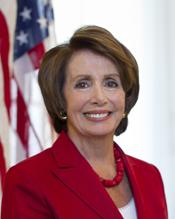
I thank the gentleman for yielding. And I want to commend you, Chairman Obey, and Mr. Murtha, for your tireless work on behalf of our men and women in uniform, and for bringing this critical…
I thank the gentleman for yielding. And I want to commend you, Chairman Obey, and Mr. Murtha, for your tireless work on behalf of our men and women in uniform, and for bringing this critical legislation to the floor today. I am particularly interested in part two and three of the resolution.
We're all grateful for the fact that this will be the last time we will vote on an Iraq supplemental in the House of Representatives. Again, I thank the chairman and the chairman for their important work in this regard.
When the House completes its work today, we will have achieved three goals. First, we will have set a new direction in Iraq that will end this sad chapter in American history and bring our brave men and women home. That is necessary because President Bush, in his request to the Congress, insists on his failed course of action in Iraq, failed from day one; day one, when they went in and thought the war would end in one day.
They're asking us to trust the same impaired judgment that took us into this war on a false premise, without the proper training and equipment for our troops, without a strategy for success or an exit strategy from Iraq.
Isn't it sad that here we are, over 5 years later, over 4,000 of our precious treasure have died, tens of thousands of our men and women in uniform have been wounded, many of them permanently. Our reputation in the world has been greatly diminished, harming our ability to stop the proliferation of weapons of mass destruction and eradicate disease and alleviate poverty, and all of the other leadership roles we have played in the past. It has come at a tremendous cost in dollars to American taxpayers, trillions of dollars, which have taken us deeply into debt, which has taken us into recession. More on that later. But think of the opportunity cost of that money, what we could have done to invest in education and health care. We will pay any price any time to protect the American people, but not to follow the whim of the impaired judgment of this Bush administration.
Only when we finally end this war can we rebuild our military. And that is another cost of this war, diminishing the capacity of our military to meet challenges and threats to our security wherever they may occur. When we do that, we will be able to refocus our attention on the real war on terror.
So this action that we are proposing today, a new direction in Iraq that will end the war, will rebuild our military, refocus on the real war on terror, and restore our reputation in the world. That is why this legislation directs that a redeployment begin within 30 days of this bill's enactment, and with the goal of being completed by December 2009, be completed by then. The new President will have the flexibility to bring our troops home safely, honorably, responsibly, and soon.
Essential to restoring our reputation in the world is to regain our moral authority, which has been lost in this war. That is why under the conditions of this legislation torture is banned. Thank you, Mr. Murtha, for your leadership on this subject. This condition has passed this House overwhelmingly in the defense appropriation bill.
It will also ban permanent bases in Iraq. This condition has passed this House overwhelmingly on any number of occasions, over 300 votes. Insist that the Iraqis pay their fair share for reconstruction. This is a relatively new condition, but a necessary one predicated on the fact that the Iraqis are amassing a budget surplus while we're going deeply in debt to pay for their reconstruction. We're saying if we put up a dollar, you put up a dollar, dollar for dollar to participate in their reconstruction. They have to be at least as interested in rebuilding Iraq as we are, especially when we are doing it to the neglect of our own reconstruction needs in the United States.
This legislation will also ensure that our military pays only its fair share for fuel. Do you know that in Iraq, we pay almost 2\1/2\ times as much for gasoline, our military does, than the Iraqi people do? The Iraqi Government subsidizes the Iraqi people and makes our military pay more than double. And that's a new condition.
The conditions here calling for the cleaning up of waste, fraud and abuse in Iraq and reviewing of contracting passed by suspension. Over two-thirds of the House voted for this legislation that is contained in this condition. And require that any agreements with Iraq that commit U.S. forces for the protection of the Iraqi Government from an external force or from a civil war internally must be approved by the Congress of the United States.
Under the guise of a Status of Forces Agreement, the administration is committing the United States to a treaty without congressional approval. I remind the President of article I. Read the Constitution, Mr. President.
I believe that these provisions should receive bipartisan support. They have every time they have come to the floor. The only two new ones are about the cost of fuel and the dollar for dollar.
What we will also accomplish in this bill is to honor our responsibility to our men and women in uniform. I have been to the theater, to the war area, five or six times in the course of this military action, sometimes with Mr. Murtha, with Mr. Skelton, with Mr. Lantos, with our committee Chairs of jurisdiction.
And when we meet the young people there, they always say the same thing: ``What is going to happen to me when I go home?'' ``What is going to happen to me when I go home?''
Some of the soldiers were telling me about their lives at home, and one of them was very quiet, and I said to him, ``What did you do before you came to Iraq?''
He said, ``I was in high school, ma'am.'' He was in high school. He was a teenager with a gun over his shoulder. If that's necessary for our country's security, it has to happen. But this young man, a teenager, fighting that fight without any thought about what was going to happen to him when he came home.
Well, what we would like to say in the final amendment here is that when you come home, young man, we will thank you for your service to our country by sending you to college. That's what the student veterans have asked us for. That is what we have done for veterans in the past. That is what we owe these young people now. And in doing so, we will be doing a great thing not only for them but for our country because their education will be part of the economic recovery of our country. In the security of our country, they have led the way. In the economic recovery of our country, they will be in the lead.
Third in this bill, we will begin to address America's domestic priorities. We will address the deep economic pain facing many families. As I mentioned, this war, President Bush's war, which is enabled by the complicity of the Republicans in Congress, has taken us deeply into debt, which has taken us deeply into recession, and now has taken our economy to a place where we have record numbers of people unemployed. Today 7.6 million people are unemployed. Of these, 1.4 million Americans, jobless Americans, have been looking for work for over 6 months. And our economy has lost 260,000 jobs this year so far alone. These people need our help as they continue to seek work in this difficult economy.
Thank you, Mr. Obey, for including the unemployment insurance for America's workers in this legislation.
The contrast, I believe, Mr. Speaker, is clear. President Bush and the Republicans in Congress insist on a war without end in Iraq. Democrats, Independents, and Republicans across the country, but, sadly, too few Republicans in this House, are insisting on a New Direction. A New Direction that strengthens America's military by ending the war in Iraq. A New Direction that strengthens America's economy by investing in our veterans and our workers here at home.
We have said over and over again that one way to support our troops is to build a future worthy of their sacrifice. We can begin building that future worthy of their sacrifice by saying ``thank you'' to them and, when they come home, to send them to college.
I urge my colleagues to support the second and the third amendments that are being presented today. And in closing, I want to, as always, salute our men and women in uniform for their service, their sacrifice, their courage,
their patriotism, and with our commitment, again, to build a future worthy of their sacrifice.
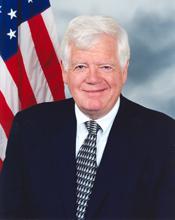
Mr. Speaker, the economy has been one of the casualties of the Iraq war. And this administration has consistently refused to be interested in dealing with the problems of the unemployed. We tried to…
Mr. Speaker, the economy has been one of the casualties of the Iraq war. And this administration has consistently refused to be interested in dealing with the problems of the unemployed.
We tried to get this introduced when we had the stimulus package some months ago. The administration didn't want to do anything with the unemployed. Long-term unemployment in this country is up to 17.9 percent. Now, you would think they would care, but they still aren't asking for it.
They have never changed their tune from 1935. They never thought we should have unemployment insurance in the Social Security Act of 1935 because they said if you give people unemployment insurance, they won't want to go to work, they will just want to sit home and get a check. That comes from people who have never been unemployed. That comes from people who don't know anybody who has ever been unemployed. It is simply nonsense.
We need to put the money into the economy. We need to give it to the workers who have lost their jobs through no fault of their own. And this administration still sits there and says, no, we're not going to extend unemployment benefits.
There are 26 weeks in here; 13 for everybody, and 13 weeks for those States that are over 6 percent.
Mr. Speaker, the U.S. economy is one of the casualties of the Iraq war, and passing an extension of unemployment benefits is nothing less than battlefield triage for innocent American workers who have lost their jobs through no fault of their own.
When I first introduced legislation several months ago to extend unemployment benefits, I had hoped the White House would declare a cease fire so that we could act quickly and on a bipartisan basis to help the American people and U.S. economy.
Instead, months went by while the administration pretended the gathering economic storm was nothing to worry about. And matters just kept getting worse.
Long-term unemployment--the percentage of unemployed workers who have not been able to find a job for at least 6 months--now stands at 17.8 percent. That is something to worry about. And act on.
My bipartisan unemployment extension bill will extend benefits in every State for an additional 13 weeks, and in States where the overall unemployment rate exceeds 6 percent, there is another 13-week extension.
We are going to help the American people weather this storm. And at the same time, we're going to lessen the economic blow to the U.S. economy.
We know people spend their unemployment benefits quickly, and we know a dollar in benefits yields $1.73 in positive economic impact as the money ripples through the economy.
Governors, mayors, State legislators, economists, advocates for working families, and the faith community are all asking for this extension of unemployment benefits.
Only those on the far right are opposed.
They say that unemployment benefits keep people from going out and looking for a job, but they are both out of line and out of touch.
Across America the average unemployment benefit is less than $300 a week--below the poverty-level for an American family.
What we're doing today is throwing a lifeline to the American people. Enough damage has already been done to the U.S. economy because of all the money spent on the endless Iraq war.
It's time for Congress to tend to the economic casualties at home.
Vote for extending unemployment benefits because it is a vote for helping the American people.
National Governors Association,
Washington, DC, May 1, 2008.
Hon. Max Baucus,
Chairman, Committee on Finance, U.S. Senate, Washington, DC.
Hon. Charles Grassley,
Ranking Member, Committee on Finance, U.S. Senate,
Washington, DC.
Hon. Charles B. Rangel,
Chairman, Committee on Ways and Means, House of
Representatives, Washington, DC.
Hon. Jim McCrery,
Ranking Member, Committee on Ways and Means, House of
Representatives, Washington, DC.
Dear Chairman Baucus, Senator Grassley, Chairman Rangel and
Representative McCrery: On behalf of the nation's governors,
we write to express our support for an extension of
unemployment benefits and to request federal assistance for
states to serve a growing number of jobless individuals.
In the last month, 36 states experienced an increase in the
unemployment rate. The national unemployment rate increased
to 5.1 percent in March 2008. Most notable, however, is the
significant number of individuals that are unemployed for 27
weeks or longer, thus exhausting all unemployment benefits.
Today, approximately 16.7 percent of jobless individuals are
experiencing long-term unemployment compared to approximately
11 percent at the beginning of the last recession.
Beginning in 1935, a federal-state partnership was formed
to create an unemployment program that would provide a core
stabilizing function during economic downturns through short-
term income support for jobless individuals, In prior
recessions including the economic downturn that began in
2001, Congress and the Administration utilized the program to
extend unemployment benefits to jobless individuals.
At the same time, any proposal to extend unemployment
benefits must also address the reality that states need
additional resources to administer unemployment claims for a
larger number of individuals for a longer period of time.
This year alone, states may have to administer an average of
nearly 400,000 unemployment insurance claims without federal
funding. Federal support is needed by state employment and
workforce agencies to administer increased initial
unemployment claims, to support weekly unemployment benefits,
and to provide employment and training services.
Given the current economic indicators and historical
precedent, governors believe it is prudent and appropriate
for Congress and the Administration to enact a temporary
federally funded extension of unemployment insurance benefits
and to provide a sufficient increase in funding for states to
assist jobless individuals during this period of economic
slowdown.
We stand ready to work with you and thank you for your
leadership on this issue of national importance.
Sincerely,
Donald L. Carcieri,
Governor, Chair, Education, Early Childhood and Workforce
Committee.
Brad Henry,
Governor, Vice Chair, Education, Early Childhood and
Workforce Committee.
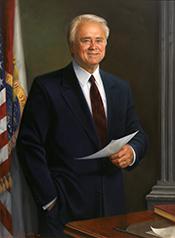
Mr. Speaker, I thank the gentleman for yielding the time to me, and I am here to comment on the defense part of the package, the request by the administration, the issue of procedure. Chairman Murtha…
Mr. Speaker, I thank the gentleman for yielding the time to me, and I am here to comment on the defense part of the package, the request by the administration, the issue of procedure.
Chairman Murtha was very outgoing and worked together with the minority and me, as the ranking member, in drafting this bill. We have always done that. When I was chairman, we did that. When he was chairman, we did that. The defense part of this bill is a good package. That's amendment No. 1.
As a matter of fact, we actually followed the process, and we went to the subcommittee, and the subcommittee members had a full discussion of the defense part of this bill, and the subcommittee members on both size of the aisle agreed that we had produced a pretty good bill, and it met most of what the administration had asked for.
Then we reported it on to the full committee. That's where the process broke down. The process up to that point, while it was at the subcommittee level, the process worked fine, regular order, just like it was supposed to.
But then all of a sudden the process did break down. I don't know to what extent any other Members might have been involved, but this Member, as the ranking member on the subcommittee, was not involved.
There were subsequent meetings, despite the fact it hadn't gone to the full committee, it hadn't gone to the floor of the House so that the Members could express their interest, either by amendment or by debate. There was a meeting between the leadership in the House and the Senate on the defense
package where it was actually conferenced, a conference agreement was reached. There was no conference, but a conference agreement was reached, and that is my understanding of what is in this bill today.
As Mr. Lewis has said, we just got the actual language of what is in this package last night. So it does take a little time to read all of these bills and to understand.
But I think the defense part of it, there may have been an additional change after that preconference conference, or whatever it was, I don't know that. That might have happened.
But I support amendment No. 1, and I believe that we have done a good job in providing for our troops.
The largest portions of amendment No. 1 will deal with pay, military personnel costs, what it takes to maintain the lives of our members of the military and their families. The other very large part of this package is operations and maintenance, something that is essential to keep the military going.
So I support this package, but I really am concerned about the process as well. I like the package, but there may be some Members on this side of the aisle or on that side of the aisle who would like to see some changes, who would like to have an opportunity to debate what is included in that package, who might want to offer an amendment that could be productive, that may be something we would all support.
But we all know, because the opportunity to do that just isn't there. It is a little strange place.
My friend--and I think everyone knows that Mr. Obey and I are friends, and that we have a strong respect for each other, and we have worked very well together in our respective positions--but he mentioned early on that we moved very quickly after September 11, 2001, after the attacks on the World Trade Center, and the airplane that flew into the Pentagon, and the airplane that flew into the ground in Pennsylvania in Mr. Murtha's district that very likely was directed at this United States Capitol, where the Defense Subcommittee was in session working on the Defense appropriations bill. But we didn't know what was happening there. We didn't know what was next.
If you recall, all of the airplanes flying in and around the United States were grounded because we didn't know if additional airplanes had been hijacked, we just didn't know the extent of the attack that we were experiencing, the terrible, vicious terrorist attack against an innocent Nation. So we did move quickly, and we appropriated $3 billion----
I thank the gentleman.
So we did move quickly, and on the third day after September 11, we produced a bill. Mr. Obey and I wrote that bill together, we consulted with each other, we had a couple of disagreements, we worked those out. We had some accountability in the bill.
We then had a meeting with Senators, and on the third day we had worked together, Republicans and Democrats, to produce a bill that sailed through the House, sailed through the Senate, signed by the President. That's the way it was done. The process was not the regular order, but it was a process done in consultation with both parties and any Member that wanted to be included.
While I do support amendment No. 1, I think the process is terrible, I think the process is inexcusable. I cannot support the process, but I think we have a good package on amendment No. 1, which is to pay for the national defense requirements in this supplemental.
Madam Speaker, I hope the House will forgive my laryngitis today. Madam Speaker, I have just heard complaints from the minority side of the aisle about the process by which this proposal is being…
Madam Speaker, I hope the House will forgive my laryngitis today.
Madam Speaker, I have just heard complaints from the minority side of the aisle about the process by which this proposal is being brought to us. This criticism about process comes from the same crowd that brought a $40 billion proposal to the floor 2 days after 9/11 without ever running that proposal through either the appropriations subcommittee or the Appropriations Committee. That criticism comes from the same crowd----
No. I didn't interrupt you. You always ask someone to yield in order to interrupt their train of thought. I would appreciate if you would stop doing that with me.
Madam Speaker, ahead of time, I will not yield to anyone until I have completed my statement.
This criticism on process comes from the same crowd that stood by and allowed 30 pages of unread material to be surreptitiously and anonymously slipped into a conference report on the defense bill after the conference report had completed action, language which insulated the drug industry from liability in cases where their products injured the health of customers.
This comes from the same crowd that several years ago blocked the ability of this House to vote on a single matter that had anything at all to do with the most significant domestic appropriation bill, the Labor-Health-Education bill. They simply wrapped it into other items and refused to allow the House to work its will on any piece of that proposal which had more than 500 programs which were insulated from House review.
This comes from the same crowd that brought three supplemental appropriation bills to the floor without running those bills through the Appropriations Committee or subcommittee.
Now they say that they want one vote on the package all put together. Well, let me tell you, what we are trying to do is to avoid Members having to look at everything in one package. What we are trying to do is to give them a straight up-or-down vote, a clean shot on the issue of whether you want to provide funding for the war or not. It is a procedurally neutral approach. If you want funding for the war, you vote ``yes'' and if you don't want it, you vote ``no.'' That way you can't hide on that issue. It stands out there alone, and people see where you stand.
We are also having a separate vote on whether or not we should impose conditions on the administration in exchange for the use of that money, straight up-or-down vote, clean shot at it, can't hide behind any other issue.
And thirdly, we are taking the administration's other requests and two priorities of our own and putting them together in a third amendment, again separate, not tied into a big package, out there so that Members can choose up or down whether they want to do that or not. I make no apology for that.
Now we are being lectured about the fact that this is a bloated bill. Out of all of the appropriated items in this bill, all but $2 billion are requested by the administration. Congress has the temerity to be asking to spend 1 percent of the appropriated amount in this bill. The rest the President takes ownership of.
Secondly, we are being told, Oh, it's terrible because we've taken a military bill and ``larded'' it up was the term that the gentleman from Janesville used, that we larded it up with unemployment compensation and with the expanded GI Bill. Well, I suppose additional unemployment compensation benefits may look like lard to a Member who makes $165,000 a year; but to people who have exhausted their unemployment benefits and have been out of work for 6 months, it doesn't look like lard to them; it looks like basic bread, and I think we should be ashamed of the fact that we haven't provided this sooner.
It also may look like lard to the gentleman from Janesville for us to say that we want to provide expanded education benefits to the GIs who fought this war. But I would remind every Member of this House, this is the first war in my knowledge where we have never had any sense of shared sacrifice. The only people in this society who are being asked to sacrifice are the veterans and the military families. They have been sent to Iraq and Afghanistan again and again and again, and we have the quaint idea that we ought to be able to take 6 percent of the cost of that war to date, 6 percent, and devote it to expanding education benefits for people who have sacrificed by wearing the uniform of the United States.
We pay for that by providing what the majority leader refers to as a patriots' premium, a one-half of 1 percent increase in taxes for the most fortunate people in this society who make more than a million bucks a year.
If you think that is even a close question, whether we ought to put the GIs before those fortunate folks, then it is no wonder you lost the seat in Mississippi 2 days ago.

Well, as Bill Young said, we worked together when he was chairman. When Jerry was chairman, we worked together. The only thing I disagree with, when it comes to the floor, I am not sure I like to…
Well, as Bill Young said, we worked together when he was chairman. When Jerry was chairman, we worked together.
The only thing I disagree with, when it comes to the floor, I am not sure I like to hear a lot about amendments. I mean, you know, I like to see it try to work in a hurry.
But, anyway, I am concerned, when I heard the other day the Secretary of Defense say that the United States military must prepare for more fighting, future wars against insurgents and militias, such as in Iraq and Afghanistan, rather than spend money and time preparing for conventional conflicts.
Overemphasizing the Department's focus on training and equipment for counterinsurgency missions appears to be simply a rationalization of a short-term budget decision made in the waning months of this administration. I am worried because we have been saying over and over again, let's look beyond Iraq, let's make sure we get the military back to the position where it should be.
These decisions have left the Armed Forces in a degraded state of readiness. Both of us, when Jerry was chairman, when Bill was chairman, we have tried to increase the amount of money for the military to increase our readiness without the support of the administration in many cases.
They have let the facilities, which directly impact service personnel, quality of life, in disrepair. Every place we have gone we have seen the disrepair. They have left many defense acquisition programs broken or badly damaged.
I sent a letter to the Secretary of Defense saying, Mr. Secretary, we have got some real problems here. We have got to fix these procedures by sending a budget up to it. We have got to stop the supplementals, put it in one budget so we can have some semblance of order when we look at these decisions. These decisions fail to take into account the potential missions the U.S. armed forces must prepare for and may have to undertake in the years ahead.
I find these comments questionable that he has made at a time when not one combat unit in the United States is rated as combat ready. We need a national strategy. We have tried to provide a national strategy to identify both near term and long-term threats to this country. We need a vigorous debate to achieve this strategy, and it hasn't happened since the Cold War.
Now, I hope that in the base bill and this supplemental we are moving in that direction. I hope that's what we are going to be able to accomplish.
Now, we spend more money on intelligence than any other country in the world. Put them all together, and we spend more money. I have got Punxsutawney Phil in my district. Punxsutawney Phil comes out once a year, he sees his shadow, and 50 percent of the time he is right.
Well, I will tell you, I wouldn't say that the intelligence effort that we spend so much money on is any more than that, because so many things have not been right.
I am concerned that if we don't pay attention to what we know, we who have been here a long time, we are not going to be prepared not only to fight a war, but to prevent a war. We can no longer be the world's policeman, and I think all of us understand that.
We need to rebuild our diplomatic alliances, and we need to restore our international credibility. Our military and diplomatic force must include the strengths of our allies. We cannot do it alone.
Now, let me say in this bill we have $3.6 billion for C-17s. We produced 34 C-130s. We went through it with the subcommittee in detail. We had to make some changes because the full committee wanted us to make some changes, $3 billion for medium and heavy trucks. I remember when we went to Saudi Arabia the first time, we asked General Schwarzkopf, what was the biggest shortage, and he said trucks.
We have tried to take care of the things we realize need to be done. We put money in for Humvees and Marine Corps facility maintenance, and we put in for medical maintenance. We transferred money to the military construction committee, and they made the decision where that money should go--and $570 billion--no one in Congress, probably in the history of Congress, paid more attention to medical care for the military than Mr. Lewis, Mr. Young and myself. We have tried to be in the forefront in making sure that they have what they need in order to take care of the troops.
As a matter of fact, we put money in some years ago for a center to take care of the amputees, and it took them awhile to understand that we were serious about it, but it happened. I am proud to say that is working very effectively.
So what we have done under the Constitution is appropriate the money where we think it will do the most good, and we will continue to do that. This is a good bill, and I hope Members vote for it so we can get the money to the troops that they need.
Mr. Speaker, I rise today to speak in support of this very important commonsense legislation, the Government Funding Transparency Act 2008. I would like to thank, of course, Chairman Towns for his…
Mr. Speaker, I rise today to speak in support of this very important commonsense legislation, the Government Funding Transparency Act 2008. I would like to thank, of course, Chairman Towns for his work on the subcommittee, Chairman Waxman for his early and active support on this legislation, and especially to the ranking member, former chairman, Mr. Davis, who we were able to work directly together with over the past days and weeks to make this, as he states, I think a much stronger bill and one that answers many of the concerns that were raised by Mr. Davis, his office, and members of the minority of the committee.
Mr. Speaker, as described, the Government Funding Transparency Act will require that companies who receive more than 80 percent of their income in annual gross revenue from the Federal Government and more than $25 million worth of Federal work in any given fiscal year disclose the salaries of their most highly compensated employees.
This disclosure would be, as Representative Davis noted, posted on an existing OMB Web site, www.USAspending.gov, which was authorized as part of the Federal Funding, Accountability, and Transparency Act, a bipartisan measure passed by the 109th Congress.
As pointed out in a recent GAO report, buying services accounted for 60 percent of the total 2006 procurement dollars. And expenditures on security services, due to our engagement in the wars in Iraq and Afghanistan, have forced those service expenditures to increase substantially.
In addition, according to that same Web site, we have seen an increasing number of contracts that weren't competed at all. In fact, in 2000, the amount of contracts not competed was $48 billion, just north of there; and in 2007, 7 years later, that number had ballooned to $112 billion.
And yet with such a substantial increase in government funding going to companies through no-bid processes, these companies are virtually subsidiaries of the United States government taking in 80 to 90, perhaps 100 percent of their revenues from U.S. taxpayers. We don't know enough about these tax companies. We don't know their management practices, their financial statements, or their employment policies. They are often highly and tightly held secrets not subject to public scrutiny.
So it is not surprising, as Chairman Waxman mentioned in October 2007 when the full Oversight and Government Reform Committee brought the CEO of Blackwater before us, one of the largest government contractors, taking in nearly 90 percent of their revenue contracts from Federal contracts, the CEO of that company, Eric Prince, refused to disclose to Congress the amount of profit that company makes or the amount of salary that he took in; yet despite the fact that 90 percent of that salary, 90 percent of the company's revenues, come from the United States' taxpayers.
It's our money. We deserve to know how it's being used. Regardless of your position on this war or any other war, we deserve to know whether or not public funds are being used to unjustly enrich government contractors.
But this principle, as Representative Davis and others pointed out, shouldn't just be applied to these types of private security or service contracts. It should be required of all entities that make the vast amount of their earnings, over 80 percent, from U.S. taxpayer dollars. And I would especially like to thank Representative Davis and Representative Foxx for their advocacy for this principle.
Importantly, it's important to note that this bill will actually only affect a limited number of companies, only those entities that subsist almost entirely on Federal money and only those that are not publicly traded, since public companies who do the lion's share, frankly, of Federal contracting, already disclose executive compensation information.
Mr. Speaker, profit is clearly a powerful motive, and this legislation does nothing to remove this incentive from our Federal contracting structure. But when it comes to private companies like Blackwater and others that would not exist if it wasn't for United States taxpayer dollars, the taxpayers and this Congress should have the information necessary to decide whether we've gone too far in padding the personal pockets of those who feed at the government trough.
As the late Supreme Court Justice Brandeis said, sunlight is the best disinfectant. I believe this legislation will apply a little bit more sunlight to the Federal funding process.
Again, I thank the chairman and the ranking member for their assistance on this legislation. And I know that this body will agree that as stewards of the people's treasure, we must do everything in our power to make sure it's being spent justly and responsibly. Again, I thank the chairman.
I had wanted to offer two amendments, one that would have prohibited government officials from attending the genocide Olympics on taxpayer money, and also Members of Congress. And no Member of…
I had wanted to offer two amendments, one that would have prohibited government officials from attending the genocide Olympics on taxpayer money, and also Members of Congress. And no Member of Congress who speaks out on human rights should go to that Olympics.
Secondly, I wanted to offer an amendment that would create a bipartisan commission, much like the Iraq Study Group, to look at everything, to put everything on the table, all of the spending and tax policies, to get control of our spending and where we are.
We have $54 trillion of unfunded liabilities in this Nation. We have $9 trillion of debt, $1 trillion that the Chinese hold, and the Saudis also hold a large portion, the Saudis who had 15 Wahabbies on those airplanes that went into our buildings.
Standard & Poor's says we will lose our AAA bond rating in 2012, and Moody's says we will lose it in 2018. The value of the dollar is falling like a rock. Gasoline is increasing. Mr. Speaker, what kind of country are we leaving to our children? Are we leaving a country whereby China and Saudi Arabia will be their bankers?
Dietrich Bonhoeffer, the Lutheran pastor who stood up to the Nazis, said, ``The ultimate test of a moral society is the kind of world it leaves to its children.''
This Congress, on both sides of the aisle, Republican and Democratic side, is not leaving a very good situation to their children and their grandchildren. I would ask you as Members of this Congress, as parents and grandparents, what kind of country do you want to
leave? What are you going to tell your kids and your grandkids later on when you say, When I was there, there was $54 trillion of debt, and I did nothing. There was $1 trillion held by the Chinese, who are spying against us, and Mr. Murtha knows how they are spying against us, we did nothing.
We lost our AAA bond rating, Mom or Dad or Grandma or Grandpa while you were there, did you do anything? And the answer will be: We did nothing.
I rise in opposition to this legislation.
I have been a member of the Appropriations Committee since 1995, yet I cannot recall a time that the House has avoided the Appropriations Committee process with such a critical nationally and internationally important piece of legislation.
Members of the Committee--including the minority--are being shut out of the process.
I wanted to offer an amendment that would prohibit U.S. government employees from attending the Olympics on the taxpayer's dime.
When awarded the honor of hosting the 2008 Summer Olympics, China had the opportunity to show the world that it has changed. But the China of today is worse than the China of yesterday, or of last year, or of the last decade. China is not progressing. It is regressing. It is more violent, more repressive, and more resistant to democratic values than ever before.
China, which jails Catholic bishops, Protestant house church leaders, Tibetan Buddhists, Muslim Uyghurs and Falun Gong practitioners; which is spying against us and supplying weapons to regimes like Khartoum; which has an extensive system of slave labor camps, was awarded the honor of hosting the 2008 summer Olympic games.
We should not reward the Beijing regime with our taxpayer dollars. U.S. officials should not be permitted to use Federal funds to attend the 2008 Olympics. But I am being prevented from offering this amendment because the Democrat leadership has gone around the Appropriations Committee and brought this bill to the floor under a closed rule.
I also wanted to offer an amendment that would create a bipartisan commission--much like the Iraq Study Group--to look at everything--tax policy and entitlement spending--and recommend legislative action to rein in our Federal debt.
We have $53 trillion in unfunded liabilities, and over $9 trillion dollars in debt. Standard and Poor's Investment Service has indicated that we could lose our triple-A bonding rating as early as 2012. The value of the dollar is falling through the floor. China holds our debt. OPEC countries like Saudi Arabia hold our debt. Dietrich Bonhoeffer said, ``The ultimate test of a moral society is the kind of world it leaves to its children.''
Our grandchildren will bear the burden of out-of-control entitlement spending if we do not act. It's on our watch to fix, and the process being used today shuts out critical issues that we must face.
This House needs to come together and work in a bipartisan manner to address the critical issues facing our country. This legislation today is the product of the heavy hand of the Democrat leadership in foreclosing an open and fair process and I cannot support it.
Show 11 more
Mr. Speaker, this is an important bill that we're debating today. In fact, it's a bill that has been kind of in the hopper, if you will, for months, and maybe even a year's time right now. This is a…
Mr. Speaker, this is an important bill that we're debating today. In fact, it's a bill that has been kind of in the hopper, if you will, for months, and maybe even a year's time right now. This is a bill that the troops very badly need. And that's why it's odd to me that there are so many unrelated amendments to it.
I understand that when the Democrats took over, their promise to the MoveOn.org fringe of their party was that we are going to get the troops out of Iraq. They have not delivered on that. And so what we have here is a little fig leaf debate on getting out of Iraq so that their Get Out of Iraq Caucus can have a political cover story so that when they go home over the Memorial Day recess, they can tell people, yeah, I voted to get out Iraq. But the truth is, there is no delivery here.
That debate alone should be something that we do all day long. It should be at least a week's worth of our time, if not more, the debate on getting out of Iraq and imperiling troops in the way. But no, the Democrat Party will not give that to their group that wants the Get Out of Iraq Caucus. What they want is a little fig leaf amendment to a bill, which they know is going to pass and they're hoping that this is going to cover their politics. That is a sham, and that is a shame. I respect somebody who wants to get out of Iraq now, but they should have a debate on that on a freestanding bill. It should not be an amendment.
Secondly, I want to point out the stuff which Mr. Culberson referred to as pork. Mr. Obey took exception to that. And I'd say this stuff isn't pork, but it isn't an emergency. It isn't stuff you put on the backs of our troops in the field.
I don't know how much money we spent in New Orleans, I would like to know. I think we, as Republicans, spent too much. I think you guys, as Democrats, are spending too much. I understand there is $5.8 billion for levees in New Orleans. Now, Mr. Speaker, as I recall, that did not happen recently.
There is money in here for the census. And I learned in eighth grade geography we do a census every 10 years. Why should that be put on an emergency bill? We know that the end of the decade comes. That funding should be done on an appropriate freestanding manner.
The Bureau of Prisons? Why are we passing that on the backs of soldiers? Contractor language. And I'm a former member of military construction and I represent four military installations. MILCON is very important to me. But why is it put on the back of a supplemental emergency bill? That is not what we do here. It should go through the regular appropriations process. It should go through a subcommittee. It should through a full committee before it comes to the House floor. It should not be an amendment that is put on a troop's bill.
I think that if we look back in history at the way that we were sticking it to, if you will, the minority party when we were in the majority, I think you guys have a very good case for that. In fact, I respect Mr. Obey. I have a page full of quotes from him.
I'm touched with the bipartisan support of the Democrat Party that suddenly when the Bush administration asks for something, it's like that, they get it. I'm really impressed with that.
Did you get a formal letter from OMB on the census? Because we haven't seen it on the minority side.
Well, we haven't seen it from OMB on our side, so I just want to point that out.
Mr. Speaker, what I would say is that these things may or may not be legitimate expenditures, but if they went through a subcommittee and a full committee and they're on a freestanding piece of legislation, that is the proper process of Congress. And when the Democrat Party was in the minority, the distinguished chairman of the Appropriations Committee was one of the biggest proponents of regular order. What we are asking for is regular order. I agree, we did it wrong, but you don't have to repeat that.
I thank the gentleman for yielding. Madam Speaker, I come to the floor today in strong opposition to this emergency supplemental spending bill that not only would bust the budget with billions in…
I thank the gentleman for yielding.
Madam Speaker, I come to the floor today in strong opposition to this emergency supplemental spending bill that not only would bust the budget with billions in nonemergency spending, but it would also raise taxes on small business. I can't think of a worse time to implement a tax increase, with a weak economy that is struggling to create and grow jobs.
Republicans will not support this bill. The President will veto this bill. Yet the Democratic leadership brings it to the floor and continues to play politics with funding for our troops.
The President's request, submitted 15 months ago, was for $108 billion. The Democrats, once again, can't help themselves. And they have added an additional $6.6 billion of this. And to add insult to injury to the American taxpayer and our troops in harm's way, this amount actually reduces the President's request by $3.5 billion.
I guess that's what you get when a bill is written unilaterally and in secret.
If the majority brought us a clean supplemental with just funding for the troops, it would undoubtedly have been passed with a big bipartisan vote and sent to the President before Memorial Day so there is no disruption in funding. That should be what we're doing, and not playing politics with funding for our troops.
That is what a majority would do if they were serious about passing a bill and not playing politics.
But that is not what the Democrat majority has done here. Instead, 15 months after the President asked for the troop funding, the majority has brought a bloated bill to the floor that will cost the American taxpayer $250 billion over the next decade.
This is a bill they wrote in secret, without allowing committee markups, while only allowing Members 18 hours to review a bill that would provide an amount equivalent to 26 percent of the spending in last year's regular appropriation bills, and without allowing the full House to work its will in an open and Democratic process.
It violates the budget passed by the majority by adding $6.6 billion to the amounts assumed for the war supplemental for the House-passed budget resolution. And the Democratic leadership has decided to lard this bill up with $66 billion in mandatory spending.
While they raise taxes to pay for the GI benefits, this bill adds billions in funding that has nothing to do with the war and is not fully offset.
So they say they are meeting the PAYGO rules. But they don't meet it for all the other spending in this bill. Mandatory spending does not belong in war emergency supplementals. The mandatory provisions in question deserve serious debate as stand-alone bills.
Why are they hiding this in a war supplemental? They should be proud of these provisions and let them withstand the full light of day through the regular committee process. And if increasing spending by over $66 billion wasn't enough, they are proposing to raise taxes on Americans as well, to tax and spend rather than paying for this increase with reductions in other spending.
The last thing we ought to be doing today is raise taxes. They will say this is a tax on millionaires. But this tax is going to hit small businesses. These are the job creators in America. This is the worst thing we can do as this economy is struggling.
Yesterday the House waived the PAYGO rule to give farm subsidies to millionaires.
Yesterday, the House waived the PAYGO rules to give farm subsidies to millionaires.
Today, the House wants to enforce PAYGO to raise taxes on small businesses. I fear for this institution. The majority is taking us down a slippery slope. And I don't think they are going to be able to put this genie back in the bottle. The committees have been ignored. The budget has been ignored. The rules have been ignored. What is next?
I urge my colleagues to vote ``no'' on this bill.
Mr. Speaker, I move to suspend the rules and pass the bill (H.R. 3928) to require certain large government contractors that receive more than 80 percent of their annual gross revenue from Federal…
Mr. Speaker, I move to suspend the rules and pass the bill (H.R. 3928) to require certain large government contractors that receive more than 80 percent of their annual gross
revenue from Federal contracts to disclose the names and salaries of their most highly compensated officers, and for other purposes, as amended.
Mr. Speaker, I yield 5 minutes to Chairman Waxman, the gentleman from California.
Mr. Speaker, I yield 5 minutes to Congressman Murphy who is the author of the bill who has done a fantastic job. I think the people in this country should be very proud of him and his work.
Mr. Speaker, I yield 1 minute to Congressman Welch.
Mr. Speaker, I ask unanimous consent that all Members may have 5 legislative days in which to revise and extend their remarks.
Mr. Speaker, H.R. 3928, the Government Funding Transparency Act of 2008, will provide more information about executive pay at large organizations that get almost all of their revenue from Federal taxpayers' dollars. It closes a loophole in the current law.
Right now, the salaries of most people who are paid from Federal funds are public information. The salaries of every Member of Congress is public information. However, large private companies that draw most of their revenue from Federal funds have no such requirements. As a result, nobody knows
if the taxpayers are funding enormous executive pay packages.
This bill is intended to apply the same standards of transparency to these large companies that apply to other people and groups that benefit from Federal expenditures. For example, each year the Federal Government spends hundreds of billions of dollars on contracts. In 2006 alone, the Federal Government spent over $400 billion.
This increase in spending has enriched Federal contractors by way of record-breaking profits and escalating executive compensation. Yet, although the government spends billions of dollars on private contractors, the American taxpayers and Congress know very little about the financial and compensation policies of these firms.
This bill is very narrowly targeted. It requires disclosure of executive pay only from private companies that bring in more than $25 million a year in Federal funds and only if those Federal funds are more than 80 percent of the company's revenue.
The executives of companies falling into that category are basically being paid by the taxpayers, and the taxpayers have a right to know where their money is going. I don't have a problem with people making money. That's okay. That is not what this bill is about. It is about getting the information needed to see if taxpayers' dollars are being well spent. That is important.
If a company whose revenue is primarily from government funds can pay its executives millions of dollars, it raises questions about whether the government is getting a good bargain. It suggests the government could spend its money more efficiently through more competition or more different requirements. Enormous taxpayer-funded pay packages should be a trigger for more oversight of the programs involved.
The sponsor of this bill, Mr. Murphy from Connecticut, has put in a lot of work on this bill because he recognizes the importance of greater transparency and the need of safeguarding tax bill dollars from waste, fraud, and abuse.
Mr. Speaker, this bill is an important step towards our goal of improving accountability and transparency in Federal spending. We should know whether taxpayers are footing the bill for high salaries paid to executives. I fully support its passage, and I urge my colleagues to do the same.
Mr. Speaker, I yield back the balance of my time.
Madam Speaker, 5 years ago in a well-orchestrated public relations stunt that featured landing on an aircraft carrier, President Bush proclaimed, ``In the battle of Iraq, the United States and our…
Madam Speaker, 5 years ago in a well-orchestrated public relations stunt that featured landing on an aircraft carrier, President Bush proclaimed, ``In the battle of Iraq, the United States and our allies have prevailed.''
Just 2 weeks ago, on the fifth anniversary of ``Mission Accomplished,'' the White House could only express exasperation that anyone would even make a fuss that 5 years have gone by and we're still in Iraq, deeper than ever.
Well, here's why people are making such a fuss, Madam Speaker: Over 4,000 American service men and women killed in Iraq; over 30,000 of our troops wounded or maimed; a continuing U.S. occupation of Iraq; and a mission that is never ending, never defined, and completely open-ended.
Ironically, the USS Abraham Lincoln, the aircraft carrier where President Bush declared victory in Iraq, was just deployed last week for another tour of duty in the Persian Gulf.
Today this House will have a choice to make, whether to continue this war well into next year. Today we will choose whether to support the George Bush strategy of keeping the war going until he can safely get out of town.
Once again, U.S. forces are engaged in some of the most intense combat since the height of the insurgency. Once again, they are battling Iraqi militias, not al Qaeda, in the markets, homes and alleyways of Baghdad. April 2008 was the deadliest month for Iraqi civilians since last August.
The U.N. now reports that 4.7 million Iraqis have been forced by violence to leave their homes. Roughly 2 million of them are refugees in neighboring countries. And another 2.7 million are internally displaced.
What is worse, we don't even have the decency to pay for this war, which has created a mountain of debt that American taxpayers will be paying off for years to come. This generation's mistake is becoming the next generation's burden.
Currently the war costs $2.4 billion each and every week. Reports estimate that the costs of this war, even if we could bring it to an end over the next 2 years, will exceed $3 trillion when we take into account rebuilding our broken military and addressing the needs of our military veterans.
Billions for the care of the severely wounded.
Billions for the care of veterans traumatized by war.
Billions to staunch the flow of suicides by young men and women who have served in Iraq.
And billions more to rebuild and re-equip our Armed Forces.
Why can't the Iraqi Government, which is currently running a huge surplus, do more to rebuild their country?
Madam Speaker, I am holding office hours across my congressional district in Massachusetts. These are mainly small towns and communities. Every weekend I meet a steady stream of constituents who come in and who want to talk about the war. People are so disappointed, so frustrated and so angry that this war is still going on. And it is not just Massachusetts. It is Illinois, Louisiana, Mississippi and every other State in the Union.
Now I know, Madam Speaker, that there will be opportunities today to support strong conditions on the war and the redeployment of our troops. We will have the opportunity to vote in support of greatly expanded educational benefits for our military veterans and for a generous response to the emergency global food crisis.
And I thank Chairman Obey for those initiatives.
But Madam Speaker, I cannot vote for one more dime for this war. Enough is enough. Before he leaves town, George Bush should bring our troops home.
Mr. Speaker, I rise in strong opposition to this continued occupation in Iraq, and I want to thank Chairman Obey for his leadership and for yielding me this time. I'm so much opposed to giving this…
Mr. Speaker, I rise in strong opposition to this continued occupation in Iraq, and I want to thank Chairman Obey for his leadership and for yielding me this time. I'm so much opposed to giving this President this new funding to continue this occupation with no strings attached until last night, once again, I went to the Rules Committee to propose the Lee amendment, which would provide funding only for the safe, responsible redeployment of our troops and contractors, and also for a strong diplomatic initiative. Not one dime should be spent anymore for funding this combat operation.
We just left a hearing of our Winter Soldiers. These young men and women told us about the dehumanizing effects of what has happened to them in terms of our troops. This has got to stop.
One of their first requests was to ask us not to vote for any more funding, to fund only redeployment and to bring them home.
In honor of our troops, let's bring them home and not send any more money over there to fight this war.
Mr. Speaker, I rise in strong opposition to the continued occupation in Iraq and I want to thank my Chairman, David Obey for his leadership and for yielding me the time. I am opposed to giving this president $180 billion with no strings attached to continue the disastrous war and occupation in Iraq as amendment No. 1 does.
The war and occupation in Iraq has put our country and economy in a hole. When you are in a hole, you've got to stop digging and climb your way out. Today that means funding the
safe redeployment of our American troops and contractors out of Iraq.
The Lee Amendment I offered at the Rules Committee would have accomplished that but it was not made in order. So I have no choice but to vote against providing more funding for Iraq.
Unlike amendment No. 1, amendment No. 2 contains important restrictions and limitations on funding and would begin redeployment of our troops within 30 days. The second amendment also contains two restrictions and conditions that I have long championed. The first is the prohibition against the establishment of permanent military bases in Iraq. The second condition prohibits the President from unilaterally binding the U.S. to an agreement with the Government of Iraq that includes security assurances for mutual defense.
Finally, I support amendment No. 3 which provides urgent funding for domestic and international priorities, including a new GI bill for our brave veterans, extension of unemployment benefits, funding for peacekeeping operations in Darfur, and urgently needed international food and disaster assistance.
The sad fact is that in the last 5 years this Administration has spent nearly a half trillion dollars on the Iraq war and occupation and we have precious little to show for it. Iraq has been destabilized, our national prestige has been tarnished, and national attention has been diverted from the real and urgent challenges facing the American people.
Over 4,000 American troops and tens of thousands of Iraqis have died, more than 30,000 Americans are wounded, and more than 4 million Iraqis are displaced.
It is far past time to stop the madness.
I urge a ``no'' vote on amendment No. 1. I urge a ``yes'' vote on amendment No. 2 and No. 3. We must redeploy and honor our troops by bringing them home.
Mr. Speaker, we find ourselves today as a minority party watching a very perplexing bill come towards us. It's perplexing in the sense that we watch a majority party which has promised America to end…
Mr. Speaker, we find ourselves today as a minority party watching a very perplexing bill come towards us. It's perplexing in the sense that we watch a majority party which has promised America to end the war, which many of us, I think, rightly view and the world will view as an American defeat because it has failed and cannot be changed to the point where America can win. We've also watched a majority party tell us that the spending on the Iraq war has destroyed the American economy. We can differ on that but that is their position. And we now watch the Democratic Party bring forward a bill that will fund a failed war and will evidently, by their logic, further decimate the American economy.
Now how does one come to the conclusion that this is a necessary step for said party? Well, you have discretionary spending added into it. Now, I would argue that a fine piece of legislation has been attached to this bill, which was introduced by the gentleman from Washington, to help people who are unemployed. Thanks to the policies of my State legislature, which has raised taxes and helped drive business out of Michigan, we have seen that people need unemployment insurance to get themselves through difficult times in the hopes they can find employment.
Which brings me to the next problem with this, which is in an attempt to help veterans, we are raising taxes on small business income. Eighty percent of the income that will be taxed comes from small business. So now what we have is an attempt to show that we can fund a war that we believe has failed with money that has decimated the American economy by going overseas; yet we will try to help the unemployed, who will further suffer from this, and we will try to help veterans who come back from that war by making sure that there are no jobs here waiting for them.
Again, it is a very perplexing bill. I would suggest to the gentleman who earlier suggested there was nothing Congress could do to end this war to rethink the position.
Congress still holds the power of the purse. If the war is not funded, the war cannot continue. That's perhaps a position I disagree with, but it is a factual matter. If you are serious about this, you would do that.
Or you would have a straightforward vote on funding the troops to ensure that we continue to move forward and that America is not defeated in Iraq. You would have dealt with the McDermott bill and sent it to the President despite his veto threat because he has also threatened to veto this legislation. There would be much Republican support for this. And then you would deal with the veterans in the way they should be.
Now many friends of mine are Blue Dogs. You were not questioned on your patriotism when you determined that this money for veterans had to be offset. No one said you cared more about big government than veterans. I would suggest that those of us who want to make sure our economy recovers and do not want to tax it into submission and decimation should not have any patriotism questioned about supporting veterans by opposing tax increases and instead looking for cuts in Federal pork to pay for it.
Madam Speaker, I very much appreciate my colleague yielding me this time. Perhaps the most important counsel I have ever received came from my dear friend and mentor, Dr. Adeline Gunther. ``Gram,''…
Madam Speaker, I very much appreciate my colleague yielding me this time.
Perhaps the most important counsel I have ever received came from my dear friend and mentor, Dr. Adeline Gunther. ``Gram,'' as we called her, was the founder and guiding light of the University Religious Conference located near the UCLA campus. Gram said to me, ``Always remember, Jerry, what you are not willing to do in order to win.''
Think about that. What you are not willing to do in order to win.
Those running the Democratic leadership of the House need desperately to learn that lesson. So enamored with their power after 12 years out of the majority, the Democrat majority is now moving rapidly in the direction of reinventing the authoritarian system that was a part of their control for the previous 40 years.
The outrageous movement of the Iraq supplemental to the House floor, without consideration by the Committee on Appropriations and under a closed rule, is the case in point.
The supplemental began as a $108 billion request for funding requirements for the troops for the remainder of 2008. This must-pass emergency legislation has now grown to somewhere near $250 billion. A whole array of legislative provisions has been added that could have been and should have been addressed by way of regular order during the appropriations process.
Unfortunately, the supplemental will bypass the Appropriations Committee altogether, and through use of parliamentary trickery, avoid the inconvenient input of Democrat and Republican Members who have real expertise in the subject areas involved.
Regular order is designed to ensure that people's voices and interests are heard on serious public policy questions as they move through the legislative process. To have the Democrat leadership cut off the people's right to be heard by such a crass parliamentary set of maneuvers results in great harm to the Appropriations Committee and seriously undermines the credibility of the world's most admired legislative body.
Only three or four Members, at most, have provided serious input throughout this misguided process. All Members, Democrats and Republicans alike, should be enraged by this arrogant demonstration of dictatorial control. I know from private conversations with many of my friends on the other side of the aisle that there is a great deal of frustration among Democrats with Chairman Obey and Speaker Pelosi for their excessive and abusive control of this process.
Madam Speaker, let me assure you that my colleagues and I will continue to exercise every tool available to us to protect the established traditions of the House and the fundamentals of our democratic system. It is clear that Speaker Pelosi is willing to do anything, including stifling the voices of nearly every Member of the House, to win.
I urge all of my colleagues to remember the words of my mentor, Dr.
Adeline Gunther, who said, ``Always remember what you are not willing to do in order to win.''
Mr. Speaker, I thank the gentleman for yielding. This week, we're in the week before we break for our annual Memorial Day work period. Historically, this has been a time when we recognized those who…
Mr. Speaker, I thank the gentleman for yielding.
This week, we're in the week before we break for our annual Memorial Day work period. Historically, this has been a time when we recognized those who have served and those who are serving, those who are willing to give even their life to help protect the freedom of this country. This is a time-honored tradition in our country.
It's today that we finally come to the floor, after literally months and months of a request for this funding for troops, nearing the deadline where troop withdrawal notices or troop furlough notices and other furlough notices would go out, and we come to the floor with a bill that puts restrictions on the troops. We come to the floor with a bill that does, in fact, finally meet those funding needs of the troops. And we come in a way that doesn't allow us to have any different ideas, have any amendments to these provisions that are brought to us today.
This is an extraordinary procedure in the way we have handled supplementals in the past. The only supplementals that have ever been brought to the floor in the last 20 years, with a closed rule, were supplementals where both sides agreed that we had to immediately respond to an immediate emergency, and it was a bipartisan agreement. There is no bipartisan agreement on the way this bill is brought to the floor. And because of that, it does not meet the needs of the troops as it should. The restrictions are wrong. The time line is wrong. Even the GI benefits that all of us believe need to be updated to meet the needs of today's military, as opposed to yesterday's military, doesn't have transferability of those benefits, the thing that spouses and people in the military and dependents in the military would like. It isn't designed for a military that's a volunteer Army.
There is a better House provision, but are we allowed to offer that House provision? No.
We get to say yes or no because everybody in this building knows that this bill will never become law. We've waited till the week before Memorial Day to bring a bill to the floor that will not become law. The majority leader announced earlier today that maybe it will be the middle of June before we get to a bill that would actually get to the President's desk and become law, when furlough notices have gone out.
This is a shameful way for us to meet the needs of our troops, and I hope we'll get down to business next week and see if we can't actually pass a bill that will meet the needs of our troops.
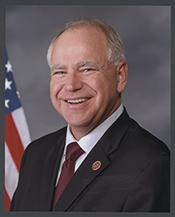
I thank the chairman of the Appropriations Committee and my neighbor over in Wisconsin for all of his work and, of course, Chairman Murtha for his unending and tireless support of our veterans. I…
I thank the chairman of the Appropriations Committee and my neighbor over in Wisconsin for all of his work and, of course, Chairman Murtha for his unending and tireless support of our veterans.
I rise today in strong support of the long overdue modernizations to the GI Bill. The original bill, that you have heard so many talk about, was one of the best pieces of legislation that ever left this floor. It allowed millions to attend college that wouldn't normally have been able to do so. I am, like my father before me is, one of those that stands before you because of that.
I also stand before you in a humble position of being the highest ranking enlisted soldier ever to serve in this body, and the understanding of what these soldiers sacrifice and what our responsibility is should be known by everyone here.
At times of war, we are asking so much, and as Senator Dole told our committee not more than a year ago, you spent billions putting them in harm's way, you spend the billions getting them out.
We have a moral obligation to provide these veterans benefits when they return. It is also a national security issue to keep faith with our young people to know that, if they choose to sign up to defend their Nation, we will stand with them.
Now I can tell you this. I'm not an attorney like many of my colleagues here. I'm a high school teacher and a 24-year veteran of our military, but I hear people stand here talking about process, talking about legalese, talking about everything like that. Your process when you were in charge, you had 5 years, Mr. Speaker, 5 years to do something about the GI Bill.
Mr. Speaker, our colleagues on the Republican side had those 5 years. They chose to do nothing. They spent their time in enacting tax cuts for the wealthiest Americans. They tell us today this is a tax on small business. They must be doing well in Louisiana and Texas compared to Minnesota because $1 million a year for a family of two is an awful lot of money.
The time to do this is now. We hear all the talk. We hear there's soul searching being done by my Republican colleagues. The only thing you need to do is look in the eyes of those veterans and tell them that you are unwilling to provide the necessary benefit for them to come back and make their lives whole.
This provides for our warriors in the field. It provides for our veterans, and it does it by paying for it, and for that, I encourage all of our colleagues to vote with this.
Announcement by the Speaker Pro Tempore
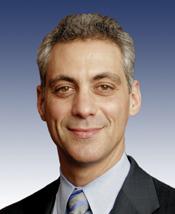
Mr. Speaker, I thank my colleagues from Wisconsin and from Pennsylvania. This is about our eighth war funding supplemental, emergency spending for the war. But what's intriguing about this one is…
Mr. Speaker, I thank my colleagues from Wisconsin and from Pennsylvania.
This is about our eighth war funding supplemental, emergency spending for the war. But what's intriguing about this one is that, in every other war supplemental, we've asked the American taxpayers to give the Iraqis approximately $50 billion to rebuild their country, schools, hospitals, roads, electricity, all so Iraq can rebuild after the war. And this is the first supplemental that we've asked to rebuild America. These kids lives, approximately the same amount of money.
Over the last eight funding bills for the war, we've dedicated approximately $50 billion of American money to rebuild Iraq's schools and roads. We're asking approximately a little over $50 billion to help these kids, our GIs, to rebuild their lives, to get the education that they've earned, to start on a new life for them and their family, whether they be Guard, Reserve or active duty.
So there has been no conscience, no problem when it came to Iraq's roads. They got the money. There was no problem when it came to Iraqi schools and hospitals. We said that was our moral obligation, to help Iraq get back on their feet.
What moral obligation do we have to our own GIs to get back on their feet?
Where is the decency to these kids who we've sent, not once, not twice, some of them three times who signed up to be Guard or Reserve and then we've implemented a stop-loss program that totally changed the contracts?
We have an obligation to these children to restart their lives.
At the height of 1949, the original GI Bill of Rights for World War II was 1 percent of our GDP. This is far less. And look how well that paid off for this country. Everybody knows somebody who went to school on that GI Bill. We are doing right by those kids who are doing right by us.
You have compared this war with the equivalent of what we've done in World War II. Well, let's make it the equivalent by giving these kids a GI Bill. They've earned it every day doing something that not one of us have done in this context.
And yes, we've asked those who are the most well-off in this country, people we all know, to pay a little so these kids can go to college and pursue their dream that they made possible for us because of their sacrifice. And I know a lot of those people, and they're willing to pay a little more to make sure that these kids have an opportunity for the American Dream.

Mr. Speaker, my colleagues, this is the third of the three bills we had before us out of the Oversight and Government Reform Committee dealing with contracting issues. And I rise in strong support of…
Mr. Speaker, my colleagues, this is the third of the three bills we had before us out of the Oversight and Government Reform Committee dealing with contracting issues. And I rise in strong support of this bill, H.R. 3928, the Government Funding Transparency Act. This bill requires contractors and other entities that are dependent on taxpayers funds for more than 80 percent of their annual gross revenue to disclose the names and salaries of their most highly compensated officials.
This requirement is similar to requirements that already apply to publicly traded companies under the rules of the Security and Exchange Commission and to nonprofit organizations through the Tax Code. It is based on a very simple principle. If you receive the vast amount of your revenue from the public, then the public has a right to know how that money is being spent.
The need for this bill became evident when the head of Blackwater, the private security military company, refused to tell Congress how much it earns, how much he earns. Blackwater gets almost all of its revenue from contracts with the Federal Government, yet Eric Prince, the head of the company, refused to answer Congressman Murphy when Mr. Murphy asked how much he earned.
As originally introduced by Representative Murphy last October, H.R. 3928 would have applied only to government contractors. Some felt that this approach unfairly singled out those entities, and we worked with the ranking member of the committee, Representative Tom Davis, to address this concern. And I believe that the result is a much stronger bill.
The measure before us today applies to any entity that receives government funding, whether through a contract, grant, cooperative agreement, subsidy or any other form of Federal funding. The measure will bring much needed sunshine to how tax dollars are spent, including on contracts. Under the bill, companies that are privately held that receive the vast majority of their revenues from taxpayers' dollars would be required to disclose the salaries of their top officers.
I want to congratulate and express my appreciation to Congressman Murphy for introducing this commonsense bill. American taxpayers have a right to know where their hard earned dollars are going.
I commend the sponsor and those who have worked on this bill on both sides of the aisle. And I urge my colleagues to support this bipartisan piece of legislation.
Bill Text
4 versions available
        [Congressional Bills 110th Congress]
[From the U.S. Government Printing Office]
[H.R. 3928 Referred in Senate (RFS)]

2d Session
H. R. 3928

_______________________________________________________________________

IN THE SENATE OF THE UNITED STATES

April 24, 2008

Received; read twice and referred to the Committee on Homeland Security
and Governmental Affairs

_______________________________________________________________________

AN ACT

To amend the Federal Funding Accountability and Transparency Act of
2006 to require certain recipients of Federal funds to disclose the
names and total compensation of their most highly compensated officers,
and for other purpose.

Be it enacted by the Senate and House of Representatives of the
United States of America in Congress assembled,

SECTION 1. SHORT TITLE.

This Act may be cited as the ``Government Funding Transparency Act
of 2008''.

SEC. 2. FINANCIAL DISCLOSURE REQUIREMENTS FOR CERTAIN RECIPIENTS OF
FEDERAL AWARDS.

(a) Disclosure Requirements.--Section 2(b)(1) of the Federal
Funding Accountability and Transparency Act (Public Law 109-282; 31
U.S.C. 6101 note) is amended--
(1) by striking ``and'' at the end of subparagraph (E);
(2) by redesignating subparagraph (F) as subparagraph (G);
and
(3) by inserting after subparagraph (E) the following new
subparagraph:
``(F) the names and total compensation of the five
most highly compensated officers of the entity if--
``(i) the entity in the preceding fiscal
year received--
``(I) 80 percent or more of its
annual gross revenues in Federal
awards; and
``(II) $25,000,000 or more in
annual gross revenues from Federal
awards; and
``(ii) the public does not have access to
information about the compensation of the
senior executives of the entity through
periodic reports filed under section 13(a) or
15(d) of the Securities Exchange Act of 1934
(15 U.S.C. 78m(a), 78o(d)) or section 6104 of
the Internal Revenue Code of 1986.''.
(b) Regulations Required.--The Director of the Office of Management
and Budget shall promulgate regulations to implement the amendment made
by this Act. Such regulations shall include a definition of ``total
compensation'' that is consistent with regulations of the Securities
and Exchange Commission at section 402 of part 229 of title 17 of the
Code of Federal Regulations (or any subsequent regulation).

Passed the House of Representatives April 23, 2008.

Attest:

LORRAINE C. MILLER,

Clerk.