Water Use Efficiency and Conservation Research Act
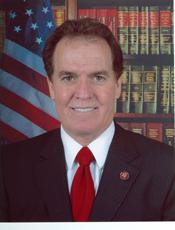
 Rep. Jim Matheson (D-UT)
Legislative Activity
Stay on top of the latest movement without scrolling through every action
Received in the Senate and Read twice and referred to the Committee on Environment and Public Works.
July 31, 2008
View full timeline
Introduced in House
October 24, 2007
Referred to the House Committee on Science and Technology.
October 24, 2007
Referred to the Subcommittee on Energy and Environment.
October 30, 2007
Forwarded by Subcommittee to Full Committee by Voice Vote .
May 6, 2008
Committee Consideration and Mark-up Session Held.
July 16, 2008
Ordered to be Reported (Amended) by Voice Vote.
July 16, 2008
Reported (Amended) by the Committee on Science and Technology. H. Rept. 110-802.
July 30, 2008
Placed on the Union Calendar, Calendar No. 519.
July 30, 2008
Mr. Matheson moved to suspend the rules and pass the bill, as amended.
July 30, 2008 • 8:36 PM
Considered under suspension of the rules. (consideration: CR H7604-7606)
July 30, 2008 • 8:36 PM
DEBATE - The House proceeded with forty minutes of debate on H.R. 3957.
July 30, 2008 • 8:36 PM
Passed/agreed to in House: On motion to suspend the rules and pass the bill, as amended Agreed to by voice vote.(text: CR H7605)
July 30, 2008 • 8:44 PM
On motion to suspend the rules and pass the bill, as amended Agreed to by voice vote. (text: CR H7605)
July 30, 2008 • 8:44 PM
Motion to reconsider laid on the table Agreed to without objection.
July 30, 2008 • 8:44 PM
Received in the Senate and Read twice and referred to the Committee on Environment and Public Works.
July 31, 2008
Floor Debate
4 membersWhat members said about H.R. 3957 on the floor


Floor Debate
4 membersWhat members said about H.R. 3957 on the floor
Madam Speaker, I move to suspend the rules and pass the bill (H.R. 3957) to increase research, development, education, and technology transfer activities related to water use efficiency and…
Madam Speaker, I rise in support of H.R. 3957, a measure aimed at increasing research, development, education, and technology transfer activities related to water use efficiency and conservation…
Madam Speaker, I yield myself such time as I may consume. The Environmental Protection Agency, better known as the EPA, is the Nation's lead agency charged with protecting the environment and…
Madam Speaker, I would like to recognize Chairman Oberstar of the Transportation and Infrastructure Committee for working with the Science and Technology Committee in such a cooperative and…
Madam Speaker, I rise in strong support of H.R. 3957-- the Water Use Efficiency and Conservation Research Act. I commend my colleague from the Science Committee--Mr. Matheson of Utah--for crafting…
Bill Text
4 versions available
        [Congressional Bills 110th Congress]
[From the U.S. Government Printing Office]
[H.R. 3957 Referred in Senate (RFS)]

2d Session
H. R. 3957

_______________________________________________________________________

IN THE SENATE OF THE UNITED STATES

July 31, 2008

Received; read twice and referred to the Committee on Environment and
Public Works

_______________________________________________________________________

AN ACT

To increase research, development, education, and technology transfer
activities related to water use efficiency and conservation
technologies and practices at the Environmental Protection Agency.

Be it enacted by the Senate and House of Representatives of the
United States of America in Congress assembled,

SECTION 1. SHORT TITLE.

This Act may be cited as the ``Water Use Efficiency and
Conservation Research Act''.

SEC. 2. FINDINGS.

Congress finds the following:
(1) Between 1950 and 2000, the United States population
increased nearly 90 percent. In that same period, public demand
for water increased 209 percent. Americans now use an average
of 100 gallons of water per person each day. This increased
demand has put additional stress on water supplies and
distribution systems, threatening both human health and the
environment.
(2) Thirty-six States are anticipating local, regional, or
statewide water shortages by 2013. In addition, climate change
related effects are expected to exacerbate already scarce water
resources in many areas of the country.
(3) The Intergovernmental Panel on Climate Change's 2007
assessment states that water stored in glaciers and snow cover
is projected to decline, reducing water availability to one-
sixth of the world's population that relies upon meltwater from
major mountain ranges. The Intergovernmental Panel on Climate
Change also predicts droughts will become more severe and
longer lasting in a number of regions.
(4) Water conservation should be a national goal and the
Environmental Protection Agency should work with
nongovernmental partners to achieve that goal. The
Environmental Protection Agency should support the research,
development, and dissemination of technologies and processes
that will achieve greater water use efficiency.
(5) WaterSense is a voluntary public-private partnership
program established by the Environmental Protection Agency to
promote water efficiency by helping consumers identify water-
efficient products and practices. The Environmental Protection
Agency estimates that if all United States households installed
water-efficient appliances, the country would save more than
3,000,000,000,000 gallons of water and more than
$17,000,000,000 per year.
(6) The WaterSense program has developed a network of
partners, and therefore can disseminate the results of research
on technologies and processes that achieve greater water use
efficiency.

SEC. 3. RESEARCH PROGRAM.

(a) In General.--The Assistant Administrator for Research and
Development of the Environmental Protection Agency (in this Act
referred to as the ``Assistant Administrator'') shall establish a
research and development program consistent with the plan developed
under section 4 that promotes water use efficiency and conservation,
including--
(1) technologies and processes that enable the collection,
storage, treatment, and reuse of rainwater, stormwater, and
greywater;
(2) water storage and distribution systems;
(3) behavioral, social, and economic barriers to achieving
greater water use efficiency; and
(4) use of watershed planning directed toward water
quality, conservation, and supply.
(b) Considerations.--In planning and implementing the program, the
Assistant Administrator shall consider--
(1) research needs identified by water resource managers,
State and local governments, and other interested parties; and
(2) technologies and processes likely to achieve the
greatest increases in water use efficiency and conservation.
(c) Minority Serving Institutions.--In the execution of this
program, the Assistant Administrator may award extramural grants to
institutions of higher education and shall encourage participation by
Minority Serving Institutions.

SEC. 4. STRATEGIC RESEARCH PLAN.

(a) In General.--The Assistant Administrator shall coordinate the
development of a strategic research plan (in this Act referred to as
the ``plan'') for the water use efficiency and conservation research
and development program established in section 3 with all other
Environmental Protection Agency research and development strategic
plans.
(b) Plan Contents.--The plan shall--
(1) outline research goals and priorities for a water use
efficiency and conservation research agenda, including--
(A) developing innovative water supply-enhancing
processes and technologies; and
(B) improving existing processes and technologies,
including wastewater treatment, desalinization, and
groundwater recharge and recovery schemes;
(2) identify current Federal research efforts on water that
are directed toward meeting the goals of improving water use
efficiency, water conservation, or expanding water supply and
describe how such efforts are coordinated with the program
established in section 3 in order to leverage resources and
avoid duplication; and
(3) consider and utilize, as appropriate, recommendations
in reports and studies conducted by Federal agencies, the
National Research Council, the National Science and Technology
Council, or other entities in the development of the plan.
(c) Science Advisory Board Review.--The Assistant Administrator
shall submit the plan to the Science Advisory Board of the
Environmental Protection Agency for review.
(d) Revision.--The plan shall be revised and amended as needed to
reflect current scientific findings and national research priorities.

SEC. 5. TECHNOLOGY TRANSFER.

The Assistant Administrator, building on the results of the
activities of the program established under section 3, shall--
(1) facilitate the adoption of technology and processes to
promote water use efficiency and conservation; and
(2) collect and disseminate information, including the
establishment of a publicly-accessible clearinghouse, on
technologies and processes to promote water use efficiency and
conservation, including information on--
(A) incentives and impediments to development and
commercialization;
(B) best practices; and
(C) anticipated increases in water use efficiency
and conservation resulting from the implementation of
specific technologies and processes.

SEC. 6. ADVANCED WATER EFFICIENCY DEVELOPMENT PROJECTS.

(a) In General.--As part of the program under section 3, the
Assistant Administrator shall carry out at least 4 projects under which
the funding is provided for the incorporation into a building of the
latest water use efficiency and conservation technologies and designs.
Funding for each project shall be provided only to cover incremental
costs of water-use efficiency and conservation technologies.
(b) Criteria.--Of the 4 projects described in subsection (a), at
least 1 shall be for a residential building and at least 1 shall be for
a commercial building.
(c) Public Availability.--The designs of buildings with respect to
which funding is provided under subsection (a) shall be made available
to the public, and such buildings shall be accessible to the public for
tours and educational purposes.

SEC. 7. REPORT.

Not later than 18 months after the date of enactment of this Act,
and once every 2 years thereafter, the Assistant Administrator shall
transmit to Congress a report which details the progress being made by
the Environmental Protection Agency with regard to--
(1) water use efficiency and conservation research projects
initiated by the Agency;
(2) development projects initiated by the Agency;
(3) outreach and communication activities conducted by the
Agency concerning water use efficiency and conservation; and
(4) development and implementation of the plan.

SEC. 8. WATER MANAGEMENT STUDY AND REPORT.

(a) Study.--
(1) Requirement.--The Administrator of the Environmental
Protection Agency shall enter into an arrangement with the
National Academy of Sciences to complete a study of low impact
and soft path strategies for management of water supply,
wastewater, and stormwater.
(2) Contents.--The study shall--
(A) examine and compare the state of research,
technology development, and emerging practices in other
developed and developing countries with those in the
United States;
(B) identify and evaluate relevant system
approaches for comprehensive water management,
including the interrelationship of water systems with
other major systems such as energy and transportation;
(C) identify priority research and development
needs; and
(D) assess implementation needs and barriers.
(b) Report.--Not later than 2 years after the date of enactment of
this Act, the Administrator of the Environmental Protection Agency
shall transmit to the Committee on Science and Technology of the House
of Representatives and the Committee on Environment and Public Works of
the Senate a report on the key findings of the study conducted under
subsection (a). The report shall evaluate challenges and opportunities
and serve as a practical reference for water managers, planners,
developers, scientists, engineers, non-governmental organizations,
federal agencies, and regulators by recommending innovative and
integrated solutions.
(c) Definitions.--For purposes of this section--
(1) the term ``low impact'' means a strategy that manages
rainfall at the source using uniformly distributed
decentralized micro-scale controls to mimic a site's
predevelopment hydrology by using design techniques that
infiltrate, filter, store, evaporate, and detain runoff close
to its source; and
(2) the term ``soft path'' means a general framework that
encompasses--
(A) increased efficiency of water use;
(B) integration of water supply, wastewater
treatment, and stormwater management systems; and
(C) protection, restoration, and effective use of
the natural capacities of ecosystems to provide clean
water.
(d) Authorization of Appropriations.--There are authorized to be
appropriated to the Administrator of the Environmental Protection
Agency for carrying out this section $1,000,000 for fiscal year 2009.

SEC. 9. AUTHORIZATION OF APPROPRIATIONS.

There are authorized to be appropriated to the Assistant
Administrator for carrying out this Act $20,000,000 for each of the
fiscal years 2009 through 2013.

Passed the House of Representatives July 30, 2008.

Attest:

LORRAINE C. MILLER,

Clerk.