Madam Speaker, I would ask unanimous consent that we shorten the debate to 15 minutes on each side. We don't have that many speakers and the hour is late. I have a feeling people's minds are not…
Madam Speaker, I would ask unanimous consent that we shorten the debate to 15 minutes on each side. We don't have that many speakers and the hour is late. I have a feeling people's minds are not going to be swayed by the eloquence on either side on this debate.
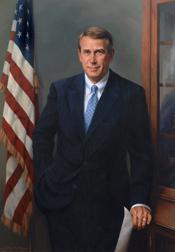
Madam Speaker, I yield 1 minute to the distinguished minority leader from the great State of Ohio (Mr. Boehner).
Madam Speaker, I yield myself 3 minutes.
(Mr. BARTON of Texas asked and was given permission to revise and extend his remarks.)
Madam Speaker, everybody has said all that needs to be said on this debate; we just haven't said it this third or fourth time that we are here on the House floor.
As the minority leader pointed out, at some point in time it still may be possible to reach a consensus on reauthorizing the SCHIP program because people on both sides of the aisle want to keep the program moving forward. The problem that most Republicans have is that we support the base program for near low-income children between 100 and 200 percent of poverty. We don't think that the SCHIP program, which was a children's health program, should be for adults. We don't think it should be for illegal aliens. We think it should be for children between 100 percent to 200 percent of poverty, and perhaps slightly higher than that if a good-faith effort has been made to cover children in that income bracket.
My friends on the other side of the aisle appear to want to use this as a surrogate for universal health care. In some versions, the original version that came out in the CHAMP bill, they wanted to go as high as 300 and 400 percent of poverty. They continue, although they say they don't want to cover noncitizens, they won't agree to enforcement measures that make that possible. And they don't want adults on the program to have to exit the program in some reasonable time period, so we have the impasse that we have today.
There haven't been many times in our Nation's history that we have postponed a veto override. I think less than 10 percent of the time, maybe even less than 5 percent of the time, but we have done it twice in a row on this particular bill. So we will postpone the bill until the week of the President's State of the Union so there can be more political posturing on the majority side right before the President comes before a joint session of Congress.
This majority is right to try to postpone that vote to that time. It would be better if we went ahead and voted on it tonight, sustained the President's veto tonight so we could then hopefully continue work or start working in a bipartisan way to actually get an SCHIP reauthorization that was more than a 1-month extension at a time.
If we have the vote tonight, the President's veto will be sustained. When we have the vote in January, the President's veto will be sustained. At some point in time we may yet get together and try to work out a compromise that both sides can agree to and have a 435- Member vote. Apparently that will not be any time in the near future.
I yield 3 minutes to the gentleman from Georgia (Mr. Deal), a member of the Health Subcommittee.
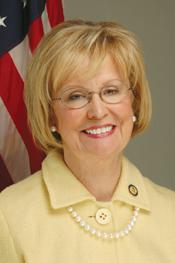
Madam Speaker, I want to yield 3 minutes to the gentlewoman from Illinois (Mrs. Biggert) who has been one of the Republican negotiators on this issue in the informal talks that have been occurring at various times over the last month.
Madam Speaker, I'm going to yield myself 2 minutes.
I want to thank my friend from Illinois for being honest. This is all about politics. It's not about policy. It's not about the children. It's about politics. So I commend him.
I'll yield for 30 seconds, sure.
I respect the gentleman from Illinois. I think we should do more of this, quite frankly.
Madam Speaker, I'm going to yield myself such time as I may consume now to respond to my good friend from Illinois. I was in the House when SCHIP was passed. I was not in the leadership, but I was on the committee. My recollection is a little bit different than my friend from Illinois.
There were some Republicans, I think Senator Hatch was one of the ones in the Senate; Congressman Archer, who was the chairman of the Ways and Means Committee. This did come out of the effort to reform welfare as it was then. There was a concern that as we tried to move primarily women who were single head of households off of welfare, if they didn't have a job that had health care, their children, in order for them to work, transition to work, that they needed health care. And President Clinton and the Republican leadership in the House and the Senate did agree that SCHIP was the answer. And it was a bipartisan agreement. I would give the President credit for supporting it, but I would also give the Republican leadership in the House and the Senate credit for supporting it also at that time.
The bill that is before us tonight is not the bill that passed in 1997. We have over 600,000 adults on SCHIP, a children's health insurance program. Rhetorically, my friends on the majority side say they really don't want adults to be covered. But nothing in this bill moves those adults off of SCHIP.
We don't know how many hundreds of thousands of noncitizens are covered. But most people agree that there are hundreds of thousands, if not millions. Nothing in this bill has an enforcement mechanism to move children who are not U.S. citizens off the rolls. Not one thing moves that. And the 200 percent of poverty, the original SCHIP bill was between 100 and 200 percent of poverty. That's still a good principle. There are not 10 million children in America between 100 and 200 percent of poverty that qualify for SCHIP. The most authoritative number is that there may be an additional 800,000.
Now, the current SCHIP bill covers about 6 million children. In order to get to the 10 million number, you have to go way above 200 percent, probably above 300 percent and maybe even as high as 400 percent. So this 10 million number, there are about 80 million children in America. Most of those children, luckily, have health insurance through some sort of a private sector employee-sponsored health insurance program. Six million have it under SCHIP, and then there are several million that have it under Medicaid. But there are not 10 million between 100 and 200 percent of poverty.
Those of us on the Republican side, we support SCHIP. We support the original program. We may even support something expanding it beyond the original program. But we don't support some of the ideas that take it up to as high as 300 to 350 percent of poverty, that cover noncitizens and that cover adults. That's what this debate is all about.
So we hope that we have an opportunity. We hope that we have a veto vote and that we sustain the President's veto, and then maybe my friend from Illinois and myself can actually enter into a bipartisan negotiation that does exactly what he wants to do and what people like myself want to do.
I would yield for 30 seconds.
We support that.
That doesn't mean that we need to continue those waivers.
With that, I would reserve the balance of my time.
Let me inquire how much time I have remaining, Madam Speaker.
I want to yield 4 minutes to a member of the committee and also a member of the ad hoc negotiation team, Mr. Walden of Oregon.
Madam Speaker, I believe we only have two more speakers, so I'm going to reserve my time at this point.
Madam Speaker, I continue to reserve.
Madam Speaker, I yield myself 1 minute.
I appreciate the gentleman that just spoke, but let's be factually accurate. There are over 600,000 adults under current law on SCHIP right now. They're not all pregnant women. Now, some of them may be, but not all 600,000, and nothing in this bill moves any adult off of SCHIP. Nothing.
Madam Speaker, with that, I reserve the balance of my time.
Madam Speaker, I yield 2\1/2\ minutes to the distinguished gentleman from the 5th District of the Garden State of New Jersey (Mr. Garrett).
Madam Speaker, what is the order of closing?
I am ready to close after Mr. Pallone.
Madam Speaker, there's a great movie from the sixties or maybe the seventies called ``Cool Hand Luke.'' Paul Newman is Cool Hand Luke, and he gets imprisoned for some minor infraction and he just doesn't conform with the regulations of the prison. And finally in exasperation the prison warden is talking to him in front of the chain gang and utters the famous line, ``What we have here is a failure to communicate.''
Well, what we have here tonight apparently is another failure to communicate. The Republicans in the House of Representatives want to reauthorize SCHIP. Some of the Republicans in the House of Representatives even want to expand SCHIP. But what we don't want to do is make SCHIP the surrogate for universal health care for children that are not in low-income or moderate-income families. We don't want to do that. And the bill before us would do that.
It would cover children up to 300 percent of poverty, explicitly, which is above the median income in this country. And it would not have any substantial reform on what are called ``income disregards.'' An income disregard is, some States have said, well, we're going to disregard this amount of income or we're going to disregard that particular expense. So for all practical purposes if a State chooses to disregard income, then there is no cap, and the bill before us doesn't have reforms in that measure.
The bill before us, in terms of illegal aliens, does have a paragraph that says no illegal alien can receive the benefit. It has that. But it has no enforcement. It's toothless. It's like saying don't go over 55 miles an hour or 60 miles an hour but you don't have a radar policeman to enforce the speed limit.
So what we are saying and what the President of the United States is saying in his veto message is pretty straightforward. Let's continue the SCHIP program. Let's find the children that are below 200 percent of poverty, and let's get them enrolled in the program and perhaps even go as high as 250 percent or 275 percent. Let's find some way to have a real enforcement to make sure that SCHIP is for children and for children of citizens. And then let's find a way to get the adults on the program off the program.
There are some States that cover more adults than children. And, again, my friends on the majority agree that that's not an appropriate thing, but they don't do anything in the bill to reform that.
So when my friend from New Jersey, the distinguished subcommittee chairman, talks about there may be as many as 6 million additional children that could be covered, I very carefully listened to what he said, and I would agree with what he said because he used the words ``Medicaid'' and ``SCHIP.'' Well there are 25 million children covered under Medicaid right now. There may well be another 5 or 6 million children that are eligible for Medicaid that we need to work with on a bipartisan basis to get in Medicaid. But according to HHS, there are only 800,000 eligible for SCHIP. Even according to the CBO, there are only an additional maybe 1.3 million that would be eligible for SCHIP under the bill that the majority is putting on the floor.
So I wish we wouldn't postpone this veto. I wish we would go ahead and have the veto override tonight because we will sustain the veto. And then I wish my good friend John Dingell from Michigan and Mr. Rangel from New York would work with Mr. McCrery and myself and other Members to really come together on a bipartisan basis.
I would like to point out that these negotiations that Mr. Hoyer alluded to did, in fact, happen, but those negotiations were not a conference. This bill is not the result of a conference committee between the House and the Senate. The bill before us is the result of some backroom negotiations and then an effort on an ad hoc basis of some of the senior Members of the majority in this House and some Members of the other body to work with some of our junior Members who had really no official standing but did negotiate in good faith to come up with a compromise. And as Mr. Garrett pointed out, the written proposal the Republicans put forward, I think, to this day has never been answered. Now, I could be wrong on that, but I don't think it has ever been formally addressed.
So I sat in on those negotiations for several days, and what we got was a lot of good feeling talk. But when it came time to put it on paper, the majority wouldn't put it on paper.
So let's not postpone this override. Let's vote down the motion to postpone, and let's have the veto override tonight. And then in the next week or so if we are still in session, let's really start a bipartisan process that is based on the formal processes of the House and the Senate.
With that, I would yield back my time, Madam Speaker.
Madam Speaker, I object to the vote on the ground that a quorum is not present and make the point of order that a quorum is not present.