Prioritizing Resources and Organization for Intellectual Property Act of 2008
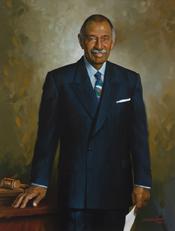 Rep. John Conyers, Jr. (D-MI)
Legislative Activity
Stay on top of the latest movement without scrolling through every action
Received in the Senate and Read twice and referred to the Committee on the Judiciary.
May 12, 2008
View full timeline
Introduced in House
December 5, 2007
Sponsor introductory remarks on measure. (CR E2500-2501)
December 5, 2007
Referred to the House Committee on the Judiciary.
December 5, 2007
Referred to the Subcommittee on Courts, the Internet, and Intellectual Property.
December 7, 2007
Subcommittee Hearings Held.
December 13, 2007
Subcommittee Consideration and Mark-up Session Held.
March 6, 2008
Forwarded by Subcommittee to Full Committee (Amended) by Voice Vote .
March 6, 2008
Referred to the Subcommittee on Commercial and Administrative Law.
April 14, 2008
Reported (Amended) by the Committee on Judiciary. H. Rept. 110-617.
May 5, 2008
Placed on the Union Calendar, Calendar No. 384.
May 5, 2008
Mr. Conyers moved to suspend the rules and pass the bill, as amended.
May 6, 2008 • 2:09 PM
Considered under suspension of the rules. (consideration: CR H3067-3078)
May 6, 2008 • 2:09 PM
DEBATE - The House proceeded with forty minutes of debate on H.R. 4279.
May 6, 2008 • 2:09 PM
At the conclusion of debate, the chair put the question on the motion to suspend the rules. Mr. Frelinghuysen objected to the vote on the grounds that a quorum was not present. Further proceedings on the motion were postponed. The point of no quorum was withdrawn.
May 6, 2008 • 2:31 PM
Considered as unfinished business. (consideration: CR H3202-3203)
May 8, 2008 • 12:16 PM
Passed/agreed to in House: On motion to suspend the rules and pass the bill, as amended Agreed to by recorded vote (2/3 required): 410 - 11 (Roll no. 300).(text: CR 5/6/2008 H3067-3074)
May 8, 2008 • 12:23 PM
On motion to suspend the rules and pass the bill, as amended Agreed to by recorded vote (2/3 required): 410 - 11 (Roll no. 300). (text: CR 5/6/2008 H3067-3074)
May 8, 2008 • 12:23 PM
Motion to reconsider laid on the table Agreed to without objection.
May 8, 2008 • 12:23 PM
Received in the Senate and Read twice and referred to the Committee on the Judiciary.
May 12, 2008
Voting History
1 vote recorded • Roll call available
Floor Debate
20 membersWhat members said about H.R. 4279 on the floor



 +15
+15
Floor Debate
20 membersWhat members said about H.R. 4279 on the floor
Mr. Chairman, I rise in support of H.R. 5818, the Neighborhood Stabilization Act of 2008. This bill would provide $15 billion in loans and grants, administered by the U.S. Department of Housing and…
Mr. Speaker, I yield myself such time as I may consume. Mr. Speaker, at the outset I want to recognize Chairman Conyers, Subcommittee Chairman Berman and Ranking Member Howard Coble of the…
Mr. Chairman, I move to lay the appeal on the table. Mr. Chairman, I demand a recorded vote. Mr. Speaker, I rise to speak in opposition to the motion to recommit. Mr. Speaker, I hope we are here…
Mr. Speaker, I rise in strong support of H.R. 4279, the ``Prioritizing Resources and Organization for Intellectual Property (PRO-IP) Act of 2007.'' I urge my colleagues to join me in voting for this…
Mr. Speaker, I rise in strong support S. 3325, the ``Prioritizing Resources and Organization for Intellectual Property (PRO-IP) Act of 2007.'' I was a co-sponsor of this legislation when it was…
Show 8 more
I thank the gentleman from Texas and, Mr. Speaker, at the outset I, too, want to recognize and express thanks to Judiciary Chairman John Conyers, Ranking Member Lamar Smith, and Subcommittee Chairman…
Mr. Speaker, I move to suspend the rules and pass the bill (H.R. 4279) to enhance remedies for violations of intellectual property laws, and for other purposes, as amended. Mr. Speaker, I ask…

Mr. Chairman, I rise today in support of this housing package because it is imperative that Congress take action to assist homeowners struggling today. The epidemic of home losses in this country is…
Mr. Chairman, this legislation represents a fair, commonsense solution that will give assistance to communities struggling to deal with the problem of vacant homes, help stabilize the housing market,…

Madam Speaker, I rise to explain both my leave of absence from the House of Representatives on May 8, 2008, and how I intended to vote with respect to the legislation that was before the House on…
Mr. Speaker, I yield 5 minutes to my friend and colleague from North Carolina (Mr. Coble), a former chairman of the Intellectual Property Subcommittee of the Judiciary Committee and now the ranking…
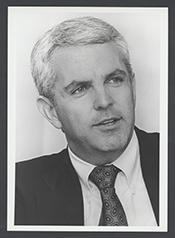
Mr. Speaker, I have a motion at the desk. I am in its present form. Mr. Speaker, this legislation is flawed in many respects. It provides $7.5 billion in loans to cities, States, and nonprofits to…

Mr. Speaker, I rise today in support of H.R. 3221, the Foreclosure Prevention Act. At the end of last year, home foreclosure rates rose to the highest level in 20 years. Every day more than 7,000…
Show 11 more

Thank you, Chairman Conyers, for those kind words. I rise today in support of H.R. 4279. American inventors, artists and businesses rely on intellectual property rights to protect the value of their…

Speaker, I rise in support of the second amendment to the American Housing Rescue and Foreclosure Prevention Act of 2008. Today, one quarter of subprime adjustable-rate mortgages are delinquent by 90…

Mr. Speaker, I rise in strong support of this important legislation to strengthen our nation's laws against counterfeiting and intellectual property violations which passed the House yesterday.…

Mr. Speaker, I rise in opposition to this bill. While we do need to focus our efforts to combat criminal activity related to intellectual property, the unbounded forfeiture provision in this bill…

Mr. Speaker, I rise in support of H.R. 3221, American Housing Rescue and Foreclosure Prevention Act of 2008, and amendments to the bill. This bill is a critical step towards stabilizing our housing…
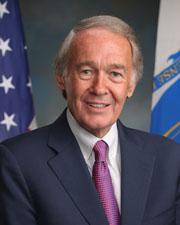
Mr. Speaker, I rise today in support of H.R. 3221, the American Housing Rescue and Foreclosure Prevention Act of 2008. This vital legislation comes at a time of record-breaking gas prices, double…
Mr. Speaker, I thank the distinguished gentleman from Texas, and I doubt that I will use 5 minutes but I thank Mr. Smith. I rise, Mr. Speaker, in support of S. 3325. Every year our economy loses an…

Mr. Speaker, over the past months, economic conditions in our country have soured. Particularly troublesome to our Nation's economic engine are skyrocketing home foreclosures and loan delinquency…
Mr. Speaker, I very much thank the chairman for yielding and for all the work that he has done to bring this bill to this point. I rise in support of S. 3325, which is the Senate's companion bill to…

Mr. Speaker, I rise today in strong support of H.R. 5818, the Neighborhood Stabilization Act, and H.R. 3221, the American Housing Rescue and Foreclosure Prevention Act. These bills come at a critical…

Mr. Speaker, I rise in strong support of H.R. 3221, The Foreclosure Prevention Act of 2008 and the package on the floor today that will provide much-needed relief to homeowners at risk of foreclosure…
Bill Text
4 versions available
        [Congressional Bills 110th Congress]
[From the U.S. Government Printing Office]
[H.R. 4279 Referred in Senate (RFS)]

2d Session
H. R. 4279

_______________________________________________________________________

IN THE SENATE OF THE UNITED STATES

May 12, 2008

Received; read twice and referred to the Committee on the Judiciary

_______________________________________________________________________

AN ACT

To enhance remedies for violations of intellectual property laws, and
for other purposes.

Be it enacted by the Senate and House of Representatives of the
United States of America in Congress assembled,

SECTION 1. SHORT TITLE; TABLE OF CONTENTS.

(a) Short Title.--This Act may be cited as the ``Prioritizing
Resources and Organization for Intellectual Property Act of 2008''.
(b) Table of Contents.--The table of contents is as follows:

Sec. 1. Short title; table of contents.
Sec. 2. Reference.
Sec. 3. Definition.
TITLE I--ENHANCEMENTS TO CIVIL INTELLECTUAL PROPERTY LAWS

Sec. 101. Registration of claim.
Sec. 102. Registration and infringement actions.
Sec. 103. Civil remedies for infringement.
Sec. 104. Treble damages in counterfeiting cases.
Sec. 105. Statutory damages in counterfeiting cases.
Sec. 106. Exportation of goods bearing infringing marks.
Sec. 107. Importation and exportation.
TITLE II--ENHANCEMENTS TO CRIMINAL INTELLECTUAL PROPERTY LAWS

Sec. 201. Criminal infringement of a copyright.
Sec. 202. Harmonization of forfeiture procedures for intellectual
property offenses.
Sec. 203. Directive to United States Sentencing Commission.
Sec. 204. Trafficking in counterfeit goods or services.
TITLE III--COORDINATION AND STRATEGIC PLANNING OF FEDERAL EFFORT
AGAINST COUNTERFEITING AND PIRACY

Subtitle A--Office of the United States Intellectual Property
Enforcement Representative

Sec. 301. Office of the United States Intellectual Property Enforcement
Representative.
Sec. 302. Definition.
Subtitle B--Joint Strategic Plan

Sec. 321. Joint Strategic Plan.
Sec. 322. Reporting.
Sec. 323. Savings and repeals.
Sec. 324. Authorization of appropriations.
TITLE IV--INTERNATIONAL ENFORCEMENT AND COORDINATION

Sec. 401. Intellectual property attaches.
Sec. 402. Duties and responsibilities of intellectual property
attaches.
Sec. 403. Training and designation of assignment.
Sec. 404. Coordination.
Sec. 405. Authorization of appropriations.
TITLE V--DEPARTMENT OF JUSTICE PROGRAMS

Subtitle A--Coordination

Sec. 501. Intellectual Property Enforcement Officer.
Subtitle B--Law Enforcement Resources

Sec. 511. Local law enforcement grants.
Sec. 512. CHIP units, training, and additional resources.
Sec. 513. Transparency of prosecutorial decisionmaking.
Sec. 514. Authorization of appropriations.
Subtitle C--International Activities

Sec. 521. International intellectual property law enforcement
coordinators.
Sec. 522. International training activities of the computer crime and
intellectual property section.
Subtitle D--Coordination, Implementation, and Reporting

Sec. 531. Coordination.
Sec. 532. Annual reports.

SEC. 2. REFERENCE.

Any reference in this Act to the ``Trademark Act of 1946'' refers
to the Act entitled ``An Act to provide for the registration of
trademarks used in commerce, to carry out the provisions of certain
international conventions, and for other purposes'', approved July 5,
1946 (15 U.S.C. 1051 et seq.).

SEC. 3. DEFINITION.

In this Act, the term ``United States person'' means--
(1) any United States resident or national,
(2) any domestic concern (including any permanent domestic
establishment of any foreign concern), and
(3) any foreign subsidiary or affiliate (including any
permanent foreign establishment) of any domestic concern that
is controlled in fact by such domestic concern,
except that such term does not include an individual who resides
outside the United States and is employed by an individual or entity
other than an individual or entity described in paragraph (1), (2), or
(3).

TITLE I--ENHANCEMENTS TO CIVIL INTELLECTUAL PROPERTY LAWS

SEC. 101. REGISTRATION OF CLAIM.

Section 410 of title 17, United States Code, is amended--
(1) by redesignating subsections (c) and (d) as subsections
(d) and (e), respectively; and
(2) by inserting after subsection (b) the following:
``(c)(1) A certificate of registration satisfies the requirements
of section 411 and section 412 regardless of any inaccurate information
contained in the certificate, unless--
``(A) the inaccurate information was included on the
application for copyright registration with knowledge that it
was inaccurate; and
``(B) the inaccuracy of the information, if known, would
have caused the Register of Copyrights to refuse registration.
``(2) In any case in which inaccuracies described under paragraph
(1) are alleged, the court shall request the Register of Copyrights to
advise the court whether the inaccuracy of the information, if known,
would have caused the Register of Copyrights to refuse registration.
The Register shall respond to the court's request within 45 days after
the request is made.
``(3) Nothing in this subsection shall affect any rights,
obligations, or requirements of a person related to information
contained in a registration certificate except for the institution of
and remedies in infringement actions under sections 411 and 412.''.

SEC. 102. REGISTRATION AND INFRINGEMENT ACTIONS.

(a) Registration in Civil Infringement Actions.--Section 411 of
title 17, United States Code, is amended--
(1) in the section heading, by inserting ``civil'' after
``and'' ; and
(2) in subsection (a), by striking ``no action'' and
inserting ``no civil action''.
(b) Technical and Conforming Amendment.--Section 411(b) of title
17, United States Code, is amended by striking ``506 and sections 509
and'' and inserting ``505 and section''.

SEC. 103. CIVIL REMEDIES FOR INFRINGEMENT.

Section 503(a) of title 17, United States Code, is amended--
(1) by striking ``and of all plates'' and inserting ``of
all plates''; and
(2) by striking the period at the end and inserting the
following: ``, and records documenting the manufacture, sale,
or receipt of things involved in such violation. The court
shall enter an appropriate protective order with respect to
discovery by the applicant of any records that have been
seized. The protective order shall provide for appropriate
procedures to assure that confidential information contained in
such records is not improperly disclosed to the applicant.''.

SEC. 104. TREBLE DAMAGES IN COUNTERFEITING CASES.

Section 35(b) of the Trademark Act of 1946 (15 U.S.C. 1117(b)) is
amended to read as follows:
``(b) In assessing damages under subsection (a) for any violation
of section 32(1)(a) of this Act or section 220506 of title 36, United
States Code, in a case involving use of a counterfeit mark or
designation (as defined in section 34(d) of this Act), the court shall,
unless the court finds extenuating circumstances, enter judgment for
three times such profits or damages, whichever amount is greater,
together with a reasonable attorney's fee, if the violation consists
of--
``(1) intentionally using a mark or designation, knowing
such mark or designation is a counterfeit mark (as defined in
section 34(d) of this Act), in connection with the sale,
offering for sale, or distribution of goods or services;
``(2) intentionally inducing another to engage in a
violation specified in paragraph (1); or
``(3) providing goods or services necessary to the
commission of a violation specified in paragraph (1), with the
intent that the recipient of the goods or services would put
the goods or services to use in committing the violation.
In such a case, the court may award prejudgment interest on such amount
at an annual interest rate established under section 6621(a)(2) of the
Internal Revenue Code of 1986, beginning on the date of the service of
the claimant's pleadings setting forth the claim for such entry of
judgment and ending on the date such entry is made, or for such shorter
time as the court considers appropriate.''.

SEC. 105. STATUTORY DAMAGES IN COUNTERFEITING CASES.

Section 35(c) of the Trademark Act of 1946 (15 U.S.C. 1117) is
amended--
(1) in paragraph (1)--
(A) by striking ``$500'' and inserting ``$1,000'';
and
(B) by striking ``$100,000'' and inserting
``$200,000''; and
(2) in paragraph (2), by striking ``$1,000,000'' and
inserting ``$2,000,000''.

SEC. 106. EXPORTATION OF GOODS BEARING INFRINGING MARKS.

Title VII of the Trademark Act of 1946 (15 U.S.C. 1124) is
amended--
(1) in the title heading, by inserting after
``IMPORTATION'' the following: ``OR EXPORTATION''; and
(2) in section 42--
(A) by striking the word ``imported''; and
(B) by inserting after ``customhouse of the United
States'' the following: ``, nor shall any such article
be exported from the United States''.

SEC. 107. IMPORTATION AND EXPORTATION.

(a) In General.--The heading for chapter 6 of title 17, United
States Code, is amended to read as follows:

``CHAPTER 6--MANUFACTURING REQUIREMENTS, IMPORTATION, AND
EXPORTATION''.

(b) Amendment on Exportation.--Section 602(a) of title 17, United
States Code, is amended--
(1) by redesignating paragraphs (1) through (3) as
subparagraphs (A) through (C), respectively, and moving such
subparagraphs 2 ems to the right;
(2) by striking ``(a)'' and inserting ``(a) Infringing
Importation and Exportation.--
``(1) Importation.--'';
(3) by striking ``This subsection does not apply to--'' and
inserting the following:
``(2) Importation or exportation of infringing items.--
Importation into the United States or exportation from the
United States, without the authority of the owner of copyright
under this title, of copies or phonorecords, the making of
which either constituted an infringement of copyright or would
have constituted an infringement of copyright if this title had
been applicable, is an infringement of the exclusive right to
distribute copies or phonorecords under section 106, actionable
under sections 501 and 506.
``(3) Exceptions.--This subsection does not apply to--'';
(4) in paragraph (3)(A) (as redesignated by this
subsection) by inserting ``or exportation'' after
``importation''; and
(5) in paragraph (3)(B) (as redesignated by this
subsection)--
(A) by striking ``importation, for the private use
of the importer'' and inserting ``importation or
exportation, for the private use of the importer or
exporter''; and
(B) by inserting ``or departing from the United
States'' after ``United States''.
(c) Conforming Amendments.--(1) Section 602 of title 17, United
States Code, is further amended--
(A) in the section heading, by inserting ``or exportation''
after ``importation''; and
(B) in subsection (b)--
(i) by striking ``(b) In a case'' and inserting
``(b) Import Prohibition.--In a case'';
(ii) by striking ``the United States Customs
Service'' and inserting ``U.S. Customs and Border
Protection''; and
(iii) by striking ``the Customs Service'' and
inserting ``U.S. Customs and Border Protection''.
(2) Section 601(b)(2) of title 17, United States Code, is amended
by striking ``the United States Customs Service'' and inserting ``U.S.
Customs and Border Protection''.
(3) The item relating to chapter 6 in the table of chapters for
title 17, United States Code, is amended to read as follows:

``6. Manufacturing Requirements, Importation, and
Exportation........601''.

TITLE II--ENHANCEMENTS TO CRIMINAL INTELLECTUAL PROPERTY LAWS

SEC. 201. CRIMINAL INFRINGEMENT OF A COPYRIGHT.

Section 2319 of title 18, United States Code, is amended--
(1) in subsection (b)(2)--
(A) by inserting ``is a felony and'' after
``offense'' the first place such term appears; and
(B) by striking ``paragraph (1)'' and inserting
``subsection (a)'';
(2) in subsection (c)(2)--
(A) by inserting ``is a felony and'' after
``offense'' the first place such term appears; and
(B) by striking ``paragraph (1)'' and inserting
``subsection (a)'';
(3) in subsection (d)(3)--
(A) by inserting ``is a felony and'' after
``offense'' the first place such term appears; and
(B) by inserting ``under subsection (a)'' before
the semicolon; and
(4) in subsection (d)(4), by inserting ``is a felony and''
after ``offense'' the first place such term appears.

SEC. 202. HARMONIZATION OF FORFEITURE PROCEDURES FOR INTELLECTUAL
PROPERTY OFFENSES.

(a) Trafficking in Counterfeit Labels.--Section 2318 of title 18,
United States Code, is amended--
(1) by amending subsection (d) to read as follows:
``(d) Forfeiture and Destruction; Restitution.--
``(1) Civil forfeiture proceedings.--(A) The following
property is subject to forfeiture to the United States:
``(i) Any counterfeit documentation or packaging,
and any counterfeit label or illicit label and any
article to which a counterfeit label or illicit label
has been affixed, which a counterfeit label or illicit
label encloses or accompanies, or which was intended to
have had such label affixed, enclosing, or
accompanying.
``(ii) Any property constituting or derived from
any proceeds obtained directly or indirectly as a
result of a violation of subsection (a).
``(iii) Any property used, or intended to be used,
to commit or facilitate the commission of a violation
of subsection (a) that is owned or predominantly
controlled by the violator or by a person conspiring
with or aiding and abetting the violator in committing
the violation, except that property is subject to
forfeiture under this clause only if the Government
establishes that there was a substantial connection
between the property and the violation of subsection
(a).
``(B) The provisions of chapter 46 relating to civil
forfeitures shall extend to any seizure or civil forfeiture
under subparagraph (A). At the conclusion of the forfeiture
proceedings, the court shall order that any forfeited
counterfeit labels or illicit labels and any article to which a
counterfeit label or illicit label has been affixed, which a
counterfeit label or illicit label encloses or accompanies, or
which was intended to have had such label affixed, enclosing,
or accompanying, be destroyed or otherwise disposed of
according to law.
``(C) In this paragraph, the term `aiding and abetting'
means knowingly providing aid to the violator with the intent
to facilitate the violation.
``(2) Criminal forfeiture proceedings.--(A) The court, in
imposing sentence on a person convicted of an offense under
this section, shall order, in addition to any other sentence
imposed, that the person forfeit to the United States the
following property:
``(i) Any counterfeit documentation or packaging,
and any counterfeit label or illicit label, that was
used, intended for use, or possessed with intent to use
in the commission of an offense under subsection (a),
and any article to which such a counterfeit label or
illicit label has been affixed, which such a
counterfeit label or illicit label encloses or
accompanies, or which was intended to have had such
label affixed, enclosing, or accompanying.
``(ii) Any property constituting or derived from
any proceeds obtained directly or indirectly as a
result of an offense under subsection (a).
``(iii) Any property used, or intended to be used,
to commit or substantially facilitate the commission of
an offense under subsection (a).
``(B) The forfeiture of property under subparagraph (A),
including any seizure and disposition of the property and any
related judicial or administrative proceeding, shall be
governed by the procedures set forth in section 413 of the
Comprehensive Drug Abuse Prevention and Control Act of 1970 (21
U.S.C. 853), other than subsection (d) of that section. At the
conclusion of the forfeiture proceedings, the court shall order
that any counterfeit label or illicit label and any article to
which a counterfeit label or illicit label has been affixed,
which a counterfeit label or illicit label encloses or
accompanies, or which was intended to have had such label
affixed, enclosing, or accompanying, be destroyed or otherwise
disposed of according to law.
``(3) Restitution.--When a person is convicted of an
offense under this section, the court, pursuant to sections
3556, 3663A, and 3664, shall order the person to pay
restitution to the owner of the marks or copyrighted works
involved in the offense and any other victim of the offense as
an offense against property referred to in section
3663A(c)(1)(A)(ii).'';
(2) by striking subsection (e); and
(3) by redesignating subsection (f) as subsection (e).
(b) Criminal Infringement of a Copyright.--
(1) In general.--Section 2319 of title 18, United States
Code, is amended by adding at the end the following:
``(g) Forfeiture and Destruction; Restitution.--
``(1) Civil forfeiture proceedings.--(A) The following
property is subject to forfeiture to the United States:
``(i) Any copies or phonorecords manufactured,
reproduced, distributed, sold, or otherwise used,
intended for use, or possessed with intent to use in
violation of section 506(a) of title 17, any plates,
molds, matrices, masters, tapes, film negatives, or
other articles by means of which such copies or
phonorecords may be made, and any electronic,
mechanical, or other devices for manufacturing,
reproducing, or assembling such copies or phonorecords.
``(ii) Any property constituting or derived from
any proceeds obtained directly or indirectly as a
result of a violation of section 506(a) of title 17.
``(iii) Any property used, or intended to be used,
to commit or facilitate the commission of a violation
of section 506(a) of title 17 that is owned or
predominantly controlled by the violator or by a person
conspiring with or aiding and abetting the violator in
committing the violation, except that property is
subject to forfeiture under this clause only if the
Government establishes that there was a substantial
connection between the property and the violation of
section 506(a) of title 17.
``(B) The provisions of chapter 46 relating to civil
forfeitures shall extend to any seizure or civil forfeiture
under this section. At the conclusion of the forfeiture
proceedings, the court shall order that any forfeited
infringing copies or phonorecords, and any plates, molds,
matrices, masters, tapes, and film negatives by means of which
such unauthorized copies or phonorecords may be made, be
destroyed or otherwise disposed of according to law.
``(C) In this paragraph, the term `aiding and abetting'
means knowingly providing aid to the violator with the intent
to facilitate the violation.
``(2) Criminal forfeiture proceedings.--(A) The court, in
imposing sentence on a person convicted of an offense under
subsection (a), shall order, in addition to any other sentence
imposed, that the person forfeit to the United States the
following property:
``(i) Any copies or phonorecords manufactured,
reproduced, distributed, sold, or otherwise used,
intended for use, or possessed with intent to use in
the commission of an offense under subsection (a), any
plates, molds, matrices, masters, tapes, film
negatives, or other articles by means of which the
copies or phonorecords may be reproduced, and any
electronic, mechanical, or other devices for
manufacturing, reproducing, or assembling such copies
or phonorecords.
``(ii) Any property constituting or derived from
any proceeds obtained directly or indirectly as a
result of an offense under subsection (a).
``(iii) Any property used, or intended to be used,
to commit or substantially facilitate the commission of
an offense under subsection (a).
``(B) The forfeiture of property under subparagraph (A),
including any seizure and disposition of the property and any
related judicial or administrative proceeding, shall be
governed by the procedures set forth in section 413 of the
Comprehensive Drug Abuse Prevention and Control Act of 1970 (21
U.S.C. 853), other than subsection (d) of that section. At the
conclusion of the forfeiture proceedings, the court shall order
that any forfeited infringing copies or phonorecords, and any
plates, molds, matrices, masters, tapes, and film negatives by
means of which such infringing copies or phonorecords may be
made, be destroyed or otherwise disposed of according to law.
``(3) Restitution.--When a person is convicted of an
offense under this section, the court, pursuant to sections
3556, 3663A, and 3664, shall order the person to pay
restitution to the copyright owner and any other victim of the
offense as an offense against property referred to in section
3663A(c)(1)(A)(ii).''.
(2) Conforming amendments.--(A) Section 506(b) of title 17,
United States Code, is amended by striking all that follows
``destruction'' and inserting the following: ``of property as
prescribed by section 2319(g) of title 18.''.
(B) Section 509 of title 17, United States Code, relating
seizure and forfeiture, and the item relating to section 509 in
the table of sections at the beginning of chapter 5 of title
17, United States Code, are repealed.
(c) Unauthorized Fixation and Trafficking.--
(1) In general.--Section 2319A of title 18, United States
Code, is amended--
(A) by striking subsection (c) and redesignating
subsections (d), (e), and (f) as subsections (c), (d),
and (e), respectively; and
(B) by amending subsection (b) to read as follows:
``(b) Forfeiture and Destruction; Restitution.--
``(1) Civil forfeiture proceedings.--(A) The following
property is subject to forfeiture to the United States:
``(i) Any copies or phonorecords of a live musical
performance described in subsection (a)(1) that are
made without the consent of the performer or performers
involved, and any plates, molds, matrices, masters,
tapes, and film negatives by means of which such copies
or phonorecords may be made.
``(ii) Any property constituting or derived from
any proceeds obtained directly or indirectly as a
result of a violation of subsection (a).
``(iii) Any property used, or intended to be used,
to commit or facilitate the commission of a violation
of subsection (a) that is owned or predominantly
controlled by the violator or by a person conspiring
with or aiding and abetting the violator in committing
the violation, except that property is subject to
forfeiture under this clause only if the Government
establishes that there was a substantial connection
between the property and the violation of subsection
(a).
``(B) The provisions of chapter 46 relating to civil
forfeitures shall extend to any seizure or civil forfeiture
under paragraph (1). At the conclusion of the forfeiture
proceedings, the court shall order that any forfeited
unauthorized copies or phonorecords of live musical
performances, and any plates, molds, matrices, maters, tapes,
and film negatives by means of which such unauthorized copies
or phonorecords may be made, be destroyed or otherwise disposed
of according to law.
``(C) In this paragraph, the term `aiding and abetting'
means knowingly providing aid to the violator with the intent
to facilitate the violation.
``(2) Criminal forfeiture proceedings.--(A) The court, in
imposing sentence on a person convicted of an offense under
this section, shall order, in addition to any other sentence
imposed, that the person forfeit to the United States the
following property:
``(i) Any unauthorized copies or phonorecords of a
live musical performance that were used, intended for
use, or possessed with intent to use in the commission
of an offense under subsection (a), and any plates,
molds, matrices, masters, tapes, and film negatives by
means of which such copies or phonorecords may be made.
``(ii) Any property constituting or derived from
any proceeds obtained directly or indirectly as a
result of an offense under subsection (a).
``(iii) Any property used, or intended to be used,
to commit or substantially facilitate the commission of
an offense under subsection (a).
``(B) The forfeiture of property under subparagraph (A),
including any seizure and disposition of the property and any
related judicial or administrative proceeding, shall be
governed by the procedures set forth in section 413 of the
Comprehensive Drug Abuse Prevention and Control Act of 1970 (21
U.S.C. 853), other than subsection (d) of that section. At the
conclusion of the forfeiture proceedings, the court shall order
that any forfeited unauthorized copies or phonorecords of live
musical performances, and any plates, molds, matrices, masters,
tapes, and film negatives by means of which such unauthorized
copies of phonorecords may be made, be destroyed or otherwise
disposed of according to law.
``(3) Notification of importation.--The Secretary of
Homeland Security shall issue regulations by which any
performer may, upon payment of a specified fee, be entitled to
notification by U.S. Customs and Border Protection of the
importation of copies or phonorecords that appear to consist of
unauthorized fixations of the sounds or sounds and images of a
live musical performance prohibited by this section.
``(4) Restitution.--When a person is convicted of an
offense under this section, the court, pursuant to sections
3556, 3663A, and 3664, shall order the person to pay
restitution to the performer or performers involved, and any
other victim of the offense as an offense against property
referred to in section 3663A(c)(1)(A)(ii).''.
(2) Applicability.--Section 2319A(e), as redesignated by
paragraph (1) of this subsection, is amended by inserting
before the period the following: ``, except that the forfeiture
provisions under subsection (b)(2), as added by the
Prioritizing Resources and Organization for Intellectual
Property Act, shall apply only in a case in which the
underlying act or acts occur on or after the date of the
enactment of that Act''.
(d) Unauthorized Recording of Motion Pictures.--Section 2319B(b) of
title 18, United States Code, is amended to read as follows:
``(b) Forfeiture and Destruction; Restitution.--
``(1) Civil forfeiture proceedings.--(A) The following
property is subject to forfeiture to the United States:
``(i) Any copies of a motion picture or other
audiovisual work protected under title 17 that are made
without the authorization of the copyright owner.
``(ii) Any property constituting or derived from
any proceeds obtained directly or indirectly as a
result of a violation of subsection (a).
``(iii) Any property used, or intended to be used,
to commit or facilitate the commission of a violation
of subsection (a) that is owned or predominantly
controlled by the violator or by a person conspiring
with or aiding and abetting the violator in committing
the violation, except that property is subject to
forfeiture under this clause only if the Government
establishes that there was a substantial connection
between the property and the violation of subsection
(a).
``(B) The provisions of chapter 46 relating to civil
forfeitures shall extend to any seizure or civil forfeiture
under this section. At the conclusion of the forfeiture
proceedings, the court shall order that any forfeited
unauthorized copies or phonorecords of a motion picture or
other audiovisual work, or part thereof, and any plates, molds,
matrices, masters, tapes, and film negatives by means of which
such unauthorized copies or phonorecords may be made, be
destroyed or otherwise disposed of according to law.
``(C) In this paragraph, the term `aiding and abetting'
means knowingly providing aid to the violator with the intent
to facilitate the violation.
``(2) Criminal forfeiture proceedings.--(A) The court, in
imposing sentence on a person convicted of an offense under
this section, shall order, in addition to any other sentence
imposed, that the person forfeit to the United States the
following property:
``(i) Any unauthorized copies of a motion picture
or other audiovisual work protected under title 17, or
part thereof, that were used, intended for use, or
possessed with intent to use in the commission of an
offense under subsection (a).
``(ii) Any property constituting or derived from
any proceeds obtained directly or indirectly as a
result of an offense under subsection (a).
``(iii) Any property used, or intended to be used,
to commit or substantially facilitate the commission of
an offense under subsection (a).
``(B) The forfeiture of property under subparagraph (A),
including any seizure and disposition of the property and any
related judicial or administrative proceeding, shall be
governed by the procedures set forth in section 413 of the
Comprehensive Drug Abuse Prevention and Control Act of 1970 (21
U.S.C. 853), other than subsection (d) of that section. At the
conclusion of the forfeiture proceedings, the court shall order
that any forfeited unauthorized copies or phonorecords of a
motion picture or other audiovisual work, or part thereof, and
any plates, molds, matrices, masters, tapes, and film negatives
by means of which such unauthorized copies or phonorecords may
be made, be destroyed or otherwise disposed of according to
law.
``(3) Restitution.--When a person is convicted of an
offense under this chapter, the court, pursuant to sections
3556, 3663A, and 3664, shall order the person to pay
restitution to the owner of the copyright in the motion picture
or other audiovisual work and any other victim of the offense
as an offense against property referred to in section
3663A(c)(1)(A)(ii).''.
(e) Applicability.--The amendments made by this section shall apply
only in a case in which the underlying act or acts occur on or after
the date of the enactment of this Act.

SEC. 203. DIRECTIVE TO UNITED STATES SENTENCING COMMISSION.

(a) Review and Amendment.--The United States Sentencing Commission,
pursuant to its authority under section 994 of title 28, United States
Code, shall review and, if appropriate, amend the Federal sentencing
guidelines and policy statements applicable in any case sentenced under
section 2B5.3 of the Federal sentencing guidelines for exporting
infringing items in violation of section 602(a)(2) of title 17, United
States Code, to determine whether a defendant in such case should
receive an upward adjustment in the offense level, on the grounds that
exportation introduces infringing items into the stream of foreign
commerce in a manner analogous to the manner in which manufacturing,
importing, and uploading such items introduces them into the stream of
commerce.
(b) Authorization.--The United States Sentencing Commission may
amend the Federal sentencing guidelines under subsection (a) in
accordance with the procedures set forth in section 21(a) of the
Sentencing Act of 1987 (28 U.S.C. 994 note) as though the authority
under that section had not expired.

SEC. 204. TRAFFICKING IN COUNTERFEIT GOODS OR SERVICES.

(a) In General.--Section 2320 of title 18, United States Code, is
amended--
(1) in subsection (a)--
(A) by striking ``Whoever'' and inserting
``Offense.--
``(1) In general.--Whoever'';
(B) by moving the remaining text 2 ems to the
right; and
(C) by adding at the end the following:
``(2) Serious bodily harm or death.--
``(A) Serious bodily harm.--If the offender
knowingly or recklessly causes or attempts to cause
serious bodily injury from conduct in violation of
paragraph (1), the penalty shall be a fine under this
title or imprisonment for not more than 20 years, or
both.
``(B) Death.--If the offender knowingly or
recklessly causes or attempts to cause death from
conduct in violation of paragraph (1), the penalty
shall be a fine under this title or imprisonment for
any term of years or for life, or both.''; and
(2) in subsection (b)(l)--
(A) by redesignating subparagraph (B) as
subparagraph (C); and
(B) by inserting after subparagraph (A) the
following:
``(B) Any property constituting or derived from any
proceeds obtained directly or indirectly as a result of
a violation of subsection (a).''.

TITLE III--COORDINATION AND STRATEGIC PLANNING OF FEDERAL EFFORT
AGAINST COUNTERFEITING AND PIRACY

Subtitle A--Office of the United States Intellectual Property
Enforcement Representative

SEC. 301. OFFICE OF THE UNITED STATES INTELLECTUAL PROPERTY ENFORCEMENT
REPRESENTATIVE.

(a) Establishment Within Executive Office of the President.--There
is established within the Executive Office of the President the Office
of the United States Intellectual Property Enforcement Representative
(in this title referred to as ``the Office'').
(b) United States Intellectual Property Enforcement
Representative.--The head of the Office shall be the United States
Intellectual Property Enforcement Representative (in this title
referred to as the ``IP Enforcement Representative'') who shall be
appointed by the President, by and with the advice and consent of the
Senate. As an exercise of the rulemaking power of the Senate, any
nomination of the IP Enforcement Representative submitted to the Senate
for confirmation, and referred to a committee, shall be referred to the
Committee on the Judiciary.
(c) Duties of IP Enforcement Representative.--
(1) In general.--The IP Enforcement Representative shall--
(A) have primary responsibility for developing the
Joint Strategic Plan against counterfeiting and piracy
under section 321 and facilitating the implementation
of the Joint Strategic Plan by the departments and
agencies listed in subsection (d)(2)(A);
(B) serve as a principal advisor to the President
on domestic and international intellectual property
enforcement policy;
(C) assist the United States Trade Representative--
(i) concerning negotiations on behalf of
the United States relating to international
intellectual property enforcement, including
negotiations on any intellectual property
enforcement matter considered under the
auspices of the World Trade Organization or in
the course of commodity or direct investment
negotiations in which the United States
participates; and
(ii) in the programs of the United States
Trade Representative to monitor and enforce
intellectual property enforcement obligations
of other countries under trade agreements with
the United States;
(D) coordinate the issuance of policy guidance to
departments and agencies on basic issues of policy and
interpretation that arise in the exercise of domestic
and international intellectual property enforcement
functions, to the extent necessary to assure the
coordination of intellectual property enforcement
policy and consistency with any other law;
(E) act as a principal spokesperson of the
President on domestic and international intellectual
property enforcement matters;
(F) report directly to the President and the
Congress regarding domestic and international
intellectual property enforcement programs;
(G) advise the President and the Congress with
respect to domestic and international intellectual
property enforcement challenges and priorities;
(H) report to the Congress, as provided in section
322, on the implementation of the Joint Strategic Plan,
and make recommendations to the Congress for
improvements in Federal intellectual property
enforcement efforts;
(I) chair the interagency intellectual property
enforcement advisory committee established under
subsection (d)(2), and consult with such advisory
committee in the performance of the functions of the IP
Enforcement Representative; and
(J) carry out such other functions as the President
may direct.
(2) Limitation on authority.--The IP Enforcement
Representative may not control or direct any law enforcement
agency in the exercise of its investigative or prosecutorial
authority in particular cases.
(3) Sense of congress.--It is the sense of the Congress
that the IP Enforcement Representative should--
(A) be a senior representative on any body that the
President may establish for the purpose of providing to
the President advice on overall policies in which
intellectual property enforcement matters predominate;
and
(B) be included as a participant in economic summit
and other international meetings at which international
intellectual property enforcement is a significant
topic.
(4) Delegation.--The IP Enforcement Representative may--
(A) delegate any of the IP Enforcement
Representative's functions, powers, and duties to such
officers and employees of the Office as the IP
Enforcement Representative may designate; and
(B) authorize such successive redelegations of such
functions, powers, and duties to such officers and
employees of the Office as the IP Enforcement
Representative considers appropriate.
(d) Coordination of Intellectual Property Enforcement Actions.--
(1) In general.--In carrying out the functions of the IP
Enforcement Representative, the IP Enforcement Representative
shall develop recommendations on the allocation of Federal
resources for intellectual property enforcement.
(2) Advisory committee.--
(A) Establishment.--There is established an
interagency intellectual property enforcement advisory
committee composed of the IP Enforcement
Representative, who shall chair the committee, and
senior representatives of the following departments and
agencies who are involved in intellectual property
enforcement, and are appointed by the respective heads
of those departments and agencies:
(i) The Department of Justice (including
the Intellectual Property Enforcement Officer
appointed under section 501).
(ii) The United States Patent and Trademark
Office and other relevant units of the
Department of Commerce.
(iii) The Office of the United States Trade
Representative.
(iv) The Department of State (including the
United States Agency for International
Development and the Bureau of International
Narcotics Law Enforcement).
(v) The Department of Homeland Security
(including U.S. Customs and Border Protection
and U.S. Immigration and Customs Enforcement).
(vi) The United States International Trade
Commission.
(vii) The Food and Drug Administration of
the Department of Health and Human Services.
(viii) The United States Copyright Office.
(ix) Such other agencies as the IP
Enforcement Representative determines to be
substantially involved in the efforts of the
Federal Government to combat counterfeiting and
piracy.
(B) Functions.--The advisory committee established
under subparagraph (A) shall, under the guidance of the
IP Enforcement Representative, develop the Joint
Strategic Plan against counterfeiting and piracy under
section 321.
(3) Exemption from federal advisory committee act.--The
Federal Advisory Committee Act shall not apply to the
interagency intellectual property enforcement advisory
committee established under paragraph (2) or to any of the
activities conducted by the IP Enforcement Representative in
developing the Joint Strategic Plan under section 321.
(e) Identification of Countries That Deny Adequate Protection of
Intellectual Property Rights.--Section 182(b)(2)(A) of the Trade Act of
1974 (19 U.S.C. 2242(b)(2)(A)) is amended by inserting ``the United
States Intellectual Property Enforcement Representative,'' after
``consult with''.
(f) Powers of IP Enforcement Representative.--In carrying out the
responsibilities under this title, the IP Enforcement Representative
may--
(1) select, appoint, employ, and fix the compensation of
such officers and employees as may be necessary to carry out
those responsibilities;
(2) request the head of a department, agency, or program of
the Federal Government to place personnel of such department,
agency, or program who are engaged in intellectual property
enforcement activities on temporary detail to the Office of the
IP Enforcement Representative to assist in carrying out those
responsibilities;
(3) use, with the consent of the Federal, State, and local
government agencies concerned, the available services,
equipment, personnel, and facilities of such Federal, State,
and local government agencies;
(4) procure the services of experts and consultants in
accordance with section 3109 of title 5, United States Code,
relating to the procurement of temporary and intermittent
services, at rates of compensation for individuals not to
exceed the daily equivalent of the rate of pay payable under
level IV of the Executive Schedule under section 5315 of title
5, United States Code, and while such experts and consultants
are so serving away from their homes or regular place of
business, pay such employees travel expenses and per diem in
lieu of subsistence at rates authorized by section 5703 of
title 5, United States Code, for persons in Government service
employed intermittently;
(5) issue such regulations as may be necessary to carry out
the functions vested in the IP Enforcement Representative;
(6) enter into and perform such contracts, leases,
cooperative agreements, or other transactions as may be
necessary in the conduct of the work of the Office and on such
terms as the IP Enforcement Representative considers
appropriate, with any department, agency, or instrumentality of
the United States, or with any public or private person, firm,
association, corporation, or institution;
(7) accept voluntary and uncompensated services,
notwithstanding the provisions of section 1342 of title 31,
United States Code;
(8) adopt an official seal, which shall be judicially
noticed; and
(9) accept, hold, administer, and use gifts, devises, and
bequests of property, both real and personal, for the purpose
of aiding or facilitating the work of the Office.
(g) Compensation.--Section 5312 of title 5, United States Code, is
amended by adding at the end the following:
``United States Intellectual Property Enforcement
Representative.''.

SEC. 302. DEFINITION.

For purposes of this title, the term ``intellectual property
enforcement'' means matters relating to the enforcement of laws
protecting copyrights, patents, trademarks, other forms of intellectual
property, and trade secrets, both in the United States and abroad,
including in particular matters relating to combating counterfeit and
pirated goods.

Subtitle B--Joint Strategic Plan

SEC. 321. JOINT STRATEGIC PLAN.

(a) Purpose.--The objectives of the Joint Strategic Plan against
counterfeiting and piracy that is referred to in section 301(c)(1)(A)
(in this section referred to as the ``joint strategic plan'') are the
following:
(1) Reducing counterfeit and pirated goods in the domestic
and international supply chain.
(2) Identifying and addressing structural weaknesses,
systemic flaws, or other unjustified impediments to effective
enforcement action against the financing, production,
trafficking, or sale of counterfeit or pirated goods.
(3) Assuring that information is identified and shared
among the relevant departments and agencies, to the extent
permitted by law and consistent with law enforcement protocols
for handling information, to aid in the objective of arresting
and prosecuting individuals and entities that are knowingly
involved in the financing, production, trafficking, or sale of
counterfeit or pirated goods.
(4) Disrupting and eliminating domestic and international
counterfeiting and piracy networks.
(5) Strengthening the capacity of other countries to
protect and enforce intellectual property rights, and reducing
the number of countries that fail to enforce laws preventing
the financing, production, trafficking, and sale of counterfeit
and pirated goods.
(6) Working with other countries to establish international
standards and policies for the effective protection and
enforcement of intellectual property rights.
(7) Protecting intellectual property rights overseas by--
(A) working with other countries to ensure that
such countries--
(i) have adequate and effective laws
protecting copyrights, trademarks, patents, and
other forms of intellectual property;
(ii) have legal regimes that enforce their
own domestic intellectual property laws,
eliminate counterfeit and piracy operations,
and arrest and prosecute those who commit
intellectual property crimes;
(iii) provide their law enforcement
officials with the authority to seize, inspect,
and destroy pirated and counterfeit goods,
including at ports of entry; and
(iv) provide for the seizure of property
used to produce pirated and counterfeit goods;
(B) exchanging information with appropriate law
enforcement agencies in other countries relating to
individuals and entities involved in the financing,
production, trafficking, or sale of pirated or
counterfeit goods;
(C) using the information described in subparagraph
(B) to conduct enforcement activities in cooperation
with appropriate law enforcement agencies in other
countries; and
(D) building a formal process for consulting with
companies, industry associations, labor unions, and
other interested groups in other countries with respect
to intellectual property enforcement.
(b) Timing.--Not later than 12 months after the date of the
enactment of this Act, and not later than December 31 of every third
year thereafter, the IP Enforcement Representative shall submit the
joint strategic plan to the President, to the Committee on the
Judiciary and the Committee on Appropriations of the House of
Representatives, and to the Committee on the Judiciary and the
Committee on Appropriations of the Senate.
(c) Responsibility of the IP Enforcement Representative.--During
the development of the joint strategic plan, the IP Enforcement
Representative--
(1) shall consult and coordinate with the appropriate
officers and employees of departments and agencies represented
on the advisory committee appointed under section 301(d)(2) who
are involved in intellectual property enforcement; and
(2) may consult with private sector experts in intellectual
property enforcement.
(d) Responsibilities of Other Departments and Agencies.--To assist
in the development and implementation of the joint strategic plan, the
heads of the departments and agencies identified under section
301(d)(2)(A) (including the heads of any other agencies identified by
the IP Enforcement Representative under section 301(d)(2)(A)(ix))
shall--
(1) designate personnel with expertise and experience in
intellectual property enforcement matters to work with the IP
Enforcement Representative; and
(2) share relevant department or agency information with
the IP Enforcement Representative, including statistical
information on the enforcement activities of the department or
agency against counterfeiting or piracy, and plans for
addressing the joint strategic plan.
(e) Contents of the Joint Strategic Plan.--Each joint strategic
plan shall include the following:
(1) A detailed description of the priorities identified for
carrying out the objectives in the joint strategic plan,
including activities of the Federal Government relating to
intellectual property enforcement.
(2) A detailed description of the means and methods to be
employed to achieve the priorities, including the means and
methods for improving the efficiency and effectiveness of the
Federal Government's enforcement efforts against counterfeiting
and piracy.
(3) Estimates of the resources necessary to fulfill the
priorities identified under paragraph (1).
(4) The performance measures to be used to monitor results
under the joint strategic plan during the following year.
(5) An analysis of the threat posed by violations of
intellectual property rights, including targets, risks, and
threats of intellectual property infringement, the costs to the
economy of the United States resulting from violations of
intellectual property laws, and the threats to public health
and safety created by counterfeiting and piracy.
(6) An identification of the departments and agencies that
will be involved in implementing each priority under paragraph
(1).
(7) A strategy for ensuring coordination between the IP
Enforcement Representative and the departments and agencies
identified under paragraph (6), including a process for
oversight by the executive branch of, and accountability among,
the departments and agencies responsible for carrying out the
strategy.
(8) Such other information as is necessary to convey the
costs imposed on the United States economy by, and the threats
to public health and safety created by, counterfeiting and
piracy, and those steps that the Federal Government intends to
take over the period covered by the succeeding joint strategic
plan to reduce those costs and counter those threats.
(f) Enhancing Enforcement Efforts of Foreign Governments.--The
joint strategic plan shall include programs to provide training and
technical assistance to foreign governments for the purpose of
enhancing the efforts of such governments to enforce laws against
counterfeiting and piracy. With respect to such programs, the joint
strategic plan shall--
(1) seek to enhance the efficiency and consistency with
which Federal resources are expended, and seek to minimize
duplication, overlap, or inconsistency of efforts;
(2) identify and give priority to those countries where
programs of training and technical assistance can be carried
out most effectively and with the greatest benefit to reducing
counterfeit and pirated products in the United States market,
to protecting the intellectual property rights of United States
persons and their licensees, and to protecting the interests of
United States persons otherwise harmed by violations of
intellectual property rights in those countries;
(3) in identifying the priorities under paragraph (2), be
guided by the list of countries identified by the United States
Trade Representative under section 182(a) of the Trade Act of
1974 (19 U.S.C. 2242(a)); and
(4) develop metrics to measure the effectiveness of the
Federal Government's efforts to improve the laws and
enforcement practices of foreign governments against
counterfeiting and piracy.
(g) Dissemination of the Joint Strategic Plan.--The joint strategic
plan shall be posted for public access on the website of the White
House, and shall be disseminated to the public through such other means
as the IP Enforcement Representative may identify.

SEC. 322. REPORTING.

(a) Annual Report.--Not later than December 31 of each calendar
year beginning in 2009, the IP Enforcement Representative shall submit
a report on the activities of the Office during the preceding fiscal
year. The annual report shall be submitted to the President and the
Congress, and disseminated to the people of the United States, in the
manner specified in subsections (b) and (g) of section 321.
(b) Contents.--The report required by this section shall include
the following:
(1) The progress made on implementing the strategic plan
and on the progress toward fulfillment of the priorities
identified under section 321(e), including an analysis of the
performance measures used to monitor results described in
section 321(e)(4).
(2) The progress made in efforts to encourage Federal,
State, and local government departments and agencies to accord
higher priority to intellectual property enforcement.
(3) The progress made in working with foreign countries to
investigate, arrest, and prosecute entities and individuals
involved in the financing, production, trafficking, and sale of
counterfeit and pirated goods.
(4) The manner in which the relevant departments and
agencies are working together and sharing information to
strengthen intellectual property enforcement.
(5) An assessment of the successes and shortcomings of the
efforts of the Federal Government, including departments and
agencies represented on the committee established under section
301(d)(2)(A), in fulfilling the priorities identified in the
applicable joint strategic plan during the preceding fiscal
year and in implementing the recommendations developed under
section 301(d)(1).
(6) Recommendations for any changes in enforcement
statutes, regulations, or funding levels that the IP
Representative considers would significantly improve the
effectiveness or efficiency of the effort of the Federal
Government to combat counterfeiting and piracy and otherwise
strengthen intellectual property enforcement, including through
the elimination or consolidation of duplicative programs or
initiatives.
(7) The progress made in strengthening the capacity of
countries to protect and enforce intellectual property rights.
(8) The successes and challenges in sharing with other
countries information relating to intellectual property
enforcement.
(9) The progress of the United States Trade Representative
in taking the appropriate action under any trade agreement or
treaty to protect intellectual property rights of United States
persons and their licensees.

SEC. 323. SAVINGS AND REPEALS.

(a) Repeal of Coordination Council.--Section 653 of the Treasury
and General Government Appropriations Act, 2000 (15 U.S.C. 1128) is
repealed.
(b) Current Authorities Not Affected.--Except as provided in
subsection (a), nothing in this title shall alter the authority of any
department or agency of the United States (including any independent
agency) that relates to--
(1) the investigation and prosecution of violations of laws
that protect intellectual property rights;
(2) the administrative enforcement, at the borders of the
United States, of laws that protect intellectual property
rights; or
(3) the United States trade agreements program or
international trade.
(c) Register of Copyrights.--Nothing in this title shall derogate
from the duties and functions of the Register of Copyrights.

SEC. 324. AUTHORIZATION OF APPROPRIATIONS.

(a) In General.--There are authorized to be appropriated for each
fiscal year such sums as may be necessary to carry out this title.
(b) Submission of Projected Budget.--By not later than the date on
which the President submits to the Congress the budget of the United
States Government for a fiscal year, the IP Representative shall submit
to the Committees on the Judiciary of the House of Representatives and
the Senate the projected amount of funds for the succeeding fiscal year
that will be necessary for the Office to carry out its functions.

TITLE IV--INTERNATIONAL ENFORCEMENT AND COORDINATION

SEC. 401. INTELLECTUAL PROPERTY ATTACHES.

The Under Secretary of Commerce for Intellectual Property and
Director of the United States Patent and Trademark Office (in this
title referred to as the ``Director''), in consultation with the
Director General of the United States and Foreign Commercial Service,
shall, within 2 years after the date of the enactment of this Act,
appoint at least 10 intellectual property attaches to serve in United
States embassies or other diplomatic missions. The appointments under
this section shall be in addition to those individuals serving in the
capacity of intellectual property attaches at United States embassies
or other diplomatic missions on the date of the enactment of this Act.
The Director shall provide such managerial, administrative, research,
and other services as the Secretary of Commerce considers necessary to
assist the intellectual property attaches in carrying out their
responsibilities.

SEC. 402. DUTIES AND RESPONSIBILITIES OF INTELLECTUAL PROPERTY
ATTACHES.

The intellectual property attaches appointed under section 401, as
well as others serving as intellectual property attaches of the
Department of Commerce, shall have the following responsibilities:
(1) To promote cooperation with foreign governments in the
enforcement of intellectual property laws generally, and in the
enforcement of laws against counterfeiting and piracy in
particular.
(2) To assist United States persons holding intellectual
property rights, and the licensees of such United States
persons, in their efforts to combat counterfeiting and piracy
of their products or works within the host country, including
counterfeit or pirated goods exported from or transshipped
through that country.
(3) To chair an intellectual property protection task force
consisting of representatives from all other relevant sections
or bureaus of the embassy or other mission.
(4) To coordinate with representatives of the embassies or
missions of other countries in information sharing, private or
public communications with the government of the host country,
and other forms of cooperation for the purpose of improving
enforcement against counterfeiting and piracy.
(5) As appropriate and in accordance with applicable laws
and the diplomatic status of the attaches, to engage in public
education efforts against counterfeiting and piracy in the host
country.
(6) To coordinate training and technical assistance
programs of the United States Government within the host
country that are aimed at improving the enforcement of laws
against counterfeiting and piracy.
(7) To assist in the coordination of the efforts of the
United States Intellectual Property Enforcement Representative,
Federal agencies, and private organizations engaged in the
promotion of United States intellectual property interests
abroad so as to maximize their effectiveness and minimize
duplicative efforts.
(8) To identify and promote other means to more effectively
combat counterfeiting and piracy activities under the
jurisdiction of the host country.

SEC. 403. TRAINING AND DESIGNATION OF ASSIGNMENT.

(a) Training of Attaches.--The Director shall ensure that each
attache appointed under section 401 is fully trained for the
responsibilities of the position before assuming duties at the United
States embassy or other mission in question.
(b) Priority Assignments.--In designating the embassies or other
missions to which attaches are assigned, the Director shall give
priority to those countries where the activities of an attache can be
carried out most effectively and with the greatest benefit to reducing
counterfeit and pirated products in the United States market, to
protecting the intellectual property rights of United States persons
and their licensees, or to protecting the interests of United States
persons otherwise harmed by violations of intellectual property rights
in those countries.

SEC. 404. COORDINATION.

(a) In General.--The activities authorized by this title shall be
carried out in coordination with the United States Intellectual
Property Enforcement Representative appointed under section 301.
(b) Report on Attaches.--The Inspector General of the Department of
Commerce shall perform yearly audits of the intellectual property
attaches of the Department, and shall report to the Committees on the
Judiciary of the House of Representatives and the Senate the results of
each such audit. In addition to an overview of the activities and
effectiveness of the intellectual property attache operations, the
audit shall include--
(1) an evaluation of the current placement of foreign-based
personnel and recommendations for transferring such personnel
in response to newly emerging intellectual property issues
abroad; and
(2) an evaluation of the personnel system and its
management, including the recruitment, assignment, promotion,
and performance appraisal of personnel, and the use of limited
appointees.

SEC. 405. AUTHORIZATION OF APPROPRIATIONS.

There are authorized to be appropriated for each fiscal year such
sums as may be necessary for the training and support of the
intellectual property attaches appointed under section 401 and of other
individuals serving as intellectual property attaches of the Department
of Commerce.

TITLE V--DEPARTMENT OF JUSTICE PROGRAMS

Subtitle A--Coordination

SEC. 501. INTELLECTUAL PROPERTY ENFORCEMENT OFFICER.

(a) Establishment.--There is established within the Office of the
Deputy Attorney General in the Department of Justice the ``Intellectual
Property Enforcement Division''. The head of the Intellectual Property
Enforcement Division shall be the Intellectual Property Enforcement
Officer (in this title referred to as the ``IP Officer''). The IP
Officer shall be appointed by the Attorney General and shall report
directly to the Deputy Attorney General.
(b) Duties.--The IP Officer shall--
(1) coordinate all efforts of the Department of Justice
relating to the enforcement of intellectual property rights and
to combating counterfeiting and piracy;
(2) serve as the lead representative of the Department of
Justice on the advisory committee provided for in section
301(d)(2) and as the liaison of the Department of Justice with
foreign governments with respect to training conducted under
section 522; and
(3) carry out such other related duties that may be
assigned by the Deputy Attorney General.
(c) Transfer of Functions.--
(1) Criminal intellectual property enforcement.--There are
transferred to the Intellectual Property Enforcement Division
those functions of the Computer Crime and Intellectual Property
Section of the Criminal Division of the Department of Justice
that relate to the enforcement of criminal laws relating to the
protection of intellectual property rights and trade secrets,
including the following:
(A) Sections 506 and 1204 of title 17, United
States Code.
(B) Sections 2318 through 2320 of title 18, United
States Code.
(C) Sections 1831 and 1832 of title 18, United
States Code.
(D) Any other provision of law, including the
following, to the extent such provision involves the
enforcement of any provision of law referred to in
subparagraphs (A) through (C) or comparable provision
of law:
(i) Section 1341 of title 18, United States
Code, relating to frauds and swindles.
(ii) Section 1343 of title 18, United
States Code, relating to fraud by wire, radio,
or television.
(iii) Section 2512 of title 18, United
States Code, relating to trafficking in
interception devices.
(iv) Section 633 of the Communications Act
of 1934 (47 U.S.C. 553), relating to the
unauthorized reception of cable service.
(v) Section 705 of the Communications Act
of 1934 (47 U.S.C. 605), relating to the
unauthorized publication or use of
communications.
(2) Intellectual property enforcement coordinators.--The
Intellectual Property Law Enforcement Coordinators of the
Department of Justice to whom section 521 applies shall also be
in the Intellectual Property Enforcement Division.

Subtitle B--Law Enforcement Resources

SEC. 511. LOCAL LAW ENFORCEMENT GRANTS.

(a) Authorization.--Section 2 of the Computer Crime Enforcement Act
(42 U.S.C. 3713) is amended--
(1) in subsection (b), by inserting after ``computer
crime'' each place it appears the following: ``, including
infringement of copyrighted works over the Internet''; and
(2) in subsection (e)(1), relating to authorization of
appropriations, by striking ``fiscal years 2001 through 2004''
and inserting ``fiscal years 2009 through 2013''.
(b) Grants.--The Office of Justice Programs of the Department of
Justice shall make grants to eligible State or local law enforcement
entities, including law enforcement agencies of municipal governments
and public educational institutions, for training, prevention,
enforcement, and prosecution of intellectual property theft and
infringement crimes (in this subsection referred to as ``IP-TIC
grants''), in accordance with the following:
(1) Use of ip-tic grant amounts.--IP-TIC grants may be used
to establish and develop programs to do the following with
respect to the enforcement of State and local true name and
address laws and State and local criminal laws on anti-piracy,
anti-counterfeiting, and unlawful acts with respect to goods by
reason of their protection by a patent, trademark, service
mark, trade secret, or other intellectual property right under
State or Federal law:
(A) Assist State and local law enforcement agencies
in enforcing those laws, including by reimbursing State
and local entities for expenses incurred in performing
enforcement operations, such as overtime payments and
storage fees for seized evidence.
(B) Assist State and local law enforcement agencies
in educating the public to prevent, deter, and identify
violations of those laws.
(C) Educate and train State and local law
enforcement officers and prosecutors to conduct
investigations and forensic analyses of evidence and
prosecutions in matters involving those laws.
(D) Establish task forces that include personnel
from State or local law enforcement entities, or both,
exclusively to conduct investigations and forensic
analyses of evidence and prosecutions in matters
involving those laws.
(E) Assist State and local law enforcement officers
and prosecutors in acquiring computer and other
equipment to conduct investigations and forensic
analyses of evidence in matters involving those laws.
(F) Facilitate and promote the sharing, with State
and local law enforcement officers and prosecutors, of
the expertise and information of Federal law
enforcement agencies about the investigation, analysis,
and prosecution of matters involving those laws and
criminal infringement of copyrighted works, including
the use of multi-jurisdictional task forces.
(2) Eligibility.--To be eligible to receive an IP-TIC
grant, a State or local government entity must provide to the
Attorney General--
(A) assurances that the State in which the
government entity is located has in effect laws
described in paragraph (1);
(B) an assessment of the resource needs of the
State or local government entity applying for the
grant, including information on the need for
reimbursements of base salaries and overtime costs,
storage fees, and other expenditures to improve the
investigation, prevention, or enforcement of laws
described in paragraph (1); and
(C) a plan for coordinating the programs funded
under this section with other federally funded
technical assistance and training programs, including
directly funded local programs such as the Edward Byrne
Memorial Justice Assistance Grant Program authorized by
subpart 1 of part E of title I of the Omnibus Crime
Control and Safe Streets Act of 1968 (42 U.S.C. 3750 et
seq.).
(3) Matching funds.--The Federal share of an IP-TIC grant
may not exceed 90 percent of the costs of the program or
proposal funded by the IP-TIC grant, unless the Attorney
General waives, in whole or in part, the 90 percent
requirement.
(4) Authorization of appropriations.--
(A) Authorization.--There is authorized to be
appropriated to carry out this subsection the sum of
$25,000,000 for each of fiscal years 2008 through 2012.
(B) Limitation.--Of the amount made available to
carry out this subsection in any fiscal year, not more
than 3 percent may be used by the Attorney General for
salaries and administrative expenses.

SEC. 512. CHIP UNITS, TRAINING, AND ADDITIONAL RESOURCES.

(a) Evaluation of CHIP Units.--The Attorney General shall review
the allocation and activities of the Computer Hacking and Intellectual
Property (in this section referred to as ``CHIP'') units that have been
established in various Federal judicial districts, with the goals of--
(1) improving the effectiveness of CHIP units in
investigating and prosecuting criminal offenses arising from
counterfeiting or piracy activities;
(2) ensuring that CHIP units are established and funded in
every judicial district in which they can be effectively
deployed;
(3) upgrading the training and expertise of Department of
Justice personnel participating in CHIP units; and
(4) improving the coordination of the activities of CHIP
units with corresponding efforts of State and local law
enforcement agencies operating within the Federal judicial
district in question.
(b) Requirements.--In addition to any initiatives undertaken as a
result of the review conducted under subsection (a), the Attorney
General, in consultation with the Director of the Federal Bureau of
Investigation, shall ensure that--
(1) each CHIP unit is supported by at least 2 additional
agents of the Federal Bureau of Investigation for the purpose
of investigating intellectual property crimes;
(2) each CHIP unit is assigned at least 1 additional
assistant United States attorney to support such unit for the
purpose of prosecuting intellectual property crimes or other
crimes involved in counterfeiting or piracy activities;
(3) CHIP units are established and staffed in at least 10
Federal judicial districts in addition to those districts in
which CHIP units exist on the date of the enactment of this
Act; and
(4) an operational unit is created consisting of not less
than 5 agents of the Federal Bureau of Investigation, attached
to the headquarters of the Federal Bureau of Investigation in
Washington, D.C., and dedicated to working with the
Intellectual Property Enforcement Division established by
section 501 on the development, investigation, and coordination
of complex, multi-district, and international criminal
intellectual property cases.
(c) Coordination With State and Local Authorities.--The United
States attorney for each Federal judicial district in which a CHIP unit
is in operation shall ensure that the activities of that unit are
coordinated with the corresponding activities of State and local law
enforcement agencies operating within that Federal judicial district in
the investigation of intellectual property crimes and other crimes
involved in counterfeiting or piracy, including by coordinating
Federal, State, and local operations and intelligence sharing to the
extent appropriate.
(d) Additional Responsibilities of the Attorney General.--The
Attorney General, in consultation with the Director of the Federal
Bureau of Investigation as appropriate, shall ensure the following:
(1) All assistant United States attorneys who are assigned
to CHIP units, and all agents of the Federal Bureau of
Investigation who support those units, have received advanced
training, on an annual basis, in the investigation and
prosecution of intellectual property crimes and other crimes
involved in counterfeiting and piracy.
(2) All relevant units of the Department of Justice are
allocated sufficient funding and other resources as may be
necessary to provide expert computer forensic assistance,
including from nongovernmental entities, in investigating and
prosecuting intellectual property crimes in a timely manner.
For purposes of this paragraph, the term ``all relevant units''
includes those officers and employees assigned to carry out the
functions transferred by section 501(c)(1), CHIP units, offices
of the United States attorneys, and units of the Federal Bureau
of Investigation that are engaged in the investigation of
intellectual property crimes.

SEC. 513. TRANSPARENCY OF PROSECUTORIAL DECISIONMAKING.

(a) In General.--The Attorney General shall direct each United
States attorney--
(1) to review the formal or informal standards currently in
effect in that Federal judicial district for accepting or
declining prosecution of cases involving criminal violations of
intellectual property laws;
(2) to consider whether the standards should be modified or
applied more flexibly--
(A) to ensure that significant violations are not
being declined for prosecution inappropriately; or
(B) in light of the broader impact of individual
cases on the overall strategy to combat counterfeiting
and piracy; and
(3) to review the practices and procedures currently in
place for providing information to complainants and victims in
cases and investigations involving criminal violations of
intellectual property laws regarding the status of such cases
and investigations, including the practices and procedures for
apprising interested parties of the decision to decline
prosecution of such cases.
(b) Construction.--
(1) Prosecutorial matters.--Nothing in this section shall
be construed to impinge on the appropriate exercise of
prosecutorial discretion with respect to cases involving
criminal violations of intellectual property laws or to require
the promulgation of formal standards or thresholds regarding
prosecution of any cases.
(2) No claims, etc., may be asserted.--Nothing in the
section shall give rise to any claim, cause of action, defense,
privilege, or immunity that may be asserted by any party to
Federal litigation.

SEC. 514. AUTHORIZATION OF APPROPRIATIONS.

There are authorized to be appropriated for each fiscal year such
sums as may be necessary to carry out this subtitle.

Subtitle C--International Activities

SEC. 521. INTERNATIONAL INTELLECTUAL PROPERTY LAW ENFORCEMENT
COORDINATORS.

(a) Deployment of Additional Coordinators.--The Attorney General
shall, within 180 days after the date of the enactment of this Act,
deploy 5 Intellectual Property Law Enforcement Coordinators, in
addition to those serving in such capacity on such date of enactment.
Such deployments shall be made to those countries and regions where the
activities of such a coordinator can be carried out most effectively
and with the greatest benefit to reducing counterfeit and pirated
products in the United States market, to protecting the intellectual
property rights of United States persons and their licensees, and to
protecting the interests of United States persons otherwise harmed by
violations of intellectual property rights in those countries. The
mission of all International Intellectual Property Law Enforcement
Coordinators shall include the following:
(1) Acting as liaison with foreign law enforcement agencies
and other foreign officials in criminal matters involving
intellectual property rights.
(2) Performing outreach and training to build the
enforcement capacity of foreign governments against
intellectual property-related crime in the regions in which the
coordinators serve.
(3) Coordinating United States law enforcement activities
against intellectual property-related crimes in the regions in
which the coordinators serve.
(4) Coordinating with the activities of the intellectual
property attaches appointed under title IV in the countries or
regions to which the coordinators are deployed.
(5) Coordinating the activities of the coordinators with
the IP Officer.
(b) Authorization of Appropriations.--There are authorized to be
appropriated for each fiscal year such sums as may be necessary for the
deployment and support of all International Intellectual Property
Enforcement Coordinators of the Department of Justice, including those
deployed under subsection (a).

SEC. 522. INTERNATIONAL TRAINING ACTIVITIES OF THE COMPUTER CRIME AND
INTELLECTUAL PROPERTY SECTION.

(a) Increased Training and Technical Assistance to Foreign
Governments.--The Attorney General shall increase the efforts of the
Department of Justice to provide training and technical assistance to
foreign governments, including foreign law enforcement agencies and
foreign courts, to more effectively combat counterfeiting and piracy
activities falling within the jurisdiction of such governments.
(b) Conduct of Programs.--The increased training and technical
assistance programs under subsection (a) shall be carried out by the
Intellectual Property Enforcement Division established by section 501,
as well as through such other divisions, sections, or agencies of the
Department of Justice as the Attorney General may direct.
(c) Priority Countries.--The Attorney General, in providing
increased training and technical assistance programs under this
section, shall give priority to those countries where such programs can
be carried out most effectively and with the greatest likelihood of
reducing counterfeit and pirated products in the United States market,
of protecting the intellectual property rights of United States
persons, or of protecting the interests of United States persons
otherwise harmed by violations of intellectual property rights in those
countries.
(d) Authorization of Appropriations.--There are authorized to be
appropriated for each fiscal year such sums as may be necessary to
carry out this section.

Subtitle D--Coordination, Implementation, and Reporting

SEC. 531. COORDINATION.

The IP officer shall ensure that activities undertaken under this
title are carried out in a manner consistent with the joint strategic
plan developed under section 321.

SEC. 532. ANNUAL REPORTS.

Not later than 1 year after the date of the enactment of this Act,
and annually thereafter, the Attorney General shall submit to the
Committees on the Judiciary of the Senate and the House of
Representatives a report on ac-

tions taken to carry out this title, including a report on the
activities of the IP Officer.

Passed the House of Representatives May 8, 2008.

Attest:

LORRAINE C. MILLER,

Clerk.