Mr. Speaker, as we take up the agenda of the new Congress in the 110th iteration, we should look to new issues which address the needs of the American people in this century, in this time. When we…
Mr. Speaker, as we take up the agenda of the new Congress in the 110th iteration, we should look to new issues which address the needs of the American people in this century, in this time.
When we look at what that new agenda should include, it should reflect the values and lifestyles and locations of Americans where they actually live today, and not the way that we think they lived 50 years ago.
When we look at the America of the 21st century, we see a country that has changed radically from an old vision of our Nation as one- third rural, one-third urban, and one-third suburban. If you hold that idea, you are about 40 years out of date. The new United States of the 21st century is a majority part suburban. In fact, in the last Presidential election, for the first time in our country's history, over half of all voters were living in suburban communities. When you ask these voters, ``What do you think the Congress should work on to make sure that it is addressing key needs of your family and your community,'' they overwhelmingly put forward a list of priorities that have been consistent for the last decade and that is: action on public education, on health care, on conservation, and on economic growth.
Responding to these needs, in the last Congress we formed the Suburban Agenda Caucus to then develop a political program here in the Congress to address those needs; and in this Special Order that we are going to have tonight, we are going talk about the next chapter, the suburban agenda for 2007. By talking about what these key pieces of legislation are, we have gone beyond platitudes or general policy descriptions to describe actual pieces of legislation that should be adopted in this Congress addressing the education, health care, conservation, and economic needs of the American people.
The suburban agenda is presented here in its new 2007 form. It includes the Gang Elimination Act of 2007, legislation by Congressman Dave Reichert that would seek to identify the top three major international drug gangs in the United States that represent a threat to our country's security. In fact, if you added up all of the documented gang members in the United States, it would amount to the fifth-largest army on the earth and one that represents a clear and present danger to the safety and security of many kids throughout America.
I will just say that in my own congressional district the average gangland shooter in North Chicago or Waukegan, Illinois, is in the eighth grade;
and this legislation is critical to provide Federal backup to suburban law enforcement to take on the new threat of gangs moving into the suburbs.
A second piece of the Suburban Agenda is the Teacher and Student Safety Act, legislation by Congressman Geoff Davis. This legislation seeks to make sure that every classroom in America is as safe as possibly can be maintained, using the judgment of full-time registered teachers who know their classrooms and their kids best.
Under this legislation, a full-time registered teacher would be allowed to search a book bag or a locker if they have any colorable suspicion that a weapon has come into the classroom.
In my own congressional district, in the Winnetka school system, and certainly we all remember the Columbine school attacks, we saw troubled kids bring weapons into the classroom with tragic results.
As a former teacher, I know that I knew my kids best; and, using that judgment, we can make sure that classrooms are safer in America.
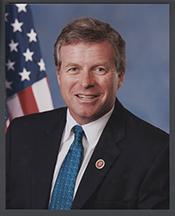
One of the critical opportunities that we have in our country is improving health care, especially using new technology and expanding health insurance for Americans; and there we have the Health Insurance for Life Act by Representative Charlie Dent.
The Health Insurance for Life Act addresses a critical problem in America, which is that the average suburban family will have five different jobs over their life, and they may worry that in between jobs they would lose coverage or be dropped or develop a pre-existing condition which would interfere with the continuation of health care insurance for their family.
The Health Insurance for Life Act of 2007 simply says that for every American already in an insurance pool, who already enjoys COBRA health reinsurance rights for 18 months, that you can continue those, that insurance, for as long as you need to.
Almost every suburban family in America has a problem that they have heard about, either in their own family or in their neighborhood, regarding predators on-line, people that would be using, for example, the number one Web site on the planet, myspace.com, to reach out to kids and to attack them in a way that was simply alien or impossible in the previous century.
The Deleting On-Line Predators Act, which passed in last Congress by a vote of 400-15, says that our first line of defense are parents, moms and dads who know about this danger and are upgrading the protections of their kids on-line. For example, in the 21st century, how the computer should be really in the living room and not the bedroom, where parents can have routine and casual contact with their on-line habits of their kids; or that every 21st century parent should demand the rights of the passwords of their children to make sure that they know where their kids have been.
The Deleting On-Line Predators Act also says to schools and libraries that, as we upgrade protections for kids on-line in the home, that we also do them in public spaces to, consistently and across the board, deny opportunities to the estimated 50,000 sexual predators on-line who are on-line at any one time.
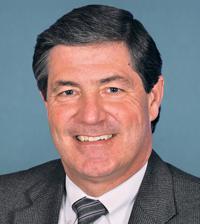
Congressman Jim Gerlach has also introduced another key piece of the Suburban Agenda. That is the Open Space and Farm Land Preservation Act to make sure that we improve the tax treatment and grant programs to preserve suburban open space, so that we do not enter a state of drift in which suburban open space disappears across the country, and we have an unending series of strip malls.
And the final piece of the Suburban Agenda for 2007 is the Senior Safety and Dignity Act by Representative Ginny Brown-Waite. That Act lays out a set of protections for seniors as America ages to make sure that their health care standards, especially in senior and life-long care, are maintained.
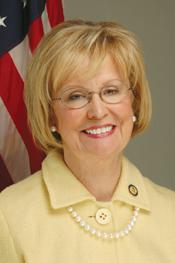
When we look at this all, there is one bill that stands above all others in the concern of suburban families, and that is how to pay for college to make sure that a child has a guaranteed road map into the middle class. And to talk about that legislation, let me yield to the author of that bill, my colleague from Illinois, Congresswoman Judy Biggert.
If the gentlelady will yield.
When we look at this problem, we see that the Congress has taken critical action in the past to change our culture in favor of more savings and investment. The 401(k) program was relatively new to our society and our culture.
And yet millions of Americans now, when they get their first real job, establish a 401(k) program, saving on their own for retirement.
Last Congress you were leading the effort on behalf of extending 529 college
savings accounts that are chartered under each State. We already have $80 billion saved under investment. That is why I want to applaud you with the potential that this 401 Kids account bill could do.
I yield back to the gentlewoman.
Mr. Speaker, reclaiming my time, that may be the biggest benefit from this legislation. Not only will we save tens of billions of dollars for college education, and I think everybody in this Chamber knows George Washington University just crossed the $50,000 a year tuition mark for kids, but more importantly, these accounts are going to have the names of each child on them. And so it is an education tool for parents. And I don't know if you want to talk about that. When the statement comes into the home that for a young teenage son or daughter, you might be able to talk about how the investment has gone.
I thank the gentlewoman. I think the Congress needs to pass the 401 Kids Family Savings Account Act. We know that the average college graduate in America earns a million dollars more than someone who only graduated from high school.
One of the other members of the Suburban Agenda Caucus and an author of one of the key pieces of legislation is my colleague from Pennsylvania, Congressman Charlie Dent, and I yield to him.
Mr. Speaker, reclaiming my time, we have seen that several hundred thousand Americans each year exercise their COBRA rights to continue health care insurance for their families after they are laid off or leave employment. But, each year, over 200,000 Americans will reach the end of their 18-month COBRA period and then be unable to continue their health care insurance. If they have a preexisting condition in their family, they could then be left out of a coverage pool later.
I think that is why it is so important that, at the discretion of the family, at their own cost, they can continue that health care insurance to have peace of mind.
I yield to the gentleman.
We also hear from job experts that in America generally it takes one month or $10,000 to find a new job, on average, but many families will hit that 18-month limit before they find new employment.
I thank the gentleman.
For suburban families, health care issues are second only to safety and security and improvement of public education in their priority list. One of the key issues is access to care, especially at community health centers, and making sure we have enough doctors. No one knows this issue better than the author of the Family Health Care Accessibility Act, part of the Suburban Agenda, my colleague, Congressman Tim Murphy.
Reclaiming my time, I applaud the gentleman. I am a co- sponsor of the Family Health Care Accessibility Act. It is part of the Suburban Agenda, so many Members are backing it.
But my understanding on this legislation is that several trial lawyer associations are against this legislation because they want to preserve the right to be able to sue any doctor volunteering in a community health center out of that ability, which then would mean that there is no doctor present or the community health center closes down.
You are an expert on health care in this Congress. When we look at the delivery of health care, in a hospital emergency room, we have the most expensive setting to care for a family. Generally they have waited until a very late moment, and now we are in an acute emergency situation.
Had that family gone to a community health center early in the process, we would have dealt with the problem without the drama and without a potential catastrophic result, and at much lower cost to the public and the family. That is why this legislation is essential, because it expands these centers and expands care at this level instead of the very expensive place we do it now, in the hospital emergency room.
If we don't pass this legislation, we will have fewer doctors and fewer examining rooms open in community health centers.
Ironically, because we did not provide this liability protection for community health centers, we don't have any issue of malpractice because there was no practice of medicine whatsoever in that setting which I think defies common sense. A greater access to care and expanded capabilities for community health centers ought to be what this Congress is about.
I thank the gentleman.
When we look at the suburban agenda, you can see, last year, we had quite a lot of progress made.
The School Safety Acquiring Excellence Act not only passed this House as part of the suburban agenda, but it was enacted into law, allowing full national criminal background checks for anyone coming in contact with kids in a school, especially recognizing the Jessica Lunsford problem.
We also passed the Charitable Donations for Open Space Act, enacted into law, and that was with the leadership of my colleague from Pennsylvania, Jim Gerlach, who is now, as part of this year's suburban agenda, is moving the Open Space and Farmland Preservation Act, and I yield to my colleague from Pennsylvania.
We look back on the tradition of great environmentalists, like Theodore Roosevelt, who started the National Park Service and expanded key habitats like Yellowstone National Park, and we are all for strengthening and expanding the park system out west.
But for my constituents outside the Chicago suburbs, or yours in the Philadelphia suburbs, that might be only part of a summer vacation.
We need to pass this legislation so there is green and open space near home so we don't have an unending set of suburban sprawl, but we don't have the Federal Government take over this role; this is a decision made by landowners and communities throughout our local areas making local decisions. But in some, create more green and open space, new greenways, to preserve a quality of life and an ecological ambience that has become part of suburban living.
Why I think this legislation is so important, too, is we have seen in the development of the environmental law and movement a trend away from our roots protecting green and open space and habitat to more regulation, more lawsuits and potentially ineffective policies.
I will just note, the Federal Superfund program, designated to cleaning up the most toxic places in America, has spent over half its funds on litigation and lawsuit costs, not on environmental cleanup.
Your legislation takes us back to the original core of what the environmental movement was first founded to do, which was to protect green and open space and key habitats for all time.
It also seems to me we are not empowering a large bureaucracy. There is no overhead in administration. The vast percentage of resources dedicated for this purpose actually goes to the environmental preservation.
I thank the gentleman for being a leading part of our Suburban Agenda Caucus and moving this critical environmental piece of legislation.
To recap, last year when we put this together, we passed legislation, enacted it, for safer schools, charitable space, for open space. We led the way in at least the House passing legislation promoting fully electronic medical records by passing the Deleting On-Line Predators Act, setting the example on student and teacher safety.
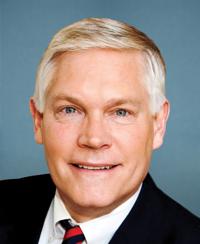
This suburban trend in America is not an Eastern trend, and it is not a Midwestern trend. It is not a Western. It is throughout the country. One of our suburban leaders is from Texas, my colleague from the Texas delegation, Pete Sessions, and a leader on suburban issues.
You are telling me that the marriage penalty will be reimposed by the American Tax Code unless this Congress acts?
What we did is we made sure married couples did not pay a higher tax than two single people living together.
If we look at the suburban agenda about safe schools, extending health care, green and open space, et cetera, one of the things that is not part of the Suburban Agenda is a tax increase, especially a tax increase on working families.
One of the things that we have instituted as part of our general tax policy is to make sure that married families are not paying a higher tax, because a key part of the Suburban Agenda is a family together, raising kids under one household.
I am worried, though, that if there is inaction on tax policy by this Congress, many of the inequities in the Tax Code get reimposed and we start taxing families at a higher rate than people who are single.
We talk about the Suburban Agenda, what is in it, which is pro-school, pro-health care, pro-environment legislation, and what is not, which is a tax increase on the American people. There is the argument that is made very often here in Washington that the only way to cure our financial woes is a tax increase. But if I remember, looking back at the record of the 1970s, even when Congress did raise taxes, for every dollar in taxes that it raised against the American people, it spent another $1.08 in new spending. So the record of those years was that, even though we were raising taxes, spending here in the Congress went up even faster, and so our deficit woes became worse.
If I am not mistaken, last year was the largest increase in tax receipts coming into our Treasury, even though there was no tax increase by the Federal Government, simply because of economic growth, that since September 11, 2001, we have added over 2 million jobs. Maybe that is one of the key lessons of the Suburban Agenda: There is no Federal program or no social welfare act that is more powerful in improving the life of a suburban family than a job and a growing economy for small business.
As the gentleman points out, many people here in Washington will point to the European Union as the economic model, an example that we should follow, but the record is relentlessly negative towards their example of creating new jobs or economic growth, where we have seen a reactive decline of the European Union as against China and the United States. We also recall in the last decade how we all thought that we would all end up working for the Japanese and that Japan, Incorporated, was the big threat.
Now we see an old axiom of politics said by one great politician, never bet against the United States, and also never bet against freedom. What we have seen here is an unbelievable economic performance by our country, record tax receipts coming into the Treasury without a tax increase, and the ability then to focus on the future of the United States, which is largely being written in the suburbs, with safe schools, extending health care and making sure that we are planning for the long term in what will be aging America, with the baby boomers entering retirement, but hopefully, with these policies entering retirement with some safety and security based on private savings and investment, encourage through first the 401(k) program and then we hope through the 401 Kids Family Tax Savings Accounts.
I thank my colleague. I will close out by simply saying that we now present to the American people and the Congress the suburban agenda for 2007, Action Against International Drug Gangs, moving into the suburbs where the Federal Government can help; Safe Schools, relying on the judgment of teachers, full time, using all of their abilities; 401 Kids Tax Deferred Savings Accounts, to make sure that families have more resources, more flexibility, to save for their child's college education and first time home purchase. Health Insurance for Life, to make sure that we continue the COBRA insurance for Americans, for more than 18 months, the Deleting Online Predators Act to make sure we are empowering parents to control this 21st Century danger to their children; the Open Space and Farm Land Preservation Act to make sure that we have more preserved green and open space in the green and open suburbs, and finally, the Senior Safety and Dignity Act to make sure that as the baby boomers age, we are preserving our long- term health care for our Americans.
This is the suburban agenda, a vision for the future and a work plan for the Congress. We are looking forward to working with both sides of the aisle on this to make sure that we are representing and advancing the needs of America as it actually is, living in the suburbs and needing action on all of these items to realize the full potential of this Congress and the work ahead.