United States-Republic of Korea Defense Cooperation Improvement Act of 2008
Legislative Activity
Stay on top of the latest movement without scrolling through every action
Read twice and referred to the Committee on Foreign Relations.
October 2, 2008
View full timeline
Introduced in House
February 14, 2008
Referred to the House Committee on Foreign Affairs.
February 14, 2008
Mr. Higgins moved to suspend the rules and pass the bill.
September 23, 2008 • 3:10 PM
Considered under suspension of the rules. (consideration: CR H8626-8628)
September 23, 2008 • 3:10 PM
DEBATE - The House proceeded with forty minutes of debate on H.R. 5443.
September 23, 2008 • 3:10 PM
Passed/agreed to in House: On motion to suspend the rules and pass the bill Agreed to by voice vote.(text: CR H8626-8627)
September 23, 2008 • 3:20 PM
On motion to suspend the rules and pass the bill Agreed to by voice vote. (text: CR H8626-8627)
September 23, 2008 • 3:20 PM
Motion to reconsider laid on the table Agreed to without objection.
September 23, 2008 • 3:20 PM
Received in the Senate.
September 24, 2008
Read twice and referred to the Committee on Foreign Relations.
October 2, 2008
Floor Debate
21 membersWhat members said about H.R. 5443 on the floor
 DRO
DRO SJL
SJL JL
JL BB
BB SP+16
SP+16
Floor Debate
21 membersWhat members said about H.R. 5443 on the floor
Mr. Speaker, pursuant to House Resolution 116, I call up the joint resolution (H.J. Res. 20) making further continuing appropriations for the fiscal year 2007, and for other purposes, and ask for its…
Mr. Speaker, pursuant to House Resolution 116, I call up the joint resolution (H.J. Res. 20) making further continuing appropriations for the fiscal year 2007, and for other purposes, and ask for its immediate consideration.
Mr. Speaker, I demand a recorded vote.
Mr. Speaker, I move to table the motion.
Mr. Speaker, I would simply note that on page H988 of the Congressional Record there is listed the following statement:
Under clause 9(a) of rule XXI, lists or statements on congressional earmarks, limited tax benefits or limited tariff benefits are submitted as follows offered by myself: H.J. Res. 20 making further continuing appropriations for fiscal year 2007, and for other purposes, does not contain any congressional earmarks, limited tax benefits, or limited tariff benefits as defined in clause 9(d), 9(e), or 9(f) of rule XXI.
No.
Mr. Speaker, I ask for a ruling from the Chair.
Mr. Speaker, I move to table the appeal.
Mr. Speaker, I ask for the yeas and nays.
I thank the Speaker. Mr. Speaker, I yield myself 2 minutes.
Mr. Speaker, I simply want to thank Janet Airis and her staff at the CBO scoring unit; Ira Forstater and Nadia Soree and the entire staff at the Legislative Council; and certainly, most of all, the staff of the Appropriations Committee, both majority and minority, both Senate and House, especially Rob Nabors and David Reich.
This is a bill that needs to pass so that everyone who is reliant upon programs contained therein understands what the rules of the game will be for the remainder of the fiscal year. I urge passage.
Mr. Speaker, I reserve the balance of my time.
Mr. Speaker, I yield to the gentleman from Texas (Mr. Lampson) for a unanimous consent request.
(Mr. LAMPSON asked and was given permission to revise and extend his remarks.)
Mr. Speaker, I yield myself 12 minutes.
Mr. Speaker, on Monday, the President will submit to the Congress his new budget. It would be kind of nice if we had disposed of his last year's budget request before the President brings
his new budget forward, because I believe that he is entitled to start the year with a clean slate, and I think we are entitled to start the year with a clean slate as well.
Unfortunately, we cannot do that because of the failures of the last Congress. This resolution represents the last remaining legislation that must be passed in order to clean up the mess left to us by the last Congress.
Now, we all know the story. Last year, the House debated and passed every single appropriation bill except the Labor, Health, Education bill. That was held up because of the now-well-known division between the two parties on the minimum wage and also because moderate Republicans in this House, led by people like Mr. Castle and others, were demanding that the Republican leadership add at least $3 billion to the Labor, Health, Education appropriation bill in order to get their votes on the Republican budget resolution.
The then chairman, Mr. Lewis from California, my good friend, specifically said on the House floor that the reason the Congress was not allowed to finish its work is because the Senate majority leader, Senator Frist, shielded the Senate from any painful votes on appropriations before the election. Then, after the election, the majority party walked away from their responsibility to finish the budget, and they left us to clean up the mess as they walked out the door.
When we considered the CR under which we are now operating, I specifically said from this place on the House floor that I would make any substantive compromise that was necessary and I would make any procedural compromise that was necessary in order to enable the then majority Republicans to finish the bills on their watch, on their terms. I said I was willing to recognize that they still controlled the Congress and so they had a right to have Republican priorities reflected in those bills, even if I disagreed with those priorities.
But I also warned that if they did not live up to their responsibilities to pass the budget, then they would forfeit their right to complain and whine about how we went about cleaning up their leftover jobs.
So when it became apparent that they would not meet their responsibilities, Senator Byrd and I announced that we would proceed by doing two things. We announced, first of all, that we would provide no congressional earmarks. We told anybody who had an earmark in a 2007 bill that if they wanted it considered in the following fiscal year they would need to present it under the reform process, which we were in the process of putting together; and we announced at that time that we intended to cut earmarks by 50 percent in comparison to the 2007 bill.
The second thing that we announced is that we would take the 2006 continuing resolution and make whatever adjustments were necessary in order to avoid shutdowns of agencies or layoffs or furloughs and in order to recognize priorities that we thought people had on both sides of the aisle. That is what we did.
In this bill, we started with the fiscal 2006 base. We then cut or rescinded $9- to $10 billion, almost $10 billion, in items that we thought could be cut or rescinded. We cut over 60 programs. We generated $10 billion or so in savings, and we added that to the $7 billion that still remained within the Republican budget resolution cap, and then we allocated that money on the basis of what we thought were better priorities.
Now, the gentleman from California says we should have just stuck with the existing 2006 continuing resolution. We could have done that. If we had, we would not have been able to add $3.6 billion in veterans' health care, which we have done in this bill, which is our number one priority. We would not have been able to add $1.2 billion in defense health, which we add in this bill. We would not have been able to add $500 million for basic housing allowances for our military, and we would not have been able to add the $1 billion that we added for BRAC, the base closing operations. We would also not have been able to add the $216 million that we added to the FBI budget at the request of the administration.
In education, two weeks ago, when the Democratic Party brought to this House floor a proposition to lower interest rates on student loans, we were told, ``oh, that is just tokenism. What you ought to do is add to the Pell Grants.''
That is what we have done. We added enough to the Pell Grant program to allow an increase in the maximum grant of $260. We wouldn't have been able to do that either if we had followed Mr. Lewis' suggestion and simply stuck to the CR under which we are now operating.
In addition to that, we added $250 million to Title I and $100 million to Head Start so we could end the decline in enrollment in that program.
In the area of science, we were asked by a number of Members on the Republican side of the aisle in this House, and on our side, plus the Senate on both sides, to add money for NIH. Members did not like the fact that, under the alternative, we were going to lose at least 500 medical grants in cancer research, heart disease, Alzheimer's and the rest.
I have not met a single constituent who said, ``Hey, Obey, I think you ought to save money by cutting cancer research grants.'' We added $620 million to reverse the decline in the number of research grants at NIH, and we added some additional funds to the National Science Foundation.
We added some additional money to energy conservation and energy research programs, in addition to which we provided a $200 million add- on for the Clean Water Revolving Fund. There isn't a small community in this country that doesn't need some help with clean water.
We added $100 million for park maintenance, and we added $90 million for firefighting.
We also were requested by the administration to provide at least the amount that they asked for the global AIDS program and to combat malaria and TB. So we added $1.4 billion to do that, and we added $146 million to prevent the Social Security Administration from having a 10- day furlough for their employees. That is what we did.
We also provided a suspension of all earmarks.
Now, I want to make clear a lot of the earmarks that we suspended are perfectly defensible. They accomplish laudatory public purposes. I think it is sad that we haven't been able to fund them. But the fact is that it became apparent to me that the earmarking process had been so discredited by the Cunningham case and by other cases that we have no choice but to start over. So we wanted to clear the decks, clean up the process, and start over.
Ninety-nine percent of the Members of this House on both sides of the aisle have immense integrity. They don't ask the Congress for things that are illegitimate, but it is that 1 percent that has fouled the nest for everybody else. So we are trying to clean up the nest so that we can approach next year with a clean start and so that we will have a process so that both parties will know what earmarks the other party is putting into the bills.
I want the minority to be fully cognizant of whatever earmarks the majority puts in the bills, and I want us to be fully cognizant of the other earmarks you put in the bills. That is the only way we can protect the integrity of this institution.
So we are being criticized in some quarters because we are being told, ``Well, when you eliminated the earmarks, you should also have eliminated the money in those programs.'' We didn't do that for one very simple reason. We didn't want to reduce the amount of money in the COPS program, for instance.
What we are doing, by eliminating earmarks, and let's be clear about it, we are not saving a dime by eliminating earmarks. But what we are doing is transferring the power to decide where that money goes from the congressional branch to the executive branch. I don't like that, but it is a price I am willing to pay to clean up the system. What that means is that the administration will have much more authority than normal to decide where money goes, whether it is in the Army Corps of Engineers program or COPS or you name it.
I would simply say, we may have made some wrong choices. Undoubtedly, we did. But the process was this.
For 3\1/2\ weeks our staffs worked 7 days a week round the clock, and they negotiated with the Senate, Republican
and Democratic staff alike. The Republican staff was invited to every meeting that took place. If they attended or didn't, that was up to them.
Whenever the staff could not reach agreement, the Members were brought in order to argue it up. If you don't think that occurred, talk to Mr. Visclosky, talk to Senator Domenici, talk about the arguments they had on the Energy and Water bill, and there are countless other examples.
We are now in a situation in which we have to move on. We may have made some wrong choices, but at least, in contrast to last year, we made those choices, we made them. They may not be popular, but they were necessary so that we can turn the page, get on the next year.
This bill is the functional equivalent of a conference report. All of the appropriation bills that were not completed action on last year, this is what they look like. This is what they look like. This is a continuing resolution that we are producing today in order to direct where the spending in these bills ought to go.
Now, you may say you don't think it fits the traditional definition of a continuing resolution. Either you can have an automatic continuing resolution, or you can have a thinking man's continuing resolution. I don't think that we were obligated to lock ourselves into the 2006 numbers, because that would have prevented us from providing the initiatives that I talked about for veterans, for education and the like.
This is a responsible document. Nothing was sneaked in. Everybody knows what is in this package. All the staff knows.
I would urge an ``aye'' vote for the bill so that, come Monday, we can deal with the President's new budget, rather than continuing to deal with the spilt milk of yesterday's majority.
Mr. Speaker, I yield myself 1 minute.
Mr. Speaker, the gentleman talks about how we should have stuck with the bills that they produced last year. There is only one problem. They couldn't convince their Republican brethren in the Senate to buy them. And so we had to try something else.
I can't help it that the majority party did not meet its responsibilities to pass these appropriations because you had an internal fight within the Republican Party. But now the responsibility is passed to us, and at least we are producing a proposal which can pass both Houses. That is more than can be said for the work product of the last Congress.
Mr. Speaker, I now yield 2 minutes to the gentleman from Texas (Mr. Edwards).
Mr. Speaker, I yield 2 minutes to the gentlewoman from New York (Mrs. Lowey).
Mr. Speaker, may I ask how much time remains on both sides.
Mr. Speaker, I yield 2 minutes to the distinguished gentleman from Massachusetts, the chairman of the Financial Services Committee (Mr. Frank).
Mr. Speaker, I yield myself 15 seconds.
Mr. Speaker, it is not correct that we are cutting BRAC. We are increasing BRAC $1 billion above the existing levels in the continuing resolution under which we are operating today. We will deal with the additional requests for BRAC in the supplemental, and you can bet that they will get all of their money. But we are adding $1 billion to BRAC. We are not cutting.
Mr. Speaker, I yield myself 15 seconds.
Mr. Speaker, if ever there was a case of the pot calling the kettle black, we have just heard it.
The gentleman is objecting because we were not able to go back 2 years to excise from a previous appropriation the rain forest project which was put into your bill when you were chairman. We have eliminated all earmarks for today and tomorrow. We cannot be expected to correct all of your mistakes.
Mr. Speaker, I yield 2 minutes to the gentleman from Indiana (Mr. Visclosky), the chairman of the Energy and Water Subcommittee.
(Mr. VISCLOSKY asked and was given permission to revise and extend his remarks.)
The answer is that there is money, there is adequate money to provide for that committee, if, in fact, it is created. But the formal action on creation has not yet taken place.
Mr. Speaker, I yield 1 minute to the gentleman from New York (Mr. Weiner) for a colloquy.
My preference is that additional funding would be available for enhancement grants which can be used for hiring. But that final decision will be up to the administration.
Mr. Speaker, I yield myself 10 seconds.
I, once again, repeat, this bill does not cut BRAC. It adds $1 billion to BRAC. The fiscal 2006 level was $1.5 billion. This bill will have $2.5 billion, and we will be adding more in the emergency supplemental.
With whatever time I have remaining of the 15 seconds.
With all due respect, I don't live in the world of newspaper articles. We produced this bill. I know what is in it. I would hope the gentlewoman would also learn what is in it.
Mr. Speaker, I yield 1 minute to the distinguished majority leader, Mr. Hoyer.
I yield the gentleman (Mr. Hoyer) another minute.
How much time do I have remaining?
Mr. Speaker, I won't take the full 4 minutes. Let me simply say that it is necessary for the House to move forward with this legislation. It is easy to nitpick. It is interesting to me that the minority today has chosen to chastise us for decisions that we made not to go back 2 years and repeal some of the mistakes that the minority made when they were in the majority. They argue that we should have done that; they argue that we should have lived with a simple continuing resolution at '06 levels. If we do that, that would mean we would not have the added funding for veterans health care, we would not have the added funding for BRAC, we would not have the added funding for the National Institutes of Health; we would not be able to raise the Pell grant by $260 for the maximum grant; we would not have the extra funding for energy research.
I would ask Members to recognize that after a full year of the Republican minority not being able to produce and finish their work, it is time for us to finish their work so we can move on. The President is producing his new budget on February 5, which is next Monday. We need to clear the decks so we can deal with that afresh.
I ask for an ``aye'' vote.
Mr. Speaker, I yield back the balance of my time.
Mr. Speaker, I rise in opposition to the motion to recommit.
Mr. Speaker, the fact is that this is simply a nit-picking motion which, if adopted, would kill our chances of passing this resolution in the United States Senate and result in us living on an '06 continuing resolution, which would deny us the ability to provide additional funds for veterans health care, for education, for veterans housing and the like.
I would point out, this resolution already adds $500 million to the basic allowance for housing. This CR already increases family housing construction by $210 million and funds military construction at the level of the President's request that have been authorized.
This motion would eliminate the weapons research account that has been of some controversy today. I would point out, we have already cut that account by $94 million. I doubt that the House wants to eliminate that nuclear weapons research.
I would also say that in a new found and sudden burst of false piety, we are now being chastised because we did not reach back and eliminate an item that was approved 2 years ago for the State of Iowa by the majority. In fact, the gentleman who was chairman of the committee when that item was approved is none other than the gentleman offering the motion right now.
I don't mind clearing up the mistakes for last year, of the gentleman, I do mind being asked to go back 2 years to clear up your mistakes. That is asking too much, even for us.
Secondly, I would say that some of us may not like the Denali Commission, but it is a perfectly authorized program. And as much as I might like to see a project like that in my district, I don't have one, neither does the gentleman. I think it is illegitimate for us to single out one legitimate program for elimination that would require us, I think in the interest of fairness, to go back and look at hundreds of other programs that have been approved in the past. So I urge a ``no'' vote.
Mr. Speaker, I rise in support of H.J. Res. 20, which among other things avert the impeding budgetary train wreck left by the Republican-controlled 109th Congress. I want to pay particular tribute to…
Mr. Speaker, I rise in support of H.J. Res. 20, which among other things avert the impeding budgetary train wreck left by the Republican-controlled 109th Congress. I want to pay particular tribute to Mr. Obey, the Chairman of the Appropriations Committee for his incredible work in fashioning this legislation that will enable us to put behind us the mess left by last Congress and get on to the important business of addressing the real and pressing needs of the American people.
Mr. Speaker, last November millions of Americans went to the polls to register the strong disgust with the Republican dominated control of the legislative and executive branches of our Federal Government. Americans were fed up with a Republican Congress and its legacy of a culture of corruption, its failure to address the pressing needs of the American people, its unwillingness to provide effective oversight of the executive branch, its fiscal irresponsibility that resulted in record budget deficits and added trillions to the national debt, and its ability to complete one of the most basic tasks of the legislative branch: to pass the appropriations bills needed to fund the government. Is it any wonder that Americans were voting for a new way of doing the people's business when they elected the Democratic majorities in the House and Senate? I think not. We Democrats promised a new and better direction for America. And we have been delivering.
Mr. Speaker, behold what we accomplished in less than the first 100 legislative hours of our majority. We passed H.R. 1, which implements the recommendations of the 911 Commission; we passed H.R. 2, raising the minimum wage by $2.10 an hour over three years and providing a much needed raise to nearly 5 million workers; we passed H.R. 3, which will provide funding for embryonic stem cell research and provide hope for millions of Americans suffering from some of the most debilitating illnesses.
But we did not stop there. We passed H.R. 4, which requires Medicaid to negotiate lower prescription drug prices for our seniors and disabled citizens; we passed H.R. 5, which will make college more affordable to middle and working class Americans by cutting the interest rate on federally insured student loans in half; and we passed H.R. 6, which is a substantial start in making this country more energy independent.
And we accomplished all this, Mr. Speaker, after draining the swamp and ending the culture of corruption by adopting the strongest, toughest ethics and lobbying rules in history.
Today, we clean up the fiscal mess left by the Republican-led 109th Congress. The last Congress abdicated its duty to be a faithful and responsible steward of the public fisc. They shirked their responsibility to establish the right priorities and make the right choices to serve the American people. They failed to pass nine of the eleven appropriations bills needed to sustain the operations of government for Fiscal Year 2007.
Mr. Speaker, thanks to your superb leadership, and especially the extraordinary legislative craftsmanship of our remarkable Chairman of the Appropriations Committee, we rectify these Republican failures today. The Continuing Resolution we take up today, H.J. Res. 20, is not the ideal manner to fund the government and contains some provisions that each of us might not like, unlike the President's decision to escalate the war in Iraq, the choices reflected in H.J. Res. 20 represent the best available alternatives out of a universe of worst choices. That is why, Mr. Speaker, I rise to offer my support for the Fiscal Year 2007 Continuing Resolution, and my appreciation to the leadership, the Chairman and members of the Committee, and for all my colleagues who join me in voting for H.J. Res. 20.
Mr. Speaker, H.J. Res. 20, totals $463.5 billion, the amount remaining under the Republican budget resolution for the current fiscal year. Most programs are funded at FY 2006 levels with increases to cover the cost of pay increases. Of course, it was also necessary to make additions to maintain staffing levels, avoid furloughs, and generally meet increased costs or workloads for agencies, particularly the Department of Justice, the federal judiciary, the Social Security Administration, the FAA (including air traffic control), international peacekeeping operations, the Indian Health Service, the Food and Drug Administration, and the USDA Food Safety Inspection Service.
But Mr. Speaker, because the new Democratic majority knows how to, and does not shirk from, choosing wisely and setting the right priorities, in this continuing resolution we were also able to provide significant new investments for high priority needs in many areas, including veterans healthcare and assistance, law enforcement, public health, housing and education, scientific research, energy independence, transportation, and the environment. Let me discuss briefly some of the more important and beneficial provisions.
veterans Affairs
In the area of veterans healthcare, the resolution provides $32.3 billion, an increase of $3.6 billion above the FY 2006 funding levels to provide service for the anticipated increase of at least 325,000 veteran patients and to meet rising healthcare costs', especially of our returning soldiers from Iraq and Afghanistan. As President Lincoln reminded us 142 years ago, we have a moral obligation to care for him whom has born the battle, and for his widow and orphan. We are going to keep that commitment.
We also provide $21.2 billion, an increase of $1.2 billion to provide care for service members and their families, including treating service members wounded in action in Iraq and Afghanistan.
Mr. Speaker, we will never neglect the needs of those who proudly don the uniform in the defense of the United States. That is why the resolution provides $13.4 billion to fund the Basic Allowance for Housing, an increase of $500 million. This increased funding is
needed to provide a down payment towards the funding shortfall caused by higher housing rates.
Public Safety and Law Enforcement
In the vitally important area of public safety, law enforcement, and crime prevention, the resolution increases the funding for the Federal Bureau of Investigation by $216.6 million to fully fund 31,359 positions, including 12,213 agents and 2,577 Intelligence Analysts-- doubling the number of Intelligence Analysts since September 11th. This amount also includes $100 million to proceed the FBI's plan to move from paper-based case management to electronic data sharing. The resolution also includes $147.4 million for counter-terrorism and intelligence infrastructure.
Mr. Speaker, as a member of the Judiciary Subcommittee on Crime, Terrorism, and Homeland Security, I know that investing in crime prevention programs is an effective use of the taxpayers' precious dollars. That is why I am pleased that the resolution provides $520 million for Byrne Justice Assistance Formula Grants, an increase of $109 million, and $542 million for Community Oriented Policing Services (COPS), an increase of $70 million. Together these increases are the first step in reversing the drastic cuts to State and local law enforcement programs made since the Bush administration came into office in 2001. I will immediately make the request for the U.S. Justice Department to fund the new crime-prevention needs of Houston.
Mr. Speaker, as we all know, education is destiny. The surest and most certain path to continued American prosperity lies in an educated citizenry. That is why I am especially pleased that for the first time in 4 years, the maximum Pell Grant has been increased, by $260 to $4,310. This long-overdue increase will help over 5.3 million students pay rising college expenses.
The resolution also provides $10.7 billion for IDEA Part B State grants, an increase of $200 million to help school districts serve 6.9 million children with disabilities and special needs. If we are going to be serious about leaving no child behind, then we must make sure to adequately fund special education.
But there is more, Mr. Speaker. The resolution increases Title I K-12 Grants by $125 million and provides more than 38,000 additional low- income children performing below grade level with intensive reading and math instruction. Thus, we have begun to reverse the decline since 2005 in Title 1 support for elementary and secondary schools at a time of record enrollments (55 million students in 2006) and pressures for more accountability from No Child Left Behind requirements.
The resolution also contains $125 million targeted to the 6,700 schools that failed to meet No Child Left Behind requirements in the 2005-2006 school year, enabling them to implement improvement activities, such as teacher training, tutoring programs, and curriculum upgrades. According to the Department of Education, without this funding more than 80 percent of high-poverty districts would be unable to afford these improvements.
The value and efficacy of Head Start is well known and long established. That is why it is so scandalous that the Bush Administration has cut this program by 11 percent in real dollars since 2002. The resolution increases funding by $103.7 million to help prevent a drop in Head Start enrollments. The money the Department of Education will have will still allow for teacher incentive pay for Houston.
Public Health Programs
The resolution provides $1.9 billion, an increase of $206.9 million to finance more than 300 critically need new or expanded health centers, serving an estimated 1.2 million new patients. We also increase Ryan White CARE Grants by $75.8 million to bring it to its authorized funding level of $1.2 billion.
Scientific Research
One of the most important investments this nation can make to secure its long-term future is in the area of scientific research. As a long- term member of the Science Committee, I am keenly aware that to keep ahead of our international competitors we cannot scrimp when it comes to expanding the Nation's intellectual capital and knowledge base. That is why the resolution wisely funds the National Institutes of Health at $28.9 billion, an increase of $619.5 million. This level of funding reverses a projected decline in new NIH research project awards and supports an additional 500 research project grants, 1,500 first time investigators, and expands funding for high risk and high impact research.
The resolution also provides an additional $50 million in new funding for the National Institute of Standards and Technology's (NIST) innovation programs for physical science research and lab support for nanotechnology and neutron research. Equally important, the resolution increases provides funding for the National Science Foundation in the amount of $4.7 billion, an increase of $335 million. This increase is a down-payment towards enhancing U.S. global competitiveness by investing in basic science research.
Mr. Speaker, in an area close to my heart and important to my district, which is often referred to as the Energy Capital of the nation, the resolution increases funding to the Department of Energy's Office of Science by $200 million to support cutting edge research, including new energy technologies such as improved conversion of cellulosic biomass to biofuels. I also appreciate that the resolution increases funding for energy efficiency and renewable energy resources by $300 million which will enable us to accelerate research and development activities for renewable energy and energy efficiency programs. NASA and in particular the Johnson Space Center can be funded by redisbursing funds in the Agency to avoid lost jobs and the stopping of important work. I will work for the continued work of NASA.
Housing and urban development
Mr. Speaker, as Hurricane Katrina laid bare for all the world to see, affordable housing has for too long been a neglected priority in this country. The resolution makes a modest but useful stab at correcting this woeful situation. The Section 8 Tenant-Based Program is funded at $15.9 billion, an increase of $502 million, which will enable the Department of Housing and Urban Development to renew 70,000 housing vouchers currently in use by individuals and families. The Section 8 Project-Based Program is budgeted at $5.9 billion, an increase of $939 million. This much needed increase will help HUD renew 157,000 housing vouchers currently in use by individuals and families.
Although no one likes to live in public housing, we must remember that for millions of our fellow citizens they are their home and sanctuary. For too long they have been neglected, which has led to an accelerated state of disrepair. That is why it is encouraging to see that the resolution provides an extra increase $300 million to enable Public Housing Authorities (PHAs) to address critical operating needs after last year's energy hikes saddled them with $287 million in unexpected utility costs. Although this increase is still $672 million short of the total estimated need of $4.5 billion, it will help to restore staff levels, maintenance activities, elderly service coordinators, security officers and equipment.
Also Mr. Speaker, the resolution contains language changing the funding formula for the Section 8 Tenant-Based Program. The current formula is based on information from 2004 that is out of date and results in some Public Housing Authorities (PHAs) getting more money then they can spend while others have less than they need. The resolution corrects this problem by directing HUD to use the most recent 12-month leasing and cost data. Last week HUD announced that a similar provision would be included in their 2008 budget request to be implemented in 2009. By including the language now, 2007 funds will be put to their intended use--funding housing units for low-income families and individuals rather than sitting unspent.
Transportation Guarantees
Next to human capital, few things are as important to the nation's economic future as is its physical infrastructure, especially its roads and bridges. That is why it is very good news that the federal aid highway program is fully funded at the level guaranteed in the SAFETEA- LU Act by providing an obligation limitation of $39.1 billion for FY 2007, $3.5 billion over the FY 2006 enacted level; and funding for Federal mass transit programs is increased by $470 million to $8.97 billion to meet the transit funding guarantees as required by SAFETEA-
Mr. Speaker, I yield myself such time as I may consume. Mr. Speaker, I rise today to do something that I have never done before, and that is to oppose House passage of an appropriations bill. My…
Mr. Speaker, I yield myself such time as I may consume.
Mr. Speaker, I rise today to do something that I have never done before, and that is to oppose House passage of an appropriations bill.
My friends on the other side of the aisle, and I use the term ``friends'' sincerely, have produced an 8-month omnibus spending bill that appropriates $463.5 billion. It is legislation that few have seen, which cannot be amended in any way, and that will pass this House after only 1 hour of debate. It is the first omnibus spending bill that I have seen during my time in Congress written and considered without the input of the chairman or ranking members of any appropriations subcommittee, without the input of any Republican or Democratic subcommittee members, without the benefit of a full Appropriations Committee markup, without the standard three days for circulating the bill to committee members before markup, without the standard 3 days for circulating the bill to all House Members after full committee consideration, without any prior debate whatsoever, and without the opportunity to offer even one amendment on the House floor.
I do not fault my friend, Mr. Obey, the chairman of the Appropriations Committee, for he is doing what he is asked to be done by his leadership. He is in the position today because of the former Senate majority leader's complete failure to schedule and pass the fiscal year 2007 appropriations bills. The House and the Senate Appropriations Committee did their work last year, and Mr. Obey and I worked very closely in attempting to see it was fully completed. The Senate leadership did not.
As the former chairman of the committee, I know that Mr. Obey feels strongly about maintaining regular order and passing other appropriations bills. I can vividly recall a conversation Mr. Obey had with me shortly after I became chairman when he suggested that perhaps I would be the last chairman of the Appropriations Committee because of the breakdown of regular order.
I looked to his comments and have taken them to heart because I committed to him and to our Members that we would pass our spending bills in regular order, and the 2 years I served as chairman we did.
Today, my fear is that Mr. Obey may be the last chairman of the Appropriations Committee because of the very concern he expressed to me, the breakdown of that regular order. Shutting both Republicans and Democrats out of the legislative process is a highly, highly unusual circumstance, but that is exactly what has occurred.
Both Republicans and Democrats are being denied a full and open debate on this legislation that will spend, as I suggested earlier, $463.5 billion, roughly one-half of the annual Federal budget.
Speaker Pelosi and Leader Hoyer, both former members of the Appropriations Committee, know that our process is very open and a collaborative one. Historically, appropriations bills are brought to the floor under an open rule to encourage debate and create better legislation. Our spending bills reflect not just the will of the Appropriations Committee but, indeed, the will of the entire bipartisan House. It is not uncommon to have hours and hours of debate and more than 100 Democrat or Republican amendments offered on a single spending bill. That is, until today.
The House will debate this legislation today for 1 hour. Not one amendment has been made in order. The Senate, that is, the other body, on the other hand, will have the opportunity to debate the legislation for up to 15 days and with the potential for an unlimited number of amendments.
Let me repeat, it is important that the Members hear that. One hour of debate in the House with no amendments, 15 days of debate in the Senate with potentially unlimited amendments.
Speaker Pelosi has vowed to run the House in a more open, democratic and inclusive way. A spirit of bipartisanship, she said, would prevail in the people's House. That pledge was put on the shelf so the new majority could complete their first 100 hours agenda.
The new majority then promised that business would soon return to regular order with plenty of opportunity for Democrats and Republicans to participate in the democratic process. Members of the House, Democrats and Republicans, are still waiting for the Speaker to keep her word.
In closing, I would suggest that our country would be better served by extending for a full year the clean continuing resolution the House and Senate passed in December. That legislation, a mere 19 pages long, contained no gimmicks, no policy changes, and did not reward or punish agencies indiscriminately, as is done in this 137-page package.
This omnibus spending bill before us today totally disregards the once proud tradition of regular order within the House Appropriations Committee and violates the longstanding bipartisan customs of the people's House. I urge that my colleagues join me in a ``no'' vote.
Mr. Speaker, I reserve the balance of my time.
Mr. Speaker, I yield 3 minutes to my colleague, the ranking member of the Homeland Security Subcommittee of Appropriations (Mr. Rogers of Kentucky).
Mr. Speaker, I yield 2 minutes to the gentleman from Virginia (Mr. Wolf).
Mr. Speaker, I yield 3 minutes to the ranking member of our Transportation Subcommittee of Appropriations (Mr. Knollenberg).
Mr. Speaker, I yield for the purpose of making a unanimous consent request to the gentlewoman from Illinois (Mrs. Biggert).
(Mrs. BIGGERT asked and was given permission to revise and extend her remarks.)
Mr. Speaker, I yield 2 minutes to the gentleman from New Jersey (Mr. Frelinghuysen).
Mr. Speaker, I yield 2 minutes to the gentlewoman from Texas (Ms. Granger).
Mr. Speaker, I yield 3 minutes to the gentleman from Ohio (Mr. Hobson).
Mr. Speaker, I yield 2 minutes to the gentleman from Georgia (Mr. Kingston).
Mr. Speaker, I yield 2 minutes to Mr. Wamp, the Appropriations Committee ranking member of the legislative branch.
Mr. Speaker, could I inquire as to how much time is remaining on each side?
Mr. Speaker, I yield 2 minutes to the gentlelady from Virginia (Mrs. Drake).
Mr. Speaker, I reserve the balance of my time.
Mr. Speaker, somewhat responding to the majority leader's comment, I can't help but be moved to say that he suggested directly that Mr. Obey had spent a good deal of time with the gentleman from the Senate, Mr. Byrd, the two Members involved in this bill, and beyond that, a good deal of contact with our staff. Beyond those two Members, let me say that this has been a very fine product. It is a staff, nonelected staffperson's piece of work that involves $463.5 billion of appropriations.
I must say that it is important for me that the body know that I am committed to reducing the rate of growth of spending. $463.5 billion is a pretty significant rate of growth.
But in the meantime, as we go about reducing spending growth, I will also work in a bipartisan spirit to move our bill through the committee and on time and under budget.
I will not, however, respond to either intimidation or any threats relative to the way we are handling the appropriations process. The Appropriations Committee will not become a small colony in the empire of this new leadership.
We renew our commitment to bills produced by regular order that will serve as a credit to our committee, to the national interest, as well as to the people from our districts we pretend to serve.
With that, the leader and I will work further together on this matter, but I am very concerned about the volume of staff direction here where in the final analysis the people know that they are not elected representatives of the House.
Mr. Speaker, I reserve the balance of my time.
Mr. Speaker, I yield back the balance of my time.
Mr. Speaker, I have a motion to recommit with instructions at the desk.
Yes, I am opposed to the bill in its present form.
Mr. Speaker, the legislation before us is intended to eliminate earmarks to fund a variety of important Federal programs. In spite of those best intentions, however, a close reading of the bill revealed that earmarks were, in fact, left in.
Additionally, a number of critical programs affecting new law enforcement, military construction and military families have been shortchanged. In an effort to live up to the spirit of what this bill intended, my motion to recommit would eliminate nearly $600 million in earmarks, other unnecessary spending, and also use those funds to fully fund the Drug Enforcement Administration's effort to combat methamphetamines and other illicit drugs, restore critically needed funds to military construction and military family housing accounts, and reduce the Federal deficit.
Specifically, this motion would accomplish the following:
First, rescind the remaining $44.6 million from the Senate's rain forest in Iowa earmark, eliminate $94 million unnecessary and unrequested funding for the Denali Commission, funding that is nothing more than a thinly-disguised Senate earmark for Alaska. Eliminate $400 million of ongoing earmarks from the NNSA weapons activity accounts. Eliminate $49.7 million of spending in DOE's fossil energy account, spending that duplicates mandatory funding by the Energy Policy Act of 2005.
My motion would distribute these savings in the following manner:
First, $50 million for the DEA's efforts to combat meth and other illicit drugs; $275 million for basic allowance for housing; $86 million for critically needed military construction and family housing; $178 million for deficit reduction.
Mr. Speaker, I encourage my colleagues, both Republicans and Democrats, to live up to the spirit of this legislation by voting to eliminate earmarks and put those funds to better use by combating meth, supporting our military families and reducing the deficit.
I urge a strong bipartisan vote on this motion to recommit.
Mr. Speaker, I yield whatever time may remain to Mr. Pearce of New Mexico.
I yield back the balance of my time.
Mr. Speaker, on that I demand the yeas and nays.
Mr. Speaker, I rise today to discuss an issue of importance to my congressional district in Southwest Washington. The White Pass Ski Area is located in the majestic Cascade Mountains in the Gifford…
Mr. Speaker, I rise today to discuss an issue of importance to my congressional district in Southwest Washington.
The White Pass Ski Area is located in the majestic Cascade Mountains in the Gifford Pinchot and Wenatchee National Forests. The area is commonly referred to by skiers as ``the jewel of the Pacific Northwest'' for its breathtaking views of Mt. Rainer and exciting skiing opportunities. The area, which provides critical tourism revenue to the surrounding rural communities, is now looking to expand to provide greater opportunities to skiers in the Pacific Northwest.
The Washington State Wilderness Act of 1984 added over 23,000 acres of land to the Goat Rocks Wilderness Area and removed from wilderness designation 800 acres adjacent to the White Pass Ski Area as having ``significant potential for ski development'' and urging the Secretary of Agriculture to ``utilize this potential, in accordance with applicable laws, rules and regulations.''
The Gifford Pinchot National Forest Land and Resource Management Plan allocated the 800-acre area that Congress had withdrawn from the Wilderness Area back in 1984 to Developed Recreation in recognition of the intent of Congress. However, the LRMP concurrently inventoried as roadless the same 800-acre area.
It is well-understood that it was congressional intent to permit expansion of the White Pass Ski Area. I would like to submit for the record a letter signed by all living Members of the 1984 congressional delegation, stating that it was their intent to provide for the expansion of White Pass Ski Area. In a February 3, 2004 letter, the U.S. Department of Agriculture also confirmed this congressional intent, stating: ``We agree that the intent of Congress was clearly to allow for ski area development in the Hogback Basin.''
The Fiscal Year 2007 Interior Appropriations Bill that passed the House in May of last year included important information clarifying congressional intent to permit expansion of White Pass Ski Area. The language stated:
The Committee notes that the Washington State Wilderness Act of 1984 removed from wilderness designation 800 acres of land adjacent to the White Pass Ski Area in Washington State for potential ski development. The Committee notes that the Gifford Pinchot National Forest Land and Resource Management Plan allocated the 800-acre area as Developed Recreation to allow for ski area expansion, while concurrently inventorying the same land as roadless to reflect its current physical character. The Committee recognizes that it was the intent of Congress to permit ski area expansion into this 800-acre area and urges the Secretary of Agriculture, once the Environmental Impact Statement for the White Pass Ski Area's Master Development Plan is properly completed, to move forward expeditiously in approving the expansion plans in accordance with all applicable laws, rules, and regulations.
Unfortunately, the Continuing Resolution that we are going to pass today does not include any report language, including the language clarifying congressional intent as it relates to White Pass Ski Area.
I wanted to bring this issue to the attention of my colleagues and highlight the fact that the House Appropriations Committee was prepared and willing to clarify congressional intent, and that the full House approved that clarification by voting for the Fiscal Year 2007 Interior Appropriations Bill in May. In keeping with this, I urge the Secretary of Agriculture to move forward expeditiously in approving the expansion plans in accordance with all applicable laws, rules, and regulations-- once the Environmental Impact Statement is properly completed.
July 7, 2005.
Mike Johanns,
Secretary of Agriculture,
Washington, DC.
Dear Secretary Johanns: As members of the 1984 Washington
Congressional delegation, we are writing to express our
collective dismay over an injustice that has continued over
the past 21 years.
Over two decades ago, we succeeded in passing through the
Congress the Washington Wilderness Act of 1984 (Washington
Wilderness Act; P.L. 98-339). This legislation added 23,000
acres of wilderness along and near Highway 12, while removing
from wilderness designation 800 acres that are adjacent to
the White Pass Ski Area. As reported language stated,
legislation removed the 800 acres from wilderness so the
Secretary of Agriculture could evaluate its ``significant
potential for ski area development.''
Now, twenty one years after passage of this Act, the White
Pass Ski Area remains mired down in its third attempt at
completing an Environmental Impact Study to add these acres.
Something has gone terribly wrong.
The White Pass Ski Area, which began operations in 1952, is
located at the crest of the Cascade Mountains in south-
central Washington State within the boundaries of the
Wenatchee-Okanagan and Gifford Pinchot National Forests.
Plans for expansion of the White Pass Ski Area were first
initiated in the late 1950's and included the Hogback Basin.
In 1961, the White Pass Company submitted to the Forest
Service a survey and formal request for additional expansion
area on the north slope of Hogback Mountain, and requested it
not be incorporated within the anticipated wilderness
boundary. The Forest Service concurred with the proposed
boundary adjustments.
However, these discussions were not brought forward during
Congressional evaluation of the proposed wilderness
legislation. The Wilderness Act of 1964 (PL 88-577)
subsequently incorporated the Goat Rocs Wild Area, including
most of Hogback Basin, into the National Wilderness
Preservation System as the Goat Rocks Wilderness. Despite the
incorporation of the proposed expansion area into the Goat
Rocks Wilderness, discussions concerning White Pass expansion
plans and the need for a boundary adjustment continued over
the next 20 years.
In the early 1980's supporters of the ski area approached
Congress to lobby for a wilderness boundary adjustment during
the days preceding passage of the 1984 Washington Wilderness
Act. Environmental interests were concerned with the
precedent created by adjusting the Wilderness boundary, but
``agreed with the expansion of downhill skiing opportunities
in exchange for significant expansion of Goat Rocks . . .''
(Sid Morrison letter to Supervisor O'Neal April 17, 1989).
The purpose of the 1984 Washington Wilderness Act were to
``(1) designate certain National Forest System lands in the
state of Washington as components of the National Wilderness
Preservation System, . . . and (2) insure that certain other
National Forest System lands in the State of Washington be
available for non-wilderness multiple uses.'' (PL 98-336, Sec
2(b)(1 and 2) Through the 1984 legislation, some 23,000 acres
of land were added to the Goat Rocks Wilderness while 800
acres were released from the wilderness area (refer to Goat
Rocks Add. West Side map #WA-W-109, March 1984).
The Senate Energy and Natural Resources Committee Report
(98-461) describing the legislation and its objectives
provides further explanation of the wilderness release
language in the Act. ``As reported, S. 837 would add
approximately 23,143 acres to the existing Goat Rocks
Wilderness established by Congress in 1964. In addition, some
800 acres would be deleted from the existing wilderness. The
800 acres deleted from the existing Goat Rocks Wilderness
Area have significant potential for ski development and
should be managed by the Secretary of Agriculture to utilize
this potential, in accordance with applicable laws, rules and
regulations (Senate Rpt. 98-461, page 10).''
The dilemma is that, because of multiple land use
designations for the proposed expansion area, in combination
with other procedural issues, efforts to approve expansion
plans have been repeatedly thwarted. The conflicting,
confusing and uncertain status of the subject lands needs
addressing.
The need for administrative action with respect to the
White Pass Ski Area expansion
project is evident from the 40-year history of expansion
attempts. Maintaining this area in a non-developed recreation
status is not consistent with the intent of Congress. Over
the past 21 years, various actions have continually
frustrated the intent of Congress to allow for the potential
expansion of White Pass Ski Area.
In order to prevent the failure of a third attempt to
resolve the expansion need, White Pass is committed to
complete another NEPA analysis. Based on findings from the
analysis, we the undersigned strongly urge the current
Washington Congressional delegation and the Secretary of
Agriculture to provide a vehicle for the White Pass Company
to expand into Hogback Basin without further delay and the
threat of costly appeals and judicial reviews.
We hope that you will agree that the conflicting, confusing
and uncertain status of the subject lands deserve your
thoughtful clarification, correction and resolution.
Sincerely,
Sid Morrison, U.S. Congressman 4th District, Mike Lowry,
Governor, U.S. Congressman, 7th District, Slade Gorton,
U.S. Senator, Al Swift, U.S. Congressman 2nd District,
Don Bonker, U.S. Congressman 3rd District, Norm Dicks,
U.S. Congressman 6th District, Dan Evans, U.S. Senator,
Governor, Tom Foley, U.S. Congressman 5th District.
Mr. Speaker, I rise today in strong support of H.R. 5916, the Security Assistance and Arms Export Control Reform Act of 2008, introduced by my colleague Mr. Berman. I would like to thank the chairman…
Mr. Speaker, I rise today in strong support of H.R. 5916, the Security Assistance and Arms Export Control Reform Act of 2008, introduced by my colleague Mr. Berman. I would like to thank the chairman for his leadership on this important legislation, which will make important reforms to U.S. arms exports.
I would also like to thank the chairman and the committee staff for working with me to incorporate two important amendments that I offered to this bill, both of which will encourage respect of basic standards of human rights in countries receiving security assistance and arms exports. I believe that these two amendments improve this legislation by taking steps to ensure that U.S. taxpayer dollars are not being used to arm governments contributing to or engaging in massive violations of human rights, including genocide.
My first amendment, which will be inserted as section 406 of this legislation, states that
``It is the sense of Congress that the United States should not provide security assistance or arms exports to nations contributing to massive, widespread, and systematic violations of human rights or acts of genocide, particularly with respect to Darfur, Sudan.''
This Congress has already taken remarkable strides to condemn the genocide in Sudan, now entering its fifth year, and to work to ensure that the people of this Nation are not unwittingly supporting these human rights abuses. My amendment reaffirms that it is the sense of Congress that violations of this nature, which are gross, widespread, and systematic, are a serious issue, and that the United States should not be providing security assistance to countries that are contributing to such abuses.
In addition, I offered a second amendment, which would also serve to reinforce the respect for basic human rights under this act. Section 103 of this legislation requires a ``comprehensive and systematic review and assessment'' of the U.S. arms export controls system by the President, to be completed not later than March 31, 2009, and sets forth a number of elements that such a review must contain. My second amendment adds an additional element to this report. It states that the President's report must also:
``(F) assess the extent to which export control policies and practices under the Arms Export Control Act promote the protection of basic human rights.''
This language will ensure that Congress will remain apprised of the implications of U.S. security assistance and arms exports on basic human rights. Through the inclusion of this amendment, we will ensure that Congress has all the information it needs to fully understand the impact of our security assistance. Because this amendment only requires an assessment of current human rights practices, it does not run the risk of restricting assistance to nations that, like Liberia, have a poor history of human rights but now, under new leadership, have made important strides toward respect of basic human freedoms.
Mr. Speaker, I believe that a nation's human rights record should be one element that the United States uses when determining whether security assistance or arms trade will be extended to that nation. My two amendments to this legislation seek to ensure that the United States is not arming governments that are contributing to or committing the grossest violations of human rights, like genocide, and to collect information on how our security assistance policies are affecting human rights in nations to which we are providing arms.
Mr. Speaker, the legislation, H.R. 5916, we are considering today includes a number of important provisions which will strengthen and reform U.S. security assistance and the defense trade licensing and review process. Congress has jurisdiction over oversight of both the U.S. arms export control process and individual sales, under the Arms Export Control Act, while the Department of State has primary responsibility to ensure that arms exports are in line with U.S. foreign policy and security objectives. Unfortunately, the State Department arms export process has broken down, and there is now an accumulated backlog of approximately 10,000 unprocessed applications for arms export license. Due to mismanagement and an underallocation of resources, the State Department process has proven dysfunctional.
This legislation contains a number of important provisions which will alleviate this serious and ongoing problem. It sets up a strategic review, to be conducted by the President, to determine the effectiveness of the current export control regime, and to make improvements where necessary, including in the efficiency in export licensing. Further, it establishes performance goals for the export licensing process, ensuring adequate staffing, flexibility in use of exporter annual registration fees for administrative purposes, regular Inspector General audits, and regular review of items for inclusion/ deletion from the U.S. Munitions List. Finally, this legislation authorizes a special up-front licensing regime for spares and components for weapons systems previously sold to U.S. allies, and increasing licensing process transparency measures to facilitate Congressional oversight.
In addition to these important provisions, this legislation will strengthen vital security relationships with a number of U.S. allies. It adds South Korea to a list of countries already receiving expedited Congressional review, including NATO nations, Australia, New Zealand, and Japan. This move recognizes the critical importance of South Korea to U.S. security and regional stability, and it is a significant symbolic move.
This legislation also extends the same recognition to Israel, and it authorizes the initial phase-in of the Foreign Military Financing formula agreed on by the United States and Israel last year. Further, this legislation requires the administration to empirically assess, on an ongoing basis, the State of Israel's Qualitative Military Edge against conventional or non-conventional security threats. This provision codifies a principle that has been stated by every President since Lyndon Johnson, and requires the administration to provide an assessment to Congress every 4 years, to be used in reviewing arms exports to other Middle Eastern countries. These provisions continue U.S. assistance to Israel, and they provide for increased congressional oversight of this assistance.
Mr. Speaker, this legislation also allows for a waiver of Section 102 (b) of the Arms Export Control Act, commonly known as the Glenn Amendment, in the case of the North Korea nuclear program. The Glenn amendment, adopted in 1994, prohibits all U.S. economic and military assistance to any state that carries out a nuclear explosion and that is, under the nuclear non-proliferation treaty, defined as a non- nuclear weapon state. In light of the nuclear disablement and dismantlement activities agreed to in the Six-Party Talks, this waiver will grant the administration the ability to request appropriations directly to the Department of Energy for these activities, rather than its current practice of channeling such assistance through the State Department's Nonproliferation and Disarmament Fund, which has other high-priority demands on its funding and personnel. I support this provision because I believe that it is in the vital national security interest of the United States to continue to disable and hopefully remove North Korea's means to make more nuclear weapons, weapons or material that may be used against our interests or even transferred to other states.
Finally, Mr. Speaker, I support a provision in Title V of this legislation, which will grant to the government of Pakistan naval vessels, including the Oliver Hazard Perry class guided missile frigate McInerney (FFG-8). I believe that the continuation of U.S. assistance to Pakistan is particularly vital at this moment, following the February 2008 Pakistani elections in which two main opposition parties won a majority of seats. At this crucial time for the
new Pakistani Government, I believe that the continuation of U.S. assistance is vital if we are to see crucial reforms and ongoing strides in the global fight against terrorism.
Mr. Speaker, this legislation will strengthen and reform the process of U.S. security assistance and arms exports. I strongly urge my colleagues to join me in supporting this legislation.
Show 8 more
Mr. Speaker, I rise today in opposition to this massive $463 billion dollar spending bill because it fails four critical tests: the accountability test, the common sense test, the compassion test,…
Mr. Speaker, I rise today in opposition to this massive $463 billion dollar spending bill because it fails four critical tests: the accountability test, the common sense test, the compassion test, and most of all--the smell test.
Hatched behind close doors by the chairmen of the House and Senate appropriations committees with no input from Members or their constituents, H.J. Res. 20 levels a devastating blow against New Mexicans and their communities. Our most vulnerable low-income residents will pay the heaviest price.
As Deputy Ranking Member of the Housing and Community Opportunity Subcommittee, I wish to point out that the Majority's arbitrary choices are ripping nearly one million dollars away from the public housing authorities in my district and the people they serve; including $272,428 from the Las Cruces Housing Authority; $158,355 from the Dona Ana Housing Authority; $30,461 from the Gallup Housing Authority; $40,717 from the Truth or Consequences Housing Authority; $15,076 from the Bernalillo Housing Authority, $43,596 from the Los Lunas Housing Authority; and a combined total of $416,173 from the Region V and Region II Housing Authorities.
A Section 8 voucher manager of one of my District's housing authorities described these drastic cuts as comparable to losing an entire month's worth of vouchers to the poor and needy families she serves. Another New Mexico housing authority representative stated that 100 families per month could lose access to vouchers in the region that housing authority serves.
The Majority's carelessly slung meat cleaver doesn't stop there. H.J. Res. 20 strips critical funding from the restoration of the Our Lady of Guadalupe Mission; essential economic development funding for a Business Park in Anthony-Berino; and desperately needed emergency ambulance services for the citizens of the Village of Columbus.
Two weeks ago, New Mexico Governor Bill Richardson and I announced our bipartisan determination to fight the dangerous scourge of methamphetamine use, production, and distribution in our state. Tragically, the Majority's ill-considered cuts will slash funding for the Drug Enforcement Administration Mobile Enforcement Teams (MET) by $30 million and 134 agents and Regional Enforcement Teams (RET) by $9 million and 23 agents. Our local and state law enforcement officers depend upon the MET and RET initiatives as two of their most effective tools in this fight. Many officers in my district have told me that even at current levels, MET funding is insufficient.
Perhaps the Majority's leadership has decided this battle isn't worth fighting. A few moments with the individuals and families whose lives this evil drug has destroyed might change their minds. But they don't seem to have the time to stop and think about how their choices will affect the safety of real people.
H.J. Res. 20 also reduces the funding associated with the Base Realignment and Closure Commission (BRAC) process by nearly $4 billion, causing delays in the scheduled repositioning of the 1st Armored Division from Germany to Fort Bliss and the Air Force Special Operations Command from overseas to Cannon Air Force Base. The Majority's decision not only perpetuates inefficient overseas bases; it severely impacts the painstaking community development plans devised by cities like Las Cruces, Alamogordo, and Clovis in New Mexico.
Last, but certainly not least given the Majority's lip service in support of supplemental and alternative energy technologies, H.J. Res. 20 shreds funding for promising initiatives in this area. Consider, for example, a letter I submit for the Record from Karl Gawell of the Geothermal Energy Association. Mr. Gawell states that this legislation ``will be a serious setback for efforts in the House and Senate to restore the DOE geothermal research program.''
I have worked with Mr. Gawell to explore opportunities for expanded geothermal energy development in Southern New Mexico and I take his concerns very seriously. I hope that my colleagues will, too.
Mr. Speaker, as one who remains committed to vigorously fighting wasteful spending, I understand--and share--the Majority's desire to eliminate unnecessary earmarks. A rushed and ham-handed bill designed for appearances isn't the right way to do it. My constituents deserve the chance to have their voices heard--an opportunity which the normal process of public hearings is designed to provide.
Certainly, H.J. Res. 20 contains positive elements, such as the significant increase it provides in funding for veterans. I wish I could vote yes for that reason alone--but I cannot support a bill that inflicts so much pain on so many New Mexicans in an indiscriminate and slipshod manner.
I urge my colleagues to join me in casting a ``no'' vote.
Geothermal Energy Association,
Washington, DC, January 30, 2007.
Dear Representative: I am writing to express our serious
concern about the direction being set by the FY 07
Appropriations bill, H.J. Res. 20, that the House will be
considered tomorrow. This bill will be a serious setback for
efforts in the House and Senate to restore the DOE geothermal
research program.
While the bill includes a generic $300 million increase in
funding for renewable energy, it allows the Secretary of
Energy to distribute those funds. Meanwhile, we are told that
the base for funding will be the Administration's FY 07
request, which for geothermal energy was ZERO!
The House adopted an amendment last year to the Energy and
Water Appropriations Bill sponsored by Representative
Millender-McDonald appropriating $5 million for geothermal
research in FY 07, and the Senate Appropriations Bill as
reported by Subcommittee and Committee would have restored
the entire $23.5 million geothermal program.
There is simply no justification for terminating geothermal
energy research at the Department of Energy. Recent studies
by the National Research Council, the Western Governors
Association Clean Energy Task Force, and MIT all support
expanding geothermal research funding to develop the
technology necessary to utilize this vast, untapped domestic
renewable energy resource.
We urge the House to take action to address this tragic
situation as it considers the
FY 07 Appropriations bill and ensure continued funding for
DOE's geothermal research efforts.
Sincerely,
Karl Gawell,
Executive Director.
Mr. Speaker, I rise to support the Republican motion to recommit.
Last year, I held nearly 40 town hall meetings across New Mexico talking to our local communities about combating methamphetamine use in our towns. Twenty of these meetings were in schools with our school kids, and we found that five times the national average of kids in New Mexico are addicted to methamphetamines, up to 15 percent of our elementary and high school students are already addicted.
Two weeks ago, New Mexico Governor Bill Richardson and I announced our bipartisan determination to fight the dangerous scourge of methamphetamine use, production and distribution in our State. Tragically, the majority's ill-considered cuts will slash funding for the Drug Enforcement Administration Mobile Enforcement Teams, the MET teams, by $30 million and 134 agents, and Region Enforcement Teams, the RETs, by $9 million and 23 agents.
Our local and State law enforcement officers depend on the MET and RET initiative as two of the most effective tools in this fight. Many officers in my district have told me that even at current level of funding, MET is insufficient.
Perhaps the majority leadership has decided battles against illegal drugs are not worth fighting. A few moments with the individuals and families who I met with in my 20 school meetings and 19 additional town hall meetings might change their minds. But we did not seem to have time to consider the people and the effects on the lives of kids in the real America that we face today. We were explained, well, maybe we made a few mistakes. Do tell. We made mistakes that affect the lives of the young people of this Nation and the heart and the soul of this country.
I urge my colleagues to support this motion to recommit. Work with us to protect and defend the families of New Mexico and all of America.
Mr. Speaker, I move to suspend the rules and pass the bill (H.R. 5916) to reform the administration of the Arms Export Control Act, and for other purposes, as amended. Mr. Speaker, I ask unanimous…
Mr. Speaker, I move to suspend the rules and pass the bill (H.R. 5916) to reform the administration of the Arms Export Control Act, and for other purposes, as amended.
Mr. Speaker, I ask unanimous consent that all Members may have 5 legislative days to revise and extend their remarks and include extraneous material on the bill under consideration.
Mr. Speaker, I rise in strong support of this bill and yield myself as much time as I may consume.
Mr. Speaker, the United States has a wide variety of foreign policy tools to promote the national security of the United States. While these tools are often referred to as ``soft power,'' they represent such diverse mechanisms as enhancing ties with friendly countries, ensuring that U.S. exports are regarded positively by prospective customers, ensuring that our policies reflect our values, and using U.S. assistance to stem the wave of proliferation of weapons of mass destruction that threaten our very homeland.
The bipartisan legislation before the House today, cosponsored by the distinguished ranking member of the Committee on Foreign Affairs, represents a new and important initiative to accomplish all these missions.
Title I of H.R. 5916 reforms the Arms Export Control process, based on proposals made by Mr. Sherman and Mr. Manzullo as introduced in H.R. 4246, the Defense Trade Controls Performance Improvement Act of 2007 to create consistency in our export policy. It also provides for a strategic review of U.S. export control policies to help ensure they promote the protection of human rights.
It also amends the Arms Export Control Act to ensure that our close allies, South Korea and Israel, get the same expedited licensing review that our NATO allies, Australia, New Zealand and Japan currently enjoy. In this regard, the bill partially draws from H.R. 5443, the United States-Republic of Korea Cooperation Act of 2008, which was introduced by our colleagues, Mr. Royce and Mrs. Tauscher of California.
In addition, in order to address recent major sales of defense articles and services to countries in the Middle East, the bill insures that Israel will maintain its qualitative military edge against whatever security threats it may face, codifying this important principle into law for the first time. It also authorizes the security assistance to Israel, including implementing the recent U.S.-Israel Memorandum of Understanding Regarding Security Assistance.
It's only fitting that as Israel commemorates the 60th anniversary of its founding, the United States renews and strengthens its relationship with our most important friend in the region. Israel is a democratic island of stability in a sea of chaos, chaos which we continue to see just this week this neighboring Lebanon. It deserves all the support we can muster.
Finally, title III of this legislation provides for a limited waiver of current sanctions to support and accelerate U.S. efforts to eliminate North Korea's nuclear program. The waiver would apply to portions of what is commonly called the Glenn Amendment.
Glenn Amendment sanctions keep the Department of Energy from funding its own ongoing work on disabling and dismantling North Korea's nuclear program, including removing plutonium in the next phase of this process, as well as verifying that Pyongyang is living up to its commitments.
Until now, a flexible but limited fund at the Department of State has paid for this work. Continued exclusive use of this State Department mechanism will undermine the ability of the United States to urgently respond to unexpected opportunities to stop the proliferation of nuclear weapons elsewhere in the world.
Title III of our bill allows for more rational funding and planning of these activities without giving the administration a blank check. It provides a narrow, carefully tailored authority. It also requires the administration to document for Congress each year the need for keeping this authority in place.
Title III also includes a provision authored by ranking member Ileana Ros-Lehtinen that reinforces U.S. policy regarding removing North Korea from the State Department's list of countries supporting terrorism.
The conditions laid out in that provision include certification that North Korea no longer is engaged in transferring to other countries any technology that enables the development or acquisition of nuclear weapons. The provision also underscores the importance of keeping the agreement laid out in the Six-Party talks, and it states that North Korea must agree to allow participation of the International Atomic Energy Agency in ensuring that the Yongbyon nuclear reactor is shut down and stays that way.
I pledge to this House that the Committee on Foreign Affairs will continue to keep a close eye on the implementation of the Six-Party Denuclearization Agreement. It is entirely possible that North Korea's own actions may sour the deal. However, in the interest of U.S. and global security, we need to forge ahead and accomplish what we can now.
Mr. Speaker, this is a good bill. I urge all of my colleagues in joining me in supporting this important legislation.
Committee on Armed Services,
House of Representatives,
Washington, DC, May 12, 2008.
Hon. Howard L. Berman,
Chairman, Committee on Foreign Affairs, Rayburn House Office
Building, Washington, DC.
Dear Mr. Chairman: I write to confirm our mutual
understanding regarding H.R. 5916, ``To reform the
administration of the Arms Export Control Act, and for other
purposes.'' This legislation contains subject matter within
the jurisdiction of the House Committee on Armed Services.
Our Committee recognizes the importance of H.R. 5916 and
the need for the legislation to move expeditiously.
Therefore, while we have a valid claim to jurisdiction over
this legislation, the Committee on Armed Services will waive
further consideration of H.R. 5916. I do so with the
understanding that by waiving further consideration of the
bill, the Committee does not waive any future jurisdictional
claims over similar measures. In the event of a conference
with the Senate on this bill, the Committee on Armed Services
reserves the right to seek the appointment of conferees.
I would appreciate the inclusion of this letter and a copy
of the response in your Committee's report on H.R. 5916 and
in the Congressional Record during consideration of the
measure on the House floor.
Very truly yours,
Ike Skelton,
Chairman.
Mr. Speaker, I am pleased to yield 6 minutes to the gentleman from California, the chairman of the Subcommittee on Terrorism, Nonproliferation, and Trade, Mr. Sherman of California.
Mr. Speaker, I extend an additional minute to the gentleman from California.
Mr. Speaker, I reserve the balance of my time.
I yield back the balance of my time.
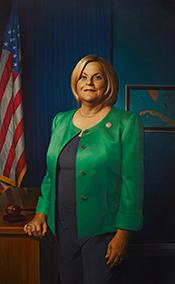
Mr. Speaker, I yield myself such time as I may consume. I also rise in strong support of H.R. 5916, the Security Assistance and Arms Export Control Reform Act of 2008. Among this legislation's…
Mr. Speaker, I yield myself such time as I may consume.
I also rise in strong support of H.R. 5916, the Security Assistance and Arms Export Control Reform Act of 2008. Among this legislation's provisions is language I offered which was incorporated into the original text regarding North Korea's nuclear programs and the ongoing Six-Party talks.
We have heard in recent days about North Korea's hand-over of 18,000 pages of so-called logs concerning its plutonium extraction activity at the Yongbyon nuclear reactor. However, let's not be fooled yet again by North Korea or by those seeking an agreement with this regime at any and all costs.
These logs, according to many regional and nonproliferation experts, do not mark any substantive progress towards nuclear disarmament. For starters, the reporting is limited to North Korea's plutonium-based nuclear facilities and not the totality of its nuclear weapons program as called for under the February 2007 Six-Party agreement whereby North Korea commits to completely disarming itself in exchange for certain concessions from the West.
To address these important issues, the language I drafted, which was incorporated into title III of the bill before us, clarifies and reinforces the conditions that North Korea must meet before it can be removed from the list of state sponsors of terrorism and before related sanctions can be removed. No new conditions have been added. However, this bill does specify that North Korea must take verifiable actions regarding all of its nuclear activities before such an important concession is granted to this duplicitous regime.
These requirements, Mr. Speaker, include ceasing to provide nuclear assistance to countries such as Syria and Iran, providing a complete and correct declaration of all of its nuclear programs, and in addition to U.S. verification, agreeing to the participation of the International Atomic Energy Agency in monitoring and verifying the shutdown and sealing of the nuclear facility at Yongbyon.
Given North Korea's abysmal record in keeping its promises, verification of its declarations and actions is of central importance to any agreement. For that reason, this bill also contains language in title III that requires the State Department to submit a report to the committee describing the methods and actions that the U.S. will use to verify North Korea's declarations regarding its nuclear facilities, describing all formal and informal agreements regarding verification, and documenting any objections regarding these measures that have been expressed by North Korea.
This bill also strengthens U.S. national security interests and assistance to our strong ally, Israel. It requires the administration to perform an ongoing assessment of Israel's qualitative military edge and authorizes an increase in U.S. Foreign Military Financing that is consistent with the August 2007 U.S.-Israel memorandum on military assistance.
These provisions are of vital importance because, as we all know, Israel is surrounded by a multitude of threats which threatens its very survival. Radical Islamic jihadists in Gaza are continuing to launch large numbers of powerful, accurate, and deadly rockets at Israel civilians and have smuggled weapons, cash, and armed militants from Egypt through underground tunnels. Palestinian extremists continue to carry out attacks inside Israel itself, including the murder of eight people at a yeshiva in Jerusalem this past March, which included one American.
In the aftermath of the summer 2006 war launched by Hezbollah against Israel, this Islamic militant group continues its reign of terror made possible by aid from Iran and Syria, both sworn enemies of Israel, both state sponsors of terrorism, both seeking a nuclear capability, and both receiving support from the regime in North Korea.
According to a Congressional Research Service report finalized just last week and prepared at my request, North Korea's relationship with the Iranian Revolutionary Guard, an entity involved in proliferation activities and in supporting Islamic extremists, appears to be in two areas: One, coordination and support of Hezbollah; and two, cooperation in ballistic missile development.
And turning to Syria, Mr. Speaker, CIA Director Michael Hayden was recently quoted as saying that the nuclear reactor the Syrian regime was building with assistance from North Korea could have produced enough plutonium for one or two nuclear weapons within 1 year of beginning operations.
Then there is the growing menace from Iran's radical Islamist regime. Defense Secretary Robert Gates recently reminded us that Iran ``is hellbent on acquiring nuclear weapons.'' As it aggressively pursues the nuclear option, the regime in Tehran still continues to call for Israel to be wiped off the map.
Thus, the provisions in this bill enhancing our relationship with Israel are critical to Israel's security and to our own vital interests in the region. This bill also advances U.S. national security and economic competitiveness by including language derived from legislation introduced by Mr. Sherman of California and Mr. Manzullo promoting long-overdue reforms in the licensing of defense exports by the State Department. It also significantly strengthens congressional oversight over a range of issues requiring the Executive Branch to fully consult with our committee before undertaking any actions covered by this legislation.
Lastly, drawing upon an initiative led by Mr. Royce of California and strongly supported by Secretary of State Rice, it upgrades the foreign military sales, FMS, status of our staunch ally, the Republic of Korea. The bill also appropriately affords the same status to our close defense relationship with Israel.
Mr. Speaker, this bill is a strong, bipartisan effort unanimously adopted by our Committee on Foreign Affairs. It is the appropriate vehicle to address the significant policy changes on North Korea that the administration is requesting. It is my hope and expectation that we allow the legislative process to take its appropriate course and that we will not seek to circumvent the authority of the Committee on Foreign Affairs or to undermine this bill by attaching broad waiver language regarding North Korea to either the pending supplemental appropriations bill or the national defense authorization bill.
I urge my colleagues to support this carefully crafted, much needed, and bipartisan legislation.
I reserve the balance of our time.

Mr. Speaker, I rise in reluctant support of H.J. Res. 20 the Continuing Resolution for FY 2007. Mr. Speaker, this is not the bill that I or any of my colleagues wish we were voting on today. This…
Mr. Speaker, I rise in reluctant support of H.J. Res. 20 the Continuing Resolution for FY 2007. Mr. Speaker, this is not the bill that I or any of my colleagues wish we were voting on today. This bill eliminates all earmarks, some for worthy projects like job training, community-based healthcare, and boys and girls clubs. I had hoped that each of the eleven FY 07 appropriations bills would have passed separately into law last year, with proper funding increases to ensure that we are investing for the future. Unfortunately, the last Congress only passed two.
The last Congress failed at this, and we are left now left to pass a continuing resolution for the rest of FY07 without the detailed fine- tuning and funding increases the bills normally contain. The Republican failures on the budget created the worst budget mess since the Government shut down in 1996. It is no wonder that the debt has increased by more than $3 trillion since Republicans took control of the Government.
The funding of scientific research is crucial to our competitiveness, economic well-being, and quality of life. Flat funding in the context of inflation is difficult for everyone, but it is particularly damaging to scientific enterprise. Scientific budget items must change dramatically each year as large projects with short lives are constructed, go into operation, and are replaced. This year would be a particularly bad time for flat funding in the sciences. We have new international commitments to energy research and new national projects that have completed construction and require operating budgets. We also have unprecedented and much-needed consensus to increase funding in the sciences to keep pace with our international peers. To this end, wrote with two others letters to the Appropriations Committee raising concerns about the impact of flat funding on the Department of Energy's Office of
Science and on the National Science Foundation. These letters were signed by a sizeable fraction of the House, and I am pleased that the Appropriations Committee has addressed this matter, fully for the NSF and appreciably for the DOE Office of Science. I look forward to increased funding for research at NSF and for fusion energy in the FY 08 appropriations.
I would like to point out a few positive points in the bill. This bill provides for a $3.6 billion increase over last year's level for VA healthcare funding. I'm pleased that this increase will make it possible for us to provide services for an additional 325,000 patients in the VA medical system, and to meet rising healthcare costs as have more returning veterans than any time since the Vietnam era. I'm also pleased that the bill includes some $4 billion for our housing program for military families. These gains are important, but we have much more to do. As we begin looking at funding priorities for fiscal year 2008 and beyond, I believe it is imperative that the Congress finally meet America's obligation to provide for full funding of our veterans' health care system. VA hospital and clinic administrators cannot provide consistent, quality services and proper continuity of care over time unless they know how much money they have to work with. The existing discretionary appropriations process for VA healthcare is not working, and only a move to mandatory funding can solve this chronic problem. I look forward to voting for such a proposal this year.
The bill raises the maximum Pell grant award from $4,050 to $4,310. This increase, the first in 4 years, recognizes the essential role of the Pell grant program in improving access to higher education and as a critical component in comprehensive efforts to address college affordability. For years under Republican leadership, Congress all but ignored the growing college cost crisis that was preventing many qualified students from going to college. Now, in just the first month of this new Democratic Congress, the House has already voted overwhelmingly to cut interest rates on need-based Federal student loans. And we have another major step towards putting a college education within reach of every qualified student by boosting the Pell grant scholarship by $260.
The bill also increases Title I school funding by $125 million, bringing total funding from $12.7 to $12.8 billion. The proposed increase would reverse the decline in Title I funding since 2005 and would allow additional reading and math services for some 38,000 eligible children. I also support the proposed $125 million for the Title I school improvement fund. These funds, if passed would be targeted to the 6,700 schools designated as needing improvement under No Child Left Behind, thereby allowing them to implement professional development initiatives, tutoring programs, and other improvements designed to raise student achievement.
The bill also spends $4.5 billion, an increase of $1.3 billion, to expand efforts to combat HIV/AIDS and TB programs, including in the 15 focus countries and the multilateral efforts through the Global Fund to Fight HIV/AIDS, TB, and Malaria. The bill also spends $248 million, an increase of $149 million, to allow the Agency to expand its bilateral global malaria initiative activities from the current three countries to seven.
The chairman deserves ones thanks for negotiating a bill better than a traditional continuing resolution, which would have jeopardized American national security, resulted in thousands of layoffs, and cut off healthcare for members of the U.S. Armed Forces and veterans. For example, the Food Safety and Inspection Service would have faced a month of furloughs, resulting in the closure of 6,000 meat processing plants; the federal judiciary would have had to fire 2,500 workers; and the Princeton Plasma Physics Lab and other research facilities would have had to stop projects and layoff scientists. I ask my colleagues to pass this bill so that we can begin the FY 08 appropriations and make more important investments in our future.
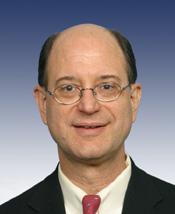
I thank the gentleman from California. Mr. Speaker, this legislation includes the text of H.R. 4246, the Defense Trade Controls Improvement Act of 2008, which was introduced by myself and Mr.…
I thank the gentleman from California.
Mr. Speaker, this legislation includes the text of H.R. 4246, the Defense Trade
Controls Improvement Act of 2008, which was introduced by myself and Mr. Manzullo, and it is Title I, subtitle A of this bill.
This subtitle grew out of hearings in our subcommittee, the Subcommittee on Terrorism Nonproliferation and Trade, which were held last July. I want to thank Chairman Berman for including the revised text of H.R. 4246 into this larger piece of legislation. I want to thank Mr. Manzullo for his efforts in crafting our original legislation, and I want to thank Mr. Ed Royce, ranking member of the Subcommittee on Terrorism Nonproliferation and Trade, for his work as well.
The Defense Trade Controls Improvement Act, which is part of this larger legislation, seeks to address past performance failings and, most importantly, understaffing of the Directorate of Defense Trade Controls, the State Department agency responsible for adjudicating licenses for commercial arms sales. This agency was found to have more than 10,000 open cases at the end of 2006. Only an unsustainable winter offensive where leaves were canceled and overtime was made mandatory and people were moved in from other areas allowed this agency to reduce this huge backlog. Licenses had languished for months, not because they raised significant national security or foreign policy concerns in most cases, but because they simply sat in someone's in box unattended.
Why has the State Department consistently underfunded and understaffed the Directorate of Defense Trade Controls? I believe that there is simply an institutional bias in the State Department toward work that is more highbrow, more likely to be the subject of a seminar at the Woodrow Wilson's School of Diplomacy. But this work, the work of licensing munitions exports, is of critical importance; arguably there is nothing more important done by the State Department. And Congress provides typically over $1 billion to the relevant account which can be used by the State Department for a whole variety of staffing, yet they have consistently understaffed this very important function.
What the bill will do is basically add a couple of dozen licensing officers and avoid this tendency of the State Department to understaff the portion of the State Department which licenses munitions exports.
Why is this licensing process so important? Well, if we say ``yes'' and issue a license and make the wrong decision, the harm is obvious. We have sent the wrong technology to the wrong country which may hurt our military or the military of our allies in the future. But there is also enormous harm if we unduly delay or wrongfully deny an application. It means we lose jobs in the United States; it means our interoperability with our allies is diminished because they won't have American munitions and therefore, won't be able to operate as effectively with our military as they could; it can rupture or hurt our relationship with allies if we wrongfully do not export or unduly delay their request to purchase American munitions, and perhaps most importantly, when we don't act quickly and people in other countries buy their munitions elsewhere, we are building the munitions industry of other countries.
And what is the effect of that? More lost jobs for the United States, more losses on interoperability, and most of all, an undercutting of our policy objectives because once those munitions industries are well established in other countries, they will not be subject to any U.S.- State Department oversight and they may export to third countries things that we would not.
So right now the relevant State Department agency has roughly 40 licensing officers available to adjudicate 85,000 cases expected to be received this year. This bill will beef up the staffing by the third quarter of fiscal year 2010 so that there will be one licensing officer for every 1,250 applications that are based on what we anticipate to be the workload that year.
That is to say, we will go from roughly 40 licensing officers to roughly 68 licensing officers. This is hardly overstaffing.
The Department of Commerce performs a similar function with regard, not to munitions, but rather, dual-use exports. The relevant part of the Department of Commerce deals with one-third as many applications that has five times the staffing. Clearly, we need those 68 licensing officers at the State Department.
This bill also requires a complete strategic review of our arms export control system, a policy review that has not occurred since 9/ 11.
The bill codifies the administration directives with respect to processing times for licenses with respect to export of hardware to our allies. Our exporters will have reasonable assurance that licenses will be adjudicated, not necessarily approved, but adjudicated within 60 days unless there are extenuating circumstances.
This bill does not include any provisions clarifying the jurisdiction over civilian aircraft parts since the State Department has issued a proposed rule, designed to provide a bright line for those decisions.
Finally, I would like to note that improvement in the operations of the State Department office have already occurred, in part in response to the hearings we held in July of 2007.
I hope this bill will further improve our licensing process. It is not for us to tell the State Department that they need to have one licensing officer for every 1,250 applications is not being overly assertive. When we provide over $1 billion to the relevant account, we ought to provide some guidance as to how that money should be spent.
I thank the gentleman for including our provisions in the larger bill.

Mr. Speaker, there are many things that can be said against this continuing resolution, as the House has heard during today's debate. But after all those things have been said, I am convinced the…
Mr. Speaker, there are many things that can be said against this continuing resolution, as the House has heard during today's debate. But after all those things have been said, I am convinced the only responsible choice is to vote for it--and I will do so.
In fact, it was the failure of responsibility on the part of last year's Republican leadership in Congress that brought us to where we find ourselves today. If they had done their job of developing and enacting the legislation to fund the essential functions of government, it would not be necessary for us to be acting now to make up for their failures.
In fairness, much of the blame rests with the Republican-led Senate. While the House last year did pass all but one of the regular appropriations bills, only two of those bills ever received a final vote in the other body--and only those two were enacted into law.
But even here in the House, the Republican leadership never even brought to the floor the bill to fund the Departments of Labor and Health and Human Services--not before the election, evidently because they did not want to have to discuss it during their campaigns, but not even in the lame-duck session last year.
Given the situation the resulted from their predecessors' failure, Chairman Obey and his colleagues on the Appropriations Committee decided that the best way to proceed was to bring forward this long- term continuing resolution, intended to complete action on appropriations for the remainder of this fiscal year, and then to begin work on the appropriations bills for the fiscal year that lies ahead.
I support that decision, and I will support this continuing resolution.
There are parts of it that I think fall short of what should be done in a number of areas. But there are other parts that I strongly support, including the provision that withholds any increase in the pay of Members of Congress--something that I think is overdue.
More than a year ago--in October of 2005--I urged the House's conferees to agree to a Senate amendment to the fiscal year 2006 appropriations bill that would have withheld a cost of living raise for Members of Congress. I regret that my plea was in vain, because I think we should be prepared to do our part when our country is at war, our homeland security must be improved, and the federal budget remains deep in deficit.
Withholding a congressional pay raise will make only a small change in the budget because the amount involved is minor compared with other expenditures. However, I think it is an appropriate first step for Members of Congress to forego this increase in our pay, and I am glad this legislation will have that effect.
I also am very pleased that the resolution includes $300 million in additional funding for the Department of Energy's Energy Efficiency and Renewable Energy, EERE, programs. My colleague Representative Perlmutter and I worked hard to get this funding included in the legislation, and I intend to work closely with
our colleagues in Congress and with the Department of Energy to ensure that the research programs carried out at National Renewable Energy Laboratory, NREL, in Colorado benefit from a good deal of those funds.
Despite the importance of NREL's work, flat or decreased funding for NREL in recent years--coupled with earmarks and inflationary cost increases--has effectively reduced the funding for renewable energy research, which has led to a continuing struggle for needed resources and great instability at the lab. This in turn has severely affected the lab's ability to develop new technologies and continue the United States' leadership in renewable energy technologies. The boost for EERE funding in this bill could go a long way toward helping NREL regain its critical momentum.
The parts of the legislation dealing with defense and national security include increased funding for defense health programs, for basic allowance for housing, and for two important Department of Energy nonproliferation programs--the International Nuclear Material Protection and Cooperation program, which secures weapons-grade nuclear materials in the former Soviet States, and the Global Threat Reduction Initiative, which secures high-risk nuclear material around the world.
It also includes $2.5 billion for implementation of a round of military base closures authorized in 2005. While the $2.5 billion is an increase from the funding provided for fiscal year 2006, it will still leaves us $3.1 billion short of meeting our Base Realignment and Closure, BRAC, commitments and nearly $1 billion short of the funds needed for military construction projects. Since the Army links its military construction and troop movement plans to BRAC implementation, this shortfall could have broad impacts on the rotation and return of troops and the building of new brigades.
It has been indicated that additional needs for BRAC and military housing will be addressed in the supplemental war spending bill we will soon consider in Congress. I hope that will be the case, and will work to achieve that result as well as to ensure that the Defense Department takes into account Colorado priorities as it makes the hard choices about which military construction projects to fund.
I also am pleased that Chairman Obey and his colleagues recognized the importance of science programs across different agencies, allowing for increases at the Department of Energy's Office of Science, the National Science Foundation, and the National Institute of Standards and Technology, NIST.
However, I am greatly concerned about the impact this resolution could have on the National Oceanic and Atmospheric Administration,

Mr. Speaker, I want to congratulate Mr. Obey, who was the ranking member in the last Congress, and who worked with Mr. Lewis to try to pass our appropriation bills and, in fact, we passed all but one…
Mr. Speaker, I want to congratulate Mr. Obey, who was the ranking member in the last Congress, and who worked with Mr. Lewis to try to pass our appropriation bills and, in fact, we passed all but one of the appropriation bills. Unfortunately, we reported the Labor Health bill, which is the largest bill, other than the Defense bill, in June, and it failed to ever get to the floor of this House because it included minimum wage, and that was not favored by the majority.
Now that we are in the majority, we are left with unfinished business. The gentlelady from Virginia mentions cutting something. We haven't cut anything. As a matter of fact, we have added $1 billion.
If you had passed your appropriation bills, you may have been able to fund at appropriate levels. But you did not pass your appropriation bills. Yet, we hear on the floor today constant complaining from the other side of the aisle that they don't like the way we fixed their failures.
Well, very frankly, I think the American public will. First of all, the American public will be pleased that we are acting, that we are moving on this legislation, which is, essentially, the funding of 9 appropriation bills that failed to move through the House of Representatives and the Senate and to the President as they should have.
Mr. Obey has worked very hard with Senator Byrd. I know Mr. Lewis' staff has been very engaged in this as well. I know the Senate staff has been engaged in it. And I am hopeful that this bill will not only pass this House with a very handy vote.
There are many people in this House, on the Republican side of the aisle who asked to achieve exactly what Mr. Obey has achieved in this bill. He has taken care of the veterans. He has taken care of veterans health. He has taken care of, for the first time in 4 years, trying to get college students Pell Grants that will give them some additional help to fund their college costs. When we had that vote on the floor of this House, we had 124 Republicans join us in that vote. This is one additional step in trying to get college students a more affordable education.
Mr. Obey has moved in a number of areas to make our investments more productive and a better return for the American people. And this bill will provide for getting last year's business done that was left undone, so that we can move on to have what Mr. Wamp wants, and I want, and Mr. Obey wants and Mr. Lewis wants. That is, full and open discussion of the bills in subcommittee, in the full committee and on this floor. I think that is what we will have.
But ladies and gentlemen of this House, we need to complete last year's undone business. It wasn't our fault that it was not done. But whoever's
fault it was, it is not useful to say that it is your fault or my fault or somebody else's fault. It is useful to say we need to move forward. We need to fund government services. We need to fund the priorities of the American people. That is what this continuing resolution does.
I congratulate Mr. Obey, and I urge all of our colleagues to support this bill so we can finally, one-third of the way into the fiscal year, finally do what we should have done by September 30 of 2006.
I thank the gentleman for his comments, but I want to say, first of all, when he talks about $463 billion, I read in the newspaper today where OMB was very pleased that we stayed within the caps imposed by the Republican-passed budget. We took the Republican-passed budget, we took those numbers, we stayed within those caps. That is exactly what you did, Mr. Lewis, when you were chairman of the committee because that was the direction from the Budget Committee. I am understanding that the White House even said that they were pleased with the fact that we stayed within the numbers when you talk about spending.
Secondly, let me say that you and I both served on the Appropriations Committee for a long period of time. In recent years, of course, we have not passed all the appropriation bills in the calendar year, much less the fiscal year, and we would pass omnibus appropriation bills with hundreds and hundreds of billions of dollars larger than this bill. One was passed January 31, the other was passed February 5. They were passed as conference reports with 1 hour of debate and no amendments, in which substantial legislative language had been added in conference and not vetted on this floor or in committee.
I understand the gentleman's representations, but he and I have been here a long time and we have a long history of knowing what has transpired in the past. This is a process that was required by the failure of the last Congress to do its work. It has been done in a way that tries to get it done so that we can get on to do exactly what the gentleman wants for the 2008 bills, give them a full airing, full hearings. And I predict to my distinguished and very close friend, Mr. Lewis, we are going to have a lot more hearings as we did when we were in charge, we had more hearings than we have had.
We are going to have oversight, and we are going to have careful scrutiny of the taxpayers' dollars. And I look forward to joining my friend in that process in the regular order. We are doing this so that we can get on to that process to do exactly what the gentleman suggests because it is the right thing to do. And I look forward to working with him on that process.
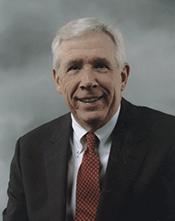
Mr. Speaker, I thank Mr. Lewis for yielding. I rise in opposition to the resolution. And let me just stipulate it probably has a lot of very good things in it. But when I was chairman of two…
Mr. Speaker, I thank Mr. Lewis for yielding.
I rise in opposition to the resolution. And let me just stipulate it probably has a lot of very good things in it. But when I was chairman of two different subcommittees, we always had complete consultation, and if what I am saying is not accurate, those Members should come down here and attack me for it, complete consultation before we sent the bills out. And what I am concerned about is the precedent that we are establishing.
I have a resolution to put the Congress on record in support of the Iraq Study Group. Now, am I going to be foreclosed from offering that resolution? Here is a group of men and women, Baker and Hamilton, who spent 8 months. It was one of these evil earmarks that you hear all about it. Am I going to be foreclosed from offering the Baker-Hamilton solution to the
problem? The administration doesn't like it. Probably Members on both sides of the aisle don't like it. But am I going to be foreclosed? Here is a group that spent 8 months looking at this. And Jim Baker is a good man and Lee Hamilton is a good man. They were bipartisan. Chuck Robb; Bill Perry; Leon Panetta, who served over here; and Ed Meese. Based on what we are seeing here now, I will be foreclosed. Any resolution that comes from this side of the aisle is automatically foreclosed. We have watched it for the whole month of January.
So let me just say I am sure, Mr. Obey, this is probably a lot of good stuff. But we on the minority side have to be treated the way we should be. Do unto others as you would have them do unto you.
Now, the test will be with my resolution, and there are only two of us on it, Gilchrest and myself. Will I be foreclosed by the Rules Committee in 2 weeks from my resolution that puts the Congress on record in support of the Baker-Hamilton Commission? Ten people, five Republicans, five Democrats, spent more time looking at this issue of Iraq than this Congress has, than the Republican Party has and the Democratic Party has. And based on what is taking place so far today, I will be foreclosed.
And I hope I am not foreclosed because when you are in the minority and you don't have that opportunity to offer amendments, then, frankly, you are being cut out of the process.
Mr. Speaker, I rise in opposition to this resolution.
This is a continuing resolution like no other that I have seen before. It is an omnibus appropriations bill that will fund nearly one- half of the federal government for fiscal year 2007.
When I was Chairman of the Science, State, Justice Subcommittee, we had in-depth discussions and consultations with our Ranking and minority members. On our committee we worked in a bi-partisan manner. The precedent that this CR is setting troubles me.
I have a resolution supporting the recommendations of the recently released Iraq Study Group, also known as the Baker-Hamilton report.
Based on this CR process with its closed rule and no committee debate, does this mean that I am going to be foreclosed from offering the resolution?
The chairman of the Appropriations Committee has been quoted saying that most of the negotiations on the CR were conducted by staff. While we have terrific staff on both sides of the aisle, this is not the way this institution is supposed to operate.
The resolution before the House includes $31.2 billion for the State, Foreign Operations accounts.
This is an increase of $1 billion dollars over the Fiscal Year 2006 level.
I am in no way criticizing the Gentlelady from New York, but I did not meet with the chairwoman of the subcommittee to discuss the CR. I know she is fair and reaches out across the aisle, and perhaps her hands were tied in this unfair process.
To be candid, there are some positive aspects of the State, Foreign Operations chapter. One is the full funding of the president's request for Global HIV/AIDS. This funding will provide life saving drugs to thousands of people infected with HIV/AIDS and will meet President Bush's goal of treating 2 million people, preventing 7 million new infections, and caring for 10 million people by 2009.
In addition, another $50 million is provided for the African Union's Mission in Sudan, and another $113 million for United Nations' international peacekeeping.
But, these funding increases had to result in decreases elsewhere. The president's 2007 Budget request included $3.2 billion for the Economic Support Fund, the continuing resolution cuts $746 million from the request, and is $148 million below the 2006 enacted level. A reduction of this magnitude will affect the Administration's ability to carry out critical foreign policy priorities, including democracy, infrastructure, and economic development programs in Iraq.
The president's 2007 Request included an increase of $709 million for stability and reconstruction programs in Iraq, these programs are essential to improving the safety of our troops in the country. Yet, the majority directed that there be no mention of funding for anything related to Iraq in the resolution.
This process is not the way the House's business should be conducted. I urge members to vote against this measure to make a statement about the way this entire process has been handled.
Show 11 more
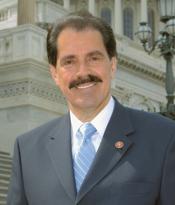
Mr. Speaker. I rise today to express my support for the final passage of H.J. Res. 20, a joint funding resolution to provide continuing appropriations for fiscal year 2007. Let me be clear, although…
Mr. Speaker. I rise today to express my support for the final passage of H.J. Res. 20, a joint funding resolution to provide continuing appropriations for fiscal year 2007. Let me be clear, although we have been able to take care of some of the most significant shortfalls, this is not a perfect funding resolution. This is also not the process that we would have preferred, because, as we all know, the funding for fiscal year 2007 should have been completed during the 109th session of Congress under the Republican majority.
With respect to the agencies included within the jurisdiction of the Financial Services and General Government Subcommittee, a bi-partisan attempt was made to address the most pressing needs. For example:
SBA disaster loans will receive $114 million for administrative costs.
SBA Salaries and expenses will receive an additional $17.7 million.
The District of Columbia will receive additional funds for public safety programs and $20 million for public transportation.
Treasury will receive an additional $26.6 million for high-priority anti-terror and financial intelligence analyst activities.
Judiciary will receive an additional $179.1 million to avoid furloughs and support critical functions.
OPM Retirement Systems Modernization will receive $13 million.
National Archives will receive $7.7 million in additional funding for the Electronic Records Archive and $3 million for repairs relating to the flooding of Archives headquarters.
Many important language provisions were also included in this resolution such as a continuation of resources to help rural communities, schools, and libraries afford telecommunications and information services. Without this language, funding would have to be cut or Universal Service fees would have to increase.
I was disappointed that we were unable to address the serious issue of privatized debt collection by the Internal Revenue Service, a practice that many Members have raised objections to continuing. I had also hoped to be able to address the HAVA funding that some states, including New York, may lose because of their inability to secure voting machines within the designated time frame. In addition, language provisions enacted in previous appropriations bills placing restrictions on how the District of Columbia is able to spend its own budget are, unfortunately, continued in this resolution.
However, I do intend to vote in favor of this Continuing Resolution. As I stated earlier, it is not perfect, but it is the best that we could do with the funds that we had. Beyond the immediate Financial Services agency issues, there was an attempt to write a resolution that addressed our nation's highest priority needs. Veterans Healthcare will receive $32.3 billion, which is an increase of $3.6 billion above the 2006 funding level. Defense Health Programs will receive $21.2 billion, an increase of $1.2 billion to provide care for our service members and their families. Providing health care for our veterans and military personnel is the right thing to do. Significant numbers of our veterans are now returning from Iraq and Afghanistan and we have an obligation to provide funding for their health care needs.
I was pleased that additional funding was provided for Pell grants. This increased funding will help over 5.3 million of our students help to pay for ever increasing college costs. This Continuing Resolution also provided additional dollars for Head Start, a program that has proven its effectiveness. The National Institutes of Health received additional funds to support 500 more research project grants.
Our community health centers were allocated an increase of $206.9 million to allow for the expansion or creation of over 300 health centers. These centers provide important health care services throughout the United States, and this funding will be utilized for priority health care needs. Ryan White CARE grants were increased to bring them to the authorized level. Finally, this resolution addresses important section 8 and public housing needs in our communities. All of these budget increases are a part of a carefully crafted resolution that attempts to address some of our nation's greatest needs.
I would urge my colleagues to vote in favor of H.J. Res 20 so that it can go to the Senate and we can complete our work before our current resolution expires on February 15th. We will be receiving the President's 2008 budget next week, and as a Congress it is time to move forward and work on the 2008 funding needs for our government.
Mr. Speaker, when I hear some of my Republican colleagues leap to the defense of section 8, I can only compare that to learning that Ahmadinejad had applied for membership in B'nai Brith. We have…
Mr. Speaker, when I hear some of my Republican colleagues leap to the defense of section 8, I can only compare that to learning that Ahmadinejad had applied for membership in B'nai Brith. We have been trying to defend section 8 against assault for some time.
One form of the assault has been formulaic rules that prevent all of the money that is appropriated from being spent. Because there is a lot of support for section 8, the administration has been unhappy when we have voted here more money than they have asked for. So they have had a series of formulaic restrictions that keep us from getting it all spent.
I will note, by the way, that the particular change here that the committee has recommended is supported by the National Association of Housing and Redevelopment Officials, the Council of Large Public Housing Authorities, and the Public Housing Authorities Directors Association. That is, all of those who administer section 8 through their organizations endorse it.
Here is the way it has worked. There were formulas put in there that kept some agencies from spending money which they received. That is, many agencies were given money that could not be spent and had not been spent that came out of the hide of agencies that needed to spend more. What this bill does is to make sure that every appropriation is spent; and as to those agencies that might be losing an allocation, in every case they are losing money that they had not been able to spend because they did not have the legal authority to do it.
This bill guarantees, and we will be here to make good on that guarantee, that any agencies that can say, well, we are not getting the same allocation that we got before, they will have reserves available to them on which they can draw. So we can guarantee that no one will be unable to serve everyone they are now serving.
What it does mean is that money which this formula has prevented from being spent in some agencies will now be spent. We will not give some agencies more than they can spend and some less. We will even it out.
And I stress again that the reserves will be available, and that is why every one of the agencies in this country that spends money on section 8, all of the public housing authorities have explicitly supported this particular change.
Council of Large Public Housing
Authorities,
Washington, DC, January 31, 2007.
Hon. David Obey,
Chairman, House of Representatives, Committee on
Appropriations, Washington, DC.
Dear Mr. Chairman: The Council of Large Public Housing
Authorities (CLPHA) represents 60 of the nation's largest
housing authorities that own and manage 40 percent of the
nation's public housing and administer over 30 percent of the
Housing Choice Voucher program. We are writing to support the
FY 2007 Joint Resolution in the House of Representatives.
CLPHA greatly appreciates the inclusion of an additional
$300 million for Public Housing Operating Fund in the
legislation and the $487 million increase in the Housing
Choice Voucher account. The increase in operating funds is a
good start in addressing the chronic under-funding of public
housing programs. Public housing is still significantly
under-funded and we look forward to working with Congress to
provide full funding for public housing.
CLPHA commends the House for unraveling the complicated and
inefficient funding system HUD has imposed on housing
authorities since 2004. By adopting a formula. that bases
funding on the most recent 12 months of leasing and cost data
the House action will guarantee funding for all vouchers in
use. The increase in funds, combined with the change in how
these funds are distributed ensure that housing authorities
do not have to reduce the number of families they currently
serve.
However, in order to effectively transition to this new
formula, housing authorities need access to currently
allocated funds to help them to offset losses and to increase
leasing levels in their communities. Congress must protect
these funds and prohibit HUD from recapturing them for either
punitive reasons or to meet a rescission target.
Thank you again for supporting public and assisted housing
programs. We look forward to working with you on these most
important issues.
Sincerely,
Sunia Zaterman,
Executive Director.
Mr. Speaker, today Congress is considering a long-term continuing appropriations bill to fund large portions of the Federal Government through the end of fiscal year 2007. This legislation is…
Mr. Speaker, today Congress is considering a long-term continuing appropriations bill to fund large portions of the Federal Government through the end of fiscal year 2007. This legislation is necessary because Congress did not complete the appropriations process last year.
There are many reasons to support this bill. For example, the bill increases Pell Grant funding to make college more affordable, IDEA funding by $200 million to help our neediest students, and Head Start funding by $100 million to give our youngest kids the opportunity to learn. Funding for housing opportunities is increased by $1.4 billion. Without the increase HUD would be forced to deny approximately 220,000 voucher renewals.
The bill also boosts funding for local law enforcement by increasing funding for both the COPS program and the Byrne Justice Assistance Grants which directly impact funding for local law enforcement efforts.
NASA aeronautics funding, vital to the Cleveland economy, was increased by $166 million over the president's budget request. Furthermore, the bill contained an extension of the layoff ban, and prevents the NASA Administrator from gutting NASA Glenn.
I also support the $3.6 billion increase in veterans healthcare funding that provides service for an anticipated increase of at least 325,000 patients and to meet rising healthcare costs. In the same vein, Defense Health Programs are increased by $1.2 billion to provide care for service members and their families--including treating service members wounded in action in Iraq and Afghanistan.
Our Nation is facing a crisis in healthcare. The bill provides necessary relief for the Community Health Center to finance over 300 new
or expanded health centers, serving an estimated 1.2 million new patients. The bill boosts funding for the Ryan White CARE Grants, the National Institutes of Health and the Indian Health Service.
The bill adds $1.3 billion to expand efforts to combat HIV/AIDS and TB. At the same time, $248 million was added to the Agency for International Development Malaria Programs to expand its bilateral global malaria initiative activities.
The bill adds considerable funding for the protection of the environment by adding $197.1 million for the Clean Water State Revolving Fund. The revolving fund is distributed by formula and will fund additional water and wastewater infrastructure projects in every state, including Ohio.
The bill adds $100 million to cover operational shortfalls for parks, refuges, forests and other public lands; including facilities in northeastern Ohio.
The bill adds $1.5 billion for the Energy Efficiency and Renewable Energy Resources program to accelerate research and development activities for renewable energy and energy efficiency programs.
Finally, the bill forces greater transparency in the activities of the World Bank, requiring them to report public disclosure of loan agreements between World Bank and its borrowers. This sunshine rule will help ensure the World Bank loans are not destructive to third world nations.
Unfortunately, this bill includes over $6 billion in nuclear weapons funding that I oppose. I have voted against the Energy and Water Appropriations bill, which contains funding for nuclear weapons, since 2002. I cannot bring myself to vote for any legislation that further endangers the world. I regret not being able to vote for all the positive aspects of this bill, but my conscience and my concerns about the threat which nuclear weapons pose to the world matter more.
Furthermore, I am concerned about the potential loss of jobs in Cleveland relating to the BRAC process. I appreciate that the bill contains additional funds for the BRAC process. I urge the Committee on Appropriations to fully fund the BRAC process as soon as possible to ensure the additional DFAS jobs can be transferred to Cleveland as previously scheduled.
Mr. Speaker, we would not be in this unfortunate situation if our colleagues in the Senate had actually passed their bill. The House fulfilled its appropriation responsibilities; the other body did…
Mr. Speaker, we would not be in this unfortunate situation if our colleagues in the Senate had actually passed their bill. The House fulfilled its appropriation responsibilities; the other body did not.
I have no problem with my majority colleague on the subcommittee, the distinguished chairman from Indiana. He has involved the minority in the process, treated us fairly, and attempted to protect our interests.
Unfortunately, the ground rules established to this resolution disadvantage the House greatly in the negotiations with the Senate. The process adopted by the majority has undermined the ability of the subcommittee to negotiate a good CR and strip out Senate pork. There are a number of significant funding reductions that should have been taken in the CR that were not.
Again, I have no fault with my chairman. He tried. But the Senate balked at even citing the need to protect ``important'' Senators.
Let me offer a few examples. The fiscal year 2004 omnibus appropriation included a $50 million earmark in the DOE's science account for an indoor rain forest alongside the interstate highway in Iowa, which I opposed, and so did my ranking member at the time, now the chairman.
The Department of Energy has been unable to execute this earmark because the sponsor has not produced the necessary non-Federal matching funds. Nearly $45 million remains unspent and unspendable.
The House proposed to rescind this earmark, but the Senate refused to consider it. If ever there were a piece of low-hanging fruit ripe to be stripped out of the resolution, this is it. The 109th Congress had its infamous Bridge to Nowhere. The 110th Congress is now building its own legacy, starting with a $50 million ``roadside attraction'' in Iowa.
In the NNSA weapons account, the House identified several sources of significant savings. The House proposed a total of $495 million of reductions from weapons activities, but the Senate again refused to accept this reduction because of perceived impact in New Mexico. The final CR contains only $94.5 million of reduction, leaving $400 million of savings untapped.
In the fossil fuel account, 2006 funding in Energy included $49.7 million for oil and gas research, which is funded at discretionary spending in fiscal year 2006, but which is now mandatory by the Energy Policy Act of 2005.
The House proposed again, rightly, to eliminate this discretionary funding in the CR, which only duplicates the new mandatory funding. Instead, the Senate declared this account to be ``untouchable'' in the strong interest of a particular Senator in West Virginia.
Given the House majority passed H.R. 6 to take away perceived windfall profits in the oil and gas industry, it is surprising that it would now allow the same industry to ``double dip'' in the CR.
In summary, I would say again that the process being followed with this CR greatly disadvantages the House in our negotiations with the other body. Members should not delude themselves that we have stripped all of the pork from the CR. We have only succeeded in stripping out the House earmarks. Over in the other Chamber, it is, frankly, business as usual.
We have had the opportunity to realize a half billion dollars of savings in energy and water portions of the CR and to apply those funds to other priority needs such as education, health care and law enforcement. I hope you all realize that in voting for this continuing resolution today means that you have decided that several hundred million of tax dollars will be better spent on welfare for the nuclear weapons labs than on these other pressing national needs.
I encourage Members on both sides of the aisle to vote against this resolution and get rid of the pork.
Mr. Speaker, let me just start by thanking Ileana Ros- Lehtinen, who's the ranking member, for her work and Chairman Berman's work in bringing this legislation to the floor. I am in support, of…
Mr. Speaker, let me just start by thanking Ileana Ros- Lehtinen, who's the ranking member, for her work and Chairman Berman's work in bringing this legislation to the floor.
I am in support, of course, of this bill. I authored this bill. But I wanted to share with you that today the House really has an opportunity to strengthen the relationship that we have had historically between the United States and Korea. That alliance is a very important one to us and to our soldiers.
The interoperability of U.S. and Korean soldiers in the Korean peninsula can be secured and, frankly, can be strengthened for years to come, and I think is important because our own Secretary of State, Condi Rice, wrote a letter recently to Chairman Berman, and she said in that letter that this ``will serve as an important symbol of the renewed strength of the U.S.-Korea alliance.''
With this legislation in law, foreign military sales with Korea would be treated just as we treat those sales that we have today with NATO or what we call NATO+3, NATO plus Australia, New Zealand and Japan. So the NATO+3 list would become NATO+4. And the upgrade in South Korea's military procurement status would mean a streamlined process; the monetary thresholds that trigger congressional review would be raised and congressional review time would be reduced.
Mr. Speaker, the Republic of Korea, as we all know, is a vital, strategic, and enduring ally to this country; 29,000 U.S. troops stand side by side with the Korean Army, and they've helped keep the peace there in northeast Asia for nearly 60 years.
We had testimony to the United States Congress earlier this year. We had General Bell, a four-star general. He was commander of the U.S. Forces Korea, and he called it ``bizarre and strange'' that Korea did not have this status in U.S. law, and he urged the adoption of this very measure that we're discussing today.
Furthermore, the U.S.-South Korean alliance is distinct. With a mutual defense treaty dating back to 1953, Korea and the U.S. form perhaps the most integrated alliance of interoperable forces I think that exist in the world. On the Korean peninsula, interoperability is not just a buzz word. It is a real-life practice that passage of this legislation would help cement. U.S. and Korean soldiers need to be operating, frankly, on American equipment.
South Korea is a larger foreign military sales partner than any of the NATO+3 members. Last year, Seoul purchased $3.7 billion worth of American defense equipment, making it one of the largest partners in U.S. foreign military sales. And this has led South Korea to formally request this preferential status through its Foreign Ministry and its Defense Ministry. Indeed, South Korean President Lee Myung-Bak raised this legislation when he met with congressional leaders here last spring.
As our alliance has matured, the Koreans are rightly on the path towards assuming the lead for their own defense. With that, Korea plans to invest $290 billion in military hardware over the next dozen years. Without updating our laws to reflect the strategic nature of our relationship, we run the risk of South Korea looking to other suppliers as it continues its defense transformation, perhaps jeopardizing interoperability of our U.S. forces that work with the Korean forces. So today, we can help prevent that from happening, while at the same time benefiting the strength of this alliance.
I urge adoption of the legislation. I thank the chairman and ranking member for their support in bringing it to the floor.
Mr. Speaker, I move to suspend the rules and pass the bill (H.R. 7177) to authorize the transfer of naval vessels to certain foreign recipients, and for other purposes. Mr. Speaker, I ask unanimous…
Mr. Speaker, I move to suspend the rules and pass the bill (H.R. 7177) to authorize the transfer of naval vessels to certain foreign recipients, and for other purposes.
Mr. Speaker, I ask unanimous consent that all Members may have 5 legislative days to revise and extend their remarks and include extraneous material on the resolution under consideration.
Mr. Speaker, I yield myself such time as I may consume.
Mr. Speaker, this bill reflects the bipartisan text agreed by the other body that incorporates several provisions from H.R. 5916, the Berman/Ros-
Lehtinen/Sherman/Manzullo Security Assistance and Arms Export Control Reform Act of 2008 that the House passed in May.
It authorizes the Department of the Navy to transfer surplus U.S. Navy vessels to friendly countries which Congress does on an annual basis. It strengthens the vital security relationship with our close friends and allies, South Korea and Israel. Building on the work of Representative Royce, U.S. law will now add South Korea to the list of countries in the Arms Export Control in the same way as NATO, Australia, New Zealand and Japan. This is a significant symbolic recognition of the critical importance of South Korea to U.S. national security and to peace and stability throughout East Asia.
It also requires the administration to empirically assess on an ongoing basis the State of Israel's ``Qualitative Military Edge,'' we call it QME, against conventional or nonconventional security threats, to report that assessment to Congress every 4 years, and to use that assessment when reviewing arms exports to other countries in the Middle East.
Every President since Lyndon Johnson has affirmed the U.S. commitment to Israel's Qualitative Military Edge against potential enemies. But unfortunately it has become clear the administration uses subjective judgment when evaluating Israel's QME. The State and Defense officials have admitted there is no objective empirical method for evaluating this critical measure of whether or not Israel maintains a qualitative superiority over potential threats to its security.
It is also clear that by such subjective evaluations are performed sale by sale and country by country without clear, overall consideration of the balance of capabilities possessed throughout the region that conceivably affect Israel's security.
This provision would remedy this glaring lack of a robust mechanism to make security and export decisions that could undermine the security of one of the most important friends and allies that we have in the Middle East. The bill also authorizes security assistance to Israel, including implementing the recent U.S.-Israel Memorandum of Understanding Regarding Security Assistance.
It is fitting that on the 60th anniversary of Israel, the U.S. renews and strengthens its relationship with a most important friend in the region. It deserves all the support we can muster.
I urge my colleagues to support this legislation.
I reserve the balance of my time.
Mr. Speaker, I have no further requests for time. I simply want to express my deep appreciation to my ranking member. We have been working together now for 7 or so months. We are not always perfect in our dealings, but it is a lot more good than bad, and getting better. I am grateful for her support and understanding of all the different shifts in these kinds of things, and I am glad to have her support for this bill.
Mr. Speaker, I yield back the balance of my time.
Mr. Speaker, I rise in reluctant support of House Joint Resolution 20 to fund the essential services of the Federal Government through September 20 of this year. On November 7, the American people…
Mr. Speaker, I rise in reluctant support of House Joint Resolution 20 to fund the essential services of the Federal Government through September 20 of this year.
On November 7, the American people voted to fire the former Republican majority for gross
mismanagement of the Nation's finances and woeful neglect of the priorities of the American people. This imperfect legislation is necessary to clean up the mess the former majority left behind.
Mr. Speaker, the former Republican majority passed only 2 of the 11 bills necessary to fund the discretionary accounts of the Federal Government. Failing to pass their obligatory legislation by October 1, 2006, the former majority passed a stopgap measure to keep the Government functioning when they adjourned the 109th Congress. Our new Democratic majority was left with the unfinished business of the fiscal year 2007 appropriations legislation. Today marks the 123rd day since the start of fiscal year 2007, and the President's 2008 budget request is scheduled to be delivered to this Congress on Monday. Now is the time to finish last year's work, so we can move on to the essential work at hand to deliver a new direction for the American people.
Although I am disappointed that funding priorities for our districts were left out of this bill, it is important to note several important improvements this bill makes over previous year's appropriations. For example, H.J. Res. 20 will raise the maximum Pell grant award from $4,050 to $4,310, the first increase in 4 years of this critical effort to make college more affordable for working families. The bill increases special education funding under the Individuals with Disabilities Education Act, IDEA, by $200 million. This Continuing Resolution will increase low-income public schools' Title I funding by $125 million and thereby reverse the decline in Title I education funding. Even with these increases, Federal investment in education continues to lag far behind the levels needed to create a first-class school system for the 21st century, and I look forward to working to address these shortfalls in the fiscal year 2008 appropriations legislation.
I am concerned about the military construction projects left out of this legislation, and I want Congress to work on a bipartisan basis to address this problem in the fiscal year 2007 supplemental appropriations legislation. This bill includes an important increase of $3.6 billion for veterans health care to meet the needs of an additional 325,000 patients, and it increases funding for health care services at the Department of Defense by $1.2 billion, including treating soldiers wounded in action in Iraq and Afghanistan. The CR also increases funding for the basic allowance for military housing by $500 million. Finally, the bill increases funding for intelligence analysts at the FBI that are critical to protect the American people from the terrorist threat as well as increasing funding for COPS local law enforcement.
Mr. Speaker, as a new member of the House Budget Committee, I have learned over the past several weeks that the budget mess created by the former majority is far worse than the American people know. It will take a lot of hard work to restore order to our Nation's books. H.J. Res. 20 is the first necessary if unpleasant step in that vital effort. I urge my colleagues to join me in voting for this legislation.
Mr. Speaker, I rise to make a point of order. Under the new House rules, there is an anti-earmark rule that governs the House, which the rule governing this bill does not waive that rule of the…
Mr. Speaker, I rise to make a point of order.
Under the new House rules, there is an anti-earmark rule that governs the House, which the rule governing this bill does not waive that rule of the House; and sections of this legislation actually go forward and violate that anti-earmark legislation. Therefore, I rise to make a point of order against H.J. Res. 20, as title I, section 101(a)(2), violates rule XXI, clause 9, of the House rules, stating, ``There shall be no Member-directed earmarks,'' which this legislation does possess.
Will the gentleman yield?
The gentleman will not yield for the question.
Yes. I wish to speak further.
Mr. Speaker, the gentleman is stating, simply because legislation states that there are no earmarks, that you can contain thousands of earmarks after that statement. It defies logic and defies reason.
And, furthermore, your section explaining that there shall be no congressional earmarks is further on in the legislation. Therefore, it is not operational over the violation that I am stating in section 101. Therefore, under the legislation here, it is not operational. Therefore, it is a very crafty way, and I have got to compliment the gentleman for putting together a very crafty piece of legislation to try to slip this by. But under these House rules, this is a clear violation of the anti-earmarking provision that is very important to the rules of debate, even when the minority is not able to offer any amendments, even when the minority has no other means of removing congressional earmarks.
Mr. Speaker, I appeal the ruling of the Chair.
Motion to Table Offered by Mr. Obey
Division. I ask for a division vote, Mr. Speaker.
Wait a second, Mr. Speaker. I asked for a division vote.
Mr. Speaker, parliamentary inquiry.
We just had a vote on this floor about rule XXI, section 9. Just for clarification, for the body's purposes going forward with this new rule, in essence, this is the parliamentary inquiry, if I may state it. The summary of rule XXI, section 9 is that as long as the legislation states that there are no earmarks, there may be thousands of earmarks within that legislation, but only operationally must the legislation include text that states that there are no earmarks. Is that the ruling of the Chair? I would be happy to give the Speaker numerous examples of earmarks in this.
Further parliamentary inquiry then.
Rule XXI, section 9, states that a bill or joint resolution reported by a committee, unless the report includes a list of congressional earmarks, limited tax benefits, limited tariff benefits in the bill or in the report and the name of any Member, Delegate or Resident Commissioner who submits a request to the committee for each respective item included in such list or a statement that the proposition contains no congressional earmarks, limited tax benefits or limited tariff benefits. Does this legislation state that and conform to rule XXI, section 9?
Further parliamentary inquiry. Operationally, may a committee Chair simply sign and attest to the Parliamentarian that there are no earmarks within said legislation?
I appreciate the Speaker operating in such an unbiased way. It is very kind of you.
Parliamentary inquiry, Mr. Speaker. What is an earmark? Under House rules, what is an earmark?
Mr. Speaker, I thank the gentleman for yielding. Mr. Speaker, I rise in opposition to H.J. Res. 20 as it is currently written. The CR includes authorization language that will change the formula for…
Mr. Speaker, I thank the gentleman for yielding.
Mr. Speaker, I rise in opposition to H.J. Res. 20 as it is currently written.
The CR includes authorization language that will change the formula for distributing section 8 housing assistance that will cut funding from 31 States and 1,227 PHAs, permanently.
I make no bones about this. Both in my State of Michigan, in Detroit and in Pontiac, PHAs in the State of Michigan as a whole would be severely impacted by the language in this bill. But I am just one of many Members, 31 States, who are impacted by this legislation, by this bill.
I ask why are we doing this now? There is no need to make the change now. There is no urgent situation that needs fixing. Under the current system, every PHA would have received an increase that fully covers the cost of running their section 8 program. No one gets cut; no one gets hurt.
This language has one impact. It creates instability and uncertainty by creating a new set of winners and losers every year.
And in their very first budget, the new majority would cut $460 million for 1,227 PHAs from what would have been provided if the program had been left alone. A complete list of the PHAs being impacted has been made available for all Members to review.
And this is not a one-time sweep, by the way, of so-called excess funds. The losses being imposed on the PHAs with this language are permanent losses, not just for this year.
This is not the system that we worked so hard to develop. Where stability and uncertainty has been the order of the day, we are now having disruption and uncertainty.
The principal claim by the supporters of this provision is that there are excess funds in PHAs that can be redistributed to other entities so that more families can be served. But that is not what the people who run the program say. Of the nearly $29 billion in funds that has been provided to the PHAs over the last 2 years, only 2.5 percent is
actually deemed excess. Two-and-a-half percent. That hardly seems like a crisis to me.
To take away those funds permanently from those areas and the families that could be served is not the solution. Getting the funds spent on families in those areas by those PHAs is the right solution.
It is clear from the language in the bill that the majority has no real certainty on what this provision is going to do. They have set aside $100 million of the funds for unanticipated outcomes. But there will be no doubt about the outcome, and $100 million is a drop in the bucket.
Again, according to the Department, the top 10 PHAs, including New York City, L.A. County, L.A. City, Sacramento, Dallas, Cook County, Miami/Dade, and San Diego County, will be cut $132 million alone; and that leaves $328 million, or 70 percent, of the destruction being caused in smaller PHAs throughout the country untouched.
Finally, the majority has argued that the administration is proposing the same change in 2008 and 2009. No one has seen the HUD budget. We have very conflicting information coming through. Regardless of what is wrong, I would urge all Members on both sides of the aisle with those PHAs that will be impacted like mine, 31, I strongly suggest they look at all of these losses; and I strongly oppose this legislation.

Mr. Speaker, today I rise in support of H.J. Res. 20, the Revised Continuing Appropriations Resolution for Fiscal Year (FY) 2007. I commend Chairman Obey and our House Leadership for bringing this…
Mr. Speaker, today I rise in support of H.J. Res. 20, the Revised Continuing Appropriations Resolution for Fiscal Year (FY) 2007. I commend Chairman Obey and our House Leadership for bringing this Joint Resolution to the floor. While a Resolution such as this is not the ideal way to fund Government programs, the failure of the last Congress to complete its work left us with no viable alternative. In a very limited amount of time, the Appropriations Committee has done yeoman's work to bring the FY 2007 appropriations cycle to a close in the Resolution that is before us today.
Many difficult choices had to be made in this Joint Resolution. I am pleased that one of those choices was to fund highway, transit, and highway safety programs at the levels guaranteed by the Safe, Accountable, Flexible, Efficient Transportation Equity Act: A Legacy for Users (SAFETEA-LU). Under H.J. Res. 20, highway programs will be funded at $38.962 billion, an increase of $3.411 billion over FY 2006 enacted levels; transit programs will be funded at $8.975 billion, an increase of $470 million over FY 2006; motor carrier safety programs will be funded at $520.5 million, an increase of $30 million over FY 2006; and highway safety programs will be funded at $821 million, an increase of $14 million over FY 2006.
These programs are funded by highway user revenues that have been deposited into the Highway Trust Fund, where they are held in trust for the purpose of meeting our surface transportation infrastructure needs. These needs are reaching crisis proportions. Congestion has worsened dramatically in recent years. In 2003, traffic congestion cost motorists $63.1 billion in terms of wasted time and fuel.
In addition to meeting our infrastructure investment needs, the highway and transit funding levels set by this Joint Resolution will create an additional 192,000 family-wage construction jobs.
I would also like to mention one aviation-related matter. Under the previous Continuing Resolution, there was a technical anomaly that had the effect of reducing the amount of Airport Improvement Program contract authority
well below the intended program level. I am pleased that H.J. Res. 20 corrects this anomaly, and further, ensures that the full amount of contract authority that is authorized for the Airport Improvement Program in FY 2007 remains available. This will set the stage for a successful reauthorization of Federal aviation programs later this year, and I thank the Appropriations Committee for their assistance in this matter.
All too often, long-term investments in our nation's infrastructure are short-changed in the face of the more immediate need to fund day- to-day operations. This Joint Resolution avoids such a short-sighted approach. Instead, it takes a longer-term view and recognizes the far- reaching effects transportation infrastructure investments have on our nation's economy, our competitiveness in the world marketplace, and the quality of life in our communities. Again, I applaud Chairman Obey and House Leadership for recognizing the value of fully funding highway and transit programs, and I urge my colleagues to support the Joint Resolution.
Mr. Speaker, I yield myself such time as I may consume. Mr. Speaker, first of all, I would like to thank my good friend, the chairman of our committee, Howard Berman. It is a delight to work with him…
Mr. Speaker, I yield myself such time as I may consume.
Mr. Speaker, first of all, I would like to thank my good friend, the chairman of our committee, Howard Berman. It is a delight to work with him in a bipartisan manner, and I appreciate the close cooperation that we've enjoyed in these months.
Mr. Speaker, I rise in support of H.R. 7177, a measure to authorize certain naval vessel transfers, to strengthen U.S. security assistance to Israel and to upgrade the foreign military sale status of our allies in the Republic of Korea. Mr. Speaker, this bill contains many provisions identical or similar to those contained a bill previously passed by this House this spring, H.R. 5916, the Security Assistance and Arms Export Control Reform Act of 2008.
The bill before us strengthens the U.S. commitment to the security of our dear friends in Israel by requiring an objective analysis of Israel's military capability with respect to conventional and unconventional threats while authorizing an increase in U.S. foreign military financing that is consistent with the August 2007 U.S.-Israel memorandum on military assistance. These provisions are of vital importance because as we all know, Israel is surrounded by a number of threats which threaten its very survival.
Thus, the provisions in this bill enhancing our relationship with Israel are critical to Israel's security but also to our vital interests in the region.
This legislation also upgrades the Foreign Military Sales status of our staunch ally, the Republic of Korea. Elements of this provision were included in H.R. 5443 which passed the House earlier this week. This upgrade is an important symbol of a renewed and transformed U.S.- ROK alliance. It reaffirms that South Korea continues to be a close and a much-valued strategic ally of the United States in a relationship that is, and must remain, a bedrock of stability in Northeast Asia.
Mr. Speaker, our actions here tonight will help to advance a new strategic framework for the alliance, not only for the purpose of managing a range of North Korea contingencies, but also to cement a common, democratic partnership for the 21st century.
Finally, Mr. Speaker, this bill authorizes the grant of surplus Navy vessels. According to our Secretary of the Navy, these proposed transfers would improve our political and military relationship with these countries.
The United States would also incur no cost in transferring these vessels, as the recipients would be responsible for all costs associated with the transfers.
I urge support for this important measure, Mr. Speaker.
I reserve the balance of my time.
Mr. Speaker, I would also like to reiterate the warm friendship and great cooperation that we have gotten from our chairman, both as Members and as members of our staff coordinate these sometimes thorny bills, controversial measures, and we are able to compromise and come to an agreement and understanding and help the House develop a good foreign policy for this greatest nation in the world, the United States of America. It is an honor for me to work with Chairman Berman.
Mr. Speaker, I yield back the balance of my time.
Bill Text
3 versions available
        [Congressional Bills 110th Congress]
[From the U.S. Government Printing Office]
[H.R. 5443 Referred in Senate (RFS)]

2d Session
H. R. 5443

_______________________________________________________________________

IN THE SENATE OF THE UNITED STATES

September 24 (legislative day, September 17), 2008

Received

October 2 (legislative day, September 17), 2008

Read twice and referred to the Committee on Foreign Relations

_______________________________________________________________________

AN ACT

To improve defense cooperation between the Republic of Korea and the
United States.

Be it enacted by the Senate and House of Representatives of the
United States of America in Congress assembled,

SECTION 1. SHORT TITLE.

This Act may be cited as the ``United States-Republic of Korea
Defense Cooperation Improvement Act of 2008''.

SEC. 2. FINDINGS.

Congress makes the following findings:
(1) Close and continuing cooperation in defense between the
United States and the Republic of Korea continues to be in the
national security interest of the United States.
(2) The Republic of Korea was designated a Major Non-NATO
Ally in 1987, the first such designation.
(3) The Republic of Korea has been a major purchaser of
United States defense articles and services through the Foreign
Military Sales (FMS) program, totaling $6,900,000,000 in
deliveries over the last 10 years.
(4) Purchases of United States defense articles, services,
and major defense equipment facilitate and increase the
interoperability of Republic of Korea military forces with
United States military forces.
(5) Congress has previously enacted important, special
defense cooperation arrangements for the Republic of Korea, as
in the Act entitled ``An Act to authorize the transfer of items
in the War Reserves Stockpile for Allies, Korea'', approved
December 30, 2005 (Public Law 109-159), which authorized the
President, notwithstanding section 514 of the Foreign
Assistance Act of 1961 (22 U.S.C. 2321h), to transfer to the
Republic of Korea certain defense items to be included in a war
reserve stockpile for that country.
(6) Such actions by Congress and sales to the Republic of
Korea enhance defense ties with that country and ensure
favorable consideration by the Government of the Republic of
Korea when it considers acquisitions of certain weapons
systems.
(7) Enhanced support for defense cooperation with the
Republic of Korea is important to the national security of the
United States, including through creation of a status in law
for the Republic of Korea similar to the countries in the North
Atlantic Treaty Organization, Japan, Australia, and New
Zealand, with respect to consideration by Congress of foreign
military sales to the Republic of Korea.

SEC. 3. SENSE OF CONGRESS.

It is the sense of Congress that expeditious consideration of
certifications of letters of offer to sell defense articles, defense
services, design and construction services, and major defense equipment
to the Republic of Korea under section 36(b) of the Arms Export Control
Act (22 U.S.C. 2776(b)) is fully consistent with United States security
and foreign policy interests and the objectives of world peace and
security.

SEC. 4. AMENDMENTS TO ARMS EXPORT CONTROL ACT.

The Arms Export Control Act (22 U.S.C. 2751 et seq.) is amended--
(1) in section 3 (22 U.S.C. 2753)--
(A) in subsection (b)(2), by inserting ``the
Government of the Republic of Korea,'' before ``the
Government of Australia''; and
(B) in subsection (d)--
(i) in paragraph (2)(B), by inserting ``the
Republic of Korea,'' before ``Japan'';
(ii) in paragraph (3)(A)(i), by inserting
``the Republic of Korea,'' before
``Australia''; and
(iii) in paragraph (5), by inserting ``the
Republic of Korea,'' before ``Australia'';
(2) in section 21 (22 U.S.C. 2761)--
(A) in subsection (e)(2)(A), by inserting ``the
Republic of Korea,'' before ``Japan''; and
(B) in subsection (h)--
(i) in paragraph (1)(A), by inserting ``the
Republic of Korea,'' before ``Australia''; and
(ii) in paragraph (2), by striking ``or to
any member government of that Organization if
that Organization or member government'' and
inserting ``, to any member government of that
Organization, or to the Governments of the
Republic of Korea, Australia, New Zealand,
Japan, or Israel if that Organization, member
government, or the Governments of the Republic
of Korea, Australia, New Zealand, Japan, or
Israel'';
(3) in section 36 (22 U.S.C. 2776)--
(A) in subsection (b)--
(i) in paragraph (1), by inserting ``the
Republic of Korea,'' before ``Japan'';
(ii) in paragraph (2), by inserting ``the
Republic of Korea,'' before ``Japan''; and
(iii) in paragraph (6), by inserting ``the
Republic of Korea,'' before ``Australia'';
(B) in subsection (c), by inserting ``the Republic
of Korea,'' before ``Australia'' both places it
appears; and
(C) in subsection (d)(2)(A), by inserting ``the
Republic of Korea,'' before ``Australia'';
(4) in section 62(c)(1) (22 U.S.C. 2796a(c)(1)), by
inserting ``the Republic of Korea,'' before ``Australia''; and
(5) in section 63(a)(2) (22 U.S.C. 2796b(a)(2)), by
inserting ``the Republic of Korea,'' before ``Australia''.

SEC. 5. AMENDMENT TO FOREIGN ASSISTANCE ACT OF 1961.

Section 656(a)(2) of the Foreign Assistance Act of 1961 (22 U.S.C.
2416(a)(2)) by inserting ``Republic of Korea,'' before ``Australia''.

Passed the House of Representatives September 23, 2008.

Attest:

LORRAINE C. MILLER,

Clerk.