Religious Worker Visa Extension Act of 2008
Legislative Activity
Stay on top of the latest movement without scrolling through every action
Read twice and referred to the Committee on the Judiciary.
August 1, 2008
View full timeline
Introduced in House
March 10, 2008
Referred to the House Committee on the Judiciary.
March 10, 2008
Referred to the Subcommittee on Immigration, Citizenship, Refugees, Border Security, and International Law.
March 11, 2008
Subcommittee Consideration and Mark-up Session Held.
March 12, 2008
Forwarded by Subcommittee to Full Committee by the Yeas and Nays: 8 - 1 .
March 12, 2008
Reported (Amended) by the Committee on Judiciary. H. Rept. 110-589.
April 14, 2008
Placed on the Union Calendar, Calendar No. 364.
April 14, 2008
Mr. Conyers moved to suspend the rules and pass the bill, as amended.
April 15, 2008 • 1:19 PM
Considered under suspension of the rules. (consideration: CR H2284-2289)
April 15, 2008 • 1:20 PM
DEBATE - The House proceeded with forty minutes of debate on H.R. 5570.
April 15, 2008 • 1:20 PM
Passed/agreed to in House: On motion to suspend the rules and pass the bill, as amended Agreed to by voice vote.(consideration: CR H2284-2285)
April 15, 2008 • 1:58 PM
On motion to suspend the rules and pass the bill, as amended Agreed to by voice vote. (consideration: CR H2284-2285)
April 15, 2008 • 1:58 PM
Motion to reconsider laid on the table Agreed to without objection.
April 15, 2008 • 1:58 PM
The title of the measure was amended. Agreed to without objection.
April 15, 2008 • 1:58 PM
Received in the Senate.
April 16, 2008
Read twice and referred to the Committee on the Judiciary.
August 1, 2008
Floor Debate
6 membersWhat members said about H.R. 5570 on the floor
 SK
SK SJLZL
SJLZL JCJ
JCJ LS+1
LS+1
Floor Debate
6 membersWhat members said about H.R. 5570 on the floor
Madam Speaker, I yield myself such time as I may consume. I rise to address the legislation as so eloquently laid out by the chairman of the full Judiciary Committee. And, first, I would like to…
Madam Speaker, I yield myself such time as I may consume.
I rise to address the legislation as so eloquently laid out by the chairman of the full Judiciary Committee. And, first, I would like to remark that I appreciate the cooperation in the negotiations that have taken place between Ranking Member Smith and the chairman of the Immigration Subcommittee, Ms. Zoe Lofgren, as well as Chairman Conyers. And this is the right spirit to deal with a religious visas extension type of a bill, and the timing of this is perfect as well for it to be the very week that Pope Benedict XVI is arriving tomorrow morning here in Washington, DC, and I think a lot of our activity will be suspended while we commemorate the glorious day.
I have looked at a number of the statistics throughout this, and I have some reservations about what has transpired with the religious worker visas over the last several years, and I expect to take up some of those issues a little bit later in the debate.
But as the gentleman who is more eloquent in laying out this entire case is to my right, I would be very happy to yield 3 minutes to the ranking member of the full Judiciary Committee, the gentleman from Texas (Mr. Smith).
Madam Speaker, I yield myself such time as I may consume.
Madam Speaker, I want to make sure that I am on record here as supporting religious worker visas. And one of the things that was well publicized during the Reagan administration was our ability to exchange students and business relationships and all parts of our culture with the rest of our world and bring people into the United States to get a feel and for us to learn from them and for them to learn from us. And I very much support that approach, and it has been important from the standpoint of promoting peace throughout the world.
I find that whenever you get to know people, you find out that people are human everywhere with the same values, the same interests and the same ideals at our core. We have different religions sometimes, we have different economics, different clothing, different food, different building structures and different climates. That all comes together as components of who we are as nations and nationalities. But inside of us, we are all one people. And that is my belief, and it is my profound commitment to continue to support the religious workers' visa.
Now I get to the ``or what?'' And that is that I have seen a significant amount of fraud in these applications. And I want to point out that where we will be welcoming Pope Benedict XVI here in Washington, D.C., and as I look through the statistics on the Catholic religious workers' visas, the fraud rate is very, very low as a proportion to the overall applications. So there is no implication in my remarks with regard to Catholics in particular, and many other denominations from that standpoint.
But the special immigrant religious worker visa program was created in 1990 and has been a magnet for people not only to come and share their faith with us, but also a magnet for people to be able to utilize the program in the system that it wasn't intended for.
The State Department's Bureau of Consular Affairs in September 2005 in their Fraud Digest reported that ``religious worker visas are known as some of the most difficult to adjudicate.'' The Fraud Digest then goes on to discuss various cases in which people were prosecuted for fraudulent use of the program. So, for instance, in 2004 a Venezuelan national was convicted in Virginia of visa fraud. He had filed 179 fraudulent petitions for religious ministers. In addition to creating fraudulent certificates of ordination, diplomas and other supporting documentation, he also obtained a valid 501(c)(3) tax exemption from recognized religious organizations without their knowledge.
The Immigration Subcommittee has long been aware of fraud in their religious worker visa program. In 1997, a GAO investigation was requested by our subcommittee. The State Department conducted a field inquiry. They did that to get the views of consular offices as to the level and type of fraud. And in 41 percent of the 83 responding posts, some type of fraud or abuse was acknowledged. And the State Department also noted that under the program's regulations, almost anyone involved with a church, aside from the explicitly excluded occupations of cleaning, maintenance and support staff, arguably could be qualified as a religious worker. So this was an open door. And I recognize the chairlady of the subcommittee acknowledged that we need to tighten that up a bit. And that, I think, is the biggest reason why, in that particular quote from that report.
In 1999, the GAO released a final report. The agency noted that the types of fraud often encountered in the processing of religious worker visas ``involved petitioners making false statements about the length of time that the applicant was a member of the religious organization and the nature of the qualifying work experience.''
The report went on to say that evidence uncovered at that time by INS agents suggested that ``some of these organizations exist solely as a means to carry out immigration fraud.'' That is what we should be guarding against. That is what we hope to be able to do with their new regulations that will be written as a result of the bill.
At his motion, I would be happy to yield to the chairman of the full committee, Mr. Conyers.
Mr. Chairman, reclaiming my time, no good deed goes unpunished.
I'm simply complimenting the Catholics without reference to Protestants. However, I do have some data I could bring out perhaps a little later in the debate.
I said, ``No good deed goes unpunished.'' I complimented the Catholics and didn't remark with regard to the Protestants.
I thank the chairman for his levity in this debate and I reclaim my time.
Madam Speaker, most recently, in July of 2006, the U.S. Citizenship and
Immigration Services Office of Fraud Detection and National Security conducted a fraud benefit assessment on the Religious Worker Visa program. They selected 220 cases at random and found an astounding 33 percent fraud rate. That means one out of three was fraudulent. That is their finding.
In 32 of the fraudulent cases, the religious institution either did not exist or only existed on paper, and 39 of their fraudulent petitions included fraudulent supporting documentation or material misrepresentations within a document. Other instances of fraud included cases where the petitioner could not be located or connected to any religious entity and where the petitioning religious entity was unaware that the petition had even been filed and was unaware of the beneficiary.
Now that this Nation is involved in a global war on terror, we must be extremely vigilant, Madam Speaker. We must protect the safety and welfare of American citizens. We can't do that with an immigration policy that includes programs ripe with fraud.
Another example would be in 2003 Mohammed Khalil and three of his sons were arrested in connection with submitting false applications to bring over 200 individuals to the United States using the Religious Worker Visa program. Prosecutors revealed that Khalil made statements to an undercover witness professing allegiance to Osama bin Laden. He also allegedly stated, ``Hopefully another attack in the United States will come shortly.'' These are the kind of people that we don't need in this program. We must be ever vigilant.
This program needed some improvements before it was ready for reauthorization. Historically it has been reauthorized as a 5-year reauthorization. The initial proposal was to reauthorize it to make the program permanent. I appreciate the negotiations that have taken it down to a 7-year reauthorization. I would have preferred it be substantially less.
However, information that has been made available to me after such time as we took action on the bill in the Judiciary Committee gives me some hope that USCIS, the U.S. Citizenship Immigration Services, has already taken some steps that likely would have reduced the percentage and certainly reduced the number of fraud cases.
As I look at the verbal report from Director Emilio Gonzalez, the 2005 Religious Worker Visa applications were something slightly above 4,000 out of the 5,000 cap that is in the authorization. That was 2005. So that would be the year by which we have seen the highest percentage of fraud in the reports that I have seen, Madam Speaker.
In 2006, the applications, by the report language that I received, is 3,048. So we have seen these numbers going down, presumably because of the increased scrutiny on the Religious Worker Visa applications. Then by 2007 we only saw, and this is by a verbal report from the director, 454 Religious Worker Visa applications. That is a dramatic 80-some percent reduction in the number of visa applications. I think it is safe to conclude that a significant amount of this, Madam Speaker, is the result of increased scrutiny on the part of USCIS.
We need to be taking a particular look still, and I intend to sit down with Director Gonzalez and talk this through so I can get a full understanding of the decisions they made, the timing of their decisions and how that might have affected the Religious Worker Visa applications.
But as I look through their report, I see a couple or three places that we should be looking. One is the special registrant countries. These are the countries that required extra scrutiny post-September 11th, and we know which countries those are. They are listed in the report. That happens to be the source of, depending how you want to evaluate the information, those countries that made those self-attested reports show that either 70 percent, 73 percent or 80 percent were fraudulent in the special registrant countries category.
Then the non-affiliated groups, the groups that are not affiliated with a religious denomination, showed 63 percent fraud. That is worthy also of significant scrutiny, and I am hopeful that this has been addressed. And those numbers I believe also are shrinking. Then I looked at, for example, the countries of origin. There was one county that had 100 percent fraud of the report that was issued. That was Jamaica.
So these are things that I think are red flags. I intend to sit down and have this conversation with Director Gonzalez and get a better feel for it. But that is the statistics we are dealing with today as this bill to reauthorize and extend for 7 years Religious Worker Visas is before this Congress.
Then I would submit also that there is something that is actually missing in our policy. A nation that should be a nation that believes in free trade and smart trade also should believe in free and smart trade of our religious workers. I believe that we should have reciprocity. For us to welcome religious workers from countries that will disallow American religious workers from going to their countries and particular religions that come from America to go to those countries, I think is a great big gap in our oversight.
Recognizing the time of this legislation and the inability to offer an amendment in a closed rule, I have drafted a bill, and I have that bill with me today and I won't be able to introduce it unless there is a request for unanimous consent, and I don't intend to do that, but this bill is the Religious Worker Reciprocity Act of 2006.
What it does, it just extends reciprocal immigration treatment to nationals of the United States who are seeking resident status in order to work in religious vocation of other countries. In other words, it would simply say you send your religious workers here, we want to be able to send our religious workers there. I think that is the intent. And I would ask for support of that across the bipartisan effort, and particularly those that have taken particular interest in this issue. But I will be introducing that legislation in a subsequent day.
Madam Speaker, I reserve the balance of my time.
Madam Speaker, I yield myself such time as I may consume.
In fact, I don't recall the unanimous consent request. Was that responded to by the Speaker?
Okay, I didn't hear that. And I certainly don't reserve nor do I object to that e-mail from USCIS being introduced into the Record. In fact, I would like to read it into the Record.
It says, ``The religious worker BFA non-immigrant had a 32.73 percent fraud rate out of a sample of 220 cases. The public version of the BFA did not further break down the 220 cases into religious categories. The fraud rate for Muslim organization has been spoken of many times on the Hill for some time. The reality is that because the population sample for Muslim groups in the BFA is so small, the rate of fraud is statistically insignificant. I am still waiting on the site check data.''
I believe that is the e-mail referenced by the gentlewoman from California, and I reference it here to speak to the data that is in the report rather than a comment about the data that is in the report.
These 220 cases were drawn to give indicators for further scrutiny. When you see a 70, 73 or 80 percent fraud rate, there is an obligation to look into that and verify the sources of that fraud and also the indicators that it might be greater, not less. I don't imply it is, but we can draw just as much inference that it is greater than it is less from these statistics.
I pointed out that Jamaica has a 100 percent fraud rate out of the sample in this study. That doesn't mean there aren't other denominations we shouldn't be looking at. But I am looking at each one of these cases, and I referenced the special registrant countries that are part of that list. The special registrant counties would be, for the record, Iran, Iraq, Syria, Sudan, Libya, Afghanistan, Algeria, Bahrain, Eritrea, Lebanon, Morocco, North Korea, Oman, Qatar, Somalia, Tunisia, United Arab Emirates, Yemen, Egypt and Pakistan.
For the record, when I referenced then the special registrant countries, those are the countries. This is the record. It is the data we are dealing with. I think that it is something that we need to pay special scrutiny to. But we should encourage the reciprocity and the exchange of religious workers.
Madam Speaker, I reserve the balance of my time.
If the gentleman would yield, I would like perhaps 30 seconds just to wrap it up.
Madam Speaker, I think this has been a very healthy debate. It has brought issues out into the Record that are going to be useful for us to reference. I pointed out that I do have data here that hasn't become part of the Record and I have withheld it for some reasons of discretion.
I look forward to reaching across the aisle and working with the Members across the aisle to look into those concentrated areas of fraud and work together to see if we can find a way to establish a policy of reciprocity for religious workers, and, at the same time, celebrate the great religions of the world and the exchange of those religions.
Madam Speaker, I yield back the balance of my time.
To the distinguished chairman, let me thank you for the litany and list of achievements of human rights that you have achieved on this floor. And I appreciate the leadership of my subcommittee Chair,…
To the distinguished chairman, let me thank you for the litany and list of achievements of human rights that you have achieved on this floor. And I appreciate the leadership of my subcommittee Chair, Ms. Zoe Lofgren, on many hard issues that have come to her attention over the time of her tenure as chairperson. And as a member of the subcommittee, I am grateful for her leadership. And working with the minority, I thank them on this instance for the cooperation on H.R. 5570. It is an especially unique and important legislative initiative as we make note not only of the many religious leaders in this Nation, but as we make note of the visit of the Aga Khan that, who has spent time in the State of Texas and his followers who have had the privilege of seeing him for the first time in 10 years in the United States, someone who has funded major humanitarian efforts around the world, and of course, the people of New York and Washington, D.C. have the privilege of hosting the Pope in these coming weeks and certainly in Washington.
Religion is special, and is special to this Nation. This legislation is a special immigrant visa which allows qualified religious workers to immigrate to the U.S. and later become citizens if they so chose and meet the qualifications. The other is a nonimmigrant visa which allows qualified religious workers to entry temporarily and perform services in the U.S. for a prescribed period. It has already been noted that the actions of these religious workers may find themselves in parishes, mosques or synagogues, or really simply in the community, as Mother Theresa was in India. Both of these visas may be granted to both ministers and nonminister religious workers.
Yes, there is humanitarian work to be done in the United States. They work in some of our most impoverished communities. And they are sincere in their social and religious humanitarian work. The bill has come under closer scrutiny because of the allegations of abuse and fraud among the foreign petitioners. But I am glad that this bill will provide for a 7-year extension of the program, and it will require DHS to promulgate regulations to eliminate fraud.
We must work together with the Department of Homeland Security, and I do appreciate the work of Dr. Gonzalez to impress upon them that their task is, in fact, to secure America and that they must move quickly on these regulations. If the regulations are not in place by December 31, 2008, to reduce fraud, the program will only be extended for 15 months through January 1, 2010. But if DHS can get the regulations in place, it is automatically extended to January 1, 2016.
I think this is a great start. But I ask my colleagues to consider the expansion of this bill, one to authorize it permanently, but also to look at a small area of which I hope to write legislation on, and that is the insistence that the religious person coming must be of the same religion of that which the person is petitioning for.
I had this circumstance in my district. Grace Community Church is a church with thriving multiple ministries that wanted to bring a young man and his family, a bilingual pastor, to speak to their Spanish congregation and to minister to our Hispanic community in Texas. It was a very, very tough task to address the question of the denials that he received because he was not the same religion of Grace Community Church. He had the same faith. He believed in a higher power. He wanted to do missionary work. The church was legitimate. It had long years in the community. The father of the young man had worked with the pastor of Grace Community Church. But yet we could not get a visa except for the gracious reconsideration of the Department of Homeland Security.
We must reduce fraud. But we can't reduce faith. And when individuals come and want to be missionaries even in this land, we should recognize and grant the opportunity. We can reduce fraud by making sure the institutions exist, the time frame is a time frame that is credible, the individuals are credible, the time that the visa is issued is reviewed, if you will, or overseen by the Department of Homeland Security. But actually, we should encourage those who wish to come to this Nation for good reasons and those who come under this visa are doing so.
So in conclusion, I do want to note that we are celebrating the authorization of this bill this week for very special reasons. But we are also celebrating it because we believe that those who want to do good should be granted the opportunity. As we go forward on this legislation, I am hoping that we will look at some of the small fractures that keep good people from
coming to the United States, worshiping, practicing, serving and working with a great church like Grace Community and others who may wish to bring individuals who may not have the same religious affiliation but have the same belief in the greater goodness and the greater power.
Let me yield back by asking my colleagues to support H.R. 5570. And I thank my colleagues for the great work that they have done.
Madam Speaker, I rise today in support of H.R. 5570, the ``Religious Worker Visa Program Extension Act of 2008'', introduced by the Chairman of the Subcommittee on Immigration, Representative Zoe Lofgren.
I urge my colleagues to support this bill. The religious worker visa program allows U.S. religious denominations to fill critical religious worker positions for which there are no qualified candidates in the U.S. with qualified religious workers abroad. The program provides for two types of visas.
The one is a special immigrant visa, which allows qualified religious workers to immigrate to the U.S. and later become citizens if they so choose and meet the qualification. The other is the non-immigrant visa, which allows qualified religious workers to enter temporarily and perform services in the U.S. for a proscribed period. Both of these visas may be granted to both ministers and non-minister religious workers.
This bill has come under closer scrutiny recently because of allegations of abuse and fraud among the foreign petitioners. H.R. 5570 would provide for a seven-year extension of the program and it would require DHS to promulgate regulations to eliminate fraud. If the Department of Homeland Security does not issue regulations to eliminate or reduce fraud in the religious worker program by December 31, 2008, the program is only extended for 15 months through January 1, 2010. If the Secretary of Homeland Security issues the regulation then the program is automatically extended until January 1, 2016.
While I support this bill, I would have liked to have this bill be expanded so that a religious worker does not have to work for a religious institution of the same denomination. Presently, a religious worker must be of the same religion as the institution by which the worker is employed. Recently this has created problems.
Pastor Riggle from Grace Community Church in my district in Houston, Texas contacted my office concerning Dr. David Scarpeta who needed a religious worker visa to work in his church. USCIS initially denied Dr. Scarpeta's religious worker petition because Dr. Scarpeta was not a member of Pastor Riggle's church.
In my view, Dr. Scarpeta should not have been excluded from the religious worker program merely because he was not a member of the church that was sponsoring him. This is inconsistent with religious work as I know it in this country. Often religious workers from different denominations and religious workers from different denominations work together in the religious vineyard.
Because I thought the law as interpreted was draconian and far too limited in its application, I worked tirelessly with USCIS to ensure that Dr. Scarpeta would be able to work for Grace Community Church. Through my efforts, I was able to get resolution of that case and now Dr. Scarpeta is an active member of the Grace Community Church.
Madam Speaker I urge my colleagues on both sides of the aisle to examine this bill and recognize that it benefits the religious worker and Americans. I fully support what Representative Lofgren and the Subcommittee on Immigration, of which I am a member, have done in the area of immigration.
I thank Mr. Conyers, Mr. Smith, and Mr. King. Madam Speaker, I am proud to be the author of H.R. 5570, the Religious Worker Visa Extension Act of 2008. Immigrant religious workers add vitality and…
I thank Mr. Conyers, Mr. Smith, and Mr. King.
Madam Speaker, I am proud to be the author of H.R. 5570, the Religious Worker Visa Extension Act of 2008.
Immigrant religious workers add vitality and depth to communities of faith throughout America. They provide much-needed help to people of all faiths. America is a great and diverse land. Our religious institutions, our churches, mosques, synagogues, temples, cathedrals, face daunting challenges today. They must reach out to more people from more countries and cultures than ever before. Religious workers serve these communities well and ably to the benefit of their communities and their many faiths. I have no doubt that religious communities in America will continue to have the need to find devoted people of faith to help them meet the needs of their members.
In Jewish community schools across the country, highly skilled religious instructors from Israel plant the fertile seeds of faith in our children. Mormon missionaries from around the world come to the U.S. to serve their community and deepen their faith. In Catholic dioceses around America, nuns from around the world provide needed community services and teach our children well. Muslim imams call their communities together to promote their faiths and a greater understanding of their beliefs. Protestant churches of every denomination benefit from the touches of religious workers in their diverse communities.
The call to faithful service in the United States will continue to grow as this Nation becomes more diverse. Because of this growing need, I introduced this bill. It follows my efforts in years past from the 105th and 106th Congress to permanently reauthorize the special immigrant nonminister religious worker visa program. I called those bills the Mother Theresa Worker Act in honor of her great service which inspired us and benefited the world.
I believed then as I believe now, that the special immigrant nonminister religious worker visa program represents an important and even critical piece of our immigration laws and that it should, like other religious worker programs, not sunset.
After four successive reauthorizations of this program in 1994, 1997, 2000 and most recently in 2003, each without a single substantive change in the program, I again introduced a bill to permanently reauthorize the program. However, as part of the process of putting the bill through the regular order and subjecting it to the robust discussion inherent in the legislative process, I offered an amendment worked out with the minority in the subcommittee to significantly reduce the potential for fraud in the program.
As mentioned by the chairman of the full committee, it requires DHS to issue its regulations. It limits the reauthorization to 15 months. If the department fails to issue regulations, it requires the Inspector General to issue a report on the effectiveness of the regulations. And rather than the permanent extension, as I had sought, Mr. Smith and I worked out a compromise of 7 years of the regulations that are authored.
Finally, after additional discussion with the minority over the last several days, we have agreed that the Inspector General's report should also contain an analysis of a random sample of nonminister special immigrant cases to determine whether they are still employed by the religious organization that petitioned for them, and if not, the reasons for their departure from such employment. I am confident that these steps will make the issue and concern of fraud unnecessary because we will eliminate that problem.
I had an exit interview, if you will, with the director of the USCIS last week. Dr. Emilio Gonzalez is going back to his family in Florida. And he told me that with the initiation of site visits, which is something that should have happened long ago, the actual number of applications for this visa has dropped significantly, which is an interesting phenomenon.
So I think that we are well underway in eliminating any problems with the program so that our country can enjoy the richness that religious workers bring to our communities.
I thank the chairman for yielding to me.
Madam Speaker, may I inquire how much time remains.
Madam Speaker, I just want to make a couple of comments. I think it is important to note that the various analyses of this program back in the nineties and early in this century actually preceded reauthorization when Republicans were in the majority. We had a reauthorization with no changes at all in 1994, 1997, 2000 and 2003. So this is the first time we have actually had changes in the bill to address the issue of fraud, and I think is it is appropriate we do so. We want to welcome religious workers to our country, but we don't want to be scammed. So I think we have done the balance on this.
I would note that I believe, as does the ranking member, that the Catholics probably do have a low rate of fraud, but there is no way to know that, because the sample of 220 was so small that there was no way to pull out any one denomination as being more problematic than another.
I would ask unanimous consent that the e-mail from the USCIS making that point to me be included in the Record.
Madam Speaker, I would note also that, anecdotally, the non-affiliated may in fact be part of the issue, and
here is the problem that may have happened.
If there is no site visit to the petitioning church, you don't know whether it is a phony post office box or whether it is St. Joseph's Cathedral in downtown San Jose. So now that the Department of Homeland Security has done site inspections, anybody can see the beautiful St. Joseph's in downtown San Jose, and you can also find out there is something funny here because there is not a real church or it is just a post office box. And I think that is what has led to the dramatic decline in some of these more problematic applications.
I would note also, and I look forward to talking to the ranking member about his reciprocity bill, but let me just express a caution. Right now, Russia will not allow our evangelicals into their country to proselytize. I think that is the wrong thing for the Russian government to do. I think it denies the Russian people the opportunity to be exposed to those who believe that Christ is their personal saviour. But I don't think we ought to deny the Russian Orthodox believers in California the opportunity to receive assistance from Russian Orthodox religious workers simply because the Russian government has hostility towards religion and our government does not have hostility towards religion.
So I look forward to discussing this further with the ranking member, but I would want to add that cautionary.
Madam Speaker, I move to suspend the rules and pass the bill (H.R. 5570) to amend the Immigration and Nationality Act to eliminate the sunset in the special immigrant nonminister religious worker…
Madam Speaker, I move to suspend the rules and pass the bill (H.R. 5570) to amend the Immigration and Nationality Act to eliminate the sunset in the special immigrant nonminister religious worker visa program, as amended.
Madam Speaker, I ask unanimous consent that all Members have 5 legislative days to revise and extend their remarks and include extraneous material on the bill under consideration.
Madam Speaker, I yield myself such time as I may consume.
Members of the House, this week we are honored by a visit from His Holiness Pope Benedict XVI and are reminded of the good work that people of faith do all around the world. I am pleased to bring before the House at this time the Religious Worker Visa Extension Act of 2008.
This measure would reauthorize the Special Immigrant Non-Minister Religious Worker Program, which also allows non-minister religious workers to obtain special immigrant status in the United States so that they may do the work required of their faith. If we don't act, the program will sunset at the end of September of this year.
Non-minister religious workers are people of faith who are called to a vocation or who are in traditional religious occupations with a bona fide nonprofit religious organization in the United States. Examples of those called to a vocation include nuns, monks, and sisters. Examples of those in religious occupations include missionaries, counselors, translators, religious instructors, cantors, and other pastoral care providers.
The program provides up to 5,000 special immigrant visas per year that religious denominations or organizations in the United States may use to sponsor foreign nationals to perform religious service here. Once granted, this type of visa allows religious workers to immigrate permanently to the United States.
Since it was first enacted in 1990, the program has been extended four times, most recently in 2003. Working with the ranking member of our committee, Lamar Smith, we're making changes in the program for the first time to address potential fraudulent uses of the program. None other than our Immigration Subcommittee Chair, Zoe Lofgren of California, has led the way in fashioning these proposals.
First, the bill requires that the Department of Homeland Security issue regulations by December 31 of this year to eliminate or reduce any fraud in the program. Then it extends authorization for only 15 months if the Department of Homeland Security fails to issue those regulations. This would enable Congress to better consider other possible avenues to address possible or potential fraud in the program if that proves necessary. If the department does issue the regulations, the authorization is extended for 6 more years, for a total of a little over 7 years. Finally, the bill requires the Inspector General to report on the effectiveness of the regulations by September 30, 2010.
With these significant anti-fraud provisions we have worked together with our Republican colleagues to add, I am confident Congress will be equipped with the information it needs to determine whether further action to prevent fraud in the program is warranted. And if it is, we do not hesitate to take such appropriate action.
So I hope that we will receive unanimous support on this bipartisan legislation.
Madam Speaker, I reserve the balance of my time.
Madam Speaker, I recognize now the gentlewoman from California (Ms. Zoe Lofgren), Chair of Immigration, without whose inordinate leadership we would not have been able to arrive at the accommodations and agreements that is in the bill that is now before us, and I yield to her such time as she may consume.
I would like now to recognize the distinguished gentlelady from Texas, Sheila Jackson-Lee, who has worked on immigration as long as anyone on our committee, and her industry and cooperation have been very effective in bringing us together this afternoon. And I yield her as much time as she may consume or as much time as I have left, whichever is the longest.
Thank you very much, Steve King, ranking member.
Am I getting from your remarks that you are implying that Protestants commit more abuse than Catholics in this particular program?
Did you say yes or no?
I thank the gentleman.
Madam Speaker, I yield such time as she may consume to the gentlewoman from California (Ms. Zoe Lofgren), the chairwoman of the Immigration Subcommittee.
Madam Speaker, I am very happy to yield back my time if the other side has no further speakers.
Absolutely.
Madam Speaker, I return any unused time.
Mr. Speaker, I move to suspend the rules and pass the Senate bill (S. 3606) to extend the special immigrant nonminister religious worker program and for other purposes. Mr. Speaker, I ask unanimous…
Mr. Speaker, I move to suspend the rules and pass the Senate bill (S. 3606) to extend the special immigrant nonminister religious worker program and for other purposes.
Mr. Speaker, I ask unanimous consent that all Members have 5 legislative days to revise and extend their remarks and to include extraneous material on the bill under consideration.
I yield myself such time as I may consume.
S. 3606 reauthorizes the Special Immigrant Nonminister Religious Worker Program, which provides an avenue for nuns, monks and other religious workers to come to the United States to do their important work. If we do not act, this program will sunset in just 4 days.
On April 15 of this year, we passed H.R. 5570 to reauthorize the program for 7 years. As sent over from the Senate, the bill allows the program to expire on March 6, 2009. While this unfortunate limitation will require Congress to revisit this issue promptly next year, I believe the program is too important to let expire.
The 5,000 religious workers eligible for these visas each year are called to a vocation or are in traditional religious occupations with bona fide nonprofit religious organizations. They are missionaries, counselors, religious instructors, and other pastoral care providers.
There is a bipartisan consensus around this program. It has been extended four times since first enacted in 1990. We have worked with Mr. Smith to craft provisions to guard against potential fraud. The Senate bill incorporates those protections. I think this is a sound bill, and I hope that we're able to pass it tonight.
I reserve the balance of my time.
Mr. Speaker, I just want to comment briefly on the March 6 date.
It is my understanding that two Republican Senators requested dramatic changes to the E-Verify program extension that we were able to pass here. When they were unable to get it, the Senate--or I should say the other body--was able to agree on just an extension until March 6. Then the issue was that nothing else was going to go past March 6.
So I think it's interesting to note that, even though we oftentimes have very contentious disagreements on various immigration matters here in the House, we were able to come to an agreement to extend the E- Verify program for an extended period of time. They couldn't get that together in the Senate, so we're going to, indeed, have to revisit this as well as E-Verify early next year, and we will have to try and come to an agreement that is bipartisan and bicameral. Certainly, we need to approve this today so that religious workers can enrich the lives of our communities. With that, I urge its adoption.
Mr. Speaker, S. 3606 is similar to a bill I authored, H.R. 5570, which passed the House on April 15 of this year.
Both bills would reauthorize the Special Immigrant Non-Minister Religious Worker Program, which allows non-minister religious workers to obtain special immigrant status in the U.S. so that they may do the work required of their faith.
The program is vitally important to religious organizations as it provides in many!instances the only avenue for nuns, monks, and other people of faith to come to the United States to fill a vocation or other traditional religious occupation. Those who use the visas come over to serve as missionaries, counselors, translators, religious instructors, cantors, and other pastoral care providers.
Unfortunately, the program is currently set to expire in just a few days.
H.R. 5570, the bill I authored, would have extended the program for several years. But S. 3606, as sent back from the Senate, would extend the program only through March 6, 2009. Although I strongly would have preferred to extend the program for longer, the program is too important to let expire. We should extend the program today to allow us the additional time we need to work out a longer extension.
I also note tat the program was first enacted in 1990 and that Congress has extended it four times, most recently in 2003. Working with Lamar Smith, the Ranking Member of the Judiciary Committee, we made changes to the program for the first time to address potential fraudulent uses of the program. The Senate bill includes those protections.
I urge my colleagues to support this important bipartisan legislation.
I yield back the balance of my time.
Show 3 more
Mr. Speaker, I yield myself such time as I may consume. I am happy to have played a part in the creation of the Religious Worker Immigrant Visa program in 1990. These visas enable American religious…
Mr. Speaker, I yield myself such time as I may consume.
I am happy to have played a part in the creation of the Religious Worker Immigrant Visa program in 1990. These visas enable American religious denominations, large and small, to benefit from committed religious workers from other countries.
Last April, the House passed legislation to extend the program for an additional 7 years. Senator Specter introduced legislation in the Senate to extend the program for 3 years. I support this bill today. However, it only reauthorizes the religious worker visa program for about 5 months.
Why such a short reauthorization?
Well, the reason is that some Democrats in the Senate are holding the reauthorization of another vital immigration program hostage. The E- Verify program provides tens of thousands of American employers who want to do the right thing with an effective tool to ensure that they are hiring a legal workforce.
The authorization for E-Verify expires in November, so the House passed a 5-year reauthorization by the overwhelming vote of 407-2. Unfortunately, Democrats in the Senate have refused to pass an extension of E-Verify for longer than 5 months. They refuse to pass a longer extension unless we accede to their demand to increase immigration to the United States by about a half a million people.
Such a demand goes against the clear preference of the American people who support current or reduced levels of immigration. It goes against the interest of American workers who compete with foreign workers for the same jobs, and it goes against the interest of American employers who want to count on E-Verify's being available to them for the long term.
This body is right to reject the demand of the Senate Democrats. Unfortunately, since they will only extend E-Verify for 5 months, we will only get a 5-month extension of the religious worker visa program. So we will need to address this issue again after the 111th Congress convenes next January.
I do appreciate the language in this bill that requires the Department of Homeland Security to expeditiously issue needed regulations to address fraud in the religious worker visa program. I have long been concerned about the high level of fraud that has been evident in this program. I urge my colleagues to support this bill.
I yield back the balance of my time.
First of all, I want to thank the gentleman from Iowa (Mr. King), who is the ranking member of the Immigration Subcommittee, for yielding. I am happy to have played a part in the creation of the…
First of all, I want to thank the gentleman from Iowa (Mr. King), who is the ranking member of the Immigration Subcommittee, for yielding.
I am happy to have played a part in the creation of the Religious Worker Immigrant Visa Program back in 1990. These visas enable American religious denominations, large and small, to benefit from committed religious workers from other countries.
However, I have also long been concerned about the high level of fraud that has been evident in this visa program. Like Mr. King, I feel regulations can only go so far in preventing fraud and we do need additional statutory changes in the program.
The Office of Fraud Detection and National Security at the Department of Homeland Security has conducted a Fraud Benefit Assessment. It found that of 220 religious worker visa cases selected at random, 33 percent had ``a finding of fraud,'' the highest of any visa program.
Fraud involves everything from bogus churches and bogus jobs to ``religious workers'' who are found driving taxis soon after they arrive here.
So I especially appreciate the steps that the chairman of the Immigration Subcommittee, Congresswoman Zoe Lofgren, has taken to address these concerns. She agreed that we would extend the expiring religious worker green cards for 7 years as long as the Department of Homeland Security issues long-needed regulations to address some types of fraud. In addition, she agreed to have the Inspector General complete a report on the effectiveness of the anti-fraud regulations. The Inspector General also will conduct an audit to determine to what extent religious workers continue to work for the religious institutions that sponsor them.
Madam Speaker, although the bill does not contain all of the provisions I would have liked, I want to express my thanks to Ms. Zoe Lofgren for her comity in drafting this legislation, which I support.
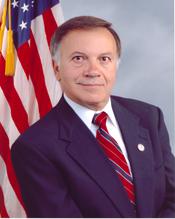
Madam Speaker, I rise to oppose H.R. 5570, a bill which will again reauthorize the Religious Worker Visa. The new majority apparently thinks we need to add ``ministry'' to the list of jobs that…
Madam Speaker, I rise to oppose H.R. 5570, a bill which will again reauthorize the Religious Worker Visa. The new majority apparently thinks we need to add ``ministry'' to the list of jobs that ``Americans won't do.'' Then again, with the level of hostility the Democrats have towards religion in America, there may come a time when we do have to import religious workers. Fortunately, we aren't to that point quite yet.
Regrettably, this program is far from comical. Just last year, the U.S. Citizenship and Immigration Service attested to the fact that this visa had been ``compromised.'' The fraud rate is ``excessively high'' according to Emilio Gonzalez, head of USCIS. In fact, a DHS fraud- prevention task force found that a whopping 33 percent of the visas in this program were granted based on fraudulent information.
Even worse, rampant fraud and abuse has characterized this program, practically since its inception in 1990. A GAO report about the program back in 1999 found that, ``As a result of . . . fraud investigations, both [the State Department and the INS] have expressed concern that some individuals and organizations that sponsor religious workers may be exploiting this category to enable unqualified aliens to enter or stay in the United States illegally.''
Madam Speaker, some might point out that this program is not very large in the scope of the total number of visas. But I would remind them that we know the amount of damage a handful of determined enemies can inflict when they are allowed to abuse our visa system.
The last thing we want to do is perpetuate a program we know is fatally flawed, and continue a policy that just might be rolling out a welcome mat for some of the most radical imams in the Middle East. I urge a ``no'' vote on this bill. Let's close this giant loophole in our national security.
Bill Text
4 versions available
        [Congressional Bills 110th Congress]
[From the U.S. Government Printing Office]
[H.R. 5570 Referred in Senate (RFS)]

2d Session
H. R. 5570

_______________________________________________________________________

IN THE SENATE OF THE UNITED STATES

April 16, 2008

Received

August 1, 2008

Read twice and referred to the Committee on the Judiciary

_______________________________________________________________________

AN ACT

To amend the Immigration and Nationality Act with respect to the
special immigrant nonminister religious worker program, and for other
purposes.

Be it enacted by the Senate and House of Representatives of the
United States of America in Congress assembled,

SECTION 1. SHORT TITLE.

This Act may be cited as the ``Religious Worker Visa Extension Act
of 2008''.

SEC. 2. SPECIAL IMMIGRANT NONMINISTER RELIGIOUS WORKER PROGRAM.

(a) Regulations.--Not later than December 31, 2008, the Secretary
of Homeland Security shall issue final regulations to eliminate or
reduce fraud in the special immigrant categories described in
subclauses (II) and (III) of section 101(a)(27)(C)(ii) of the
Immigration and Nationality Act (8 U.S.C. 1101(a)(27)(C)(ii)).
(b) Extensions.--
(1) In general.--Section 101(a)(27)(C)(ii) of the
Immigration and Nationality Act (8 U.S.C. 1101(a)(27)(C)(ii))
is amended by striking ``October 1, 2008,'' each place such
term appears and inserting ``January 1, 2010,''.
(2) Conditional further extension.--
(A) In general.--Section 101(a)(27)(C)(ii) of the
Immigration and Nationality Act (8 U.S.C.
1101(a)(27)(C)(ii)), as amended by paragraph (1), is
further amended by striking ``January 1, 2010,'' each
place such term appears and inserting ``January 1,
2016,''.
(B) Conditional effective date.--The amendment made
by subparagraph (A) shall take effect on March 1, 2009,
but only if the Secretary of Homeland Security has
complied with subsection (a).
(c) Report.--Not later than September 30, 2010, the Inspector
General of the Department of Homeland Security shall submit to the
Congress a report containing the results of a study of the
effectiveness of the regulations described in subsection (a). The
report shall also include an analysis of a random sample of non-
minister special immigrant religious workers, before their second
anniversary of being admitted, to determine whether they are still
employed by the religious organization that petitioned for them, and if
not, the reasons for their departure from such employment.

Passed the House of Representatives April 15, 2008.

Attest:

LORRAINE C. MILLER,

Clerk.