Mr. Speaker, I move to suspend the rules and pass the bill (H.R. 5803) to direct the Election Assistance Commission to establish a program to make grants to participating States and units of local…
Mr. Speaker, I move to suspend the rules and pass the bill (H.R. 5803) to direct the Election Assistance Commission to establish a program to make grants to participating States and units of local government which will administer the regularly scheduled general election for Federal office held in November 2008 for carrying out a program to make backup paper ballots available in the case of the failure of a voting system or voting equipment in the election or some other emergency situation, and for other purposes.
Mr. Speaker, I ask unanimous consent that all Members may have 5 legislative days to revise and extend their remarks and include extraneous matter in the Record on H.R. 5803.
Mr. Speaker, I yield myself such time as I may consume.
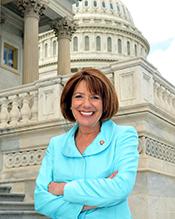
I introduced H.R. 5803 at the request of election advocates and elected officials as a simple solution to deal with some of the problems jurisdictions may face this election day.
The bill provides reimbursements through grants to jurisdictions that choose to provide backup paper ballots in the event of voting machine failure or some other emergency situation for this November's election. The language in the legislation has been crafted, at the request of State and local governments, to allow them to decide what constitutes an emergency situation. That could mean anything from machine failure to long lines to problems with polling place staffing. It is fully up to the jurisdiction to determine what justifies the use of backup paper ballots and how to distribute them.
As mentioned, this is 100 percent optional. If States already use paper, including electronic machines with a voter verifiable paper audit trail, it's unlikely they would apply for a grant.
Of the 14 States that use electronic voting machines without paper trails, only 5 have no paper requirements at all and 9 States and the District of Columbia only use these machines in some jurisdictions. All this legislation provides is an additional method of instilling voter confidence. The grants provided in this bill allow jurisdictions to have a contingency plan, backup paper ballots, in case there are mistakes by poll workers or another cause and to determine when and how to implement that plan. Another provision included in the legislation allows the jurisdiction to determine when and how the backup paper ballots are distributed to voters.
The bill has been drafted in full cooperation with and is supported by the National Council of State Legislators, the National Association of County Officials, and the National Association of
Secretaries of State. All those organizations have submitted letters of support, as has Ohio Secretary of State Brunner, who calls it ``meaningful and respectful of State authority in election administration matters.''
In addition to the support of State and local governments, the bill is supported by election integrity groups, including People for the American Way, the Brennan Center, the Lawyers Committee For Civil Rights Under the Law, Common Cause, Verified Vote, Counted as Cast, and just today the NAACP Legal Defense Education Fund. Additional input was provided by disability rights groups who have told us that the bill has no adverse impact on their community and that they approve the language.
As we have seen, broad support for election-related legislation is not easy to accomplish. Backup paper ballots are a unifying factor between election officials and election advocates. It's 100 percent optional, and the responsibility and mechanisms for implementation is left to the State and local officials. The bill is a measured and proactive step towards improving the system of election administration for this November.
Voter turnout in the 2008 presidential primaries was at 28 percent of the country's estimated eligible voters. That's a record one in four eligible voters, actually slightly more. The turnout rate has not been that high since 1972, when the voting age was lowered to 18. Given this record primary turnout, providing State and local jurisdictions the option to have backup paper ballots could mitigate any challenges they may face on Election Day in November. This bill helps ensure election integrity and national electoral confidence and respects State and local jurisdictions' responsibility to administer elections.
I would also note that given the fiscal situation of most States and most counties, providing some assistance in this paper ballot measure is extremely important. I know, for example, in my own State of California there is a tremendous multibillion-dollar budget deficit that is mimicked in counties throughout the State. We have received a report from CRS that outlines various things that could concern us, including long lines in jurisdictions that have DREs. The paper ballot backup measure could help mitigate against that problem.
And, finally, I would note that the cost of this measure, this authorization, is really the price we pay every day for an afternoon in Iraq. Surely we can spend the equivalent of an afternoon in Iraq to preserve, protect, and defend our own electoral system in one of the most important elections our Nation will see this November.
With that, I would urge the passage of the bill.
Brennan Center for Justice,
New York, NY, April 30, 2008.
Re Support for H.R. 5803, the ``Back Up Paper Ballot Bill''.
Representative Zoe Lofgren,
Chair, Subcommittee on Elections, Committee on House
Administration, House of Representatives, Washington, DC.
Dear Representative Lofgren: Thank you for your leadership
and commitment to improving the security, reliability, and
accessibility of our voting systems. In an election year that
has garnered unprecedented voter interest, it is particularly
important to have good policies and procedures in place in
advance of the November elections.
For this reason, we strongly support H.R. 5803, the Back Up
Paper Ballot Bill. News reports of machine problems during
states' recent presidential primary elections provide a
preview of potentially widespread machine failure and
disenfranchisement in November. H.R. 5803 would reimburse
jurisdictions for costs associated with providing voters
emergency paper ballots in the event of machine breakdowns.
In elections past, machine failures have caused long lines
at the polls and disenfranchised untold numbers of voters.
Encouraging the use of emergency paper ballots will help
ensure that every voter may have her vote counted and make it
much less likely that voters will be forced to wait on long
lines or turned away from the polls because of machine
malfunction--these are particularly important considerations
for November's elections, when turnout is expected to be
high.
Sincerely,
Lawrence Norden,
Counsel.
Mr. Speaker, I would just note before recognizing Representative Gonzalez that this is an authorization measure but there is money that has already been appropriated and allocated to States under HAVA that if we pass this would then become available for the backup paper ballots.
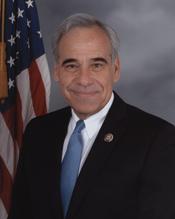
Mr. Speaker, I would now recognize a member of the committee, a former judge and valued colleague, Congressman Charles Gonzalez, for 2 minutes.
Mr. Speaker, before yielding to Mr. Ellison, I would like to include in the Record a letter from the Secretary of State of Ohio urging support of the bill.
Columbus, Ohio,
April 29, 2008.
Re Letter of support for H.R. 5803.
Hon. Zoe Lofgren,
Cannon House Office Building,
Washington, DC.
Dear Congresswoman Lofgren: I write to extend my support
for H.R. 5803, which would create a grant program for states
to print and utilize backup paper ballots for the November
2008 federal elections. In Ohio, we thoroughly tested the
reliability and security of direct recording electronic (DRE)
voting machines and found them susceptible to performance
problems and security lapses. Until we can obtain funding to
replace DRE voting systems in the 53 counties in Ohio that
utilize DREs as their primary voting system., we have found
that backup paper ballots: Ensure that voters have the option
to vote a paper ballot, Alleviate congestion due to long
lines, and Serve as emergency ballots in the case of machine
or power failure.
Ohio utilized backup paper ballots during the March 4, 2008
primary election. In at least two specific instances, they
proved to be vital when machines could not be used because
they were programmed incorrectly and when sustained power
outages exhausted the life of batteries in DRE voting
machines. We plan to utilize backup paper ballots again in
November with even greater specifics in their implementation
and use. In short, we believe that in Ohio, backup paper
ballots offer a transitional solution to a wholesale change
of voting systems and provide a means to better ensure
election integrity this November.
Recently, I worked with Congressman Rush Holt on H.R. 5036,
which included backup paper ballot provisions similar to
those found in H.R. 5803. I supported his efforts concerning
reimbursements to the states for backup paper ballots.
Likewise, I support your advancement of H.R. 5803's grant
program for backup paper ballots and offer any assistance I
can provide toward passage of this worthwhile measure.
In December 2007, my office released what is known as the
``EVEREST Report,'' a massive voting machine study of the
three voting systems used in Ohio: Premiere (formerly
Diebold), ES&S, and Hart Intercivic. The EVEREST Report
contained scientific and industrial findings that Ohio's
voting systems (also used throughout the country),
specifically DRE voting systems, lack basic security
safeguards required and provided in other applications
throughout the computer industry, are prone to deterioration
in performance and software operation, and need reengineering
and improved procedures for operation. In response, I issued
a directive (Directive 2008-01) to all boards of elections on
January 2, 2008, requiring all counties utilizing DRE voting
machines as their primary system of voting to print backup
paper ballots in the amount of at least 10% of the number of
voters who voted in a similar, previous election.
The directive permitted any voter who preferred a paper
ballot to vote by paper ballot and for such paper ballots to
be counted on election night as part of the unofficial count.
Until Ohio has secured funding to move its counties utilizing
DRE voting technology to optical scan paper ballot
technology, backup paper ballots provide needed security and
reliability to ensure that disenfranchisement does not occur
and to provide for greater integrity in post-election audit
procedures.
My office has ordered our 53 county boards of elections
that utilize DREs as their primary voting system to provide
the Ohio Secretary of State's office with the costs of
impLementing the backup paper ballot directive, and once we
have obtained these numbers, I will be happy to share them
with you. I can tell you, initially, the costs for even the
largest counties were in the low 5 figures, and for. most,
they were in the low 4 figures. From initial figures
provided, it appears that your proposal would be a cost
effective means to ensure election confidence, especially
since the November 2008 election will be the first
presidential election where DRE use will be widespread.
I appreciate the opportunity to communicate my support for
H.R 5803. Restoring and ensuring confidence in Ohio elections
is an essential goal of my administration. Our state has made
great strides in this respect, and we will continue to work
toward this end, especially for November's election, when
Ohio again is likely to be a pivotal state in the
presidential contest. H.R 5803 would provide Ohio, along with
many other states, a simple but important tool to ensure
election integrity and increase national electoral
confidence. Please feel free to contact me if I can provide
you with additional information or support.
Sincerely,
Jennifer Brunner,
Ohio Secretary of State.
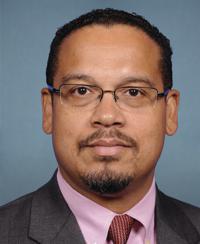
I now would yield to the gentleman from Minnesota (Mr. Ellison) whose Secretary of State has been a witness in our committee and who has been a leader in election law reforms, 2 minutes.
Mr. Speaker, before recognizing Mr. Langevin, I would note that the Secretary of State Associations helped us draft this bill, but they were not going to have a meeting to actually take a vote on support in time for today. But they did assist in the drafting.
I would now recognize our colleague from Rhode Island, Congressman Langevin, who is a former Secretary of State himself, for 2 minutes on the bill.
(Mr. LANGEVIN asked and was given permission to revise and extend his remarks.)
Several.
Mr. Speaker, may I inquire how much time remains on either side.
Mr. Speaker, at this point, I would like to recognize a valued member of our committee, Congresswoman Susan Davis, for 2 minutes.
Mr. Speaker, at this point I would like to recognize for 2 minutes the gentleman from New Jersey (Mr. Holt) who has worked so diligently on election matters in this Congress.
Mr. Speaker, I yield 1\1/2\ minutes to the gentlewoman from Ohio (Mrs. Jones).
The last speaker that we were expecting has not shown, so if the gentleman is prepared to close and yield back, I will do the same.
Mr. Speaker, I would urge that we approve this very modest measure. As has been noted by the White House in their statement today, there is $1 billion that has been appropriated and remains unspent by States to prepare and conduct the 2008 elections. Most of those funds are allocated to the purchase of DREs that have been so troublesome, and this authorization would allow for a very modest portion of a maximum of $75 million of that appropriated funds to be used for backup paper ballots.
In my own county of Santa Clara, we ran out of ballots this election year, and people were scrambling. That was before the massive budget cuts that the county is facing. And I will just say this. Having been on the board of supervisors for longer than I have been in the United States House of Representatives, I understand how tough it is to balance those budgets. At local government, there is no deficit spending. What you have got is what you can spend. So county boards of supervisors all over the country are trying to figure out how to run an election with local funds and also keep the county hospital open and also fund the sheriff's department and also keep the parks open and keep the streets paved.
I fear that backup paper ballots in November are not going to compete with some of the more pressing needs and so this bill is enormously important. We can pass it today and have a more orderly election so that no American is denied their right to vote. I urge Members to put partisanship aside, to support this very modest measure that is supported by election officials all over the United States.
Mr. Speaker, I yield back the balance of my time.