To encourage, enhance, and integrate Silver Alert plans throughout the United States, to authorize grants for the assistance of organizations to find missing adults, and for other purposes.
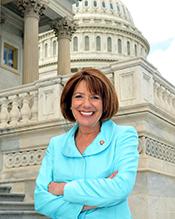
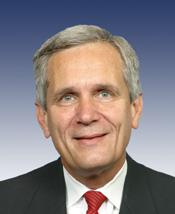 Rep. Lloyd Doggett (D-TX)
Legislative Activity
Stay on top of the latest movement without scrolling through every action
Read twice and referred to the Committee on the Judiciary.
October 2, 2008
View full timeline
Introduced in House
May 15, 2008
Referred to the Subcommittee on Crime, Terrorism, and Homeland Security.
July 14, 2008
Subcommittee Hearings Held.
July 15, 2008
Subcommittee on Crime, Terrorism, and Homeland Security Discharged.
July 28, 2008
Reported (Amended) by the Committee on Judiciary. H. Rept. 110-825.
September 8, 2008
Placed on the Union Calendar, Calendar No. 531.
September 8, 2008
Mr. Scott (VA) moved to suspend the rules and pass the bill, as amended.
September 15, 2008 • 4:49 PM
Considered under suspension of the rules. (consideration: CR H8078-8083)
September 15, 2008 • 4:49 PM
DEBATE - The House proceeded with forty minutes of debate on H.R. 6064.
September 15, 2008 • 4:49 PM
At the conclusion of debate, the chair put the question on the motion to suspend the rules. Mr. Issa objected to the vote on the grounds that a quorum was not present. Further proceedings on the motion were postponed. The point of no quorum was withdrawn.
September 15, 2008 • 5:04 PM
Considered as unfinished business. (consideration: CR H8368-8369)
September 17, 2008 • 7:02 PM
Passed/agreed to in House: On motion to suspend the rules and pass the bill, as amended Agreed to by voice vote.(text CR 9/15/2008 H8078-8080)
September 17, 2008 • 7:02 PM
On motion to suspend the rules and pass the bill, as amended Agreed to by voice vote. (text CR 9/15/2008 H8078-8080)
September 17, 2008 • 7:02 PM
Motion to reconsider laid on the table Agreed to without objection.
September 17, 2008 • 7:02 PM
The title of the measure was amended. Agreed to without objection.
September 17, 2008 • 7:02 PM
Received in the Senate.
September 17, 2008
Read twice and referred to the Committee on the Judiciary.
October 2, 2008
Floor Debate
8 membersWhat members said about H.R. 6064 on the floor


 +3
+3
Floor Debate
8 membersWhat members said about H.R. 6064 on the floor
Madam Speaker, I support the National Silver Alert Act. I also urge my colleagues to support this bill. It is necessary. Thousands of vulnerable older adults go missing each year as a result of…
Mr. Speaker, I support the National Silver Alert Act. I also urge my colleagues to support this bill. It is necessary. Thousands of vulnerable older adults go missing each year as a result of…
Mr. Speaker, I thank the gentleman from Virginia for his help and leadership on this measure. Mr. Speaker, I rise in support of H.R. 6064, the National Sliver Alert Act, which I authored and on which…
Mr. Speaker, I rise today in strong support of H.R. 6064, the National Silver Alert Act sponsored by my colleague from Texas, Congressman Lloyd Doggett. I first became involved in the issue of…
Mr. Speaker, Today is a very important day for anyone who has ever lived through the nightmare of an adult loved one gone missing. The National Silver Alert Act will reauthorize Kristen's Act and…
Show 4 more
Mr. Speaker, I move to suspend the rules and pass the bill (H.R. 6064) to encourage, enhance, and integrate Silver Alert plans throughout the United States, as amended. Mr. Speaker, I ask unanimous…
Mr. Speaker, I rise today in support of the National Silver Alert Act. As a society we are judged by how we care for our most vulnerable in our community--our young children and our senior citizens.…

Mr. Speaker, I too rise in support of this important piece of legislation and am pleased that a cosponsor of this bill, someone who has contributed meaningfully to the bill and to its amendments, the…
Mr. Speaker, I ask unanimous consent that the motions to suspend the rules relating to the following measures be considered as adopted in the form considered by the House on Monday, September 15,…
Bill Text
4 versions available
        [Congressional Bills 110th Congress]
[From the U.S. Government Printing Office]
[H.R. 6064 Referred in Senate (RFS)]

2d Session
H. R. 6064

_______________________________________________________________________

IN THE SENATE OF THE UNITED STATES

September 17, 2008

Received

October 2 (legislative day, September 17), 2008

Read twice and referred to the Committee on the Judiciary

_______________________________________________________________________

AN ACT

To encourage, enhance, and integrate Silver Alert plans throughout the
United States, to authorize grants for the assistance of organizations
to find missing adults, and for other purposes.

Be it enacted by the Senate and House of Representatives of the
United States of America in Congress assembled,

TITLE I--SILVER ALERT COMMUNICATIONS NETWORK

SECTION 101. SHORT TITLE.

This title may be cited as the ``National Silver Alert Act''.

SEC. 102. DEFINITIONS.

For purposes of this title:
(1) State.--The term ``State'' means each of the 50 States,
the District of Columbia, the Commonwealth of Puerto Rico, the
United States Virgin Islands, Guam, American Samoa, and the
Commonwealth of the Northern Mariana Islands.
(2) Missing senior.--The term ``missing senior'' refers to
any individual who--
(A) is reported to, or identified by, a law
enforcement agency as a missing person; and
(B) meets the requirements to be designated as a
missing senior, as determined by the State in which the
individual is reported or identified as a missing
person.

SEC. 103. SILVER ALERT COMMUNICATIONS NETWORK.

The Attorney General shall, subject to the availability of
appropriations under section 107, establish a national Silver Alert
communications network within the Department of Justice to provide
assistance to regional and local search efforts for missing seniors
through the initiation, facilitation, and promotion of local elements
of the network (known as Silver Alert plans) in coordination with
States, units of local government, law enforcement agencies, and other
concerned entities with expertise in providing services to seniors.

SEC. 104. SILVER ALERT COORDINATOR.

(a) National Coordinator Within Department of Justice.--The
Attorney General shall designate an individual of the Department of
Justice to act as the national coordinator of the Silver Alert
communications network. The individual so designated shall be known as
the Silver Alert Coordinator of the Department of Justice (referred to
in this title as the ``Coordinator'').
(b) Duties of the Coordinator.--In acting as the national
coordinator of the Silver Alert communications network, the Coordinator
shall--
(1) work with States to encourage the development of
additional Silver Alert plans in the network;
(2) establish voluntary guidelines for States to use in
developing Silver Alert plans that will promote compatible and
integrated Silver Alert plans throughout the United States,
including--
(A) a list of the resources necessary to establish
a Silver Alert plan;
(B) criteria for evaluating whether a situation
warrants issuing a Silver Alert, taking into
consideration the need for the use of such Alerts to be
limited in scope because the effectiveness of the
Silver Alert communications network may be affected by
overuse, including criteria to determine--
(i) whether the mental capacity of a senior
who is missing, and the circumstances of his or
her disappearance, warrant the issuance a
Silver Alert; and
(ii) whether the individual who reports
that a senior is missing is an appropriate and
credible source on which to base the issuance
of a Silver Alert;
(C) a description of the appropriate uses of the
Silver Alert name to readily identify the nature of
search efforts for missing seniors; and
(D) recommendations on how to protect the privacy,
dignity, independence, and autonomy of any missing
senior who may be the subject of a Silver Alert;
(3) develop proposed protocols for efforts to recover
missing seniors and to reduce the number of seniors who are
reported missing, including protocols for procedures that are
needed from the time of initial notification of a law
enforcement agency that the senior is missing through the time
of the return of the senior to family, guardian, or domicile,
as appropriate, including--
(A) public safety communications protocol;
(B) case management protocol;
(C) command center operations;
(D) reunification protocol; and
(E) incident review, evaluation, debriefing, and
public information procedures;
(4) work with States to ensure appropriate regional
coordination of various elements of the network;
(5) establish an advisory group to assist States, units of
local government, law enforcement agencies, and other entities
involved in the Silver Alert communications network with
initiating, facilitating, and promoting Silver Alert plans,
which shall include--
(A) to the maximum extent practicable,
representation from the various geographic regions of
the United States; and
(B) members who are--
(i) representatives of senior citizen
advocacy groups, law enforcement agencies, and
public safety communications;
(ii) broadcasters, first responders,
dispatchers, and radio station personnel; and
(iii) representatives of any other
individuals or organizations that the
Coordinator determines are necessary to the
success of the Silver Alert communications
network; and
(6) act as the nationwide point of contact for--
(A) the development of the network; and
(B) regional coordination of alerts for missing
seniors through the network.
(c) Coordination.--
(1) Coordination with other agencies.--The Coordinator
shall coordinate and consult with the Secretary of
Transportation, the Federal Communications Commission, the
Assistant Secretary for Aging of the Department of Health and
Human Services, the head of the Missing Alzheimer's Disease
Patient Alert Program, and other appropriate offices of the
Department of Justice in carrying out activities under this
title.
(2) State and local coordination.--The Coordinator shall
consult with local broadcasters and State and local law
enforcement agencies in establishing minimum standards under
section 105 and in carrying out other activities under this
title, as appropriate.
(d) Annual Reports.--Not later than one year after the date of
enactment of this Act, and annually thereafter, the Coordinator shall
submit to Congress a report on the activities of the Coordinator and
the effectiveness and status of the Silver Alert plans of each State
that has established or is in the process of establishing such a plan.
Each such report shall include--
(1) a list of States that have established Silver Alert
plans;
(2) a list of States that are in the process of
establishing Silver Alert plans;
(3) for each State that has established such a plan, to the
extent the data is available--
(A) the number of Silver Alerts issued;
(B) the number of individuals located successfully;
(C) the average period of time between the issuance
of a Silver Alert and the location of the individual
for whom such Alert was issued;
(D) the State agency or authority issuing Silver
Alerts, and the process by which Silver Alerts are
disseminated;
(E) the cost of establishing and operating such a
plan;
(F) the criteria used by the State to determine
whether to issue a Silver Alert; and
(G) the extent to which missing individuals for
whom Silver Alerts were issued crossed State lines;
(4) actions States have taken to protect the privacy and
dignity of the individuals for whom Silver Alerts are issued;
(5) ways that States have facilitated and improved
communication about missing individuals between families,
caregivers, law enforcement officials, and other authorities;
and
(6) any other information the Coordinator determines to be
appropriate.

SEC. 105. MINIMUM STANDARDS FOR ISSUANCE AND DISSEMINATION OF ALERTS
THROUGH SILVER ALERT COMMUNICATIONS NETWORK.

(a) Establishment of Minimum Standards.--Subject to subsection (b),
the Coordinator shall establish minimum standards for--
(1) the issuance of alerts through the Silver Alert
communications network; and
(2) the extent of the dissemination of alerts issued
through the network.
(b) Limitations.--
(1) Voluntary participation.--The minimum standards
established under subsection (a) of this section, and any other
guidelines and programs established under section 104, shall be
adoptable on a voluntary basis only.
(2) Dissemination of information.--The minimum standards
shall, to the maximum extent practicable (as determined by the
Coordinator in consultation with State and local law
enforcement agencies), provide that appropriate information
relating to the special needs of a missing senior (including
health care needs) are disseminated to the appropriate law
enforcement, public health, and other public officials.
(3) Geographic areas.--The minimum standards shall, to the
maximum extent practicable (as determined by the Coordinator in
consultation with State and local law enforcement agencies),
provide that the dissemination of an alert through the Silver
Alert communications network be limited to the geographic areas
which the missing senior could reasonably reach, considering
the missing senior's circumstances and physical and mental
condition, the modes of transportation available to the missing
senior, and the circumstances of the disappearance.
(4) Age requirements.--The minimum standards shall not
include any specific age requirement for an individual to be
classified as a missing senior for purposes of the Silver Alert
communication network. Age requirements for determinations of
whether an individual is a missing senior shall be determined
by each State, and may vary from State to State.
(5) Privacy and civil liberties protections.--The minimum
standards shall--
(A) ensure that alerts issued through the Silver
Alert communications network comply with all applicable
Federal, State, and local privacy laws and regulations;
and
(B) include standards that specifically provide for
the protection of the civil liberties and sensitive
medical information of missing seniors.
(6) State and local voluntary coordination.--In carrying
out the activities under subsection (a), the Coordinator may
not interfere with the current system of voluntary coordination
between local broadcasters and State and local law enforcement
agencies for purposes of the Silver Alert communications
network.

SEC. 106. TRAINING AND OTHER RESOURCES.

(a) Training and Educational Programs.--The Coordinator shall make
available to States, units of local government, law enforcement
agencies, and other concerned entities that are involved in initiating,
facilitating, or promoting Silver Alert plans, including broadcasters,
first responders, dispatchers, public safety communications personnel,
and radio station personnel--
(1) training and educational programs related to the Silver
Alert communication network and the capabilities, limitations,
and anticipated behaviors of missing seniors, which shall be
updated regularly to encourage the use of new tools,
technologies, and resources in Silver Alert plans; and
(2) informational materials, including brochures, videos,
posters, and web sites to support and supplement such training
and educational programs.
(b) Coordination.--The Coordinator shall coordinate--
(1) with the Assistant Secretary for Aging of the
Department of Health and Human Services in developing the
training and educational programs and materials under
subsection (a); and
(2) with the head of the Missing Alzheimer's Disease
Patient Alert Program within the Department of Justice, to
determine if any existing material with respect to training
programs or educational materials developed or used as part of
such Patient Alert Program are appropriate and may be used for
the programs under subsection (a).

SEC. 107. AUTHORIZATION OF APPROPRIATIONS FOR THE SILVER ALERT
COMMUNICATIONS NETWORK.

There are authorized to be appropriated to the Department of
Justice such sums as may be necessary to carry out the Silver Alert
communications network as authorized under this title.

SEC. 108. GRANT PROGRAM FOR SUPPORT OF SILVER ALERT PLANS.

(a) Grant Program.--Subject to the availability of appropriations
to carry out this section, the Attorney General shall carry out a
program to provide grants to States for the development and enhancement
of programs and activities for the support of Silver Alert plans and
the Silver Alert communications network.
(b) Activities.--Activities funded by grants under the program
under subsection (a) may include--
(1) the development and implementation of education and
training programs, and associated materials, relating to Silver
Alert plans;
(2) the development and implementation of law enforcement
programs, and associated equipment, relating to Silver Alert
plans;
(3) the development and implementation of new technologies
to improve Silver Alert communications; and
(4) such other activities as the Attorney General considers
appropriate for supporting the Silver Alert communications
network.
(c) Federal Share.--The Federal share of the cost of any activities
funded by a grant under the program under subsection (a) may not exceed
50 percent.
(d) Distribution of Grants on Geographic Basis.--The Attorney
General shall, to the maximum extent practicable, ensure the
distribution of grants under the program under subsection (a) on an
equitable basis throughout the various regions of the United States.
(e) Administration.--The Attorney General shall prescribe
requirements, including application requirements, for grants under the
program under subsection (a).
(f) Authorization of Appropriations.--
(1) There is authorized to be appropriated to the
Department of Justice $5,000,000 for each of the fiscal years
2009 through 2013 to carry out this section and, in addition,
$5,000,000 for each of the fiscal years 2009 through 2013 to
carry out subsection (b)(3).
(2) Amounts appropriated pursuant to the authorization of
appropriations in paragraph (1) shall remain available until
expended.

SEC. 109. SAMMY KIRK VOLUNTARY ELECTRONIC MONITORING PROGRAM.

(a) Program Authorized.--The Attorney General, after consultation
with the Secretary of Health and Human Services, is authorized to award
grants to States and units of local government to carry out programs to
provide voluntary electronic monitoring services to elderly individuals
to assist in the location of such individuals if such individuals are
reported as missing.
(b) Authorization of Appropriations.--There are authorized to be
appropriated to carry out this section $2,000,000 for each of the
fiscal years 2009 through 2014.
(c) Designation.--The grant program authorized under this section
shall be referred to as the ``Sammy Kirk Voluntary Electronic
Monitoring Program''.

TITLE II--KRISTEN'S ACT REAUTHORIZATION

SEC. 201. SHORT TITLE.

This title may be cited as ``Kristen's Act Reauthorization of
2008''.

SEC. 202. FINDINGS.

Congress finds the following:
(1) Every year thousands of adults become missing due to
advanced age, diminished mental capacity, or foul play. Often
there is no information regarding the whereabouts of these
adults and many of them are never reunited with their families.
(2) Missing adults are at great risk of both physical harm
and sexual exploitation.
(3) In most cases, families and local law enforcement
officials have neither the resources nor the expertise to
undertake appropriate search efforts for a missing adult.
(4) The search for a missing adult requires cooperation and
coordination among Federal, State, and local law enforcement
agencies and assistance from distant communities where the
adult may be located.
(5) Federal assistance is urgently needed to help with
coordination among such agencies.

SEC. 203. GRANTS FOR THE ASSISTANCE OF ORGANIZATIONS TO FIND MISSING
ADULTS.

(a) Grants.--
(1) Grant program.--Subject to the availability of
appropriations to carry out this section, the Attorney General
shall make competitive grants to public agencies or nonprofit
private organizations, or combinations thereof, to--
(A) maintain a national resource center and
information clearinghouse for missing and unidentified
adults;
(B) maintain a national, interconnected database
for the purpose of tracking missing adults who are
determined by law enforcement to be endangered due to
age, diminished mental capacity, or the circumstances
of disappearance, when foul play is suspected or
circumstances are unknown;
(C) coordinate public and private programs that
locate or recover missing adults or reunite missing
adults with their families;
(D) provide assistance and training to law
enforcement agencies, State and local governments,
elements of the criminal justice system, nonprofit
organizations, and individuals in the prevention,
investigation, prosecution, and treatment of cases
involving missing adults;
(E) provide assistance to families in locating and
recovering missing adults; and
(F) assist in public notification and victim
advocacy related to missing adults.
(2) Applications.--The Attorney General shall periodically
solicit applications for grants under this section by
publishing a request for applications in the Federal Register
and by posting such a request on the website of the Department
of Justice.
(b) Other Duties.--The Attorney General shall--
(1) coordinate programs relating to missing adults that are
funded by the Federal Government; and
(2) encourage coordination between State and local law
enforcement and public agencies and nonprofit private
organizations receiving a grant pursuant to subsection (a).

SEC. 204. AUTHORIZATION OF APPROPRIATIONS.

There are authorized to be appropriated to carry out this title
$4,000,000 for each of fiscal years 2009 through 2019.

Passed the House of Representatives September 17, 2008.

Attest:

LORRAINE C. MILLER,

Clerk.