Mr. Speaker, I move to suspend the rules and pass the bill (H.R. 6098) to amend the Homeland Security Act of 2002 to improve the financial assistance provided to State, local, and tribal governments…
Mr. Speaker, I move to suspend the rules and pass the bill (H.R. 6098) to amend the Homeland Security Act of 2002 to improve the financial assistance provided to State, local, and tribal governments for information sharing activities, and for other purposes, as amended.
Mr. Speaker, I ask unanimous consent that all Members may have 5 legislative days to revise and extend their remarks and include extraneous material on the bill under consideration.
Mr. Speaker, I yield myself such time as I may consume.
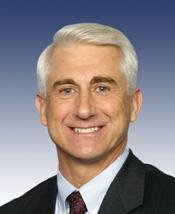
Mr. Speaker, my colleague and the ranking member of our Subcommittee on Intelligence, Information Sharing, and Terrorism Risk Assessment Dave Reichert, introduced H.R. 6098 earlier this year, and it was reported unanimously out of our subcommittee and the full committee.
I have to express my personal disappointment that Mr. Reichert is not here for this debate. I know that this is a subject he is passionate about, as am I, as are the first responders, so-called ``first preventers'' who will benefit enormously by its passage.
At issue, Mr. Speaker, is how DHS grant recipients can spend their money when it comes to hiring and retaining intelligence analysts at the State and local levels.
In the 9/11 Act, we were clear, grant recipients could use up to 50 percent of their State Homeland Security Grant Program and Urban Area Security Initiative funding for personnel costs, without time limitations.
The Department of Homeland Security, however, had other ideas. Instead of following the law, it capped allowable personnel costs far below the 50 percent threshold, and it imposed a 2-year limit on how long States could employ intelligence analysts hired with Federal dollars. This has had the absurd result of States and localities firing analysts after 2 years, just to continue to qualify for DHS funding.
Think about this. Someone works for you, is providing excellent, accurate and actionable intelligence analysis that will help us track and prevent the next set of threats, and that person gets fired only because he or she has to be fired in order for money to continue to flow. This makes absolutely no sense.
DHS' approach, likewise, undermines the culture of constitutionality that Congress intended to foster at fusion centers in the 9/11 Act.
Many States and localities want to use DHS grant funds to hire and retain analysts at those centers, which are increasingly becoming the linchpin for information sharing with the Federal Government. To sustain this effort, however, State and locals need money to pay for staff overtime to make fusion centers work, something both Congress and the President, in his National Strategy For Information Sharing, strongly support.
But, Mr. Speaker, the Department's grant guidance ignores this, just as it ignores the stringent privacy and civil liberties training requirements that are the centerpiece of the 9/11 Act's funding provision. By forcing States and localities to fire staff every 2 years in order to access Federal funds, DHS is effectively preventing the ``culture of constitutionality'' from taking root.
When privacy and civil liberties best practices have no time to develop, abuses, like the Maryland State Police's apparent spying on peace protestors and death penalty opponents, are the inevitable result.
Mr. Speaker, H.R. 6098 fixes these problems by giving States and localities the flexibility they need to hire and retain the staff to keep our communities safe. That is why the bill has been cosponsored by both Democrats and Republicans, and that is why it was approved on a unanimous basis by both our subcommittee and the full Homeland Security Committee last month.
Mr. Speaker, fusion centers, done the right way, are essential for Homeland Security.
I therefore urge passage of this critically important legislation, and reserve the balance of my time.
Mr. Speaker, we have no further speakers on our side. I am prepared to close debate once the minority has closed.
Mr. Speaker, we have just debated eight bills that come out of the Homeland Security Committee. I think that is a pretty good work product. As I mentioned earlier, four of them, those managed by the chairman of the full committee, Mr. Thompson, I think, are excellent policy. They come from a variety of subcommittees. And I want to thank him again, ranking member King and the superb bipartisan staff that has helped move us along. I urge their passage by this House.
The four bills that I have just managed, and that we debated earlier, one of which, hopefully will reduce the pernicious practice of overclassification and selective declassification, a second, which will reduce the ability to put sensitive but unclassified markings on documents, a third which will promote the dissemination of open source information by the Department of Homeland Security, and the fourth, which will end the absurd practice of having to fire people in order to continue to receive Federal funds, all go in one direction. And what is that direction? That direction is to help our first preventers, police and fire services, who know our neighborhoods best, to get critical information in real time about what to look for and what to do.
Without critical information in real time, the cop on the beat could unfortunately miss the plot that is being pursued in the house right in front of him because he or she doesn't know what to look for and what to do.
Each of these bills is designed to get information which the Federal Government may have or which may appear in open source materials to that first preventer in real time. And each of these bills also is designed to reduce and hopefully eliminate the excuses that can cause a Federal bureaucrat to decide that to protect his turf or her turf or to protect himself or herself from embarrassment, to say ``Oh, I will just mark this document `classified' or I will just put an SBU marking on this document and that way the person next door won't get to see it.''
Well, Mr. Speaker, that's the wrong impulse, it's the wrong signal, and with passage of these bills, we send a strong message; and more than that, a strong requirement to the Department of Homeland Security that at least the people who work there cannot, any longer, use or abuse the classification and SBU systems in order to protect themselves.
I'm hopeful that later this afternoon as we debate some additional bills on the suspension calendar, one of the things we will do is to use this principle of limiting the categories for ``sensitive but unclassified'' and take it government-wide. That is legislation that, as I mentioned, has been reported by the Oversight and Government Reform Committee, and I believe that will be before us shortly.
I want to say that I endorse that idea. I think it makes sense to reduce the SBU categories across the government. I think we can make DHS the gold standard, but hopefully every department of government that can use those stamps to prevent necessary information from being shared will get the same strong message.
Let me finally say, as one of the co-authors of the Intelligence Reform bill of 2004, that we recognized, when we enacted that bill, that what has been called a ``need-to-know'' culture that has created stovepipes, so-called stovepipes in our government, had to be changed to a ``need-to-share'' culture if we were ever going to be able to connect the dots to prevent the next attack.
Changing a culture from ``need to know'' to ``need to share'' is a very difficult thing to do, but a piece of that is breaking down the ways that individuals prevent information from moving off their desks to the person at the next desk.
And with passage of the four bills we have just debated, I think we send the strongest possible signal. And with passage of legislation that Mr. Waxman, I believe, is going to offer strongly, we continue to send that signal out across the government.
So Mr. Speaker, I urge passage of the Reichert bill that we have just debated. I urge passage of the four bills that I have been managing during the last hour or so. I call for an ``aye'' vote on the legislation.
I yield back the balance of my time.
Mr. Speaker, I object to the vote on the ground that a quorum is not present and make the point of order that a quorum is not present.