Improving Public Access to Documents Act of 2008
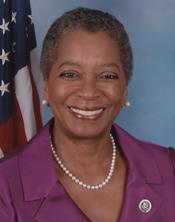
 Rep. Jane Harman (D-CA)
Legislative Activity
Stay on top of the latest movement without scrolling through every action
Received in the Senate and Read twice and referred to the Committee on Homeland Security and Governmental Affairs.
July 31, 2008
View full timeline
Introduced in House
June 5, 2008
Referred to the House Committee on Homeland Security.
June 5, 2008
Referred to the Subcommittee on Intelligence, Information Sharing, and Terrorism Risk Assessment.
June 9, 2008
Subcommittee Hearings Held.
June 11, 2008
Subcommittee Consideration and Mark-up Session Held.
June 11, 2008
Forwarded by Subcommittee to Full Committee (Amended) by Unanimous Consent .
June 11, 2008
Committee Consideration and Mark-up Session Held.
June 26, 2008
Ordered to be Reported (Amended) by Voice Vote.
June 26, 2008
Reported (Amended) by the Committee on Homeland Security. H. Rept. 110-779.
July 28, 2008
Placed on the Union Calendar, Calendar No. 498.
July 28, 2008
Ms. Harman moved to suspend the rules and pass the bill, as amended.
July 29, 2008 • 1:19 PM
Considered under suspension of the rules. (consideration: CR H7186-7189)
July 29, 2008 • 1:19 PM
DEBATE - The House proceeded with forty minutes of debate on H.R. 6193.
July 29, 2008 • 1:19 PM
At the conclusion of debate, the chair put the question on the motion to suspend the rules. Mr. Bilirakis objected to the vote on the grounds that a quorum was not present. Further proceedings on the motion were postponed. The point of no quorum was withdrawn.
July 29, 2008 • 1:28 PM
Considered as unfinished business. (consideration: CR H7596)
July 30, 2008 • 7:42 PM
Passed/agreed to in House: On motion to suspend the rules and pass the bill, as amended Agreed to by voice vote.(text: CR 7/29/2008 H7186-7188)
July 30, 2008 • 7:42 PM
On motion to suspend the rules and pass the bill, as amended Agreed to by voice vote. (text: CR 7/29/2008 H7186-7188)
July 30, 2008 • 7:42 PM
Motion to reconsider laid on the table Agreed to without objection.
July 30, 2008 • 7:42 PM
Received in the Senate and Read twice and referred to the Committee on Homeland Security and Governmental Affairs.
July 31, 2008
Floor Debate
3 membersWhat members said about H.R. 6193 on the floor

Floor Debate
3 membersWhat members said about H.R. 6193 on the floor
Mr. Speaker, I move to suspend the rules and pass the bill (H.R. 6193) to require the Secretary of Homeland Security to develop and administer policies, procedures, and programs to promote the…
Madam Speaker, I rise today in support of these Homeland Security bipartisan measures. I would like to commend Chairman Thompson and Ranking Member King for their efforts to bring these bills to the…
Mr. Speaker, I yield myself such time as I may consume. I rise today in support of H.R. 6193, the Improving Public Access to Documents Act, sponsored by Homeland Security Committee colleague,…
Bill Text
4 versions available
        [Congressional Bills 110th Congress]
[From the U.S. Government Printing Office]
[H.R. 6193 Referred in Senate (RFS)]

2d Session
H. R. 6193

_______________________________________________________________________

IN THE SENATE OF THE UNITED STATES

July 31, 2008

Received; read twice and referred to the Committee on Homeland Security
and Governmental Affairs

_______________________________________________________________________

AN ACT

To require the Secretary of Homeland Security to develop and administer
policies, procedures, and programs to promote the implementation of the
Controlled Unclassified Information Framework applicable to
unclassified information that is homeland security information,
terrorism information, weapons of mass destruction information and
other information within the scope of the information sharing
environment established under section 1016 of the Intelligence Reform
and Terrorism Prevention Act of 2004 (6 U.S.C. 485), and for other
purposes.

Be it enacted by the Senate and House of Representatives of the
United States of America in Congress assembled,

SECTION 1. SHORT TITLE.

This Act may be cited as the ``Improving Public Access to Documents
Act of 2008''.

SEC. 2. FINDINGS.

Congress finds the following:
(1) The proliferation and widespread use of ``sensitive but
unclassified'' (SBU) control markings by the Federal Government
interferes with accurate, actionable, and timely homeland
security information sharing, increases the cost of information
security, and needlessly limits public access to information.
(2) The control markings problem, which has worsened since
the 9/11 attacks, causes considerable confusion about what
information can be shared with whom both internally at the
Department of Homeland Security and with its external partners.
This problem negatively impacts the dissemination of homeland
security information to the Department's State, local, tribal,
and territorial homeland security and law enforcement partners,
private sector customers, and the public.
(3) Overuse of ``sensitive but unclassified'' markings
stands in the way of a safer and more secure homeland. This
trend is antithetical to the creation and operation of the
information sharing environment established under section 1016
of the Intelligence Reform and Terrorism Prevention Act of 2004
(6 U.S.C. 485), and must be halted and reversed.
(4) To do so, the Department should start with the
understanding that all departmental information that is not
properly classified, or marked as controlled unclassified
information and otherwise exempt from disclosure, should be
made available to members of the public pursuant to section 552
of title 5, United States Code (commonly referred to as the
``Freedom of Information Act'').
(5) The Department should also develop and administer
policies, procedures, and programs that promote compliance with
applicable laws, executive orders, and other authorities
pertaining to the proper use of controlled unclassified
information markings and the National Archives and Records
Administration policies implementing them.

SEC. 3. CONTROLLED UNCLASSIFIED INFORMATION FRAMEWORK IMPLEMENTATION
WITHIN THE DEPARTMENT OF HOMELAND SECURITY.

Subtitle A of title II of the Homeland Security Act of 2002 (6
U.S.C. 121 et seq.) is amended by adding at the end the following new
section:

``SEC. 210F. CONTROLLED UNCLASSIFIED INFORMATION FRAMEWORK
IMPLEMENTATION PROGRAM.

``(a) In General.--The Secretary shall develop and administer
policies, procedures, and programs within the Department to implement
the controlled unclassified information framework to standardize the
use of controlled unclassified markings on, and to maximize the
disclosure to the public of, homeland security information, terrorism
information, weapons of mass destruction information, and other
information within the scope of the information sharing environment
established under section 1016 of the Intelligence Reform and Terrorism
Prevention Act of 2004 (6 U.S.C. 485) that must be disseminated to
prevent and to collectively respond to acts of terrorism. The Secretary
shall coordinate with the Archivist of the United States and consult
with representatives of State, local, tribal, and territorial
government and law enforcement, organizations with expertise in civil
rights, civil liberties, and government oversight, and the private
sector, as appropriate, to develop such policies, procedures, and
programs.
``(b) Requirements.--Not later than one year after the date of the
enactment of the Improving Public Access to Documents Act of 2008, the
Secretary, in administering the policies, procedures, and programs
required under subsection (a), shall--
``(1) create, in consultation with the Archivist of the
United States, a standard format for unclassified finished
intelligence products created by the Department that have been
designated as controlled unclassified information, consistent
with any government-wide standards, practices or procedures for
similar products;
``(2) require that all unclassified finished intelligence
products created by the Department that have been designated as
controlled unclassified information be prepared in the standard
format;
``(3) ensure that such policies, procedures, and programs
protect the national security as well as the information
privacy rights and legal rights of United States persons
pursuant to all applicable law and policy, including the
privacy guidelines for the information sharing environment
established pursuant to section 1016 of the Intelligence Reform
and Terrorism Prevention Act of 2004 (6 U.S.C. 485), as
appropriate;
``(4) establish an ongoing auditing mechanism administered
by the Inspector General of the Department or other appropriate
senior Department official that randomly selects, on a periodic
basis, controlled unclassified information from each component
of the Department, including all Department components that
generate unclassified finished intelligence products, to--
``(A) assess whether applicable controlled
unclassified information policies, procedures, rules,
and regulations have been followed;
``(B) describe any problems with the administration
of the applicable controlled unclassified information
policies, procedures, rules and regulations, including
specific non-compliance issues;
``(C) recommend improvements in awareness and
training to address any problems identified in
subparagraph (B); and
``(D) report at least annually to the Committee on
Homeland Security of the House of Representatives and
the Committee on Homeland Security and Governmental
Affairs of the Senate, and the public on the findings
of the Inspector General's audits under this section;
``(5) establish a process whereby employees may challenge
the use of controlled unclassified information markings by
Department employees or contractors and be rewarded with
specific incentives for successful challenges resulting in--
``(A) the removal of controlled unclassified
information markings; or
``(B) the correct application of appropriate
controlled unclassified information markings;
``(6) inform employees and contractors that failure to
comply with the policies, procedures, and programs established
under this section could subject them to a series of penalties;
``(7) institute a series of penalties for employees and
contractors who repeatedly fail to comply with the policies,
procedures, and programs established under this section after
having received both notice of their noncompliance and
appropriate training or re-training to address such
noncompliance;
``(8) maintain a publicly available list of all documents
designated, in whole or in part, as controlled unclassified
information by Department employees or contractors that--
``(A) have been withheld in response to a request
made pursuant to section 552 of title 5, United States
Code (commonly referred to as the `Freedom of
Information Act'); and
``(B) includes for each such withheld document a
summary of the request and a statement that identifies
the exemption under section 552(b) of title 5, United
States Code (commonly referred to as the `Freedom of
Information Act') that justified the withholding; and
``(9) create a process through which the public can notify
the Inspector General of the Department of any concerns
regarding the implementation of the controlled unclassified
information framework, including the withholding of controlled
unclassified information pursuant to section 552(b) of title 5,
United States Code (commonly referred to as the `Freedom of
Information Act'), which shall be considered as part of the
audit described in paragraph (4).
``(c) Implementation.--In carrying out subsections (a) and (b), the
Secretary shall ensure that--
``(1) information is designated as controlled unclassified
information and includes an authorized controlled unclassified
information marking only if--
``(A) a statute or executive order requires or
authorizes such a designation and marking; or
``(B) the Secretary, through regulations,
directives, or other specific guidance to the agency
that have been submitted to and approved by the
Archivist of the United States, determines that the
information is controlled unclassified information
based on mission requirements, business prudence, legal
privilege, the protection of personal or commercial
rights, safety, or security;
``(2) notwithstanding paragraph (1), information is not to
be designated as controlled unclassified information--
``(A) to conceal violations of law, inefficiency,
or administrative error;
``(B) to prevent embarrassment to Federal, State,
local, tribal, or territorial governments or any
official, agency, or organization thereof; any agency;
or any organization;
``(C) to improperly or unlawfully interfere with
competition in the private sector;
``(D) to prevent or delay the release of
information that does not require such protection;
``(E) if it is required to be made available to the
public; or
``(F) if it has already been released to the public
under proper authority; and
``(3) the controlled unclassified information framework is
administered in a manner that ensures that--
``(A) information can be shared within the
Department and with State, local, tribal, and
territorial governments, the private sector, and the
public, as appropriate;
``(B) all policies and standards for the
designation, marking, safeguarding, and dissemination
of controlled unclassified information are consistent
with the controlled unclassified information framework
and any other policies, guidelines, procedures,
instructions, or standards established by the
President, including in any relevant future executive
memoranda or executive orders;
``(C) the number of Department employees and
contractors with controlled unclassified information
designation authority is limited appropriately as
determined in consultation with the parties referred to
in subsection (a);
``(D) controlled unclassified information markings
are not a determinant of public disclosure pursuant to
section 552 of title 5, United States Code (commonly
referred to as the `Freedom of Information Act');
``(E) controlled unclassified information markings
are placed on archived or legacy material whenever
circulated, consistent with the controlled unclassified
information framework and any other policies,
guidelines, procedures, instructions, or standards
established by the President, including in any relevant
future executive memoranda or executive orders;
``(F) all controlled unclassified information
portions of classified documents are marked as
controlled unclassified information; and
``(G) it supersedes any pre-existing policies and
procedures relating to the creation, control, and
sharing of sensitive but unclassified information
generated by the Department, except where otherwise
provided by law.
``(d) Public Access to Unclassified Information.--The Secretary
shall make available to members of the public all controlled
unclassified information and other unclassified information in its
possession that is releasable pursuant to an appropriate request under
section 552 of title 5, United States Code (commonly referred to as the
`Freedom of Information Act').
``(e) Rule of Construction.--Nothing in this section shall be
construed to prevent or discourage the Department from voluntarily
releasing to the public any unclassified information that is not exempt
from disclosure under section 552 of title 5, United States Code
(commonly referred to as the `Freedom of Information Act').''.

SEC. 4. ENFORCEMENT OF CONTROLLED UNCLASSIFIED INFORMATION FRAMEWORK
IMPLEMENTATION WITHIN THE DEPARTMENT OF HOMELAND
SECURITY.

Subtitle A of title II of the Homeland Security Act of 2002 (6
U.S.C. 121 et seq.) is amended by adding at the end the following new
section:

``SEC. 210G. ENFORCEMENT OF CONTROLLED UNCLASSIFIED INFORMATION
FRAMEWORK IMPLEMENTATION PROGRAMS.

``(a) Personal Identifiers.--The Secretary shall--
``(1) assess the technologies available or in use at the
Department by which an electronic personal identification
number or other electronic identifying marker can be assigned
to each Department employee and contractor with controlled
unclassified information designation authority in order to--
``(A) track which documents have been designated as
controlled unclassified information by a particular
employee or contractor;
``(B) determine the circumstances when such
documents have been shared;
``(C) identify and address misuse of controlled
unclassified information markings, including the
misapplication of controlled unclassified information
markings to documents that do not merit such markings;
and
``(D) assess the information sharing impact of any
such problems or misuse;
``(2) develop an implementation plan for a Department
standard for such technology with appropriate benchmarks, a
timetable for its completion, and cost estimate for the
creation and implementation of a system of electronic personal
identification numbers or other electronic identifying markers
for all relevant Department employees and contractors; and
``(3) upon completion of the implementation plan described
in paragraph (2), or not later than 180 days after the date of
the enactment of the Improving Public Access to Documents Act
of 2008, whichever is earlier, the Secretary shall provide a
copy of the plan to the Committee on Homeland Security of the
House of Representatives and the Committee on Homeland Security
and Governmental Affairs of the Senate.
``(b) Training.--The Secretary, in coordination with the Archivist
of the United States, shall--
``(1) require annual training for each Department employee
and contractor with controlled unclassified information
designation authority or those responsible for analysis,
dissemination, preparation, production, receiving, publishing,
or otherwise communicating written controlled unclassified
information. Such training shall--
``(A) educate each employee and contractor about--
``(i) the Department's requirement that all
unclassified finished intelligence products
that they create that have been designated as
controlled unclassified information be prepared
in a standard format prescribed by the
Department;
``(ii) the proper use of controlled
unclassified information markings, including
portion markings; and
``(iii) the consequences of improperly
using controlled unclassified information
markings, including the misapplication of
controlled unclassified information markings to
documents that do not merit such markings, and
of failing to comply with the Department's
policies and procedures established under or
pursuant to this section, including the
negative consequences for the individual's
personnel evaluation, homeland security,
information sharing, and the overall success of
the Department's missions;
``(B) serve as a prerequisite, once completed
successfully, as evidenced by an appropriate
certificate, for--
``(i) obtaining controlled unclassified
information designation authority; and
``(ii) renewing such authority annually;
and
``(C) count as a positive factor, once completed
successfully, in the Department's employment,
evaluation, and promotion decisions; and
``(2) ensure that such program is conducted efficiently, in
conjunction with any other security, intelligence, or other
training programs required by the Department to reduce the
costs and administrative burdens associated with the additional
training required by this section.
``(c) Detailee Program.--The Secretary shall--
``(1) implement a Departmental detailee program to detail
Departmental personnel to the National Archives and Records
Administration for one year, for the purpose of--
``(A) training and educational benefit for the
Department personnel assigned so that they may better
understand the policies, procedures, and laws governing
the controlled unclassified information framework;
``(B) bolstering the ability of the National
Archives and Records Administration to conduct its
oversight authorities over the Department and other
Departments and agencies; and
``(C) ensuring that the policies and procedures
established by the Secretary remain consistent with
those established by the Archivist of the United
States; and
``(2) in coordination with the Archivist of the United
States, report to Congress not later than 90 days after the
conclusion of the first year of the program established under
paragraph (1), on--
``(A) the advisability of expanding the program on
a government-wide basis, whereby other departments and
agencies would send detailees to the National Archives
and Records Administration; and
``(B) the administrative and monetary costs of full
compliance with this section.
``(d) Termination of Detailee Program.--Except as otherwise
provided by law, subsection (c) shall cease to have effect on December
31, 2012.''.

SEC. 5. DEFINITIONS.

Subtitle A of title II of the Homeland Security Act of 2002 (6
U.S.C. 121 et seq.) is further amended by adding at the end the
following new section:

``SEC. 210H. DEFINITIONS.

``In this Act:
``(1) Controlled unclassified information.--The term
`controlled unclassified information' means a categorical
designation that refers to unclassified information, including
unclassified information within the scope of the information
sharing environment established under section 1016 of the
Intelligence Reform and Terrorism Prevention Act of 2004 (6
U.S.C. 485), including unclassified homeland security
information, terrorism information, and weapons of mass
destruction information (as defined in such section) and
unclassified national intelligence (as defined in section 3(5)
of the National Security Act of 1947 (50 U.S.C. 401a(5))), that
does not meet the standards of National Security Classification
under Executive Order 12958, as amended, but is (i) pertinent
to the national interests of the United States or to the
important interests of entities outside the Federal Government,
and (ii) under law or National Archives and Records
Administration policy requires safeguarding from unauthorized
disclosure, special handling safeguards, or prescribed limits
on exchanges or dissemination.
``(2) Controlled unclassified information framework.--The
term `controlled unclassified information framework' means the
single set of policies and procedures governing the
designation, marking, safeguarding, and dissemination of
terrorism-related controlled unclassified information that
originates in departments and agencies, regardless of the
medium used for the display, storage, or transmittal of such
information, as set forth in the President's May 7, 2008
Memorandum for the Heads of Executive Departments Regarding
Designation and Sharing of controlled unclassified information
(CUI), and in any relevant future executive memoranda,
executive orders, or legislation.
``(3) Finished intelligence product.--The term `finished
intelligence product' means a document in which an intelligence
analyst has evaluated, interpreted, integrated, or placed into
context raw intelligence or information.''.

SEC. 6. TECHNICAL AMENDMENT.

The table of contents in section 1(b) of the Homeland Security Act
of 2002 (6 U.S.C. 101(b)) is amended by adding after the item relating
to section 210E the following new items:

``Sec. 210F. Controlled unclassified information framework
implementation program.
``Sec. 210G. Enforcement of controlled unclassified information
framework implementation programs.
``Sec. 210H. Definitions.''.

Passed the House of Representatives July 30, 2008.

Attest:

LORRAINE C. MILLER,

Clerk.