Mr. Speaker, I move to suspend the rules and pass the Senate bill (S. 2162) to improve the treatment and services provided by the Department of Veterans Affairs to veterans with post-traumatic stress…
Mr. Speaker, I move to suspend the rules and pass the Senate bill (S. 2162) to improve the treatment and services provided by the Department of Veterans Affairs to veterans with post-traumatic stress disorder and substance use disorders, and for other purposes, as amended.
Mr. Speaker, I yield myself such time as I may consume.
We are considering two bills. This first one, S. 2162, as amended, the Veterans' Mental Health and Other Care Improvements Act of 2008, and the next one is going to be about the Veterans' Benefits Improvement Act of 2008. These are two bills which passed the Senate, and is an omnibus bill that includes legislation from the Senate and from the House.
Many of our Members have legislation in this bill. And they are two bills that are really going to be great for veterans, greatly enhance the benefit in both the health field and on the benefit field.
As we have discussed these bills, we have learned much about the needs of our Nation's veterans, and this bill goes a long way to address them. Rates for post traumatic stress disorder, for example, amongst Operation Enduring Freedom and Operation Iraqi Freedom veterans has been estimated to be higher than 30 percent. Additionally, as we have tragically learned, suicide is on the rise. The Army reports, in fact, rates as high as they were during the Vietnam War. And the rate of homelessness among this cohort is also tragically growing. We must act now to address these issues before it's too late.
We know from past wars that some veterans will struggle with substance abuse, homelessness, and PTSD. And we can see the same patterns emerging as a result of the stress of repeated deployments to OEF and OIF.
This bill expands and improves the health care services available to veterans fighting substance use disorders and requires that all VA medical centers provide veterans access to the full continuum of care for substance use disorders.
I would like to recognize both the leadership of the chairman of the Subcommittee on Health, Mr. Michaud, and Ms. Berkley for their strong advocacy for veterans who suffer with substance use disorder and for their contributions to this very important provision in the bill.
As a way to honor the memory of Justin Bailey, a brave veteran that we lost to the horrors of war, this bill would ensure that the VA conduct more research about the often tragic relationship between PTSD and substance use disorders. The bill allows
community mental health centers in rural areas to work with the VA to provide peer outreach and support services as well as readjustment and mental health services.
We now know that PTSD not only affects the veteran, but also has a profound effect on their family. Thanks to the leadership of Mr. Hare from Illinois, this bill makes necessary changes to the law to allow the VA to provide needed counseling to families of veterans.
In addition to addressing the mental health challenges facing our veterans, many also experience homelessness. While the VA continues to be the largest provider of direct services to homeless veterans, we must ensure that it remains postured to assist the growing number of homeless veterans and veterans at risk for homelessness. To this end, the bill increases the authorization for homeless programs to $150 million.
It also expands and extends a valuable joint VA and Department of Labor program of referral and counseling services, ensures that the VA domiciliary program is capable of meeting the needs of the growing female population, and provides necessary support to low-income veteran families that have made the transition to permanent housing. I want to thank Mr. Murphy and Ms. Herseth Sandlin for their focus on this issue and ensuring that these provisions are in the bill.
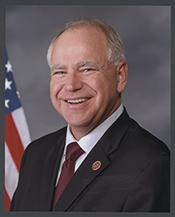
Aside from mental health and homelessness, many veterans struggle to cope with chronic and acute pain. This pain lingers long after the physical wounds of war have healed and affects the quality of life of many veterans. Thanks to Mr. Walz of Minnesota's leadership, this bill would require the VA to develop and implement a system-wide policy on pain management.
S. 2162 also improves the health care for certain groups of especially vulnerable populations within the VA. It establishes Epilepsy Centers of Excellence to care for the 89,000 veterans with epilepsy, provides comprehensive health care to children of Vietnam veterans born with spina bifida, and updates VA policies regarding HIV testing. This would not have been possible without the hard work of Mr. Perlmutter of Colorado, Mr. Ellsworth of Indiana, and Mr. Doyle of Pennsylvania.
Next, this bill would reduce the financial burden placed on our veterans. It requires the VA to reimburse veterans for the cost of emergency treatment received in non-VA facilities, prohibits the collection of copayments for all hospice care furnished by the VA, and increases the beneficiary travel mileage reimbursement rate to the current government employee rate. I want to thank Mr. Space of Ohio for his contribution on the emergency treatment provision. And I would like to thank Mr. Miller from Florida for his work on prohibiting copayments for hospice care.
Another challenge facing the VA is rural health. Today, nearly 39 percent of veterans enrolled in the VA health care system live in rural areas. Despite the expansion of community-based outpatient clinics and vet centers, many rural veterans still have problems of access. Thanks to Mr. Moran of Kansas' leadership, this bill requires the VA to conduct a 3-year pilot program in five Veterans Integrated Service Networks to allow highly rural veterans to seek covered health services from non-VA health care providers.
The VA is currently authorized to collect third-party payments from veterans' insurance companies, but due to ineffective procedures, over $1 billion go uncollected annually. This legislation would require the VA to establish no more than seven other Consolidated Patient Account Centers to enable it to improve its billing performance. And I want to recognize and thank my ranking member, Mr. Buyer of Indiana, for his contributions to this issue.
The bill also gives the VA the legal authorities it needs to move forward in major facility construction projects and leases so that it can continue to provide world-class health care to veterans in world- class facilities.
The bill also extends or makes permanent a number of important expiring authorities.
Finally, the bill would name the VA Spinal Cord Injury Center in Tampa, Florida, after our former colleague, Michael Bilirakis. It was through former Congressman Bilirakis' efforts that this center came into being. He served in the Air Force in the 1950s and served in Congress for 24 years. It is fitting that we recognize his efforts in naming the center after him.
I want to recognize and thank Mr. Miller of Florida for his leadership on this issue, and also the younger Mr. Bilirakis from Florida for carrying on his father's tradition.
Mr. Speaker, both Republican and Democratic Members of this committee made major contributions to this bill. And I want to thank the staff from both sides of the aisle for putting together such a comprehensive package. It takes care of the men and women who have given so much to defend this Nation, provides our veterans with the quality health care programs and services they need and they so richly deserve.
I hope my colleagues will support S. 2162, as amended.
Mr. Speaker, I reserve the balance of my time.
Mr. Speaker, I would like to yield 4 minutes to an incredibly active and important new Member from New York, John Hall, who chairs our Subcommittee on Disability Assistance and Memorial Affairs. I thank you for all your efforts on behalf of our veterans.
Mr. Speaker, I would recognize another great and new member of our committee, the gentleman from Illinois (Mr. Hare), also for 4 minutes.
Mr. Speaker, I would like to recognize for 5 minutes the dynamic gentlelady from Florida who has served with me and fought with me for 16 years on this committee, Ms. Brown.
Mr. Speaker, I yield such time as he may consume to the gentleman from Texas (Mr. Rodriguez), another Member who has served on our committee for almost a decade.
Madam Speaker, I ask unanimous consent that all Members may have 5 legislative days in which to revise and extend their remarks and include extraneous material on S. 2162, as amended.
Madam Speaker, I yield myself such time as I may consume.
Madam Speaker, I want to say to Congressman Buyer, the ranking member, and really all the Members on both the Republican and Democrat side of this committee, we have had some ups and downs in this year, but these two bills that we are doing today are great bills. I think we, and I say ``we'' meaning all of us, have a great deal to be proud of. We are going to touch millions of veterans with these bills, millions, and their families, and we are doing it on behalf of people that we know deserve no less.
We have traveled around the country. We have met thousands of veterans in different States. I think both of us get more and more impressed with both the newer veterans and the older veterans and what they have accomplished and how they have carried out their lives. So we are very proud to have worked together to produce these bills.
Joint Explanatory Statement For S. 2162, as Amended
Veterans' Mental Health and Other Care Improvements Act of 2008
The ``Veterans' Mental Health and Other Care Improvements Act of 2008'' reflects a compromise agreement that the Senate and House of Representatives' Committees on Veterans' Affairs reached on certain provisions of a number of bills considered by the House and Senate during the 110th Congress, including: S. 2162, to improve the treatment and services provided by the Department of Veterans Affairs to veterans with post-traumatic stress disorder and substance use disorders, and for other purposes, passed by the Senate on June 3, 2008 [hereinafter, ``Senate Bill'']; H.R. 5554, to expand and improve health care services available to veterans from the Department of Veterans Affairs for substance use disorders, and for other purposes, passed by the House on May 20, 2008 [hereinafter, ``House Bill'']; S. 1233, to provide and enhance intervention, rehabilitative treatment, and services to veterans with traumatic brain injury, and for other purposes, placed on the Senate calendar on August 29, 2007.
H.R. 1527, to conduct a pilot program to permit certain highly rural veterans enrolled in the health system of the Department of Veterans Affairs to receive covered health services through providers other than those of the Department, passed by the House on September 10, 2008; H.R. 2623, to prohibit the collection of copayments for all hospice care furnished by the Department of Veterans Affairs, passed by the House on July 30, 2007; H.R. 2818, to provide for the establishment of epilepsy centers of excellence in the Veterans Health Administration of the Department of Veterans Affairs, passed by the House on June 24, 2008; H.R. 2874, to make certain improvements in the provision of health care to veterans, and for other purposes, passed by the House on July 30, 2007; S. 2969, to enhance the capacity of the Department of Veterans Affairs to recruit and retain nurses and other critical health care professionals, and for other purposes, placed on the Senate calendar on September 18, 2008.
H.R. 3819, to reimburse veterans receiving emergency treatment in non-Department of Veterans Affairs facilities for such treatment until such veterans are transferred to Department facilities, and for other purposes, passed by the House on May 21, 2008; H.R. 4264, to name the Department of Veterans Affairs spinal cord injury center in Tampa, Florida, as the ``Michael Bilirakis Department of Veterans Affairs Spinal Cord Injury Center, passed by the House on June 26, 2008; H.R. 5729, to provide comprehensive health care to children of Vietnam veterans born with Spina Bifida, and for other purposes, passed by the House on May 20, 2008; H.R. 6445, to prohibit the Secretary of Veterans Affairs from collecting certain copayments from veterans who are catastrophically disabled, and for other purposes, passed by the House on July 30, 2008; H.R. 6832, to authorize major medical facility projects and major medical facility leases for the Department of Veterans Affairs for fiscal year 2009, to extend certain authorities of the Secretary of Veterans Affairs, and for other purposes, passed by the House on September 11, 2008; S. 2969, to enhance the capacity of the Department of Veterans Affairs to recruit and retain nurses and other critical health care professionals and for other purposes, which was placed on the Senate legislative calendar on September 18, 2008.
The House and Senate Committees on Veterans' Affairs have prepared the following explanation of the compromise bill, S. 2162 (hereinafter referred to as the ``Compromise Agreement''). Differences between the provisions contained in the Compromise Agreement and the related provisions in the bills listed above are noted in this document, except for clerical corrections and conforming changes made necessary by the Compromise Agreement, and minor drafting, technical, and clarifying changes.
Title I--Substance Use Disorders and Mental Health Care
Tribute to Justin Bailey (sec. 101)
The Senate bill contained a provision (sec. 306) to specify that this title is enacted in tribute to Justin Bailey, who, after returning to the United States from service as member of the Armed Forces in Operation Iraqi Freedom, died in a domiciliary facility of the Department of Veterans Affairs while receiving care for post-traumatic stress disorder and a substance use disorder.
Section 6 of the House bill contained the identical provision.
The Compromise Agreement contains this provision.
Findings on Substance Use Disorders and Mental Health (sec. 102)
The Senate bill contained a provision (sec. 301) that would express the sense of the Congress that:
(1) More than 1,500,000 members of the Armed Forces have been deployed in Operation Iraqi Freedom and Operation Enduring Freedom. The 2005 Department of Defense Survey of Health Related Behaviors Among Active Duty Personnel reports that 23 percent of members of the Armed Forces on active duty acknowledge a significant problem with alcohol use, with similar rates of acknowledged problems with alcohol use among members of the National Guard.
(2) The effects of substance abuse are wide ranging, including significantly increased risk of suicide, exacerbation of mental and physical health disorders, breakdown of family support, and increased risk of unemployment and homelessness.
(3) While veterans suffering from mental health conditions, chronic physical illness, and poly trauma may be at increased risk for development of a substance use disorder, treatment for these veterans is complicated by the need to address adequately the physical and mental symptoms associated with these conditions through appropriate medical intervention.
(4) While the Veterans Health Administration has dramatically increased health services for veterans from 1996 through 2006, the number of veterans receiving specialized substance abuse treatment services decreased 18 percent during that time. No comparable decrease in the national rate of substance abuse has been observed during that time.
(5) While some facilities of the Veterans Health Administration provide exemplary substance use disorder treatment services, the availability of such treatment services throughout the health care system of the Veterans Health Administration is inconsistent.
(6) According to the Government Accountability Office, the Department of Veterans Affairs significantly reduced its substance use disorder treatment and rehabilitation services between 1996 and 2006, and has made little progress since in restoring these services to their pre- 1996 levels.
The House bill contained no similar provision.
The Compromise Agreement contains the Senate provision but modifies finding (6) to include the year of the Government Accountability report and cites the National Mental Health Program Monitoring System report.
Expansion of Substance Use Disorder Treatment Services Provided by the
Department of Veterans Affairs (sec. 103)
The Senate bill contained a provision (sec. 302) that would require that the Secretary of Veterans Affairs ensure the provision of services and treatment to each veteran enrolled in the health care system of the Department who is in need of services and treatments for a substance use disorder, and the bill included a specific list of services. The Senate bill would also authorize that the services and treatments may be provided to a veteran: (1) at Department of Veterans Affairs medical centers or clinics; (2) by referral to other facilities of the Department that are accessible to such veteran; or (3) by contract or fee- for-service payments with community-based organizations for the provision of such services and treatments.
The House bill contained a similar provision (sec. 2) that would require the Secretary to provide a full continuum of care for substance use disorders to veterans in need of such care and included a specific list of services, including three services not included in the Senate bill: marital and family counseling, screening for substance use disorders, and coordination with groups providing peer to peer counseling. The House bill (sec. 3) would also require the Secretary to ensure that the amounts made available for care, treatment, and services are allocated evenly throughout the system, including an annual reporting requirement.
The Compromise Agreement includes the listing of substance use disorder services included in both the Senate and House bills, and follows the Senate bill with respect to the locations of where services would be provided. The Compromise Agreement follows the House bill with respect to ensuring the equitable distribution of resources for substance abuse services but does not include the annual reporting requirement.
Care for Veterans with Mental Health and Substance Use Disorders (sec.
104)
The Senate bill contained a provision (sec. 303) that would ensure that if the Secretary of Veterans Affairs provides a veteran inpatient or outpatient care for a substance use disorder and a comorbid mental health disorder, that the treatment for such disorders be provided concurrently: (1) through a service provided by a clinician or health professional who has training and expertise in treatment of substance use disorders and mental health disorders; (2) by separate substance use disorder and mental health disorder treatment services when there is appropriate coordination, collaboration, and care management between such treatment services; or (3) by a team of clinicians with appropriate expertise.
The House bill contained no similar provision.
The Compromise Agreement contains the Senate provision.
Pilot Program for Internet-based Substance Use Disorder Treatment for
Veterans of Operation Iraqi Freedom and Operation Enduring Freedom
(sec. 105)
The House bill contained a provision (sec. 4) that would express the sense of the Congress that:
(1) Stigma associated with seeking treatment for mental health disorders has been demonstrated to prevent some veterans from seeking such treatment at a medical facility operated by the Department of Defense or the Department of Veterans Affairs.
(2) There is a significant incidence among veterans of post- deployment mental health problems, especially among members of a reserve component who return as veterans to civilian life.
(3) Computer-based self-guided training has been demonstrated to be an effective strategy for supplementing the care of psychological conditions.
(4) Younger veterans, especially those who served in Operation Enduring Freedom or Operation Iraqi Freedom, are comfortable with and proficient at computer-based technology.
(5) Veterans living in rural areas find access to treatment for substance use disorder limited.
(6) Self-assessment and treatment options for substance use disorders through an Internet website may reduce stigma and provides additional access for individuals seeking care and treatment for such disorders.
This provision would also require the Secretary of Veterans Affairs to carry out a pilot program to test the feasibility and advisability of providing veterans who seek treatment for substance use disorders access to a computer-based self-assessment, education, and specified treatment program through a secure Internet website operated by the Secretary.
The Senate bill contained no similar provision.
The Compromise Agreement contains the House provision.
Report on Residential Mental Health Care Facilities of the Veterans
Health Administration (sec. 106)
The Senate bill contained a provision (sec. 305) that would require the Secretary of Veterans Affairs, acting through the Office of Mental Health Services of the Department of Veterans Affairs, not later than six months after the date of the enactment of this Act, conduct a review of all residential mental health care facilities, including domiciliary facilities, of the Veterans Health Administration; and not later than two years after the date of the completion of the first review conduct a follow-up review of such facilities to evaluate any improvements made or problems remaining since the first review was completed. Not later than 90 days after the completion of the first review, the Secretary would be required to submit to the Committee on Veterans' Affairs of the Senate and the Committee on Veterans' Affairs of the House of Representatives a report on such review.
The House bill (sec. 5) contained a similar provision, except there was no provision for a two-year follow-up review, and the six-month review would be carried out by the Office of the Medical Inspector.
The Compromise Agreement includes the Senate provision which specifies the two-year follow-up review, but would have the Inspector General carry out the reviews.
Pilot Program on Peer Outreach and Support for Veterans and Use of
Community Mental Health Centers and Indian Health Service
Facilities (sec. 107)
The Senate bill contained a provision (sec. 401) that would require the Secretary of Veterans Affairs to carry out a pilot program to assess the feasibility and advisability of providing the following to veterans of OIF/OEF in at least two Veterans Integrated Service Networks: 1) peer outreach services; 2) peer support services provided by licensed providers of peer support services or veterans who have personal experience with mental illness; 3) readjustment counseling services; and other mental health services. Services would be provided through community mental health centers or other entities under contracts or other agreements and through the Indian Health Service pursuant to a memorandum of understanding entered into by the Secretary of Veterans Affairs and the Secretary of Health and Human Services.
Section 6 of H.R. 2874 required the Secretary to carry out a program to provide peer outreach services, peer support services, and readjustment and mental health services to covered veterans. This provision was not a pilot program and did not provide for the means to collaborate with the Indian Health Service.
The Compromise Agreement contains the Senate provision with an amendment that would authorize at least three pilot sites.
Title II--Mental Health Research
Research Program on Comorbid Post-traumatic Stress Disorder and
Substance Use Disorders (sec. 201)
The Senate bill contained a provision (sec. 501) that would require the Secretary of Veterans Affairs to carry out a program of research into comorbid post-traumatic stress disorder (PTSD) and substance use disorder. This research program shall be carried out by the National Center for Posttraumatic Stress Disorder. In carrying out the program, the Center shall: 1) develop protocols and goals with respect to research under the program; and 2) coordinate research, data collection, and data dissemination under the program.
The House bill contained no similar provision.
The Compromise Agreement contains the Senate provision.
Extension of Authorization for Special Committee on Post-Traumatic
Stress Disorder (sec. 202)
The Senate bill contained a provision (sec. 502) that would modify section 110(e)(2) of the Veterans' Health Care Act of 1984, P.L. 98- 528, to extend the reporting requirement for the Special Committee on Post-Traumatic Stress Disorder. Currently, the reporting requirement is set to expire in 2008; this provision would extend it through 2012.
Section 209 of H.R. 6832 contained an identical provision.
The Compromise Agreement contains the provision.
Title III--Assistance for Families of Veterans
Clarification of Authority of Secretary of Veterans Affairs to Provide
Mental Health Services to Families of Veterans (sec. 301)
The Senate bill contained a provision (sec. 601) that would amend section 1701(5)(B) of title 38, United States Code, to clarify the authority of the Secretary of Veterans Affairs to provide mental health services to families of veterans.
Section 3 of H.R. 6445 contained a provision that would modify section 1782(b) of title 38 so as to eliminate the requirement that family support services be initiated during the veteran's hospitalization and deemed essential to permit the veteran's discharge.
The Compromise Agreement follows the House bill with respect to the provision eliminating the need for services to be initiated during a veteran's hospitalization and essential to the veteran's discharge, but follows the Senate bill with respect to the provision to clarify the authority of the Secretary of Veterans Affairs to provide mental health services to families.
Pilot Program on Provision of Readjustment and Transition Assistance to
Veterans and Their Families in Cooperation with Vet Centers (sec.
302)
The Senate bill contained a provision (sec. 402) that would establish a pilot program to assess the feasibility and advisability of providing additional readjustment and transition assistance to veterans and their families in cooperation with Readjustment Counseling Centers. The pilot would be similar to family assistance programs previously conducted at ten Army facilities around the country.
The House bill contained no similar provision.
The Compromise Agreement contains the Senate provision with an amendment to begin the pilot program no later than 180 days after the enactment of the Act.
Title IV--Health Care Matters
Veterans Beneficiary Travel Program (sec. 401)
The Senate bill contained a provision (sec. 101) that would direct the Secretary to reimburse qualifying veterans at the rate authorized for Government employees under section 5707(b) of title 5. The Senate provision would also strike a provision that allows the Secretary to raise or lower the deductible for reimbursements in proportion to a change in the mileage rate. Finally, the Senate provision would reinstate the amount of the deductible for the beneficiary travel reimbursement program to the amount in effect prior to the Secretary's February 1, 2008, decision on beneficiary travel.
The House bill contained no similar provision.
The Compromise Agreement contains the Senate provision.
Mandatory Reimbursement of Veterans Receiving Emergency Treatment in
Non-Department of Veterans Affairs Facilities until Transfer to
Department Facilities (sec. 402)
The Senate bill contained a provision that would amend section 1725 of title 38 in subsections (a)(1) and (f)(1). Subsection (a)(1) would be amended by replacing `may reimburse' with `shall reimburse.' This change would make reimbursement for emergency care received at non-VA facilities mandatory for eligible veterans, rather than at the discretion of the Secretary. Subsection (f)(1) would be amended to provide greater specificity regarding the termination of VA's obligation to reimburse. The Senate bill would also amend section 1728 of title 38 so as to make that section, which relates to reimbursement for the emergency treatment of service-connected conditions, consistent with section 1725, as amended. Thus, reimbursement would also be made mandatory under Section 1728. The existing criteria, defining veteran eligibility for reimbursement for emergency care services, would be carried over in the revised statutory language. In addition, the Senate bill would further amend section 1728 so as to strike the phrase `care and services' in current subsection (b) of section 1728, and replace that phrase with `emergency treatment.' This proposed change is designed to promote consistency between sections 1725 and 1728.
H.R. 3819 contained similar provisions.
The Compromise Agreement contains these provisions.
Pilot Program of Enhanced Contract Care Authority for Health Care Needs
of Veterans in Highly Rural Areas (sec. 403)
H.R. 1527 (sec. 2) would require the Secretary to conduct a pilot program which permits highly rural veterans who are enrolled in the system of patient enrollment established under section 1705(a) of title 38, and who reside in Veterans Integrated Service Networks (VISNs) 1, 15, 18, and 19, to elect to receive covered health services for which such veterans are eligible, through a non-Department health care provider.
The Senate bill contained no similar provision.
The Compromise Agreement follows the House bill, with an amendment that specifies that the pilot program will be carried out in 5 VISNs, four of which shall include at least three highly rural counties (as determined by the Secretary based upon the most recent census data), and one of which shall include one highly rural county. All VISNs selected must include an area within the borders of at least four states, and not be already participating in Project HERO. Eligibility for participation in the pilot program would be limited to those veterans already enrolled in the VA health care system at the time of commencement of the program, as well as OIF/OEF veterans who are eligible for VA health care under section 1710(e)(3)(C) of title 38.
Epilepsy Centers of Excellence (sec. 404)
The Senate bill contained a provision (sec. 103) that would require that the Secretary, upon the recommendation of the Under Secretary for Health, designate not less than six Department health care facilities as locations for epilepsy centers of excellence.
H.R. 2818 (sec. 2) would require the Secretary to designate an epilepsy center of excellence at each of the 5 centers designated under section 7327 of title 38 (Centers for research, education, and clinical activities on complex multi-trauma associated with combat injuries).
The Compromise Agreement specifies that the Secretary shall designate at least four but not more than six Department health care facilities as locations for epilepsy centers of excellence. Not less than two of these centers shall be collocated with centers designated under 7327 of title 38.
Establishment of Qualifications for Peer Specialist Appointees (sec.
405)
The Senate bill contained a provision (sec. 104) that would amend section 7402(b) of title 38 so as to define qualifications for peer specialist positions employed by the Veterans Health Administration. Specifically, in order to be eligible to be appointed to a peer specialist position, a person must be a veteran who has recovered or is recovering from a mental health condition; and be certified by a not- for-profit entity engaged in peer specialist training by having met such criteria as the Secretary shall establish for a peer specialist position; or a State by having satisfied relevant State requirements for a peer specialist position. The Senate bill would also amend section 7402 of title 38 so as to add a new subsection providing authority for the Secretary to enter into contracts with not-for-profit entities to provide peer specialist training to veterans and certification for veterans.
The House bill contained no similar provision.
The Compromise Agreement contains the Senate provision.
Establishment of Consolidated Patient Accounting Centers (sec. 406)
Section 5 of H.R. 6445 contained a provision that would amend chapter 17 of title 38 to insert a new section mandating that not later than 5 years after the date of enactment of this bill, the Secretary of Veterans Affairs shall establish not more than seven consolidated patient accounting centers for conducting industry-modeled regionalized billing and collection activities of the Department.
The Senate bill contained no comparable provision.
The Compromise Agreement contains the House provision.
Repeal of Limitation on Authority to Conduct Widespread HIV Testing
Program (sec. 407)Section 217 of S. 2969 would repeal section 124 of Public Law 100-322, which permits VA to test a patient for HIV infection only if the veteran receives pre-test counseling and provides written informed consent for such testing. Eliminating this section from the law would bring VA's statutory HIV testing requirements in line with current guidelines issued by the Centers for Disease Control and Prevention.
Section 6 of H.R. 6445 contained an identical provision.
The Compromise Agreement contains the provision.
Provision of Comprehensive Health Care by Secretary of Veterans Affairs
to Children of Vietnam Veterans Born with Spina Bifida (sec. 408)
H.R. 5729 would amend section 1803(a) of title 38 so as to expand the existing VA Spina Bifida Health Care Program and provide a comprehensive health benefit to beneficiaries.
The Senate bill contained no comparable provision.
The Compromise Agreement contains the House provision.
Exemption from Copayment Requirement for Veterans Receiving Hospice
Care (sec. 409)
Section 309 of S. 1233 would amend section 1710 of title 38 so as to exempt hospice care provided in all settings from the copayment requirement for VA long-term care. Under current law, only hospice care provided in a VA nursing home is exempted from copayment.
H.R. 2623 contained a similar provision.
The Compromise Agreement contains the provision.
Title V--Pain Care
Comprehensive Policy on Pain Management (sec. 501)
The Senate bill contained a provision (sec. 201) that would require the Secretary of Veterans Affairs to develop and implement a comprehensive policy on the management of pain experienced by veterans enrolled for VA health care services no later than October 1, 2008.
The policy would be required to cover the following: the Department- wide management of acute and chronic pain experienced by veterans; the standard of care for pain management to be used throughout the Department; the consistent application of pain assessments to be used throughout the Department; the assurance of prompt and appropriate pain care treatment and management by the Department, system-wide, when medically necessary; Department programs of research related to acute and chronic pain suffered by veterans, including pain attributable to central and peripheral nervous system damage characteristic of injuries incurred in modern warfare; Department programs of pain care education and training for health care personnel of the Department; and Department programs of patient education for veterans suffering from acute or chronic pain and their families.
Section 4 of H.R. 6445 contained identical provisions.
The Compromise Agreement contains the provisions, but would require the Secretary of Veterans Affairs to develop and implement a comprehensive policy on pain management no later than October 1, 2009.
Title VI--Homeless Veterans Matters
Increase in Authorization of Appropriations for the Homeless Grant and
Per Diem Program (sec. 601)
Section 506 of S. 2969 would amend section 2013 of title 38, to increase the authorization of appropriations for the Homeless Grant and Per Diem Program from $130 million to $200 million.
The House bill contained no comparable provision.
The Compromise Agreement contains the Senate provision but changes the authorization amount to $150 million.
Expansion and Extension of Authority for Program of Referral and
Counseling Services for At-risk Veterans Transitioning from Certain
Institutions (sec. 602)
Section 403 of S. 1233 would amend section 2023 of title 38 so as to extend and expand the authority for a program to aid incarcerated veterans in their transition back to civilian life. The program would be extended until September 30, 2011, and would be expanded from six to twelve sites.
Section 7 of H.R. 2874 contained identical provisions.
The Compromise Agreement contains the provision, but would extend the program until September 30, 2012.
Permanent Authority for Domiciliary Services for Homeless Veterans and
Enhancement of Capacity of Domiciliary Care Programs for Female
Veterans (sec. 603)
Section 405 of S. 1233 would amend section 2043 of title 38 to make permanent an existing authority to expand domiciliary care for homeless women veterans.
Section 8 of H.R. 2874 contained identical provisions.
The Compromise Agreement contains the provisions.
Financial Assistance for Supportive Services for Very-low Income
Veteran Families in Permanent Housing (sec. 604)
Section 406 of S. 1233 would amend title 38 so as to add a new section 2044, relating to supportive services for very low-income veterans and their families occupying permanent housing. Proposed new section 2044 would direct VA to provide grants to eligible entities to provide and coordinate the provision of a comprehensive range of supportive services for very low-income veteran families occupying permanent housing, including those transitioning from homelessness to such housing.
Those families may be occupying permanent housing, moving into permanent housing within 90 days, or moving from one permanent residence to another to better suit their needs. Entities eligible to receive grants under this provision are public or private non-profit organizations which have demonstrated the capacity and experience necessary to deliver the services outlined in the proposed new section. Under the provisions of the proposed new section 2044, grants would be provided for a wide range of services, so as to give families a broad set of tools to maintain a permanent residence. To this end, providers could receive grants to furnish outreach, case management, assistance in obtaining and coordinating VA benefits, and assistance in obtaining and coordinating other public benefits provided by federal, state, or local agencies or organizations.
Section 9 of H.R. 2874 contained similar provisions but provided a more expansive list of supportive services, and authorized for appropriations a different funding level.
The Compromise Agreement contains the Senate provision.
Title VII--Authorization of Medical Facility Projects and Major Medical
Facility Leases
Authorization for Fiscal Year 2009 Major Medical Facility Projects
(sec. 701)
Section 701 of S. 2969 would authorize:
$54,000,000 to construct a facility to replace a seismically unsafe acute psychiatric inpatient building in Palo Alto, California.
$131,800,000 for an outpatient clinic in Lee County, Florida.
$225,900,000 to make seismic corrections at a VA Medical Center in San Juan, Puerto Rico.
$66,000,000 to construct a state-of-the-art polytrauma health care and rehabilitation center in San Antonio, Texas.
Section 101 of H.R. 6832 contained the same provisions, except for Lee County, Florida. Instead, H.R. 6832 authorizes the Lee County project under a different section.
The Compromise Agreement contains the House provision.
Modification of Authorization Amounts for Certain Major Medical
Facility Construction Projects Previously Authorized (sec. 702)
Section 702 of S. 2969 would modify previous authorizations by providing $625,000,000 for restoration, new construction, or replacement of the medical care facility for the VA Medical Center at New Orleans, Louisiana.
Section 102 of H.R. 6832 contained the same provisions and the following additional provisions:
$769,200,000 for the replacement of the VA Medical Center at Denver, Colorado.
$131,800,000 for an outpatient clinic in Lee County, Florida.
$136,700,000 to correct patient privacy deficiencies at the VA Medical Center in Gainesville, Florida.
$600,400,000 to build a new VA Medical Center in Las Vegas, Nevada.
$656,800,000 to build a new medical center in Orlando, Florida.
$295,600,000 to consolidate the campuses at the University Drive and H. John Heinz III Divisions in Pittsburgh, Pennsylvania.
The Compromise Agreement contains the House provision with an amendment to provide $568,000,000 for the replacement of the VA Medical Center at Denver, Colorado.
Authorization of Fiscal Year 2009 Major Medical Facility Leases (sec.
703)
Section 703 of S. 2969 would authorize fiscal year 2009 major medical facility leases as follows:
$4,326,000 for an outpatient clinic in Brandon, Florida.
$10,300,000 for a community-based outpatient clinic in Colorado Springs, Colorado.
$5,826,000 for an outpatient clinic in Eugene, Oregon.
$5,891,000 to expand an outpatient clinic in Green Bay, Wisconsin.
$3,731,000 for an outpatient clinic in Greenville, South Carolina.
$2,212,000 for a community-based outpatient clinic in Mansfield, Ohio.
$6,276,000 for a satellite outpatient clinic in Mayaguez, Puerto Rico.
$5,106,000 for a community-based outpatient clinic in Southeast Phoenix, Mesa, Arizona.
$8,636,000 for interim research space in Palo Alto, California.
$3,168,000 to expand a community-based outpatient clinic in Savannah, Georgia.
$2,295,000 for a community-based outpatient clinic in Northwest Phoenix, Sun City, Arizona.
$8,652,000 for a primary care annex in Tampa, Florida.
Section 102 of H.R. 6832 included the same provisions, except that it provided $3,995,000 for Colorado Springs.
The Compromise Agreement includes the Senate provisions.
Authorization of Appropriations (sec. 704)
Section 704 of S. 2969 would authorize for appropriations:
$477,700,000 for the aforementioned list of major medical facility projects authorized for fiscal year 2009.
$625,000,000 for the aforementioned list of major medical facility construction projects previously authorized.
$66,419,000 for the aforementioned list of major facility leases authorized for fiscal year 2009.
S. 2969 also identified funding sources which may be used to carry out major medical facility projects authorized for fiscal year 2009 and for those projects previously authorized.
Section 105 of H.R. 6832 would authorize for appropriations:
$345,900,000 for the aforementioned list of major medical facility projects authorized for fiscal year 2009.
$1,694,295,000 for the aforementioned list of major medical facility construction projects previously authorized.
$54,475,000 for the aforementioned list of major facility leases authorized for fiscal year 2009.
The Compromise Agreement includes the House provision, with amendments to provide $1,493,495,000 for major facility construction projects previously authorized and $70,019,000 for major facility leases authorized for fiscal year 2009. The Agreement also includes the provision in S. 2969 on allowable funding sources to carry out major medical facility projects.
Increase in Threshold for Major Medical Facility Leases Requiring
Congressional Approval (sec. 705)
Section 705 of S. 2969 would increase the threshold for major medical facility leases requiring Congressional approval from $600,000 to $1,000,000.
H.R. 6832 contained no comparable provision.
The Compromise Agreement contains the Senate provision.
Conveyance of Certain Non-Federal Land by City of Aurora, Colorado, to
Secretary of Veterans Affairs for Construction of Veterans Medical
Facility (sec. 706)
Section 706 of S. 2969 would allow the city of Aurora to donate non- Federal land for use by the Secretary of Veterans Affairs no later than 60 days after the enactment of this section.
H.R. 6832 contained no comparable provision.
The Compromise Agreement contains the Senate provision.
Report on facilities administration (sec. 707)
Section 106 of H.R. 6832 would require the Secretary of Veterans Affairs to submit a report on facilities administration no later than 60 days after the date of the enactment of this section.
S. 2969 contained no comparable provision
The Compromise Agreement includes the House provision.
Annual report on outpatient clinics (sec. 708)
Section 107 of H.R. 6832 would require an annual report on outpatient clinics no later than the date on which the budget for the next fiscal year is submitted to the Congress under section 1105 of title 31.
S. 2969 contained no comparable provision.
The Compromise Agreement includes the House provision.
Name of Department of Veterans Affairs Spinal Cord Injury Center,
Tampa, Florida (sec. 709)
H.R. 4264 would name the VA spinal cord injury center in Tampa Florida, ``Michael Bilirakis Department of Veterans Affairs Spinal Cord Injury Center.''
S. 2969 contained no comparable provision.
The Compromise Agreement includes the House provision.
Title VIII--Extension of Certain Authorities
Repeal of Sunset on Inclusion of Non-institutional Extended Care
Services in Definition of Medical Services (sec. 801)
Section 201 of S. 2969 would amend section 1701 of title 38 to repeal the December 31, 2008, sunset on the inclusion of non-institutional extended care services in the definition of medical services.
Sec. 201 of H.R. 6832 contained an identical provision.
The Compromise Agreement contains the provision.
Extension of Recovery Audit Authority (sec. 802)
Section 202 of S. 2969 would amend section 1703(d)(4) of title 38 to extend the recovery audit authority for fee-basis contracts and other medical services contracts in non-VA facilities from September 30, 2008, to September 30, 2013.
Sec. 202 of H.R. 6832 contained an identical provision.
The Compromise Agreement contains the provision.
Permanent Authority for Provision of Hospital Care, Medical Services,
and Nursing Home Care to Veterans who Participated in Certain
Chemical and Biological Testing Conducted by the Department of
Defense (sec. 803)
Section 203 of S. 2969 would amend subsection (e)(3) of section 1710 of title 38 to provide permanent authority for the provision of hospital care, medical services, and nursing home care to veterans who participated in certain chemical and biological testing conducted by the Department of Defense.
Section 203 of H.R. 6832 contained an identical provision.
The Compromise Agreement contains the provision.
Extension of Expiring Collections Authorities (sec. 804)
S. 2969 contained no comparable provision.
Section 204 of H.R. 6832 would extend the expiring collections authorities for the following: a) amend section 1710(f)(2)(B) of title 38 to extend health care copayments from September 30, 2008, under current law, to September 30, 2010; and b) amend section 1729 (a)(2)(E) of title 38 to extend the medical care cost recovery from October 1, 2008, to October 1, 2010.
The Compromise Agreement contains the House provision.
Extension of Nursing Home Care (sec. 805)
Section 202 of S. 2969 would amend 1710A(d) of title 38 to provide nursing home care to veterans with service-connected disability, which expires on December 31, 2008, to December 31, 2013.
Section 205 of H.R. 6832 contained an identical provision.
The Compromise Agreement contains the provision.
Permanent Authority to Establish Research Corporations (sec. 806)
Section 607 of S. 2969 would strike section 7368 of title 38 to provide permanent authority to establish research corporations
Section 207 of H.R. 6832 contained an identical provision.
The Compromise Agreement contains the provision.
Extension of Requirement to Submit Annual Report on the Committee on
Care of Severely Chronically Mentally Ill Veterans (sec. 807)
Section 210 of H.R. 6832 would amend section 7321(d)(2) of title 38 to extend the requirement to submit an annual report on the committee on care of severely chronically mentally ill veterans through 2012.
S. 2969 contained no comparable provision.
The Compromise Agreement contains the House provision.
Permanent Requirement for Biannual Report on Women's Advisory Committee
(sec. 808)
Section 211 of H.R. 6832 would amend section 542(c)(1) of title 38 to provide for a permanent requirement for a biannual report by the women's advisory committee on the needs of women veterans including compensation, health care, rehabilitation, outreach, and other benefits and programs administered by the VA.
S. 2969 contained no comparable provision.
The Compromise Agreement contains the House provision.
Extension of Pilot Program on Improvement of Caregiver Assistance
Services (sec. 809)
Section 222 of S. 2969 would extend the pilot program on improvement of caregiver assistance services for a three-year period through fiscal year 2009.
H.R. 6832 contained no comparable provision.
The Compromise Agreement includes the Senate provision.
Title IX--Other Matters
Technical Amendments (sec. 901)
Section 303 of H.R. 6832 would provide for technical amendments for the following sections of title 38: 1712A; 2065(b)(3)(C); 4110(c)(1); 7458(b)(2); 8117(a)(1); 1708(d); 7314(f); 7320(j)(2); 7325(i)(2); and 7328(i)(2). It also would provide for technical amendments to the table of sections at the beginning of chapter 36 and chapter 51, as well as amend section 807(e) of the Veterans Benefits, Health Care, and Information Technology Act of 2006 (Public Law 109-461) to replace the phrase `Medical Care' with `Medical Facilities.'
S. 2969 contained no comparable provision.
The Compromise Agreement contains the House provision.
Madam Speaker, I yield back the balance of my time.