I don't object, Mr. President, but I would also like to be included in that particular order just given. Mr. President, we do not have a UC on the majority side, but we do on the minority side. So…
I don't object, Mr. President, but I would also like to be included in that particular order just given.
Mr. President, we do not have a UC on the majority side, but we do on the minority side. So our next speakers will be in the order of 10 minutes for Senator Gregg, 10 minutes for Senator Coburn, and then I will wind up the final 10 minutes.
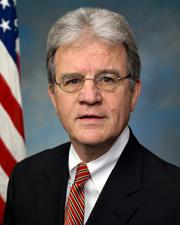
Mr. President, seeing no one on the other side of the aisle, I yield to the junior Senator from Oklahoma, Mr. Coburn, for 10 minutes.
Mr. President, let me conclude on our side and then, hopefully, we are going to go to Senator Murray after that and then to a voice vote. Where we are right now is, last Friday I was notified by the Department of Transportation that the highway trust fund would run out of money sometime in the next 2 weeks. As recently as this summer, DOT said it was going to be all right for another year. We understand. A lot of people don't understand this.
The Federal gas tax is not a percentage, it is a centage. That means for every increase that we have in the price of gas, the revenues go down. Consequently, they have gone down in such a way that could not have been anticipated at the time. That, combined with the busy construction season, caused the trust fund's balance to go from $4.2 billion at the end of July to less than $1.4 billion in the beginning of September.
In my State of Oklahoma, our director is Gary Ridley, who I believe is the best director in the United States of America. He was forced to take dramatic action--and I think prudent action--when he said we would have to cut by $80 million the projects in August that were postponed.
Here is what we are up against. These are projects that have already been bid, people have been hired, the shovels are in their hands ready to do something, and all of a sudden they have to stop doing it which creates all kinds of problems.
Furthermore, at the point the trust fund officially runs out of money--which will be within the next 8 days unless we do what we are doing today, which I am confident we will--work on countless projects currently under construction will be halted. In other words, projects already under construction will be stopped.
The uncertainty over the Federal Government's ability to make good on financial promises made in law is forcing States to substantially disrupt their highway programs. It is a lot more serious than just stopping programs because if you stop programs, you are breaching contracts. You will have lawsuits and penalties that will come in and end up costing a lot more money. This is why we say what we are facing is, indeed, a crisis.
Once a project is canceled or delayed and jobs are lost, it is not as simple to restart the project, as there will be penalties to the States and, in many cases, a new contracting process.
Despite the arguments to the contrary, in my opinion, H.R. 6532 is not a raid on the general fund. In fact, the opposite is true. Let me go over this point to be sure we all understand.
I do not find disagreement with anything my three Republican colleagues said here. They are talking about a lot of things that had very little to do with this bill. I certainly agree with my junior Senator in his discussion about the United Nations, about the Social Security trust fund problems, and spending in general. What happened here--and I was mistaken not too long ago. I said it was the 1998 Balanced Budget Act. It was not that. It was actually in TEA-21. Nonetheless, back in 1998, they took $8 billion out of the trust fund and put it into the general fund. That is critical, we understand, because this is a moral issue. Probably the most popular tax in America today is the tax we have on our highways because people know when they buy a gallon of gas, that money is going to go to repairing highways, bridges and overpasses and make them safer for everyone in America. That is fine, but when they find out we have raided that trust fund and have taken $8 billion out and put it into the general fund, that is morally wrong.
I argued since that time--I can remember being on the floor 10 years ago, in 1998, saying this is wrong, we shouldn't be doing it. I have been trying to rectify that problem since 1998.
We are in a position where we can look at it this way: that we are rectifying something that should not have happened 10 years ago. We are giving back the $8 billion to the trust fund. That is not fiscally irresponsible. I think it is the right thing to do.
While I agree with my colleagues the highway program has grown to include things that are not in the Federal interest and doing nothing to save lives or reduce congestion or relieve the problems of transportation, which is a crisis in America, these issues are more appropriately dealt with in the national highway reauthorization bill for 2009.
I plan to play a very important, significant role. I will continue to be one of the big four, as Senator Boxer referred to it, during that time. I have felt for a long time--and I agree with my junior Senator-- that there are a lot of items that should not be in a Transportation reauthorization bill. Over the years, more and more projects have crept in.
It is interesting that Senator Boxer, who is considered one of the most liberal Members of this body, and myself, who has been ranked recently as the most conservative Member of this body, agree in this area. While I am conservative, I have said I am a big spender in two areas. One is national defense and the other is infrastructure. That is what Government is supposed to be doing.
Talk to anyone, and they will tell you it is a crisis out there with our bridges. Oklahoma is dead last in the condition of our bridges. They don't realize it, but we are No. 3 from the top in terms of number of bridges, only exceeded by Texas and California. Yet we are a relatively small State. So we have this problem. We have to deal with it, and Government has to do it.
When the Federal highway system was chartered back in 1953 during the Eisenhower administration, I believe, we have been doing highways and funding them the same way since that time. Up until about 7 or 8 years ago, we always enjoyed a surplus in the highway trust fund. That is why people
are always targeting it, saying there is a surplus there, let's throw in the bike trails, let's throw in all these other projects about which Senator Coburn was talking. I agree with him they should not have been there.
One of the ways we are going to meet this crisis--and I am going to try to do it--is to make sure everything we do is directly related to safety on the highways and safety in transportation. Intermodal, sure, we have to consider we have channels, we have barge traffic, we have trains, we have all these things that are important. But we do have a serious problem, and anyone who doesn't think we have a serious problem in transportation in America has not been out driving around.
I don't argue with those who feel this process is not right. I don't like this process. I was hoping we would be all right when we passed the 2005 Transportation reauthorization bill. I was elated. I knew we were going to be in good shape on that bill. All these things happen, but when they happen, we have to correct it. You can't say this is the wrong way to do it. I have to do it and whatever way is right. That is my opinion. Maybe I am in the minority, but when we are defending America and working on infrastructure, Government has to perform.
I would only say I do not disagree with my colleagues who do not like the way this happened. I don't like the way it happened either. I wish it did not happen that way. I can tell you we are going to have to do something. I don't agree this is a bailout. I don't call it a bailout. I think it is one of the two prime responsibilities of Government, and we are going to have to do it. What we are doing now is not enough.
Let me speak to my colleagues who have complaints about what is in a highway reauthorization bill. When the 2009 reauthorization bill takes over from the 2005 bill, I will expend as much energy as I can to keep on the track of safety and moving America and not all these other things special interest people want. I think those things are fine, but they should stand on their own two feet. I believe we have the opportunity now to get this done.
While I don't like the way it happened, I can tell you it had to happen. We cannot stop construction in America at a time that is already a crisis. In the absence of passing this bill today, that is exactly what will happen.
I encourage everyone to vote for it. I hope we are going to be able to do it on a voice vote. I understand other speakers wish to be heard. I will go ahead and set an example and yield back the remainder of our time on this side, hoping we can get to the vote.