National Energy Security Intelligence Act of 2008
Legislative Activity
Stay on top of the latest movement without scrolling through every action
Received in the Senate and Read twice and referred to the Select Committee on Intelligence.
July 24, 2008
View full timeline
Introduced in House
July 17, 2008
Referred to the House Committee on Intelligence (Permanent Select).
July 17, 2008
Mr. Ruppersberger moved to suspend the rules and pass the bill.
July 22, 2008 • 7:21 PM
Considered under suspension of the rules. (consideration: CR H6796-6801)
July 22, 2008 • 7:21 PM
DEBATE - The House proceeded with forty minutes of debate on H.R. 6545.
July 22, 2008 • 7:21 PM
At the conclusion of debate, the Yeas and Nays were demanded and ordered. Pursuant to the provisions of clause 8, rule XX, the Chair announced that further proceedings on the motion would be postponed.
July 22, 2008 • 7:58 PM
Considered as unfinished business. (consideration: CR H7011-7012)
July 23, 2008 • 5:02 PM
Passed/agreed to in House: On motion to suspend the rules and pass the bill Agreed to by the Yeas and Nays: (2/3 required): 414 - 0, 2 Present (Roll no. 520).(text: CR 7/22/2008 H6796)
July 23, 2008 • 5:08 PM
On motion to suspend the rules and pass the bill Agreed to by the Yeas and Nays: (2/3 required): 414 - 0, 2 Present (Roll no. 520). (text: CR 7/22/2008 H6796)
July 23, 2008 • 5:08 PM
Mr. Price (GA) moved to reconsider the vote.
July 23, 2008 • 5:08 PM
Mr. Hastings (FL) moved to table the motion to reconsider the vote
July 23, 2008 • 5:09 PM
On motion to table the motion to reconsider the vote Agreed to by recorded vote: 242 - 179 (Roll no. 521).
July 23, 2008 • 5:10 PM
Motion to reconsider the vote tabled.
July 23, 2008 • 5:11 PM
Received in the Senate and Read twice and referred to the Select Committee on Intelligence.
July 24, 2008
Voting History
2 votes recorded • Roll call available
Floor Debate
24 membersWhat members said about H.R. 6545 on the floor
 BF
BF MR
MR SB
SB CAD
CAD NP+19
NP+19
Floor Debate
24 membersWhat members said about H.R. 6545 on the floor
Mr. Speaker, pursuant to House Resolution 1363, I call up the bill (H.R. 3221) to provide needed housing reform, and for other purposes, with the Senate amendment to the House amendments to the…
Mr. Speaker, pursuant to House Resolution 1363, I call up the bill (H.R. 3221) to provide needed housing reform, and for other purposes, with the Senate amendment to the House amendments to the Senate amendment with an amendment thereto, and ask for its immediate consideration in the House.
Mr. Speaker, I offer the motion at the desk.
Mr. Speaker, I recognize myself for such time as I may consume.
Let me concur with the remarks of the gentleman from Louisiana. I don't like everything in this bill either. It is inconceivable to me that anybody would like everything in this bill, because it is the product of a very significant set of compromises. To some extent, frankly, the challenges the Congress faced and the administration faced in dealing with the housing crisis--remember, we are here in substantial part because of a terrible housing crisis that has affected the economy of the U.S. and the world. We are dealing with the consequences of bad decisions and inaction and malfeasance from years before.
Obviously it requires a joint effort. To some extent, this is a test of our ability as a self-governing people to govern. Because if everybody held off and said I am only going to support a bill with which I am in complete agreement, we would not be able effectively to respond to this crisis.
So I appreciate the President's policy statement saying I don't like everything in this bill, but I'm going to sign it and you should pass it quickly. I think that's true of all of us who have looked at this.
Now I do want to refute some of the myths. One, we heard reference to a $300 billion program. My colleague, the ranking member, sent out a Dear Colleague letter that said the part of the bill that tries to avoid mortgage foreclosure is a $300 billion program. In fact, it's a $1.7 billion program, according to CBO.
Yes, it's $300 billion, $300 billion is the total amount of mortgages that could be insured. It would cost $300 billion only if no one who had one of those mortgages ever made a payment of a penny and the houses were worth nothing. Obviously it's not a $300 billion program. That's why CBO said our version was $1.7 billion.
We also heard from some of the Republicans that it is a $5 trillion program. What they call a $5 trillion program, the stand-by authority that the President has asked us to give the Secretary of the Treasury, the Congressional Budget Office says is a $25 billion program but probably won't be spent.
So I think we need to understand conservative Republican arithmetic. It is the most inflationary arithmetic I ever heard. $1.7 billion of CBO becomes $300 billion. $25 billion from CBO becomes $5 trillion. I hope it will be very clear to people that these numbers that are being thrown around are simply inaccurate and misleading.
I also want to talk now to some of my friends on the left and others who have, I think, been misrepresenting what we are doing with regard to Fannie Mae and Freddie Mac giving stand-by authority, saying this is bailing out the corporations, that this is welfare for the rich.
Let me read the list of people, organizations, who have specifically endorsed what this bill does with regard to stand-by authority to keep Fannie Mae and Freddie Mac from collapsing:
The Consumer Federation of America, the Lawyers' Committee for Civil Rights Under Law, the Leadership Conference on Legal Rights, the League of United Latin American Citizens, the Mexican American Legal Defense Fund, the National Association of Consumer Advocates, the National Council of La Raza, the National Urban League, the National Fair Housing Alliance, the National Low Income Housing Coalition.
Mr. Speaker, apparently there has been some infiltration. Apparently the corporate welfare advocates have taken over all the liberal organizations in America. We will probably have to investigate that, because all of the organizations with which I have worked for 28 years, who are the effective advocates for low-income housing, say pass this bill, please, and please specifically help Fannie Mae and Freddie Mac.
So the amount of misinformation here is enormous.
Finally, I want to address the question of procedure. Everything in this bill, with the exception of the emergency request from the President for stand-by authority for Fannie Mae and Freddie Mac, has been fully debated in the Financial Services Committee and voted on and debated on the floor of this House.
We are repackaging a number of things. Sometimes it takes our friends in the Senate two, three and four tries to get something done, so we keep serving the ball to them. Everything in this bill, with the exception of the emergency stand-by authority, has been thoroughly debated and voted on the floor of the House, and no part of it got less than 260 votes. So we're hardly rushing through things for the first time.
July 17, 2008.
Statement on Recent Federal Action To Provide Stand-by Support to
Fannie Mae and Freddie Mac
The undersigned consumer, civil rights and fair housing
organizations commend U.S. Treasury Secretary Paulson,
Federal Reserve Board Chairman Bernanke and leaders of the
Senate Banking and House Financial Services Committees, for
acting quickly to provide for stand-by support to Fannie Mae
and Freddie Mac, the two government sponsored housing
enterprises (or GSEs). This support reaffirms the importance
of the two companies in providing liquidity and stability to
the housing market during this tumultuous period.
The U.S. economy has a deep stake in the success of Fannie
Mae and Freddie Mac as companies with an essential public
mission. As history has shown, both GSEs are vital to the
long-term health and success of our nation's housing finance
system. Furthermore, their public mission activities have
been and must continue to be instrumental in expanding
opportunities for homeownership and affordable rental housing
for consumers.
The establishment of a strong independent regulator, as
provided for by the housing measure pending before Congress,
will serve to maintain public confidence that Fannie Mae and
Freddie Mac remain safe and sound and thus able to continue
to carry-out their vital public mission. Immediate action on
GSE regulatory reform signals that Fannie Mae and Freddie Mac
functions are essential to the housing market and to
consumers.
Center for Responsible Lending
Consumer Action
Consumer Federation of America
Consumers Union
Lawyers' Committee for Civil Rights Under Law
Leadership Conference on Civil Rights
League of United Latin American Citizens (LULAC)
Mexican American Legal Defense Fund (MALDEF)
National Association of Consumer Advocates
National Association of Neighborhoods
National Community Reinvestment Coalition
National Consumer Law Center (on behalf of its low-income
clients)
National Council of La Raza
National Fair Housing Alliance
National Low Income Housing Coalition
National Urban League
Opportunity Finance Network
Mr. Speaker, I reserve the balance of my time.
Mr. Speaker, I yield myself 1 minute.
I welcome the evolution in the gentleman's thinking. A week ago he sent me a letter saying we should not do the FHA modernization, so he has apparently expanded that, and I appreciate that.
There is one other myth, though, that I forgot to refute that he trotted out, namely, that this is going to force the FHA to take bad loans. That could not be further from the truth. This bill explicitly leaves the FHA in complete control of the decision to guarantee a loan or not. Nothing in this bill coerces the FHA. The lenders, to be eligible, would have to write down the loan by a significant percentage. An independent decision is then made by the FHA as to whether or not they want to guarantee it.
I now yield 3 minutes to the gentlewoman from California, a major author of important parts of this bill.
I now recognize the Chair of the Financial Institutions Subcommittee, the gentleman from Pennsylvania, for 1\1/2\ minutes.
Mr. Speaker, I yield myself 45 seconds to say that the gentleman from Alabama suggested that I was misrepresenting his letter. Here is the last paragraph: There is need for expedited legislation, and that action is a basic GSE reform bill that can be drafted, and taken to the floor with minimal preparation, since we have had hearings, not FHA modernization and not a tap standby authority. That's what he asked for a week ago, only GSE reform and not anything else.
Secondly, the minority leader has understated the administration's position. I'm sure that he wants to be accurate. They are not simply saying the President would sign the bill, the statement of administration policy urges the House to pass it expeditiously. So they are not simply going to sign it, they want us to pass it expeditiously. I know the minority leader wouldn't want to understate the position of the administration.
I now yield 2 minutes to the gentleman from Georgia (Mr. Marshall).
Would the gentleman yield?
The gentleman from Georgia has been a diligent advocate for a sensible public policy, and I admire both his diligence and his grasp of the issue. He is correct. Nothing in this title changes existing Federal law with respect to the authority of the Office of Thrift Supervision and the Office of the Comptroller of the Currency's preemptive authority, and their right to regulate and oversee a depository institution's products and services marketing and distribution system, and they do obviously have definitional authority under this legislation.
Mr. Speaker, I yield 1 minute to a very diligent member of the committee, the gentleman from New Hampshire (Mr. Hodes).
Mr. Speaker, another one of the most active members of our committee, the gentleman from Texas (Mr. Al Green) is recognized for 1 minute.
Mr. Speaker, I yield to the gentleman from California (Mr. Baca), and there is language in the bill dealing with in-person counseling of which he is the main author, and I yield to him now for a unanimous consent request.
(Mr. BACA asked and was given permission to revise and extend his remarks.)
Mr. Speaker, I yield 1 minute to the majority leader.
Mr. Speaker, I yield for the purpose of making a unanimous consent request to the gentleman from Connecticut (Mr. Shays).
(Mr. SHAYS asked and was given permission to revise and extend his remarks.)
Mr. Speaker, I yield 1 minute to the gentleman from Texas (Mr. Hinojosa), a very active member of the committee.
(Mr. HINOJOSA asked and was given permission to revise and extend his remarks.)
Mr. Speaker, I am glad now to yield to my neighbor, the gentleman from Rhode Island (Mr. Langevin), 1 minute.
(Mr. LANGEVIN asked and was given permission to revise and extend his remarks.)
That's very generous of my friend. If he wishes to give another minute, I certainly would want to facilitate that.
I believe you can get unanimous consent, but if the gentleman's time has expired it would then be within the prerogative of the gentleman from Alabama to yield him another minute.
Mr. Speaker, I yield 1 minute to my colleague from Massachusetts (Mr. Lynch), a valued member of our committee.
I now yield to an alumnus of our committee, the gentleman from New Jersey (Mr. Sires), 1 minute.
I yield 1 minute to a member of the Ways and Means Committee, the gentlewoman from Nevada (Ms. Berkley).
I yield 1 minute to another member of the committee, the gentleman from Indiana (Mr. Carson).
I yield 1 minute to a very active member of the committee, the gentleman from Florida, Mr. Klein.
Mr. Speaker, yet another very active and important member of our committee, the gentleman from New York (Mr. Meeks). I yield him 1 minute.
I now yield 1\1/2\ minutes to the Chair of the Small Business Committee and a member of our committee, the gentlewoman from New York (Ms. Velazquez).
Mr. Speaker, I am about to yield to the Speaker, but I yield myself 30 seconds to say to my friend from Illinois who wonders about this newfound confidence in the President. My confidence in giving him power is growing as his time in office diminishes.
I now recognize the Speaker of the House for 1 minute. Her leadership has been very important on this.
Mr. Speaker, I yield 1 minute to the gentlewoman from Ohio (Mrs. Jones) who has been very concerned with this crisis given the impact that it has in her home district.
I yield the gentlewoman an additional 30 seconds.
I accept that we should. The imbalance is not intentionally done, just we're better at time management.
I now yield 3 minutes to one of the leading members of our committee in the preparation of this bill, the gentleman from North Carolina (Mr. Watt).
Would the gentleman yield to me at this time?
All the debates I've heard about civil litigation have been concerned that plaintiffs' lawyers would initiate lawsuits. We're talking here, as the gentleman well knows, about citizens who are finding themselves as defendants in foreclosures, and I can't imagine that people meant to exclude the ability of lawyers to defend people when we've got a record of some of these foreclosure packages being abusive.
So I would agree with the gentleman, and if necessary, I would hope we could make that very clear that defending someone who's being foreclosed upon, when there have been inappropriate practices isn't what has generally been meant here by a stopping the initiation of civil litigation.
I want to now yield to the chairman of the Budget Committee who has been a very important factor in our being able to pull this together, the gentleman from South Carolina (Mr. Spratt), 2\1/2\ minutes.
Let me inquire of my colleague, I understand he only had one more speaker?
Well, we have two. So I will now yield to the gentlewoman from California (Ms. Waters) for 2 minutes and then I'll be closing on our side.
Would the gentlewoman yield?
We were able to postpone the deadline there of October 1. There is also an issue on risk-based pricing. I believe we will have both of those resolved in a more flexible way before October 1 so that seller financing and risk-based financing, appropriately done, will not go out of existence.
Regular order.
Mr. Speaker, I yield myself the balance of my time.
The resemblance between reality and the rhetoric from New Jersey is even thinner at this point than it usually is. In fact, in 2003 and earlier, many of us were trying to do some reforms.
In 2005, I supported Michael Oxley, the former chairman of the committee and others, in enacting reform. The fact is very clear-- Republican rule for 12 years, no Fannie Mae/Freddie Mac reform. We took office, and 3 months after the Democrats became the majority, the Financial Services Committee, under the Democrats, and this House, passed a bill that increased regulation of Fannie Mae and Freddie Mac to the satisfaction of this administration. Twelve years of inaction under the Republicans, in 3 months----
No.
In 3 months we did it in the House, and it took the Senate, and there was, unfortunately, obstruction from Senate Republicans, but it finally got done.
Secondly, we have the myth of the $5 trillion, the silliest single misleading statistic I have ever heard. $5 trillion is the total value of mortgages held by people insured by Fannie Mae and Freddie Mac. The gentleman from Texas said this could reach $5 trillion. It will reach the sky on a broomstick before that.
No. I ask the gentleman to stop harassing me. He had his time. I would like to conclude. We had equal time here.
The $5 trillion means that--in the first place, nothing in this bill assumes any responsibility for any of those mortgages. Zero. It is stand-by authority to the Secretary of the Treasury to make the loans.
As the gentleman from New Jersey acknowledged, the CBO said this might cost $25 billion. It will probably cost nothing. It might cost $25 billion. How did $25 billion become $5 trillion? By fantasy. In fact, what you have is if every single mortgage held by Fannie Mae and Freddie Mac were to pay zero, then you would have a $5 trillion problem, but it wouldn't be ours.
Mr. Speaker, this bill is not to the liking of any single individual in all of its aspects, but it shows our ability to govern, because every single organization that has been advocating for low-income housing, all of the organizations that are in the business of building and selling housing, the organizations concerned with the financial health of this country, and the mayors and the Governors all support the bill, the Financial Services Roundtable, the American Bankers Association, the Mortgage Bankers Association, the National Association of Realtors, the National Association of Home Builders, the United States Conference of Mayors, the National Governors Association, and all the advocacy groups, the National Association of Consumer Advocates, National Community Reinvestment Coalition, National Consumer Law Center, National Fair Housing Alliance, National Low Income Housing Coalition.
The point is this. If we had a bill that was perfect for any one of these groups, you wouldn't have this coalition. These are people who, unlike my conservative colleagues who think that their administration has suddenly lost all of its moorings and they think that the Realtors and the home builders and the Financial Services Roundtable and the Low Income Housing Coalition and the home builders, all of these people don't understand. That's because they know the difference between a $5 trillion fantasy and a $25 billion stand-by authority to prevent terrible economic damage.
Here is the final point. No solution to a problem could be more elegant than the problem. We are in this problem because of excessive deregulation that led to the subprime explosion. The gentleman from Alabama and I and other members of the committee, my two colleagues from North Carolina, tried several years ago to prevent it. I acknowledge that we worked together. We were overruled by higher political authority at the time under the Republican-controlled Congress.
We are suffering from the results of the subprime. As to Fannie and Freddie, yes. That's a hybrid form that none of us here created that we should look at, and we will look at. But to deny a emergency response until we do that would be inviting disaster.
Mr. Speaker, I yield myself such time as I may consume. I appreciate the renewed enthusiasm for this issue, and I can't tell you how important I think it is. Energy today is a national security…
Mr. Speaker, I yield myself such time as I may consume.
I appreciate the renewed enthusiasm for this issue, and I can't tell you how important I think it is. Energy today is a national security issue, and it is incredibly important that we have a full understanding of what the money that we send every single day overseas is doing to our enemies, how it is fueling their ability to do things like buy weapons, improve weapon systems and do other things.
I was struck by one portion of the bill and would make an inquiry to the bill's sponsor, that you made a difference between the National Intelligence Estimate and the National Intelligence Assessment. I am curious why you chose National Intelligence Assessment versus the National Intelligence Estimate on this particular issue.
I yield to the gentleman from Louisiana to respond.
Reclaiming my time, that's interesting.
Sure.
And I understand that. And I think the gentleman from Louisiana misstated, it is not because it is the most accurate report, it is because it is based on open-source information and something that we could use to project versus the actual intelligence estimate which is more narrow in scope and used confidential, and as you know, classified sources of information.
And I ask the question because I have to be honest, I am very disappointed with my friends this evening on an issue that I think is so important. You know, there is a reason, I think, that we have a 9 percent approval, the lowest this Congress has ever registered. And it is for issues exactly like this.
We stood up in good faith last week. As a matter of fact, Mr. Hoekstra introduced this very bill word for word, and then we offered it, the same bill, in a motion to recommit. And this is policy, and we won't spend much time on it, but I have to note that I just think this is an awful way to do business here, and I think the 110th Congress has really sunk to new lows.
There was no reason that you couldn't have picked up the phone and talked with Mr. Hoekstra about a bill that he introduced and pioneered to deal with a most serious issue. As a matter of fact, one of the speakers today actually voted against the bill in its form, but today there is a renewed enthusiasm that we are going to pass this bill.
I yield to the distinguished majority leader.
You are very welcome, sir. To the distinguished Member, I am reclaiming my time.
The only real problem with the bill last week was that there was a Republican and not a Democrat. You know what, I say okay. If that's the way this is going to be, I say okay.
Ronald Reagan had a very interesting plaque on his desk, and it said, ``It's amazing what you can get done if you don't care who gets the credit.'' So I am going to offer this tonight, Mr. Distinguished Majority Leader, and then I will let you respond.
We hope that because of this new spirit of great ideas, but it has to be a Democrat idea, I am for that too, because I am more concerned about $4 a gallon gasoline and people not being able to make it.
So I offer this suggestion, and I will offer this deal tonight, H.R. 3089, please take it. It opens up ANWR and OCS and builds more refineries here in the United States. It's yours. We'll bring it over word for word and let you put a Democrat on it. Let's get it done.
H.R. 2279, which builds new refineries on military bases. Please, take this bill, help those people who are suffering under $4 a gallon gasoline. I'll bring it over, word for word. Put your name on it. We'll get it done.
H.R. 5656, which repeals the ban on coal-to-liquids as an aviation fuel. Please, for the people who are stopping to go to their children's away games because they can't afford over $4 a gallon gasoline, take this bill, please. I will bring it over, word for word, it's yours.
H.R. 2208, which provides incentives for the development of coal-to- liquids, please, take the bill. Put your name on it. We'll vote for it. Put it on suspension. We're in.
H.R. 2493, which eliminates expensive and wasteful boutique fuel blends, which is costing Americans real money out of their paychecks. Their food prices are going up. We have volunteer firefighters who no longer can afford to respond to fires in very remote areas of places like Michigan and Texas and, yes, even Louisiana. Please, take the bill. Put a Democrat on it. Call a sponsor, we'll give it to you word for word.
H.R. 6107, it opens up the coastal plains of Alaska, which we know will directly have an impact on the cost of fuel and bring down those prices of people who can't afford over $4 gasoline today.
H.R. 6108, which opens up our deep oceans as an energy resource. My legislation, H.R. 6161, which will spur the development of clean cars and invest in nuclear power. I give you the bill today, it's mine, it's yours. I'll give it to you. Take it. Put it on suspension.
My complaint here is this. There has been a lot of nothing happening on it. If you are trying to tell the American people you are for lessening their burden at the pump, which is literally killing small towns all across America, then let's do something about it. If it's just the fact that Republicans are on these bills, we give you all of them, every single one of them. Let's do this together, so the people who are paying the pain at the pump get some relief.
Now, this bill is pretty serious, I think, and I believe the reason we need this American-made energy plan, and that this helps us understand what the impact of those oil dollars flowing overseas every single day, and every day that we don't do something, means that we are a little bit in danger, is serious. That's why we are going to support this bill. We don't care if your name is on it. We really don't.
We just want to point out we don't care if your name is on all the bills that do the right thing. Every day, think of this, every single day, we send $840 million to OPEC. We send $191 million to Saudi Arabia. This is as of April. We send $155 million to Venezuela, $52 million to Russia.
Energy is a critical issue, and it's one that we should focus the intelligence community's efforts on. We shouldn't divert our intelligence resources to global climate change, as my colleagues have suggested. It doesn't have a real impact for what we know is fueling our very enemies' ability to buy missile systems, to upgrade their nuclear arsenals, to invest in their conventional forces, and people like Hugo Chavez, spending money, as has been reported in public newspapers, on submarines. We all certainly know what his intentions are with that, with American shipping so close to the coast.
Focusing our intelligence resources on energy security would make clear to the American people that our priorities are focused in the right place again. The press has also reported that Hugo
Chavez has supported the FARC, a terrorist organization that operates in Colombia. Wouldn't it make sense to track the rising oil prices, which results in greater income to Chavez's now nationalized oil companies, and to assess whether these funds are being used to collude with terrorist organizations? Is it merely coincidence that Chavez has reportedly traveled to Russia today to buy arms in the wake of rapidly rising oil prices? I think we all know the answer to that. It's helpful to have the intelligence resources focused on that very serious problem.
We need to have a better idea of how rapidly escalating energy costs are directly or indirectly increasing funds available to terrorist organizations so that this Congress can make informed decisions about the policy going forward. If there is a direct or even an indirect correlation between rising energy prices and increased financial support to terrorist organizations, we need to know, and we need to take action.
What are the security implications of Iran leveraging energy resources against the United States? Iran is the world's fourth largest producer of crude oil and as oil prices continue to rise, we must consider the potential for Iran to leverage energy resources and the potential effects of such actions.
These are questions our intelligence professionals should be analyzing and answering. We have done a lot of things here. We have played a lot of games. I think there was even a bill last week they called the DRILL Act. It stuns me a little bit. There was actually no drilling in the bill.
We need to have an honest discussion, not only with ourselves, but with the American people. We haven't really done that. Every day, it presents a national security issue that we spend about $1 billion a day overseas to people who want to do us harm, every single day.
Every day that we don't open up our own American-made energy resources, shame on us. We are just only adding fuel to what we will have to deal with in one way or another.
In addition to the economic aspects of having increased domestic energy supply here in America that frees us up, provides jobs here at home, and provides energy security and reduced prices and makes us competitive in a worldwide market when we are talking about the competitiveness of energy prices, and the manufacturing of goods here in the United States. The greatest thing of all, if you do a comprehensive package that includes conservation and alternative energy, and American-made and American-drilled oil, it means that we walk away from the ability to have to send $1 overseas. The sad part is, it's doable. It's absolutely doable.
We really don't need the intelligence community to come back and tell us this. We know it, but I am strongly encouraging us to support this bill, because maybe if it's coming from the intelligence community and says, hey, folks in Congress, you have a problem, you better do something about it, I am going to be for it. I don't care if it has a Republican name on it or a Democrat name on it. As I have said before, we have got a whole list of great bills we are willing to walk over and have you sponsor as soon as we can possibly get the ink to dry.
Mr. Speaker, I reserve the balance of my time.
Mr. Speaker, I have the greatest respect for my friend from Maryland. I enjoy his service on the Intelligence Committee, but I think we have had this debate before. I can't tell you, you are a great guy but how wrong you are on this one.
You know, you talked about Big Oil. Let's all be mad at Big Oil. I am mad at Big Oil. I have friends who run small stores who literally have had tears in their eyes because the fuel costs don't allow them to do deliveries of food, deliveries of flour for what they used to do.
I know mid- and small trucking firms who have had to actually park their trucks, because anything over $4 takes away all their margin. This is hurting the poorest Americans first, the middle class second, and, beyond that, people are adapting. But the folks who have played by the rules are getting killed with these oil prices, these gasoline prices.
So what you are telling me is you are mad at them. You say they are not drilling on any of the leases. Not true, they have got 4,700 onland leases. But they are telling us, this is where we know the oil is. Please let us get it.
And we said, no, we are mad at you because you are making money because oil is $145 a barrel.
Okay. I am mad at them too. But every day that you stay mad and you don't take action means that we send $840 million to OPEC every day. That really makes me mad.
How about $191 million to Saudi Arabia? What should that be doing to you?
How about $155 million to Venezuela, Hugo Chavez, who we know is in collusion with the Iranians, who we know is investing in munition plants, who we know, by press reports, is buying submarines to intimidate U.S. shipping, who we know is buying munitions for the FARC in Colombia. We finally have them at rope's end, and we don't care that we are going to fund them through this sham of a government in Venezuela?
Or the $52 million we sent to Russia. And by the way, they are retrofitting their nuclear missile systems that are targeted at the United States. And they couldn't do it before. Just a few years ago they couldn't afford to do it, we had to give them money to dismantle their nuclear program. And because oil is at $145 a barrel because we refuse to increase the supply in the world, they are going to go out and buy missile systems targeting us.
It is crazy, it is madness, and we can do something about it. If you are mad at oil companies, increase the supply of oil and watch the prices fall. That is the best way to get them. And guess who benefits? The single mom who is right now trying to debate if she can keep that job because it is a little bit too far at $4.19 a gallon in my hometown. I have talked to those people and they are at wits' end.
We have to stop this. I said, we don't care if it is Republican or Democrat. And if that has been the concern, quite obviously tonight maybe that was the big issue. We again, I will offer again, you can have every bill that we have; I will bring it over, to stop sending money to foreign oil overseas at the expense of our people at the pump.
You can bring up Big Oil all night long. You can be mad at them, you can tax them, you can try to regulate them, but you and I both know that prices aren't going to go down at the pump for any of those causes. They will if we have an American-made domestic supply that actually impacts the world market and starts bringing prices down.
I'm going to plead with all of you for those people who don't have a voice and they don't have fancy lobbyists and they can't afford to fly to Washington, DC because they are barely making it right now, please, let's have an American-made energy supply that keeps Americans alive, keeps them employed, has an impact on our national security, has an impact on our economic security, and the best benefit of all, it takes care of our environment in the process, because what we are proposing is conservation, alternative energy and American-made sources of energy, including oil. And there is more conservation in our bills than there is production. Who isn't for that?
I haven't heard any discussion of nuclear with zero emissions. You talk about sun, solar and wind. That is great. But that, in and of itself, won't do it.
Take our comprehensive bills, the all-of-the-above energy plan. Take it all. Get it done. Make a difference for the future generations of America. We will all stand up together and celebrate.
I reserve the balance of my time.
Well, I gave a good chunk of my time to the majority leader, and I was going to do that. I know if I run over, you will give me a little bit of that time back. I won't be long.
I think we have certainly debated this. If you are mad or you are disappointed, and I am very disappointed with the remarks from the gentleman. To accuse somebody of something like that is, well, I won't even get into it and I will tell you why, because we have in the power of our hands in Congress to fix this through conservation, through alternative energy research and through an American-made energy plan.
I would like some regular order, sir.
What we are talking about is conserving energy to get ourselves off foreign oil that actually has an economic impact, a positive economic impact.
The statistics you made up from the oil companies I have never heard them before. They are absolutely outrageous. And who cares? I am mad at them, so let's do something about it. Let's do a conservation, alternative energy and American-made oil so that we can stop punishing the very people who are struggling to make it every day.
You can be disappointed and mad and kick the chair and say we hate them, and that is great. It doesn't do anything for somebody who is paying more for milk or bread or gasoline.
I would request unanimous consent for an additional 30 seconds.
Again, we can be mad. We can kick. We can scuffle. The most important people in this debate aren't being heard right now. Americans back home are saying help us out. Give us an American-made energy plan. Give us conservation. Give us alternative energy. All of those things are in the bills we are willing to give you tonight.
I would hope and urge, for the very pressure that is being put on those families, we would stand united, with your name on the bills, and take care of those people, because right now they are at the back end of the heel, and all they hear is their disappointment in a very, very, very inactive Congress on the issues that matter to them the most.
I yield back the remainder of my time.
Mr. Speaker, I rise in opposition to this legislation and recognize myself for such time as I may consume. Mr. Speaker, I do rise in opposition and I do so reluctantly because I acknowledge that we…
Mr. Speaker, I rise in opposition to this legislation and recognize myself for such time as I may consume.
Mr. Speaker, I do rise in opposition and I do so reluctantly because I acknowledge that we are faced with a crisis, and because there are provisions in this bill that I strongly support.
The bill strengthens GSE capital requirements, it enhances the government's receivership authority if they get in trouble. These are significant improvements over the current regime. Even more importantly, the legislation contains a measure I introduced over a year ago to create a comprehensive system for licensing and registration of mortgage originators. This provision will do more to protect consumers and prevent many of the abuses that caused the subprime crisis in the first place than just about any other reform we can make.
The problem, Mr. Speaker, is that, rather than bringing up a clean bill to the floor to improve GSE regulation, to modernize the FHA and to crack down on rogue elements in the mortgage industry, the majority has brought us something else entirely, and they prohibited any amendments, it's a ``take it or leave it.''
The bill before us today includes provisions that actually would undermine GSE safety and soundness and fiscal discipline by diverting billions of dollars from Fannie Mae and Freddie Mac and from homeowners and taxpayers to pay for three big new government programs. It does so at a time when we should instead be doing everything within our power to stabilize the GSEs and our housing markets and avoid the need for an even bigger taxpayer bailout down the road.
Mr. Speaker, the most troubling aspect of this legislation remains the affordable housing fund, which would siphon $9 million from the GSEs over a 10-year period to fund State and local initiatives. One of the primary beneficiaries of these funds will be political advocacy groups across the country that claim as some part of their mission the promotion of affordable housing.
When the affordable housing fund was first introduced in GSE reform legislation that the House considered in May of last year, I cautioned that this would be an additional cost on the GSEs; I said that on the floor of this House. At that time, their combined capitalization was roughly $106 billion. Today, their market capitalization is roughly $20 billion. One year and $86 billion in lost market capitalization later, a plan now to divert billions of dollars from the GSEs to fund another expensive government housing program is not only just bad policy, it's irresponsible.
Also, I believe unwise are provisions of this bill authorizing--and let me say this: The chairman of the full committee said that I have referred to this as a ``$300 billion program.'' I do that again today without apology. Mr. Speaker, this bill authorizes $300 billion in new FHA loan guarantees. Now, the chairman said that I said it would cost that in my letter to the Members. But, in fact, I said the $300 billion program would do little to help struggling homeowners. I said a $300 billion program. I didn't say that would be the ultimate cost. In fact, it authorizes $300 billion in guarantee. If anybody doubts that, 412 of the bill, line 19, it says, ``The aggregate original principal obligation of all mortgages insured under this section may not exceed $300 billion.'' At no time have I said that the ultimate cost would be $300 billion.
In fact, in another letter to the Members I quoted the Washington Post and what they said about the cost. And that cost will be in excess of $1 billion in all likelihood. So they are three new
programs, all of them costing more than $1 billion.
And as I said, this new FHA loan guarantee program would have the effect of bailing out lenders and investors seeking to offload their riskiest loans on an FHA already close to being overwhelmed by the larger role that it's being asked to play in the mortgage market.
Many of us on this side of the aisle have questioned the fairness of asking 110 million Americans who are paying their mortgages on time, renting or owning their homes outright to subsidize those who make different choices.
The version of this legislation that the House approved last May at least had the virtue of being upfront. It required taxpayers to foot the bill directly for this ill-conceived Federal program. The version we are considering today purports to protect taxpayers by changing and shifting those costs over on the GSEs--the same GSEs are asked to pick up this cost, but at the same time we authorize the taxpayer to lend them money--by imposing these costs of the bailout on the GSEs through the affordable housing fund. But as we found in the last couple of days, as I said, that's the same thing as asking the taxpayers to foot the bill no matter how circuitous you do it.
On this point you don't take my word for it. Look at the editorial of the Washington Post, not a conservative newspaper. Here's what they said: ``The bill would fund the bailout through a fee on Fannie and Freddie, possibly $531 million in 2009. This is rather circuitous, given that government backing subsidizes Fannie and Freddie indirectly (and that they may soon be borrowing directly from the Treasury)''--and they will when this bill passes, or could. ``And it contradicts the purposes of the mortgage bailout, which is to shore up housing prices: Fannie and Freddie will pass the fees along to their customers, thus decreasing housing liquidity and depressing the residential real estate market.'' Despite that, despite liberal newspapers agreeing with conservatives, it's in the bill, and we won't have an opportunity to get it out.
The editorial concludes by asking the question, and I asked the same question: ``Wouldn't it be simpler and safer to let a new regulator address the GSEs' capital needs before plunging them even deeper into the housing quagmire?'' Mr. Speaker, I couldn't agree more.
In addition to asking taxpayers to bail out the GSEs and lenders and investors seeking to rid their portfolios of their most toxic mortgages, this bill goes a step further. It establishes yet a third government program, this one a $4 billion grant program--paid for by the taxpayers--to fund the purchase of foreclosed properties by States and local governments. This is nothing more than a bailout of investors and real estate speculators who made risky investments but who will now be able to dump their foreclosed properties on State and local governments.
This approach invites more, not fewer, foreclosures by providing incentives to lenders to foreclose on properties rather than attempt to work with struggling homeowners to keep their houses or property. Besides, setting the government up as a landlord is not my idea of a wise use of taxpayer dollars or an answer to the housing crisis. What in the world it is doing in a bill purportedly designed to avert foreclosures and assist troubled homeowners is anyone's guess.
This legislation unfortunately contains yet another--despite all that--irresponsible, in my opinion, provision from the Senate-passed bill, one that establishes a moratorium on the FHA's authority to engage in risk-based pricing. At a time when we're asking the FHA to play a greater role in assisting troubled homeowners seeking to refinance, barring the agency from pricing its product according to risk is a serious mistake. Not only will this moratorium prevent the FHA from serving more homeowners, it will lead to higher mortgage costs for everyone as the FHA is forced to raise its upfront and annual premiums to compensate for its inability to charge premiums based on risk.
If we've learned anything in the last 2 or 3 years it's that there's risk out there, and we ought to price for that risk. We don't do that in this bill; in fact, we establish a moratorium to stop that.
This legislation--the entire legislation--presents us with extremely tough choices. It includes long-needed reforms, as I said, but it also adds costly and unnecessary programs that make it impossible for many of us to support. It takes money from the GSEs when they're already in trouble. It creates two big new government housing programs even though there's an abundance of housing programs already existing. If they are not doing the job, let's reform the ones we have. And it places a moratorium on risk-based pricing.
If that weren't enough, the bill now includes a proposal to support the GSEs by direct government investment of taxpayer dollars in the common stock of these privately held companies.
When the Treasury proposals were announced last week, we were told it was essential to avoid a catastrophic failure of Fannie and Freddie and the turmoil in global capital markets. We were told we needed to pass it within 48 hours. Confusingly, at the same time we were told that the Treasury needed blank check authority, we were assured that it would never be used. We were told it must be voted on immediately, even though we were told at the same time the Federal Reserve had agreed to provide liquidity in the event of an emergency if there was one.
Those assurances notwithstanding, giving unlimited authority to a government agency for unprecedented action is a serious matter in a system that's based on checks and balances. Deciding this issue without hearings and within a 1-week span with virtually no deliberation and no opportunity to amend is a surrender of congressional responsibility. Congress did not do that with Chrysler, Lockheed or Conrail, which all were extensively studied and debated before action taken.
It is likely that the concept of ``If you build it, they will come'' applies here; if we give them this authority, it will be used, and I believe not only to provide liquidity, but to purchase an equity stake in these private, stockholder-owned companies.
Even a small government investment in Fannie and Freddie is incremental nationalization, let's be honest, a path our government should not go down without serious consideration of the consequences. One is crowding out the private mortgage market as we give them ever larger sources of cheap money. How do private lenders compete? They don't. Not fairly.
We should hesitate to saddle taxpayers with losses in tough times that should be absorbed by those who took the risks and reaped the billions in profits when times were good.
By raising concerns, those of us who questioned a rush to judgment on a blank check request were able to delay the consideration last week and to make some beneficial changes in the bill. As a result, even Senators Dodd and Shelby have now acknowledged--and I think Senator Shelby has thought all along--that the blank check needs to be examined very carefully.
Mr. Speaker, we can do better than this bill. Given the high stakes, we must do better. We should reject this legislation and immediately substitute it with a clean bill that reforms the GSEs, modernizes FHA, and increases the Treasury lending authority by a set amount.
Mr. Speaker, I reserve the balance of my time.
Mr. Speaker, at this time, I would like to introduce my letter of July 14 and let the Members themselves determine whether the correct characterization would be made on my statement.
House of Representatives,
Committee on Financial Services,
Washington, DC, July 14, 2008.
Hon. Barney Frank,
Committee on Financial Services, House of Representatives,
Washington, DC.
Dear Mr. Chairman: It is unquestionably true that the
financial stability of Fannie Mae and Freddie Mac is
critically important to the housing market and in turn to the
overall economy. It is also quite apparent that as a result
of a weak economy, short seller activities and a declining
housing market, Fannie and Freddie are facing substantial
financial challenges. Having said that, the sweeping changes
contemplated in the proposal made by the Treasury Department
over the weekend represent a far-reaching overhaul of the
financial regulatory structure of our housing market. Making
such broad changes in a precipitous manner without adequate
study and analysis is unprecedented and, perhaps,
unnecessary.
The problem immediately at hand seems to have been
addressed yesterday by the decision of the Federal Reserve to
open the discount window to Fannie and Freddie. It also
appears this intervention by the Federal Reserve will be
sufficient to provide adequate liquidity for these
enterprises to meet any obligations for the near future.
With this Federal Reserve liquidity facility in place, a
more long-term structure can be given the careful analysis
that is necessary to avoid the all too common problem of
unintended consequences when the regular legislative order is
bypassed. Please consider a process which will allow all
sides of this issue to be given the careful consideration
they so clearly deserve.
I do believe there is need for expedited legislation and
that action is a basic GSE reform bill. This legislation
could be drafted and taken to the floor with minimal
preparation since its provisions were carefully vetted in
hearings and markup.
Sincerely,
Spencer Bachus,
Ranking Member.
At this time, I will recognize the gentlelady from Illinois, the subcommittee Chair, Mrs. Biggert, for 5 minutes.
Mr. Speaker, I recognize the minority leader, the gentleman from Ohio (Mr. Boehner), for 1 minute.
Mr. Speaker, at this time I yield 2 minutes to the gentleman from Texas (Mr. Paul).
(Mr. PAUL asked and was given permission to revise and extend his remarks.)
Mr. Speaker, I yield 2 minutes to the gentleman from Illinois (Mr. Manzullo).
Mr. Speaker, at this time I yield 3 minutes to the gentleman from South Carolina (Mr. Barrett).
Mr. Speaker, I have a parliamentary inquiry as to how much time is remaining.
I would ask unanimous consent to give the gentleman from Rhode Island another 1 minute.
I would ask unanimous consent, Mr. Speaker, that the total time be extended 1 minute.
I would ask unanimous consent that the total time be extended 1 minute and the gentleman from Rhode Island be given that time.
Mr. Speaker, at this time I yield 2 minutes to the capable gentleman from Indiana (Mr. Pence).
(Mr. PENCE asked and was given permission to revise and extend his remarks.)
Mr. Speaker, at this time I recognize the deputy ranking member of the full committee, Mr. Neugebauer from Texas, for 3 minutes.
Mr. Speaker, I reserve the balance of our time.
Mr. Speaker, at this time I yield to the gentleman from North Carolina, a member of the committee, Mr. McHenry, 2 minutes.
Mr. Speaker, I continue to reserve my time.
Mr. Speaker, I would like to inquire as to the time remaining on both sides.
I continue to reserve my time, Mr. Speaker.
Mr. Speaker, at this time I would like to recognize the gentleman from Illinois (Mr. Roskam), a very capable, bright member of our committee for 2 minutes.
Mr. Speaker, at this time I would like to yield 2 minutes to the secretary of the Republican Conference, the gentleman from Texas (Mr. Carter).
Mr. Speaker, I'd like to inquire into the time remaining on each side.
Mr. Speaker, due to the imbalance, I'd reserve the balance.
Mr. Speaker, at this time, I yield 3 minutes to the gentleman from Texas (Mr. Hensarling).
Yes, that is correct.
Mr. Speaker, I yield the balance of my time to the gentleman from New Jersey (Mr. Garrett).
Mr. Speaker, I object to the vote on the ground that a quorum is not present and make the point of order that a quorum is not present.
Mr. Speaker, I move to suspend the rules and pass the bill (H.R. 6545) to require the Director of National Intelligence to conduct a national intelligence assessment on national security and energy…
Mr. Speaker, I move to suspend the rules and pass the bill (H.R. 6545) to require the Director of National Intelligence to conduct a national intelligence assessment on national security and energy security issues.
Mr. Speaker, I ask unanimous consent that all Members have 5 legislative days to revise and extend their remarks and insert extraneous material on H.R. 6545.
Mr. Speaker, I yield myself such time as I may consume.
I thank the gentleman from Louisiana (Mr. Cazayoux) for sponsoring this important and timely piece of legislation. Gas prices are at a record high at more than $4 a gallon. As a result, the price of our everyday needs are going up as well. Things like food and consumer goods need to be transported long distances before they reach store shelves in our neighborhoods. Moreover, high fuel costs strain our military operations and increase the taxpayer dollars required to move our troops, ships and planes around the world.
The recent escalation in prices serves as a reminder of the fact that the United States relies on the global energy market. About 65 percent of our oil is imported from other countries, and the price of oil fluctuates with global events. Although much of the oil we import comes from Canada and Mexico, our western hemisphere allies, our oil consumption impacts the global oil market. Many other oil-producing countries are hostile to the United States and are plagued by corruption or instability. The list of the top ten holders of oil reserves includes Iran, Iraq, Venezuela, Russia and Nigeria. For the past few years, 20 to 30 percent of Nigeria's oil output has been disrupted by rebel attacks; Iraq's production hovers below pre-invasion levels and is by no means stable; and Iran's nuclear activities have raised concerns around the world.
In addition, over the past few years global oil reserves have declined while global demand for oil has increased. Some estimate that global demand will increase by 46 percent over the next 25 years. If supply cannot keep pace with demand, the market becomes increasingly volatile and disruptions have a much greater effect.
We must understand the national security implications of the global energy market. Some countries are beginning to use energy as a leverage to achieve their foreign policy goals. For instance, 40 percent of the world's oil flows through the Strait of Hormuz in the Persian Gulf. Would Iran try to block the Strait of Hormuz in the event of a foreign policy crisis? The Intelligence Committee should analyze the impact of such a crisis.
The National Intelligence Assessment required by this legislation will allow the intelligence community to work with the best minds in the country, from academia to industry, much like the National Intelligence Assessment on global climate change. The intelligence community will collect data from various sources and then assess the geopolitical aspects.
I also note that the report required by this bill is the same one that would have been required in the motion offered by the ranking member of the Intelligence Committee last week. However, the form in which he offered it would have killed the entire intelligence authorization bill. Unfortunately, when asked, he refused to agree to allow the House to simply adopt this amendment on the spot which would have saved the bill. That forced Members into the uncomfortable position of choosing this report over authorizing full funding and other critical legislation that our intelligence agencies need to do their jobs of keeping us safe.
I am pleased that we passed the intelligence authorization last week, and I will vote to support this legislation. This report will be an important tool for policymakers to understand the current energy crisis and plan for the future. I urge my colleagues to vote for the bill.
I reserve the balance of my time.
Would the gentleman yield?
Just to answer that question, it was the language chosen by Ranking Member Hoekstra.
Mr. Speaker, may I ask how much time is left, please.
Mr. Speaker, I yield myself such time as I may consume.
First, I understand the issues that my friend from the Intelligence Committee has raised. I just want to point out that this issue we have with the oil crisis and energy crisis did not occur in the last couple of years. This administration has been in office now close to 7\1/2\ years, and this is a policy we should have started 8 years ago. And now we are attempting to resolve it.
I want to respond to one of your issues, though, about the drilling. The oil companies should explore the more than 68 million acres of Federal land that we have already leased to them. It just boggles my mind, this has not been used.
But maybe I found a reason why they don't want to do this. In today's Baltimore Sun, July 22, an Associated Press article, Big Oil Big on Dividends and Buybacks, and this is a quote: ``Giant oil companies such as ExxonMobil and ConocoPhillips are set to report what will probably be another round of eye-popping quarterly profits. Which raises the question: Just where is all that money going?
``The companies insist they're trying to find new oil that might help bring down gas prices, but the money they spend on exploration is nothing compared with what they spend on stock buybacks and dividends.
``It's good news for shareholders, including mutual funds and retirement plans for millions of Americans, but no help to drivers making drastic cutbacks to offset high fuel bills.
``The five biggest international oil companies plowed about 55 percent of the cash they made from their businesses into stock buybacks and dividends last year, up from 30 percent in 2000 and just 1 percent in 1993, according to Rice University's James A. Baker III Institute For Public Policy.
``The percentage they spend to find new deposits of fossil fuels has remained flat for years, in the mid-single digits.''
Is this why we are not drilling, they are not drilling the 68 million acres? Based on this article, and based on the evidence before us, they have not drilled. They have improved their profits. They have done it for their stockholders, but it has hurt the American public as a result of that policy.
Mr. Speaker, I would now yield 5 minutes to the gentleman from Louisiana (Mr. Cazayoux) the sponsor of H.R. 6545, the National Energy Security Intelligence Act.
I yield myself such time as I may consume.
I want to respond to my good friend, who I respect. Former law enforcement.
I am not mad at the oil companies. I am disappointed in the oil companies on behalf of the American people.
I think you have talked about where we buy our oil. It seems to me that this administration has been in office for about 7\1/2\ years, have set the oil policy, and now we are paying for it. And we are attempting to do whatever we can on this side of the aisle to resurrect it.
And to come up with an issue of drill, drill, drill. We keep saying, and the facts are there, we have 83 million acres that the oil companies have under license, and they have not chosen to put money into the drilling of those 83 million acres, both onshore and offshore. That is number one.
What really concerns me, and what I am upset about though is the fact that we, this Congress, when the Republicans were in the majority, that we gave oil companies billions of dollars of grants to do research. And yet I haven't seen any of that money go to drilling or doing what you are suggesting that we should do now.
What I see is what I read in that article in the Sun paper about the fact that the oil companies are making outstanding, the highest profits they have ever made in their history. And you know why? Because they are putting the money, the grants that we gave them, the American dollars, not in to drilling and trying to help bring the oil prices down, but to the bottom line of their stockholders and also to really having the American people suffer because of that strategy.
So I would just say that this is an issue we must move forward with. We are talking about drilling when this is an intelligence bill, and we should stand behind this bill, as Americans, as Republicans and as Democrats.
Now I yield 3 minutes to my friend from Rhode Island, Congressman Kennedy.
I yield the gentleman an additional 30 seconds.
How much time remains on each side?
I reserve.
I yield an additional 30 seconds to my friend.
I yield 1 minute to the gentleman from Rhode Island (Mr. Kennedy).
How much time do I have remaining?
I will close.
First, I thank the gentleman from Louisiana and the other sponsors of H.R. 6545 for introducing this important piece of legislation.
Energy and the availability of fuel affects every aspect of our lives. It impacts our security. It impacts our economy, and it impacts our wallets. We need the best information available and the best analysis possible on energy security. The intelligence community is in a unique position to give it to us.
I urge all my colleagues to support this legislation.
I yield back the balance of my time.
Mr. Speaker, on that I demand the yeas and nays.
I thank the gentleman for yielding and I thank him for the great intelligence, brilliance, and eloquence that he has brought to this very important debate for the American people. I want to thank…
I thank the gentleman for yielding and I thank him for the great intelligence, brilliance, and eloquence that he has brought to this very important debate for the American people. I want to thank him, as Chair of the Financial Services Committee, for his tremendous leadership. I also want to commend Congresswoman Maxine Waters as Chair of the Subcommittee on Housing, and acknowledge the excellent work of Chairman Charlie Rangel on the Ways and Means Committee, without whose leadership we would not be here today, and also subcommittee Chair Richie Neal for his extraordinary leadership.
Mr. Speaker, I had hoped that this legislation would have been the product of much more bipartisanship, and it seems that it has been between the White House and the Democrats in the Congress. As a fan of Congressman Spencer Bachus, I also want to acknowledge him. We have some areas of disagreement here, but I'm pleased that we are able to move forward.
Mr. Rangel, Mr. Frank, Mr. Neal, and Chairwoman Waters have brought us a comprehensive package on housing policy reforms that will lift families facing foreclosure and stem the continuing drop in home values across the country.
I also wish to acknowledge the contributions of Secretary Paulson. Treasury Secretary Paulson played a constructive role and helped the President reach this agreement after opposing many parts of this legislation. I'm so pleased that the White House issued a statement that the President would not veto this bill.
Under Chairman Frank's leadership, the House last year, just 3 months after Democrats took the majority, in the spring of last year, this House of Representatives passed a bill very similar to the one the House is voting on today, and the administration said that it will not oppose. But at the
time, we had trouble getting from the passage of the bill. Mr. Frank and members of the committee, Chairwoman Waters, foresaw, they knew there was a need for legislation. They passed legislation similar to this 15 months ago only 3 months after Democrats took power.
Again in May of this year, the House passed virtually an identical GSE reform bill as part of a broader comprehensive package to address the crisis in our housing market. Also in January, in discussion over the economic stimulus package, we proposed inclusion of both the GSE reform bill and the FHA reform bill that are now in this package. Unfortunately, we could not get agreement on that.
The bill that the House takes up today, if enacted, will represent the most far-reaching reform of our nation's Federal housing finance system in a generation. Chairman Frank had the foresight to build a bipartisan consensus around the bill that addresses the difficult challenges in our housing markets and communities across America. To help American families avoid foreclosure and jump-start the housing market, this legislation first steers middle class families away from predatory subprime loans and provides them with affordable mortgages; shields middle class borrowers from predatory lending practices and provides foreclosure avoidance counseling opportunities; protects taxpayers, not speculators, by requiring lenders and homeowners to take responsibility; and it offers tax breaks to first-time home buyers.
In this bill we are also ensuring that legislation increases the stock of affordable housing by preserving affordable rental housing for seniors and other populations in communities across America; provides tax incentives for the production of rental housing for low-income populations.
So while all of the attention is on the GSEs, Fannie Mae and Freddie Mac and the rest, I wanted to be sure that people understood what was happening to help working families in America.
I would have liked to have seen a seller-financed down payment provision that would help low- and moderate-income families achieve homeownership, and I hope that that issue will be revisited in future legislation. I would also hope that we can review carefully what the most appropriate government structure is to oversee the GSE, including the Federal home loan banks. The Federal home loan banks were not part of the problem, and I know they have some concern about whether a single individual, an executive director or a governing board would provide better governed insight. I think it would be important for us to review this.
On the subject of our veterans, this legislation, and thanking Mr. Frank, is also helping returning veterans achieve the dream of homeownership by increasing the VA home loan limit for veterans in high-cost areas. I'm so proud of that. It is extending the length of time veterans are protected from foreclosure upon their return from service from 3 months to 1 year.
The bill does many, many other things, too numerous to mention here, but suffice it to say that we are addressing a crisis of historic proportions, and the bill protects the futures of our families and their housing.
Having just returned from the gulf coast region, I would also like to note the significant contributions to this bill of two of our newest Members of the House, both of whom hail from the gulf area, Don Cazayoux from Louisiana and Travis Childers from Mississippi. Congressman Cazayoux and Congressman Childers sponsored legislation cutting red tape at HUD so that public housing facilities can receive swift assistance from FEMA after a natural disaster. Their legislation also authorizes funds to combat violent crime on or near the premises of public or federally assisted housing facilities. Their achievement is a testament to their diligence and dedication in representing their districts.
As this bill was going forward, I just might say about 2 weeks ago around this time we thought we had a mortgage foreclosure housing bill that we would bring to the floor. It was then that we heard that following weekend, a week-and-a-half ago, from Secretary Paulson that the GSE language provisions needed to be in this bill. That made a drastic change in the legislation making it a much bigger package.
While we all understand that the last thing our economy needs is for Fannie Mae and Freddie Mac not to be able to make loans and we go forward giving confidence to the markets that Congress will act and the system should be trusted for what Congress is saying about this, I think down the road a bit we should review the hybrid nature of Fannie and Freddie. I know that this bill gives authority to review the compensation of the executives of those institutions, and I think that's very important.
Owning a home is an essential part of the American dream. It's not only about what it means to individuals, it is what it means to the community, putting down roots. It's what it means to the economy as we take an interest in our homes and make them habitable. By expanding homeownership opportunities and protecting families against foreclosure, we are helping to keep the American dream of homeownership alive by restoring confidence in the housing market. Our economy can begin to grow and create jobs for the American people again.
For this reason, I don't think we could have been better served than by the tremendous leadership and knowledge and perception of the distinguished chairman of the committee, Barney Frank. I thank you for your leadership once again, Mr. Frank, and by the relentless persistence of Congresswoman Maxine Waters on behalf of low-income people and homeowners and renters in our country. Thank you for your leadership.
Thanks to Mr. Rangel as well. It seems like every bill we're thanking Mr. Rangel because he has such an important part of it. He has so much knowledge of the process, stamina, and working on legislation day in and day out, we're deeply in his debt, and in this case, he was well and ably served by Congressman Richie Neal.
Again, this is a major accomplishment for the Congress. I'm glad it's being done in a bipartisan way with the Congress and the administration and hope that it will be signed into law this week.
Thank you again, Mr. Frank.
Show 8 more
Mr. Speaker, I rise today with a heavy heart, like my compatriot on the other side, who is my ranking member on the subcommittee that I chair. This is not a perfect bill. And I have heard the ranking…
Mr. Speaker, I rise today with a heavy heart, like my compatriot on the other side, who is my ranking member on the subcommittee that I chair.
This is not a perfect bill. And I have heard the ranking member of the full committee unfortunately take the position that he is opposed to the bill. That sort of hurts my feelings and my best judgment that we're not here to pick the best bill or to argue on the particulars or even at this time to find fault.
But let me make a salient point, because I have heard a lot of discussion on the other side of the aisle about responsibility. Let me point out that what we're doing here is increasing the Federal debt limit by $800 billion. That is more money than the entire debt of the United States from the beginning of the United States in 1776 until the beginning of the Ronald Reagan administration, when we only had a debt of $800 billion. In the succeeding 28 years, since the first day of the Reagan administration, we've run up more than $8 trillion in debt. And now we're jumping $800 billion more. That is what we ought to really be talking about. That is what we should have reserved time on. That is what we should be discussing.
But I ask you a very simple question, and I'm going to leave it as a question: Who occupied the White House and led this country in that 28- year period?
Mr. Speaker, I rise today to express support--albeit with some reluctance--for this latest version of H.R. 3221, now known as the Housing and Economic Recovery Act. While we must act quickly to stabilize our economy and mortgage markets by passing this bill, the package before us is somewhat imperfect. That being said, I will vote for this legislation in order to help working Americans to purchase or remain in their homes, protect the assets of senior citizens, and assist veterans with their housing needs.
H.R. 3221 contains many desirable policy reforms. It will put in place a strong, independent regulator with robust bank-like powers to ensure the safety and soundness of Fannie Mae and Freddie Mac. I have worked for more than 8 years as a leader on the Capital Markets Subcommittee to reach a consensus on world-class regulatory reform for these sizable financial institutions.
The bill sensibly modernizes the existing operations of the Federal Housing Administration, too. Further, H.R. 3221 improves the ability of the FHA to help many homeowners now facing the prospect of a foreclosure to remain in their homes, but only at a significant cost to the financial institutions currently holding the loans and the promise that the government can share in the gains in the values of the homes that it helps to save.
In addition to altering the regulation of the Federal Home Loan Banks, the bill will permit these institutions to provide credit enhancements for tax-exempt municipal bonds, as first proposed in my bill, H.R. 2091. The ongoing problems in the bond insurance markets have affected the ability of municipalities to issue affordable bonds to construct roads, build schools, and expand hospitals. This important reform helps to fix that problem in the short term.
H.R. 3221 further includes several important provisions that will enable the Federal Home Loan Bank System to accomplish more in the broad area of economic development, community development, public finance, and public infrastructure. The System is uniquely positioned to promote such activities, and these reforms build on the 1999 law I worked to enact.
Specifically, we have added explicit economic and community development language to the System's mission in guiding the new Deputy Director. Our intention is that the regulator should apply this direction on mission to all approved activities, including advance programs, new business activities, letters of credit, acquired member asset programs, and the full use of their investment powers.
This bill also includes a number of promising reforms to help the manufactured housing industry. To provide more affordable housing, the bill will require Fannie Mae and Freddie Mac to serve this market sector. The bill also updates FHA loan requirements for these homes.
Moreover, this bill contains two significant reforms on which I have worked for some time. More than 3 years ago, I proposed legislation to require the licensing and registration of those individuals who originate mortgages. The new registry and broker licensing conditions in this bill closely adhere to the proposal I first made. The legislation also contains my amendments to protect the independence of appraisers and allow them to serve as honest referees of a home's value.
While there is much to like in this bill, we could have employed a better process in bringing up several matters now found in this extensive package. In this regard, I would like to focus on the GSE backstop and the increase in the debt limit.
Less than 2 weeks ago, the Bush administration put forward an expansive GSE liquidity backstop proposal. Because this initial plan caused significant concerns for many, we modified this standby authority before inserting it into this package.
As a result, the backstop now includes several taxpayer protections like limiting dividends, capping executive pay, and ensuring the government receives preferences and priorities in repayment by the GSEs. We could have, however, gone even further in these safeguards by capping the government's total exposure. We also should have allowed for more public scrutiny of these matters than time allowed us.
Ironically, the Administration's last-minute request on the backstop alters the balance we previously sought to achieve on GSE structural reforms. In particular, the package before us will remove presidential appointees from the boards of Fannie Mae and Freddie Mac. It also eliminates governmental appointees to the boards of the Federal Home Loan Banks.
If the government now has a greater potential to provide more capital to the GSEs, it should have maintained a seat at the table in their daily governance. I very strongly believe that these public appointees have helped to focus the GSEs on their public missions and protect taxpayers. I will therefore very closely monitor the implementation of these changes to safeguard the government's interests.
The decision to use this package as the ultimate vehicle for increasing the national debt ceiling by $800 billion to $10.6 trillion is also very concerning. When Ronald Reagan first took office, we had only $800 billion in national debt. Because this increase in the public debt limit requested by the Bush administration equals the amount the country ran up in its first 204 years, we should have considered the matter separately rather than pursuing this expedient path.
On the whole, however, the somewhat imperfect compromise before us is necessary and important. We cannot allow the proverbial perfect to be the enemy of the good. We need to take strong, swift action in order to end the negative feedback loop that continues to occur in our capital markets and the housing sector. Because this consensus product is designed to achieve that goal, I will vote for H.R. 3221.

Mr. Speaker, I rise in support of H.R. 3221, the ``American Housing Rescue and Foreclosure Prevention Act of 2008''. This momentous legislation will jump-start the market for mortgages by…
Mr. Speaker, I rise in support of H.R. 3221, the ``American Housing Rescue and Foreclosure Prevention Act of 2008''. This momentous legislation will jump-start the market for mortgages by establishing a true market value for the securities backed by these loans. H.R. 3221 responds directly to the current housing crisis facing this country, while providing the tools to prevent a repeat of these problems. This will help families facing foreclosure keep their homes, help other families avoid foreclosures in the future, and help the recovery of communities harmed by empty homes caught in the foreclosure process.
This legislation provides mortgage refinancing assistance to keep at least 400,000 families from losing their homes, to protect neighboring home values, and to help stabilize the housing market at no cost to American taxpayers. This legislation also protects taxpayers by requiring lenders and homeowners to take responsibility. This is not a bailout; in order to participate, lenders and mortgage investors must take significant losses by reducing the loan principal.
This legislation contains critical protections for taxpayers' dollars, including higher refinancing fees that establish a new FHA reserve to cover possible losses from defaults on these government- backed mortgages. I support this legislation because only primary residences are eligible: NO speculators, investment properties, second or third homes will be refinanced and it provides $180 million for financial counseling and legal assistance to help families stay in their homes.
H.R. 3221 gives the Secretary of the Treasury the authority to increase the already existing line of credit to Freddie and Fannie for the next 18 months, as well as giving the Treasury Department standby authority to buy stock in those companies to provide confidence in the GSEs and stabilize housing finance markets.
While Fannie Mae and Freddie Mac both now meet the capital and liquidity requirements set by their regulator, given the severe turmoil in the markets, the standby authority is needed to increase market confidence and enable both enterprises to continue to raise capital and maintain the availability of mortgage credit. This bill requires the Treasury Secretary to make an emergency designation before using the authority--certifying that he is acting to provide stability to financial markets, prevent disruptions in the availability of mortgage finance, protect the taxpayers, and facilitate an orderly restoration of private markets. No spending would occur unless the Secretary certifies that there is an emergency that requires immediate action. However, if those conditions are not met, there would not be any increase in the deficit as a result of this legislation.
I support that this legislation provides $4 billion in emergency assistance (CDBG Funds) to communities hardest hit by the foreclosure and subprime crisis to purchase foreclosed homes, at a discount, and rehabilitate or redevelop the homes to stabilize neighborhoods and stem the significant losses in home values of neighboring homes. This legislation establishes a nationwide loan originator licensing and registration system that will set minimum standards for loan originator licensing substantially improving the oversight of mortgage brokers and bank loan officers. It also establishes improved mortgage disclosure requirements that will help ensure that mortgage borrowers understand their mortgage loan terms.
This legislation preserves the American Dream for Our Nation's Veterans. It increases the VA Home Loan limit, helping returning soldiers avoid foreclosure and stay in their homes. This legislation requires the Department of Defense to establish a counseling program for veterans and active service members facing financial difficulties and provides a moving benefit to servicemen and women who are forced to move out because their rental housing was foreclosed on. It also increases benefits paid to veterans with disabilities, such as blindness, to adapt their housing and allows the Veterans Administration to provide for improvements to homes of veterans with service-connected disabilities.
This is preeminently the time to speak the truth, the whole truth, frankly and boldly. Nor need we shrink from honestly facing conditions in our country today. This great Nation will endure as it has endured, will revive and will prosper. As President Franklin Delano Roosevelt stated in 1933, ``the only thing we have to fear is fear itself-- nameless, unreasoning, unjustified terror which paralyzes needed efforts to convert retreat into advance.'' We must do just that. We must move forward and that is exactly what H.R. 3221 seeks to do.
This legislation will begin to repair, not bailout, the economy, by restoring confidence in the markets, limiting the damage to families and neighborhoods, and rejuvenating the communities with new affordable housing. Ironically, we celebrate the bailouts of yesteryear, when we believed that the power of the Federal Government was needed to get the country out of the Depression.
Were the banking reform laws, emergency relief programs, work relief programs, and agricultural programs, the Social Security Act, and programs to aid tenant farmers and migrant workers--were these bailouts? Many of the New Deal programs under President Roosevelt were considered bailouts at that time. And yet, these programs brought our country out of the Depression, rejuvenated out economy, and gave hope as we sought to deal with the War overseas.
Texas
Texas ranked fourth behind California, Florida, and Illinois in pre- foreclosures. Last year, Texas held the top seat for active foreclosures.
H.R. 3221 helps homeowners and only homeowners, not speculators or lenders. We cannot continue to stand by as things get worse. Texas reported 13,829 properties entering some stage of foreclosure in April, a 16 percent increase from the previous month and the most foreclosure filings reported by any state. The state documented the Nation's third highest state combined foreclosure rate--one foreclosure filing for every 582 households.
Many homeowners in my district are worried about missing their next house payment or their next home equity mortgage, or their interest rate going up. These families are under stress and in constant fear of losing their homes.
While this bill should not be the last word in housing legislation, it is a great beginning. This bill coupled with Congresswoman Maxine Waters's bill, H.R. 5818, the Neighborhood Stabilization Act, provides a good starting point in providing Americans with relief.
Texas and what HUD is Doing
In March, the Department of Housing and Urban Development (HUD), announced the Texas State Program and the cities of Houston and New Braunfels will receive a total of $234,868,077 to support community development and produce more affordable housing. HUD's annual funding will also provide down-payment assistance to first-time homebuyers; assist individuals and families who might otherwise be living on the streets; and offer real housing solutions for individuals with HIV/
Mr. Speaker, I ask unanimous consent that all Members have 5 legislative days within which to revise and extend their remarks and include extraneous material on H.R. 3221. Mr. Speaker, I yield myself…
Mr. Speaker, I ask unanimous consent that all Members have 5 legislative days within which to revise and extend their remarks and include extraneous material on H.R. 3221.
Mr. Speaker, I yield myself so much time as I might consume.
Mr. Speaker, Finance Committee Chairman Frank and Ways and Means Committee Chairman Rangel have asked the nonpartisan Joint Committee on Taxation to make available to the public a technical explanation of this legislation. The technical explanation, JCX-63-08, expresses the committee's understanding and legislative intent behind this important legislation. It is available on the Joint Committee on Taxation Web site, at www.jct.gov. Mr. Speaker, I stand today in support of H.R. 3221, the American Housing Rescue and Foreclosure Prevention Act of 2008.
I want to begin by commending Mr. Rangel, the chairman of the Ways and Means Committee, and Mr. Frank, the chairman of the Financial Services Committee, for their tireless efforts on behalf of this bill. It has certainly not been an easy task.
With bank failures and foreclosures continuing to headline the news, the pressure to respond has been most remarkable. I have seen it in my back yard. Massachusetts is the sixth in the Nation community for foreclosure activity. In Springfield, the heart of my district, 300 homes have been foreclosed this year, and over 2,000 mortgages will reset to higher interest rates through 2009. In response today, we have a tax title with broad bipartisan support.
The tax provisions in this bill are an appropriate mix of incentives for home purchasers, owners, renters, for builders, developers and lenders. Quite simply, they help the housing and real estate industry regain their footing; and they offer struggling home owners a lifeline. How critical that provision.
This bill offers hope that if we can get this industry up and moving again, and provide security for distressed home owners, maybe the economy will respond and get back on track as well. We all know how important the housing industry is, not only to American economic security, but to overall economic gain.
The provisions in the tax title include:
A $7,500 refundable tax credit for first-time home buyers which is available for purchases through next July.
An additional standard deduction for property taxes for those who do not itemize. I can't emphasize how important that provision is and how well received it will be. It will be a huge benefit, especially for seniors who have paid off their mortgages but still face property tax bills.
A temporary increase in the low-income housing tax credit, which provides affordable housing for working families in all 50 states.
A temporary increase in State-issued mortgage revenue bonds and a provision allowing the proceeds to be used to refinance certain subprime loans.
The tax title of this bill is fully paid for with three previously approved offsets. I want to just point something out. We have had significant Republican support in the past for these offsets, meaning simply that Republicans have supported the pay-for provisions that we've used.
First, the bill uses the Bush administration's credit card reporting proposal which obligates third-party financial institutions that process credit card payments to report to the IRS on annual credit card receipts to a business.
Second, the bill delays for 2 years the worldwide interest allocation rule. This tax benefit was enacted in 2004 but delayed until 2009. We simply push off for 2 years a benefit these companies haven't used yet to claim more foreign tax credits and lower their U.S. tax bill.
Finally, the bill limits the exclusion of gains on vacation homes. This provision will limit the exclusion of gains to the amount of time a vacation home was a principal residence over the total time owned after January 1, 2009.
Mr. Speaker, these tax provisions, along with the provisions brokered by Mr. Frank, are urgently needed.
With that, I reserve the balance of my time.
Mr. Speaker, I would like to yield at this time 2 minutes to the gentleman from Michigan (Mr. Levin), a member of the Ways and Means Committee.
(Mr. LEVIN asked and was given permission to revise and extend his remarks.)
Mr. Speaker, just a quick response.
The FHA, which supports this legislation, is a part of the Department of HUD which is appointed by President Bush. In addition, Secretary Paulson, I believe, supports this legislation, and the White House has withdrawn their veto threat.
With that, I would like to yield 1 minute to the gentleman from Connecticut (Mr. Larson), also a member of the Ways and Means Committee.
Mr. Speaker, at this time I would like to yield 2 minutes to the gentleman from Oregon (Mr. Blumenauer), another member of the Ways and Means Committee.
Mr. Speaker, I would like to yield 2 minutes to the gentleman from Illinois (Mr. Emanuel), who's had a longstanding interest from the executive branch of government to the legislative branch of government in housing matters, my friend.
Mr. Speaker, I recognize myself for 30 seconds.
The role of the speculator will be enhanced if we allow this virus to continue to spread. As the homes fall into foreclosure, the speculator and the reach of the speculator will drive prices down in communities across the country.
I acknowledge, as the gentleman defined the problem, the challenge, but at
the same time, not to act today would be irresponsible.
And with that, I would like to yield 2 minutes to the gentleman from New Jersey, a former mayor, Mr. Pascrell.
Mr. Speaker, might I inquire as to how much time I have remaining?
With that, Mr. Speaker, I would like to recognize the gentleman from Georgia (Mr. Scott) for 3 minutes.
Mr. Speaker, a reminder that the Bush administration and the Secretary of the Treasury, one might argue the most important appointment the President of the United States makes, they have been party to this proposal, they have been involved from day one, they support what we are doing here today.
With that, I would like to yield 2 minutes to the gentlelady from New York (Mrs. Maloney).
Mr. Speaker, as usual, we appreciate the judicious approach to legislation that Mr. McCrery has offered today.
As is always the case with legislation that comes to this floor, there are parts of it that some of us don't care for. But he addressed the issue of urgency. The Secretary of the Treasury spoke to the issue of urgency. President Bush dropped his veto threat. And a reminder, the people that are responsible for the tax title portion of this legislation voted for it 35-5 in the Ways and Means Committee.
This is complex legislation. There is a virus that is moving through the housing market across America. The result is everywhere for us to see.
The softening of markets everywhere are directly related to what's happened in the housing market. We have a chance today to stem the tide of those effects. We should take advantage of it.
Mr. Speaker, I yield myself such time as I may consume. Mr. Speaker, challenging times make for difficult choices, and these are certainly challenging times. We all understand the severity of the…
Mr. Speaker, I yield myself such time as I may consume.
Mr. Speaker, challenging times make for difficult choices, and these are certainly challenging times. We all understand the severity of the housing crisis. Single-family housing starts to decline to 647,000 in June of 2008, down nearly two-thirds since early 2006 and are now near their lowest level in a generation. There is currently a 10\1/2\-month supply of unsold homes, double the 10-year average. Home prices have been falling, defaults on foreclosures have been on the rise, and this contraction in the residential real estate market has become an anchor on our economy.
In the most critical recent development, the financial health of Fannie Mae and Freddie Mac has deteriorated markedly over the past 2 weeks, raising the prospect that these two companies, which own or guarantee nearly half of all United States mortgages, could fail. We must not let that happen. The stakes are simply too high and the risk of an even broader, more expensive financial bailout down the road is too great. And for that reason, I will, with great reluctance, support the legislation before us today--notwithstanding its numerous flaws--as it includes the plan developed by Secretary Paulson to provide a temporary Federal backstop in order to protect taxpayers from potentially enormous future exposure and our economy from perhaps unprecedented harm.
Having said that, I deeply regret that the majority has viewed Secretary Paulson's urgent request for legislation on Fannie and Freddie as an opportunity to push through a number of unrelated, highly controversial provisions as part of the broader package before us today.
While there are several tax proposals in this package that I do find worthwhile--such as the increase in the mortgage revenue bond allowance and a provision allowing low-income housing tax credits to be used against the AMT--the bill's tax title contains several objectionable provisions.
For example, the bill would provide an additional standard deduction for property taxes, which will effectively serve as a new form of revenue sharing for the States encouraging higher taxes on the State level. The bill would also restrict the capital gains exclusion on the sale of certain homes at a particularly precarious or sensitive time for our housing markets and the economy at large. I don't think that's well advised.
It also recycles a proposal to delay for 2 years the implementation of more favorable worldwide interest allocation rules that are designed to enhance the competitiveness of United States companies. And finally, it provides an extremely short time line for credit card companies to come into compliance with new and complex reporting rules.
Today's bill also contains a number of non-tax provisions beyond the jurisdiction of the Ways and Means Committee that I oppose, including the affordable housing trust fund and a proposed $4 billion spending increase on Community Development Block Grants.
With respect to the latter provision, I would note that yet again the Ways and Means Committee is being used as the piggy bank to fund another committee's spending request. Curiously, while the majority is insisting on higher taxes to cover the cost of this increased CDBG spending, the majority has once again waived its own PAYGO rules on the overall bill itself, including with respect to the estimated $25 billion cost of Secretary Paulson's proposal on Fannie Mae and Freddie Mac. While it is certainly not surprising to see the majority abandon its PAYGO principles yet again, it is worth noting that our friends on the other side of the aisle seem to cling to their increasingly empty PAYGO rhetoric only when it comes to extending expired tax provisions.
Finally, Mr. Speaker, I want to express my disappointment with the procedural straitjacket imposed upon the minority in today's bill. Not only has the majority packaged Secretary Paulson's proposal on Fannie and Freddie together with a laundry list of objectionable provisions in a single take-it-or-leave-it bill with very little time for review, the minority has not been permitted to offer a single amendment, not a substitute, not even a motion to recommit. I don't think that this House is well served by the rules governing today's debate.
With all of that being said, Mr. Speaker, I will reluctantly support this package because of the urgent need to prevent Fannie Mae and Freddie Mac, and potentially our broader economy, from collapsing under the current strains in the housing market.
I reserve the balance of my time.
Mr. Speaker, I yield 3 minutes to the distinguished ranking member of the Social Security Subcommittee of the Committee on Ways and Means, the gentleman from Texas (Mr. Sam Johnson).
(Mr. SAM JOHNSON of Texas asked and was given permission to revise and extend his remarks.)
Mr. Speaker, I reserve the balance of my time.
I continue to reserve, Mr. Speaker.
Mr. Speaker, I yield 4 minutes to the distinguished gentleman from California (Mr. Royce).
Mr. Speaker, I yield 2 minutes to the distinguished gentleman from Texas, a member of the Ways and Means Committee, Mr. Brady.
Mr. Speaker, I yield 3 minutes to the distinguished member from Wisconsin, a member of the Ways and Means Committee and the ranking member of the Budget Committee, Mr. Ryan.
Mr. Speaker, I understand that the majority is ready to close on their side.
I would ask unanimous consent that any time that I don't use in my closing be reallocated to the minority on the Financial Services Committee. It shouldn't be much, but whatever is left, I would like for them to have it.
With that, Mr. Speaker, let me just say I have heard some of my colleagues on my side of the aisle talk about the problems in this bill.
I certainly agree with many of their assessments of some provisions in this bill. One conclusion, though, that I disagree with is that a vote for this bill is irresponsible. I think, in fact, just the opposite. I think the responsible vote is to vote for this bill.
I think it is important that this bill pass today, not next week or in a special session in August, but today. I think timeliness is important, and the responsible vote, unfortunately, because there is a lot of things I disagree with in this bill, but the responsible vote, Mr. Speaker, is an ``aye'' vote today for this bill.
With that, Mr. Speaker, I yield back the remainder of my time to the gentleman from Alabama (Mr. Bachus).

Mr. Speaker, I thank the chairman. Frequently I rise in support of a bill and congratulate the chairman. It is always warranted to do that; but in this case, it is particularly warranted. No Member…
Mr. Speaker, I thank the chairman.
Frequently I rise in support of a bill and congratulate the chairman. It is always warranted to do that; but in this case, it is particularly warranted. No Member has worked harder or longer in a more complex context than has Chairman Frank, working with Secretary Paulson of the administration, with Mr. Dodd, Mr. Bachus, and Mr. Shelby. While I know there may not be full agreement, I know there has been the opportunity to work together. I want to congratulate Mr. Frank who has been lionized in the press, properly so, for his expertise on the subject matter and for his political skill in bringing this matter to the floor today in a fashion that will see its passage.
Mr. Speaker, when it comes to economics, none of us, none of us is an island. Our prosperity is always, and always will be, bound up with the prosperity of our neighbors. And nothing has proved that more than the mortgage crisis that is rocking our economy today.
Yes, it has reached to the heights of Wall Street to threaten huge banks and the government-sponsored enterprises Fannie Mae and Freddie Mac.
But the crisis began close to home. It began with millions of families who have seen their subprime mortgage rates jump out of reach, sometimes because they didn't understand the repercussions but often because they were misled by unscrupulous, unregulated lenders. The consequences will be felt close to home.
Home prices are set to decline for the second year running, the first time that has happened since the Great Depression. And communities are facing a vicious cycle of foreclosures, falling property values, declining property tax collections, cutbacks in city services, rising crime, and more foreclosures. The American public rightfully expects us to act. So the bill that we debate today isn't simply about helping hundreds of thousands of Americans keep their homes, as vital as that objective is. It's about stabilizing an entire economy.
We have talked about a stimulus bill. This is a very important component of the stimulus of our economy. As Fed Chairman Bernanke put it: ``Doing what we can to avoid preventable foreclosures is not just in the interest of lenders and borrowers. It's in everybody's interest.'' It's in our economy's interest.
I couldn't agree with him more. And that's why I'm proud to stand in support of this Housing Rescue and Foreclosure Prevention Act.
This legislation will enable at least 400,000 homeowners, that's 400,000 families, to refinance their homes, switching from risky subprime mortgages to safer loans backed by the Federal Housing Administration.
Now, it's not about a bailout. Lenders will have to take losses, and borrowers must agree to share with the government any profit from the resale of a refinanced home. That's right, it's appropriate, and this bill contains it.
The bill also helps stabilize communities that are reeling from foreclosures and declining property values by helping States and cities buy up foreclosed properties. Not just will the homes in question be bought up. Entire neighborhoods will be protected.
Furthermore, this bill creates a strong, independent regulator for Fannie Mae and Freddie Mac. I have observed often that one of the problems in our economy has been that over the last 7\1/2\ years, we have taken the referee off the field. This bill reinstates a vigorous referee.
It also gives the Treasury Department temporary authority to extend credit to the GSEs, should they require it. The Congressional Budget Office has concluded that there is ``probably better than a 50 percent chance,'' and I quoted that, that this authority will not be used. But even if it is not, this bill will go a long way toward shoring up confidence in our financial markets.
Mr. Speaker, there is barely a Member in this body whose constituents have not felt the pain of the housing crisis, whether the personal crisis of losing a home or the ripple effect set off by each foreclosure. The needs of our constituents outweigh the demands of ideology. That's always true, of course, but at moments like this, we feel that truth more acutely than usual.
So I hope that my colleagues will put partisanship aside and do the right thing for our economy, for our neighbors, and for our country.
Mr. Speaker, in closing, let me read the Statement of Administration Policy. One of the things I want to congratulate Mr. Frank and Secretary Paulson on is the bipartisan way in which they have worked on a daily basis. I know they have talked daily. I have talked to Secretary Paulson, I think, weekly. But on a daily basis to make sure that we had a bipartisan administration-Congress response to the crisis that confronts us. I read from the Statement of Administration Policy, which is dated July 23, at 12:25, just a few hours ago. I know all my colleagues will want to listen intently to what the administration says we ought to be doing:
`` . . . the temporary Treasury authorities and GSE reform provisions are too important to the stability of our Nation's housing market, financial system, and the broader economy not to be enacted immediately. For these reasons the administration supports passage of H.R. 3221, as amended.''
America will be pleased when, in a bipartisan way, the administration and Congress act together to face a crisis confronting our citizens and our country. I urge my colleagues to vote for this critically important piece of legislation.

Mr. Speaker, I rise today in support of this bill. In the time Congress has taken to debate what steps to take to address the housing crisis and its related economic impact, hundreds of thousands of…
Mr. Speaker, I rise today in support of this bill.
In the time Congress has taken to debate what steps to take to address the housing crisis and its related economic impact, hundreds of thousands of Americans have lost their homes to foreclosure and the U.S. economy has continued to weaken.
Since last year, the House has been responding, and most of the provisions of this legislation are identical or similar to measures that we have passed previously. However, only now has the Senate acted, by passing the revised version of H.R. 3221 that is now before us. As a result, much precious time has passed--and the time to act is now.
Adding to the urgency is the need to respond to the perceived problems affecting Fannie Mae and Freddie Mac--and the Bush administration's request that Congress act to validate the steps by the Treasury Department and the Federal Reserve to restore confidence in the soundness of those companies that are so critical, not just to the mortgage market, but the national economy and the international standing of the U.S. dollar.
The provisions to implement this administration proposal have drawn serious criticism from well-informed people concerned that they do not strike the right balance between the value of supporting those entities and the value of subjecting them to the same market forces that affect other private concerns.
I have carefully considered those criticisms, especially because, as a son of the West, I
prefer the Federal Government's influence to be limited, in particular when it involves the free market process. Our Nation's history has shown, however, that in certain times it is the duty of the federal government to take action to help people responsibly address problems they face--particularly if, as in this case, government may have contributed to the problems.
The value of Fannie Mae and Freddie Mac stock has plummeted in the last year, down about 80 percent. The most dramatic slide occurred just weeks ago, and it was the promise that Congress would pass--and the President would sign into law--this legislation that halted the Government Sponsored Enterprises' (GSEs) freefall. With Fannie Mae and Freddie Mac responsible for $5 trillion worth of residential mortgages--nearly half of the value in home loans nationwide--our economy could be crippled for years. With the backing of the U.S. Treasury Department, as outlined in this bill, we can avoid such a catastrophe.
This bill also places a strong regulator in position to oversee Fannie Mae, Freddie Mac and the Federal Home Loan Banks, and protect against any similar pitfalls in the future.
On the ground in neighborhoods throughout America, the importance of this legislation is much more concrete. Simply put, this legislation will help American families at risk of foreclosure work responsibly with their lenders to stay in their homes. The number of foreclosed properties soared through the first six months of this year, with more than 340,000 American families losing their homes.
This bill will help hundreds of thousands of American families remain in their homes by allowing the Federal Housing Administration (FHA) to guarantee qualified loans. However, both lenders and homeowners must agree to sacrifice in order to receive the FHA's backing, with lenders having to voluntarily take significant losses by reducing the loan principal, and homeowners having to repay the government a percentage of the value of the home if they sell or refinance again.
This legislation also provides States with funding to purchase, rehabilitate and sell foreclosed properties, and in the process improve the value and quality of neighborhoods hardest hit by the housing crunch. This package will help remove some of the housing industry's excess inventory by providing a refundable tax credit for first-time homebuyers, and by increasing the Veterans Administration home loan guarantee limit, so that our veterans can receive the expanded home ownership opportunities they deserve for serving our nation.
This legislation also creates an affordable housing trust fund, paid for with a percentage of future GSE profits, to provide acceptable affordable housing for low- and extremely low-income families--those who were too often the victims of deceitful and predatory subprime lending practices.
Mr. Speaker, my home State of Colorado was one of the first to realize the devastation of this housing crisis. Foreclosed homes can be found in far too many neighborhoods, especially in Adams County just outside of Denver--serving as a sober reminder of the need for housing reform. I was encouraged today to learn that the Bush administration removed its opposition to this bill. This legislation has been carefully crafted to safeguard against fraud, corporate giveaways and speculator abuse, and to provide a foothold for our nation's housing market to begin to rebound. This bill is a major step toward a more stable housing market, a more stable economy, and more stable households throughout the Nation.
For these reasons, Mr. Speaker, I urge my colleagues to join me in supporting this bill.
I thank the gentleman for yielding. Mr. Speaker, Americans across the country and in my congressional district are feeling the pain as a result of the instability in the housing market, and they're…
I thank the gentleman for yielding.
Mr. Speaker, Americans across the country and in my congressional district are feeling the pain as a result of the instability in the housing market, and they're feeling the pinch at the pump because of high energy prices. Congress should act responsibly to address both issues. We need a serious energy debate now. The American people cannot wait any longer. At the same time, it is clear that we need to restore investor confidence in the housing market. And that is why we're here today.
For starters, we need to pass critical housing reform bills, an effort that could have been a slam-dunk last year. We could have given the regulators some teeth to shore up our financial institutions and prevent similar turbulence in the housing market in the future. But we did not. Instead, critical housing bills were littered with controversial provisions, and the process was drawn out.
So here we are today, at a ``take-it-or-leave-it'' moment, considering a number of items that should not be on the table but are, unfortunately, fused to the three most important parts of the housing stimulus legislation.
I feel like we're in a catch-22 here, for in order to enact the good, we have to swallow the bad. What is the good? It's restoring investor confidence in the market, plain and simple. It's also GSE reform, FHA reform and increased funding for housing counseling, all of which are badly needed and long overdue.
Counselors can help prevent foreclosures by guiding homeowners into a loan that best meets their budget needs. My colleague, Ruben Hinojosa, and I have been two of the leading advocates in Congress for financial literacy, which includes housing counseling. I cannot emphasize enough the importance of housing counseling for homeowners in trouble or those seeking to purchase a home for the first time. Counselors are working hard in my congressional district helping people save their homes. I would like to thank them and all of the counselors across the country. And I'm hopeful that this bill gives them more tools to accomplish their mission.
The FHA and GSE reforms in this bill will add much-needed liquidity to the market while providing consumers with an alternative to bad, subprime loans.
I'm also pleased that the FHA reform bill increases the loan limits so that the low- and middle-income Americans living in the high-cost areas like Chicagoland also can secure their piece of the American Dream through FHA-backed mortgages. The GSE reform bill will rein in Fannie and Freddie so that these housing giants will more safely and soundly adhere to their missions to foster affordable housing opportunities for Americans. Are these two reform bills enough? No. But they're a good start.
It's too bad that Congress waited so long before agreeing to the significant changes for the GSEs, Fannie Mae and Freddie Mac. The House began the process 3 years ago when it passed a bill, with my support, that would have improved regulation of these companies and may have averted some of the financial turmoil that they're now experiencing.
But now we have to move forward, and we have to move forward in this Congress on a bipartisan basis. I think that the House and Senate have wasted time outbidding each other on how much taxpayer funding to spend on bailing out some of the irresponsible lenders and those who speculated that
the market would go up forever. Now they have run out the clock and Congress is being forced to risk taxpayer dollars in order to avert the economic crisis that could occur if the two companies failed. That kind of leadership is not acceptable.
The final version of the bill also includes some measures that I fought against in committee in what amounts to a tax on middle class homeowners. It siphons money from Fannie and Freddie to pay for a new congressional fund for housing programs. The bill also puts into place an FHA refinancing scheme that will benefit lenders and borrowers who acted irresponsibly. The block grant provision has no safeguards and could be ripe for fraud. And the list goes on.
Do I think the excess provisions in this bill are necessary to stabilize the housing market? No. Is this Congress mandating that the taxpayers foot the bill for these excesses in order to bring stability to our economy and the housing market? Sadly, yes.
However, because of the urgent need to stabilize the marketplace and restore investor confidence, I support the bill, and I congratulate the chairman of the committee for his work on this.

Mr. Speaker and Members, I rise in strong support of this legislation. I want to thank Barney Frank for the wonderful work that he has done negotiating some very difficult parts of this bill. This…
Mr. Speaker and Members, I rise in strong support of this legislation.
I want to thank Barney Frank for the wonderful work that he has done negotiating some very difficult parts of this bill. This bill is urgently needed to help our Nation address the current foreclosure crisis and its impact on world financial markets. I want to thank a number of people, the members of the Subcommittee on Housing and Community Opportunity and the bipartisan members who voted for many aspects of this bill when that legislation came before our committee. I want to thank the Black Caucus for standing strong and insisting that we have money to help those communities that were targeted by the lenders for this subprime mess that they put us in.
Do I like everything in this bill? No, I don't. I'm frankly disappointed that we were unable to strike the language that was placed in this bill on the Senate side that effectively killed one of the most successful programs to help poor and low-income would-be homeowners, the down payment assistance program. But this is not the end of that. We shall be back so that we can continue that program.
Do I support some of the more controversial aspects of this bill? I do. I stand here today in support of the GSEs. I think it is very, very important that we maintain support for the GSEs so that we can stabilize this economy. It's absolutely unthinkable that we would allow these GSEs to go down in any shape, form or fashion when they hold 50 percent of all of the mortgages in this country and about $6 trillion in debt.
And so, I must commend the President--I have never thanked him for anything--for understanding the best interests of this country and removing his veto threat because of the $4 billion that we have in CDBG money. They say politics makes strange bedfellows from time to time and this bill may be the finest example of that.
I was most active on the modernization of the Federal Housing Administration and the $4 billion in the CDBG funding for States and localities to purchase, rehabilitate and resell or rent out abandoned and foreclosed homes. The modernization of FHA has long been a priority of mine because in recent years FHA had become obsolete in many parts of the country due to its low loan limits, outdated rules and slow bureaucracy. I saw too many low-income home buyers in California with little choice but to turn to the subprime mortgage market for assistance.
This Congress, I introduced H.R. 1852, the Expanding American Home Ownership Act of 2007, to give FHA the tools and resources to allow it to assist more low-income homebuyers. H.R. 1852 passed the House on September 18, 2007, on a bipartisan vote of 348-72, and again on May 8 of this year, as part of the H.R. 3221, the first go-round on this housing rescue package.
I want to thank all of the coalition of groups, the mayors and the organizations that supported this bill.
As we wind down this debate, I again want to thank Barney Frank for his tremendous leadership. I want to thank Nancy Pelosi for listening to Barney Frank and coming together to take a very strong stand to help us to realize this very comprehensive and relevant piece of legislation.
This legislation does a lot of good things: first-time home buyers assistance, tax credits, low-income housing tax credits, counseling funds that are targeted to the most needy neighborhoods, the strengthening of FHA, the refinancing of troubled mortgages by FHA, $4 billion to the cities, standby authority for the GSEs help to create more confidence in the markets.
The sub-prime meltdown created a crisis. This is a comprehensive, realistic response, and I'm proud of the work not only of Chairman Frank but of Charlie Rangel and Senator Dodd who left the $4 billion in from the Senate side, the Financial Services Committee, my Subcommittee on Housing and Community Opportunity.
We did not get the seller funded downpayment assistance program, but my subcommittee will start immediately to work on this legislation so that we can come back in a few months with a stand-alone piece of legislation to do what needs to be done.
This is an important program. This program that's helped over 730,000 homeowners between the year 2000 and 2007 is extremely important to helping those who can't afford to pay the mortgage every month. They cannot afford that downpayment to get into the home. It works. It works well. It needs to be understood. We need to put it in law and do it correctly.
I yield to the gentleman from Massachusetts.
Show 11 more
Let me thank my colleague from Alabama for yielding, and let me say to my colleagues that I'm disappointed in the bill that we have before us. And I'm disappointed in the fact that the White House…
Let me thank my colleague from Alabama for yielding, and let me say to my colleagues that I'm disappointed in the bill that we have before us. And I'm disappointed in the fact that the White House has indicated that they will sign the bill that we have before us. Everybody in this Chamber knows that we need to take responsible steps to restore the financial condition of our credit markets and our institutions.
Clearly, the housing market needs some stability. But the bill, I believe, that is before us falls well short of that goal by placing taxpayers on the hook for billions and billions of dollars. And how do we do this? We do this by creating a new tax--of course they will
call it a fee--on Fannie Mae and Freddie Mac, a new tax on them of about $1 billion a year, so that we can use that money to give to the FHA to bail out scam artists, speculators and banks who made bad loans.
Listen. There is nobody in this Chamber that isn't there to help innocent victims of this housing crisis. But as the gentleman knows, and I think everybody in this Chamber knows, there is no way to help the innocent victims without, at the same time, helping the scam artists and speculators and the financial institutions who provided the loans to them. And what will happen is that the worst loans held by these financial institutions are going to be taken in by FHA. And who is going to pay the bill? The American taxpayers. I don't think they can afford it.
Secondly, as I said, we're going to charge Fannie Mae and Freddie Mac some 800, 900, almost $1 billion a year in new taxes that are going to be used to help fund all of this over the next 3 years. After that, what is going to happen to that money? It's going to go to local housing groups. Now, I can tell you that there has been more money wasted in these groups than about any kind of money that we have ever spent. But the idea of charging two institutions that we are trying to save, we are going to charge them a tax of about $800, $900 million a year on one end, and then on the other end, we're going to provide a possible taxpayer bailout. It makes no sense to me.
And then we get to the issue of GSE reform. The GSE reform, the new regulator in this bill I think is of good prospect, and is a good piece of work. I think the FHA modernization in this bill is good work. But when you look at the GSE part of this, we're going to have a new regulator. They're going to require more capital. They're going to hold Fannie's and Freddie's and the others' feet to the fire for a while. But to what end? What do we do 4 or 5 years from now when these institutions are supposedly healthy? We're in the same box that we're in today. We have a private company with a product with a Federal guarantee. It used to be that this was an implicit guarantee that the Federal government would back up these loans. But now it's clearly an explicit guarantee because the Treasury Secretary has made it clear that we're going to stand behind these two institutions.
So we have a private company that has a product with a Federal guarantee. I just have to ask my colleagues, we have an opportunity here to make real reform and to make real decisions about the future of these institutions.
We leave the question hanging. I am not quite sure what the answer really is. But to have this public-private quasi-partnership, and it is a private company with a board of directors, they make decisions and pay themselves salaries, and have a product, though with an explicit guarantee by the Federal Government, is a recipe for disaster, as we have found.
There are other problems with this bill. We have $4 billion in here for cities and States to buy up foreclosed properties, which I think will only increase the number of foreclosures in those jurisdictions that get the money.
It is a bill that I wish I could support. It is a bill where clearly the market needs support, but this is not a bill that I can support. I am disappointed that we couldn't do better. I am even more disappointed that the White House will sign this product. I urge my colleagues to vote ``no.''

Mr. Speaker, today we consider the Senate Amendments to the American Housing Rescue and Foreclosure Prevention Act to assist struggling homeowners, help stabilize the housing market and to help those…
Mr. Speaker, today we consider the Senate Amendments to the American Housing Rescue and Foreclosure Prevention Act to assist struggling homeowners, help stabilize the housing market and to help those homeowners who are being financially hurt by rising foreclosures in their neighborhoods.
Originally passed by this body in August of last year, this bill represents a compromise between the administration and Democratic and Republican congressional leaders, and retains most of its original provisions while incorporating the Administration's plan to provide explicit government backing for Fannie Mae and Freddie Mac. The bill also provides emergency assistance for the redevelopment of abandoned and foreclosed homes to help stabilize the housing market and our neighborhoods.
To address one of the root causes of the mortgage crisis, the bill specifically targets the Federal Housing Administration and Fannie Mae and Freddie Mac.
The bill overhauls the FHA to increase the market share of mortgages they insure, raises loan limits for FHA-backed loans, boosts loan limits in high-cost areas, allows the agency to vary the premiums it charges borrowers based on their credit risk, and modifies disclosure requirements to provide more information concerning mortgage choices. The bill also creates a new independent agency to regulate Fannie Mae and Freddie Mac to place these entities into conservatorship or receivership in the event of a financial crisis.
In addition to providing assistance to home buyers and homeowners in the form of tax credits, and a reduction for real property taxes, the bill also provides assistance for low-income rental housing, and four billion dollars in additional Community Development Block Grant resources to help states and localities rehabilitate neighborhoods harmed by rising foreclosures.
Despite much evidence to the contrary, there are still many who think this bill is about bailing out Fannie Mae. As we all know, as mortgage defaults have risen and home prices have fallen, Fannie Mae and Freddie Mac have reported billions of dollars in realized and unrealized losses. Freddie Mac, for example, reported at the beginning of this month that if it had been forced to liquidate its holdings at the end of the quarter, it would have been left with a deficit of $5.2 billion.
It is crucial to American economic health that we work to keep these two important institutions on sound financial footing. According to the Center for Economic and Policy Research, due to the collapse of the housing bubble and the subsequent collapse in housing values, the vast majority of Americans are accumulating little or no wealth and are in danger of becoming completely reliant on Social Security and Medicare to support them in their retirement years. Since homeownership is the way most Americans accumulate wealth, and since Fannie Mae and Freddie Mac own or guarantee more than 40 percent of U.S. home mortgages, they cannot be allowed to fail.
This bill will help keep them from failing by increasing their available credit lines, allowing the Treasury Department to purchase their equity and allowing the Federal Reserve to reset their capital requirements. The funds provided by this bill will only be made available if the home loans these institutions guarantee default. By making additional financial support available to these institutions, Congress sends a clear message to investors that we stand by Fannie Mae and Freddie Mac and will not allow them to fail. If investors are reassured, Fannie Mae and Freddie Mac may not need to draw upon this funding.
Our economy is in crisis mode. The American Housing Rescue and Foreclosure Prevention Act is a necessary response to stabilize the housing market and to come to the aid of those Americans who are threatened by the rising number of foreclosures in their neighborhoods.
This is not a perfect bill--but it provides an urgent response to an urgent problem. I urge my colleagues to join me in supporting it.
Mr. Speaker, I rise today to express concerns about H.R. 3221, the American Housing Rescue and Foreclosure Prevention Act of 2008. Arizona has been hit hard by the current banking and housing crisis…
Mr. Speaker, I rise today to express concerns about H.R. 3221, the American Housing Rescue and Foreclosure Prevention Act of 2008.
Arizona has been hit hard by the current banking and housing crisis and currently ranks third in the nation in foreclosures. Coupled with rising energy and food costs, my constituents are painfully aware of the tough economic times we are in.
I proudly voted for H.R. 3221 when it was originally considered by the House on May 8, 2008. This comprehensive housing legislation would provide critical reform to the regulatory agencies to which the government sponsored enterprises, like Fannie Mae and Freddie Mac, report. That bill would also provide relief to homeowners by permanently allowing Fannie Mae and Freddie Mac to purchase larger loans, which would provide mortgage market liquidity for refinancing and the purchasing of homes in foreclosure.
A strong, independent regulator is important to ensuring that Fannie Mae and Freddie Mac remain accountable for excessive risk or undercapitalization. The current regulatory structure is terribly inadequate and I feel it is important that this new regulator be empowered as soon as possible.
I am pleased to see that the legislation we are considering today includes assistance for first-time homebuyers and property tax relief for current homeowners. The $7,500 credit for first-time homebuyers is like an interest-free 15-year loan that will ensure that homebuyers without the traditional down payment capital are able to purchase their first home, expanding homeownership in the United States.
The standard deduction for property taxes, included in this bill, of $500 for single filers and $1,000 for joint filers is important to make sure that homeowners suffering from rising inflation get relief in paying their property taxes, which have gone up in Maricopa County and across the Nation.
This bill would also allow the Federal Housing Administration (FHA) to insure larger mortgages. By insuring mortgages, this agency serves an important function by lowering interest rates, thus making buying a home more affordable. The bill also allows FHA to lower monthly payments for borrowers that pay their loan payments on-time for the loan's first 5 years.
These provisions, and many more in the bill, will all provide important relief to homeowners, bolster the struggling housing market, and re-establish confidence in the banking industry that the U.S. Government is acting quickly to address the most immediate concerns.
However, I am troubled by the inclusion of an unlimited U.S. Treasury credit line for Fannie Mae and Freddie Mac, and including the authority for the U.S. Treasury to purchase stock in these private companies. I am concerned that this new authority will set a dangerous precedent and provide impetus for other private financial institutions to ignore risk in the future.
This may also have serious implications for the Federal budget deficit and the growing national debt, which will increase the statutory limit to $10.6 trillion from $9.8 trillion and $1.2 trillion above the current national debt.
Although, I think it is important to restore confidence in Fannie Mae and Freddie Mac, who guarantee roughly half of the mortgage debt in this country, I strongly believe that the Treasury Department must carefully consider the implications of using the authority provided in this bill.
I voted against the rule providing for consideration of this bill because it does not afford us an opportunity for a separate debate and vote on this new authority. Given that opportunity, I would have encouraged my colleagues to take a closer look at the need for this authority at the present time. As I am now faced with an imperfect package, I cannot, in good conscience, oppose a measure that would provide so much urgently needed relief to my constituents, homeowners, and soon-to-be homeowners across Arizona.
Mr. Speaker, I want to thank Chairman Frank for this great work. This is probably one of the most important bills that we are going to pass in this 110th Congressional Session. When you look at what…
Mr. Speaker, I want to thank Chairman Frank for this great work. This is probably one of the most important bills that we are going to pass in this 110th Congressional Session.
When you look at what is taking place and you look at the fruits of what is going on in our economy, you see that the housing crisis is the catalyst for our Nation's current economic crisis. And what this bill does, it really is, it makes this House stand up for the true meaning of its creed, the people's House, because there are a lot of things in here that go to the people of the United States of America, the taxpayers who we entrust and know that they are the heartbeat of this economy.
When you talk about creating equality in wealth, it is with homeownership. And what this bill does, it makes sure that individuals continue that homeownership. It makes sure the individual receives financial literacy. It makes sure that the unscrupulous lenders, you know, those people who were victimized by the unscrupulous lenders, that they are wiped out of the map and that people get counseling that is desperately needed in this place. And also it talks about organizations who have been integrally involved in creating opportunities to folks. This is a very good bill. I vote ``aye.''
Mr. Speaker, I would like to applaud my colleagues in the House, Members of the United States Senate, the Secretary of the Treasury,
Financial Industry and Housing Sector advocates and, in particular, my friend and colleague, House Financial Services Committee Chairman Barney Frank for providing the leadership and resources in crafting this landmark legislation, H.R. 3221, the Housing and Economic Recovery Act of 2008.
My district, New York's 6th Congressional District has among the highest rates of foreclosure in the Nation. This legislation will address the severe housing crisis that has been the catalyst for our Nation's current economic crisis and has disproportionately impacted the African-American community. There is ample evidence that this crisis is having a devastating and disproportionate impact on the African-American and Latino communities. This Congress has insured that the Housing and Economic Recovery Act of 2008 not only addresses the larger problems of industry giants like Fannie Mae and Freddie Mac, but it also specifically targets urban, low income and minority communities and homeowners who have been affected by unscrupulous sub-prime and predatory loans. These loans have led to record rates of foreclosures that are having disastrous results in the African-American and Latino community.
I am particularly heartened that the measure provides nearly $200 million in Federal funding for housing counseling services. These counseling services will provide funds for nonprofit groups that serve low income, minority and urban communities to provide desperately needed financial literacy outreach and education.
Organizations such as the National Urban League, which has provided housing counseling services to our Nation for over 40 years and offers a wide variety of housing counseling services to homeowners, as well as low-to-moderate income renters. Housing counseling plays a key role in increasing financial awareness and Closing the wealth gap between minority and nonminority households.
Throughout my tenure in the Congress, I have fought for an expansion of housing counseling and financial literacy services in an effort to improve the financial situation for minorities with respect to securing homeownership, maintaining. good credit and attaining monetary savings.
I am pleased to hear that President Bush is no longer threatening to veto this much needed legislation. I would urge the Congress to move quickly to enact this historic legislation and to get it to the President's desk as soon as possible.

I just want to thank the gentleman for yielding. I wanted to mention the point about whether it didn't matter whether the big oil companies were really making a profit or not making a profit, whether…
I just want to thank the gentleman for yielding. I wanted to mention the point about whether it didn't matter whether the big oil companies were really making a profit or not making a profit, whether they were using their profits right for good or not, or reinvestment or not.
I just want to make it really clear what they actually are doing, just to correct any misperceptions and to clarify what has already been said by my good friend, Mr. Ruppersberger, from Maryland.
Last year oil companies made 286 percent profit. Domestically, in this country, they cut capital reinvestment by 11 percent. So if you make money, usually, as a business, you reinvest in your capital and infrastructure so that you can go on and make more money.
This is a unique business. Not only do they take their profits, but they don't reinvest it in the business, even though they know they are coming to a point where they are going to be in a limited supply mode, or they should be thinking that somewhere down the line they might be. But of course, they don't care because they have an incentive to keep oil prices high right now.
So this notion that there is some incentive for them to go out there and take their profits and go explore, and that we shouldn't be harping on them for going out there and doing what they already are doing, they aren't doing it. That is why we are trying to make them do it, because they are not doing it.
This notion that they are already out there exploring all these things is nonsense. They cut their domestic exploration by 11 percent last year. That is nonsense that they have actually been out there exploring these leases.
How can you take home 286 percent profit and say that you made an honest attempt at finding oil in this country? You haven't made an honest attempt.
So the fact of the matter is, they are to blame when you take home that kind of money and you leave Americans out in the cold and you leave Americans high and dry because of these high gas prices. And that is where the blame should be is on big oil.
And the blame should be the administration. Where was Dick Cheney when he had his energy meeting at the beginning of the administration?
For all we know, Dick Cheney had a bunch of oilmen, along with the President, who is also an oilman, in a meeting and they said, let's think about how we are going to drive up the price of oil over the course of President Bush's presidency so that we all make millions and million of dollars, because certainly that is the way it has worked out. And Dick Cheney and President Bush, two oilmen, and all of their rich oilmen friends from Texas have certainly made millions and millions of dollars while they have been in office.
You cut the budget for conservation.
The President has an opportunity now to release the Strategic Petroleum Reserve. We have billions and billions of barrels of oil buried in this country that we have been burying for over 3 decades since the energy crisis in the 1970s in case of an emergency.
The President says this isn't an emergency. I don't know where he is living, but it is an emergency in my district. He should release 10 percent of the Strategic Petroleum Reserve, burst the speculative bubble on oil, bring the prices down, bring relief to our consumers, and use the profits of that to help generate the proceeds to fuel the costs that are going to be incurred by investing in this renewable energy technology that the gentleman is speaking about, which, by the way, the Republicans completely cut the funding for every year that they ran this House. They cut this technology by 23 percent on average. And I am on the Appropriations Committee and I know that for a fact.
Mr. Speaker, today I've got to say, after spending a decade advocating for strong GSE reform, I am shocked to see this attempt to increase moral hazard and socialized risk that we're seeing on the…
Mr. Speaker, today I've got to say, after spending a decade advocating for strong GSE reform, I am shocked to see this attempt to increase moral hazard and socialized risk that we're seeing on the floor today. We're going to reward some of the same institutions which have undermined sound economic principles, which have resisted the reforms that we've tried to push.
I believe good governance and protecting the American taxpayer has got to trump rewarding radical organizations and imprudent lenders and rewarding speculators. And unfortunately, that is what is done in this bill.
And for too long, Fannie Mae and Freddie Mac have reaped the rewards of the private sector, while enjoying the type of security known only to branches of the Federal Government. Their quasi-governmental status has created a level of moral hazard unseen anywhere else in our capital markets.
You know, in an effort to create a regulator with enough authority to restrain these institutions, in 2003 I introduced the first legislation which sought to put Fannie and Freddie and the Federal home loan bank system under one strong regulator within the Federal Government.
Additionally, in 2005, I offered an amendment on this floor to give the new regulator the authority to review and adjust the GSEs' portfolios to mitigate against a potential systemic shock. And the same groups and organizations that right now stand to benefit from this bill opposed those reforms at the time.
As the systemic risk posed by the GSEs grew, the need for a strong regulator, able to control their risk exposure and ensure they were adequately capitalized, became more and more critical, especially as the mortgage industry began to deteriorate over the last 18 months.
The failure of Congress to pass such critical legislation over the years could end up being one of Washington's greatest oversight mistakes in recent history, and worst yet, we're here today asking, as we do so often, the American taxpayer frankly to pay for the failure here.
Now, I'm angered that today's legislation has been loaded with handouts and improperly funded liabilities, the most obvious of which bails out speculators and investors that incorrectly gambled on the housing industry and the institutions that provided their loans.
The $300 billion plan would allow banks to dump their least appealing loans onto the Federal Housing Administration, and by taking on these mortgages, we are shifting the default risk. That default risk is currently held by institutions and investors around the world, and we're shifting it instead onto the backs of the American taxpayers.
The Congressional Budget Office estimated that a stunning 35 percent of all of the loans refinanced through mortgage bailouts may eventually default on the Federal Government.
And then we have the affordable housing fund, which would funnel as much as $600 million every year to activist organizations with a long history, frankly, of both voter fraud and anti-free market advocacy throughout the country.
And what is the funding mechanism to prevent taxpayers from footing the bill for these misguided programs? Well, it is a 4.2 basis points tax levied on the same struggling GSEs that this legislation is meant to strengthen. And whether this tax will be enough to cover the 10s of billions of potential losses remains to be seen.
In closing, Mr. Speaker, I encourage my colleagues to join me in opposing this legislation because of the unprecedented amount of taxpayer liabilities included in this package. This is an affront to good governance. It should be avoided at all costs.
Mr. Speaker, I rise today in opposition to this bill. There's no question that if Freddie Mac and Fannie Mae were to collapse, it would deal a serious blow to our economy, and nearly every community…
Mr. Speaker, I rise today in opposition to this bill.
There's no question that if Freddie Mac and Fannie Mae were to collapse, it would deal a serious blow to our economy, and nearly every community would feel the negative effects. But this bill fails to give taxpayers enough confidence that the two mortgage giants won't be back again for another dip in the trough.
I'm concerned that we're unduly putting a massive burden on taxpayers for Wall Street's bad decisions and those of speculators who took on risky mortgages.
I believe that before we use taxpayer dollars to potentially increase the national debt, provide an unlimited line of credit, and allow the government to buy a little less than $1 trillion in stock in private companies, then Congress needs to insist on these three conditions.
First, unlike today, Freddie and Fannie must be required to have the capital standards necessary to ensure their fiscal stability.
Secondly, that over a set period of time they are gradually reduced in size so that America's housing eggs are not all in one basket.
And finally, that the leadership of Freddie and Fannie be replaced. The millionaire captains who grounded this ship have proven they are not capable to steer us to calmer waters.
I am also hopeful that should this plan work, I unfortunately believe the underlying bill on housing misses the mark. Rather than a $300 billion bailout for the housing areas, what we've seen as an alternative is that the HOPE NOW Alliance, the private sector, has stepped forward to help 1.7 million homeowners transfer from those high ARM rates, adjustable rate mortgages, to fixed rate mortgages so they can keep their home.
And I fear, too, that the way we pay for this bill, which would hurt American companies creating jobs here in America, and raises taxes on those with second homes, vacation homes, investment homes, retirement homes, will further hurt our housing economy at a time we simply can't afford it.
Reluctantly, I oppose this bill.
Mr. Speaker, there's no question that if these two mortgage giant were to collapse, it would deal a serious blow to our economy and nearly every community would feel the negative effects. If the White House and this Congress are convinced the plan will calm the waters, then I am certainly hopeful it works. But this bailout fails in one important aspect: it doesn't fully solve the problems that brought Freddie Mac and Fannie Mae to this crisis point, so taxpayers have no guarantee that these two companies won't be back again for another handout.
Before we use taxpayer dollars to potentially increase the national debt, provide an unlimited line of credit and allow the government to buy nearly a trillion dollars of stock in private companies, then Congress needs to insist on three conditions. First, unlike today, Freddie and Fannie must be required to have the capital standards necessary to ensure their fiscal stability. Second, that over a set period of time they are gradually reduced in size so that America's housing eggs are not all in one basket. And third, that the leadership of Freddie Mac and Fannie Mae be replaced immediately. The millionaire captains who grounded this ship have proven they are not the ones to steer us to calmer seas.
I am skeptical that the proposed new Federal regulator is strong enough to take these necessary steps so it is essential that Congress insist on adding these safeguards in law before we put the taxpayers on the hook for the bailout.
Mr. Speaker, I am pleased that we are able to consider this legislation today. H.R. 6545, the National Energy Security Act is an important proposal to ensure that policymakers get a comprehensive…
Mr. Speaker, I am pleased that we are able to consider this legislation today. H.R. 6545, the National Energy Security Act is an important proposal to ensure that policymakers get a comprehensive analysis of the way our national security and energy security are affected by rising energy costs.
I applaud the gentleman from Louisiana for introducing this bill, and believe that is the right way to address this proposal. Last week, the ranking member of my committee proposed this idea. But his motion made it clear that this was just a tactic to de-rail the intelligence authorization bill. I said that this report was a good idea, and that we deserve to know the information that this bill requires. But I could not agree to the form of his request then because it would have sent the bill back through the committee process, effectively killing this bill, and would have denied critical funds that the men and women in the intelligence community need to uncover and disrupt terrorist plots--funds that he agreed were crucial to our national security.
I hope that the House will pass this proposal now. It is important for us to understand the energy security implications of rising prices. I would note that the intelligence community has already done some work in this area. Last March, the intelligence community produced an unclassified report called, ``Energy Security Dynamics Transforming International Politics'', which covered some of the issues in this bill, but that report was not at the same level of rigor and coordination as the assessment required by this bill.
This National Intelligence Assessment will provide a short-term and long-term assessment of the outlook for prices, supply, and demand for key forms of energy. The intelligence community can help us understand the plans for production and supply of energy sources from key energy- producing and exporting nations. It can also help us understand how potential adversaries who are energy suppliers will use dollar diplomacy or energy supply as leverage to achieve their goals. We also need to understand whether increased energy prices are going to fund terrorists. The format of this report will allow the intelligence community to consult with the best minds in industry and academia.
I would also note that this assessment is similar to one on the national security implications of global climate change that was included in last year's House-passed version of the intelligence authorization bill. We received that report last month, and the intelligence community management subcommittee held
an excellent hearing on it. Both energy security and global climate change have serious implications for national security. But both energy security and global climate change require solutions that cannot be solved by our military or intelligence community. The next President will have to deal with these challenges, and deserves the best judgment of our intelligence community.
This bill ensures that the next President will have that advice. I urge my colleagues to adopt the resolution.
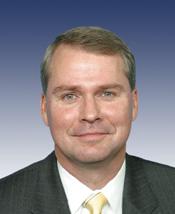
Mr. Speaker, I thank the gentleman for yielding. Mr. Speaker, sometimes, like many of my colleagues, I get frustrated about the pace of Congress. For the last several weeks, I have come to the floor…
Mr. Speaker, I thank the gentleman for yielding.
Mr. Speaker, sometimes, like many of my colleagues, I get frustrated about the pace of Congress. For the last several weeks, I have come to the floor almost every day to talk about energy problems and why Congress doesn't seem to want to do anything to fix the problem. That is why I am amazed all of a sudden that Congress seems to be moving at warp speed to pass an ill-advised bill that could cost taxpayers billions of dollars and change the very nature of our financial system.
First, let me say that I appreciate the intentions of this bill, Mr. Speaker. I believe the government should take targeted steps to help those facing foreclosure in those neighborhoods that have had problems with the negative effects of multiple foreclosures. But we should not legislate in a rush, and we should not use a potential crisis as an excuse to expand the size of government in an unprecedented manner.
Please understand that I agree we cannot allow Fannie and Freddie to fail, and we must closely monitor the health of the banking system. Still, decisions of this magnitude should be considered calmly, rationally, and independently. Let's not mortgage the future of our country without fully understanding all the implications.
Timing is not the only problem with this legislation. As I said before, I fear we will be feeling the lingering effects of this legislation for many years. In one part of this bill, we are creating a new FHA program that will distort housing prices by neglecting the realities of supply and demand in the housing market, all while putting taxpayers on the hook for this expensive, and I think dangerous, experiment. Like many of my colleagues, I don't think we should allow the American taxpayers to become the insurance policy for financial decisions that did not quite turn out as planned.
There are other parts of the bill that do not make much sense at first glance. For example, the new affordable housing trust fund is funded by the income of Fannie and Freddie. At the same time that we are trying to stabilize them elsewhere in the bill, we are adding new burdens and raising their costs. While I appreciate the importance of affordable housing, I don't think this makes much financial sense.
Like much of what Congress has been doing this year, this affordable housing trust fund is taxing what we are trying to help. We are trying to help people buy and keep their homes, yet we are discussing raising taxes. Rather than increasing the size of government, perhaps we should be putting more money into the pockets of hardworking Americans so they can afford to keep their homes.
While we certainly should be ensuring that the GSEs are stable, I am concerned about the long-term effects that this bill will have on the health of the housing market, the Federal balance sheet, and the American economy. Because I do not think this legislation will provide helpful solutions to our housing market, I oppose this bill and ask my colleagues to do the same.
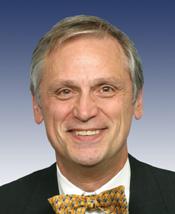
Thank you, Mr. Neal, for your leadership and your courtesy. Mr. Speaker, I am pleased to support this package as it brings much- needed reforms to the industry, supports homeowners around the country…
Thank you, Mr. Neal, for your leadership and your courtesy.
Mr. Speaker, I am pleased to support this package as it brings much- needed reforms to the industry, supports homeowners around the country and is much needed. I think it represents a lot of good, hard work. But I must make one point, because buried in the provisions of this bill in section 3082 on page 680 is an expansion of the Gulf Opportunity Zone to two counties in Alabama.
One of those counties is 300 miles from the coast and doesn't have much to do with housing and has nothing to do with damage for Katrina.
The reason I'm speaking to it is because it is an expansion designed to provide a subsidy for National Steel Car, a Canadian rail manufacturer. A subsidy unnecessary for two reasons: because the plant in question is already under construction, and that Alabama was already under a contractual obligation to provide this subsidy if Congress did not.
The United States has a domestic railcar industry, with plants and facilities around the country. I put in the Record a list of the 18 factories around the United States and the four American corporate headquarters.
U.S. Rail Car Facilities
American Railcar Industries (2095 Employees as of 12/31/07)
Corporate Headquarters, 10 Clark Street, St. Charles, MO
63301, 636-940-6000.
Marmaduke Plant, 7755 Highway 34 E, Marmaduke, AR, 870-597-
2224.
Milton Plant, 417 North Arch St., Milton, PA.
Paragould Plant, 901 Jones Rd., Paragould, AR, 870-236-
6600.
Trinity Industries (Rail Group: 7470 employees as of 12/31/07)
Corporate Headquarters, 2525 Stemmons Freeway, Dallas, TX
75702, 800-631-4420.
Longview Plant, 607 Fisher Rd., Longview, TX.
Oklahoma City Plant, 2033 SW 22nd St., Oklahoma City, OK,
405-632-6631.
Saginaw Plant #1, 104 E Bailey Boswell Rd., Saginaw, TX
817-232-3650.
Saginaw Plant #2, 2850 Peden Rd., Saginaw, TX, 817-236-
7141.
Ft. Worth Plant #1, 2548 NE 28th St., Fort Worth, TX, 817-
665-1400.
Ft. Worth Plant #2, 1901 Brennan Ave., Fort Worth, TX, 817-
625-6225.
Springfield Plant, 1849 North Park Avenue, Springfield, MO
65803-1985, 417-831-6797.
Cartersville Plant, 190 Old Grassdale Road Northwest,
Cartersville, GA 30121-5097, 770-382-9400.
Winder Plant, 880 Airport Road, Winder, GA 30680.
Freightcar America (576 employees as of 12/31/07)
Corporate Headquarters, Two North Riverside Plaza, Suite
1250, Chicago, IL 60606, 312-928-0850.
Danville, IL Plant, 2313 Cannon Street, Danville, Illinois
61832, 217-443-4106, Fax: 217-443-0750.
Roanoke Plant, 830 Campbell Avenue SE, Roanoke, VA 24013,
540-853-3221, Fax: 540-853-3254.
Johnstown, PA Facilities--JUST CLOSED, 17 Johns Street,
Johnstown, PA 15901, 800-458-2235, Fax: 814-533-5010.
The Greenbrier Companies, Inc. (Gunderson: 1036 employees as of 7/21/
08)
Corporate Headquarters, One Centerpointe Drive, Suite 200,
Lake Oswego, OR 97035, 503-684-7000.
Portland, OR Plant (Gunderson), 4350 NW Front Avenue,
Portland, OR 97210, 503-224-1973.
Progress Rail
Corporate Headquarters, 1600 Progress Drive, Albertville,
I thank the gentleman for yielding. We are in the midst of a recession, which is not your garden variety business down-cycle. This recession started with the collapse of sub- prime mortgages, which…
I thank the gentleman for yielding.
We are in the midst of a recession, which is not your garden variety business down-cycle. This recession started with the collapse of sub- prime mortgages, which has taken a toll on investment banks, like Lehman Brothers and Bear Sterns, and even the biggest of the commercial banks, like Citibank.
At the outset, it seemed that the effects of the recession would be felt mostly by those institutions that were long in sub-prime mortgages. Since Fannie Mae and Freddie Mac deal mainly in prime mortgages, typically with equity of 20 percent, and not sub-prime mortgages, it was felt at first that these institutions, with their government-sponsored status, and their implicit guarantee, would be part of the solution as opposed to part of the problem. It was felt that maybe they could even take up some of the defaulted sub-prime paper. But as foreclosures increased, and housing values decreased, and net interest rate spreads worsened, Fannie Mae and Freddie Mac began to feel the effects, and the financial markets began to question their financial statements, which, I will emphasize, state positive net worth and positive cash flow.
Secretary Paulson was able to slow down the steep fall in value by stating explicitly and emphatically what has been implicit since these entities were first created, namely, that the credit of the United States stands behind them. The most important purpose of this bill is for the Congress to affirm in law what the Secretary has declared, or to be more specific, to confer on Treasury the power to extend to these two entities, Fannie Mae and Freddie Mac, an open-ended line of credit.
It's fair to ask why no ceiling on the line of credit. The answer may seem paradoxical, but the Secretary of Treasury has assured us that the larger and less restricted the credit is, the less likely the lines will ever be drawn down. Creditors will not need to worry if they forbear, if they don't cash in, they may not be paid because come hell or high water the Federal Government's credit stands behind these entities.
For that pledge also to be taken seriously by the market as credible, it's necessary to increase the debt ceiling of the United States. We did that in the last budget resolution we adopted here in the House. This bill, once again, would confirm and raise the debt ceiling of the United States, giving the Secretary headroom and credibility when he says the standby lines of credit that we're extending will be adequate to accomplish the effect it's intended.
This debate is about housing and two entities, GSEs, but it's also about our credit globally. If these two entities were to default and not have the United States government back up its guaranty, the consequences could be truly calamitous.
This is also good policy, counter-cyclical policy for the recession itself. It's a good bill, good policy, and I urge everyone to support it.
I thank the gentleman.
Bill Text
3 versions available
        [Congressional Bills 110th Congress]
[From the U.S. Government Printing Office]
[H.R. 6545 Referred in Senate (RFS)]

2d Session
H. R. 6545

_______________________________________________________________________

IN THE SENATE OF THE UNITED STATES

July 24 (legislative day, July 23), 2008

Received; read twice and referred to the Select Committee on
Intelligence

_______________________________________________________________________

AN ACT

To require the Director of National Intelligence to conduct a national
intelligence assessment on national security and energy security
issues.

Be it enacted by the Senate and House of Representatives of the
United States of America in Congress assembled,

SECTION 1. SHORT TITLE.

This Act may be cited as the ``National Energy Security
Intelligence Act of 2008''.

SEC. 2. NATIONAL INTELLIGENCE ASSESSMENT ON ENERGY PRICES AND SECURITY.

Not later than January 1, 2009, the Director of National
Intelligence shall submit to Congress a national intelligence
assessment on national security and energy security issues relating to
rapidly escalating energy costs. Such assessment shall include an
assessment of--
(1) the short-term and long-term outlook for prices,
supply, and demand for key forms of energy, including crude oil
and natural gas, and alternative fuels;
(2) the plans and intentions of key energy-producing and
exporting nations with respect to energy production and supply;
(3) the national security implications of rapidly
escalating energy costs;
(4) the national security implications of potential use of
energy resources as leverage against the United States by
Venezuela, Iran, or other potential adversaries of the United
States as a result of increased energy prices;
(5) the national security implications of increases in
funding to current or potential adversaries of the United
States as a result of increased energy prices;
(6) an assessment of the likelihood that increased energy
prices will directly or indirectly increase financial support
for terrorist organizations;
(7) the national security implications of extreme
fluctuations in energy prices; and
(8) the national security implications of continued
dependence on international energy supplies.

Passed the House of Representatives July 23, 2008.

Attest:

LORRAINE C. MILLER,

Clerk.