To amend title 38, United States Code, to repeal the provision of law requiring termination of the Advisory Committee on Minority Veterans as of December 31, 2009.
Legislative Activity
Stay on top of the latest movement without scrolling through every action
Received in the Senate and Read twice and referred to the Committee on Veterans' Affairs.
August 1, 2008
View full timeline
Introduced in House
January 24, 2007
Referred to the House Committee on Veterans' Affairs.
January 24, 2007
Referred to the Subcommittee on Disability Assistance and Memorial Affairs.
March 2, 2007
Subcommittee on Disability Assistance and Memorial Affairs Discharged.
July 16, 2008
Committee Consideration and Mark-up Session Held.
July 16, 2008
Reported by the Committee on Veterans' Affairs. H. Rept. 110-772.
July 24, 2008
Placed on the Union Calendar, Calendar No. 491.
July 24, 2008
Mr. Filner moved to suspend the rules and pass the bill.
July 29, 2008 • 5:50 PM
Considered under suspension of the rules. (consideration: CR H7255-7256)
July 29, 2008 • 5:50 PM
DEBATE - The House proceeded with forty minutes of debate on H.R. 674.
July 29, 2008 • 5:50 PM
At the conclusion of debate, the chair put the question on the motion to suspend the rules. Mr. Lamborn objected to the vote on the grounds that a quorum was not present. Further proceedings on the motion were postponed. The point of no quorum was withdrawn.
July 29, 2008 • 5:55 PM
Considered as unfinished business. (consideration: CR 8/1/2008 H7709)
July 31, 2008 • 7:55 PM
Passed/agreed to in House: On motion to suspend the rules and pass the bill Agreed to by voice vote.(text: CR 7/29/2008 H7255)
July 31, 2008 • 7:55 PM
On motion to suspend the rules and pass the bill Agreed to by voice vote. (text: CR 7/29/2008 H7255)
July 31, 2008 • 7:55 PM
Motion to reconsider laid on the table Agreed to without objection.
July 31, 2008 • 7:55 PM
Received in the Senate and Read twice and referred to the Committee on Veterans' Affairs.
August 1, 2008
Floor Debate
14 membersWhat members said about H.R. 674 on the floor
 BF
BF SB
SB DKA
DKA JJHLVG+9
Floor Debate
14 membersWhat members said about H.R. 674 on the floor
Madam Speaker, I move to suspend the rules and pass the Senate bill (S. 3023) to amend title 38, United States Code, to improve and enhance compensation and pension, housing, labor and education, and…
Madam Speaker, I move to suspend the rules and pass the Senate bill (S. 3023) to amend title 38, United States Code, to improve and enhance compensation and pension, housing, labor and education, and insurance benefits for veterans, and for other purposes, as amended.
Madam Speaker, I yield myself such time as I may consume.
Madam Speaker, obviously we rise in strong support of S. 3023, as amended, the Veterans' Benefits Improvement Act of 2008. Just by the listing of the title of the bill, you see how wide ranging this legislation is.
We have, Madam Speaker, 24 million veterans in this country, over 2.5 million of which receive disability compensation benefits from the Department of Veterans Affairs. Upon filing a claim for disability compensation at the VA, our veterans and their dependents face increased waiting times, along with an increasingly adversarial claims processing system.
From 2002 up until 2007, the backlog of disability claims rose from 250,000 to nearly 650,000 claims pending. That is an insult to the veterans who have served this Nation. During the same period, the VA consistently missed its performance targets on nearly all compensation and pension claims processing fronts.
These problems are not new. General Omar Bradley, who was a Director of the Veterans Administration after World War II, in the mid-50s said in a comprehensive report that ``the dominant problems are the carryover from past decades of a backward-looking pension philosophy and our failure to adjust the existing veterans programs to fundamental changes in our society.''
This quote is pretty striking, because the same thing could be said of the claims processing system 50 years later.
After nearly 2 years of oversight hearings, informed by numerous reports examining these issues, the committee, led by our colleague John Hall of New York, who chairs the Disability Assistance and Memorial Affairs Subcommittee, set out to transform this broken and outdated system. He introduced and our House subsequently passed the Veterans Disability Benefits Claims Modernization Act of 2008, H.R. 5892, which would comprehensively modernize VA's claim processing system. This legislation is the cornerstone of this Senate bill, S. 3023.
Mr. Hall's efforts included contributions from our colleagues from the committee. Joe Donnelly of Indiana introduced the Immediate Benefits for Wounded Warriors Act of 2007, H.R. 4219; Congressman Space of Ohio introduced the Veterans Disability Fairness Act, H.R. 5709; and Congressman Hare of Illinois ensured that mental health was an issue that was captured in language throughout the bill. All of these Members, Madam Speaker, are new Members of our Congress, and they have taken a vigorous and active role in their work, as illustrated in this bill.
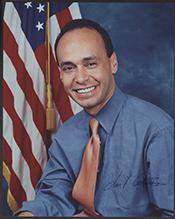
Congressman Gutierrez from Illinois and Congresswoman Corrine Brown from Florida introduced H.R. 674, which alerted us not to let the Advisory Committee on Minority Veterans sunset. And Congresswoman Carol Shea-Porter, another new Member from New Hampshire, has led the charge to spare families from VA debt collection.
So this bill will arm the VA with a lasting blueprint to transform its
claims processing system using integrated and modern information technology platforms and an updated rating schedule, with tools to improve the accountability, timeliness and quality of adjudicated claims. It will establish an Office of Survivors Assistance, and at last allow survivors to step into the shoes of deceased veterans to pursue pending claims and appeals.
Madam Speaker, we will finally tackle the central issues that have led to an unmanageable claims backlog, delays in processing, avoidable errors, inconsistencies in ratings and lack of accountability in a system that amounts to a ``system of injustice'' for our veterans.
This bill will help modernize the VA claims processing system and assist it in becoming a 21st century, world-class entity that reflects the selfless and priceless sacrifices of those it serves, our veterans, their families and survivors.
I would point out a pilot program that we will start on disability claims that takes as a model--and it may be surprising to say this, Madam Speaker--the IRS, our Internal Revenue Service, which for many years was very dysfunctional, but now, if you file your claim for a tax refund, you will get a check in 3 weeks because they send out the check on receipt of your tax return, but it's subject to audit.
So why not take that same process if your claim is documented fully and if you have help from a Certified Veteran Service Officer? There are thousands around the country. We will send out the check upon receipt, subject to audit. I think that's the way to clean up the backlog and to say to our veterans, yes, we understand your needs, and we are going to meet them.
In addition, Madam Speaker, I was contacted by veterans who are concerned that the VA does not have enough slots for veterans to participate in its so-called Independent Living Program. That program allows injured veterans to obtain meaningful employment, and it allows them to live independently while they heal from their wounds. So we have introduced a bill to allow 100 Independent Living Program slots to be available. I'm proud that this language was included in legislation that will ensure that the services needed by our veterans are available when they're required.
Madam Speaker, when we passed the so-called 21st century GI Bill some months ago, that was a great improvement in the educational benefits for our younger veterans, especially for those returning from Iraq and Afghanistan. Starting the next school year, they'll be able to draw on those new benefits, but we are trying to model that GI Bill on the GI Bill of 1944, which had so much influence on making America's middle class.
Part of that bill of 1944 had a home loan guaranty program. I'm here because of that program. My dad was able, after he came back from the war, to buy a house in New York for $2,000. We were finally members of the middle class.
We didn't include that part in that GI Bill, but we include it here. We are going to raise the values for veterans' loans. We are going to raise the value at which a refinance can take place. We are going to reduce the fees and the equity requirements, and will make the VA home loan program, again, relevant to veterans today, especially to those who are experiencing a crisis right now. They will be able to go to the VA and get a good deal on refinancing their home loans, a deal they couldn't have gotten before this passed. So I think this will be, again, a great benefit for thousands of our veterans around the country.
We also have a provision in this bill by Representative Ciro Rodriguez, who is a distinguished member of our committee, to update housing construction and design guidelines furnished to contractors. He will talk about that in a few minutes.
Again, I want to make special mention of the cooperation of my ranking member, Mr. Buyer of Indiana. What we did in working together was to provide legislation, that I'm sure he will talk about, to give VA assistance to the Paralympics program, which has been so successful in assisting veterans and servicemembers in their rehabilitation efforts. That language is in here. Through this program, we give a sense of self-worth and a sense of confidence to veterans who are severely injured.
Mr. Buyer has a special interest in that. In fact, if we're not in session next week, I think he's going to visit part of that program that's being carried out in California. He's going to my district. He doesn't realize what kind of welcome we have ready for him, but we'll leave that to his imagination. It's going to strengthen our commitment to caring for the servicemembers by helping them heal from the wounds of war so they can be active members and have the confidence to do that.
We also have language similar to that introduced by Congressman Patrick Murphy of Pennsylvania that will extend Servicemembers Civil Relief Act protections to enable servicemembers with deployment orders to more easily terminate or to suspend cell phone contracts without fee or penalty. It sounds like a little thing, but it's big in the lives of young people who have to face deployment. We're trying to tackle not only the big things but also these little irritants that affect our active duty and our veterans.
Congressman Boozman from Arkansas worked on legislation that closes the loophole in the Service-Disabled Veteran-Owned Small Business Program. We clarify our intent by extending disabled veterans' small business contracting provisions to the maximum extent possible to cover agents purchasing goods and services on behalf of the VA.
On the Subcommittee on Economic Opportunity, Chairwoman Stephanie Herseth Sandlin and her ranking member, Mr. Boozman, introduced a bill, which is also included in this legislation, to authorize the VA's Secretary to advertise in national media outlets to make sure that veterans are informed of their benefits.
So you see, Madam Speaker, we have some very big things and some smaller things, but again, in working together, our committee was able to significantly affect the quality of life for our 25 million veterans in this country.
I would reserve the balance of my time.
Madam Speaker, when Mr. Hall from New York arrived as a new Member last year and got thrown into looking at the VA disability claims system, he resolved that this had to be fixed. Two-years' worth of work is reflected in this bill. A big chunk of the bill comes from Mr. Hall.
We are so proud of the work you've been able to do, and we look forward to its helping millions and millions of veterans. Thank you. I would recognize Mr. Hall for as much time as he may consume.
Madam Speaker, I yield to the gentleman from Texas (Mr. Rodriguez), another great member of our committee, for such time as he may consume.
Madam Speaker, I recognize another new member of our committee, but again a very aggressive, active member, the gentleman from Indiana (Mr. Donnelly), for 4 minutes.
Madam Speaker, I ask unanimous consent that all Members may have 5 legislative days in which to revise and extend their remarks and include extraneous material on S. 3023, as amended.
Madam Speaker, I yield myself such time as I may consume. I rise in support of S. 3023, as amended, the Veterans' Benefits Improvement Act of 2008. The manager's amendment before us is a compilation…
Madam Speaker, I yield myself such time as I may consume.
I rise in support of S. 3023, as amended, the Veterans' Benefits Improvement Act of 2008. The manager's amendment before us is a compilation of the bipartisan provisions of 11 bills from both the House and the Senate Committees on Veterans' Affairs.
I would like to thank Chairman Filner, Chairman Akaka and Ranking Member Richard Burr for their cooperative efforts in bringing this bill forward to serve our Nation's veterans.
I would also like to acknowledge the hard work of both the House and the Senate staff. Our Subcommittee on Economic Opportunity is chaired by Stephanie Herseth Sandlin and by Dr. John Boozman as ranking member. Both of them together have a proven track record of working in a bipartisan manner to ensure that veterans who are leaving active duty have meaningful career opportunities and the skills needed to pursue those opportunities.
Our Subcommittee on Disability Assistance and Memorial Affairs has also demonstrated its dedication to working on behalf of our Nation's veterans. I want to thank Chairman Hall and Ranking Member Lamborn for their hard work and bipartisanship in their efforts.
Madam Speaker, S. 3023 incorporates over 60 veterans' provisions that have passed either the House or the Senate, and that's what had to be negotiated here between the two bodies. Clearly, time doesn't permit me to expand on every one of these provisions, but I'd like to highlight just a few.
I am pleased that the Department of Labor will be required to collect data on the employment needs of Native Americans. The Department of Veterans Affairs will begin a 20-year longitudinal study of veterans who participate in the VA's Vocational Rehabilitation Program. This measure would also increase the time to 20 years that spouses of deceased or 100 percent service-connected disabled veterans have to use their education benefits.
There are provisions that extend the temporary increases in VA- conforming loan limits in the stimulus act of 2011 and that reduce equity requirements for VA-guaranteed refinancing loans. As well, there are provisions that
renew the adjustable and hybrid adjustable loan programs for another 4 years.
This bill expands the servicemember protections under the Servicemembers Civil Relief Act in several ways. It also clarifies the VA's authority to purchase advertising as part of outreach efforts.
Madam Speaker, for me, one of the most exciting parts of the bill would authorize a new program at the VA to promote the increased participation by disabled veterans in adaptive sports. That is what the chairman was referring to. The bill would direct the VA to expand its cooperative sports activities with the United States Paralympics, and it would authorize $8 million to be used for grants to support an integrated adaptive sports program managed by the United States Paralympics and by partners such as the Disabled Sports USA, Blaze Sport, the National Parks Recreation Association, the Paralyzed Veterans of America, and the Disabled American Veterans.
I want to thank Chairman Filner for his mutual interest in the disabled sports and for his efforts to ensure this bill was included.
Chairman Filner, your leadership here, not only for the United States Olympic Committee's being out in Chula Vista, is extremely important in making this a reality. So I appreciate your support, not only of our Olympic Committee but also for the fact that this has become a reality. So, because of your leadership and for the fact that we were able to take our mutual interests and to bring them together to serve a greater need, I applaud your leadership.
The United States Paralympic Team that competed in Beijing included 13 disabled veterans, several of whom were wounded in the war on terror. Now, a few years back, I visited Chula Vista. This was years back when the United States Olympic Committee had a very large board, and we had individuals who were really positioning to profitize off of the Olympic ideal, and it was very disturbing to me. We had a series of ethical blunders that occurred at the Olympic Committee. It was the Olympic Committee's darkest hour.
I came back to Congress. I met with Cliff Stearns at the time, who was on the Energy and Commerce Committee. He helped set a course for the reorganization of the United States Olympic Committee at a time when also then Senator McCain took action in the Senate and when the Olympic Committee also then created its own task force. The Olympic Committee had reorganized itself. We went into the past Olympics. Everyone was pulling on the rope in the same direction. It was very exciting. I took that relationship that had developed with the United States Olympic Committee and brought them to the VA to develop these sports programs.
The whole intent of not only this legislation but of what Chairman Filner is embracing is to use sports as a platform of healing, and I think that is extremely important. What we have done here is: As for these 13 disabled veterans who just returned from the Paralympic Games in Beijing, this group of wounded warriors produced four gold medals, three silver medals and three bronze medals. So I'm pretty excited about these spectacular Americans.
It's the wave of the future when disabled veterans who are competing with artificial limbs or with spinal cord dysfunctions will be commonplace. The program we are implementing here today will be the seed for the VA and for its partners to nurture and grow.
So I want to thank Chairman Filner for his leadership on this. This is so meaningful. I look forward next week to coming out to your district, Chairman Filner, and to going out to Chula Vista, out to the U.S. Olympic Training Center with the Secretary of the VA. Hopefully, you'll have an opportunity to be there. I'm pretty excited about these sports programs.
In Senate 3023, we will also enhance and improve veterans' benefits and the system that administers them. Such revisions include measures to increase the accuracy and the timeliness of benefit claims decisions and to enhance the VA's use of information technology. It will also look at VA disability compensation to ensure due consideration is afforded to veterans for their loss of earnings and their quality of life.
This is something that Senator Burr and I had introduced in a measure in response to not only the recommendations of the Disability Commission but also in response to the recommendations of the Presidential task force of Senator Dole and former Secretary Shalala.
The bill would also improve benefits for the survivors of deceased veterans. For instance, it would allow the substitution upon the death of a claimant for the purpose of acquiring benefits. That was Mr. Lamborn's provision.
The bill would also release survivors of deceased claimants of the frustration of the time-consuming process of starting the entire claims process from square one.
The bill would also create a VA Office of Survivors Assistance to ensure surviving dependents have access to benefits and to services and that such programs are responsive to the needs of survivors.
With that, Madam Speaker, I would like to reserve the balance of my time.
How did you do against them?
Madam Speaker, I yield myself such time as I may consume.
I would like to thank Chairman Hall and also Mr. Lamborn. I had asked the staff to go through this bill that we are looking at today, and I wanted to put authorship on all of the provisions so I get to see who are the authors of all of the provisions. So I want to thank Mr. Lamborn and Mr. Hall for their good work on the bill. Mr. Lamborn has a lot of authorship on a lot of different provisions.
But I see a lot of names in here. There is also Stephanie Herseth Sandlin and Dr. Boozman. These are two individuals who had a lot of years working together, and they define bipartisanship on the committee, Madam Speaker. They have a great work product.
Madam Speaker, at this time I yield to the gentleman from Arkansas (Mr. Boozman).
I would like to thank the gentleman for his leadership, and I reserve the balance of my time.
The gentleman may proceed. If he needs time, I will be more than happy to yield it.
I yield myself such time as I may consume.
I would like to extend compliments to the Speaker pro tem, the gentlelady from Ohio, for her attentiveness during this. As a former member of the Veterans' Affairs Committee yourself, and as a former chairwoman of one of the committees on Comp and Pen and Memorial Affairs, I appreciate your leadership here tonight.
I also would like to note that two members of the staff on the Republican side are not with us here tonight who gave tremendous contributions to both bills that we've had here tonight, on health and in benefits; that being the former Staff Director, Jim Lariviere and Jeff Phillips. Both of these individuals have been called to active duty, and both were promoted to Brigadier General. So Brigadier General Jim Lariviere tonight with the United States Marine Corps is on duty, and Brigadier General Jeff Phillips is also on duty with the United States Army. We recognize their contribution to these bills tonight, and wish them Godspeed and safety to themselves and their families.
With that, I want to express my appreciation to Chairman Filner and the leadership of your team and that of your staff, and to include my staff for their hard work and the cooperation with that of the United States Senate.
I yield back the balance of my time.
General Leave
Mr. President, I am pleased that the Senate is acting on S. 3023, as amended, the proposed Veterans' Benefits Improvement Act of 2008, as passed by the House of Representatives earlier this week. The…
Mr. President, I am pleased that the Senate is acting on S. 3023, as amended, the proposed Veterans' Benefits Improvement Act of 2008, as passed by the House of Representatives earlier this week. The bill, as it comes before the Senate, is a compromise agreement developed with our counterparts on the House Committee on Veterans' Affairs. I thank Chairman Filner and Ranking Member Buyer of the House committee for their cooperation on this legislation. I also thank my good friend, the committee's ranking member, Senator Burr, for his cooperation as we have developed this bill.
This omnibus veterans' benefits bill will provide much needed support to our Nation's veterans. It contains provisions that are designed to enhance compensation, claims processing, housing, labor and education and insurance benefits for veterans. A full explanation of the Senate and House negotiated agreement can be found in the Joint Explanatory Statement, which I will ask appear in the Record at the conclusion of my remarks.
I will highlight a few of the provisions that I have sponsored in the legislation that is before us today.
This legislation would result in improved notices being sent to veterans concerning their claims for VA benefits. Following a number of decisions by the U.S. Court of Appeals for Veterans Claims and the U.S. Court of Appeals for the Federal Circuit, VA's notification letters to veterans about the status of their claims have become increasingly long, complex, and difficult to understand. These notification letters must be simplified, as veterans, VA, veterans' advocates, and outside review bodies have all recommended. The notices should focus on the specific type of claim presented. They should use plain and ordinary language rather than bureaucratic jargon. Veterans should not be subjected to confusing information as they seek benefits.
To further improve the VA compensation system, this legislation would end the prohibition on judicial review in the U.S. Court of Appeals for the Federal Circuit of matters concerning the VA rating schedule. VA issues regulations which are used to assign ratings to veterans for particular disabilities. Under current law, actions concerning the rating schedule are not subject to judicial review unless a constitutional challenge is presented. This legislation would amend the law to treat actions concerning the rating schedule in the same manner as all other actions concerning VA regulations.
I expect VA to comply with all laws passed by Congress in developing and revising the rating schedule. However, justice to our Nation's veterans requires that actions concerning the rating schedule be subject to the same judicial scrutiny as is available for the review of actions involving other regulations.
VA's Home Loan Guaranty Program may exempt homeowners from having to make a downpayment or secure private mortgage insurance, depending on the size of the loan and the amount of the VA guaranty.
Public Law 108-454 increased VA's maximum guaranty amount to 25 percent of the Freddie Mac conforming loan limit determined under section 305(a)(2) of the Federal Home Loan Mortgage Corporation Act for a single-family residence, as adjusted for the year involved.
The Economic Stimulus Act of 2008, Public Law 110-185, temporarily reset the maximum limits on home loans that the Federal Housing Administration may insure and that Fannie Mae and Freddie Mac may purchase on the secondary market to 125 percent of metropolitan-area median home prices but did so without reference to the VA home loan program. This had the effect of raising the Fannie Mae, Freddie Mac, and FHA limits to nearly $730,000, in the highest cost areas, while leaving the then-VA limit of $417,000 in place. On July 30, 2008, the Housing and Economic Recovery Act of 2008 was signed into law as Public Law 110-289. That law provided a temporary increase in the maximum guaranty amount for VA loans originated from July 30, 2008 through December 31, 2008, to the same level as provided in the stimulus act.
The compromise agreement would extend the temporary increase in the maximum guaranty amount until December 31, 2011. This would enable more veterans to utilize their VA benefit to purchase more costly homes.
The compromise agreement would also increase the maximum guaranty limit for refinance loans and increase the percentage of an existing loan that VA will refinance under the VA home loan program.
Under current law, the maximum VA home loan guaranty limit for most loans in excess of $144,000 is equal to 25 percent of the Freddie Mac conforming loan limit for a single-family home. Public Law 110-289 set this value at approximately $182,437 through the end of 2008. This means lenders offering loans of up to $729,750 will receive up to a 25- percent guaranty, which is typically required to place the loan on the secondary market. Under current law, this does not include regular refinance loans.
Current law limits to $36,000 the guaranty that can be used for a regular refinance loan. This restriction means VA will not guarantee a regular refinance loan over $144,000, essentially precluding a veteran from using the VA program to refinance his or her existing FHA or conventional loan in excess of that amount.
VA is also currently precluded from refinancing a loan if the homeowner does not have at least 10 percent equity in his or her home.
The compromise agreement would remove the equity requirement for refinancing from an FHA loan or conventional loan to a VA-guaranteed loan. This would allow more veterans to use their VA benefit to refinance their mortgages. Many veterans do not have 10 percent equity and thus are precluded from refinancing with a VA-guaranteed home loan.
Given the anticipated number of non-VA-guaranteed adjustable rate mortgages that are approaching the reset time when payments are likely to increase, the committee believes that it
is prudent to facilitate veterans refinancing to VA-guaranteed loans. In light of today's housing and home loan crises, additional refinancing options will help some veterans bridge financial gaps and allow them to stay in their homes and escape possible foreclosures. These provisions would allow more qualified veterans to refinance their home loans under the VA program.
This omnibus benefits bill would also make crucial updates to the Uniformed Services Employment and Reemployment Rights Act, which protects service members' rights to return to their prior jobs with the same wages and benefits. The provisions in the committee bill are derived from S. 2471, the proposed USERRA Enforcement Improvement Act of 2007, which Senator Kennedy and I introduced on December 13, 2007. This legislation would ensure that Federal agencies assist service members in a more effective manner by requiring the Department of Labor to investigate and refer cases in a more timely manner and by requiring reports from the Department of Labor on their compliance with the deadlines.
The omnibus benefits bill includes a provision derived from S. 3000, the proposed Native American Veterans Access Act of 2008, which I introduced on May 8, 2008. This provision is intended improve VA's ability to understand and respond to the needs of Native American veterans. While Native Americans are more likely to serve in uniform than the general population, many of them find cultural and geographical barriers between themselves and the benefits they earned through service. In addition, those returning to traditional homelands, especially reservation communities, frequently come home to dismal job opportunities and starved economies. The proposed bill would require a study to help us understand the employment needs of Native American veterans and how best to address them.
The compromise agreement also includes provisions derived from legislation I introduced on April 25, 2007, S. 1215, which would update the Special Unemployment Study required to be submitted by the Secretary of Labor to the Congress by mandating that it cover veterans of Post 9/11 global operations. It would also require the report to be submitted on an annual, rather than a biennial, basis. By updating this report, Congress will have more data available on more recent groups of veterans--those who served and are serving in the Post-9/11 global operations. This will help with assessments of the needs of current veterans entering the work force and develop appropriate responses.
Before I close, I recognize and thank the individuals involved in putting together this comprehensive measure. Specifically, I thank Kimberly Ross, Brian Lawrence, Juan Lara, and Mike Brinck from the House committee and Amanda Meredith, Mindi Walker, and Kevin Tewes from the minority staff on the Senate Committee. I also thank the majority staff who assisted me in developing the compromise agreement and all the legislation that led up to it. Patrick McGreevy, Mary Ellen McCarthy, Ted Pusey, Babette Polzer, and Dahlia Melendrez have worked throughout the 110th Congress on many of the provisions included in this legislation, and I am pleased that our collective efforts have led to this compromise agreement becoming a reality.
I urge our colleagues to support this important legislation that would benefit many of this Nation's nearly 24 million veterans and their families.
Mr. President, I ask unanimous consent to have the Joint Explanatory Statement, which was developed with our colleagues in the House, printed in the Record.
Mr. Speaker, I move to suspend the rules and pass the bill (H.R. 6832) to authorize major medical facility projects and major medical facility leases for the Department of Veterans Affairs for fiscal…
Mr. Speaker, I move to suspend the rules and pass the bill (H.R. 6832) to authorize major medical facility projects and major medical facility leases for the Department of Veterans Affairs for fiscal year 2009, to extend certain authorities of the Secretary of Veterans Affairs, and for other purposes.
Mr. Speaker, I yield myself such time as I may consume.
Mr. Speaker, this is a very important bill that we simply must pass this year because it extends authorities for a whole number of veterans programs. And I want to thank my ranking member, Mr. Buyer of Indiana, for his cooperation and support to get this bill on the floor today because, as I said, we have got to get this done before the end of this congressional session.
H.R. 6832 includes the text of several other pieces of legislation; for example, the text of H.R. 5856, the Department of Veterans Medical Facility Authorization and Lease Act of 2008, that we passed on this floor by a vote of 416-0 back in May. As the new fiscal year begins on October 1, it is essential that the VA have the legal authorities it needs to move forward in providing world-class facilities and better access for our veterans.
In addition to providing these authorizations, we extend a number of expiring authorities, including the authority to collect from insurance companies and third parties for the cost of certain health care. These provisions were slated to expire at the end of this month. It also extends the VA authority to receive data from the IRS and the Social Security Administration to verify income levels for veterans in certain programs.
We extend here also the authority of the VA to conduct recovery audits of fee basis and other medical service contracts when a veteran receives care at a non-VA facility, such as the bill we just passed with Mr. Moran.
We make permanent here the VA authority to treat veterans who participated in tests conducted by the Department of Defense at the Deseret Test Center from 1962 to 1973, which included the program known as Project Shipboard Hazard and Defense, or Project SHAD. This authority expired last year. We have to do more for those who have been subject to those tests, and we will look at legislation, especially by Mr. Thompson of California, in the near future.
We extend the reporting requirements for the Special Committee on PTSD, Posttraumatic Stress Disorder, and the Committee on Care of Severely Chronically Mentally Ill Veterans. These committees are vitally important as we seek to provide the best care for our veterans in dealing with these mental health issues.
We repeal the sunset on inclusion of noninstitutional extended care services as part of the health care provided to our veterans, and extend the authority of the VA to provide nursing home care for certain veterans, which was also slated to expire at the end of this year.
We increase the number of veterans among our most severely disabled veterans who would be able to participate in the VA's Independent Living Program. Long-term care services are a vital component of our health care for veterans, and will only increase in importance in the years ahead.
H.R. 6832 also makes permanent the authority of the Advisory Committee on Minority Veterans and reporting requirements for the Women's Advisory Committee.
Mr. Speaker, I have often stressed the importance of the housing provisions in the original GI bill that was enacted in 1944. This act, of which over 8 million veterans took advantage of, probably created the prosperous and stable middle-class in our Nation. We recently passed an update of the GI bill that we called the 21st Century GI Bill, which brought education benefits up to the standards that this century requires, but we did not reform and improve the VA home loan program in that GI bill that would have in fact remained true to the spirit of the original GI bill. The housing crisis that is affecting all of our society in all areas of our country would be helped by broadening authority of the VA in this area.
Both my ranking member, Mr. Buyer, and I have introduced legislation to reform the home loan program, and H.R. 6832 brings both of our pieces of legislation together. We were able to provide temporary authority for the VA to make loans at levels that matched other Federal housing programs in an earlier bill this year, but that authority expires at the end of the year and VA will be forced once again to essentially limit its guarantee to a maximum loan amount of $417,000. What we do here is to extend that authority until 2011 to guarantee loan amounts up to $729,750 in certain parts of the country. We also extend the authority of the VA to make so-called hybrid adjustable rate and adjustable rate mortgages in their program, which also expires this year.
Finally, H.R. 6832 will make it easier for veterans to refinance their home loans with the VA. We authorize the VA to provide the same maximum loan guarantee for veterans, refinancing non-VA loans, as it currently provides for loans guaranteed by the VA. It will enable veterans to refinance the loan at up to 100 percent of the value of the underlying property. Currently, the VA is only able to finance up to 90 percent.
I know that I speak for Mr. Buyer in that we wish we could do more right at this moment to help our veterans weather this housing crisis, but this bill provides real help, and will make a real difference in the lives of thousands of veterans facing the housing crisis and our economic slowdown. It is extremely important that we pass H.R. 6832, and meet our responsibilities to our Nation's veterans.
I thank the minority side for its great cooperation on this.
I reserve the balance of my time.
Mr. Speaker, I yield such time as she may consume to one of the most passionate advocates for veterans in our country, Ms. Brown of Florida.
Mr. Speaker, I yield such time as he may consume to Mr. Rodriguez of Texas.
Mr. Speaker, I would add to what the gentleman from Texas said. You know better than anybody the problems with the facilities in San Juan, Puerto Rico. This does a seismic correction for one of the major buildings on the order of $225 million, and establishes an outpatient clinic in Mayaguez, Puerto Rico. So we are taking some steps, we have a long way to go, for our citizens there in Puerto Rico.
I ask unanimous consent that all Members may have 5 legislation days in which to revise and extend their remarks and include extraneous material on H.R. 6832.
I yield back the balance of my time.
Mr. Speaker, on that I demand the yeas and nays.
Madam Speaker, I thank Chairman Filner and Ranking Member Buyer, and I would also like to thank Senator Akaka and Ranking Member Senator Burr from the Senate Veterans' Committee, and tell Mr. Buyer,…
Madam Speaker, I thank Chairman Filner and Ranking Member Buyer, and I would also like to thank Senator Akaka and Ranking Member Senator Burr from the Senate Veterans' Committee, and tell Mr. Buyer, I wish he could have been there when I was paddling kayaks with about 20 veterans from the Montrose VA Hospital on the Hudson River about 2 weeks ago. Some of them have lost their legs or lost the use of their legs. Some of them were whole of body, but suffering PTSD or other mental or psychological issues.
I did fine, and they did great. You can imagine in a kayak where it is arms and upper body, they can go where they want to go very fast; faster than I can. It is incredibly therapeutic. It wasn't not Olympic competition, but it is a perfect example of what you were talking about in terms of the therapeutic value of that program.
I am honored to be here with my distinguished colleagues in the House supporting Senate bill S. 3023, the Veterans' Benefits Improvement Act of 2008. And I am especially grateful that it contains all of the provisions from our Veterans' Disability Benefits Claims Modernization Act which I and other members of the subcommittee, including the ranking member, Congressman Lamborn, worked incredibly hard on in the Veterans' Affairs Subcommittee on Disability Assistance and Memorial Affairs.
The bill really grew from the testimony of VSOs, individual veterans, employees of the VA, various stakeholders on these issues who came for a year to hearings and round tables and brought us their ideas. I would like to thank all of them for their contribution.
At the end of July I was told that the backlog of claims had reached 838,000 which is a shameful situation for our country which has so much technological and medical capability and capacity, to not be able to keep up with the combination of returning Iraq and Afghanistan veterans at the same time there is the maturing of our Vietnam veterans. And we still have vets from other conflicts who are coming in for care at the same time.
The backlog was predicted to reach a million cases by next year if we didn't do this, and so I am happy we are moving forward and not letting that happen. This Congress has done, in a week in which we had the financial disaster dropped in our lap, and I was afraid that this might all get put on the back burner, I am pleased that the staff worked as hard as they did, both House and Senate staff, full committee and subcommittee staff, and I think it is the right thing to do, not to make our
veterans wait for another 6 months because we are going to a new Congress and we have to resubmit the whole thing.
Today's VA claims processing system is labor-intensive and paper based. It relies on an archaic rating schedule and outdated medical concepts, practices that have been allowed to continue for too long unchecked and unaddressed. Too many opportunities for change have been missed, too many reports after reports have been shelved to collect dust.
This bill will comprehensively repair the VA disability benefits' system so that veterans and their survivors can receive accurate and timely assistance. The VA schedule by which veterans are rated for their disabilities needs to adhere to more modern medical practices and disability concepts, and should consider such factors as quality of life and earnings capacity.
VA management issues need to be addressed and inefficiencies corrected to enhance quality and performance. S. 3023 outlines procedures so veterans can expedite their claims when they have included all of the available evidence. It also codifies the VA's ability to render temporary ratings for undisputed, disabling severe injuries or illnesses.
Furthermore, the information technology enhancements in the bill require the VA to institute electronic systems and computer softwares that are commonplace in other aspects of our society. And I compliment Ranking Member Lamborn for his consistent advocacy of that portion in particular of this bill.
Veterans should benefit from the modern technological age that we live in, and an environmentally friendly, paperless process that can award claims in real-time, allow two offices that specialize in different aspects of the medical claims to be looking at the information at the same time.
Applying for VA benefits should be as easy as online banking, and that is what we are aiming to make it.
This bill also calls upon the VA to create a survivors' office. Although the VA's motto is ``to care for widows and orphans,'' it has never lived up to that visionary idealism of President Lincoln. That omission is rectified in this bill, especially important while so many military members are giving their lives in service to this country and leaving behind their beloved families.
In another measure to support survivors, the bill allows for the survivor to become the claimant when the veteran dies so that the pending claim can be adjudicated. It is a travesty that so many veterans die worried that they will be unable to provide for their families. Widows and dependent children are left aggrieved and abandoned by the country their spouses faithfully served just at the time when they are concerned about so many other adjustments being made in their lives and that their grief is still being processed at the same time.
A properly operating benefits system could prevent the ills that might befall a veteran. We must fight against suicide, divorce, bankruptcy, stigma, poverty and homelessness among our Nation's disabled veterans by providing to them the quality of life needs, providing them with parity among their peers, and elimination of stress they encounter in an adversarial and confusing claims processing system.
I envision S. 3023 as putting the VA on a 21st century track to lead the way to decisions that are made quickly and correctly. We must treat our Nation's veterans and their families with the dignity and respect that they deserve while restoring their faith in us. We must end the turmoil, alienation and injustice that they feel when they file a claim for their earned VA benefits by acting now.
I urge all Members to support this bill. I thank both Ranking Member Buyer and Chairman Filner.
Show 8 more
I rise today to urge my colleagues to support H.R. 674, legislation to make the Advisory Committee on Minority Veterans permanent. I have sponsored this legislation along with Congresswoman Corrine…
I rise today to urge my colleagues to support H.R. 674, legislation to make the Advisory Committee on Minority Veterans permanent. I have sponsored this legislation along with Congresswoman Corrine Brown, who serves on the Veterans' Affairs Committee. Current law mandates the termination of the Advisory Committee on Minority Veterans (ACMV) on December 31, 2009. This bill would simply repeal the provision of law that sunsets this important committee so that its critical work on behalf of minority veterans can continue.
The Advisory Committee on Minority Veterans operates in conjunction with the VA Center for Minority Veterans. This committee consists of members appointed by the Secretary of Veterans Affairs and includes minority veterans, representatives of minority veterans groups and individuals who are recognized authorities in fields pertinent to the needs of minority veterans.
The Advisory Committee on Minority Veterans helps the VA Center for Minority Veterans by advising the Secretary on the adoption and implementation of policies and programs affecting minority veterans, and by making recommendations to the VA for the establishment or improvement of programs in the department for which minority veterans are eligible.
The Committee has consistently provided the VA and Congress with balanced, forward-looking recommendations, many of which go far beyond the unique needs of minority veterans. In 2002, the Committee met in my hometown of Chicago and warned that in the Chicago regional office, ``it was mentioned that it was much easier to deny benefits than to grant benefits because of stringent requirements of the Veterans Benefits Administration and the Court of Appeal for Veterans Claims.''
The Chicago Sun-Times later exposed that Illinois veterans ranked 50th in disability benefit compensation. That information` sparked a campaign by the Illinois Congressional Delegation to rectify the situation. Since then, the VA Inspector General has issued his report and recommendations, and the Secretary has pledged additional staff and resources to the Chicago regional office.
The Committee will also be needed in the future since the unique concerns of minority veterans will become increasingly important for our nation over the next decade.
Currently, 17 percent of the troops serving in Iraq and Afghanistan are African-American, while 11 percent are Hispanic. The concerns of these veterans and others will not disappear on December 31, 2009, nor should the Committee that represents them. The Advisory Committee on Minority Veterans has helped our minority veterans from past wars with programs to address their concerns. We should not shortchange our newly returning soldiers by allowing this Committee's tenure to expire.
Many specific issues of concern to minority veterans need to be addressed further. Minority veterans confront the debilitating effects of post-traumatic stress disorder (PTSD) and substance abuse in greater numbers. Minority veterans suffer from a higher incidence of homelessness. Access to health care for Native American veterans is also a common problem. In addition, access to adequate job training is a difficulty for many minority veterans, a high percentage of whom qualify as low-income, category A veterans.
Unfortunately, discrimination and cultural insensitivity remain problematic for minority veterans at many VA facilities. The Advisory Committee on Minority Veterans still has a lot of work to do, and I urge my colleagues to support this legislation to make this important Committee permanent.
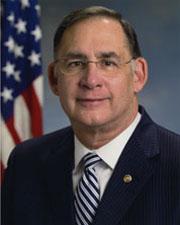
Madam Speaker, as ranking member of the Veterans' Affairs Subcommittee on Economic Opportunity, I am delighted with the product of our negotiations with the Senate Veterans' Affairs Committee. This…
Madam Speaker, as ranking member of the Veterans' Affairs Subcommittee on Economic Opportunity, I am delighted with the product of our negotiations with the Senate Veterans' Affairs Committee. This is an excellent bill, and I think we can declare a victory for America's veterans.
I want to especially thank Chairman Filner and Ranking Member Buyer. This truly is an excellent product, and I appreciate your leadership in bringing it all together.
I would also like to acknowledge the excellent bipartisan manner in which Chairwoman Herseth Sandlin has led the Subcommittee on Economic Opportunity. She has done a tremendous job, and I congratulate her for a successful 110th Congress, and look forward to reversing roles with her again next year.
S. 3023 has a wide range of improvements for employment, education, vocational rehabilitation, housing programs, and servicemembers' rights. This bill improves protections for our servicemembers under the Servicemembers Civil Relief Act, and we require training for Federal human resource officials to increase the number of veterans in our Federal workforce.
We will finally study the employment needs of Native Americans and increase the court's discretion when ruling on veteran's employment cases. Along with our disabled veterans, we owe so much to the spouses and children of those who lose their life while on active duty or become 100 percent disabled in service. Therefore, we extend the time to use their chapter 35 education benefits to 20 years.
Those who need vocational rehabilitation will find it easier to qualify for independent living. We will also require the VA to conduct a 20-year study on 3-year groups of veterans who use voc. rehab benefits to determine the effectiveness of those benefits.
The recent stimulus bill increased conforming loan limits for VA guaranteed loans, and we will extend those temporary limits through 2011. Under the temporary increased limits, VA may be able to guarantee up to nearly $730,000, depending on the location of the home.
We are also renewing the VA's authority to guarantee adjustable and hybrid adjustable rate loans. These types of loans are ideal for some veterans, and I am pleased we were able to renew VA's authority.
Disabled veterans will see increased opportunities in sports through an imaginative integrated adaptive sports program operated by VA, U.S. Paralympics, Inc., and partners such as Disabled Sports U.S.A., National Parks and Recreation Association, Blaze Sports, the DAV and Paralyzed Veterans of America. The program will support disabled athletes from the grassroots level through elite competition such as the recently completed Paralympic Games in Beijing.
Finally, there was some confusion at the VA regarding their authority to use funds for mass TV and radio advertising to promote veterans' benefits. S. 3023 makes it clear that VA will now have the authority to conduct advertising campaigns using modern media methods to reach more veterans.
Again, Madam Speaker, this is a great bill. I want to again thank our chairman, Mr. Filner, and our ranking member, Mr. Buyer, and also Chairwoman Herseth Sandlin for their great work in bringing this forward.
Mr. Speaker, I move to suspend the rules and pass the bill (H.R. 674) to amend title 38, United States Code, to repeal the provision of law requiring termination of the Advisory Committee on Minority…
Mr. Speaker, I move to suspend the rules and pass the bill (H.R. 674) to amend title 38, United States Code, to repeal the provision of law requiring termination of the Advisory Committee on Minority Veterans as of December 31, 2009.
Mr. Speaker, I yield myself such time as I may consume.
This bill comes to us from our colleague from Chicago, Congressman Luis Gutierrez, and this would repeal the law that requires the termination of the Advisory Committee on Minority Veterans on December 31 of 2009. We cannot let this important committee vanish.
Today, Mr. Speaker, over 14 percent of veterans are from racial or ethnic minority groups. African Americans comprise about 10 percent. The rest are Hispanic, Asian, or Native American. However, the Census Bureau projects that the number of minority Americans will shift significantly in the future and will grow to about 35 percent of the total population by 2050. Undoubtedly, that will be reflected in the percentage of people of color in the military, which is already steadily on the rise.
This trend has been true for black women who are joining the military at a greater rate than they are represented in the overall population and in a greater ratio than their male counterparts. In fact, black women comprise almost 35 percent of female servicemembers. This pattern will affect the VA's mission and scope, and it must be prepared to respond to properly deliver benefits.
Congress developed the Center for Minority Veterans and the Advisory Committee in 1994 to advise VA and Congress on providing health care and delivering benefits to minority veterans because there were disparities in such service. We had hoped to improve VA practices for future generations of minority veterans. This center has issued an annual report since 1994, and it's mandated to focus specific attention on African American, Hispanic, Asian, Native American, and Pacific Islanders, which it has done by conducting town hall meetings and site visits to such places as inner city Los Angeles and Native American tribes in Alaska.
The House Committee on Veterans' Affairs has explored these disparities and has been greatly assisted by the Committee on Minority Veterans. Its recommendations regarding outreach, research, education, staff diversity, translation services, and housing have been extremely enlightening and have resulted in many improvements.
At the present time, the Advisory Committee on Minority Veterans is due to sunset in 2009. This bill would prevent this from occurring and would serve to bring permanent awareness to cultural, racial, and ethnic issues among veterans to Congress and VA leadership.
I urge this Congress to support the bill and allow the Advisory Committee on Minority Veterans to continue its work uninterrupted and fully supported.
I reserve the balance of my time.
Mr. Speaker, I would again ask unanimous consent that all Members may have 5 legislative days in which to revise and extend their remarks and to include extraneous material on H.R. 674.
Mr. Speaker, I urge my colleagues to support the bill, and I yield back the balance of my time.
Mr. Speaker, I rise today in support of H.R. 6832, the Department of Veterans Affairs Construction and Extensions Act of 2008. This legislation, which I am cosponsoring along with Chairman Filner is…
Mr. Speaker, I rise today in support of H.R. 6832, the Department of Veterans Affairs Construction and Extensions Act of 2008.
This legislation, which I am cosponsoring along with Chairman Filner is a bipartisan measure consisting of the construction bill the House of Representatives passed on May 21, 2008, as well as language from the bill I introduced on August 1, 2008, H.R. 6802, the Veterans Authorities Extension Act of 2008, and additional authorizations.
The provisions included from the Committee reported and House passed construction bill, H.R. 5856, would authorize major VA medical facility projects and leases for fiscal year 2009. Included in this legislation is an authorization of $66 million for construction of a fifth Polytrauma Rehabilitation Center in San Antonio, Texas. VA's four existing Polytrauma Centers are located in Richmond, Virginia; Tampa, Florida; Minneapolis, Minnesota; and Palo Alto, California.
Mr. Speaker, this past February, I had the pleasure of visiting the Audie Murphy VA Medical Center in San Antonio for a briefing on
this new project, which will provide state-of-the-art care to our severely injured heroes. The VA Polytrauma Centers are designed to provide comprehensive inpatient rehabilitation services for individuals with complex, severe and disabling traumas. By creating a fifth Polytrauma Center in San Antonio, our commitment to veterans and servicemembers is reinforced by expanding access to the southwestern United States.
H.R. 6832 also will provide the extension of a number of important authorizations. These include: Repeal of the sunset on inclusion of non-institutional extended care services; Extension of recovery audit authority; Permanent authority for provision of hospital care, medical services, and nursing home care to veterans who participated in certain chemical and biological testing; Extension of expiring collections authorities; Extension of nursing home care; Extension of authority to carry out income verification; Extension of certain home loan guaranty programs; Extension of requirement to submit an annual report on the Special Committee on PTSD; Permanent requirement for the biannual report on the Women's Advisory Committee; and Permanent authority for VA's Advisory Committee on Minority Veterans (which was previously passed this last July in H.R. 674).
The bill will also increase the number of veterans participating in the VA's Independent Living Program, and will enhance the refinancing of home loans by veterans.
I would like to thank Chairman Filner, as well as Health Subcommittee Chairman Michael Michaud of Maine and Ranking Member Jeff Miller of Florida, for their efforts to bring this legislation through the Committee and on to the House floor for consideration. I would also like to commend the Committee staff for their hard work and bipartisan efforts throughout this Congress.
Mr. Speaker, I urge my colleagues to support H.R. 6832, the Department of Veterans Affairs Construction and Extensions Act of 2008.
General Leave

Madam Speaker, I rise today to speak on S. 3023, Veterans' Benefits Improvement Act of 2008. This bill is so important to our men and women who have served, are currently serving, or will serve one…
Madam Speaker, I rise today to speak on S. 3023, Veterans' Benefits Improvement Act of 2008. This bill is so important to our men and women who have served, are currently serving, or will serve one day.
As President John F. Kennedy once said, ``As we express our gratitude, we must never forget that the highest appreciation is not to utter words, but to live by them.'' Every day on this Floor, we praise the efforts of the soldiers who defend our way of life and our safety. If it is not time that we live by President Kennedy's words, and not just pay them lip service, when will it be?
Veterans face some of the greatest hardships that any of us can ever imagine. When they return from service, a large number of them can't acclimate back in to their life in an easy manner. This number goes up when you look at the members of the service who have seen action in one of the theatres that we have fought wars in. As of September 24, 2008, we have lost 4,125 men and women. As you all know, death is not the only sacrifice that these brave Americans make. Over 10 times that number of soldiers killed, 10 times that amount have been wounded. When they do return, they expect that the benefits they were promised are there to help them transition.
This bill provides a few things that will help the period of transition run smoothly. First off it says that veterans who need disability assistance can get it with ease. As anyone who has ever filled out a government form, they know that they were not designed with simplicity in mind. These forms often take trained professionals and a large amount of time to understand how and where to file this paperwork.
The current way to file is just as confusing as how you file other governmental forms. If this bill passes the Secretary of Veterans Affairs would be required to publish regulations relating to how people in need would request disability assistance. This bill would require clear and concise words as well as input from the public on what they think. The best way to prevent confusion is to get interested stakeholders to be brought into the process.
Second, this bill will standardize the process's time limits. No time limits on how long a person has to file claims exist today. This means that if the agency decides they want to deny a claim based on time, there is no mechanism to appeal. The 60 day deadline allows disabled veterans who are denied to fight back and get the coverage.
Our soldiers, and the patriotism that they inspire in Americans, need to be protected. This bill will help the veterans of the past, and the solders of the future, worry about their safety and not worry about what they will do when
they get home. We need to help these heroes out anyway we can.
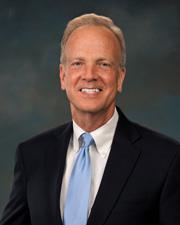
Mr. Speaker, I support H.R. 6832, the Department of Veterans Affairs Construction and Extensions Act of 2008. I again thank Chairman Filner and Ranking Member Buyer for bringing this bill forward…
Mr. Speaker, I support H.R. 6832, the Department of Veterans Affairs Construction and Extensions Act of 2008. I again thank Chairman Filner and Ranking Member Buyer for bringing this bill forward today. And I also want to thank the leaders of the Subcommittee on Health, the gentleman from Maine (Mr. Michaud) and the ranking member, the gentleman from Florida (Mr. Miller) for their bipartisan efforts in crafting this important legislation.
The construction authorization provisions in title I of this bill are identical to previously passed legislation here in the House, the construction authorization bill H.R. 5856, and they would authorize major VA medical facility projects and leases for the fiscal year 2009. This legislation is similar to what we have done in the past on an annual basis. The Veterans' Affairs Committee report for that bill H.R. 5856 with further explanation of the legislation background and intent of these construction authorizations.
Collectively, the provisions authorize approximately $2.2 billion over the next 5 years to improve access to health care for our Nation's veterans. The extension portion of this bill, the extension authorities in title III include a number of important authorizations. Ranking Member Buyer introduced a bill to extend the expiring authorities, H.R. 6802, on August 1 of this year, and this bill incorporates those extensions and others.
Among those that are significant and important are: Repeal of sunset on inclusion of non-institutional extended care services; permanent authority for provision of hospital care, medical services, and nursing home care to veterans who participated in certain chemical and biological testing; extension of nursing home care; and, extension of certain home loan guaranty programs.
The bill, in title III, would also increase the number of veterans participating in the independent living program and enhance refinancing of home loans by veterans.
Mr. Speaker, with House action on this construction authorization and the extension of authorities, as well as the veterans' COLA we just passed a few moments ago in the form of Senate bill 2617, the House will have taken what many consider the must-pass bills for the 2008 session for the 110th Congress. Our hope is that our Senate colleagues will take up H.R. 6832 promptly, so that we may complete the actions on these legislative items that are of great importance to veterans.
Mr. Speaker, I urge my colleagues to support H.R. 6832.
I reserve the balance of my time.
Mr. Speaker, I reserve the balance of my time.
Mr. Speaker, I support this legislation.
I yield back the balance of my time.
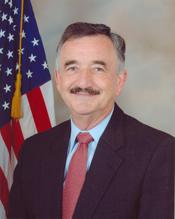
Madam Speaker, I thank the gentleman for this opportunity regarding the Veterans' Benefits Improvement Act. This bill improves the treatment and service provided by the Department of Veterans Affairs…
Madam Speaker, I thank the gentleman for this opportunity regarding the Veterans' Benefits Improvement Act.
This bill improves the treatment and service provided by the Department of
Veterans Affairs to veterans with post-traumatic stress disorders and substance abuse disorders, and many other provisions.
This is a great opportunity for us to deal with the issue of post- traumatic stress and be able to get the research that is needed, and also provide the services that are needed for our veterans coming in from Afghanistan and Iraq.
We know that our Vietnam veterans suffered tremendously from this, and we were negligent in not providing the services at that time. But I know that they worked hard and lobbied us, making sure that we are there for the soldier that is coming back from Afghanistan and Iraq, and also providing the services for those Vietnam veterans and those veterans from previous wars that are suffering tremendous heartaches and problems from this particular illness.
We know that this illness has created difficulties in terms of substance abuse. We know that a lot of them try to self-medicate in dealing with issues, and this will give us a better opportunity to do the necessary clinical work that will give us the insight that will help us to deal with those situations and help these soldiers as well as these veterans and their families.
Let me also take this opportunity, this bill also is a bill that incorporates H.R. 5664, a bill that I introduced to correct a bureaucratic oversight in the way that the Veterans Administration advises contractors constructing or renovating houses for disabled veterans. My bill seeks to ensure that the veterans whose homes were updated under this program benefit from all of the modern technology and construction practices that can be provided.
Today, veterans, particularly those from Iraq and Afghanistan, are sustaining injuries that in the past conflicts would have resulted in their death. The variety of these injuries require a fresh look at the way that the VA provides guidance to vets in using special adaptive housing grants. The primary guidance that the VA provides contractors who modify homes under this grant program is VA Pamphlet 26-13 titled ``Handbook For Design: Specially Adaptive Housing.'' This guide was last updated in 1978. This bill requires an update to that guide at least every 6 years.
I would like to thank once again Chairman Hall and Chairman Filner and Ranking Member Buyer for their leadership and their work.

Madam Speaker, today I rise in strong support of S. 3023, the Veterans' Benefits Improvement Act, as amended. This legislation represents months of work by my colleagues on the House Veterans'…
Madam Speaker, today I rise in strong support of S. 3023, the Veterans' Benefits Improvement Act, as amended.
This legislation represents months of work by my colleagues on the House Veterans' Affairs Committee.
I want to thank the ranking member of the committee, my friend from my home State of Indiana. Our districts actually touch up upon each other, and I'll try to be brief and not use too much of his time.
One key provision in this bill, as amended, would ensure that severely injured veterans released from active duty are able to receive disability benefits immediately for injuries that can be promptly rated while they wait to be assigned a rating for other injuries that are not immediately ratable.
The bill before us would codify temporary ratings for severely injured veterans who have paid a high price on behalf of our country. The passage of this legislation will make temporary ratings a right of our wounded warriors, instead of just an option to be employed by the Veterans Administration.
I want to take a moment to thank my good friend, the chairman of the Disability Assistance and Memorial Affairs Subcommittee, Mr. Hall, for his work on this legislation. I want to thank Chairman Filner and I want to thank Ranking Member Buyer for their assistance and leadership on this issue as well.
We have much work to do to continue to improve the way our disability claims process works for injured veterans. However, S. 3203 represents real change that will directly translate to improved service for those Americans who have fought and sacrificed on behalf of our Nation.
I urge all my colleagues to vote for this bill. I want to thank again the ranking member for his graciousness.
Show 8 more
Madam Speaker, I submit the following: S. 3023, as amended, the Veterans' Benefits Improvement Act of 2008, reflects a Compromise Agreement reached by the House and Senate Committees on Veterans'…
Madam Speaker, I submit the following:
S. 3023, as amended, the Veterans' Benefits Improvement Act
of 2008, reflects a Compromise Agreement reached by the House
and Senate Committees on Veterans' Affairs (the Committees)
on the following bills reported during the 110th Congress:
H.R. 674; H.R. 3681, as amended; H.R. 3889, as amended; H.R.
4255, as amended; H.R. 5664, as amended; H.R. 5892, as
amended; H.R. 6221, as amended; H.R. 6225, as amended, and
H.R. 6832 (House Bills); S. 1315, as amended; and S. 3023, as
amended (Senate Bills).
H.R. 674 passed the House on July 31, 2008; H.R. 3681, as
amended, passed the House on May 20, 2008; H.R. 3889, as
amended, passed the House on May 20, 2008; H.R. 4255, as
amended, passed the House on July 31, 2008; H.R. 5664, as
amended, passed the House on May 20, 2008; H.R. 5892, as
amended, passed the House on July 30, 2008; H.R. 6221, as
amended, passed the House on July 31, 2008; H.R. 6225, as
amended, passed the House on July 31, 2008; H.R. 6832 passed
the House on September 11, 2008; S. 1315, as amended, passed
the Senate on April 24, 2008, and passed the House, as
amended, on September 22, 2008; and S. 3023, as amended,
passed the Senate on September 16, 2008.
The Committees have prepared the following explanation of
S. 3023, as further amended, to reflect a Compromise
Agreement between the Committees. Differences between the
provisions contained in the Compromise Agreement and the
related provisions of the House Bills and the Senate Bills
are noted in this document, except for clerical corrections,
conforming changes made necessary by the Compromise
Agreement, and minor drafting, technical, and clarifying
changes.
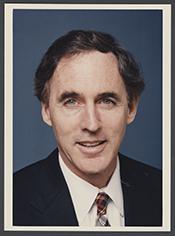
Mr. Speaker, providing for our nation's veterans--the brave men and women who risk their lives to ensure our freedom--has always been a top priority for me in my service to the people of the sixth…
Mr. Speaker, providing for our nation's veterans--the brave men and women who risk their lives to ensure our freedom--has always been a top priority for me in my service to the people of the sixth district of Florida. I am pleased that we are here today to pass legislation that will authorize much-needed funding for improvements to new and existing VA facilities throughout our country.
Included in this legislation is funding for a new Bed Tower at the Department of Veterans Affairs Medical Center in Gainesville, Florida. For years I have been working on securing funding for an addition to the Malcom Randall VA Hospital in my district, which will help to correct some of the patient privacy deficiencies this hospital has been experiencing over the years.
This facility will address the acute needs of our local veterans by providing them with state-of-the-art, private patient rooms, and the convenience of high quality VA medical care. The funding authorized by this legislation will go toward a five-story, 245,000 square foot facility consisting of four floors of new patient beds and one floor of supporting medical services. This new Bed Tower will have 228 new beds, and will also house a 10-bed ER, Chest Pain Unit, and ENT, Ophthalmology, Urology, and Hematology Clinics.
The Malcom Randall VA Hospital is one of the busiest and efficient VA facilities in the country, and the veterans in my district will benefit greatly from this new Bed Tower. I thank my colleague, Mr. Filner, for introducing this important legislation, and I look forward to the completion of this new Bed Tower in Gainesville.
Mr. Speaker, I rise in support of this specific legislation. Let me just indicate that the language that is on there regarding Project 112 efforts, those are studies that were supposedly conducted…
Mr. Speaker, I rise in support of this specific legislation.
Let me just indicate that the language that is on there regarding Project 112 efforts, those are studies that were supposedly conducted during the 1960s and 1970s on our own soldiers. There was a variety of studies that were conducted where, basically, we used nerve gas and other things with our own soldiers to see how they would react, and we have prioritized in terms of trying to provide the services and health care needs of these soldiers and to ID them. This allows extension of that language that is needed for us to continue to do the right thing when it comes to our veterans now that suffered under those studies.
Let me also say that this is a comprehensive piece of legislation that begins to fund a variety of different programs throughout the country, and including, Mr. Speaker, in your beloved area of Puerto Rico, which you know a large number of soldiers that served our country reside in and will have an opportunity to get extended health care needs there through the clinics.
In addition, I am proud to announce that we have four major polytrauma centers in this country, and the fifth one is located in San Antonio. This allows the opportunity for funding of that particular polytrauma center that will allow services to be extended to those soldiers coming both from Afghanistan and Iraq that are seriously injured.
So, once again, I want to take this opportunity to thank the leadership for their efforts, and I thank Mr. Filner for the dedicated work he has providing these resources to our veterans throughout the country.
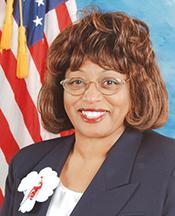
Mr. Speaker, first, let me thank the chairman for his leadership on this issue and for his tireless work on the committee and on behalf of the Nation's veterans. I rise in support of H.R. 6832, the…
Mr. Speaker, first, let me thank the chairman for his leadership on this issue and for his tireless work on the committee and on behalf of the Nation's veterans.
I rise in support of H.R. 6832, the Veterans' Programs Extension and Construction Authorization Act of 2008. I am pleased at the construction that has occurred in the State of Florida. My State has the largest elderly veterans population in the country. Everyone enjoys the warm weather, and veterans are no different. It is high time that we build the facilities that will take care of the heroes and sheroes.
In addition, this bill increases the authorization for the construction of a new VA medical center in Orlando. We have waited over 25 years for this facility, and we have construction delays. We cannot allow construction delays because of the lack of money due to increased energy costs or inflation. It would be criminal to do this.
In addition, this bill increases the authorization by $51 million to fund patient privacy at the Gainesville Medical Center. We need to make sure our veterans are treated with respect.
Earlier this year, this Congress passed the Military Construction and Veterans Affairs Appropriation under the leadership of Chairman Chet Edwards. I appreciate him including funds for these projects in the bill, along with the continuing development of the medical centers in Florida.
I urge the passing of the bill and continued support for our Nation's veterans. May God continue to bless America.
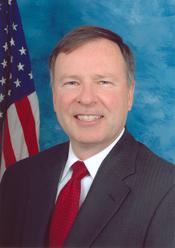
Mr. Speaker, I rise in support of H.R. 674, a bill to amend title XXXVIII, United States Code, to permanently establish the Advisory Committee on Minority Veterans which is set to expire on December…
Mr. Speaker, I rise in support of H.R. 674, a bill to amend title XXXVIII, United States Code, to permanently establish the Advisory Committee on Minority Veterans which is set to expire on December 31, 2009. I commend my colleague from Illinois, Luis Gutierrez, for introducing this bill.
Mr. Speaker, in 1994 under Public Law 103-446, the Veterans' Benefits Improvements Act, Congress established the Advisory Committee on Minority Veterans. The committee is comprised of veterans who represent their respective minority groups and are recognized authorities in fields pertinent to their needs. The committee's goal is to promote the use of VA programs, benefits, and services by minority veterans, to make benefits and services more accessible to minority veterans, and to evaluate current programs and make recommendations on how the VA can better serve minority veterans.
As I said, current authority for the committee is set to expire December 31, 2009. By supporting H.R. 674, we eliminate the expiration date and permanently extend this important committee to ensure the perspectives of minority veterans are considered during the establishment of VA benefits and services. I urge my colleagues to support the bill.
Mr. Speaker, I yield back the balance of my time.
General Leave
Mr. Speaker, I object to the vote on the ground that a quorum is not present and make the point of order that a quorum is not present.
Mr. Speaker, I rise in support of H.R. 674, a bill to amend title 38, United States Code, to permanently establish the Advisory Committee on Minority Veterans, which is set to expire December 31,…
Mr. Speaker, I rise in support of H.R. 674, a bill to amend title 38, United States Code, to permanently establish the Advisory Committee on Minority Veterans, which is set to expire December 31, 2009.
I commend my colleague from Illinois, Luis Gutierrez for introducing this bill.
Mr. Speaker, in 1994, under Public Law 103-446, the Veterans' Benefits Improvements Act, Congress established the Advisory Committee on Minority Veterans.
The Committee is comprised of veterans who represent their respective minority groups and are recognized authorities in fields pertinent to their needs. The Committee's goal is to: promote the use of VA programs, benefits, and services by minority veterans; make benefits and services more accessible to minority veterans; and, evaluate current programs and make recommendations on how VA can better serve minority veterans.
As I previously stated, authority for the Committee will expire December 31, 2009. By supporting H.R. 674, we eliminate the expiration date and permanently extend this important committee to ensure the perspectives of minority veterans are considered during the establishment of VA benefits and services.
I urge my colleagues to support the bill.

Madam President, reserving the right to object--and I will object because of my concern of the way the given legislation is being handled--this is an issue on which the chairman of the Veterans'…
Madam President, reserving the right to object--and I will object because of my concern of the way the given legislation is being handled--this is an issue on which the chairman of the Veterans' Affairs Committee and I have had some difference. At the same time, I clearly recognize the phenomenal commitment of the chairman to veterans and, in this case, to Filipino veterans who served us so gallantly during World War II.
It is my understanding there is a conflict in the House at this minute relating to the passage of legislation the Senate has moved. This is an effort to avert that conflict and bring the bill to a conference committee in a different form by using a House-passed bill. It is a tactic I hoped we would not use to address this important issue. The Senate can and should revisit this issue at another time. I hope we will.
It is with that intent that I object to this unanimous consent request.
Madam President, I ask unanimous consent that the Veterans' Affairs Committee be discharged from further consideration of H.R. 674 and the Senate proceed to its immediate consideration; that all…
Madam President, I ask unanimous consent that the Veterans' Affairs Committee be discharged from further consideration of H.R. 674 and the Senate proceed to its immediate consideration; that all after the enacting clause be stricken, the text of S. 1315, the Veterans Benefits Enhancement Act, as passed by the Senate on April 24, 2008, be inserted in lieu thereof, the bill, as amended, be read the third time and passed; that a title amendment which is at the desk be agreed to, the motions to reconsider be laid upon the table, with no intervening action or debate, the Senate insist on its amendments, request a conference with the House on the disagreeing votes of the two Houses, and the Chair be authorized to appoint conferees on the part of the Senate.
Bill Text
4 versions available
        [Congressional Bills 110th Congress]
[From the U.S. Government Publishing Office]
[H.R. 674 Referred in Senate (RFS)]

2d Session
H. R. 674

_______________________________________________________________________

IN THE SENATE OF THE UNITED STATES

August 1, 2008

Received; read twice and referred to the Committee on Veterans' Affairs

_______________________________________________________________________

AN ACT

To amend title 38, United States Code, to repeal the provision of law
requiring termination of the Advisory Committee on Minority Veterans as
of December 31, 2009.

Be it enacted by the Senate and House of Representatives of the
United States of America in Congress assembled,

SECTION 1. REPEAL OF SUNSET PROVISION FOR ADVISORY COMMITTEE ON
MINORITY VETERANS.

Subsection (e) of section 544 of title 38, United States Code, is
repealed.

Passed the House of Representatives July 31, 2008.

Attest:

LORRAINE C. MILLER,

Clerk.