Refuge Ecology Protection, Assistance, and Immediate Response Act
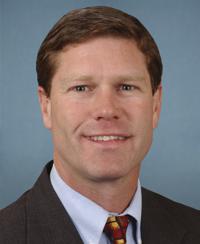 Rep. Ron Kind (D-WI)
Legislative Activity
Stay on top of the latest movement without scrolling through every action
Referred to the Committee on Environment and Public Works.
November 8, 2007
View full timeline
Introduced in House
January 31, 2007
Referred to the House Committee on Natural Resources.
January 31, 2007
Referred to the Subcommittee on Fisheries, Wildlife, and Oceans.
February 13, 2007
Subcommittee Consideration and Mark-up Session Held.
July 26, 2007
Forwarded by Subcommittee to Full Committee (Amended) by Voice Vote .
July 26, 2007
Committee Consideration and Mark-up Session Held.
October 10, 2007
Ordered to be Reported (Amended) by Unanimous Consent.
October 10, 2007
Reported (Amended) by the Committee on Natural Resources. H. Rept. 110-397.
October 22, 2007
Placed on the Union Calendar, Calendar No. 251.
October 22, 2007
Ms. Bordallo moved to suspend the rules and pass the bill, as amended.
October 22, 2007 • 3:03 PM
Considered under suspension of the rules. (consideration: CR H11791-11795)
October 22, 2007 • 3:04 PM
DEBATE - The House proceeded with forty minutes of debate on H.R. 767.
October 22, 2007 • 3:04 PM
Passed/agreed to in House: On motion to suspend the rules and pass the bill, as amended Agreed to by voice vote.(text: CR H11791-11793)
October 22, 2007 • 3:14 PM
On motion to suspend the rules and pass the bill, as amended Agreed to by voice vote. (text: CR H11791-11793)
October 22, 2007 • 3:14 PM
Motion to reconsider laid on the table Agreed to without objection.
October 22, 2007 • 3:14 PM
Received in the Senate and Read twice and referred to the Committee on Energy and Natural Resources.
October 23, 2007
Senate Committee on Energy and Natural Resources discharged by Unanimous Consent.(consideration: CR S14234)
November 8, 2007
Senate Committee on Energy and Natural Resources discharged by Unanimous Consent. (consideration: CR S14234)
November 8, 2007
Referred to the Committee on Environment and Public Works.
November 8, 2007
Floor Debate
5 membersWhat members said about H.R. 767 on the floor


Floor Debate
5 membersWhat members said about H.R. 767 on the floor
Mr. Speaker, I rise in support of H.R. 767, the REPAIR Act, as it is called, and yield myself such time as I may consume. I would like to also congratulate and thank my dear friend from Guam. She…
Mr. Speaker, I rise today in strong support of H.R. 767, the Refuge Ecology Protection, Assistance, and Immediate Response Act, which I authored. Passage of this legislation today will bring us one…
Mr. Speaker, I move to suspend the rules and pass the bill (H.R. 767) to protect, conserve, and restore native fish, wildlife, and their natural habitats at national wildlife refuges through…
I do want to commend the distinguished gentlelady who serves as Chair of our Fisheries, Wildlife and Oceans Subcommittee in the Natural Resources Committee, and I want to associate myself with the…
Mr. President, I ask unanimous consent that the Committee on Energy and Natural Resources be discharged from further consideration of H.R. 767, and that the bill be referred to the Committee on…
Bill Text
5 versions available
        [Congressional Bills 110th Congress]
[From the U.S. Government Publishing Office]
[H.R. 767 Reference Change Senate (RCS)]

110th CONGRESS
1st Session
H. R. 767

_______________________________________________________________________

IN THE SENATE OF THE UNITED STATES

October 23, 2007

Received; read twice and referred to the Committee on Energy and
Natural Resources

November 8, 2007

Committee discharged; referred to the Committee on Environment and
Public Works

_______________________________________________________________________

AN ACT

To protect, conserve, and restore native fish, wildlife, and their
natural habitats at national wildlife refuges through cooperative,
incentive-based grants to control, mitigate, and eradicate harmful
nonnative species, and for other purposes.

Be it enacted by the Senate and House of Representatives of the
United States of America in Congress assembled,

SECTION 1. SHORT TITLE.

This Act may be cited as the ``Refuge Ecology Protection,
Assistance, and Immediate Response Act''.

SEC. 2. FINDINGS AND PURPOSE.

(a) Findings.--The Congress finds the following:
(1) The National Wildlife Refuge System is the premier land
conservation system in the world.
(2) Harmful nonnative species are the leading cause of
habitat destruction in national wildlife refuges.
(3) More than 675 known harmful nonnative species are found
in the National Wildlife Refuge System.
(4) Nearly 8 million acres of the National Wildlife Refuge
System contain harmful nonnative species.
(5) The cost of early identification and removal of harmful
nonnative species is dramatically lower than removing an
established invasive population.
(6) The cost of the backlog of harmful nonnative species
control projects that need to be carried out in the National
Wildlife Refuge System is over $361,000,000, and the failure to
carry out such projects threatens the ability of the System to
fulfill its basic mission.
(b) Purpose.--The purpose of this Act is to encourage partnerships
among the United States Fish and Wildlife Service, other Federal
agencies, States, Indian tribes, and other interests for the following
objectives:
(1) To protect, enhance, restore, and manage a diversity of
habitats for native fish and wildlife resources within the
National Wildlife Refuge System through control of harmful
nonnative species.
(2) To promote the development of voluntary State
assessments to establish priorities for controlling harmful
nonnative species that threaten or negatively impact refuge
resources.
(3) To promote greater cooperation among Federal, State,
and local land and water managers, and owners of private land,
water rights, or other interests, to implement ecologically
based strategies to eradicate, mitigate, and control harmful
nonnative species that threaten or negatively impact refuge
resources through a voluntary and incentive-based financial
assistance grant program.
(4) To establish an immediate response capability to combat
incipient harmful nonnative species invasions.

SEC. 3. DEFINITIONS.

For the purposes of this Act:
(1) Advisory committee.--The term ``Advisory Committee''
means the Invasive Species Advisory Committee established by
section 3 of Executive Order No. 13112, dated February 3, 1999.
(2) Appropriate committees.--The term ``appropriate
Committees'' means the Committee on Natural Resources of the
House of Representatives and the Committee on Environment and
Public Works of the Senate.
(3) Control.--The term ``control'' means, as appropriate,
eradicating, suppressing, reducing, or managing harmful
nonnative species from areas where they are present; taking
steps to detect early infestations on at-risk native habitats;
and restoring native species and habitats to reduce the effects
of harmful nonnative species.
(4) Environmental soundness.--The term ``environmental
soundness'' means the extent of inclusion of methods, efforts,
actions, or programs to prevent or control infestations of
harmful nonnative species, that--
(A) minimize adverse impacts to the structure and
function of an ecosystem and adverse effects on
nontarget species and ecosystems; and
(B) emphasize integrated management techniques.
(5) Harmful nonnative species.--The term ``harmful
nonnative species'' means, with respect to a particular
ecosystem in a particular region, any species, including its
seeds, eggs, spores, or other biological material capable of
propagating that species, that is not native to that ecosystem
and has a demonstrable or potentially demonstrable negative
environmental or economic impact in that region.
(6) Indian tribe.--The term ``Indian tribe'' has the
meaning given that term in section 4 of the Indian Self-
Determination and Education Assistance Act (25 U.S.C. 450b).
(7) National management plan.--The term ``National
Management Plan'' means the management plan referred to in
section 5 of Executive Order No. 13112 of February 3, 1999, and
entitled ``Meeting the Invasive Species Challenge''.
(8) Refuge resources.--The term ``refuge resources'' means
all lands and waters, including the fish and wildlife species
and the ecosystems and habitats therein, that are owned and
managed by the Federal Government through the United States
Fish and Wildlife Service and located within the National
Wildlife Refuge System administered under the National Wildlife
Refuge Administration Act of 1966 (16 U.S.C. 668dd et seq.),
including any waterfowl production area.
(9) Secretary.--The term ``Secretary'' means the Secretary
of the Interior, acting through the Director of the United
States Fish and Wildlife Service.
(10) State.--The term ``State'' means each of the several
States of the United States, the District of Columbia, the
Commonwealth of Puerto Rico, the Virgin Islands, Guam, American
Samoa, the Commonwealth of the Northern Mariana Islands, any
other territory or possession of the United States, and any
Indian tribe.

SEC. 4. REFUGE ECOLOGY PROTECTION, ASSISTANCE, AND IMMEDIATE RESPONSE
(REPAIR) GRANT PROGRAM.

(a) In General.--The Secretary may provide--
(1) a grant to any eligible applicant to carry out a
qualified control project in accordance with this section; and
(2) a grant to any State to carry out an assessment project
consistent with relevant State plans that have been developed
in whole or in part for the conservation of native fish,
wildlife, and their habitats, and in accordance with this
section, to--
(A) identify harmful nonnative species that occur
in the State that threaten or negatively impact refuge
resources;
(B) assess the needs to restore, manage, or enhance
native fish and wildlife and their natural habitats and
processes in the State to compliment activities to
control, mitigate, or eradicate harmful nonnative
species negatively impacting refuge resources;
(C) identify priorities for actions to address such
needs;
(D) identify mechanisms to increase capacity
building in a State or across State lines to conserve
and protect native fish and wildlife and their habitats
and to detect and control harmful nonnative species
that might threaten or negatively impact refuge
resources within the State; and
(E) incorporate, where applicable, the guidelines
of the National Management Plan.
The grant program under this section shall be known as the ``Refuge
Ecology Protection, Assistance, and Immediate Response Grant Program''
or the ``REPAIR Program''.
(b) Functions of the Secretary.--
(1) In general.--The Secretary shall--
(A) publish guidelines for and solicit applications
for grants under this section not later than 6 months
after the date of enactment of this Act;
(B) receive, review, evaluate, and approve
applications for grants under this section;
(C) consult with the Advisory Committee on the
projects proposed for grants under this section,
including regarding the scientific merit, technical
merit, feasibility, and priority of proposed projects
for such grants; and
(D) consult with the Advisory Committee regarding
the development of the database required under
subsection (j).
(2) Delegation of authority.--The Secretary may delegate to
another Federal instrumentality the authority of the Secretary
under this section, other than the authority to approve
applications for grants and make grants.
(c) Functions of the Advisory Committee.--The Advisory Committee
shall--
(1) consult with the Secretary to create criteria and
guidelines for grants under this section;
(2) consult with the Secretary regarding whether proposed
control projects are qualified control projects; and
(3) carry out functions relating to monitoring control
projects under subsection (j).
(d) Eligible Applicant.--To be an eligible applicant for purposes
of subsection (a)(1), an applicant shall--
(1) be a State, local government, interstate or regional
agency, university, or private person;
(2) have adequate personnel, funding, and authority to
carry out and monitor or maintain a control project; and
(3) have entered into an agreement with the Secretary or a
designee of the Secretary, for a national wildlife refuge or
refuge complex.
(e) Qualified Control Project.--
(1) In general.--To be a qualified control project under
this section, a project shall--
(A) control harmful nonnative species on the lands
or waters on which it is conducted;
(B) include a plan for monitoring the project area
and maintaining effective control of harmful nonnative
species after the completion of the project, that is
consistent with standards for monitoring developed
under subsection (j);
(C) be conducted in partnership with a national
wildlife refuge or refuge complex;
(D) be conducted on lands or waters, other than
national wildlife refuge lands or waters, that, for
purposes of carrying out the project, are under the
control of the eligible applicant applying for the
grant under this section and on adjacent national
wildlife refuge lands or waters administered by the
United States Fish and Wildlife Service referred to in
subparagraph (C), that are--
(i) administered for the long-term
conservation of such lands and waters and the
native fish and wildlife dependent thereon; and
(ii) managed to prevent the future
reintroduction or dispersal of harmful
nonnative species from the lands and waters on
which the project is carried out; and
(E) encourage public notice and outreach on control
project activities in the affected community.
(2) Other factors for selection of projects.--In ranking
qualified control projects, the Director may consider the
following:
(A) The extent to which a project would address the
operational and maintenance backlog attributed to
harmful nonnative species on refuge resources.
(B) Whether a project will encourage increased
coordination and cooperation among one or more Federal
agencies and State or local government agencies or
nongovernmental or other private entities to control
harmful nonnative species threatening or negatively
impacting refuge resources.
(C) Whether a project fosters public-private
partnerships and uses Federal resources to encourage
increased private sector involvement, including
consideration of the amount of private funds or in-kind
contributions to control harmful nonnative species or
national wildlife refuge lands or non-Federal lands in
proximity to refuge resources.
(D) The extent to which a project would aid the
conservation of species that are listed under the
Endangered Species Act of 1973 (16 U.S.C. 1531 et
seq.).
(E) Whether a project includes pilot testing or a
demonstration of an innovative technology having the
potential for improved cost-effectiveness in
controlling harmful nonnative species.
(F) The extent to which a project considers the
potential for unintended consequences of control
methods on ecosystems and includes contingency
measures.
(f) Distribution of Control Grant Awards.--In making grants for
control projects under this section the Secretary shall, to the
greatest extent practicable, ensure--
(1) a balance of smaller and larger projects conducted with
grants under this section; and
(2) an equitable geographic distribution of projects
carried out with grants under this section, among all regions
and States within which such projects are proposed to be
conducted.
(g) Grant Duration.--
(1) In general.--Each grant under this section shall be to
provide funding for the Federal share of the cost of a project
carried out with the grant for up to 2 fiscal years.
(2) Renewal.--(A) If the Secretary, after reviewing the
reports under subsection (h) regarding a control project, finds
that the project is making satisfactory progress, the Secretary
may renew a grant under this section for the project for an
additional 3 fiscal years.
(B) The Secretary may renew a grant under this section to
implement the monitoring and maintenance plan required for a
control project under subsection (e)(1)(B) for up to 5 fiscal
years after the project is otherwise completed.
(h) Reporting by Grantee.--
(1) In general.--(A) A grantee carrying out a control
project with a grant under this section shall report to the
Secretary every 24 months or at the expiration of the grant,
whichever is of shorter duration.
(B) A State carrying out an assessment project with a grant
under this section shall submit the assessment pursuant to
subsection (a)(2) to the Secretary no later than 24 months
after the date on which the grant is awarded.
(2) Report contents.--Each report under this subsection
shall include the following information with respect to each
project covered by the report:
(A) In the case of a control project--
(i) the information described in
subparagraphs (B), (D), and (F) of subsection
(k)(2);
(ii) specific information on the methods
and techniques used to control harmful
nonnative species in the project area; and
(iii) specific information on the methods
and techniques used to restore native fish,
wildlife, or their habitats in the project
area.
(B) A detailed report of the funding for the grant
and the expenditures made.
(3) Interim update.--Each grantee under subsection
(h)(1)(A) of this section shall also submit annually a brief
synopsis to the Secretary, either electronically or in writing,
that includes--
(A) a chronological list of project progress; and
(B) use of awarded funds.
(i) Cost Sharing for Projects.--
(1) Federal share.--Except as provided in paragraphs (2)
and (3), the Federal share of the cost of a project carried out
with a grant under this section shall not exceed 75 percent of
such cost.
(2) Innovative technology costs.--The Federal share of the
incremental additional cost of including in a control project
any pilot testing or a demonstration of an innovative
technology described in subsection (e)(2)(E) shall be 85
percent.
(3) Projects on refuge lands or waters.--The Federal share
of the cost of the portion of a control project funded with a
grant under this section that is carried out on national
wildlife refuge lands or waters, including the cost of
acquisition by the Federal Government of lands or waters for
use for such a project, shall be 100 percent.
(4) Application of in-kind contributions.--The Secretary
may apply to the non-Federal share of costs of a control
project carried out with a grant under this section the fair
market value of services or any other form of in-kind
contribution to the project made by non-Federal interests that
the Secretary determines to be an appropriate contribution
equivalent to the monetary amount required for the non-Federal
share of the activity.
(5) Derivation of non-federal share.--The non-Federal share
of the cost of a control project carried out with a grant under
this section may not be derived from a Federal grant program or
other Federal funds.
(j) Monitoring and Maintenance of Control Grant Projects.--
(1) Requirements.--The Secretary, in consultation with the
Advisory Committee, shall develop requirements for the
monitoring and maintenance of a control project to ensure that
the requirements under subsections (e)(1)(A) and (B) are
achieved.
(2) Database of grant project information.--The Secretary
shall develop and maintain an appropriate database of
information concerning control projects carried out with grants
under this subsection, including information on project
techniques, project completion, monitoring data, and other
relevant information.
(3) Use of existing programs.--The Secretary shall use
existing programs within the Department of the Interior to
create and maintain the database required under this
subsection.
(4) Public availability.--The Secretary shall make the
information collected and maintained under this subsection
available to the public.
(k) Reporting by the Secretary.--
(1) In general.--The Secretary shall, by not later than 3
years after the date of the enactment of this Act and
biennially thereafter in the report under section 8, report to
the appropriate Committees on the implementation of this
section.
(2) Report contents.--A report under paragraph (1) shall
include an assessment of--
(A) trends in the population size and distribution
of harmful nonnative species in the project area for
each control project carried out with a grant under
this section, and in the adjacent areas as defined by
the Secretary;
(B) data on the number of acres of refuge resources
and native fish and wildlife habitat restored,
protected, or enhanced under this section, including
descriptions of, and partners involved with, control
projects selected, in progress, and completed under
this section;
(C) trends in the population size and distribution
in the project areas of native species targeted for
restoration, and in areas in proximity to refuge
resources as defined by the Secretary;
(D) an estimate of the long-term success of varying
conservation techniques used in carrying out control
projects with grants under this section;
(E) an assessment of the status of control projects
carried out with grants under this section, including
an accounting of expenditures by the United States Fish
and Wildlife Service, State, regional, and local
government agencies, and other entities to carry out
such projects;
(F) a review of the environmental soundness of the
control projects carried out with grants under this
section;
(G) a review of efforts made to maintain an
appropriate database of grants under this section; and
(H) a review of the geographical distribution of
Federal money, matching funds, and in-kind
contributions for control projects carried out with
grants under this section.
(l) Cooperation of Non-Federal Interests.--The Secretary may not
make a grant under this section for a control project on national
wildlife refuge lands or lands in proximity to refuge resources before
a non-Federal interest has entered into a written agreement with a
national wildlife refuge or refuge complex under which the non-Federal
interest agrees to--
(1) monitor and maintain the control project in accordance
with the plan required under subsection (e)(1)(B); and
(2) provide any other items of cooperation the Secretary
considers necessary to carry out the project.

SEC. 5. CREATION OF AN IMMEDIATE RESPONSE CAPABILITY TO HARMFUL
NONNATIVE SPECIES.

(a) Establishment.--The Secretary may provide financial assistance
for a period of one fiscal year to enable an immediate response to
outbreaks of harmful nonnative species that threaten or may negatively
impact refuge resources that are at a stage at which rapid eradication
or control is possible, and ensure eradication or immediate control of
the harmful nonnative species.
(b) Requirements for Assistance.--The Secretary shall provide
assistance under this section, with the concurrence of the Governor of
a State, to local and State agencies, universities, or nongovernmental
entities for the eradication of an immediate harmful nonnative species
threat only if--
(1) there is a demonstrated need for the assistance;
(2) the harmful nonnative species is considered to be an
immediate threat to refuge resources, as determined by the
Secretary; and
(3) the proposed response to such threat--
(A) is technically feasible; and
(B) minimizes adverse impacts to the structure and
function of national wildlife refuge ecosystems and
adverse effects on nontarget species.
(c) Amount of Financial Assistance.--The Secretary shall determine
the amount of financial assistance to be provided under this section
with respect to an outbreak of a harmful nonnative species, subject to
the availability of appropriations.
(d) Cost Share.--The Federal share of the cost of any activity
carried out with assistance under this section may be up to 100
percent.
(e) Monitoring and Reporting.--The Secretary shall require that
persons receiving assistance under this section monitor and report on
activities carried out with assistance under this section in accordance
with the requirements that apply with respect to control projects
carried out with assistance under section 4.

SEC. 6. COOPERATIVE VOLUNTEER HARMFUL NON-NATIVE SPECIES MONITORING AND
CONTROL PROGRAM.

(a) In General.--Consistent with the National Wildlife Refuge
System Volunteer and Community Partnership Enhancement Act of 1998
(Public Law 105-242), the Secretary shall establish a cooperative
volunteer harmful non-native species monitoring and control program to
administer and coordinate projects implemented by partner organizations
concerned with national wildlife refuges to address harmful non-native
species that threaten national wildlife refuges or adjacent lands.
(b) Eligible Activities.--Each project administered and coordinated
under this section shall include one of the following activities:
(1) Habitat surveys.
(2) Detection and identification of new introductions or
infestations of harmful nonnative species.
(3) Harmful non-native species control projects.
(4) Public education and outreach to increase awareness
concerning harmful non-native species and their threat to the
refuge system.

SEC. 7. RELATIONSHIP TO OTHER AUTHORITIES.

(a) Authorities, etc. of Secretary.--Nothing in this Act affects
authorities, responsibilities, obligations, or powers of the Secretary
under any other statute.
(b) State Authority.--Nothing in this Act preempts any provision or
enforcement of State statute or regulation relating to the management
of fish and wildlife resources within such State.

SEC. 8. BIENNIAL REPORT.

The Secretary shall prepare and submit to the Congress by not later
than 2 years after the date of the enactment of this Act and biennially
thereafter--
(1) a comprehensive report summarizing all grant activities
relating to invasive species initiated under this Act
including--
(A) State assessment projects;
(B) qualified control projects;
(C) immediate response activities; and
(D) projects identified in the Refuge Operations
Needs database or the Service Asset and Maintenance
Management System database of the United States Fish
and Wildlife Service.
(2) a list of grant priorities, ranked in high, medium, and
low categories, for future grant activities in the areas of--
(A) early detection and rapid response;
(B) control, management, and restoration;
(C) research and monitoring;
(D) information management; and
(E) public outreach and partnership efforts; and
(3) information required to be included under section 4(k).

SEC. 9. AUTHORIZATION OF APPROPRIATIONS.

(a) In General.--There are authorized to be appropriated to carry
out this Act such sums as may be necessary.
(b) Allowance for Immediate Response.--Of the amounts appropriated
to carry out this Act no more than 25 percent shall be available in any
fiscal year for financial assistance under section 5.
(c) Continuing Availability.--Amounts appropriated under this Act
may remain available until expended.
(d) Administrative Expenses.--Of amounts available each fiscal year
to carry out this Act, the Secretary may expend not more than 3 percent
or up to $100,000, whichever is greater, to pay the administrative
expenses necessary to carry out this Act.

Passed the House of Representatives October 22, 2007.

Attest:

LORRAINE C. MILLER,

Clerk.