


H. RES. 1031
In the House of Representatives, U. S.,
March 11, 2008
RESOLUTION
That House Resolution 895, amended by the amendment printed in the report of the Committee on Rules accompanying this resolution, is hereby adopted.
Clerk.
Stay on top of the latest movement without scrolling through every action
Motion to reconsider laid on the table Agreed to without objection.
March 11, 2008 • 10:25 PM
Introduced in House
March 10, 2008
The House Committee on Rules reported an original measure, H. Rept. 110-547, by Ms. Sutton.
March 10, 2008
That H.Res. 895, amended by the amendment printed in the report of the Committee on Rules accompanying this resolution, is hereby adopted.
March 10, 2008 • 9:43 PM
Placed on the House Calendar, Calendar No. 195.
March 10, 2008
Considered as privileged matter. (consideration: CR H1524, H1525-1534)
March 11, 2008 • 7:19 PM
DEBATE - The House proceeded with one hour of debate on H. Res. 1031.
March 11, 2008 • 7:23 PM
DEBATE - The House resumed debate on H. Res. 1031.
March 11, 2008 • 8:40 PM
On ordering the previous question Agreed to by the Yeas and Nays: 207 - 206 (Roll no. 121). (consideration: CR H1532)
March 11, 2008 • 9:59 PM
Passed/agreed to in House: On agreeing to the resolution Agreed to by the Yeas and Nays: 229 - 182, 4 Present (Roll no. 122).(text: CR H1515)
March 11, 2008 • 10:25 PM
On agreeing to the resolution Agreed to by the Yeas and Nays: 229 - 182, 4 Present (Roll no. 122). (text: CR H1515)
March 11, 2008 • 10:25 PM
Motion to reconsider laid on the table Agreed to without objection.
March 11, 2008 • 10:25 PM
2 votes recorded • Roll call available
What members said about H.Res. 1031 on the floor
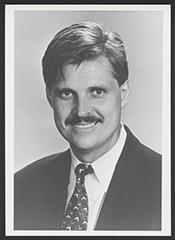
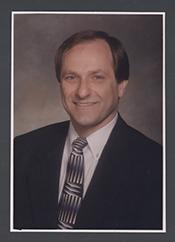
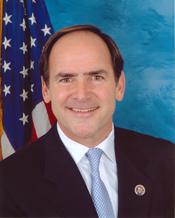
I thank the gentleman from California for yielding. Mr. Speaker, I was very excited to be part of this ethics task force. And led by the able leadership of Chairman Mike Capuano and Ranking Member…
I thank the gentleman from California for yielding.
Mr. Speaker, I was very excited to be part of this ethics task force. And led by the able leadership of Chairman Mike Capuano and Ranking Member Lamar Smith, I was very hopeful that we could work in a bipartisan fashion to come up with a good, solid ethics bill.
We held over 30 hearings. We worked very hard. And I believed we were on track until about last August. And sometime during last August, the outside special interest groups got to the Democrat leadership, and this whole effort was derailed.
And what came out of this was terrible and I will just give you one specific example. This whole thing puts all of us in a vulnerable situation, but in this one specific instance there are six members appointed to the Office of Congressional Ethics, the OCE, and there are supposed to be joint appointments with the Speaker of the House and the Minority Leader. But there is a caveat. If you cannot get an agreement, and just hold off for 90 days and get your respective appointee in this position as one of the six members of the OCE.
Now, why should we be concerned that this was hijacked by the outside groups? These outside special interest groups exist to chastise and press charges against Members of Congress. That's how they raise their money. That's why they exist. And they're on both sides of the political spectrum; so all of us are vulnerable. These groups take sides in political battles, and use any scrap of evidence they can find to try to press charges against Members of Congress.
In fact, if you have ever amended your FEC report, there are examples of how they've used that as alleged unethical charges against Members of Congress. And nothing disqualifies these members of outside groups from sitting on the OCE as one of six members.
So we're all vulnerable by these politically motivated people being incorporated into this whole process to make sure that all of us have a chance to face charges, whether justified or not.
Now, just think of your worst critic. They're out there in the blogs. They're in the call-in for your newspapers. These are the types of folks that you will be confronted with if we allow these outside groups to inject themselves in this process.
And how will you respond? Well, the first thing you will have to do is go out and hire a lawyer, and those lawyers are about $1,000 an hour; and a minimum investigation, even when you're innocent, is going to a quarter of a million dollars. Now, some people don't mind that. Some have plenty of money to burn. But I think a majority of Members here in this Congress realize that even a false charge can bankrupt them and force them into a position where they have no financial substance. That will happen in this ethics bill.
This is just the tip of the iceberg of how this process got hijacked and how this ethics bill is not fair to Members of Congress. It's unconstitutional. And I think this rule ought to be defeated. And if you have a single ounce of self-preservation, you will vote ``no'' for this rule and vote ``no'' against this unconstitutional bill.
Mr. Speaker, rise today with reluctance and regret that I am unable to support the House rule change before us today.
Exactly 12 months ago I was both honored and excited to receive the appointment from my leader to serve on the Speaker's Special Task Force on Ethics Enforcement. At the time, like my Republican colleagues, I was excited about the possibility of forging together a bipartisan piece of legislation that would address the fundamental issues that are currently plaguing our ethics system in Congress. Under the capable and civil leadership of Chairman Mike Capuano and Ranking Member Lamar Smith, I was hopeful of what we could achieve.
For the past 13 years I have observed the House ethics process and came to the conclusion early on that our system was not transparent enough, not efficient enough, and simply not effective. In a word, our system was broken. Sadly, today, I am forced to accept that the Speaker's Task Force has failed its mission and has produced a partisan, undemocratic, and unconstitutional bill that I am convinced will only compound our current problems--and further frustrate the wishes of the American people for this House to clean up its act.
While the Democrat proposal is flawed in several substantial ways, its biggest and most glaring failure is that it turns a democratic ethics process into an undemocratic and partisan one where justice can be easily denied. Under the proposal before us today, an investigation can he initiated by the action of only two of the six members of the new independent Office of Congressional Ethics, OCE.
The legislation also mandates that names of the two members remain secret and kept from the American public and the accused Member of Congress. An earlier version of this legislation required a majority vote of the new committee before proceeding to a second-phase review of the pending matter. However, under the version we are debating today, a full-fledged review and investigation may occur without a majority vote of the OCE. This proposal jettisons the basic and fundamental right of democracy and fair play.
Mr. Speaker, in addition to being undemocratic, this proposal also contains several provisions which are most likely unconstitutional and therefore unenforceable. The most egregious provision is the creation of the OCE.
In its 200+ years of existence, Congress has never seriously contemplated handing over one of its most important responsibilities-- that of regulating and disciplining its own Members--to an outside entity that is unaccountable to the American people unlike elected Members of Congress.
The legislation before us today would do just that. However, instead of abdicating our constitutional responsibility as specified in article I, section 5 of the United States Constitution, I propose that our task force goes back to work--and finds a solution which bridges our partisan differences while adhering to our constitutional obligations.
Our Ethics Committee is broken--so why not focus on and fix the problem instead of creating a whole new set of problems that will only serve to further undermine our ethics process? If Members of Congress are truly interested in repairing our ethics process--if Members of Congress are truly committed to restoring honor and integrity to this House--it's essential that we come together in a bipartisan spirit and develop a package that both sides can agree upon and support. Unfortunately, today's legislation falls way short of hitting that mark.
Mr. Speaker, in addition to abolishing basic rights of democracy and fair play--this proposal promises to undermine ongoing Ethic's Committee investigations and will likely impede Department of Justice investigations. In just one example, this legislation imposes an unreasonable period of time to investigate unethical conduct.
Quick and incomplete investigations can lead to unjust results-- including charging the innocent and letting the guilty off free. It's imperative that our processes of maintaining the highest standards of ethical behavior supports and complements the House Ethic's Committee-- regrettably, this bill will only undermine its ability to do its job.
On September 26, 2007, David H. Laufman, a former Investigative Counsel for the House Ethics Committee from 1996-2000 and a former federal prosecutor opined the following in Roll Call:
``[T]he creation of an outside ethics panel will not solve
the core problems that currently afflict the House. Real
ethics reform
in the House begins with willingness on the part of both
party leaderships to refrain from political intervention in
the ethics process and give the ethics committee the
independent, professional resources it needs to do its work.
. . . Creating an outside panel, moreover, would simply
create another layer of ethics bureaucracy that further slows
down a process already characterized by sluggishness.''
At this time I would like to submit Mr. Laufman's entire Op-Ed into the Record.
Mr. Speaker, instead of maintaining and fostering the cause of justice and ethical behavior in Congress, this piece of legislation may actually thwart the efforts of the Ethics Committee and Justice Department to investigate unethical behavior and punish Members appropriately. Again, if the Ethics Committee is broken lets fix or replace it--but why in the world would we want to ignore the problem by creating an additional layer of legislative redtape--which will only serve to work against the purposes of the Ethics Committee--instead of enhancing its ability to get its job done fairly and expeditiously.
Mr. Speaker, it was an honor to serve on this Task Force and work with my 7 distinguished colleagues. Over the past 12 months I participated in over 30 hearings, listening to testimony from a wide variety of interests on this important matter before us today.
While various organizations expressed their support for the concept of creating an independent body--and their endorsements have been promoted today in this debate--it would be unfair to not recognize that several witnesses expressed their misgivings and concerns with the direction this legislation would take the House ethics process. Witnesses I suggest were more qualified then others to testify to the pros and cons of creating a new independent body.
Last March the task force met in private with former Congressmen Bob Livingston, R-LA, and Louis Stokes, D-OH, regarding their experiences from serving as cochairs of the last House Ethics Task Force in 1997. Both men had served on the House Ethics Committee and were highly esteemed by their colleagues. Congressman Stokes was a former chairman of the House Ethics Committee and shared the following statement with our task force members:
I strongly believe the current Ethics Committee structure
should be preserved. I think Congress has a constitutional
obligation to police its members. The mechanism exists to
hire outside counsel whenever necessary, as the Committee did
in the Abscam cases and also in the sex and drug
investigations. In both cases the House received accolades
for its work. A dangerous aspect of investigations by either
a House Committee or an outside panel is interference with
Justice Department investigations.
At this time I would like to submit Mr. Stokes entire written statement into the Record.
Mr. Speaker, I would like to raise one additional point that warrants discussion. Regardless of the outcome of today's vote, I believe it is important that this House give serious consideration to providing attorney's fees for Members of Congress that may become the subject of an OCE or Ethics Committee review in the future--but are subsequently cleared of any baseless charges. Under the OCE structure set up in this rule, it will be very easy for any two members to initiate an investigation--for any reason--without any real evidence--which in turn will force any discerning Member to hire a DC attorney to make sure their rights are protected and their name is not damaged in the process.
Colleagues do not be fooled--this will become inevitable if this rule is enacted today.
I want to thank Chairman Capuano for highlighting the issue of attorney's fees in his Report and also commend him again for his leadership and hard work with the task force. While I am unable to support its outcome today, I know that every member of the task force is sincere in their desire and efforts to help fix what's wrong with our current ethics process. Unfortunately, today's rule change falls way short of our goal.
Mr. Speaker, let me acknowledge that we started out on a great glide path of bipartisanship--but eventually the Democrat leadership was influenced by various outside organizations that refused to accept any compromise that involved maintaining the current democratic rules of justice and fair play. For example, the task force members--both Democrat and Republican--had agreed in principal to allow outside entities the right to submit ethics complaints to the OCE.
In fact, this provision was requested by these various organizations and highly promoted as a vehicle to bring much needed credibility to the current ethics process. And, while I had some reservations about it I was willing to support this provision.
Unfortunately, these same organizations were not willing to be subjected to the same level of scrutiny and transparency they wished to impose upon Members of Congress--namely the disclosure of their largest donors who may or may not have an ax to grind with a Member of Congress. One official quoted in an article on the issue stated: ``you can. imagine how upsetting this [provision] is to the donor community.''
Indeed.
And that was the end of that.
In closing Mr. Speaker, let me also thank Ranking Member Lamar Smith for his leadership, experience, expertise, and tireless efforts that he brought to this important effort.
Let me also thank the capable staff that assisted us throughout this process, including: Paul Taylor, Chief Republican Counsel to the House Judiciary Subcommittee on the Constitution; Ed Cassidy, Senior Advisor and Floor Assistant to the Republican Leader, and my Chief of Staff, Jeff Kahrs.
Before I end I can't help but note the irony in spending well over 100 hours of my time hearing testimony and discussing the significant ramifications of each provision within this legislation--the most sweeping ethics legislation in over 10 years--and the Democrat leadership decision to bring this bill to the floor--under the cover of darkness--and under a closed partisan rule which only allows 30 minutes of debate on each side--that's less than 30 seconds for each Member of this House to be heard on this topic.
Mr. Speaker, I hope that Members will not be fooled by the lack of an open and full debate on this important issue. I strongly oppose this rule change and respectfully urge all Members--Democrats and Republicans--to reject this proposal. It's time for the Ethics Task Force to get back to work and find a bipartisan solution to our failed ethics process that is supported by a majority of both Republican and Democrat Members. Anything less then a bipartisan solution will result in partisan failure.
[From Roll Call, Sept. 26, 2007]
Outside Panel Won't Resolve Core Ethics Problems
(By David H. Laufman)
Now that President Bush has signed into law S. 1, the
Honest Leadership and Open Government Act of 2007, it is fair
to ask what sort of enforcement regime for the new rules
Members of Congress can expect from the Senate Ethics
Committee and the House Committee on Standards of Official
Conduct, also known as the House ethics committee. As in so
much of life, the answer is: It depends.
The Senate Ethics Committee has long functioned quietly and
methodically to evaluate ethics complaints and allegations of
misconduct in a professional, nonpartisan manner. That track
record reflects the relative collegiality of the Senate and
the inclination of the respective party leaderships to leave
ethics matters ``to the professionals'' for sorting out.
There is every reason to expect that the Senate committee
will bring the same balanced enforcement to the new rules
that has characterized its operations in the past.
The House ethics committee, however, is a different matter.
Although the committee has undertaken some tough
investigations in recent years--most notably, its inquiries
regarding former Majority Leader Tom DeLay (R-Texas) and
former Rep. Bud Shuster (R-Pa.)--it has been cleaved by
partisan turmoil and deadlock for much of the period since
the conclusion of the cases against former Speaker Newt
Gingrich (R-Ga.) in 1997. The nadir of this devolution
occurred in 2005, when two seasoned attorneys on the
committee's nonpartisan staff were fired in apparent
retribution for their work on the DeLay investigation, and
two committee members believed to be ``politically
unreliable'' by their party leadership were summarily
jettisoned.
Now, there is potential for even further disequilibrium in
the House ethics process. At issue is the pending
determination by the Special Task Force on Ethics Enforcement
as to whether an outside panel should be established to
conduct preliminary review of ethics complaints and make
recommendations to the House ethics committee on whether
investigative action should be undertaken.
As a former investigative counsel to the House ethics
committee who investigated both Democrats and Republicans--
and as a former federal prosecutor--I fully appreciate the
importance of conducting thorough, independent
investigations. I also appreciate that the establishment of
an outside ethics panel might enhance public confidence in
the integrity of the House ethics process. But the creation
of an outside ethics panel will not solve the core problems
that currently affect the House.
Real ethics reform in the House begins with a willingness
on the part of both party leaderships to refrain from
political intervention in the ethics process and give the
ethics committee the independent, professional resources it
needs to do its work. All the new ethics laws and rules in
the world will amount to nothing unless the party leadership
on both sides refrain from politicizing the ethics process,
the committee members ultimately charged with implementing
them are committed to consistent, nonpartisan enforcement,
and committee members do not have to worry about retaliation
from their party leadership or fellow members.
Establishing an outside ethics panel also would constitute
a historic abdication of the House's constitutional
responsibility for self-regulation. Article I, Section 5,
Clause 2 of the U.S. Constitution states that ``Each House
[of Congress] may determine the Rules of its Proceedings,
punish its Members for disorderly Behavior, and with the
Concurrence of two thirds, expel a Member.'' Although the
drafters of the Constitution chose the permissive ``may''
rather than ``shall,'' it is clear that they intended to
create a system of peer review where Members of Congress
shoulder the responsibility for weighing allegations of other
Members' misconduct. The establishment of an outside panel to
evaluate ethics complaints would be an unprecedented
deviation from more than 200 years of self-regulation.
Moreover, it would be tantamount to an admission that the
House is now unable to fully govern itself and needs
protection against its own improper impulses.
Nor, if established, would an outside panel likely improve
the House ethics process. First, none of the publicly
reported proposals under consideration to establish an
outside panel divests the House ethics committee of ultimate
decision-making discretion as to whether ethics violations
occurred or what sanctions to impose if a violation is found.
Creating an outside panel, moreover, would simply create
another layer of ethics bureaucracy that further slows down a
process already characterized by sluggishness. Second, making
informed assessments of allegations of misconduct requires
more than the mere application of law or rules to facts: It
also requires a nuanced understanding of the institutional
context in which the alleged misconduct occurred. Arguably,
the need for such a nuanced understanding is particularly
great in the case of a political institution that has its own
unique cultural attributes. It is possible that retired
Members of Congress could bring the necessary perspective to
bear if appointed to an outside ethics panel. It is less
likely that retired jurists, academicians or individuals from
other professions would be equally capable of making the
necessary contextual judgments.
That the committee would retain autonomy to reject the
recommendations of an outside panel ignores political
realities surrounding ethics scandals. If, for example, the
outside panel recommended that the committee initiate an
investigation--a recommendation that almost certainly would
become publicly known--the pressure on the committee from
interest groups and the news media to accept the panel's
recommendation would be formidable.
Clause 1 of House Rule 23, which comprises the Code of
Official Conduct, states that ``A Member, officer, or
employee of the House of Representatives shall conduct
himself at all times in a manner which shall reflect
creditably on the House of Representatives.'' The special
task force would bring credit on the House by rejecting the
idea of an outside ethics panel and recommitting the House to
ethics enforcement marked by bipartisanship and consensus.
Mr. Speaker, I actually find very little in Mr. Dreier's comments I disagree with. I agree with almost everything he has said, and I commend him for that very thoughtful speech. Mr. Speaker, before I…
Mr. Speaker, I actually find very little in Mr. Dreier's comments I disagree with. I agree with almost everything he has said, and I commend him for that very thoughtful speech.
Mr. Speaker, before I comment on the specifics, I'd also like to thank the members of the task force, especially Mr. Smith, who was the ranking member for Republicans. It was a great opportunity to become a friend of another Member. We did disagree in the end, but I found it to be a very thoughtful, fruitful, and enjoyable experience.
I also want to thank other members of the committee: Mr. Price, Mr. Scott, Ms. McCollum, Mr. Meehan before he left, Mr. Hobson, Mr. Camp, and Mr. Tiahrt. I thought we had some great meetings, and it was a pleasure to me to engage in this endeavor.
I also want to thank the Members of the freshman class of 2006. They're the ones who really kept the pressure on us to try to fix our ethics rules. They came here on the backs of public discontent with our actions, and they have kept our feet to the fire. I thank them for that.
I also want to thank the many people that helped us walk through this. There are many people whom I will list in my extension of remarks at a later time because there are too many of them. I do want to point out one staff member, in particular my own, Christina Tsafoulias, who worked countless hours trying to get through this. I want to thank her publicly for that.
On the specifics, again I think I agree with most everything Mr. Dreier said. This is really all about public trust, but the point that seems to be missed is the public does not trust us on ethics issues at this point. Maybe that's fair. Maybe that's unfair. Maybe it's based on reality. Maybe it's based on perception. But it is a fact. They do not trust us. They don't trust us for many different reasons. As I see it, I can point to two different issues in particular: the perception of the good-ol'-boy network. Now, maybe that's not fair, but it's certainly what our constituents think. They think we are all here protecting each other. They think that we operate beyond closed doors and smoke-filled rooms to make sure that
no bad things get said about our colleagues. I don't think that is true, but that's certainly the perception. When people don't have trust in the system, they don't have trust in us, and I think that's an important thing to address.
The other part of it, as was already pointed out, is transparency, or the lack thereof. That encourages people to think that the good-ol'-boy network is all that we rely on. As far as partisanship, I totally agree. Any system that results in partisanship on ethics matters is unsuccessful. But partisanship has two points: yes, there is partisanship to initiate witch hunts, and that is a concern, I believe, this proposal addresses that by requiring joint appointments and by requiring one Democratic appointment and one Republican appointment to initiate a review. It totally undermines any legitimate concerns about partisanship witch hunts.
But the other side of the coin that nobody here wants to talk about is the potential for partisan stonewalling, which we have suffered in this House in the past where one party simply says, You cannot look at our Member. Period. End of discussion. And if you do, we will remove Members from the Ethics Committee who look at that Member, which has happened in this House, and everybody knows it.
And to think that partisanship is only a one-sided witch hunt is a mistake. Partisanship is also stonewalling. It's also protecting our fellow colleagues who may or may not have done something wrong simply because they come from the same party as we do. That's just as wrong as partisan witch hunts, and I believe this proposal addresses that as well.
I also want to comment on the two proposals that were dropped on us lately. One of them had been in one form or another for a while; but both of them, in their final form, were dropped on us lately. I will simply tell you that, yes, we did look at them; and I have an opinion here which I will submit to the Record from the Congressional Research Service and one from the House counsel that states by bringing non- Members into a Member-oriented item to have official votes on matters in this House is likely to be unconstitutional.
Now, I know that some people don't want to hear it, and certainly it won't be definitive until the Supreme Court were ever to act on it, but there is all of these constitutional questions on everything we do. I, for one, am a lawyer. I try to figure out how unconstitutional an issue might be; and if the answer is it's more likely to be unconstitutional than not, I won't do it. If the answer is I think it's constitutional, you try it. If it gets knocked down in court later on, so be it.
So these two proposals, according to two independent agencies we could get direct answers on quickly, believe that it's unconstitutional.
As far as the rule goes, I have had a year's worth of debate, and I would have welcomed anybody to come to any of our meetings and participated at any time they wanted to have the hours-on-hours of discussion. At the same time, this is a pretty simple proposal. I know some people don't like the concept of an independent entity having something to do with our ethics process. I respect that opinion. I disagree with it, but I respect it. It is a fair concern. At the same time, that's what this is.
An up-or-down vote on that, I think, is a fair thing for the American people to let them know how we feel about this concept.
The material I referred to previously I will insert into the Record at this point.
Congressional Research Service,
Washington, DC, March 4, 2008.
Memorandum
Subject: Permissibility of Non-Members Being Appointed to a
Committee of the House of Representatives.
From: Jack Maskell, Legislative Attorney, American Law
Division.
This memorandum responds to requests from congressional
offices for a brief overview of the permissibility and
constitutionality of allowing the House to appoint non-
Members, that is, persons who are not current Members,
Delegates, or Resident Commissioner, to a committee of the
House of Representatives, with full voting privileges in
committee. Although the House of Representatives has
extensive authority and discretion concerning its own
internal proceedings and rules, the Constitution requires
that Members of the House be elected every two years by the
people of the several states, and thus a rule which would
allow persons who are not elected to the House to carry out
the constitutional functions of the House of Representatives
through full voting membership on one of its committees would
raise constitutional questions.
Each House of Congress generally has broad authority to
determine its own internal, procedural rules, and to
establish those procedures and internal structures within the
body to assist in implementing the institution's
constitutional duties. Under Article I, Section 5, cl. 2 of
the Constitution, which grants to each House the express
authority to ``determine the Rules of its Proceedings * *
*,'' the institution of the House, within the framework of
express constitutional requirements, has broad discretion
concerning its own internal operations and functionings as
befits a legislative assembly which is an independent, co-
equal branch of government under our tripartite governmental
system of separated powers. Under this authority, the courts
have traditionally given deference to the explication,
application, and definition of internal procedural matters in
both Houses of Congress. As noted by the Supreme Court in
United States v. Ballin: ``The question, therefore, is as to
the validity of this rule, and not what methods the Speaker
may of his own motion resort to * * * Neither do the
advantages or disadvantages, the wisdom or folly, of such a
rule present any matters for judicial consideration. With the
courts the question is only one of power. The Constitution
empowers each house to determine its rules of proceedings. It
may not by its rules ignore constitutional restraints or
violate fundamental rights, and there should be a reasonable
relation between the mode or method of proceeding established
by the rule and the result which is sought to be attained.
But within these limitations all matters of method are open
to the determination of the house, and it is no impeachment
of the rule to say that some other way would be better, more
accurate or even more just. It is no objection to the
validity of a rule that a different one has been prescribed
and in force for a length of time. The power to make rules is
not one which once exercised is exhausted. It is a continuous
power, always subject to be exercised by the house, and
within the limitations suggested, absolute and beyond the
challenge of any other body or tribunal.
When there are interpretative and definitional ``gaps'' in
language of constitutional provisions, for example, the
courts have allowed each House to fill in the details of such
constitutional provisions regarding its internal procedures.
As noted by the Supreme Court in the case regarding the
procedure that the Senate adopted to carry out its
constitutional duties to ``try'' impeachment cases: ``As a
rule the Constitution speaks in general terms, leaving
Congress to deal with subsidiary matters of detail as the
public interests and changing conditions may require * * *.''
The Supreme Court in Nixon v. United States, thus deferred to
the institution of the Senate in its determination under its
own rules of proceeding as to the method that the Senate uses
to ``try,'' as required by the Constitution, an impeachment
of a federal judge. Specifically, the Court deferred to the
judgment of the Senate to use only a small portion of the
entire membership of the Senate body, in the form of a
committee, to actually hear and take the evidentiary
testimony (and then to report to the full Senate which votes
to convict or not on the impeachment), since there was a
``textual commitment to a coordinate political department''
of the matter in the Constitution.
The courts have thus recognized the authority of
committees, and have allowed the committees broad
investigative and oversight authority, for example, because
committees of the House act as the House for those purposes
that are expressly delegated to those committees by the Rules
of the House (and have only those authorities and powers that
are in fact delegated from the full institution). The Supreme
Court has recognized the House's ``utilization of its
committees'' to carry out a ``legislative function belonging
to it under the Constitution.'' Since the committees act as
and on behalf of the House pursuant to its Rules, are
creatures of the House, and are in legal and actual essence a
division or sub-entity of the entire institution (carrying
out and exercising the constitutional functions of that
institution delegated to them), there is a very strong
indication that such committees exercising such functions may
generally be composed only of Members of the House.
Article I, Section 2 of the Constitution provides that
Members of the House must be elected every two years by the
people of the several States. Membership in the House, and by
extension on committees acting for the House, would thus
appear to require that a Member be elected by the people of
the several states. In a brief review of legal sources, we
have not discovered any precedent where non-Members of the
House have been members of a House committee with full
privileges and votes similar to any Member of the House, and
thus we have found no judicial decisions and rulings on its
permissibility, other than in the case of the elected
delegates or resident commissioners in the House. In Michel
v. Anderson, the United States Court of Appeals, District of
Columbia Circuit, found that there exists what one might
describe as an ``historical exception'' to the general
constitutional proposition that the House must only be made
up of Members elected from the several states, and that
exception, recognized in law from the
very first Congress (1 Stat. 50, 52 (1789)), was that people
in territories and districts under the jurisdiction of the
United States could have a non-voting delegate or
commissioner in the House (that is, that such delegate may
not vote on legislation on the floor) to ``represent'' them:
``The territorial delegates, representing those persons in
geographic areas not admitted as states, then, always have
been perceived as would-be congressmen who could be
authorized to take part in the internal affairs of the House
without being thought to encroach on the privileges of
membership.''
Such non-voting representatives, in the form of elected
delegates from the territories and districts not admitted as
states, have in practice sat on House committees, and could,
according to the court, if authorized by the House, vote in
the ``Committee of the Whole'' (but only if their vote was
not the determinative vote), but could not vote on
legislation on the floor.
However, the court in Michel v. Anderson expressly noted
that this historical exception for territorial delegates was
limited, and noted, in dicta, that such exception and
permission for territorial delegates to participate in
certain internal matters in the House could not be extended
or applied to allow the House to adopt a rule putting other
non-Members on House committees: ``The appellees, for their
part, forthrightly concede that the House could not permit
persons other than the traditional delegates to perform the
role currently played by the delegates. It would, thus, not
be open to the House to authorize by rule, say, the mayors of
the 100 largest cities to serve and vote on House
committees.''
In the case of allowing persons not elected as Members of
the House to be full voting members of a committee of the
House, such as in certain proposals concerning the House
Committee on Standards of Official Conduct, the precedent of
allowing territorial delegates to participate in certain
internal processes of the House, including voting in
committee, may be distinguished on three basic grounds.
First, there is historical precedent recognized from the
first Congress for the people of territories and districts,
not recognized as states, to have some limited, non-voting
representation in the House. In the proposals seeking to add
non-Members to the standing House Committee on Standards of
Official Conduct, no such purpose of representation of
persons in geographic regions under the jurisdiction of the
United States is provided, intended, or accomplished.
Secondly, as discussed above, the court noted in its opinion
that this historical permission for territorial delegates,
provided by law, to participate in certain House proceedings,
was a limited exception, and would not open the House to
``authorize by rule'' the addition of other persons (such as
mayors of cities) ``to serve and vote on House committees.''
Finally, the court noted that the voting of a territorial
delegate, even in a House committee or in the ``Committee of
the Whole'' (with the revote provision), is ``largely
symbolic'' because the vote could not immediately affect
legislation, such as a vote on legislation on the House floor
would. The duties and authority of the House Committee on
Standards of Official Conduct to both recommend the
discipline of a Member directly to the House, and to issue a
``letter of reproval'' on its own accord, upon the requisite
number of the votes of its members, may be seen as part of
the express constitutional authority of the House under
Article I, Section 5, cl. 2, to ``punish its Members for
disorderly Behaviour.'' As such, these activities might be
considered part of the direct and express constitutional
function of the House, delegated to and exercised in some
part by one of its committees made up of its own Members,
and thus something more than merely the ``symbolic act''
which was the subject of the Michel v. Anderson case.
A committee of the House, such as the House Committee on
Standards of Official Conduct, could clearly employ staff to
assist the committee in carrying out its functions, and could
use an ``outside counsel,'' an advisory committee, or ``task
force'' made up of non-Members (and even including on its
membership some sitting House Members) to assist the
committee in its investigative work, fact-finding, and even
recommending to the Committee that it take certain action on
matters. However, it may be argued that under existing
decisions and precedent, allowing persons who are not elected
as Members (or as delegates representing persons under the
jurisdiction of the United States in geographic regions that
are not states) to be full voting members of a House
committee exercising the constitutional functions of the
House delegated to it could, in the words of the U.S. Court
of Appeals, ``encroach on the privileges of membership.''
Jack Maskell
Legislative Attorney.
I thank the gentleman for yielding. Mr. Speaker, I stood right here a few years ago against my party in favor of reform. I got scars on my back from standing for reform. But I heard John Tanner say…
I thank the gentleman for yielding.
Mr. Speaker, I stood right here a few years ago against my party in favor of reform. I got scars on my back from standing for reform. But I heard John Tanner say when I got to Congress that neither party has an exclusive on integrity and ideas, and I believe that is true.
I want to tell you tonight, on the same platform I stood a few years ago when I joined then minority in this reform, there is good reform and there is bad reform. This is bad reform. I don't care what you say about it, how kind you are about it, this is bad reform. It is not good for the institution. It is not workable.
Mr. Speaker, I submit for the Record a four-page document by Ken Kellner, the senior counsel for your majority Ethics Committee, explaining all the problems.
Review of Task Force Proposal
Bill: I looked over the draft resolution forwarded by Rep.
Smith. I suggest you review it closely as well. Review of the
draft was not to critique the need for or merits of the
proposal, but to identify areas in which the proposal would
interfere with the operations of the Committee. We cannot
anticipate all plausible areas of concern prior to actual
implementation, but I did the best I could.
1. The new ``Office'' or ``Board'' is expressly authorized
to take up matters on its own initiative and to conduct
interviews and obtain testimony in its ``review'' of such
matters. See Section 1(c)(1)(A). This raises several
concerns, listed below:
As the Committee noted in its earlier feedback to the task
force, the interview of witnesses by both the new entity and
the Committee might result in conflicting statements that
would undermine the value of testimony from that witness.
Statements from witnesses would also likely be obtained
prematurely due to the time deadlines imposed on the new
entity. Sometimes there are valid investigative reasons not
to reveal the existence of an investigation to a witness
until other witnesses are interviewed or other evidence
obtained. In the course of its proceedings, the new entity
might reveal critical evidence or information to key
witnesses. The failure of those witnesses to keep this
information confidential may be very harmful to the integrity
of any future Committee inquiry.
The ``self-initiation'' discretion could undermine current
rules that limit complaints to those filed by Members. An
agent could provide information to the new entity that would
trigger review under its rules. There is no accountability as
to the source of information, unlike with respect to
``complainants,'' who must certify that the ``information is
submitted in good faith and warrants the review and
consideration of the Committee,'' and who must provide a copy
of the complaint and all attachments to the respondent. See
Committee Rules (d) and (e).
2. The new entity must ``transmit to the individual who is
the subject of the second-phase review the written report and
findings of the board[.]'' See Section 1(c)(2)(C)(ii). In
addition, the report will include ``findings of fact,'' ``a
description of any relevant information that it was unable to
obtain or witnesses whom it was unable to interview [] and
the reasons therefore,'' and a recommendation for the
issuance of subpoenas where appropriate.''
It is a bad idea for the Committee's purposes that the
``written report and findings of the board'' be transmitted
both to the Committee and to the individual under review.
This will provide information to a potential respondent at an
inappropriate stage, including alerting the respondent as to
witnesses who have been identified as potential recipients of
subpoenas. At a minimum, this would provide opportunities for
the coordination (or appearance of coordination) of
testimony. Potential respondents would also be alerted as to
difficulties encountered in obtaining information from
certain witnesses. This could discourage negotiated outcomes
if a respondent knows that certain individuals are not
cooperating witnesses.
This process is not sensitive to the need for
confidentiality of witness information at the early stages of
an investigation. Members, staff, and private individuals
should be able to provide information in confidence, at least
at the initial stages. The new rules may have an anti-
whistleblower effect and possibly employment ramifications
for individuals as well. For example, what if it is revealed
that a current employee is providing or refusing to provide
information about his or her employing Member? A previous
ethics task force was ``mindful'' of the need to ``protect
the confidentiality of a witness prior to publicly
disclosing'' a statement of alleged violation. Report of the
Ethics Reform Task Force on H. Res. 168, 105th Cong., 1st
Sess. at 25 (June 17, 1997).
The proposal is also inconsistent with Committee rules and
practices that keep investigative information confidential.
Under Committee Rule 26(f), evidence gathered by an
Investigative Subcommittee that would potentially be used to
prove a violation ``shall be made available to the respondent
and his or her counsel only after each agrees, in writing,
that no document, information, or other materials . . . shall
be made public until'' a Statement of Alleged Violation is
made public by the Committee or an adjudicatory hearing is
commenced.
There is no rule or precedent in effect for the new entity
for dealing with concerns of the Department of Justice in
cases of concurrent jurisdiction. As noted, under the
proposed process, there is considerable potential for the
making of inconsistent statements by witnesses and for the
release of confidential information. It this occurs, it
could easily undermine active criminal investigations.
The Board may make ``findings of fact'' as part of their
submission. This is generally a
function for a trier of fact after an opportunity for a
defendant/respondent to cross-examine witnesses or challenge
the evidence. What if the findings differ from those reached
by the Committee?
3. There appears to be a requirement that the Committee
publicly disclose Board submissions to the Committee. See
Section 3(2). This would occur if the Committee declines to
empanel an Investigative Subcommittee or if one year has
passed from the date of the referral from the new entity.
This means that the Committee must release the Board's
findings, even if the Committee has already determined to
handle the matter non-publicly. This is inconsistent with the
discretion now with the Committee (and investigative bodies
generally) to exercise judgment as to what matters to address
in a non-public fashion. With the possibility of review by
the new entity and public disclosure of conduct, there will
be greatly reduced incentive for witnesses and investigated
parties to cooperate with the Committee or to do so with
complete cooperation and candor.
This procedure also may place artificial pressure on an
Investigative Subcommittee to complete its work in well less
than a year, regardless of the impact on the investigation.
While such a time period may be sufficient, neither the
Department of Justice nor other law enforcement entities and
regulatory bodies, are subject to such limitations as they
would generally impact adversely on the completeness of an
inquiry.
4. A provision in the proposal provides that the Office
will cease its review of a matter on the request of the
Committee ``because of the ongoing investigation of such
matter by the Committee.'' See Section 1(d).
This rule should be clarified to make clear that it
includes informal fact-finding efforts by the Chair and
Ranking Member of the Committee. Otherwise, this important
rule may only have effect in the unusual case of empanelled
subcommittees. New language could be ``because of the ongoing
review of this matter by the Committee in accordance with the
Committee's rules.'' Section 1(d) and Section 3(3) should be
revised.
5. If the new entity ceases such review at the request of
the Committee it will ``so notify any individual who is the
subject of the review.'' See Section 1(d).
There are valid circumstances under which the Committee
would not want to notify an individual that it is undertaking
review of a matter until it is ready to do so for valid
investigative and privacy reasons. In general, it is not the
routine practice of law enforcement entities to notify
individuals. Such disclosures could trigger protective
behaviors that might undermine an investigation, as well as
lead individuals to hire of attorneys (perhaps unnecessarily
and at considerable expense). [By analogy, would it be
appropriate in all cases to notify a respondent that the
Committee has referred evidence of criminal conduct to the
Department of Justice? In many cases, it is in the interests
of criminal law enforcement that such referrals be made in
confidence.]
6. The new entity must adopt a ``rule requiring that there
be no ex parte communications between any member of the board
and any individual who is the subject of
any review by the board.'' See Section 1(c)(2)(E)(iv).
This provision should be revised to prohibit communications
from any interested persons and any member of the board, as
well as make explicit that ex parte contacts include those
made by counsel. A useful provision to examine in considering
ex parte prohibitions is the provision contained in Federal
Election Commission regulations pertaining to contacts with
any Commissioner. See 11 C.F.R. Sec. 201.2.
Kenneth E. Kellner,
Senior Counsel, Committee on
Standards of Official Conduct.
They kept a lid on it till today, and the bill is up tonight, and here it is. It is bad reform.
If you think that the steroid and baseball hearings are a distraction over the business of the people of this country, wait until tomorrow when this goes into effect, when outsiders are firing political shots at each other, listening to people back home want us to quit bickering and sniping and firing shots at each other and get these important things done for them.
The gentlelady said she yields the customary time. This is not a customary process. The rule was shut down. There are no substitutes, there is no recommit, there are no alternatives, and there is no consideration of a bipartisan alternative by two people with integrity who have been working together for weeks to have a day to say, no, this is a better approach.
Have former Members, first time ever that outsiders are part of this process, but they are former Members. They have no ax to grind. They will call it like it is. Let's take a logical step.
But let me tell you, if this is based on trying to hold the House, that's a false strategy. When we put our reelection as a majority above the people's business and honor and integrity we lost, and we should have, and you are doing the same thing.
Don't do this, House. It's not good for this country, and it's not good for us.
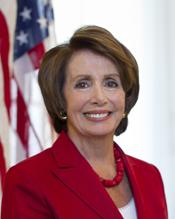
Mr. Speaker, I thank the gentlelady from Ohio, Congresswoman Sutton, for yielding and for managing this very challenging bill this evening with such dignity. This is an important time for us, my…
Mr. Speaker, I thank the gentlelady from Ohio, Congresswoman Sutton, for yielding and for managing this very challenging bill this evening with such dignity.
This is an important time for us, my colleagues, because we are sending a message to the American people as to who we are. We know each other to be honorable individuals who come here with the best motivation. Our title ``Representative'' is our job description, to represent the people of our districts. We gain respect for each other as we work on issues across the aisle, across the region, across generations in every way, representing the beautiful diversity of our country.
Unfortunately, the American people do not share our view of ourselves here in the Congress and our reputation has received tarnish. Part of that tarnish came from a culture of corruption that preceded the Democratic takeover of this Congress. When I became Speaker of the House, I said it was necessary to drain the swamp that is Washington, D.C. so that the people will understand that we are here for the people's interest and not the special interests.
And so this legislation that is before us today represents what I believe is necessary for us to convey to the American people what we owe them: our best effort to have this Congress live up to the highest ethical standard.
And I know of what I speak because I had the responsibility to serve on the Ethics Committee for 6 years when we took up some terrible issues. The bank scandal, remember that? Many of you weren't here yet, but it was a horrible time. The Newt Gingrich case, it was a horrible time. During that time, as divided as we were, Democrat and Republican, I would pray at night that something exculpatory would come along, something that would say we don't need to continue this case because there is evidence that these charges are not true. It is hard, it is hard to pass judgment on your colleagues. It is very difficult.
And I say that in the most bipartisan way, and we worked together on that committee in a very bipartisan way during some very difficult times.
After 6 years, I thought my service was over; and I had to spend another year on what Mr. Hoyer referenced as the Livingston-Cardin Committee to rewrite the rules. We thought we did a really good job; but, obviously, a review of them some years later said we have to do more.
But that has been the story of ethics in the Congress. Since the Ethics Committee was first created in 1967, the House has set increasingly higher standards of conduct to guide Members because public service is a public trust. As I said, in recent years that trust has been eroded, and we have come here to drain the swamp.
Just last year on the first day of the Congress, the New Direction Congress, the House implemented new and sweeping changes to the gift and travel restrictions. Last September we passed the historic Honest Leadership and Open Government Act, historic lobbying and ethics reform that is now the law of the land.
Today, the New Direction Congress will, for the first time, open the ethics process up to the participation of our fellow citizens, which will make this institution more accountable to the people who sent us here, the American people. I welcome their assistance.
I want to say a word about Mr. Capuano. I want to thank him for his service to our country. In recognizing him, I want to recognize the participation of all of the members, Democrats and Republicans, on the task force, for their service to this House; and I believe there was a good-faith effort made to keep this process as bipartisan as possible. And that is the best you can do. If at the end of the day there is not a willingness to make the reforms necessary to restore the confidence of the American people in the Congress of the United States, then you cannot be held back because some do not want to act.
Mr. Capuano, I believe, led this effort in a way that was bipartisan and sensitive to the institution's history and traditions. And I must say that I received, early on, compliments from his co-Chair, the Republican co-Chair of the committee, about working with Mr. Capuano. He said something like, I am sorry you appointed him because he is very good to work with. That was supposed to be a joke.
In any event, I would like to extend special thanks to him for undertaking this very difficult task, not only in trying to make something that is important work, but also to convince our colleagues that this is the route to take.
Now as I said, I served on the committee under the old rules and I helped write the new rules, and there is always a time to revisit all of it. And there will be a time to revisit these rules as well.
A special thanks to my friend, Mr. David Hobson, for his work on the task force and for his many years of distinguished service in the Congress. We will miss his thoughtful deliberations and his contributions to our country. Thank you, David Hobson.
As I mentioned, I served on the Ethics Committee during some very, very difficult times; and I want to extend my deep respect and appreciation to those who serve on this committee now and who have served past and present. Until you have undergone that, until you have undergone that, you cannot really understand how difficult it is. And how happy you are when your term of office ends. But I want to salute them, all of them, past and present, for their important work.
I have deep respect for what Mr. Capuano, striving to work in a bipartisan way, has tried to achieve. Adopting the Capuano Task Force recommendations will provide the public and the House with the assurance that credible, credible allegations of wrongdoing will be addressed by the Ethics Committee in a timely fashion. I emphasize the word ``credible'' because I have no doubt that the main target of this, and who do you think the main target of any outside groups to this group will be? You're looking at her. You are looking at her.
But I am willing to take that risk because I also trust, yes, I also trust, my polite colleagues, I also trust that this group will rid itself of frivolous, baseless complaints and send a message to those who would file repeated frivolous complaints that is their price to pay to do this. I consider this a protection.
It will bring an additional measure of transparency to the ethics enforcement process. It creates this transparency, I think it is important to note, without compromising the House's constitutional prerogatives to discipline its Members without interfering with the work of the Ethics Committee and without altering the substantive rules governing the conduct of the committee's deliberations.
I fully realize that bringing non-Members to this enforcement mechanism is not only a step forward; it is a departure. It is a departure from the traditions of the House.
To those who have those concerns, I pledge that I will work closely with my friend, the Republican leader, Mr. Boehner, to jointly appoint the members of this new Office of Congressional Ethics, fair men and women who understand the importance of nonpartisan behavior and the compelling need to act fairly to protect the interests of the public, the House, and especially the Members.
Finally, Mr. Speaker, I pledge that the House leadership, and I know I heard, listened with great interest to what Mr. Hoyer had to say about this, and thank you, Mr. Hoyer, for your extraordinary leadership on making Congress more accountable and live up to a high ethical standard. Our leadership will closely monitor the work of the new Office of Congressional Ethics and continually review all reasonable proposals intended to guarantee the highest ethical conduct and a more transparent and effective ethics process. Whether they relate to the new panel or the Ethics Committee itself, if additional changes are required, we will propose them.
And since I mentioned Mr. Hoyer's name, I want to associate myself with one of the remarks he made. I thought it was 30 days. Mr. Hoyer said 45 days. But in a very short period of time, according to the proposal that the Republicans are putting forth, in a very short period of time if the Ethics Committee had not disposed of those charges, they would go to the Justice Department. They would go to the Justice Department.
Well, the Ethics Committee is about the rules of the House, about conducting ourselves in a way that brings honor to the House. Many of those issues are not matters for the Justice Department. The Justice Department knows when its jurisdiction should weigh in.
This is about the facts, the rules of the House, and sometimes the law of the land. It's not about hearsay, rumor, suspicion, I thought so, somebody told me. It's about the facts, the rules and the law of the land. That is all that matters. That is all that matters.
I think that this evening this Congress has an opportunity to send a message to the American people, and as we do, each and every one of us does as well. Our votes will speak for themselves. We are willing to take a chance to make a vote on something we might have written differently. And I don't know one bill I've ever voted for that I wouldn't have, something you might have written differently, but something that can strive to remove the doubt that is in the minds of the American people about the integrity of this body.
I hope that you will all join in voting for this. It is worthy of your support. I know that, with my vote, I will be able to say I did everything I could, respecting the work of those who undertook this for practically 1 year to come up with a proposal that was fair, that was effective, and that helped us drain the swamp and say to our bosses, the people who sent us here, we honor you with our service, and we pledge to you that we will always serve in a Congress that upholds the highest ethical standard.
This is an important vote. I urge our colleagues to vote ``aye.'' And I thank Mr. Capuano once again for his extraordinary leadership.
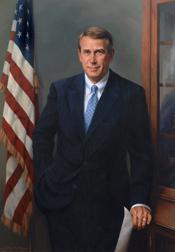
My colleagues, rebuilding the bonds of trust between those of us who serve in this institution and the American people should be our highest priority. And I think the American people have every right…
My colleagues, rebuilding the bonds of trust between those of us who serve in this institution and the American people should be our highest priority. And I think the American people have every right to expect the highest ethical standards of every Member of this institution, and I think it is our obligation to deliver on that commitment to the American people.
Clearly, the Speaker believes that we need to establish this Office of Congressional Ethics because the Ethics Committee process is broken. Let me say, I agree with her. It is broken. It didn't work under Republican control here for at least the last 5 or 6 years that we had the majority in this House, and the lack of evidence that I've seen over the last 15 months, it's not worked well under the Democratic majority either.
In December of 2006, as the Speaker was waiting to take her position, she and I sat down and we talked about this. I expressed to her at the time my serious reservations about some outside, independent group that was responsible to no one. And I mentioned to the Speaker at the time that I thought that our obligations, as the leaders of this institution, were to stand up to make sure that this process really did work.
I think every Member of this institution wants the Ethics Committee process to work fairly, to work honestly, and to work in a bipartisan fashion, because it is our obligation to the American people and the obligation of each and every one of us, for the future of this institution, to make sure that this process works fairly, honestly, and in a bipartisan way.
I was here in 1991. Some of you were. Most of you weren't. I was standing right on the back wall when I and some of my colleagues had information that we read in USA Today about Members of Congress bouncing 8,300-some-odd checks the year before at the House bank. Some of us wanted to know why or how, what was going on at the House bank. And before we could get to the microphones with our privileged resolution, the Speaker of the House was down here in the well of the House. The majority leader was down here in the well of the House. Even the Republican leader was here in the well of the House, and all three of them basically said the same thing: We didn't do anything wrong, and we won't do it again.
So, for those of you that have concerns about the habits of this institution to sweep these issues under the rug, I saw it, and I've seen it since on both sides of the aisle.
When we will not rise up to meet our responsibility as Members, to judge each other and to hold ourselves to a higher ethical standard, I know that tendency. And for those new Members that are here who want to bring this process and make it more transparent and make it more open, trust me, there's no one who will work more closely with you to make it happen. The Ethics Committee process, again, I'm going to say it again, needs to work fairly, it needs to work honestly, and it needs to work in a bipartisan fashion.
In 2005 and 2006, the then minority leader, Ms. Pelosi, the minority whip, Mr. Hoyer, castigated the majority to no end over the issue of, it might have been in 2004 and 2005, over the issue of making changes to the ethics process and the ethics rules in a partisan manner. And I agreed with them. And those changes were later rescinded by a vote in this House.
But over the last 15 months, three times we've had bipartisan, I mean partisan changes to the rules brought to the floor of this House and forced down Members' throats. Three times. Tonight is the fourth time, the fourth time that we've gone down the same path that people decried and decried. And I think all of us on both sides of the aisle know that if this process is going to work fairly and honestly and in a bipartisan manner, it needs to be written in a bipartisan manner. No other way around it.
The members of the task force, Mike Capuano, the gentleman from Massachusetts, the other three Democrat members, Lamar Smith and the other three Republican members really did hard work and really tried to come to some agreement. But when you start to create this outside entity, as an excuse, as a way of saying we're doing something, instead of actually fixing the problem, that's where we could never come to an agreement.
I look around this House and I know that there are a majority of the Members of this House who are opposed to the creation of this Office of Congressional Ethics. I see you. I know who you are. You all know it.
We've been through this process. The 18 years that I've been here, we've been through this process of self-flagellating ourselves and introducing new ethics packages, passing them on the floor of the House, all of it, all of it under some rules of public pressure.
But what we really have never done is to create an ethics process that does work fairly and honestly in a bipartisan manner. I don't know what goes on down there, and I understand there's a reason for some secrecy, but to have some idea that something is moving in the ethics process would be helpful, to know that they are investigating case number whatever it is and that it will move.
But I do think that the proposal that we have tonight before us is partisan. I don't think it'll work. And I don't think it's in the best interest of the American people or this institution.
The current Ethics Committee is made up of five members appointed by the Speaker and five members appointed by the minority leader. It's bipartisan. The problem we have is that the process itself has not worked. And it's been frankly 10 years since it's worked very well. Now, there's a lot of ways to make it work. I think more transparency and more accountability. And I think Members could come to an agreement on making that process work, although I do believe the most important thing that will make it work is a commitment by the leaders on both sides of the aisle to say, we expect the Ethics Committee to work; we expect them to do our job. And the two leaders need to stand there and uphold those Members and the work that they do on behalf of this entire House. It can happen.
But the new proposal is three Members appointed by the Speaker and three Members appointed by myself and we have to come to an agreement. We have six Members that we could, six Members on this outside organization that we could agree on.
Now, the Speaker and I have come to some agreements here over the last couple of weeks, and it's been a very nice and wonderful experience. But to think that we can come to an agreement on six people to serve on this outside panel strikes me as a stretch. I can't imagine who in their right mind would want to serve on this outside panel because of the fighting that's going to occur, not by Members, but by partisan groups on both sides who are going to want to be filing frivolous complaints. And the problem with this outside process is that it does not have the secrecy and accountability that's necessary to ensure that Members' reputations aren't drug through the mud by some partisan charge that may have no basis in fact at all. None.
Now, if the bipartisan process that we have called the Ethics Committee doesn't work, why would we think that this bipartisan outside Ethics Committee is going to work any better?
I just want to say that this institution means a lot to me. It means a lot to, I think, all of us who serve. And before I came to the floor, I was watching the proceedings from my office, and I saw the new Member, the gentleman from Illinois, sitting here, probably was scratching his head wondering on his first day in Congress he's in the middle of this big partisan fight. It's not usually this way. But I've got to tell you that it really isn't usually this way.
What we're about to undertake here is something that will never be undone, if we do it. And if we do it wrong, which I believe it is being done wrong, it will be something that this institution and its Members will live with for a long, long time to come.
And I think there's only one real answer, and I want all of my colleagues to really seriously consider doing the right thing tonight. I think that we ought to defeat the previous question. I think that we ought to send this back to a committee that can, in a bipartisan way, find a way to make the Ethics Committee process work in the fair,
honest and bipartisan manner in which we all want it to work. Let's not paper over the problem. Let us go fix the problem, and the problem is the Ethics Committee process itself.
And so I would ask my colleagues to thank the great work of the bipartisan group of Members who tried to put this together, thank them for their job and the job they did for this institution. But let's also reject this proposal, agree that we will work together in a bipartisan way to do the right thing for our Members, our colleagues, this institution and for the American people.
Defeat the previous question.
Mr. Speaker, parliamentary inquiry.
Mr. Speaker, did I understand that to challenge the vote on the previous question that it would rise to a question of the privileges of the House? Is that correct?
Mr. Speaker, I believe that the privileges of the House have been dishonored, that the rules have been violated.
Mr. Speaker, when could I introduce a privileged motion?
If I can't offer a privileged resolution until this business has been completed, there will have been a vote taken on final passage of this rule, which basically takes my remedy away from me. I believe that under the rule as written by the majority that a vote cannot be held open solely for the purpose of trying to change the outcome. It was violated.
Mr. Speaker, I move to adjourn.
Mr. Speaker, I thank my friend for yielding me the customary 30 minutes, and with that, I yield myself such time as I might consume. (Mr. DREIER asked and was given permission to revise and extend…
Mr. Speaker, I thank my friend for yielding me the customary 30 minutes, and with that, I yield myself such time as I might consume.
(Mr. DREIER asked and was given permission to revise and extend his remarks.)
Mr. Speaker, as legislators there can be no issue of more fundamental importance than the strength and the integrity of our institution. None of our work here, none of our legislative or political priorities matter if we don't have the integrity and the trust of the people that are necessary to be an effective body.
The Founders of our Republic, the authors of our Constitution, were well aware of the inherent challenges in making government fully accountable. They understood human nature and the pitfalls that go with investing power in individuals.
After all, Madison famously wrote in Federalist 51: ``But what is government itself but the greatest of all reflections on human nature? If men were angels, no government would be necessary. If angels were to govern men, neither external nor internal controls on government would be necessary. In framing a government which is to be administered by men over men, the great difficulty lies in this: You must first enable the government to control the governed; and in the next place oblige it to control itself.'' Those were the brilliant words of the Father of our Constitution.
Our Founders recognized, Mr. Speaker, these challenges and knew the answer was to empower institutions rather than individuals. They knew that
the House of Representatives, like all government institutions, must have the authority and the imperative to preserve its integrity and to punish those individual Members who would tarnish its reputation, diminish its stature, and erode its ability to serve as the representative of the people.
They gave explicit constitutional authority to do so. As we all know, Article II, section V, clause 2 of the Constitution directs Congress to ``determine the rules of its proceedings, punish its members for disorderly behavior, and, with the concurrence of two-thirds, expel a member.''
Ultimately, Mr. Speaker, they knew that the most important guarantor of accountable and trustworthy government is democracy itself. No individual Member of Congress ever acts with impunity because we are judged every 2 years by the people who sent us here. And, of course, no one is above the law.
As we speak, there are former colleagues of ours serving time in jail for their abuses of the offices that we hold. Outside watchdog groups, the media, individual voters and our criminal justice system are all working, and working quite effectively, to shed some light on this body and ensure Members are held accountable.
Externally, Mr. Speaker, the pressure is on. The problem is how to deal with accountability internally; how do we fulfill our constitutional imperative to police ourselves and preserve the integrity of this body. Our current process is broken. It's hamstrung by two key problems: partisan deadlock and a lack of transparency. This a serious challenge. It is so serious that some Members of this body apparently feel that we are not up to the job.
A task force was established to consider the question of whether we should just throw up our hands, concede that we are not capable of fulfilling our constitutional duty to police ourselves and set up another body to do it for us.
This was a dubious task to begin with, but I believe that it was tackled with all sincerity and commitment. Mr. Capuano and Mr. Smith took on the role assigned to them and very carefully considered the question. But the breakdown came when it was time to make its recommendation.
The proposal put forth by Mr. Capuano, which ignores the real problem of a broken, internal ethics process, and in fact exacerbates the problem by adding a new partisan outside body, was not endorsed by his Republican counterpart. It met immediate criticism on both sides of the aisle. The Democratic leadership had no choice but to pull it.
Now, Mr. Smith offered a very thoughtful alternative, and we were told that consideration of Mr. Capuano's proposal was being postponed in order to work with Mr. Smith and consider his suggestion. That bipartisan negotiation, to my knowledge, Mr. Speaker, never took place. Mr. Wamp and Mr. Hill also submitted a proposal, a bipartisan proposal; but it was disregarded as well. Instead, we are back here confronting essentially the same deeply flawed proposal that was yanked from the schedule a couple of weeks ago.
They may have put lipstick on that pig, but it is still a pig, Mr. Speaker. This proposal still sets the stage for partisan witch hunts. It may take bipartisan support to initiate investigations, but they can be advanced purely on partisan lines. So at the very beginning, when little information is known, bipartisanship is called for. But once the process begins, the flood gates for partisan attacks are wide open. The minor modifications made to the original proposal do nothing more than attempt to obfuscate the utterly partisan nature of the proposed Office of Congressional Ethics.
As we have seen countless times under the Democratic leadership, a bad proposal demands a draconian process to get it through. And the worse the proposal is, the worse the process needs to be. We've seen an explosion of closed rules in this Congress. And what does a closed rule do? It severely restricts debate and shuts out all amendments. This has become the go-to rule for this new majority. And that's as bad as it could possibly get. Right? There is nothing worse that they could do than to shut out all amendments and alternatives. Right?
I used to think so until this point, until we saw this rule. This one absolutely takes the cake, Mr. Speaker. In case you missed it when the Clerk read it, and allow me to repeat it, pay attention or you will miss it again: ``Resolved, that House Resolution 895, as amended by the amendment printed in the report of the Committee on Rules accompanying this resolution, is hereby adopted.'' That's what the resolution says. This rule actually provides for passage of the underlying proposal without so much as one single word of debate on this proposal. They simply declare it into existence. No debate, no vote. A closed rule may shut out dissent, but this rule eliminates deliberation altogether.
Before this Congress even began, our distinguished Speaker, my fellow Californian, committed to ``the most honest and open government,'' has managed to stoop to unprecedented lows in closed, inaccessible government that operates purely on back-room deals with no place for open, honest debate. And for what purpose? To ram through a policy so bad it has been widely and heavily criticized by both Democrats and Republicans. A policy to turn our ethics process into nothing more than cheap partisan games and a policy of abandoning our constitutional imperative to police ourselves and ensure the integrity of this great institution. This is terrible policy, brought to us by a singularly terrible rule.
I urge my colleagues to reject the rule and demand real ethics reform that actually addresses the root problems in our current system and accepts responsibility, as the Constitution directs us to, for our own ethics process.
With that, I reserve the balance of my time.
Mr. Speaker, I am happy to yield 2 minutes to a hardworking member of this so-called bipartisan task force on ethics reform, my friend from Michigan (Mr. Camp).
Mr. Speaker, at this time I am happy to yield 4 minutes to my friend from Pasco, the former chairman of the Committee on Standards of Official Conduct, the present ranking member, Mr. Hastings.
Mr. Speaker, I'm happy to yield 5 minutes to my very good friend, the gentleman from San Antonio, the Republican leader of this important task force, Mr. Smith.
Mr. Speaker, at this time I am happy to yield 2 minutes to the distinguished Republican whip, the gentleman from Missouri (Mr. Blunt).
Mr. Speaker, I would just say in response to my friend that bipartisan input has, unfortunately, not taken place. The gentleman is totally incorrect.
And to confirm that, Mr. Speaker, I am happy to yield 3 minutes to a hardworking member of the task force, my friend from Goddard, Kansas (Mr. Tiahrt).
(Mr. TIAHRT asked and was given permission to revise and extend his remarks.)
Mr. Speaker, by direction of the Committee on Rules, I call up House Resolution 1031 and ask for its immediate consideration Mr. Speaker, for the purpose of debate only, I yield the customary 30…
Mr. Speaker, by direction of the Committee on Rules, I call up House Resolution 1031 and ask for its immediate consideration
Mr. Speaker, for the purpose of debate only, I yield the customary 30 minutes to the gentleman from California (Mr. Dreier). All time yielded during consideration of the rule is for debate only.
General Leave
Mr. Speaker, I ask unanimous consent that all Members have 5 legislative days within which to revise and extend their remarks and to insert extraneous materials into the Record.
Mr. Speaker, I yield myself such time as I may consume.
If there is time available, we will entertain that.
Yes.
If there is time remaining that hasn't already been assigned or requested, we will certainly not preclude opposition.
We're working on the list.
Mr. Speaker, I can't guarantee the time.
Mr. Speaker, I reclaim my time.
Mr. Speaker, H. Res. 1031 provides for the adoption of H. Res. 895, which establishes an Office of Congressional Ethics in the House of Representatives. I rise in support of this important rule that will allow us to enact one of the most important ethics reforms this House has ever seen.
Mr. Speaker, the issue of ethics and accountability has long been on the minds of the people that I represent. During my campaign to become a Member of this esteemed body, everywhere I went, people asked about it. They believed and, Mr. Speaker, they were absolutely right, that the corruption and unfair influence that existed in past Congresses was having an effect on our policies, deflecting us from making progress on issues important to them and families across this great Nation.
So last year, Mr. Speaker, on my first day in office representing the people of Ohio's 13th District, I was very proud to stand on the floor of the House of Representatives to support the new ethics and lobbying reforms which have now become law. We ended the K Street Project and cut off the gifts and the perks used far too often by lobbyists to woo lawmakers. The historic rules package we passed was extraordinary in its scope and breadth. But it was only the beginning of actions necessary to restore the public trust and to cut off the abuses of recent years.
Mr. Speaker, trust is a fragile thing. It's difficult to win and easy to lose. It finds its hold on promises kept and honesty sustained and unquestionable integrity.
Many of us, Mr. Speaker, came to this new Congress as new Members dedicated to acting to change the way business was being conducted. In May of last year, I stood side by side with my freshman Democratic colleagues, some of whom we'll hear from today, calling for the creation of a nonpartisan and independent body that could initiate and examine ethics investigations. And today, we are acting to make this change happen.
With this bill, we continue the mission of pushing back against corruption. We are forging ahead to restore trust and confidence in this great institution.
Mr. Speaker, House Resolution 895 will help end the culture and abuses that have hurt the American people, both in policy and in spirit. This legislation is the culmination of hard work of Representative Capuano and the special task force on ethics enforcement. He deserves our appreciation.
Speaker Pelosi and Majority Leader Hoyer also deserve praise for their tireless efforts to move this issue forward, sometimes in contentious times. The independent ethics panel will help cure many of the inherent structural flaws that restrain our present ethics structure by eliminating the conflicts of interest that can be found in our current system. The formation of this office is the next step in our mission to repair the damage to the public trust caused by corruption and to ensure that any potential abuses in the future will be identified and addressed.
And it's important to emphasize, Mr. Speaker, that our bill establishes an independent, bipartisan office of congressional ethics. The words ``independent'' and ``bipartisan'' are worth stressing.
We may hear today about the desire of some who want to delay action on this important measure, but the American people have waited and waited, and this bill has been a long time in the making. This bill was made necessary by abuses of the past that have robbed the public of their faith and trust in this institution, and this new bill was made possible by the commitment of this new Congress to ensure that we will do what it takes to prevent the excesses and abuses of the past and hold those who violate the rules accountable.
Safeguarding the trust of the American people is not a part-time job. The integrity of this institution and the trust of the American people must be paramount. And make no mistake, we take this step not only to restore the public trust, we must take this step to ensure that we will be an institution worthy of that trust. That's why we're acting today. The American people are waiting. I urge my colleagues on both sides of the aisle to join in support of this resolution.
Mr. Speaker, I reserve the balance of my time.
Mr. Speaker, I would like to state again, as I did a few moments ago, that we are going to hear, evidently today, about the desire of some to delay action on this important measure. And I just restate that the American people have waited and waited. And this bill has been a long time in the making.
I yield 6 minutes to the distinguished gentleman from Massachusetts (Mr. Capuano), the chairman of the Special Task Force on Ethics Enforcement.
Mr. Speaker, at this time, it is my pleasure to yield 2 minutes to the distinguished gentleman, my colleague from Ohio (Mr. Space).
Mr. Speaker, I yield 2 minutes to the distinguished gentleman from Connecticut, my freshman colleague, Mr. Murphy.
Mr. Speaker, I yield 2 minutes to the distinguished gentleman from Indiana (Mr. Hill).
Mr. Speaker, at this time I yield 2 minutes to the distinguished gentleman from New Hampshire (Mr. Hodes).
Mr. Speaker, I yield 1 minute to the gentleman from Hawaii (Mr. Abercrombie).
Mr. Speaker, if the gentleman needs an additional minute, I am going to give him mine. Mr. Speaker, I yield 1 minute to the distinguished gentleman from Maryland, the majority leader, Mr. Hoyer. Mr.…
Mr. Speaker, if the gentleman needs an additional minute, I am going to give him mine.
Mr. Speaker, I yield 1 minute to the distinguished gentleman from Maryland, the majority leader, Mr. Hoyer.
Mr. Speaker, I yield 2 minutes to the gentleman from Virginia, a member of the bipartisan Ethics Task Force, Mr. Scott.
We have several more speakers.
Mr. Speaker, I yield 1 minute to the gentleman from North Carolina, a member of the bipartisan Ethics Task Force, Mr. Price.
Mr. Speaker, I yield 2 minutes to the gentlewoman from Minnesota (Ms. McCollum), a member of the ethics task force.
We have two and myself to close.
Mr. Speaker, at this time I yield 1 minute to the gentleman from Massachusetts, the chairman of the ethics task force, Mr. Capuano.
Mr. Speaker, it is my honor to yield 1 minute to the gentlewoman from California (Ms. Pelosi), the distinguished Speaker of the House.
Mr. Speaker, I insert a March 11 letter from the Ethics Committee chairwoman, Stephanie Tubbs Jones, into the Record at this point.
House of Representatives, Committee on Standards of
Official Conduct,
Washington, DC, March 11, 2008.
Dear Colleagues: Today, I am disappointed that the Ranking
Member of the Ethics Committee, Representative Doc Hastings,
would violate the Ethics Committee's confidentiality rules by
releasing a confidential communication between two attorneys
who work for the Committee.
Both Representative Hastings and I agreed that the Ethics
Committee could not and should not give advice to the
committee charged by House Leadership with reviewing the
ethics process itself. In his letter, Representative Hastings
said ``Upon receipt of his letter, I shared Rep. Smith's
request with Chairwoman Tubbs Jones and urged her to join me
in submitting official comments to Rep. Capuano's task force
on behalf of our Committee--a request to which she did not
agree''. That is not true. We did however agree to send a
letter outlining the functions of the ethics committee
process which is signed by both Representative Hastings and
myself. (This letter is available upon request). We also
agreed to allow our counsel to attend some of the meetings of
the outside ethics committee and to address some of the
concerns we raised. Some of these concerns are reflected in
the Office of Congressional Ethics' final product.
Indeed the Oath of Office, Rule 7(a), proscribes this
conduct when we declare ``I do solemnly swear (or affirm)
that I will not disclose, to any person or entity outside the
Committee on Standards of Official Conduct, any information
received in the course of my service with the Committee,
except as authorized by the Committee or in accordance with
its rules.''
Rule 7(d) provides that Members and staff of the Committee
shall not disclose to any person or organization outside the
Committee, unless authorized by the Committee, any
information regarding the Committee's or a subcommittee's
investigative, adjudicatory or other proceedings, including
but not limited to: (i) the fact of nature of any complaints;
(ii) executive session proceedings; (iii) Committee or
subcommittee report, study or other document which purports
to express the views, findings, conclusions or
recommendations of the Committee or subcommittee in
connection with any of its activities or proceedings; or (iv)
any other information or allegation respecting the conduct of
a Member, officer or employee, of the House.
Today, Representative Hastings stated he had no desire to
release ``the memo'' if this matter had not come to the
floor. If Representative Hastings was as altruistic as he
claims to be having had this memo since November 2007, he
would have initiated a process whereby our counsel could have
time to prepare a response that might have been available for
public review after being approved by the Chair and Ranking
Member. This ``memo'' was actually an internal email
communication between lawyers of the Committee and not
approved for release by the Chair or Ranking Member. By
releasing the said internal communication, Representative
Hastings could in fact reduce the confidence that the
nonpartisan counsel has in communicating with members
uncertain that their work product would be kept confidential.
Representative Hastings' reliance on Rule 7(g) which
states, ``Unless otherwise determined by a vote of the
Committee, only the Chairman or Ranking Minority Member of
the Committee, after consultation with each other, may make
public statements regarding matters before the Committee of
any subcommittee, does not relieve him of the obligation to
comply with the rules of confidentiality.
As Chair of the Ethics Committee, I have taken great
strides not to give an opinion on the proposed Office of
Congressional Ethics and I had hoped that my ranking member
could place himself above the fray and not act for a partisan
purpose. I see now that he cannot.
I do not seek to have sanctions brought against
Representative Hastings at this time in hope that we can
continue the work of this bipartisan committee. I do however
want to make it clear that if he continues to release
confidential communication, I will seek to have him
sanctioned for violations of the Code of Official Conduct.
Sincerely,
Stephanie Tubbs Jones,
Chairwoman.
Mr. Speaker, when the laws and congressional rules are violated, the American people suffer. They suffer in policy and they suffer in spirit. They're cheated out of their right to proper representation. When Americans went to the polls in the last election, they sent a clear message that they are concerned about the state of our government. The American people want to know that we are here for them, not for the lobbyists, not for special interests and not for self- interest. They deserve nothing less. That is what this is about.
I urge a ``yes'' vote on the previous question and on the rule.
Mr. Speaker, I yield back the balance of my time, and I move the previous question on the resolution.
Mr. Speaker, I take a back seat to no one in this House on loving this institution. The issue, my friends, is not whether we have respect for one another. Too often, it is demonstrable on this floor…
Mr. Speaker, I take a back seat to no one in this House on loving this institution.
The issue, my friends, is not whether we have respect for one another. Too often, it is demonstrable on this floor that we don't.
The issue is, Will the American people have respect for us? That is the issue. That is the critical issue that confronts us this evening. Not because any of us are pointing fingers at anybody else in this House.
But unless you were sound asleep prior to the last election, unless you were living in another country in another land in another time, you know what the people thought about this, the people's House that we love. That, my friends, is why we are in the majority, because the people thought changes were necessary in this House.
The people asked for change. They asked for accountability. There have been some things said on this House floor that are not accurate. Mr. Tiahrt said that Ms. Pelosi, the Speaker, and Mr. Boehner, the minority leader, would make independent appointments to this.
Mr. Capuano changed that as a result of the suggestions of these Members. It was a good change because it meant that Mr. Boehner and Ms. Pelosi are going to have to agree on six people.
It has been said on this House just now that this replaces the Ethics Committee. It absolutely does not. Does it complement it? I think it does, but it does not replace it. Nor does it substitute its judgment for the Ethics Committee.
The Ethics Committee can continue to operate as it does now and can initiate, it does not need to wait on this committee. It can initiate the defense of the ethics of this House, 435 of us elected by our neighbors and friends. We are all sad when one of us comes short of the expectations of our constituents, as we should, because we know only too well, those of us who have served for significant periods of time in the public's fear, that the acts of each of us is often attributed to the rest of us.
There needs to be a confidence level among the American people in the people's House. How are they going to
have that confidence? I suggest to you that it is my belief, as one who is not for many of the things that the so-called groups are for, who think that it is going to change, it will not change, many times, the substance of what we deal with.
I happen to have come to the conclusion that this proposal that Mr. Capuano and others have made, and I regret the fact that this is not a bipartisan proposal. One of my best friends in life, not just that served here in this House, is Senator Ben Cardin. Many of you know how close he and I are. He and Bob Livingston worked on the last major ethics reform together and came together in a bipartisan fashion.
I am one who works in a bipartisan fashion. Ask Bob Ney and the Help America Vote Act. Ask Steve Bartlett on the Americans with Disabilities Act. I believe in operating that way. I wish this were a bipartisan product.
If we had the vote on the Republican alternative, I would vote against it. Why would I vote against it? Because it has within its framework submitting to the Justice Department after 45 days a complaint that the Ethics Committee has not dealt with. I don't think that is appropriate for a violation of the rules. It should be within the bosom of this body. This proposal copies it there.
This does not give subpoena power to people to go on fishing expeditions. It gives to six people, selected jointly by Mr. Boehner and Speaker Pelosi, who I hope and believe that they will agree upon people of very high integrity and good common sense. Because when they say, and somebody comes along and says in a press conference, Steny Hoyer has violated the rules, none of us can protect ourselves against that. That's the business we are in. We are all targets and we are all vulnerable.
But it is my belief that this body will be composed of the kinds of people that I think Speaker Pelosi and Mr. Boehner will appoint, and not Members.
I am a lawyer. I will tell you, the public is not too convinced that lawyers are good at self-regulation. Some of you are doctors. The public is not particularly convinced that doctors are good self- regulators, or CPAs or other professions.
That's what we are talking about. We are talking about to the American public we do act properly, we do keep the faith. We are honest, and we are prepared to answer for our conduct and give confidence to you, the American people, that it is the people's House, not our House, the people's House.
I suggest to you, my friends, that whatever can happen, whatever could happen, whatever scenario you fear can happen right now with the existing process, all this does, it adds a complementary body, hopefully, and I believe, of citizens of very high repute who will, in turn, be able to say to the American public, yes, this group of Americans is honest, hardworking, and serving you well.
Are there, from time to time, exceptions? There are. But let us have the confidence to tell to the American people our conduct is, and we want it to be, above reproach, and we do not fear the oversight and accountability that this proposal suggests. I urge my colleagues, have confidence in those that Mr. Boehner and Ms. Pelosi will appoint. Have confidence in yourselves and in your colleagues, and let us this night give confidence to our constituents and the American people.
Vote for this proposal.
Madam Speaker, during the week of February 25-29, 2008, I was unavoidably absent from rollcall votes 69-87. Had I been present I would have voted ``yea'' on rollcall vote 69, H. Res. 978, ``yea'' on…
Madam Speaker, during the week of February 25-29, 2008, I was unavoidably absent from rollcall votes 69-87.
Had I been present I would have voted ``yea'' on rollcall vote 69, H. Res. 978, ``yea'' on rollcall vote 70, H. Res. 930, ``yea'' on rollcall vote 71, H. Res. 944, ``yea'' on rollcall vote 74, H. Res. 974, ``yea'' on rollcall vote 75, H.R. 3521 the Sires of New Jersey Amendment, ``yea'' on rollcall vote 76, H.R. 3521 the Meek of Florida Amendment, ``yea'' on rollcall vote 81, H. Res. 1001, ``nay'' on rollcall vote 83, H.R. 5351 on Motion to Recommit with Instructions, ``yea'' on rollcall vote 84, H.R. 5351, ``yea'' on rollcall vote 85, S. 2272, ``yea'' on rollcall vote 86, H.R. 4454, ``yea'' on rollcall vote 87, H.R. 4454.
Madam Speaker, during the week of March 3-7, 2008, I was unavoidably absent from rollcall votes 88-106.
Had I been present I would have voted ``yea'' on rollcall vote 88, H.R. 1143, ``yea'' on rollcall vote 89, H.R. 1311, ``yea'' on rollcall vote 90, H.R. 816, ``yea'' on rollcall vote 91, H.R. 4191, ``yea'' on rollcall vote 92, H. Con. Res. 278, ``yea'' on rollcall vote 93, H. Res. 951, ``yea'' on rollcall vote 96, H. Res. 1014, ``yea'' on rollcall vote 97, H.R. 4774, ``yea'' on rollcall vote 98, H. Con. Res. 286, ``nay'' on rolicall vote 100, H.R. 1424 the Motion to Recommit with Instructions, ``yea'' on rollcall vote 101, H.R. 1424, ``yea'' on rollcall vote 102, H.R. 5400, ``yea'' on rollcall vote 104, H. Res. 1015, ``nay'' on rollcall vote 105, H.R. 2857 the Flake of Arizona Amendment, ``yea'' on rollcall vote 106, H.R. 2857 the Inslee of Washington Amendment.
Madam Speaker, during the week of March 10-14, 2008, I was unavoidably absent from rollcall votes 108-145.
Had I been present I would have voted ``yea'' on rollcall vote 108, H. Res. 537, ``yea'' on rollcall vote 109, H.R. 3196, ``yea'' on rollcall vote 110, H.R. 4166, ``yea'' on rollcall vote 115, H. Res. 924, ``yea'' on rollcall vote 116, Motion, ``yea'' on rollcall vote 117, H.R. 2082, ``yea'' on rollcall vote 118, H. Res. 948, ``yea'' on rollcall vote 119, H. Res. 493, ``yea'' on rollcall vote 122, H. Res. 1031, ``yea'' on rollcall vote 130, H. Res. 1036, ``yea'' on rollcall vote 131, H.R. 5563, ``yea'' on rollcall vote 132, H. Con. Res. 316, ``yea'' on rollcall vote 133, H. Res. 936, ``yea'' on rollcall vote 134, S. 2733, ``yea'' on rollcall vote 137, H. Con. Res. 312 Kilpatrick of Michigan Amendment, ``yea'' on rollcall vote 138, H. Con. Res. 312 Lee of California Amendment, ``nay'' on rollcall vote 140, H. Con. Res. 312 Ryan of Wisconsin Amendment, ``yea'' on rollcall vote 141, H. Con. Res. 312, ``yea'' on rollcall vote 142, H. Res. 991, ``yea'' on rollcall vote 143, H. Res. 1041 On Ordering the Previous Question, ``yea'' on rollcall vote 144, H. Res. 1041 On Agreeing to the Resolution, ``yea'' on rollcall vote 145, H.R. 3773.
Madam Speaker, during the week of March 31-April 4, 2008, I was unavoidably absent from rolicall votes 147-160.
Had I been present I would have voted ``yea'' on rollcall vote 147, H.R. 3352, ``yea'' on rollcall vote 148, H.R. 2675, ``yea'' on rollcall vote 149, H. Con. Res. 302, ``yea'' on rollcall vote 150, H. Con. Res. 310, ``yea'' on rollcall vote 151, H. Res. 1005, ``yea'' on rollcall vote 152, H. Res. 1021, ``yea'' on rollcall vote 154, H. Res. 1065 On Ordering the Previous Question, ``yea'' on rollcall vote 155, H. Res. 1065 On Agreeing to the Resolution, ``yea'' on rollcall vote 156, H.R. 5501 Carson of Indiana Amendment, ``nay'' on rollcall vote 157, H.R. 5501 On Motion to Recommit with Instructions, ``yea'' on rollcall vote 158, H.R. 5501 On Passage, ``nay'' on rollcall vote 159, H.R. 4847 On Motion to Recommit with Instructions, ``yea'' on rollcall vote 160, H.R. 4847 On Passage.
Madam Speaker, during the week of April 7-11, 2008, I was unavoidably absent from rollcall votes 161-182.
Had I been present I would have voted ``yea'' on rollcall vote 161, H.J. Res. 70, ``yea'' on rollcall vote 162, H.R. 2464, ``yea'' on rollcall vote 163, S. 793, ``yea'' on rollcall vote 164, H. Res. 1084 On Ordering the Previous Question, ``yea'' on rollcall vote 165, H. Res.
1084 On Agreeing to the Resolution, ``yea'' on rollcall vote 166, H. Res. 1077, ``yea'' on rollcall vote 167, H.R. 2016 the Grijalva of Arizona Amendment, ``nay'' on rollcall vote 168, H.R. 2016 the Bishop of Utah Amendment, ``nay'' on rollcall vote 169, H.R. 2016 the Bishop of Utah Amendment, ``nay'' on rollcall vote 170, H.R. 2016 the Bishop of Utah Amendment, ``yea'' on rollcall vote 171, H.R. 2016 the Altmire of Pennsylvania Amendment, ``nay'' on rollcall vote 172, H.R. 2016 the Pearce of New Mexico Amendment, ``nay'' on rollcall vote 173, H.R. 2016 On Motion to Recommit with Instructions, ``yea'' on rollcall vote 174, H.R. 2016 On Passage, ``yea'' on rollcall vote 175, H.R. 2419, ``yea'' on rollcall vote 176, H.R. 5489, ``yea'' on rollcall vote 177, H.R. 5472, ``yea'' on rollcall vote 179, H. Res. 1083, ``yea'' on rollcall vote 180, H. Res. 1038, ``yea'' on rollcall vote 181, H. Res. 1092, ``nay'' on rollcall vote 182, H.R. 2537 the Flake of Arizona Amendment.
Mr. Speaker, I rise today in support of H. Res. 895, establishing within the House of Representatives an Office of Congressional Ethics, and for other purposes, introduced by my distinguished…
Mr. Speaker, I rise today in support of H. Res. 895, establishing within the House of Representatives an Office of Congressional Ethics, and for other purposes, introduced by my distinguished colleague from Massachusetts, Representative Capuano. This important legislation will establish an independent Office of Congressional Ethics in the House of Representatives that will address concerns about House transparency and accountability.
Ethics and legal scandals plagued the Republican Congress. The cozy relationship between Congress and special interests we saw during the 109th Congress resulted in serious lobbying scandals, such as those involving Jack Abramoff.
But that is not all. Under the previous Republican leadership of the House, lobbyists were permitted to write legislation, 15-minute votes were held open for hours, and entirely new legislation was sneaked into signed conference reports in the dead of night.
The American people registered their disgust at this sordid way of running the Congress last November and voted for reform. Democrats picked up 30 seats held by Republicans and exits polls indicated that 74 percent of voters cited corruption as an extremely important or a very important issue in their choice at the polls.
Ending the culture of corruption and delivering ethics reform is one of the top priorities of the new direction Congress. That is why as our first responsibility in fulfilling the mandate of this critical election, Democrats offered and passed last year an aggressive ethics reform package. Today, we are here to pass yet another piece of ethics legislation, illuminating that this Democratic Congress has nothing to hide. We are committed to accountability and financial transparency and as such will continue to pass ethics legislation until we are satisfied that any and all ethics concerns have been addressed. We seek to end the excesses we witnessed under the Republican leadership and to restore the public's trust in the Congress of the United States.
This important legislation amends Rule XXVI, Financial Disclosure, of the Rules of the House by requiring members of the board of the Office of Congressional Ethics to file annual financial disclosure reports with the Clerk of the House. It furthermore Amends Rule XI, Procedures of Committees and Unfinished Business, to permit the Committee on Standards of Official Conduct to undertake an investigation upon receipt of a report regarding a referral from the Office of Congressional Ethics and sets forth provisions concerning the public disclosure of board findings. The rules outlined within this legislation state that the board is directed to address any joint allegation within 7 calendar days, ensuring that any and all allegations are expediently handled. Through the creation of the Office of Congressional Ethics, the House will significantly increase the transparency and accountability of its ethics enforcement process through greater timely reporting by a body of individuals who are independent from the House.
Mr. Speaker, it is wholly fitting and proper that the Members of this House, along with all of the American people, paid fitting tribute to the late President Gerald R. ``Jerry'' Ford, a former leader in this House, who did so much to heal our Nation in the aftermath of Watergate. Upon assuming the Presidency, President Ford assured the Nation: ``My fellow Americans, our long National nightmare is over.'' By his words and deeds, President Ford helped turn the country back on the right track. He will be forever remembered for his integrity, good character, and commitment to the national interest.
This House today faces a similar challenge. To restore public confidence in this institution, we must commit ourselves to being the most honest, most ethical, most responsive Congress in history. We can end the nightmare of the last 6 years by putting the needs of the American people before those of the lobbyists and special interests. To do that, we must establish an independent Office of Congressional Ethics, and as such I offer my whole-hearted support to this legislation.
Mr. Speaker, I am proud to support H. Res. 895 and I urge my colleagues to join me in supporting this important legislation.
I want to thank my friend from California, the ranking member of the Rules Committee, for yielding me time. Mr. Speaker, at the outset I want to recognize the dedication and focus that Representative…
I want to thank my friend from California, the ranking member of the Rules Committee, for yielding me time.
Mr. Speaker, at the outset I want to recognize the dedication and focus that Representative Capuano, the chairman of the Ethics Task Force, has demonstrated throughout this process. We know the best of intentions underly his desire and the desire of all Ethics Task Force members to enhance the integrity of the House of Representatives.
While this proposal is marginally improved over the first proposal, it still contains flaws that make it defective. The fundamental flaw of the proposal is that it fails to reform the House Ethics Committee itself. The creation of another ethics entity would be an admission of the failure of the Ethics Committee.
Americans rightly feel the ethics process simply does not work. They do not know when ethics investigations are started; they do not know the status of those investigations, and they do not know whether a partisan deadlock
has resulted in stalling an investigation forever. Americans need this knowledge, and that can only come through reforms to the Ethics Committee itself that will produce more bipartisanship and greater transparency. But the proposal before us simply adds another layer of bureaucracy on top of an already broken system. It creates an entirely new entity that invites yet more partisanship under clearly undemocratic procedures.
This country and the House of Representatives is founded on the principle of rule by majority; yet this proposal allows ethics inquiries to be initiated upon the request of only two out of the six board members. Furthermore, the proposal requires ethics investigations to go forward even when majority support among the board members cannot be obtained. This is undemocratic.
The resolution before us today is different from the original resolution and includes several changes. One amendment to the resolution now provides that the Speaker and minority leader will each nominate three members of the board with the concurrence of the other. Even under such a system, three board members will have been selected by the leader of a partisan political party.
Another amendment would provide that an investigation be terminated unless three board members affirmatively voted to proceed with an investigation. But if one board member nominated by the Speaker and one board member nominated by the minority leader agreed to initiate an investigation, but upon further review either board member decides the matter should be dismissed, the investigation can still proceed with the support of only those board members nominated either by the Speaker or the minority leader.
Not only does this resolution retain the undemocratic nature of the resolution, it also allows investigations to go forward on a purely partisan 3-3 vote. This is an open invitation to a partisan free-for- all. As a recent editorial in Roll Call stated bluntly, ``We don't deny it's a gamble.''
Under this proposal, many Members who deserve better could have their reputations unfairly diminished. A recent editorial in The Hill newspaper entitled ``Leaking Ethics'' focused on this point. It said, ``All it takes is one source to say the Ethics Committee may launch a probe into a Member and that lawmaker's reputation will be forever damaged whether he or she is guilty or innocent.''
Whether this resolution passes or not, Congress will survive. But if it passes, Members should know there is an obvious danger the ethics process will become even more partisan and that innocent Members will be hurt.
I urge my colleagues to oppose the rule on the resolution which invites partisanship, undermines democracy, and poses unacceptable risk.
I thank my friend from California for yielding. Mr. Speaker, while I am constrained by confidentiality rules in speaking about the current work and past actions of the Ethics Committee, I want to…
I thank my friend from California for yielding.
Mr. Speaker, while I am constrained by confidentiality rules in speaking about the current work and past actions of the Ethics Committee, I want to clearly state today that I believe the current rules and structure of the ethics process should and need to be improved.
The procedures of the Ethics Committee are not perfect, and I firmly believe this House should make modifications to those procedures to better protect the integrity of the House and the faith of the American people. However, Mr. Speaker, this House must act carefully and deliberately in making any improvements, and it must be done in a bipartisan way. Mr. Speaker, that is not happening.
No consideration of a bipartisan reform proposal is permitted on the floor tonight. The House floor is shut down to any debate. No alternative is allowed to be considered. No amendment may be offered. No respect, Mr. Speaker, is offered to the concerns expressed by both Democrat and Republican Members of this House.
Mr. Speaker, in 2005, at the beginning of the 109th Congress, Democrat leaders decried House rule changes that were written only by Republican leaders. Democrats demanded bipartisanship and a fair say in the rules that governs the ethics of House Members. Democrats weren't given any say then, and those one-way changes to the rules were ultimately reversed during the 109th Congress. It is now 3 years later, and the same Democrat leaders have abandoned their calls for bipartisanship and are refusing to work across the aisle to make bipartisan improvements to the ethics process.
Mr. Speaker, Republicans were wrong to do it in 2005 and Democrats are wrong doing it today. In fact, since the new Democrat majority took office a little over a year ago, this House has already had to go back twice and correct poorly written rules that Democrats passed without any input from Republicans. In both instances, Mr. Speaker, Democrat- written rules that the House had to go back and fix were ethics rules.
The House should learn from the mistakes of the past several years and not doom ourselves to repeat history by failing to insist that ethics changes be done in a bipartisan way. For the ethics process to work, bipartisanship is vital. Without bipartisanship, the process will fail.
Bipartisanship is not always easy, but it is absolutely necessary for the legitimacy of the entire ethics process. Without bipartisanship, the process degenerates into politically motivated actions, or witch hunts.
This proposal is not a good proposal, and no one, Mr. Speaker, is more disappointed than I. Because Members of the Ethics Committee are asked to do an unwelcomed job. We do it by the rules of the House. And by the rules of the House, we must remain silent, even when subjected to relentless and often inaccurate criticism and attacks on our actions.
So, Mr. Speaker, improve the ethics process. Improve the ethics ability to police its Members. Improve our ability to provide timely information to the American people. Improve the bipartisanship that is central to the ability of the ethics process to function. But, Mr. Speaker, for the sake of this institution and for ensuring an ethics process that will function properly, do not act in a partisan way by supporting a proposal written solely by one party. Oppose this proposal and demand bipartisan improvements to the entire ethics process.
Mr. Speaker, may I ask the gentlewoman whether she would yield an additional minute. Thank you. Mr. Speaker, we have got a new grand jury in the House, the Office of Congressional Ethics, and we have…
Mr. Speaker, may I ask the gentlewoman whether she would yield an additional minute.
Thank you.
Mr. Speaker, we have got a new grand jury in the House, the Office of Congressional Ethics, and we have the House Ethics Committee. We have two identical, competing committees by design. Now, I defy anybody in this House to go to your next Rotary Club meeting and try to explain what that is all about.
Any referral to the Office of Congressional Ethics will be seen as tantamount to a guilty verdict. Any other conclusion by the House Ethics Committee will be seen as a coverup. Mark my words, that is exactly what is going to happen.
This is about ethics, not criminal prosecution. I have heard words like ``corruption'' used around here as if we are some sinkhole of depravity. If a criminal matter is at issue, it should be in the hands of the Federal Attorney, not appointees of the Speaker or the majority leader.
I can't figure out where the ethics complaints come from. Are they dropped off at the door? What criteria will be applied by the OCE? This is about the House, and its membership should decide whether any Member has failed to meet its standards, not appointees who have not served or are not currently Members of the House.
An ethics investigation is by definition peer review. Any appointee to the Office of Congressional Ethics who has not served in the House has no credibility in terms of judging Members or the conduct of House standards.
And does anybody believe that complaints won't be in the media immediately, regardless of validity? The press irritation with the House Ethics Committee is because it has actually practiced confidentiality.
This is an invitation to ideological mischief and character assassination. We say this is about our ability to police ourselves. The effect will be just the opposite. The House Ethics Committee no longer has any discernable function other than to affirm whatever has been referred to it.
All this makes me sad, and it makes me angry. I have devoted every bit of energy in my life for nine terms to this House. I revere the opportunity for service in the people's House. With this proposal we are indicting ourselves. We are retreating before those who would tear this House down.
We are retreating before those who would tear this House down, who denigrate our commitment and make us out to be little more than crooks and knaves and hustlers.
We are the guardians of the Nation's liberty. We are the defenders of its constitutional imperatives. We are the people's House. We should be proud to stand up for this House, its institution and its legacy. Instead, we cringe before our critics and turn over our obligation to govern ourselves to others.
If we have no respect for ourselves, how can we expect it from anybody else? I have faith and trust in my constituents. I have faith and trust in you, my colleagues of the House. We need to have faith and trust in each other.
The regard and affection I have for every Member of this House is deep and abiding, the affection I started when I was the last man to be sworn in by Tip O'Neill before he retired when Bob Michel was here. In that spirit, I love the House of Representatives. It defines my life. It should define yours.
This proposal is not worthy of the House and our responsibility to it. Turn it down.
Mr. Speaker, I have a number of concerns about the resolution before us today. First, I am concerned that granting the power and authority to investigate Members of Congress to an independent,…
Mr. Speaker, I have a number of concerns about the resolution before us today. First, I am concerned that granting the power and authority to investigate Members of Congress to an independent, outside entity cedes away too much of the power granted to the legislative branch by the Constitution of the United States. We need to be clear about what it is we are doing today; we are altering the scheme created by Framers of the Constitution in a way that weakens this body.
The Constitution grants Members of Congress important protections that allow us to carry out our official duties free from the threat of investigation by an outside entity. Among other things, the immunity provided by the speech and debate clause allows us too vigorously pursue our oversight responsibilities without fear of retribution. Rather than allow some outside body to decide the standards that should be used to judge whether a Member of Congress is capable and responsible enough to carry out his or her duties, the Constitution vests that power in the voters, and with Congress itself.
I understand the problem that this resolution is attempting to address: People in this country are losing faith in the institutions of government. I believe that delegating the authority for investigating Members of Congress to an outside entity only confirms these fears. I believe that rather than giving into the skepticism and cynicism inherent in this view, we need to show people that government is responsible and that it can work.
If the Committee on Standards and Conduct is no longer capable of carrying out this responsibility, by all means we should find a way to reform it, empower it, and give it the tools it needs to uphold the integrity of this body. However, it seems to me that it would be unwise and unnecessary for us to tell the American people that we are no longer capable of policing our own.
Regardless of what we do here today, it will remain up to the voters to decide who represents them in this body. As the dean of the House, I have had the privilege to serve in this body and represent the people of my District for many years. During my time in the House I have witnessed politicians be indicted, be forced to resign because of public pressure, and be investigated and reprimanded by the House. I have also seen politicians accused of wrongdoing, or tarnished by the mere appearance of wrongdoing, who have been given the opportunity to make their case before the voters and return to this body.
In today's world, where the Internet and 24 hour cable news amplify and repeat almost any charge, regardless of its veracity, it seems unlikely that many Members of Congress will be able to avoid public scrutiny if they commit illegal or unethical acts. The question before us is not whether we want those who commit such acts to go unpunished, but what is the best way to ensure that they are held accountable. While I respect the views of those who believe an independent office is necessary, I cannot bring myself to agree. Ultimately, I will place my faith in the voters and in this body to ensure that the House of Representatives remains a strong and honorable institution.
Mr. Speaker, I rise in strong opposition to the Democrats' flawed ethics proposal. This bill would actually weaken ethics enforcement in the House by adding an unnecessary and even unconstitutional…
Mr. Speaker, I rise in strong opposition to the Democrats' flawed ethics proposal. This bill would actually weaken ethics enforcement in the House by adding an unnecessary and even unconstitutional layer of bureaucracy to an already failing ethics process.
During our work on the special task force on ethics enforcement, Republican Members consistently voiced our opposition to creating an ineffective, redundant, and duplicative committee. The Constitution explicitly states that the House is solely responsible for punishing its Members for disorderly behavior. Creating an Office of Congressional Ethics calls into question our constitutional duties to discipline our own Members.
Let me take a minute to point out some of the absurd provisions in the Democrat proposals.
First, board members of the so-called Office of Congressional Ethics would be appointed to 4-year terms, yet the House reassembles itself every 2 years and must renew its internal rules on a biennial basis.
Second, reviews by the board would advance on tie votes. This is undemocratic and runs contrary to our entire system of majority government.
Third, when board reviews are concluded, the findings are referred to the Ethics Committee for further action. This puts us right back to the failed system in which we find ourselves today.
Quite frankly, the most glaring failure of the Democrats' proposal is that it does nothing to address the problems inherent to the Ethics Committee. Rather than adding a layer of bureaucracy, ethics reform should address the problems plaguing the Ethics Committee. I support measures that reform the Ethics Committee by creating greater bipartisanship, transparency, and accountability in the investigations process.
We should require that all Members appointed to the Ethics Committee be chosen jointly by the Speaker and minority leader to end partisan gridlock. We should also mandate monthly status reports by the committee on pending investigations. The Republican proposal would implement these and other important changes, but the Rules Committee blocked consideration of our proposals.
My fellow Members, we must reform the House ethics process and restore a sense of public confidence and accountability in this institution. The Democrats' bill does neither. I hope you will join me in voting down this flawed partisan proposal.
Mr. Speaker, the American people deserve elected Members of the House of Representatives who will perform their duties with the highest standards of decorum and ethical conduct. When a Member of this…
Mr. Speaker, the American people deserve elected Members of the House of Representatives who will perform their duties with the highest standards of decorum and ethical conduct.
When a Member of this body fails to follow the rules of the House, violates ethical standards, or brings dishonor upon this House, it is our duty and our responsibility to act. The people we serve expect no less. The ethics process needs improvement, so let us act to ensure the integrity of this House.
I was appointed by Speaker Pelosi to serve as a member of the Special Task Force on Ethics Enforcement, and I would like to commend Chairman Capuano for his forthright leadership, his patience, and his respect for this institution. It was also a pleasure working with Ranking Member Lamar Smith and all my Democratic and Republican colleagues on the task force.
Today I rise in strong support of this resolution to establish an Office of Congressional Ethics. I commend Speaker Pelosi for her courage to take on this challenge for the well-being of this House.
With the passage of this resolution, we will create an independent Office of Congressional Ethics. This office will be separate from the Ethics Committee. It will have an appointed board comprised of distinguished Americans who are not Members of this House.
This independent board will review ethics complaints and make formal recommendations to the Ethics Committee for dismissal or for further investigation. This resolution leaves the power of all final decisions to the Ethics Committee. The resolution also establishes time lines for the Ethics Committee to act on referred investigations and requires that the committee make public statements about actions or inactions on these matters. I believe that improving this process will benefit the Members and reassure the public that ethics is a priority of this Congress.
Clearly this proposal is not perfect. It is a compromise, and it commences an ongoing effort to ensure that ethics remain at the forefront of this Congress. Even while preparing for floor action, Speaker Pelosi and Chairman Capuano made significant changes in order to address this concern.
I support the resolution and urge my colleagues to do so as well.
Mr. Speaker, I would like to yield my friend an additional minute. Mr. Speaker, may I inquire of the Chair how much time is remaining on each side. Mr. Speaker, my friend from Maryland has just…
Mr. Speaker, I would like to yield my friend an additional minute.
Mr. Speaker, may I inquire of the Chair how much time is remaining on each side.
Mr. Speaker, my friend from Maryland has just advocated vigorously bipartisanship in this process.
I am now happy to yield 2 minutes to the coauthor of a bipartisan proposal, my friend from Chattanooga, Tennessee (Mr. Wamp).
Mr. Speaker, may I inquire of my friend from Ohio how many speakers she has remaining.
Mr. Speaker, I reserve the balance of my time.
Mr. Speaker, I say to my friend we have a couple of speakers remaining, and if she has more than that, we will continue to reserve the balance of our time.
At this time I am very happy to yield 2 minutes to our hardworking friend from Stillwater, Minnesota (Mrs. Bachmann).
Mr. Speaker, I yield myself 1 minute.
Mr. Speaker, bipartisanship is something that everyone has said we need to have as we deal with this issue. The distinguished Speaker, my fellow Californian, Ms. Pelosi, said when she was minority leader that ethics reform must be done in a bipartisan way.
The majority leader, Mr. Hoyer, stood in the well when this bill was pulled 2 weeks ago and said he wanted to see this work done in a bipartisan way. Mr. Wamp and Mr. Hill have worked in a bipartisan way. We need to have bipartisanship.
I am going to urge my colleagues to vote ``no'' on the previous question so in fact we can do what the American people want us to do, work in a bipartisan way because the integrity of this institution is absolutely essential if we are going to succeed in governing.
Mr. Speaker, I reserve the balance of my time.
Mr. Speaker, we can attain the bipartisanship that the distinguished Speaker and the majority leader would like us to have. We can do so by defeating the previous question so that we can make that in order.
I am happy to yield the balance of our time to my friend from Westchester, Ohio, the distinguished Republican leader, Mr. Boehner.
Mr. Speaker, on that I demand the yeas and nays.
Mr. Speaker, parliamentary inquiry.
Mr. Speaker, I would like to inquire of the Chair, what is the procedure to move ahead to ensure that we have enforcement of rule IX?
I thank the gentleman for yielding. Mr. Speaker, 3 years ago at the beginning of the 109th Congress, the minority leader, today the Speaker, said that the rules of the House should never be changed…
I thank the gentleman for yielding.
Mr. Speaker, 3 years ago at the beginning of the 109th Congress, the minority leader, today the Speaker, said that the rules of the House should never be changed without bipartisan cooperation. I think that did not mean without a bipartisan meeting. It meant without a bipartisan effort to reach a conclusion that both sides believed would improve the ethics process in the House.
During this Congress, the Ethics Committee has not worked. I don't think anybody is going to rise to debate the other side of that. This outside commission, if it does become part of the rules tonight, through this rule, it would have no vote, no amendment, no alternative. If it does become part of the rules, almost assures that the Ethics Committee will not work for the remainder of this Congress. This new outside group will become the reason to wait. It will take 45 or 60 days to reach agreements on people who can serve, if that can be done that quickly. It will take them another 60 days to get a staff together. Already we're clearly outside the ethics process working in this Congress.
The bill that Mr. Hill just mentioned, the bill that Mr. Smith just mentioned would both be focused on making the process work and work now. They both would be focused on ensuring that this process does what it's supposed to do.
This rule not only rushes without any real alternative or debate, but also Members were informed today that last November the bipartisan staff of the Ethics Committee asked to evaluate the concepts behind this bill gave reason after reason after reason why they thought those concepts were flawed, concepts that have not been improved by the changes that were made in the last few days. They gave reason after reason after reason why they thought this commission would make the Ethics Committee less likely to be able to do its job effectively. And we still rushed, Mr. Speaker, to try to force this on the Congress when that information, we now know, has been available since November. We got it today.
I think we ought to give the time for the people who work on ethics every day to be able to publicly evaluate this concept.
I thank my colleague from Ohio for yielding time. I would like to thank my colleague from Massachusetts (Mr. Capuano) for his diligent work under very difficult circumstances for months on end. It…
I thank my colleague from Ohio for yielding time.
I would like to thank my colleague from Massachusetts (Mr. Capuano) for his diligent work under very difficult circumstances for months on end. It was difficult for Mr. Capuano because many Members of this House did not believe that this resolution is necessary, despite what Mr. Capuano has referred to tonight as a problem with
public perception and a lack of transparency. The Members of this House, many of them, still do not get it.
Our current ethics process is filled with flaws: the conflicts of interest exist; only Members can file complaints; the public is left in the dark regarding investigations. We haven't been very good at policing ourselves. This resolution is necessary because, as Mr. Capuano mentions, the American public has lost faith in the institution of Congress, and we ignore that loss of faith at our own peril.
I come from one of those districts that has been referenced as one that sent a freshman here on the backs of public discontent. The people that I represent back in Ohio's 18th understand all too well the perils of public betrayal.
We have an obligation to restore the public trust. We started that last January with ethics legislation that helped sever the link between lobbyists and legislators. We need to continue with that movement today by looking at ourselves, by looking inward and creating a system that is nonpartisan, but is independent, and that will vet, initiate, and conduct investigations. This resolution does that. It represents a good start. I am proud to have worked on it with my fellow freshman colleagues, Mr. Hodes as well as Mr. Murphy, who will be offering support today, as well as many others.
Quite simply, Mr. Speaker, the public is fed up with the status quo. They want Members who break the rules to be investigated and brought to justice. My esteemed colleague from California today referenced that none of what we do matters if we do not have the trust of the public. This resolution helps restore that trust. I urge its support.
I thank the gentlewoman for yielding. I also thank Mr. Capuano for his leadership on this matter. Mr. Speaker, I rise in support of this bill and in strong support of accountability and transparency…
I thank the gentlewoman for yielding. I also thank Mr. Capuano for his leadership on this matter.
Mr. Speaker, I rise in support of this bill and in strong support of accountability and transparency in all public service.
For years the former congressional leadership eroded the faith of the American people through corruption, dishonesty, and abuse of power. I came into office pledging to restore the people's trust; and as stewards of the public trust, we must hold Congress to the highest standard and end the abuses of the past.
This legislation before us is an important step in restoring the trust of the people we serve in this body. It puts ethics violations in the hands of an independent, nonpartisan board; and that is the right way to give the American people the confidence that any corruption will be investigated fairly and thoroughly.
I have also stood with my colleagues Mr. Murphy of Connecticut and Mr. Space of Ohio to cosponsor an amendment that would allow this body to have subpoena power in order to give the board the real teeth an outside investigative body should have. In my
judgment, I would have preferred that the leadership and the Rules Committee had allowed this amendment to reach the floor for consideration. In the fullness of time, I believe we will see the wisdom of giving this new independent ethics body all the tools it needs to investigate alleged violation. However, even without this added power, I will support this bill because the perfect must not be the enemy of the good.
Let there be no mistake, Mr. Speaker. This bill has had bipartisan input, and the bill was even pulled from the floor to make sure that on a bipartisan basis suggestions for improvement were heard, reviewed, and incorporated.
I was sent to Congress by the people of New Hampshire to clean up Washington. This legislation may not go all the way, but it goes a long way towards helping restore trust in the people's House.
Mr. Speaker, it is the unfortunate reality that the House of Representatives has seen its share of unethical behavior on the part of public officials elected to represent and serve their…
Mr. Speaker, it is the unfortunate reality that the House of Representatives has seen its share of unethical behavior on the part of public officials elected to represent and serve their constituents. Moreover, this problem is not one confined to Democrats or Republicans. Rather, it is a problem that we all need to recognize and take steps to address.
For these reasons, and with the interest of the American people in mind, we need a fair and just manner to investigate any allegations of unethical behavior by a Member of the House. With this goal in mind, the gentleman from Massachusetts (Mr. Capuano) introduced H. Res. 895, and I support his efforts.
H. Res. 895 takes every possible step to ensure equality, fairness, and nonpartisanship in addressing questions of ethics. It establishes a new independent Office of Congressional Ethics within the House of Representatives to be governed by a board that will be comprised of six members jointly appointed by the Speaker of the House and the minority leader.
To further ensure fairness and prevent preferential treatment, current Members of the House of Representatives and lobbyists are not eligible to serve as board members. Moreover, removal of a board member may only occur with the approval of both the Speaker and the House minority leader.
The Office of Congressional Ethics could include former Members of the House, but all of the members of the board would be qualified by virtue of their exceptional public standing. This office has the potential to clean up politics and, in turn, restore the public's faith in politics in the political process.
This has the support of Common Cause, U.S. PIRG, and two very well- respected scholars in government and politics, Thomas Mann of the Brookings Institute and Norm Ornstein of the American Enterprise Institute.
I support H. Res. 895 and urge my colleagues to vote in favor of this reform.
Thank you very much, Representative Sutton. Mr. Speaker, I think we're on the precipice of an historic step forward in restoring the people's faith in this institution, but I understand how difficult…
Thank you very much, Representative Sutton.
Mr. Speaker, I think we're on the precipice of an historic step forward in restoring the people's faith in this institution, but I understand how difficult this is to talk about. And giving the minority the benefit of the doubt, maybe that's why this House sat idly by for 12 years with no real major reforms to a very broken process.
But it's tough to talk about because it's not just about a broken process, it's about human nature. It's tough to talk about the failure of our ethics process because we're talking about the fallibility of all of us. It is against human nature, frankly, to rat out your friends, to investigate them, to punish your colleagues. And so that's why you can't just change people's perception of this place. You just can't fix the ethics process by tweaking the process that exists now. You have to admit the inherent fallibility of the ability for all of us to police ourselves and give that power to an independent body.
The cat is out of the bag, people figured this out long ago. There are too many Members that have violated the public trust, and they've watched too many other Members sit idly by.
Now, I, frankly, agree with my colleague Representative Space that this proposal could have been even a little bit stronger with the addition of subpoena power, but this is a major step forward and we should all support it. There is a generation of young people out there who stand on the precipice of losing all complete faith in government and in this institution. Tonight we have the chance to do right by them by correcting the mistakes of the past.
I thank Mr. Capuano and the task force for their hard work here, and I urge passage of the rule.
I thank the gentlelady from Ohio for yielding this time. Mr. Speaker, I rise not to make a recommendation to Members on how to vote on this bill; I rise to remind Members that if they decide to vote…
I thank the gentlelady from Ohio for yielding this time.
Mr. Speaker, I rise not to make a recommendation to Members on how to vote on this bill; I rise to remind Members that if they decide to vote this bill down, that does not mean that there is no alternative that they can vote for.
A great deal of talk tonight has been made about bipartisanship, and I think that's very important. We need to have a bipartisan bill, and we had one. I introduced legislation last year that would create a new Ethics Committee consisting of former Members of Congress.
Just a few weeks ago, my good friend from Tennessee (Mr. Wamp) made a similar recommendation with a few differences. His recommendation was to have six members who were former Members and six members who are current Members. I joined with Mr. Wamp, and now we have huge bipartisan support for a concept that merits a vote.
Now, when I campaigned on this particular issue back in 2006, this gained a great deal of support in my district when I outlined the specifics. This is a good bill, and I think if you go back to the Ninth District in Indiana, they will confirm that this is a good bill. And it is a bipartisan bill. Let's for once in this body act in a bipartisan way.
As I said, I make no recommendation as to how you should vote on this bill. But if you decide that you want to defeat this bill, there is an alternative. It is bipartisan. It is substantive, and it has subpoena powers. In many ways this bill is a better bill because it is a stronger bill.
I urge Members to consider what I have said, that there is an alternative out there. It's not the end of the day. The game is not over. The game can go on. We can pass a good bill with bipartisan support.
2 versions available
Full legislative text is easier to read from the official PDF on a phone-sized screen. You can still view the full bill text below if you prefer.
IV
110th CONGRESS
2d Session
H. RES. 1031
In the House of Representatives, U. S.,
March 11, 2008
RESOLUTION
Providing for the adoption of the resolution (H. Res. 895) establishing within the House of Representatives an Office of Congressional Ethics, and for other purposes.
That House Resolution 895, amended by the amendment printed in the report of the Committee on Rules accompanying this resolution, is hereby adopted.
Lorraine C. Miller,
Clerk.