Mr. Chairman, I yield myself such time as I may consume. H.R. 4847, the U.S. Fire Administration Reauthorization Act of 2008 reauthorizes USFA's activities in training, fire education and awareness,…
Mr. Chairman, I yield myself such time as I may consume.
H.R. 4847, the U.S. Fire Administration Reauthorization Act of 2008 reauthorizes USFA's activities in training, fire education and awareness, data collection, research and standards development and promotion. This legislation also authorizes $291 million in Federal funds for fiscal years 2009
through 2012 for the USFA. This authorization level, Mr. Chairman, is consistent with previously authorized levels and it only includes a very modest growth in funding that is capped at 3 percent in any of the fiscal years for the bill.
Mr. Chairman, as the lead Republican sponsor of this legislation, I am pleased to have worked with my colleague from Arizona, Mr. Mitchell, over these past few months to bring this bill, H.R. 4847, to the House floor today.
I am also pleased that this bill has gone through the regular order process. That is a refreshing phrase, Mr. Chairman, but I am certainly pleased that it went through regular order. In fact, in October, the Science Committee's Subcommittee on Technology and Innovation, of which I am the ranking member, we held a hearing on reauthorizing USFA, and H.R. 4847 was unanimously reported out of our subcommittee earlier this year.
On February 27 of this year, the full committee, the full Science Committee, reported the bill after accepting both Republican and Democratic amendments that I think have improved the bill.
The mission of USFA is to limit economic and life loss ``due to fire and related emergencies, through leadership, advocacy, coordination and support.''
This organization provides vital assistance in the areas of training, fire education and awareness, and it awards grants to a number of our local fire departments across this country. We all have them in every district of all 435 Members. These activities have made a substantial impact over the last 30 years.
Mr. Chairman, it is important to note that because of the work of the USFA, smoke alarms are now standard issue in residences across the country. Over a million firefighters have received advanced training, and firefighter equipment and safety continually improves.
USFA should be proud of its record of achievement. However, it is also clear that certainly there are still improvements that can be made. In the last 10 years, deaths related to fires have decreased by approximately 25 percent, from nearly 5,000 in 1996 to 3,675 in 2006. Although that decrease in fire-related deaths is commendable, the United States still has one of the highest death rates from fires in the industrialized world.
Additionally, despite decreases in the numbers of fires, direct damage costs are increasing and have surpassed $10 billion per year. The number of fires have gone down, but the damage from them has gone up to $10 billion per year. In an average year, Mr. Chairman, fires caused as much damage in the United States as have hurricanes. The reauthorization of USFA will allow the agency to continue to improve our preparedness and to reduce our vulnerability to fires.
Unfortunately, last year we saw wildfires that literally ravaged southern California, and we need to develop a more cohesive way of combating these fires. I am happy to see that this legislation specifically addresses the issue of fighting fires in what we refer to as an urban-wildland interface by implementing methods to better respond and prepare for fires that move from wildlands to suburban and indeed urban areas.
Furthermore, Mr. Chairman, I am particularly pleased that this legislation now includes an amendment that I offered at full committee. It will allow the USFA administrator to perform studies related to the management of emergency medical services at the scene of a fire. Our brave firefighters, men and women, are called upon to extract victims from car crashes, building fires or collapses, and other emergencies, so it is critical that patients receive consistent care under medical direction.
While I do not expect USFA to pursue studies into the medical care EMS patients should receive, I believe my amendment, which was accepted by the full Science Committee, will give the administrator the authority to conduct studies into training, system design, on-scene patient management while making sure to work with appropriate Federal agencies and existing medical services in these local communities.
Mr. Chairman, the current bill is an important and well-crafted step forward for the USFA, and it represents months of diligent work by both the majority and the minority members and staff of the Science Committee. I want to make sure to commend the great staff of both the minority and the majority.
This legislation has been a bipartisan accomplishment of our committee. That is pretty much standard practice in the Science Committee, I am proud to say, Mr. Chairman. And it is being supported not only unanimously by the committee, but by a number of fire related advocacy groups, including the Congressional Fire Services Institute, the International Association of Arson Investigators, the International Association of Fire Chiefs, the International Association of Firefighters, the International Fire Service Training Association, the National Fire Protection Association, the National Volunteer Fire Council, and the National North American Fire Training Directors.
Mr. Chairman, I could go on, but my staff didn't list any more.
I certainly want to say, Mr. Chairman, this is an outstanding bill and I urge all my colleagues to support it, H.R. 4847, because this bill will enable the USFA to continue its record of achievement, as well as prepare firefighters for the challenges that they will undoubtedly face in the future.
Mr. Chairman, I reserve the balance of my time.
Mr. Chairman, I continue to reserve my time.
Mr. Chairman, I will continue to reserve my time.
Mr. Chairman, may I ask how much time is remaining on both sides?
Mr. Chairman, I continue to reserve the balance of my time.
Mr. Chairman, at this time, I am pleased to yield to the ranking member of the full committee, the Science Committee, the gentleman from Texas (Mr. Hall). I yield to him as much time as he might consume.
Mr. Chairman, if I might ask my good friend from Arizona how much time, first of all, does he have left, and does he have additional speakers.
At this point, Mr. Chairman, I will continue to reserve the balance of my time. But if the gentleman needs some time from our side, we will be glad to yield it to him.
Mr. Chairman, I will yield to myself such time as I might consume.
I was recently in Iraq. I've been a number of times, of course, to Iraq, and Afghanistan. And also just recently, I saw a news special back home highlighting one of our great heroes from the Middle East who was burned severely. His injuries, I think, were the result of an improvised explosive device, and he was an occupant of one of the up- armored HUMVEES or the new MRAP vehicles. I think, indeed, it was an up-armored HUMVEE.
And while he was not injured by shrapnel or a projectile, there was a fire, and there was a significant fire. And of course, as he was pulled from the burning vehicle, he sustained severe, severe injuries to his person from the fire. And he described how he just, he knew what to do. He rolled, he tried everything in his power. But of course, thanks to what happened to him at Landstuhl Medical Center in Germany, and then eventually at Walter Reed and Bethesda, he's alive and well and has a family and children. And this little news clip featured him playing with his kids. But you could certainly see the ravages that that fire inflicted upon his body, and the scarring of course. What a brave--I wish I could remember his name, Mr. Chairman, because it was, talk about a profile in courage.
But it just made me think about, as we've been discussing here today, and you talk about what these firefighters do and how important they are. And actually, as we know, 40 percent of the workload in Operation Iraqi and Enduring Freedom has been carried by our Guard and Reserve, many of whom are firefighters who, you know, they've been trained. And thank God for that. And I'm very hopeful. I want to look into this further. I'm sure that our military, our regular Army and Marine Corps, they're all well-trained in that. But that just goes to show you how important it is, not just to save a life, but try to bring that life back and so they can rejoin their family and friends in society, go back to their job.
One of the statistics that I think both Mr. Mitchell and I mentioned in regard to the fact that the latest year that we had numbers, there was still something like 37, 3,800 people that lose their lives every year in fires in this country.
Well, you know what? That's about the number, we're at 4,000 now, that have lost their lives in this 4\1/2\, 5-year war. And of course there were practically 3,000 lives lost, many of them from fire, a lot of them firefighters themselves, on 9/11. So it just brings home the message that fire is an awful thing. It is an awful thing. It might not kill you immediately, like one of these high powered projectiles, but it can certainly destroy one's life.
And so what we're talking about here today is so important, and that's why this bill is so important.
I just wanted to make those remarks, Mr. Chairman.
I, at this time, don't have additional speakers waiting for time, but I would like to reserve the balance of my time. And I still make the offer to yield to the gentleman from Arizona if he needs some more minutes.
Mr. Chairman, I will continue to reserve.
How much time do we have, Mr. Chairman?
I would be happy, Mr. Chairman, if the Chair would allow, to yield up to 5 minutes for the gentleman from Arizona to close. But I want to make my closing remarks, of course, before that.
Thank you, Mr. Chairman.
To close on my side, again, let me just simply say as I did before, it has been a great pleasure to work with Mr. Mitchell on this bill. It has been an even greater pleasure to meet with the many firefighters and fire chiefs who I have consulted with over the past few months: our own fire chiefs in my county and city, Cobb County, Georgia; Marietta City, Georgia; Chief Jackie Gibbs, Chief Becky Dillenger. I see them literally every week in the district and the great work that they do, and it makes me awfully proud to be up here representing not only them but the other eight counties in my district. They know that we are fighting to help them protect us, and that's a comforting feeling.
H.R. 4847 is a very good bill. And this is the least that we, in this body, can do to support our Nation's fire services. And I want to again say I hope that we will have as many Members that are present today, close to 430, I hope, voting ``yes'' for 4847 to support this bill.
At this time, I am prepared to yield as much time as the gentleman from Arizona needs for the purpose of his closing.
Mr. Chairman, I rise to claim the time under the rule but I am in support of the gentleman's amendment, not in opposition to it.
Mr. Chairman, the men and women of our Nation's fire services are among the very first responders to an extraordinary wide range of accidents, injuries, and disasters. And the gentleman from New Jersey, he knows as well as anybody in this body. He was right there. His district's right there, very close to the scene of 9/11. And I think that his amendment is very, very appropriate because this was a fire caused by a terrorist attack. Unlike the Murrah Building attack at Oklahoma City, which was an incidence of domestic violence by our own, if you will, homegrown terrorists, this situation that occurred on 9/11 is the reason why I'm sure the gentleman from New Jersey has brought forth this good amendment. And he is so right to point out that firefighters will also be the first to the scene when many of these catastrophes happen.
Hopefully, it won't occur in this country again. We've been blessed. I think there has been a lot of hard work on the part of this Congress and this administration to protect our country on our soil from another terrorist attack. Thank God so far it hasn't happened. But that doesn't mean you don't
train for and prepare for it. And those firefighters that went to work that day, they were well trained, but I'm sure they weren't expecting a terrorist attack. And in such an event like that, their first job, of course, always is to heroically save lives. But fire services will also act to minimize the damage and property loss that a terrorist strike or ensuing events may cause. I mean, as the amendment addresses, there may be biological weapons of mass destruction, and there could have been, right behind the two planes, maybe another plane with a terrorist coming into the city in parachutes with nuclear or biological weapons, a sarin gas attack. God knows what could have happened in the subways of New York City. So the United States Fire Administration works hand- in-glove with other components of the Department of Homeland Security, and Chairman Thompson is here on the floor right now, to ensure that our Nation's fire services have access to the best training and resources available.
So I'm proud of the U.S. Fire Administration's work to date to improve our resiliency and our preparedness, yes, for terrorist events, natural disasters, and, of course, the daily accidents and fires that occur in communities across the country.
Mr. Chairman, I wholeheartedly support the gentleman's amendment. I urge all my colleagues and expect all my colleagues to support his amendment.
Mr. Chairman, I reserve the balance of my time.
Mr. Chairman, I yield back the balance of my time.
I want to thank the gentleman for yielding, and the generosity of his time.
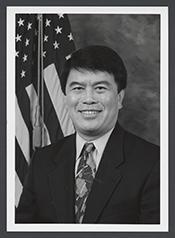
Mr. Chairman, in this decade, wildland fires have consumed 50 million acres in this country. While the term ``wildland fires'' brings to mind uninhabited areas in our Nation's parks, forests, and rural areas, wildland fires have done tremendous damage to urban and suburban development as well. I think that was the reason for the colloquy between Mr. Wu from Oregon and Mr. Sali from Idaho.
Last fall, western States were hit particularly hard by wildland fires that encroached into developed areas and destroyed homes, businesses, and livelihoods. The amendment offered by the gentleman from Idaho addresses that concern. The amendment allows the Administrator of the USFA to distribute information on the importance of clearing in these areas biomass materials from Federal lands, not out in the interior of a National Park. That was a point that was made in the colloquy.
The amendment requires USFA to work in consultation, of course, with other Federal agencies to ensure that USFA provides the best possible recommendations. Removing hazardous fuels, biomass materials, from Federal forests and lands will help to prevent, and more importantly, to limit these forest fires as they begin to encroach on urban areas. So if you leave these materials susceptible to forest fires, the consequences, as Mr. Sali pointed out, can be disastrous.
So, Mr. Chairman, I support wholeheartedly his amendment and urge my colleagues to do the same.
Mr. Chairman, I rise to claim time in opposition. However, we are very supportive of the gentleman's amendment, and I yield myself such time as I may consume.
Mr. Chairman, millions of United States houses today contain smoke alarms. They have been credited with saving thousands of lives. Yet, smoke alarms can only warn the occupants of a fire. They cannot contain or extinguish a fire. Fire sprinkler systems provide the means to limit fire growth and therefore save lives and property. We already mentioned $10 billion a year, I think, in property damage, 3,600 lives lost every year.
Studies by the USFA have shown that the installation of residential fire sprinkler systems could save thousands of lives and millions of dollars in property taxes. Bottom line. So together with their Federal partners, USFA has reported a potential 82 percent reduction in fire deaths if fire sprinklers, along with smoke alarms, were installed in all residential dwellings. With the cost of a home sprinkler system in new construction being estimated as low as $1.50 a square foot, or as low as 1 percent of the total cost of the house, and of course, many insurance companies offering discounts up to 15 percent on houses that contain sprinkler systems, it is clear that the benefits in lives and property saved far outweigh the costs.
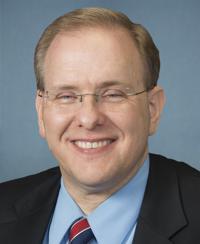
The amendment from the gentleman from Rhode Island (Mr. Langevin) supports the efforts of the U.S. Fire Administration to improve the awareness of the effectiveness and availability of residential sprinkler systems.
Mr. Chairman, I wholeheartedly support the gentleman's amendment, and urge my colleagues to do the same.
I yield back my time.