Madam Speaker, it's an honor and a privilege for me to be a servant of the people in the House of Representatives. I came to this office through a rather unusual route. My first career was in law…
Madam Speaker, it's an honor and a privilege for me to be a servant of the people in the House of Representatives.
I came to this office through a rather unusual route. My first career was in law enforcement. And we are here tonight to recognize National Police Week, and especially National Police Memorial Day on Thursday.
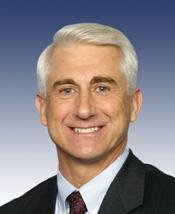
My 33-year career in law enforcement started in 1972. I was a 21- year-old police officer, a sheriff's deputy with the King County Sheriff's Office. I worked patrol for 5 years. I worked as a property crimes detective. I worked as a homicide detective. And I've worked as a lead detective on a serial murder case. I've worked as a patrol sergeant, SWAT commander, a hostage negotiator--just about every aspect of law enforcement that you can think of I've been fortunate enough to experience--and finally, my last 8 years as first elected Sheriff in King County in almost 30 years. And here I stand today, in my second term in the House of Representatives, to talk about law enforcement.
I feel I have, as you might guess, some knowledge about what police officers do and what dangers they might face. And this week especially is an important week to stop and think about what police officers across this Nation do. I think that sometimes we take them for granted, the brave men and women who serve all across this Nation to protect us each and every day.
If you think about your life, think about my life and what we do each day by getting up in the morning, preparing breakfast, going to work, going to school, feeling safe, coming home from work, picking up your children from school, we sort of take those police cars for granted that we see patrolling our neighborhood. And Sunday, this past Sunday we celebrated Mother's Day, an opportunity for families to get together with their children and grandchildren, as I did on Sunday with my three--actually, two of my children showed up, and some of my grandchildren were there, but an opportunity for us to come together and celebrate the contribution that mothers make to this Nation. And we did it safely in our home.
But at the same time, I remember, as I was sitting there this Sunday, and most holidays, really, reflect back on my career and think about those days I was in a police car, as I drove around the neighborhoods that I was patrolling and recognizing that all of these families were together on this special day, Thanksgiving, New Year's, Christmas, Mother's Day, Father's Day, all those days that bring families together that I was driving around in my patrol car in those communities, all the cars parked at these homes, it was my job, and my partner's job on either side of me in the districts that they patrolled, to keep them safe while they enjoyed that day. We take that for granted. I think we take our freedom for granted.
I once spoke at the University of Washington not too long after taking this office and I was talking to a group of students, 400, 500 students or so, and really was emphasizing the importance of freedom and how much that we need to embrace our freedom and recognize that freedom isn't free, not just the men and women who are serving here as police officers in our country, protecting us each day here at home, but those men and women who are protecting our freedom all around the world in our armed services.
And as I was a little bit passionate about freedom and about how important it is for us to recognize that if we don't guard freedom it will slip through our fingertips, a young lady in the class raised her hand and said--and they still call me Sheriff, by the way--Sheriff, I don't understand why you're talking about freedom so much. We have been a free country for years, and we're going to continue to be free. That really struck me, that one comment by that young college student, because she really pointed out what I had believed for a long time, that people in this country are taking our freedom for granted.
Success in our world today, success in our communities today, it really depends upon what our police officers do. Remember your police officers out there who are balancing, protecting your neighborhoods every day. I was the sheriff during WTO. We had 40 to 50 thousand people who were rioting in the streets of Seattle in 1999.
Now, there is a great balance that had to take place there as we tried to bring peace to the city of Seattle during those riots. Before the riots began, people were saying, let's go to Seattle and listen to people speak and express their freedom of speech. And then as people arrived and some decided to create havoc, people were a little bit nervous because crimes were being committed, the rights of other people were being trampled upon by those who felt that their freedom of speech was more important than others who were trying to express their freedom by going to work, coming home, leaving and going and moving and shopping and doing the things that we do every day.
So at one point what we had to do in WTO during those days was to shut the city down. Certain segments of the city of Seattle were cordoned off. There was a curfew placed on the city of Seattle on the citizens. So freedom was lost. If you think about freedom on a continuum, you have the ``freedom to'' and the ``freedom from.'' ``Freedom to'' is the police officers that raise their right hand and say, I swear that I will uphold the Constitution of the United States, that I will protect your rights provided to each and every citizen of the United States of America. And on the other end of the continuum you have the
``freedom from.'' We promise that we will do our best to keep you from becoming victims of crime. Well, in WTO you saw that balance sway. Freedom was being expressed, people were expressing their freedom more vocally than they should have. It got out of control. Chaos ensued. Police came in. Freedom was taken away. The balance in the continuum of freedom was unbalanced.
But in America and in Seattle, as peace was restored to the city, the curfew was removed and certain areas of the city that were closed off were now open once again for people to move about the city. This is America, where we recognize that we can't keep people from moving where they want to move and go where they want to go. It's a free country.
So the police have a tough job. Imagine being a police officer, 50,000 people rioting in the streets and you're one of the police officers standing in line trying to protect America, protect the citizens of Seattle. And I saw this happen. One of the police officers, the sheriff's deputies standing his post shoulder to shoulder with the rest, as I was standing behind him, was standing stoically in the face of thousands of people screaming and yelling and protesting. And one had a stick in his hand and reached over and hit the police officer, the sheriff's deputy over the head with that stick. And the sheriff's deputy didn't move, just stood there. And they moved the crowd along. It's a tough job to balance freedom and protection of America, but our police officers do it every day.
Let's take a moment to talk about and think about National Police Week. This is a week where we celebrate and appreciate and remember the efforts that all of our police officers put forth each and every day. And boy, I could tell you some stories, I would be here all night, about my experiences on patrol and some of the things that police officers see and the dangers that they face.
More than 56,000 police officers are assaulted every year. Every 53 hours a police officer is killed in the line of duty here in the United States. I've lost some friends over my 33-year career. I want to share their stories briefly. And as you can tell, it's emotional, memories that come bubbling up as I remember those days.
My best friend by the name of Sam Hicks, he and I were working homicide together. We were tracking down a killer. He went out one night with another friend of mine because they got a tip on where this killer was. And as they went out in search of this killer, they found him. They began to follow him. And the killer and his brother ambushed my partner and shot him in the chest with a .308 Winchester rifle and took his life. He left behind a wife and five children. That was June 1982.
Two years later, a good friend of mine who was a classmate in the academy--in fact, we rode together every day to the police academy in 1973--Mike Rayburn, a great public servant, excellent police officer, dedicated, committed to his job and his family and his community, was working a special unit in Seattle. He knocked on a door, the door opened, the man opened the door and thrust a World War II sword through the crack of the door and into Detective Rayburn's body. He fell and died.
These are only two stories of two special friends. There are many people who are touched by the loss of a police officer, mothers and fathers, sisters, brothers, spouses, sons and daughters, grandparents, neighbors and friends. It's a job we should respect, we should thank them for, praise them for, not take for granted, and always remember them.
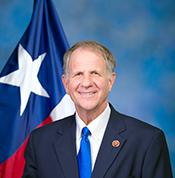
I'd like to pause in my presentation for a moment and yield some time to my good friend who is a judge from Texas, Congressman Ted Poe.
I thank my good friend from Texas, and it's good to have others in Congress who understand the role that law enforcement officers across this country play and the important work that they do to keep us all safe. And the judges were a great partner for us in keeping our communities and neighborhoods safe.
I want to thank you for your years of service in law enforcement and thank you for being here tonight to share some of your thoughts with us on National Police Week.
Some of the things that you mentioned I want to touch on.
We, as Americans, cannot really talk about success and freedom in America and being free in America until we know our children are safe and we know our children and family are secure. One of the things that I think is important is to have people in Congress who understand law enforcement. And for those police officers out there listening, I assure you that there are people here who understand and appreciate so much what you do. Some of us have been there.
The judge touched on a number of police officers injured in the line of duty. I was one of those in a domestic violence call in the mid- 1970s, back when I was much younger and had dark brown hair. But in the middle of trying to save the wife of a deranged person, her husband, I was in the battle for my life. This man had a butcher knife and was trying to slit the throat of his wife, and I was able to grab her and push her out a bedroom window but suffered butcher knife wounds to the side of my neck.
I also understand the need for support, for the community to come around us and support us and be there for us when we need them to stand up and tell elected officials: We need more police officers. We need technology. We need more help. We need you to be there for us and support us with budget increases, not budget cuts. We need you to make strong laws in your local communities, your cities, and your States and your counties that help us do our job, that help us protect American citizens from criminals, from being victims, and also to protect our rights.
The United States has some serious problems that we need to address, and I don't think they're being addressed the way they should be. People know that we have a gang problem. People know that we have a drug problem. People know that we have child predators on the Internet, sexual predators on the Internet, preying on our children.
I want to share a few facts with you. Gangs are increasing. We used to think about gang problems, drug problems, and those sorts of things as inner-city problems, inner-city crimes. These crime activities now are spread across the Nation, as you can see by this map. This is an indication of the gang problem across our country. The white dots you see are where gang activity exists today, and it's pretty much maintained the same level over a number of years. The red dots indicate increases in gang activity. The blue dots, which you don't see many of, indicate a decrease. Now, if you can't see this fully on your TV screen at home, please feel free to go to our Web site and check your neighborhood, check your city, check your State to see what condition your neighborhood is in as far as increase in gang activity and drug activity.
Today there are 25,000 gangs operating in more than 3,000 jurisdictions in the United States. Gang membership has escalated to 850,000 members.
Even more alarming, gangs are increasingly targeting our young kids. They're not recruiting kids from college, young men and women from college. Yes, they are, but this isn't their target age. They're not just recruiting kids from high school. They're not just recruiting kids from junior high school or middle schools. But they're also targeting our kids who are in elementary schools. The average age of a gang recruit today is seventh grade. That's an 11- or 12-year-old child being recruited into a gang in some city across the United States of America now, today, tomorrow, and the day after.
What are we doing? According to a 2001 Department of Justice survey, 20 percent of students age 12 through 18 reported that street gangs had been present at their school during the previous 6 months. More than one-quarter of the students in urban schools reported a street gang presence. Eighteen percent of students in suburban schools and 13 percent in rural schools reported the presence of street gangs. This is not just an inner city problem. This is a problem that is spread across this country. It is in suburban schools. And
it is in the suburban neighborhood that I live in in Washington State.
Gangs threaten the freedom and security of our communities in many ways. They are directly linked to the narcotics trade, human trafficking, ID theft, assault, murder and a host of other crimes. There were over 631 gang-related homicides in the United States in 2001. Gangs readily employ violence to control and expand their drug trade.
Now I have personal experience too, of course, with that but more on a personal level rather than a professional level as a police officer. I want to talk about the impact of drugs on children and families. I am the proud grandfather of six grandchildren. Two of my grandchildren are adopted. They were foster grandchildren, foster children of my daughter and her husband, who were drug-addicted babies. They came into my daughter's home and her husband's home when they were about 2\1/2\ months old. Little Briar is 6 years old and doing fine. He was 2\1/2\ pounds when he was born, a little meth-addicted baby. Little Emma is 5 years old. She was a crack cocaine, heroin, meth and alcohol-addicted baby.
Think about that for a minute. Drug-addicted babies. Gang members who are promoting drugs and selling drugs to young teenage girls on our streets who then become pregnant and give birth to drug-addicted babies.
I hope that everyone watching understands the impact of what I just said. Do you know what happens when a meth baby is born? Have you ever thought about the pain they go through? When they are born, they have no idea they are hungry. In fact, they don't know how to eat. They don't know how to suck on a bottle. The poison from the meth escapes through their bottom. So they put the babies on their belly in a fetal position with a warming light over the top of them. The poison, as I said, escapes through their bottom. But you can't put any ointment on them because it holds the poison against the skin. You can't use baby powder. It does the same thing. It creates more pain.
So what do you do with a meth-addicted baby? You let the baby suffer for 2 or 3 weeks and let the drug escape through the bottom while the baby feels intense burning and pain during that period of time. Briar went through that. Emma, as a crack cocaine, heroin and meth-addicted baby had additional issues to deal with. Today these children are in a good home. They have a chance at a good life and to be productive citizens in this country.
But ladies and gentlemen, those are the kids that we need to protect. Those are the kids that our police officers are out there every day trying to prevent them from becoming drug-addicted babies, trying to prevent those young girls that we see out there from becoming mothers of drug-addicted babies, trying to prevent those young men out there from becoming fathers of drug-addicted babies and then disappearing into the streets.
So we have to say enough is enough. We have a crisis on our hands. Gangs, drugs, sexual predators, Internet sexual predators, gangs on the rise, organized gangs, 850,000 gang members. Congress needs to stop talking about these issues and needs to act. We need to act today. And during this Congress, the majority has been silent on this issue. And as I said, I understand as a sheriff, as a police officer in a uniform driving a police car, and as a detective, I needed the tools then to do my job. I know there was a fight in the battle in the budget arena at the county council level, at the State level and at the Federal level to find us the tools that we needed. But every day we went out and we did our job with the tools that we had.
One of the things I wanted to point out today is that we have, as Republicans, presented over 103 pieces of legislation to help police officers get the job done. I have to tell you that as a cop, because I still see myself as a cop trying to be a legislator, trying to find the way to stop the craziness and the violence in this country, where are the people of the United States who need to push their representative, who need to call their representative, who need to e-mail their representative, who need to be pounding on the front door and demanding that we do something about gang violence in this country, that we do something about stopping the recruitment of our grade school kids and junior high school kids into gangs?
Of the only six bills that we have out of the 103 that the Democrats have agreed to accept, and they have actually passed, three of those are resolutions. While we support resolutions and the statements that they make in support of police officers, in support of stopping crime and protecting our citizens, we need real action.
To address the gang epidemic in our suburban communities, I have introduced legislation, H.R. 367, the Gang Elimination Act, that would identify and target the three international gangs that present the greatest threat to the United States and create a gang most-wanted list and develop a national strategy to eliminate the gang epidemic plaguing our neighborhood. This bill has not seen the light of day. I even testified in front of the committee. That bill has not even seen the light of day.
Why not? Is it because it is a Republican bill? Is it because the majority doesn't support the job that police officers are out there trying to do every day? Why are we not providing the tools that our cops need? I ask that question every day when I come to work in this body.
Crime is on the increase. Violent crime is on the increase. Gang activity is on the increase. Drug addiction is on the increase. More drug-addicted babies are being born. The pediatric interim care center that Briar and Emma were taken to and treated and foster cared out and finally adopted by my family has increased their capacity to now nearly 45 babies that they can hold within that facility. And it's not enough. They need more space.
So I would ask the majority, please consider the other 103 bills. Let's bring the Gang Elimination Act to the floor. Let's bring these other 103 bills to the floor. Let's act on these today. Let's help the police officers out there in our country that need our help today. Let's not wait another minute. I demand that we have action here in Congress in helping our police officers.
Madam Speaker, I yield back the balance of my time.