Mr. Speaker, I move to suspend the rules and agree to the resolution (H. Res. 1251) saluting the life and music of the late Otha Ellas ``Bo Diddley'' Bates, guitar virtuoso and rock and roll pioneer,…
Mr. Speaker, I move to suspend the rules and agree to the resolution (H. Res. 1251) saluting the life and music of the late Otha Ellas ``Bo Diddley'' Bates, guitar virtuoso and rock and roll pioneer, whose music continues to influence generations of musicians.
Mr. Speaker, I ask unanimous consent that all Members have 5 legislative days to revise and extend their remarks and include extraneous material on the resolution under consideration.
Mr. Speaker, I yield myself such time as I may consume.
Mr. Speaker, today we honor the life and musical legacy of Bo Diddley, a founding father of rock and roll, a guitarist who has influenced generations of musicians, who no doubt will continue to do so for generations to come.
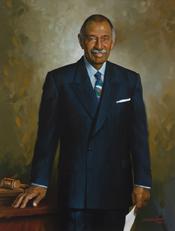
This resolution was introduced by the chairman of the full Judiciary Committee, Mr. Conyers, who was unable to be here in time to present it himself.
I am honored to note that Bo Diddley was born Otha Ellas Bates in the small town of McComb, Mississippi. He moved as a young boy to Chicago, where he initially studied classical violin. But at age 12, he heard John Lee Hooker play ``Boogie Chillen'' and found his true calling, the electric guitar.
He got the nickname, by which he will ever be known, as a teenager from a girl in his neighborhood. He said she meant it as a compliment to his boxing skill.
After years playing music with friends on the South Side of Chicago, first on street corners, later at the 708 Club, Bo Diddley and his band made their first record in 1955.
Vee-Jay Records had turned them down, who said the music was just too strange. But they walked across the street to Chess, who signed them up on the spot. The song, titled ``Bo Diddley,'' became an instant hit, reaching number 2 on the charts.
Later that year, he was invited to perform on TV on the Ed Sullivan Show. For some reason, Ed Sullivan chose to have him play a Tennessee Ernie Ford song, ``16 Tons.'' Bo Diddley didn't know that song. So the show's crew spent 2 hours playing him the record and rehearsing it with him and made cue cards with the lyrics for him.
But what the audience got to hear that night was ``Bo Diddley.'' And when the show's producer asked him what went wrong, he said, ``Man, maybe that was `16 Tons' on those cards, but all I saw was `Bo Diddley.' ''
Although Ed Sullivan didn't plan for it to be, that was the first rock and roll performance on TV, a year before Elvis Presley made his appearance on the show.
Bo Diddley had several other songs reach the top of the charts. He became as well known as any recording artist in America. But he contributed so much more than that, and it would be hard to overstate his importance to the music world.
He quite literally played to his own beat, actually called the ``Bo Diddley beat.'' And to this day, that beat is a rock and roll staple. You hear it in the music of Buddy Holly, the Rolling Stones, Bruce Springsteen, and countless others.
But Bo Diddley was no mere one-beat wonder. He introduced a rich complexity of driving rhythms and cross-rhythms, building on African American traditions from the Cuban clave, to the hambone of the Chicago street, to the shout of the church.
He not only laid the cornerstone for rock and roll, he also laid the groundwork for rap music and, by mixing in elements of classical violin technique, also for funk. He was also a pioneer in the use of reverb, tremolo, sustain, distortion and feedback, all essential ingredients in heavy metal and psychedelic rock.
To help round out the Bo Diddley beat with what he called ``that freight train sound,'' he persuaded Jerome Green to set aside the tuba and take up the maracas and added Billy Boy Arnold on the harmonica.
His band may also have been the first to feature a woman on guitar, first Peggy Jones, then known on stage as ``Lady Bo,'' in the late 1950s, and then when she left, Norma Jean Wofford, a.k.a. ``the Duchess.'' He also invented two well-known guitar designs, the square guitar, and the Flying V. And he may have been the first to build his own home recording studio, right here in Washington, DC.
As the preeminent rock historian Robert Palmer observed a few years ago, and I quote, ``If the musical copyright laws of the United States more accurately reflected the way American vernacular music is created and disseminated, Bo Diddley would be a wealthy man today.''
But Bo Diddley never did become a wealthy man. Despite all his hard work and his invaluable cultural contributions, he had to stay on the road right up until the time a stroke forced him to retire last year at age 78. The fact that he reaped so little from all that he had sowed helped spur him in later years to become a tireless advocate for educating musicians on their rights. As he explained in a 2005 interview in Rolling Stone magazine, ``I tell musicians `Don't trust nobody but your mama.' '' Good advice for many of us.
Mick Jagger spoke for many when he said last week that Bo Diddley was ``a wonderful, original musician who was very generous to the Rolling Stones in our early years.'' Although Bo Diddley himself is now gone, he has left an indelible mark on American music. And this resolution is before us today to honor that uniquely American contribution to music, rock and roll.
I reserve the balance of my time.
Mr. Speaker, I urge adoption of H. Res. 1251 and yield back the balance of my time.