Mr. Speaker, I would join my colleague from Maryland in commending Jay Eagen and Karen Haas for the tremendous job they have done, and, before Karen, Jeff Trandahl, who served temporarily as CAO…
Mr. Speaker, I would join my colleague from Maryland in commending Jay Eagen and Karen Haas for the tremendous job they have done, and, before Karen, Jeff Trandahl, who served temporarily as CAO during the bridge time before the selection of Mr. Eagen, and who also served as the Clerk of the House very ably.
They both, Jay Eagen and Karen Haas, have done a great job in that office. The House has run very, very well as a result, and I commend them and wish them well in the future. I am certain that they have bright futures based on the excellent work that they did here.
I also would like to comment about the appointments that have been made. The new appointment for the Clerk, Ms. Miller, from everything I see, is an outstanding appointment. We recognize that as traditionally the appointment of the Speaker and can be made solely by the Speaker and has been in the past.
I look forward to good things from her. She is obviously very capable, has an outstanding record in working in the House, the Senate, and various other places. I look forward to good work from her.
In regard to the selected candidate for Chief Administrative Officer for the House, Mr. Beard, I do not object to his appointment. He is, I think, of relatively good background and should be able to manage the job, at least I seriously hope so.
But I have serious concerns about the lack of transparency and the selection process that resulted in his appointment. Just to give a better history, when I first arrived here, it was shortly before the Republicans took over the majority, and there had been considerable confusion in the House. We had the bank scandal, the post office scandal and so forth. A position was created, I forget the precise title, but something along the line of the director of the nonlegislative and financial functions of the House of Representatives.
The Speaker at that time, who was a Democrat, since they were in the majority, appointed a person to fill that post. It was General Wishart, I believe, and he resigned after several months saying basically he could not do the job, given the parameters that were imposed upon it.
When the Republicans took over the House of Representatives, they also appointed, and it was largely a Speaker's appointment at that time, appointed someone to serve as the Chief Administrative Officer of the House. That position was created and described by the new majority.
Mr. Faulkner had a good resume and had a lot of good ideas, but, frankly, did not really meet the needs that we had for that position at that time. We then decided, and I believe Mr. Hoyer was on the committee at the same time with me, and we simply decided that we had to make this as nonpartisan a position as possible.
So we formed a group, two Republicans, two Democrats, and they conducted a nationwide search with a search firm to find the best person for the Chief Administrative Officer position.
They ended up selecting someone from the House of Representatives, someone who was familiar with it, but also someone with extensive administrative background who did a tremendous job of operating this institution since that time.
The main point I want to make is a process was set up that was bipartisan. It resulted in an excellent appointment, and I believe we should use that same process again.
In fact, I felt so strongly about it, I sent a letter to the Speaker last week pointing out that we should use that same process again. Barely was the letter delivered that she announced publicly that she had selected a new CAO, without using that process at all, without input from the minority party. Simply, we had the courtesy of chatting with the new appointee, but nothing to say in the appointment or whether or not that person should have the appointment.
I have met with him; I recognize he has considerable administrative ability. He has been around a long time, but I am very concerned because we did not use the same process. I think this new appointee is going to owe his allegiance to only one person, that is the Speaker of the House, and I don't believe that is the best way to operate the House of Representatives.
At the same time, should anything deleterious or improper happen, we recognize where the responsibility for that will lie, because it will be with the person who made the appointment.
But I have firsthand knowledge, having served on the House Administration Committee now for over 12 years, firsthand knowledge of the important role the Chief Administrative Officer plays in the House operations, and it is an extremely important job.
This is a complex organization on the Hill, over 10,000 employees. The position has many responsibilities that are of significant consequence to the House of Representatives.
While the proper administration of the House is ultimately the responsibility of the majority, the successful operation of the House is most certainly not a partisan manner.
Republicans and Democrats alike maintain a shared investment in preserving and building upon the professional improvements made by the House Chief Administrative Officer over the last 12 years.
In 1997, as I mentioned, the last occasion a new CAO was appointed, a search committee was constituted that, as I said, required a unanimous decision from all search committee members in order to select a candidate for the position of Chief Administrative Officer.
That last provision, I think, is very important, to ensure that it was not a partisan position required that both Republicans and both Democrats had to vote to select the final candidate for the position.
At that time, our current House majority leader, my colleague from Maryland, stated that the formulation of a search committee comprised of the leaders of both parties ``was done to assure that we would have a bipartisan agreement on an administrator for the business of the House.''
Mr. Hoyer also stated that what this House needs is a bipartisan and effectively nonpartisan way to assure ourselves and the American people that the business of the House, the paying of our bills, the managing of our information systems, all of that which has nothing to do with the formulation of the policy, but everything to do with the effective management of the people's House, is being done in a proper fashion.
Now, I am not quoting this to throw the words in Mr. Hoyer's face. That is not my intent at all. It is simply my intent to show how at that time we worked very hard to get a bipartisan agreement. That bipartisan agreement, which Mr. Hoyer spoke of, resulted in the appointment of Jay Eagen, our current Chief Administrative Officer, who has served us so well for a number of years.
Under Mr. Eagen's tenure, just as an example, the House has achieved eight consecutive clean opinions from independent auditors, an impressive result by any measure. This should be contrasted with the result when the Republicans first took office, we asked for an independent outside audit, and the auditors came back and said the books are such a mess, we cannot even audit them; you will have to construct an entire new financial management system.
I was pleased that since I had helped develop the computer system that I was able to help develop a system that was appropriate for that task. I think all of this together has led to the clean audits that we have had for a number of years.
I certainly support the comments that Mr. Hoyer made some years ago. They were very appropriate. They described the procedure accurately; and his points, as he made them, I totally agree that the appointment of a post was such a significant impact to this institution, we should be able to put aside our party affiliations and work together to find a suitable candidate.
I wish I could make a comparable statement today. I wish that such a bipartisan process had been followed this time. Instead, I am left only to express my sincere disappointment that it did not take place.
Let me make it clear, the qualifications of Mr. Beard are not under attack; but the process that Speaker Pelosi administered to make this appointment is. I think we should have had the same process, and I am disappointed that the Speaker chose not to do that.
Without a fair, open and competitive process, there simply is no way to determine whether the selection is in the best interest of the House, and the complete absence of transparency is cause for alarm for those who value the integrity of this institution.
Mr. Speaker, I reserve the balance of my time.
Yes, I have several.
Mr. Speaker, I yield 5 minutes to the gentleman from California, a newly appointed member of the Committee on House Administration, the gentleman from California (Mr. Daniel E. Lungren).
Mr. Speaker, I thank the gentleman from Maryland for his comments.
I would also echo his comments about Mrs. Miller. I was astounded at her resume. In fact, I would love to have a resume that complete myself. She has served government in so many different agencies and in so many different ways that I am certain that she will perform very, very well as the Clerk of the House.
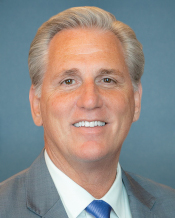
Mr. Speaker, I yield 3 minutes to Mr. McCarthy of California, a brand new member of the Committee on House Administration but one with considerable experience on it because of his previous work as a staff member for the Honorable Bill Thomas, who chaired the committee.
Mr. Speaker, I am pleased to yield 4 minutes to the gentleman from Texas (Mr. Burgess).
Mr. Speaker, in that case I will make my final comments. I assume the gentleman from South Carolina is able to close right after that.
Just hearing this debate reminds me again of all the things that happened. And first of all, I have to clarify that Mr. Eagen did not have to clear up a mess left by Mr. Faulkner. Mr. Faulkner may or may not have been the best choice for CAO at the time he took the job, but certainly improved the situation. And I was there. I saw the books as they were, ledger cards made out in pencil with erasures in the ledger book, an erasure of a number filled in with $2,500,000 just to make the books balance. I have seen those books. I know the facts. It was a mess after 40 years of the rule of one party.
Now, I am not defending or criticizing either General Wishart or Scot Faulkner. They were there. They did the best job they could in very difficult circumstances. But they were not there very long.
The point is simply that when we followed a good process, when we used a bipartisan process, we appointed someone who has served for a number of years and has served extremely well.
You know as well as I that if you hire a person, that person's loyalty is going to be to you. It is very important that this position be operated in a bipartisan fashion. And since the Speaker has appointed Mr. Beard, no matter how capable he is, no matter how much he tries, he will be suspected of partisanship in his decisions.
Daniel Beard may, in fact, be the right person to lead the CAO organization, and I truly hope that he is. However, given the selection process, there is simply no way of knowing that with any degree of confidence. This appointment could and should have occurred with the full confidence of all Members of the House. Unfortunately, the burden of proof now lies with Mr. Beard and, ultimately, Speaker Pelosi, to ensure that Mr. Beard is able to maintain the level of skill, professionalism and bipartisanship we have come to expect from the House CAO.
Mr. Speaker, I demand a division of the question on the adopting of the resolution.
Mr. Speaker, I yield back the balance of my time.