Mr. Speaker, I thank the gentleman for extending me the time. I rise in opposition to this new, record-breaking 62nd closed rule being offered by this Democrat-led Congress, and I object to the…
Mr. Speaker, I thank the gentleman for extending me the time.
I rise in opposition to this new, record-breaking 62nd closed rule being offered by this Democrat-led Congress, and I object to the timing of bringing this underlying legislation to the floor at a particularly fragile and vulnerable time for American consumers, for American small businesses, and for the entire American economy.
As every Member of this House, in fact, probably every single person on this planet with a working television already understands and they're very acutely aware, the United States capital markets for commercial credit have been frozen. And later this week, this Congress is going to be asked to vote on a massive and currently unfinished proposal to try to stem this enormous threat to our economy and to prevent it from spilling over into everyday Americans' lives who are simply trying to make ends meet.
The enormity and complexity of this crisis and its corresponding legislative solutions makes me question why, Mr. Speaker, why, with all the other problems in our financial markets that require our immediate, fixed and unwavering attention, this House leadership would bring this bill to the floor under a closed rule, instead of focusing on the much larger problem that economists and editorial boards across this country believe has the potential to do catastrophic damage to global financial systems.
Additionally, Mr. Speaker, I'm confused as to why this Congress is choosing this path because, despite whether the House considers this Democrat majority's 62nd closed rule, or this legislation today, it makes no difference, absolutely no difference as to whether the issues contained in this legislation to protect consumers from unfair or deceptive practices will even be addressed in a timely fashion.
To protect consumers from questionable practices, the Federal Reserve has already proposed broad new rules. But rather than allowing the Fed to finish its job, this Congress thought it was important enough to pass a new law to give to them, and this Congress is passing a bill that preempts all of the work that Congress has asked these regulators to do, while doing nothing to strengthen the Federal Reserve's already existing consumer protection mandate.
Like every other Member of this House, I am concerned about the crushing economic impact that rising food and fuel prices are having on American families. I'm even more concerned that passing legislation like this will discourage investment in credit card lending to fewer consumers and smaller businesses getting access to the credit that they need to stay afloat.
Unlike the Democrat leadership bringing this bill to the House floor, I do not believe that it is wise policy to create a consumer credit crunch at the same time that our economy is already experiencing a massive commercial credit crunch. And I'm greatly concerned that current market conditions have the potential to greatly amplify the unintended consequences of this legislation at a time when families and small business need it the most. The ``it'' is credit.
Limiting the ability of consumer credit issuers to base their prices according to risk, as this legislation proposes to do, will only increase rates and fees for everyone, while also severely constricting the availability of credit to higher risk consumers altogether.
So, at a time when our constituents most need the flexibilities of these products, i.e., credit, this Democrat Congress is trying to preempt the focused efforts of three different regulators and restricting the access to credit card credit that is made available to American families and to small businesses.
Mr. Speaker, I believe a far more reasonable course of action would have been the one that was suggested by 14 members of the Financial Services Committee, a bipartisan group of seven Democrats and seven Republicans, when they asked the chairman of the committee to hold hearings on the Federal Reserve proposed rules before deciding whether passing legislation limiting consumer credit was necessary.
Mr. Speaker, I would like to insert into the Record a copy of this bipartisan letter to Chairman Frank, as well as a copy of the administration's statement of administrative policy on this bill, which makes their concerns about unfair and deceptive practices as clear as their opposition to this underlying legislation that would ``result in less access to credit and higher interest rates for consumers.''
That is what the White House has said, and I will once again quote: This legislation will ``result in less access to credit and higher interest rates for consumers.''
Mr. Speaker, this comes at a particularly bad time, when consumers in our economy already have had enough stress to deal with without having to worry about unintended consequences of legislation passed by Congress that would make it even more difficult for families and small businesses to make ends meet.
Executive Office of the President, Office of Management
and Budget,
Washington, DC, September 22, 2008.
Statement of Administration Policy
H.R. 5244--Credit Cardholders' Bill of Rights Act of 2008
The Administration is concerned about unfair and deceptive
credit card practices and supports efforts to protect
consumers. Credit card plans have become more complex, and it
is important that disclosures are transparent and clear so
that consumers can understand their contracts and compare
products. Transparency alone is insufficient to protect
consumers from all unfair credit card practices, and
legislation likely to result in higher interest rates for
consumers is not the answer; deceptive practices must also be
prohibited.
The Federal Reserve, Office of Thrift Supervision, and
National Credit Union Administration are currently finalizing
regulations to prohibit unfair and deceptive credit card
practices and make disclosures more transparent. The proposed
regulations, which are expected to be finalized in December,
address a number of goals of this bill. Those proposed
regulations eliminate universal default, prohibit double-
cycle billing, require advance notice of rate increases, and
rein in over-the-limit fees. Regulations are better suited to
addressing these problems than legislation because they can
be adapted more readily to changes in market conditions. The
proposed regulations are the result of extensive research and
consumer input, have received extensive public comment, and
should be finalized without legislation.
The Administration opposes H.R. 5244, particularly section
2 of the bill, because it would broadly constrain the ability
of financial institutions to price risk, likely resulting in
less access to credit and in higher interest rates for
consumers. For the credit market to operate efficiently,
creditors must have the flexibility to react to changes in
customer risk and market conditions. Section 2 would restrict
when lenders may change terms of the credit agreement,
significantly constraining the ability of financial
institutions to adapt to changing credit risks and market
conditions.
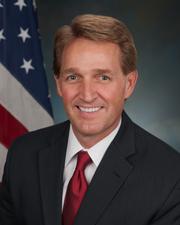
Mr. Speaker, at this time I would like to yield 5 minutes to the distinguished gentleman from Arizona (Mr. Flake).
I would like to yield the gentleman an additional 3 minutes.
Mr. Speaker, I would like to inquire of my colleague, the gentleman, Mr. Welch, if he has additional speakers. I, at this time, do not appear to have any additional speakers.
Mr. Speaker, I would like to reserve the balance of my time.
Mr. Speaker, we reserve our time.
Mr. Speaker, it's my understanding that the gentleman from Vermont is through with his speakers at this time, if I could confirm that.
I thank the gentleman.
Mr. Speaker, I yield myself such time as I may consume.
Mr. Speaker, since taking control of this House, this Democrat Congress has totally neglected its responsibility to address the domestic supply issues that have created the skyrocketing gas, diesel and energy costs that Americans are facing today, and no doubt, part of the credit crunch that we are facing today and credit card costs that Americans are facing today is as a result of the high cost of gasoline right now that all Americans are paying.
By going on vacation for 5 weeks over August, while I and 138 others of my Republican colleagues stayed in Washington to talk about real solutions for American families, this Democrat majority has proven that they do not believe that the energy crisis facing American families and business was important enough to cancel their summer beach plans or book tours to get the job done.
So, again, today, the Republicans are here on the floor of the House of Representatives asking each of our colleagues to vote with me to defeat the previous question. If the previous question is defeated, I will move to amend the rule to allow this House to take up a measure that will allow Members to be able to vote for a pro-energy bill and
prevent Members from going home to campaign for reelection without actually passing a bill which will pass and have meaningful reform so that we can lower the price of gasoline at the pump.
This legislation that I will be proposing that can be voted on today and that would turn into law would allow States to expand the exploration and extraction of natural resources along the Outer Continental Shelf. Not allowed in the Democrat bill that passed one week ago.
It would open the arctic energy slope and oil shale reserves to environmentally prudent exploration and extraction. Not included in the Democrats' bill of a week ago.
It would extend expiring renewable energy incentives. It would encourage the streamlining approval of new refining capacity and nuclear power facilities. Not included in the Democrat bill of a week ago.
It would encourage advanced research and development of clean coal, coal-to-liquid, and carbon sequestration technologies, which was not included in the Democrat bill a week ago.
Perhaps most of all, it would minimize drawn out legal challenges that unreasonably delay or prevent actual domestic energy production. Not included in the Democrats' bill of a week ago.
Mr. Speaker, this requirement would finally force the Democrat leadership to take positive, meaningful action to increase the supply of American energy. It would reduce the price at the pump for American families and use, what we term in the Republican Party, an all-of-the- above strategy combining increased supply of American-made energy, improved conservation and efficiency, and provide for new and expanding energy technologies to achieve American energy independence.
Mr. Speaker, I ask unanimous consent to have the text of the amendment and extraneous material inserted into the Record prior to the vote on the previous question.
Mr. Speaker, we're here on the floor debating a bill today that may have unintended consequences of drying up the ability that families have and people have and small businesses have for getting credit.
I do acknowledge, I think every Member of this House acknowledges, that gasoline prices, energy prices are way too high. Food prices are way too high. But people who are trying to live their lives need the opportunity to have credit, the opportunity to be able to have a credit card, and to be able to place those expenses on their credit card, and then manage their own ability to pay back. That is the essence of what we should be about is trying to help people do that today.
Not about creating another credit card crunch. Not about creating credit cards where people don't know whether they're going to be able to get credit or not, and perhaps, more importantly, the opportunity for us to give this marketplace for American consumers stability where they know what they can count on and move forward to take care of their families and their small businesses.
Mr. Speaker, I would like to say also that we believe that the provisions that were put in the rule specifically addressing the earmark reform or earmarks is unacceptable. It's unacceptable to say that this House will quite likely be voting on a massive bill only to find out weeks later we'll find out what was in the bill and those earmarks that accompany that.
As the gentleman from Arizona (Mr. Flake) noted, that is disappointing. It's disappointing because this House was advised over 2 years ago that this would be the most honest, open, and ethical Congress in history.
Mr. Speaker, I have seen very little to no action on behalf of this new Democrat majority that is open about what they do, that is transparent in what they do. And once again, today, with a record shattering breaking new closed rule, we find that they aren't even willing to take ideas from people in their own party, and I think that's disappointing.
As we wind down this last week that we're here before the election, we find that there are new tricks of the trade that take place in this Rules Committee. I'm disappointed that this new Democrat majority continues that. I support the gentleman from Arizona (Mr. Flake) and what he said; and, Mr. Speaker, I would say that that's why I'm asking Members of this body not to support this rule and the underlying legislation.
I yield back my time, Mr. Speaker.
Mr. Speaker, on that I demand the yeas and nays.
Mr. Speaker, I demand a recorded vote.