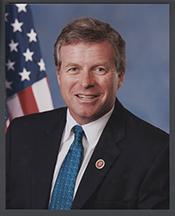
Mr. Speaker, I move to suspend the rules and agree to the resolution (H. Res. 171) honoring the Marquis de Lafayette on the occasion of the 250th anniversary of his birth, as amended. Mr. Speaker, I…
Mr. Speaker, I move to suspend the rules and agree to the resolution (H. Res. 171) honoring the Marquis de Lafayette on the occasion of the 250th anniversary of his birth, as amended.
Mr. Speaker, I ask unanimous consent that all Members may have 5 legislative days within which to revise and extend their remarks on this resolution under consideration.
Mr. Speaker, I yield myself such time as I may consume.
Mr. Speaker, I hail from Lafayette County, Missouri. Its county seat is Lexington, my home. A few miles westbound on Highway 224 are the small towns of Napoleon, Wellington and Waterloo. These communities, which are nestled into the fertile farmland and rolling hills south of the Missouri River, are named after prominent figures or places in French history. They are a very long way from France. But their names and the namesake of my home county, Marquis de Lafayette, reflect a friendship that has existed between the United States and France since the early days of the American Revolution.
No one person better symbolizes that friendship and the assistance American colonists received from Europe in our struggle for independence than the Marquis de Lafayette. He occupies a considerable place in the history of the United States, which is why I was
pleased to author H. Res. 171, a resolution honoring the life of the Marquis de Lafayette on the occasion of his 250th birthday on September 6, 2007.
Lafayette was a man of considerable military skill who sympathized with the American revolutionary fighters. After withdrawing from the French army and traveling across the ocean at his own expense, the Congress voted Lafayette the rank and commission of major general in the Continental Army. His military service during the Revolutionary War was invaluable to George Washington, earning him the reputation as ``the soldier's friend.'' Lafayette's strategic thinking and dedication as a general officer serve as a model for our present day military personnel.
After achieving military victory, Lafayette returned to France, helping the U.S. secure trade agreements and critical loans with European nations. He also became a prominent figure in the French Revolution, speaking out in support of universal freedom and human rights.
Because of Lafayette's commitment to America, Congress honored him with awards of money and land. Congress was also presented a life-size portrait of Lafayette that hangs here in the Chamber of the House of Representatives. The other large portrait is of President George Washington, Lafayette's closest friend and role model.
At the invitation of President James Monroe, Lafayette returned to the United States in 1824. He embarked upon a triumphant tour, during which he visited 24 States, including Missouri, and he became the first foreign dignitary to address the House of Representatives. Lafayette also visited many Masonic bodies across America.
During this visit and thereafter, various American leaders honored Lafayette by naming cities, towns and counties for him or for his French estate, known as LaGrange. Schools, monuments and parks were named for him throughout the United States. One of the most prominent is Lafayette Park in Washington D.C., which is located directly across from the White House.
As we take a moment this year to honor the Marquis de Lafayette on the occasion of his 250th birthday, let us remember how he helped secure American independence and helped establish the United States as an international presence. The values of democracy espoused by our Founding Fathers and by Lafayette have been the bedrock of U.S. domestic and international policymaking for generations. I urge all Americans, and especially those wearing the American military uniform, to study Lafayette as America pays tribute to him this year.
As we take to the floor today to honor a respected Frenchman, I would be remiss if I did not also take the opportunity to say a word of appreciation to the current French Ambassador to the United States, Jean-David Levitte.
Through his time in Washington, I have come to know Ambassador Levitte as a fine person and an outstanding representative of the people of France. Last week, I learned that the newly elected French President, Nicolas Sarkozy, has appointed Ambassador Levitte to be his chief diplomatic adviser. Let me take this means to wish him well as he takes on more responsibilities. But more importantly, let me thank him for his friendship.
I ask Members to support H. Res. 171.
Mr. Speaker, I reserve the balance of my time.
Mr. Speaker, I am so pleased that we are able to take this resolution up today honoring the Marquis de Lafayette. Those of us who grew up in Lafayette County knew that there was some special meaning to the name of our county.
It was Lillard County once upon a time, and after Lafayette's visit to the State of Missouri, St. Louis to be exact, the General Assembly of our State named the western county which borders Jackson County, which now encompasses Kansas City, named it after Marquis de Lafayette and called it Lafayette County. We in Lafayette County are very proud of the reason and the heritage that this county has been so named.
Mr. Speaker, I reserve the balance of my time.
Mr. Speaker, let me give a special thanks to my friend from South Carolina (Mr. Wilson) who, among other assets, has a sense of history which has been exhibited this morning. I appreciate him speaking, as well as the gentleman from Louisiana speaking of his hometown of Lafayette. It was very kind of you to do so, as well as my friend from Texas coming here to discuss the Marquis de Lafayette.
As the gentleman from South Carolina has pointed out, Marquis de Lafayette was a very unusual man. Doing what he did at such an early age and making such a great impact upon this country, it is fitting and proper that we, as a body, honor him, honor his memory, and honor the fact that he was of such great assistance and help to General George Washington in those very difficult days.
As one leaves Lexington, my hometown, on the Missouri River and travels on Highway 224 towards Kansas City, one goes through Wellington, Missouri; Waterloo, Missouri; and Napoleon, Missouri, in that order, and it is rather interesting that part of French history between Lexington and Kansas City is reflected in the names of those communities.
History has not borne out who named them such. There is no way for us to record or learn the genesis of those three names except they do exist, Wellington, Napoleon, and in between, Waterloo. But whoever did it did us all a favor so we can discuss and learn more of history; and today we are learning more about the Marquis de Lafayette and honoring his memory.
Mr. Speaker, I have no further requests for time, and I yield back the balance of my time.