Mr. Speaker, I yield myself such time as I may consume. I would like to start off by congratulating Chairman Spratt and the majority staff on the Budget Committee for reaching this point in the…
Mr. Speaker, I yield myself such time as I may consume.
I would like to start off by congratulating Chairman Spratt and the majority staff on the Budget Committee for reaching this point in the budget process. This is not easy. And they are to be commended for getting the budget up to this point.
I have long believed that the budget resolution is an important statement of congressional policy and a critical act of governing. So in a sense, I am glad to see this conference report here today. And the gentleman from South Carolina deserves credit for that.
That said, the choices in this budget, or some would argue, the complete lack thereof, represents an enormous missed opportunity, an enormous missed bipartisan opportunity.
The Democrats' fiscal year 2008 budget sets off a vicious cycle, Mr. Speaker. Higher taxes fuel higher spending and greater spending demand. In order to meet this appetite for greater spending, we are going to have to raise taxes again and again and again. Let's take a look at how this will work.
First, the linchpin of this budget, and numbers do not lie, check with the Congressional Budget Office, its only one binding fiscal policy is the same one that Democrats have been bringing to the floor time and again, ``raise taxes.'' This budget will raise taxes on the American economy and American workers by at least $217 billion. That is the second largest tax increase in American history. And to be clear, their $217 billion tax increase is just an opening bid. It will last only until the majority can raise the ante.
As you may recall, Mr. Speaker, the House Democrats wanted and included in their budget a $400 billion tax increase. That would have been the largest in history. But the Senate made it clear by a vote of 97-1 that they would not accept the House's number. So from this conference report, it would initially appear that the House Democrats receded to the Senate's smaller tax number, the smaller tax increase, that's according to the CBO, that is, until you take a closer look at some of the procedures and gimmicks included in this report.
First let's look at the trigger. There is this so-called tax trigger. In short, this trigger will provide the majority with an immense loophole allowing them to renege on their promise to protect certain high-profile tax benefits, and they can do it without leaving any fingerprints because it would all be automatic. All the Democrats have to do, believe it or not, is spend too much money, and that will set off the trigger and raise those taxes.
Mr. Speaker, they are saying in this budget they want to extend marriage penalty relief, the child tax credit and the 10 percent bracket. But if they spend too much money, guess what happens automatically? Those tax cuts go away.
Then there is the $190 billion worth of unfunded spending increases promised in this budget's 23 reserve funds. If they actually deliver on these promised 23 wish list reserve funds, that's another tax hike.
Mr. Speaker, even their version of PAYGO, which they touted as proof of their commitment to fiscal discipline, is just a means to make it easier to raise taxes. What happens if they raise mandatory spending, Mr. Speaker? You guessed it. They have to raise taxes to pay for it.
So again, this $217 billion tax hike is just the starting bid. You can expect them to draw from that well again and again and again. Why is this a problem? Why do we have this huge difference of opinion, difference in philosophy of ideology of economic doctrines? Because the enormous tax increases will threaten the economic and fiscal progress our Nation has made these past several years.
As I have said many times before, the tax decreases, the tax cuts we passed in 2001 and 2003 have turned this economy around, it brought us out of recession. It improved job growth, GDP growth. It lowered the unemployment rate. Business investment and the entire market rebounded. And all that growth has led to surging revenues coming into the Federal Treasury. Three years of double digit revenue growth at these lower tax rates. The tax hikes contained in this budget threaten to reverse all of this.
And think of the impact this tax hike will have on the small businesses that it hits. Our small businesses, who are already paying the second highest tax burden in the industrialized world, will be told that they are just not paying enough. In this increasingly global economy, where these companies are struggling to compete with China and India, imposing an even larger tax burden will be crushing. It will severely threaten our ability to compete, and let alone lead, in the global economy.
So what will taxpayers get in return for sending Congress ever higher cuts of their paychecks? Better working, more efficient, less wasteful spending? No. The majority doesn't even pretend they are going to control spending.
There is no control on the existing trajectory of spending we have in this budget. We are only 5 months into this Congress, and at every opportunity the new majority has chosen the path of higher spending. They increased discretionary spending by $6 billion in the omnibus, another $20 billion or so of extraneous spending in the supplemental, and now they're increasing nondefense discretionary appropriations next year by another $23 billion.
For all we've heard about how the Democrats had to clean up the mess the Republicans gave them, their only response to this seems to be spend more and tax more. This formula has never worked for getting control of the budget in the past, and it won't work now. It's also the reverse of what's going on in the rest of the world. Across Europe, governments are moving away from their welfare state, big government tax policies and toward more market-oriented policies. For instance, the latest, most clear example. But here in the States, where we should be leading the tide toward free markets, Democrats are taking us in the other direction.
Finally, I think the biggest failure of this budget is not what it does do, it's what it doesn't do. This budget does nothing to reform entitlement programs, to extend their solvency. We had a parade of witnesses from the left and from the right, Democrat witnesses, Republican witnesses, the Chairman of the Federal Reserve, the OMB Director, the CBO Director, all come to us and say, you've got to get a handle on entitlements. You have to reform the entitlement programs to make them more solvent, to stop this enormous unfunded liability that is hitting American taxpayers.
Even with the Democrats' $400 billion tax increase, they had in the House-passed version, that would quickly outpace revenues, entitlements would swamp us.
So Mr. Speaker, even if we hit a temporary balanced budget, as this might achieve, it will be temporary because you can't raise taxes enough again and again to outpace the trajectory of entitlement spending growth. We will go back into deficits because this budget does nothing to control spending.
So why have the Democrats failed to even address this dire situation? Because as Senate Budget Chairman Senator Conrad told 60 Minutes, ``It's always easier not to. It's always easier to defer, to kick the can down the road, to avoid making choices.'' ``You know, you get into trouble in politics when you make choices.'' I appreciate that sentiment, but we all know that is not what budgeting is about. Budgeting is about making choices even when they're tough, even when they are not politically popular because that is what we came here to do.
In closing, I believe this budget fails to make any real choices, let alone the right ones. It will impose on American families and businesses at least the second largest tax increase in American history, if not the largest, add immense new government spending, and put off critical entitlement reforms for at least another 5 years. Our House Republican budget proved we can balance the budget without raising taxes and stop the rate on Social Security.
It is my genuine hope that the House will vote today to change this dangerous course and send the Democrat budget back to the drawing board.
With that, Mr. Speaker, I reserve the balance of my time.
Mr. Speaker, will the gentleman yield?
Mr. Speaker, just a point of clarification. I think the gentleman said that our budget did not extend the tax cuts. It did. In fact, it extended all the 2001 and 2003 tax cuts. I just wanted to state that for the record. That is all.
Well, I can go back into that, but I think we have belabored the point.
Mr. Speaker, I yield myself 30 seconds simply to ask a rhetorical question, if the Democrats chose to extend some of the tax cuts in this budget and therefore not all of the others, how is this not a tax increase?
If the Senate said that the Democrat House budget raised taxes and they didn't want to raise them as much and they forced the conference to negotiate to keep some of the tax cuts at bay, how is this not a tax increase? If they are saying they are preserving some of the tax cuts, then by definition they are raising the other taxes.
You can't have it both ways.
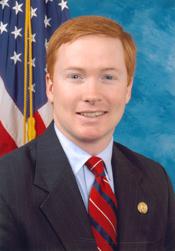
Mr. Speaker, I yield 2 minutes to a young, earnest, conscientious Republican leader, the gentleman from Florida (Mr. Putnam).
Mr. Speaker, I yield 1\1/2\ minutes to the ranking member of the Education and Labor Committee, the gentleman from California (Mr. McKeon).
Mr. Speaker, I yield 1\1/2\ minutes to the gentleman from South Carolina (Mr. Barrett).
Mr. Speaker, I yield 1 minute to the gentleman from California (Mr. Herger), a member of the Ways and Means Committee.
Mr. Speaker, I yield 1\1/2\ minutes to the gentleman from Texas (Mr. Conaway), a member of the Budget Committee.
Mr. Speaker, I yield 1\1/2\ minutes to the gentleman from California (Mr. Campbell), a member of the Budget Committee.
Mr. Speaker, I yield 1\1/2\ minutes to the gentleman from Texas (Mr. Hensarling), a member of the Budget Committee.
Mr. Speaker, I yield myself 10 seconds simply to say that's correct, the majority did make choices. They chose to raise taxes, they chose to raise spending, and they chose to violate their own PAYGO rules.
With that, Mr. Speaker, I yield 1\1/2\ minutes to the gentleman from Florida (Mr. Mario Diaz-Balart), a member of the Budget Committee.
Mr. Speaker, given the stated concerns about borrowing by the majority, I have a parliamentary inquiry.
Mr. Speaker, it's my understanding that pursuant to rule XXVII of the rules of the House, upon adoption of the conference report by both the House and the Senate, the Clerk of the House will be instructed to prepare a joint resolution adjusting the public debt limit; is that correct?
Further inquiry, Mr. Speaker.
Am I further correct, that by operation of rule XXVII, upon adoption of this conference report by both the House and the Senate, this joint resolution adjusting the debt limit will be considered as passed by the House and transmitted to the Senate?
Will there be a separate vote in the House on passing this joint resolution adjusting upwards the debt limit?
Mr. Speaker, by operation of this rule, will the vote by which the conference report is passed by the House be considered the vote on passage of the joint resolution adjusting the debt limit?
Mr. Speaker, I yield myself such time as I may consume.
Mr. Speaker, what we have just learned is that if a Member votes for this conference report, and it is adopted by the Senate, then they will be recorded as having voted for the joint resolution raising the public debt limit to $9.815 trillion, an increase in the public debt of borrowing of $850 billion. If a Member votes against this conference report, and it is adopted by the Senate, then they will not be recorded as having voted to increase the debt limit or borrowing by $850 billion.
So it's very clear that the passage of this budget increases borrowing by $850 billion and that is, in fact, the effect of this.
Mr. Speaker, I reserve the balance of my time.
Mr. Speaker, I yield 30 seconds to the gentlewoman from North Carolina (Ms. Foxx).
Mr. Speaker, I yield 2\1/2\ minutes to our distinguished minority whip, Mr. Blunt.
Mr. Speaker, may I inquire of the chairman, the gentleman from South Carolina, is he the last speaker on their side? You are reserving the right to close?
Mr. Speaker, may I inquire how much time is remaining on both sides?
At this time I would like to yield 2 minutes to the distinguished chief minority whip from Virginia (Mr. Cantor).
Mr. Speaker, I yield myself 3\1/2\ minutes.
Mr. Speaker, let's just be really clear. You are hearing this debate about taxes. Nowhere is the difference between the two parties ever clear than it is right now. We brought a budget to the floor that not only did not raise taxes, it kept taxes low, and it reduced spending, and it balanced the budget, and it finally stopped the raid of the Social Security Trust Fund.
That's what we proposed. We are not in the majority. Our view did not prevail. The Democrat budget did prevail. What did that budget do? It passed the largest tax increase in American history. That's not what we say, that's what the Congressional Budget Office says, our scorekeepers.
So what did they do in conference? They decided to accede to the Senate and have a slightly smaller tax increase. They started off with the red line, largest tax increase in American history as measured by the Congressional Budget Office. No matter what you say, the numbers in the budget just don't lie.
Then they said, let's have a trigger. If we don't spend too much money, and if the surplus is big enough in 2010, then maybe some taxpayers could get some tax relief, and we won't raise all of their taxes. We will extend the marriage penalty and the child tax credit, 10 percent bracket, but will all the other tax increases occur? So we will have the second highest tax increase in American history.
That's what their proposal does. They simply cannot have it both ways. They cannot say there is no tax increase in this budget and then say we are preserving some of the tax cuts and not others. You can't have it both ways.
Here is what this budget does. It puts us on a vicious cycle of taxing and spending. They start off by spending $24 billion, next year, brand new spending.
Then they have a $217 billion tax increase. Then they have 23 reserve funds, 23 wish lists, which equal $190 billion in new spending. Then they have no entitlement reforms, which means our entitlement programs are going to grow and grow and grow at unsustainable rates. Guess what, $190 billion in wish lists, 23 new wish lists of spending. What do they get? If they get the spending, they get another $190 billion tax increase to pay for it, a vicious cycle of new spending.
The trigger tax says we would like to give some people some tax relief, but if we continue to whet our appetite, taxpayers won't get it. All this trigger says is it puts the taxpayer at the back of the line and the government and spending at the front of line. We have a different core set of values.
We believe the money that people make is their money, not the government's money. If you are making money, working hard and paying taxes, that's your money, not ours. We have a different set of beliefs. They believe the opposite. They believe that more and more and more money ought to come out of workers' paychecks. They believe that they can spend your money better than you can.
That is not what we believe. The reason that we don't believe it is because if you have more money in your paycheck, you have more for yourself and more freedom for your family, we know, by golly, the American economy grows. We succeed. We improve in the global economy.
We created 7 million new jobs since this last run of tax cuts. We increased revenues to the Federal Government from these lower tax raises, 3 years in a row, double digit revenue growth. Let's not turn that recipe upside down. Let's not ruin a good thing.
Defeat this budget.
Mr. Speaker, I yield the remainder of our time to the distinguished minority leader, Mr. Boehner.