Madam Speaker, I move to suspend the rules and pass the bill (H.R. 599) to direct the Secretary of Homeland Security to streamline the SAFETY Act and anti-terrorism technology procurement processes.…
Madam Speaker, I move to suspend the rules and pass the bill (H.R. 599) to direct the Secretary of Homeland Security to streamline the SAFETY Act and anti-terrorism technology procurement processes.
Madam Speaker, I ask unanimous consent that all Members have 5 legislative days to revise and extend their remarks, and to insert extraneous materials relating to the bill under consideration into the Congressional Record.
Madam Speaker, I yield myself such time as I may consume.
Today, Madam Speaker, I rise in support of legislation I introduced, the SAFETY Reform Act of 2007, which will help ensure that safe and effective antiterrorism technologies are being deployed by the Department of Homeland Security to bolster our security throughout the country.
The Support for Anti-Terrorism by Fostering Effective Technologies Act of 2002, or SAFETY Act as it is known, was designed to provide incentives for development and deployment of antiterrorism technologies.
The SAFETY Act was intended to address the liability concerns of businesses and to pave the way for innovative development of key antiterrorism technologies. Unfortunately, a lack of personnel within the Office of SAFETY Act Implementation, an excessively burdensome application process, and a lack of communication between the Department's procurement and management divisions made for difficult implementation of the SAFETY Act.
This legislation which I have introduced, along with Chairman Thompson, Subcommittee Ranking Member Rogers and many other members of the Homeland Security Committee, should fix many of those shortcomings.
Last year the Homeland Security Committee held a subcommittee hearing highlighting some of the problems that arose from the SAFETY Act's implementation. We heard from a variety of industry leaders and experts that the application process was overly burdensome, and that it took far too long for the Department of Homeland Security to properly evaluate and approve many of the applications that businesses submitted.
While I am pleased to see that many companies with new and innovative technologies have already applied for the SAFETY Act program, the program can be effective only when the applications are properly approved.
My legislation, therefore, takes three important steps to improve the effectiveness of the application process. First, this bill will help facilitate communication between the Department of Homeland Security's procurement sector and the Department's Office of SAFETY Act Implementation, which is the entity tasked with reviewing the applications. This approach will allow officials at DHS to thoroughly review applications while also maintaining quick turnaround times.
Second, the bill would require that the Secretary employ a sufficient number of analysts in the Office of SAFETY Act Implementation who can deal with the ever-growing number of applications. Appropriate staffing will help ensure that the applications are being processed in a timely manner, thereby allowing us to deploy the newest and best technologies as quickly as possible.
Finally, this legislation will help raise awareness of SAFETY Act risk management provisions among procurement officers across Federal, State, and local levels, and throughout the private sector.
Contributions made by private enterprises are an extremely important component of our Nation's security, and our governmental policies should continue to encourage innovation, not stifle it.
By passing the SAFETY Reform Act, I am optimistic that we will be able to effectively streamline the application process and encourage participation in this program across all levels of government and the private sector.
I urge my colleagues to join me in supporting the SAFETY Reform Act of 2007.
Madam Speaker, I reserve the balance of my time.
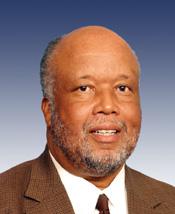
Madam Speaker, I am pleased to yield such time as he may consume to the gentleman from Mississippi (Mr. Thompson), the chairman of the Homeland Security Committee.
Madam Speaker, I yield 3 minutes to the gentleman from Florida (Mr. Meek).
Madam Speaker, in closing, I want to thank the speakers who have come forward. I want to thank Members on the other side of the aisle for working with us in a bipartisan fashion to bring this bill to the floor. I want to particularly recognize the leadership of Chairman Thompson and his due diligence in seeing that this act was put together in such a timely fashion and brought to the floor so quickly.
It is the responsibility of every level of government, whether it is the local, State or Federal level, first and foremost to protect our citizens. Our Nation is at war, and homeland security must be our top priority. The quicker that we can get these new and vital technologies in place that will better protect the American people, the better off we will all be.
So it is my intent that this act will clarify some of the problems with the original SAFETY Act and with the implementation that has been witnessed by the Department of Homeland Security, and I am pleased that we have brought this act to the floor today.
Madam Speaker, I move its passage.
Madam Speaker, I request that the following letters be made part of the Congressional Record.
Professional Services Council,
Arlington, VA, January 22, 2007.
Hon. James Langevin,
Chairman, Subcommittee on Emerging Threats, Cybersecurity,
Science and Technology.
Hon. Mike Rogers,
Ranking Member, Subcommittee on Management, Investigations
and Oversight.
Homeland Security Committee,
House of Representatives,
Washington, DC.
Dear Chairman Langevin and Congressman Rogers: On behalf of
the Professional Services Council (PSC), the leading national
trade association representing the professional and technical
services industry selling to the Federal Government, I am
writing to endorse the legislation introduced by you and
others (H.R. 599) to streamline the SAFETY Act and anti-
terrorism technology procurement processes.
We appreciated the bipartisan leadership of Chairman
Thompson and Ranking Member King during the 109th Congress to
provide strong oversight of SAFETY Act implementation,
including the execution of the responsibilities of the
Secretary of Homeland Security and the Under Secretary for
Science and Technology in administering the Act. We are
confident that the Committee's support for the full
implementation of the law and for extending the coverage of
the Act to appropriate anti-terrorism technologies will
remain strong through your Subcommittees' leadership. '
PSC has been a strong and active supporter of the SAFETY
Act since its development in Congress in 2002. We have
commented extensively on the Act, on the implementing
regulations, application kits, and operating principles. We
have met repeatedly with key leaders within the Department
and other offices in the Executive Branch. We testified
before your Committee last year on the Act. We are pleased
with the recent progress made in providing the regulatory and
administrative framework for implementation, and with DHS's
renewed commitment to moving
that implementation forward. However, more can and should be
done.
While the Department is fully committed to robust
implementation of the Act, we see your bill as an important
step in helping the Department achieve that goal--whether
through the allocation of additional full-time DHS employees
to carry out the functions assigned under the Act or ensuring
that the Department's internal procurement and policy
organizations are aligned with and use the authorities
provided under the Act. In addition, the Department plays an
important role in providing guidance and information to other
federal agencies and to other stakeholders about the Act.
Each of these important items is addressed in H.R. 599.
We appreciated the opportunity to comment on the draft bill
and are pleased to offer PSC's support for the legislation as
introduced. We strongly support passage by the House early in
the legislative cycle and look forward to further legislative
and administrative action to fully implement the goals and
objectives of the SAFETY Act. We also look forward to working
with your Subcommittees and others on this important homeland
security initiative.
In the interim, if you or your staffs have any questions or
need any additional information, please do not hesitate to
let me know.
Sincerely,
Alan Chvotkin, Esq.,
Senior Vice President and Counsel.
Madam Speaker, I yield back the balance of my time.