Mr. Speaker, at this time, I would like to yield 1 minute to the distinguished chairwoman of the Rules Committee, Ms. Slaughter. Mr. Speaker, let me emphasize once again that Chairman Rahall, in his…
Mr. Speaker, at this time, I would like to yield 1 minute to the distinguished chairwoman of the Rules Committee, Ms. Slaughter.
Mr. Speaker, let me emphasize once again that Chairman Rahall, in his testimony before the Rules Committee 2 days ago, said that this was the first step, that there are a lot more issues that we need to address as a Congress to achieve our goal of energy independence, and we are going to do that. What we are doing today really is responding to the outcry of the American people who are outraged by the fact that in the midst of being gouged by Big Oil, the previous Congress decided to pass a bill to provide billions of dollars in subsidies and tax breaks to those very companies.
So with that, Mr. Speaker, let me yield 1 minute to the distinguished gentleman from New York (Mr. Hall).
Mr. Speaker, the distinguished former chairman of the Rules Committee and the distinguished minority whip have made it clear that they are not impressed with the first 100 hours of this Congress, but the American people are and, quite frankly, that is what counts.
Mr. Speaker, at this point I would like to yield 1\1/2\ minutes to the gentleman from Vermont (Mr. Welch), who is a member of the Rules Committee.
Mr. Speaker, let me just respond to the gentleman from California by saying to him that I appreciated him being in the Rules Committee. I thought his testimony was very thoughtful, and I look forward to his engagement in a lot of these issues as, again, the chairman of the Resources Committee said, this is the beginning, not the end.
I just want to point out one thing to him so he understands one thing, and that is, in the last year, when the Republicans were in control of the Congress, there were 34 rules provided to bills that were not reported out of committee. I point that out not to make a partisan point, but simply to kind of illuminate him on the fact that there were a lot of bills that no one ever saw before they came before the Rules Committee.
With that, Mr. Speaker, I yield 2 minutes to the distinguished gentlelady from Florida, a member of the Rules Committee, Ms. Castor.
Mr. Speaker, at this time I would like to yield 1\1/2\ minutes to the gentleman from New Hampshire (Mr. Hodes).
Mr. Speaker, at this time I would like to yield 2 minutes to the gentleman from Maryland (Mr. Wynn).
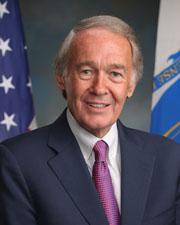
Mr. Speaker, at this time I would like to yield 2 minutes to the distinguished gentleman from Massachusetts (Mr. Markey).
Mr. Speaker, at this time I yield 2 minutes to the gentlewoman from Texas (Ms. Jackson-Lee).
(Ms. JACKSON-LEE of Texas asked and was given permission to revise and extend her remarks.)
Mr. Speaker, I yield 2\1/2\ minutes to the gentleman from New York (Mr. Israel).
Mr. Speaker, let me, first, begin by reiterating something that has been said many times here.
One of the great features of H.R. 6 is that it would create a Strategic Energy Efficiency and Renewables Reserve. It could be used to reduce our dependence on foreign oil. Everybody talks about wanting to become energy independent, but they don't want to do anything about it; and this would actually create a reserve to do that, to accelerate the use of clean domestic renewable energy resources and alternative fuels, to promote the utilization of energy-efficient products and practices and conservation, and to increase research development and deployment of clean renewable energy and energy-efficient technologies.
Again, this is the beginning of our dealing with this issue. There is a lot more to do. And I look forward to more debates and hearings and more ideas from Members from both sides of the aisle to figure out how we can achieve our goal of energy independence.
Mr. Speaker, I want to thank my colleagues on both sides of the aisle for participating in the debate today. Over the past 100 hours, this House has made tremendous progress in addressing the needs of the American people. We have strengthened the ethical rules of this House. We have made the homeland safer by adopting the recommendations of the 9/11 Commission. We have given low-wage workers a much needed raise. We have embraced the promise of stem cell research. We have made student loans and prescription drugs more affordable.
And with the passage of this rule and the CLEAN Energy Act of 2007, we will take our energy policy in a new direction, toward cleaner, renewable energy and away from tax giveaways to huge oil and gas companies.
If you want the same old same old, vote against this rule and vote against the underlying bill. If you want a new direction, then support the rule and support the underlying bill.
Mr. Speaker, let me close with a word about process. I understand the concerns expressed by my friends on the other side of the aisle. I served in the minority party during the last Congress, and I suspect my friends are worried that they will be treated as poorly and disrespectfully as we were.
I was here when the Republican majority passed exactly one open rule on a non appropriations bill. I was here when votes were held open for 3 hours to change people's votes. I was here when special interests provisions were tucked into conference reports after they were signed.
This House is broken, Mr. Speaker, and the Democratic majority was elected to fix it, and that is what we are going to do.
All I can tell my friends on the other side of the aisle is what I believe. I believe that every Member of this House deserves to be respected. I believe that one party does not hold a monopoly on good ideas; and I believe that openness should be the rule, and not the exception. And all I can offer my friends is my word that I will work as hard as I possibly can to make sure that this
House runs in a more open, democratic fashion than was the norm over the past 12 years. We will not be perfect, because human endeavors never are. But we will be better.
The material previously referred to by Mr. Lincoln Diaz-Balart of Florida is as follows:
Amendment to H. Res. 66 Offered by Mr. Lincoln Diaz-Balart of Florida
Strike all after the resolved clause and insert the
following:
``That at any time after the adoption of this resolution
the Speaker may, pursuant to clause 2(b) of rule XVIII,
declare the House resolved into the Committee of the Whole
House on the state of the Union for consideration of the bill
(H.R. 6) to reduce our Nation's dependency on foreign oil by
investing in clean, renewable, and alternative energy
resources, promoting new emerging energy technologies,
developing greater efficiency, and creating a Strategic
Energy Efficiency and Renewables Reserve to invest in
alternative energy, and for other purposes. The first reading
of the bill shall be dispensed with. All points of order
against the bill and against its consideration are waived
except those arising under clauses 9 or 10 of rule XXI.
General debate shall be confined to the bill and shall not
exceed three hours, with 60 minutes equally divided and
controlled by the chairman and ranking minority member of the
Committee on Ways and Means, 60 minutes equally divided and
controlled by the chairman and ranking minority member of the
Committee on Natural Resources, 30 minutes equally divided
and controlled by the chairman and ranking minority member of
the Committee on Agriculture, and 30 minutes equally divided
and controlled by the chairman and ranking minority member of
the Committee on Science and Technology. After general debate
the bill shall be considered for amendment under the five-
minute rule. During consideration of the bill for amendment,
the Chairman of the Committee of the Whole may accord
priority in recognition on the basis of whether the Member
offering an amendment has caused it to be printed in the
portion of the Congressional Record designated for that
purpose in clause 8 of rule XVIII.
Amendments so printed shall be considered as read. At the
conclusion of consideration of the bill for amendment the
Committee shall rise and report the bill to the House with
such amendments as may have been adopted. The previous
question shall be considered as ordered on the bill and
amendments thereto to final passage without intervening
motion except one motion to recommit with or without
instructions.''.
Mr. Speaker, I yield back the balance of my time, and I move the previous question on the resolution.