Mr. Speaker, I yield myself such time as I may consume. First of all, I would like to say to my colleagues that beginning last night in the early evening and continuing and extending to this morning,…
Mr. Speaker, I yield myself such time as I may consume.
First of all, I would like to say to my colleagues that beginning last night in the early evening and continuing and extending to this morning, a number of us have been in touch with each other about the provisions of this bill with the hope and expectation that we might be able to resolve our differences. I have been in touch with the White House. I have been in touch with the principal sponsors of the legislation; and I think we had engaged in some good-faith efforts to try to, as I say, resolve our differences.
Specifically, I had been hopeful that the other side would accept some of the provisions that had been in an amendment that I had hoped to offer today. Unfortunately, that amendment was not allowed by the Rules Committee. So Members of the House are not going to be able to vote on that amendment, which, in my judgment, would have improved the bill. There were a couple of provisions in that amendment, though, that I thought would be of interest to the sponsors of the bill and to the other side, and I regret that we were not able to come to a meeting of the minds, because I think that would have improved the bill and also yielded a better result when the bill perhaps becomes law.
Mr. Speaker, I also want to say to my colleagues that, if anything, I have a sympathy for the media, for the press. Long ago and far away, I was a newspaper reporter and spent 2 years writing articles, and so I have stood in the shoes of those who are reporters today. After being a reporter for a couple of years, I went to law school; and while in law school I actually wrote an article for the Texas Bar Journal called ``Politicians Versus the Press: Libel in Texas,'' and I actually came down on the side of the press. So that is where my sympathies lie.
However, in the case of this bill, I am afraid I cannot support it. And because we were not able to reach a compromise on the bill, I remain opposed to the bill, the White House remains opposed to the bill, the Director of National Intelligence remains opposed to the bill, and the Department of Justice remains opposed to the bill. Unfortunately, it is still so flawed that we cannot support it.
Mr. Speaker, a free press strengthens democracy. In our Nation the first amendment of the Constitution guarantees the press their freedom to report. And for 200 years in this Nation, the press, in fact, has flourished. Information has flowed freely. And that is why I believe this bill is simply a solution in search of a real problem.
Members of the private sector and law enforcement officials believe H.R. 2102 diminishes legal rights, public safety, and our national security. We must ensure that whistleblowers can expose crimes, waste, and wrongdoing. But we should not create a protection so broad that those who would destroy people's reputations, businesses, and privacy can hide behind it.
The Federal Government defends our national security; so we must weigh the benefits of a reporter's privilege with the problems it may cause for those who protect our country.
I thank the primary authors of H.R. 2102, Mr. Boucher and Mr. Pence, for working with the Department of Justice, interested groups, and Members to develop alternative language to address legitimate concerns of industry and law enforcement authorities. Despite efforts to accommodate their concerns, the Justice Department and the acting Director of National Intelligence, as I mentioned a while ago, still oppose this bill for very good reasons. The White House also opposes the bill and a veto is likely. The President's senior advisers, in fact, have recommended a veto of this bill. They believe the stakes are too high in a post-9/11 world to support the Free Flow of Information Act.
For example, they have pointed out that the exceptions language fails to address misconduct that the Justice Department confronts on a daily basis. To illustrate, neither the bill nor the manager's amendment that will be offered contains exceptions language allowing DOJ to obtain the identity of a new source with the knowledge of a child prostitution ring, an online purveyor of pornography, gang violence, or alien smuggling, all examples.
And the text governing source disclosure exceptions only addresses prospective events, not past events. For example, the Department may be able to acquire information about a source's identity to prevent a terrorist attack like September 11; but if al Qaeda decides to tell a media outlet on September 12 how it planned and carried out the attack, DOJ could not compel that media outlet to reveal its terrorist sources while conducting an investigation.
If a child molester spoke to a journalist and revealed that he molested a child yesterday, under this bill Justice officials could not compel that journalist to reveal his sources and cooperate in the investigation. The Department of Justice will be hamstrung as it goes about the business of conducting investigations and prosecuting criminals.
Yes, numerous States have shield laws, but they run the gamut; and many are not near as broad as the Federal shield law proposed today. But the key difference is that the States are not entrusted with the responsibility of defending our country; the Federal Government is. Under the bill, DOJ carries the burden of trying to establish a national security imperative which can still be negated by a judge's subjective notion of what constitutes the public interest in news gathering. The bill's terms will be subject to the different opinions of hundreds of Federal judges across the country.
The bill is simply a solution in search of a problem. It has been 35 years since the Supreme Court ruled that the first amendment does not shield journalists in grand jury proceedings. The Justice Department has issued only 19 subpoenas to reporters seeking confidential source information since 1991. Only 19 subpoenas since 1991. The system is not broken. So why are we trying to fix it?
I simply believe we must err on the side of caution and not support legislation that could make it harder to apprehend criminals and terrorists or to deter their activities.
Mr. Speaker, I reserve the balance of my time.
Mr. Speaker, before I yield to a colleague, I want to yield myself 1 minute.
Mr. Speaker, what I want to do is read an excerpt from the Statement of Administration Policy that might respond to some of the points that have been made.
The administration said that if H.R. 2102 were presented to the President in its current form, his senior advisers would recommend that he veto the bill, and here's one of the reasons why:
``The bill would impose an unreasonable and unjustified evidentiary burden on prosecutors seeking to issue a subpoena to a member of the news media, placing authorities in an untenable position.
``In order to satisfy the bill's requirements, prosecutors essentially must prove the existence of specific criminal activity in a hearing before a judge, with notice to the subjects of the investigation, before they will be able to undertake the necessary investigative steps to determine whether a crime has occurred. Thus, in many cases, prosecutors will have to conduct a minitrial before their investigation has concluded, and in some cases, even before their investigation has gotten off the ground.''
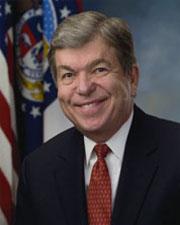
Mr. Speaker, I am now happy to yield to the gentleman from Missouri, the minority whip (Mr. Blunt).
Mr. Speaker, I yield 3 minutes to the gentleman from Indiana, a distinguished member of the Judiciary Committee and one of the original sponsors of the legislation we are debating today.
(Mr. PENCE asked and was given permission to revise and extend his remarks.)
Mr. Speaker, I yield 1 minute to my friend from North Carolina (Mr. Coble), a distinguished member of the Judiciary Committee and the ranking member of the Intellectual Property Subcommittee of the Judiciary Committee.
Mr. Speaker, I yield 1 minute to the gentleman from Florida (Mr. Keller), a diligent member of the Judiciary Committee.
Mr. Speaker, I yield myself 1 minute.
Mr. Speaker, I would like to read an excerpt from the Department of Justice's letter in opposition to the bill we are discussing: ``Given the extensive safeguards already in place, the Department strongly opposes H.R. 2102 and similar legislative efforts to provide a `journalist's privilege' that would prevent the disclosure of relevant testimony and evidence critical to the fair disposition of investigations and trials.
``H.R. 2102 would make it virtually impossible to enforce certain Federal criminal laws, particularly those pertaining to the unauthorized disclosure of classified information, and would seriously impede other national security investigations and prosecutions, including terrorism prosecutions.
``H.R. 2102 would undermine national security and other law enforcement investigations by permitting compelled disclosure of a media source only when necessary to prevent a terrorist attack against the United States and only when the bill's other burdensome prerequisites are satisfied.''
But the problem here is that it would not allow us to get to the information after the fact. You could not force a journalist to disclose information, for instance, after a terrorist attack when you want to find out who was involved
in that attack. For that reason, we should oppose the bill.
Mr. Speaker, I yield 1 minute to my friend and colleague from Texas (Mr. Poe).
Mr. Speaker, I yield 1 minute to my distinguished colleague from Oregon (Mr. Walden).
Mr. Speaker, may I ask how much time remains on each side.
Mr. Speaker, I yield myself 2 minutes.
Mr. Speaker, I would like to read for my colleagues an excerpt of a letter we received from the Office of the Director of National Intelligence:
``We are joining the Department of Justice in opposing H.R. 2102, the Free Flow of Information Act of 2007. We share the Department's strong opposition to H.R. 2102 articulated in its letter of July 31, 2007.
``The government must retain the ability to obtain information from the press that would both prevent harm to the United States and its citizens and to identify and bring to justice those who cause such harm. Unfortunately, press reports on U.S. intelligence activities have been a valuable source of intelligence to our adversaries. Former Russian military intelligence Colonel Stanislav Lunev wrote: `I was amazed, and Moscow was very appreciative, at how many times I found very sensitive information in American newspapers. In my view, Americans tend to care more about scooping their competition than about national security, which made my job easier.''
What an indictment.
Finally, and I am quoting from the letter: ``The bill, as drafted, would require that identification of the source be necessary to prevent an act of terrorism or other significant and specified harm to the national security. It would not, however, allow the government to compel the identification of a source if it was necessary to identify the perpetrators of a completed act of terrorism or an act that harmed the national security. Similarly, the bill could authorize the government to compel the identification of a source in order to prevent imminent death or bodily harm, but would not allow the government to compel disclosure of a source in order to identify a murderer.
``For these reasons and for the reasons set out in the letter from the Department of Justice, we urge the Congress to reject this bill.''
Mr. Speaker, that is a letter from the Office of the Director of National Intelligence.
Mr. Speaker, I yield 5 minutes to the gentleman from Iowa (Mr. King), who is the ranking member of the Immigration Subcommittee of the Judiciary Committee.
Mr. Speaker, I yield myself 2 minutes for the purpose of engaging in a colloquy with my friend from Indiana (Mr. Pence). I have a question I would like to ask him.
The bill states that the determination as to whether the testimony or document is critical to the underlying matter is to be made ``based on information obtained from a person other than the covered person,'' the covered person being the journalist. There has been some confusion as to what is meant by ``information from the covered person.''
In the Washington Post on October 4, Patrick Fitzgerald, who was the U.S. Attorney in the Scooter Libby case, wrote, ``The bill puzzlingly requires that agents prove that the leak occurred without relying on the newspaper article.''
Is Mr. Fitzgerald right? Does this provision mean that the party seeking the subpoena cannot use the very newspaper article at issue in the lawsuit to show why the reporter's testimony is needed?
I yield to the gentleman from Indiana.
I thank the gentleman from Indiana for his answer to my question. That is much appreciated.
Mr. Speaker, I am the last speaker on this side, and I know the chairman of the Judiciary Committee has the right to close. I wonder if he has any additional speakers.
Mr. Speaker, I yield myself the balance of my time.
Mr. Speaker, let me summarize the objections to this legislation. The White House, the Justice Department, the Acting Director of National Intelligence and many law enforcement officials oppose H.R. 2102 because they believe it diminishes legal rights, public safety and endangers national security. The Department of Justice is concerned that this legislation will impede its efforts to conduct investigations and prosecute criminals.
For 200 years, information has flowed freely to the press. Congress need not enact H.R. 2102, when the status quo is working and the legislation's potential harm to our national security is so significant.
Our Founders created a legal system where no one is above the law. But if the media shield bill passes, we will be carving out a special exception to that rule for reporters, tabloids and bloggers.
This is not what our Founders intended when they created a free press. No one should be above the law, not even the press. We must err on the side of caution and not support legislation that could make it harder to apprehend criminals and terrorists or deter their activities. I urge my colleagues to oppose this legislation.
Mr. Speaker, I yield back the balance of my time.
Mr. Speaker, although I am not opposed to the amendment, I ask unanimous consent to control the time in opposition to the amendment.
Mr. Speaker, I yield 3 minutes to the gentleman from Indiana (Mr. Pence).
(Mr. PENCE asked and was given permission to revise and extend his remarks.)
Mr. Speaker, I yield myself the balance of my time.
I support the manager's amendment offered by the gentleman from Virginia (Mr. Boucher). The provisions of the amendment do improve the bill by addressing some of the Justice Department's concerns. Despite this, it still does not cure the bill's fundamental flaws.
The legislation will still make it impossible to enforce certain criminal laws and will impede national security investigation. While I commend the sponsors of the amendment for trying to address the Justice Department's concern, even if the amendment is adopted, the bill should still be opposed. So I urge Members to support the amendment and oppose the underlying bill.
Mr. Speaker, I yield back the balance of my time.
Mr. Speaker, I offer a motion to recommit.
I am opposed in its current form.
Mr. Speaker, H.R. 2102 presumes that a journalist is entitled to a reporter's privilege unless the government can show a court otherwise. The government can only do this by meeting certain threshold requirements set forth in the bill.
After all those requirements are met, the judge must then apply a balancing test. The judge must find that ``the public interest in compelling disclosure of the information or document involved outweighs the public interest in gathering or disseminating news or information.''
My motion to recommit provides further guidance to the judge as to what criteria should be considered in weighing that decision.
The motion to recommit simply states that the judge may consider the extent of any harm to national security. It does not dictate any result.
The manager's amendment partly addresses this issue by creating an additional exception to the privilege that excludes from the privilege leaks of classified information that harm national security in criminal cases. I agree with that idea as far as it goes.
This motion to recommit, though, goes further. It allows the judge to consider this factor in any case, not just a criminal case. It allows a judge to consider any leak that harms national security, not just a leak in violation of the laws on classified information.
There are many kinds of information that can harm national security. One example is grand jury information. Suppose that the government is conducting a grand jury investigation of a suspected terrorist ring. If a grand juror were to reveal that to a reporter, it might allow the terrorist to escape to strike another day.
Another example is information covered by various common law privileges like the attorney/client privilege. Suppose that an attorney knew his client, a former terrorist, was cooperating with authorities to avoid prosecution. If he revealed this to the press, it could reveal to the terrorist's former compatriots that they needed to change their plans.
Another example is confidential business information that is protected by contractual relationships. Employees of a computer company might know and reveal without authorization that a certain new chip is coming to the market in a matter of months. This might allow a foreign enemy to stop their research on that type of chip and devote their resources to some other project.
The problem is that any of these kinds of information could harm national security. If they do, a judge ought to be able to consider that in deciding what the public interest requires.
In short, I think we are going in the same direction, but the manager's amendment does not go far enough. The motion to recommit protects national security against harmful leaks in all cases, not just criminal cases. When national security is threatened by leaks, we must protect ourselves in all cases, not just criminal cases.
I urge my colleagues to adopt this motion and protect our national security.
Mr. Speaker, I yield back the balance of my time.
Mr. Speaker, on that I demand the yeas and nays.