

H.Res. 988House110th Congress (2007-2009)Passed Congress

Designating the month of March 2008 as "MRSA Awareness Month".

Introduced February 14, 2008

Legislative Activity

Stay on top of the latest movement without scrolling through every action

10 earlier actions
HouseFloor Latest Action

Motion to reconsider laid on the table Agreed to without objection.

September 25, 2008 • 6:29 PM

View full timeline
HouseIntro Referral

Introduced in House

February 14, 2008

HouseIntro Referral

Referred to the House Committee on Energy and Commerce.

February 14, 2008

HouseCommittee

Referred to the Subcommittee on Health.

February 14, 2008

HouseFloor

Mr. Pallone moved to suspend the rules and agree to the resolution, as amended.

September 23, 2008 • 9:07 PM

HouseFloor

Considered under suspension of the rules. (consideration: CR H8685-8686; text of measure as introduced: CR H8685)

September 23, 2008 • 9:07 PM

HouseFloor

DEBATE - The House proceeded with forty minutes of debate on H. Res. 988.

September 23, 2008 • 9:07 PM

HouseFloor

At the conclusion of debate, the chair put the question on the motion to suspend the rules. Mr. Burgess objected to the vote on the grounds that a quorum was not present. Further proceedings on the motion were postponed. The point of no quorum was withdrawn.

September 23, 2008 • 9:12 PM

HouseFloor

Considered as unfinished business.

September 25, 2008 • 6:29 PM

HouseFloor

Passed/agreed to in House: On motion to suspend the rules and agree to the resolution, as amended Agreed to by voice vote.

September 25, 2008 • 6:29 PM

HouseFloor

On motion to suspend the rules and agree to the resolution, as amended Agreed to by voice vote.

September 25, 2008 • 6:29 PM

HouseFloor

Motion to reconsider laid on the table Agreed to without objection.

September 25, 2008 • 6:29 PM

Floor Debate

4 members

What members said about H.Res. 988 on the floor

1 Republican3 Democrats
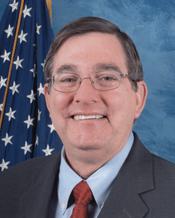
Michael C. Burgess
Rep. Michael C. BurgessR-TX-26 · Sep 23, 2008

Mr. Speaker, I also rise in favor of House Resolution 988 and support designating the month of March as the Methicillin- Resistant Staphylococcus Aureus Awareness Month. I also want to thank the…

Jim Matheson
Rep. Jim MathesonD-UT-2 · Sep 23, 2008

Mr. Speaker, I rise today in support of H. Res. 988, a resolution honoring MRSA awareness. I introduced this resolution with my colleague, Congresswoman Barbara Cubin. First, I would like to thank…

Frank Pallone, Jr.
Rep. Frank Pallone, Jr.D-NJ-6 · Sep 23, 2008

Mr. Speaker, I move to suspend the rules and agree to the resolution (H. Res. 988) designating the month of March 2008 as ``MRSA Awareness Month,'' as amended. Mr. Speaker, I ask unanimous consent…

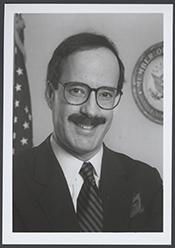
Eliot L. Engel
Rep. Eliot L. EngelD-NY-17 · Sep 25, 2008

Madam Speaker, I ask unanimous consent that the motions to suspend the rules relating to the following measures be considered as adopted in the form considered by the House on Tuesday, September 23,…

Bill Text

2 versions available

Reading Mode
Latest
Engrossed in HouseIssued September 25, 2008

H. RES. 988

In the House of Representatives, U. S.,

September 25, 2008

RESOLUTION

Whereas Methicillin-resistant Staphylococcus aureus (MRSA) is a type of infection that is resistant to treatment with the usual antibiotics and is one of the most common pathogens that cause Healthcare-Associated Infections (HAIs) in the United States and in many parts of the world;

Whereas a study led by the Centers for Disease Control and Prevention estimates that in 2005 more than 94,000 invasive MRSA infections occurred in the United States and more than 18,500 of these infections resulted in death;

Whereas the percentage of Staphylococcus aureus infections in the United States that are attributable to MRSA has grown from 2 percent in 1974 to 63 percent in 2004;

Whereas the annual number of hospitalizations associated with MRSA infections, including both HAIs and community-based infections, more than tripled between 1999 and 2005, from 108,600 to 368,600;

Whereas approximately 85 percent of all invasive MRSA infections were associated with healthcare;

Whereas serious MRSA infections occur most frequently among individuals in hospitals and healthcare facilities, particularly the elderly, those undergoing dialysis, and those with surgical wounds;

Whereas individuals infected with MRSA are most likely to have longer and more expensive hospital stays, with an average cost of $35,000;

Whereas there has been an increase in reported community-acquired staph infection outbreaks, including antibiotic-resistant strains, in States such as Illinois, New York, Kentucky, Virginia, Maryland, Ohio, North Carolina, Florida, the District of Columbia, and Alaska;

Whereas clusters of community-acquired MRSA infections have been reported since the late 1990s among competitive sports teams, correctional facilities, schools, workplaces, military facilities, and other community settings;

Whereas a person who is not infected with MRSA can be a vehicle for the transmission of infections through skin-to-skin contact; and

Whereas many instances of MRSA transmission can be prevented through the use of appropriate hygienic practices, such as hand washing and appropriate first aid for open wounds and active skin infections, are followed: Now, therefore, be it

That the United States House of Representatives—

(1)

recognizes the importance of reducing the transmission of infections in hospitals and ensuring appropriate use and utilization of antibiotics to meet patient and public health needs;

(2)

recognizes the importance of operational research for finding the best ways of preventing hospital- and community-acquired Methicillin-resistant Staphylococcus aureus (MRSA) and developing new antibiotics for improving care for MRSA patients;

(3)

recognizes the importance of raising awareness of MRSA and methods of preventing MRSA infections; and

(4)

supports the work of advocates, healthcare practitioners, and science-based experts in educating, supporting, and providing hope for individuals and their families affected by community and healthcare associated infections.

Clerk.