Earmark Declaration
Madam Speaker, in conformance with Republican Earmark Standards Guidance, I hereby submit the attached detailed finance plan for the C-130 Squadron Operations Facility at the Cheyenne Municipal Airport in Cheyenne, WY. This project is…
Madam Speaker, in conformance with Republican Earmark Standards Guidance, I hereby submit the attached detailed finance plan for the C-130 Squadron Operations Facility at the Cheyenne Municipal Airport in Cheyenne, WY. This project is funded at $7,000,000 in H.R. 2638, the Consolidated Security, Disaster Assistance, and Continuing Appropriations Act of 2009, as reported by the House Rules Committee on September 23, 2008. I am pleased to support this project on behalf of the Wyoming National Guard as they seek to fulfill vital national defense and homeland security requirements in association with the active duty Air Force.
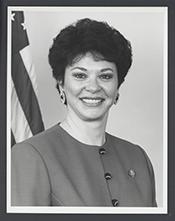
Requesting Member: Rep. Barbara Cubin (WY-At Large).
Bill Number: H.R. 2638.
Account: Military Construction; Air National Guard.
Legal Name of Requesting Entity: Wyoming National Guard.
Address of Requesting Entity: 5500 Bishop Boulevard/Cheyenne, WY 82009.
Description of Request: Provide an earmark for $7,000,000 to construct a squadron operations facility at the Cheyenne Municipal Airport in Cheyenne, WY. Specifically, $5,795,000 for basic construction of the approximately 26,200 square foot facility; $200,000 for utilities; $165,000 for roadway and parking pavements; $55,000 for site improvements; $75,000 for communications support; $315,000 in contingency funds for unforseen expenses; and $396,000 for supervision, inspection and overhead. This request is consistent with the intended and authorized purpose of the Air National Guard's Military Construction account. The Wyoming National Guard has identified a need for this new, consolidated facility to provide space for administration, training, intelligence, life support, survival equipment, command post, flight planning, aircrew briefing rooms, flight management, and storage. This facility is designed to sustain 24-hour/day operations supporting airborne firefighting, aeromedical evacuation, and homeland defense missions of 12-PAA C-130 aircraft associated with active duty Air Force personnel.
In conformance with Republican Earmark Standards Guidance, I hereby submit the attached detailed finance plan for the ADAL Missile Service Complex at F.E. Warren Air Force Base in Cheyenne, WY. This project is funded at $810,000 in H.R. 2638, the Consolidated Security, Disaster Assistance, and Continuing Appropriations Act of 2009, as reported by the House Rules Committee on September 23, 2008. I am pleased to support this project on behalf of F.E. Warren Air Force Base as the base continues its efforts to provide our nation with robust nuclear deterrence.
Requesting Member: Rep. Barbara Cubin (WY-At Large).
Bill Number: H.R. 2638.
Account: Military Construction; Air Force.
Legal Name of Requesting Entity: F.E. Warren Air Force Base-Address of Requesting Entity: F.E. Warren Air Force Base.
Description of Request: Provide an earmark of $9,043,000 for a modern and efficient facility in which to perform missile component repair, technical training, administrative functions, and security code issuance. This requirement will provide a Keys and Codes Control Center (KCCC) and an Operational Security Keys and Codes (OSC) center. It will also provide a Proof Load Test Pit (PLTP), an essential part of Minuteman III (MMIII), as well as a facility to test the structural integrity of the missile carriage and erection vehicle, something that occurs 10-20 times each month. The $810,000 earmark in this bill will support planning and design for this project.
In conformance with Republican Earmark Standards Guidance, I hereby submit the attached detailed finance plan for the Multicontinuum Technology for Space Structures project in Laramie, WY. This project is funded at $2,880,000 in H.R. 2638, the Consolidated Security, Disaster Assistance, and Continuing Appropriations Act of 2009, as reported by the House Rules Committee on September 23, 2008. I am pleased to support this project on behalf of Firehole Technologies, Inc. as they continue their efforts to provide our Armed Forces with a foundation for the efficient computer analysis of the composite structures that are growing in importance to our national security.
Requesting Member: Rep. Barbara Cubin (WY-At Large).
Bill Number: H.R. 2638.
Account: Research, Development, Test and Evaluation, Air Force; Space Technology; Line 13.
Legal Name of Requesting Entity: Firehole Technologies, Inc.
Address of Requesting Entity: Wyoming Technology Business Center/ Dept. 3011, 1000 E. University Avenue/Laramie, WY 82071
Description of Request: Provide an earmark of $3.6 million to develop a foundation for accurate and efficient computer analysis of composite structures in order to ensure their optimized application and, ultimately, mission success. The Air Force is actively designing and developing space structures where increased payloads, structural precision and deployable sub-structures are critical to mission success. Composites have emerged at the forefront of the material selection process for these applications based upon their unique strength-to-weight ratios, physical property tailoring, and shape memory capability.
Specifically, the budget for this project breaks down as follows: $1,626,713 for engineering labor; $585,000 for University of Wyoming subcontract expenses; $133,835 in consulting costs; $93,805 in travel expenses; $404,647 in General and Administrative expenses; and $756,000 for Air Force program management.
In conformance with Republican Earmark Standards Guidance, I hereby submit the attached detailed finance plan for the Eye-Safe Long Range Stand-Off System for Detection of Chemical and Biological Weapons project in Laramie, WY. This project is funded at $1,500,000 in H.R. 2638, the Consolidated Security, Disaster Assistance, and Continuing Appropriations Act of 2009, as reported by the House Rules Committee on September 23, 2008. I am pleased to support this project on behalf of DeltaNu as they continue their efforts to provide our Armed Forces with enhanced chemical/biological materials long-range detection capabilities.
Requesting Member: Rep. Barbara Cubin (WY-At Large).
Bill Number: H.R. 2638.
Account: Research, Development, Test and Evaluation, Defense-Wide; Chemical and Biological Defense Program--Advanced Development; Line 33.
Legal Name of Requesting Entity: DeltaNu.
Address of Requesting Entity: 628 Plaza Lane/Laramie, WY 82070.
Description of Request: Provide an earmark of $4.5 million for the development of long-range chemical/biological detection technology critical to new requirements for U.S. forces in the Middle East. Currently available detection systems are based on outdated technology that will never be able to provide soldiers sufficient early warning about incoming chemical/biological weapons.
This project received $1.12 million for FY08 to develop a hand-held detection device to function up to 25 meters and beyond, though this device is not eye-safe. This year's request will continue to enhance the range at which the device can be used effectively, as well as fund the development of an eye-safe version of this product. The chemical/ biological detection system developed by this request will enhance several military capabilities, including: the ability to detect exposed personnel or vehicles before they enter a base; the detection
of weapons materials before they can threaten personnel; and the accurate identification of hazardous material such that the correct countermeasure can be applied.
Specifically, the budget for this project breaks down as follows: $1,000,000 for materials; $675,000 for labor; $809,528 for labor overhead; $85,006 for subcontractors, including $75,006 for the University of Wyoming; $30,000 for travel; $1,705,034 for General and Administrative expenses; $200,000 in facilities expenses; and $495,502 for profit.
In conformance with Republican Earmark Standards Guidance, I hereby submit the attached detailed finance plan for the Enhanced Landmine and IED Detection System project in Laramie, WY. This project is funded at $960,000 in H.R. 2638, the Consolidated Security, Disaster Assistance, and Continuing Appropriations Act of 2009, as reported by the House Rules Committee on September 23, 2008. I am pleased to support this project on behalf of ADA Technologies, Inc. as they continue their efforts to provide our Armed Forces enhanced landmine and Improvised Explosive Device detection capabilities.
Requesting Member: Rep. Barbara Cubin (WY-At Large).
Bill Number: H.R. 2638.
Account: Research, Development, Test and Evaluation, Army; Landmine Warfare and Barrier Advanced Technology; Line 48.
Legal Name of Requesting Entity: ADA Technologies, Inc.
Address of Requesting Entity: Wyoming Technology Business Center/ Dept. 3011, 1000 E. University Avenue/Laramie, WY 82071
Description of Request: Provide an earmark of $3,400,000 for the development and testing of prototype integrating portable robots with landmine and Improvised Explosive Devices (IED) detection technology. The Enhanced Landmine and IED Detection System (eLIDs) will allow potential landmine and IED threats to be accurately and quickly classified. The application of this technology into robotic form will greatly enhance the war fighter's ability to concentrate on other missions while the machinery protects war fighters from the explosives threats posed by landmines and IED's.
Buried mine detection and IED detection has become an increasingly urgent requirement for our nation's war fighters in Afghanistan and Iraq. IED detection in the field includes route clearance, urban environment, check point clearance and vehicle borne IEDs. Historically, landmine and IED detection has been done with a single detector capability, such as a metal detector, and has not been effective since landmines and IED's are built from other materials. New and more accurate detection techniques need to be developed and integrated into operational detection systems.
Specifically, the project budget breaks down as follows: $2,260,000 for labor ($1,630,000 for each of fiscal years 2009 and 2010); $80,000 for materials ($40,000 for each of fiscal years 2009 and 2010); and $60,000 for travel expenses ($30,000 for each of fiscal years 2009 and 2010).
In conformance with Republican Earmark Standards Guidance, I hereby submit the attached detailed finance plan for the Enhanced Robotic Manipulators for Defense Applications project in Jackson, WY. This project is funded at $750,000 in H.R. 2638, the Consolidated Security, Disaster Assistance, and Continuing Appropriations Act of 2009, as reported by the House Rules Committee on September 23, 2008. I am pleased to support this project on behalf of Square One Systems Design as they continue their efforts to provide our Armed Forces with robotics technology with defense-related applications.
Requesting Member: Rep. Barbara Cubin (WY-At Large).
Bill Number: H.R. 2638.
Account: Research, Development, Test and Evaluation, Army; Army Technical Test Instrumentation and Targets; Line 135.
Legal Name of Requesting Entity: Square One Systems Design.
Address of Requesting Entity: P.O. Box 10520/Jackson, WY 83002.
Description of Request: Provide an earmark of $870,000 for the development of robotic manipulators, including the extension for use in Improvised Explosive Device disassembly capability, the integration of High Intensity Focused Ultrasound (HIFU) devices into the manipulator to allow for remote treatment of critically wounded soldiers and the development of grippers consistent with the robotic casualty evacuation.
Improvised explosive devices have emerged as the most lethal threat facing Coalition Forces in Iraq. A number of countermeasures have been developed to address this threat including the use of tele-operated explosive ordnance disposal robots. While these robots are capable of providing standoff detonation capability, they lack the dexterity needed to effectively perform high-level explosive handling tasks. The successful development of robot manipulators has the potential to improve the effectiveness of America's frontline combat forces while greatly reducing the exposure of our soldiers to hostile fire. As mentioned above, there remain other potential applications for robotic manipulators, including their integration into tele-operated trauma care robots.
Specifically, this project breaks down as follows: $280,000 for mechanical design; $86,000 for electrical design; $120,000 for controls; $56,000 for machine vision; $74,000 for prototype assembly and testing; $44,000 for project management; and $210,000 for parts and materials.