










II
110th CONGRESS
1st Session
S. 2232
IN THE SENATE OF THE UNITED STATES
October 25, 2007
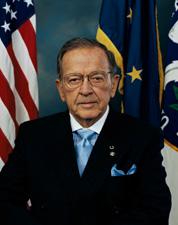
Mr. Stevens (for himself, Mr. Inouye, Ms. Murkowski, and Mr. Akaka) introduced the following bill; which was read twice and referred to the Committee on Indian Affairs
A BILL
To direct the Secretary of Commerce to establish a demonstration program to adapt the lessons of providing foreign aid to underdeveloped economies to the provision of Federal economic development assistance to certain similarly situated individuals, and for other purposes.
Short title
This Act may be cited as the
Foreign Aid Lessons for Domestic
Economic Assistance Act of 2007
.
Purposes
The purposes of this Act are—
to adapt the lessons of foreign aid to underdeveloped economies, such as the experience of the Millennium Challenge Corporation, to the provision of Federal economic development assistance to similarly situated remote Native American communities;
to provide Federal economic development assistance for Native American communities through the Native American Challenge Demonstration Project;
to administer Federal economic development assistance in a manner that—
promotes economic growth and the elimination of poverty;
strengthens good governance, entrepreneurship, and investment in Native American communities; and
builds the capacity of Native people to deal with rapid change and uncertainty due to climate change;
to improve the effectiveness of Federal economic development assistance by encouraging the integration and coordination of the assistance in Native American communities;
to promote sustainable economic growth and poverty reduction policies in Native American communities in a manner that promotes self-determination and self-sufficiency among remote Native American communities while preserving the cultural values of those communities; and
to establish a demonstration project that, if successful, may be broadly applied to other Native American communities in the United States.
Definitions
In this Act:
Compact
The term compact means a binding agreement with the United States entered into pursuant to this Act.
Economic development strategy
The term economic development strategy means a strategy—
written by an eligible entity and designed to achieve sustainable economic growth and reduce poverty over a defined period; and
developed in consultation with public and private sector entities, as appropriate to the geographic area and intended beneficiaries of the compact.
Eligible entity
The term eligible entity means—
in the State of Alaska, a consortium of not more than 2 regional Alaska Native nonprofit organizations, to be determined by the Secretary, in consultation with the Secretary of the Interior and the Alaska Federation of Natives, with priority given to organizations serving regions with high poverty levels;
in the State of Hawaii, a consortia of local Native Hawaiian community organizations, to be determined by the Secretary, in consultation with the Secretary of the Interior and the Office of Hawaiian Affairs; and
in the 48 contiguous States, not more than 3 organizations, to be determined by the Secretary, in consultation with the Secretary of the Interior, which may be Indian tribes, consortia of Indian tribes, or nongovernmental entities authorized by 1 or more Indian tribes.
Indian tribe
The term Indian tribe has the meaning given the term in section 4 of the Indian Self-Determination and Education Assistance Act (25 U.S.C. 450b).
Secretary
The term Secretary means the Secretary of Commerce.
Millennium Challenge Demonstration Project
Establishment
The
Secretary shall establish and implement in the Department of Commerce a
demonstration project, to be known as the Native American Millennium
Challenge Demonstration Project
(referred to in this section as the
demonstration project).
Authorization of assistance
In carrying out the demonstration project, the Secretary may provide assistance to any eligible entity that enters into a compact with the United States pursuant to this Act.
Form of assistance
Assistance under the demonstration project—
shall be provided in the form of funding agreements established under the applicable compact;
may not be provided in the form of loans; and
may not be used for gaming activities covered by the Indian Gaming Regulatory Act (25 U.S.C. 2701 et seq.).
Coordination
In general
The provision of assistance under the demonstration project shall be coordinated, to the maximum extent practicable, with other Federal economic development assistance programs for Native Americans carried out by the Federal agencies and departments described in paragraph (2).
Agencies and departments
The Federal agencies and departments referred to in paragraph (1) are—
the Department of Agriculture;
the Department of Commerce;
the Department of Energy;
the Department of Health and Human Services;
the Department of Housing and Urban Development;
the Department of the Interior;
the Small Business Administration; and
such other Federal agencies and instrumentalities as the Secretary determines to be appropriate.
Integrated funding
On execution of a compact with an eligible entity, the Secretary, in cooperation with other Secretaries as appropriate, shall authorize the eligible entity to coordinate the federally funded economic development assistance programs provided for the area served by the eligible entity in a manner that integrates the program services into a single, coordinated program.
Programs affected
The programs that may be integrated under the demonstration project include any program under which an Indian tribe is eligible for receipt of funds under a statutory or administrative formula for economic development purposes.
Waiver authority
On receipt of an executed compact, the Secretary shall consult with the eligible entity that is a party to the compact and the Secretary of each Federal agency or department that provides funds to be used to implement the compact to identify any waiver of statutory requirements or applicable regulations, policies, or procedures necessary to enable the eligible entity to implement the compact.
Challenge Compacts
Compacts
In general
The Secretary shall develop and recommend procedures for consideration of proposals for compacts submitted by eligible entities.
Assistance
The Secretary may provide assistance to an
eligible entity only if the eligible entity enters into a compact with the
United States, to be known as a Native American Challenge
Compact
, that establishes a multiyear plan for achieving development
objectives in furtherance of the purposes of this Act.
Applications
The Secretary shall develop and recommend procedures for considering applications for compacts submitted by eligible entities.
Criteria for selection of eligible entities
The Secretary shall develop an application process and criteria for selecting eligible entities to enter into compacts under this Act, taking into consideration—
the purposes of this Act;
the economic development strategy of the eligible entity;
the remoteness of the reservation or community to be served by the eligible entity;
the general economic status of the eligible entity;
poverty rates; and
the service capacity of the eligible entity.
Assistance for development of compacts
To the extent that funds are appropriated in advance to carry out this section, the Secretary may enter into contracts with, or make grants to, any eligible entity for the purposes of facilitating the development and implementation of a compact between the United States and the eligible entity.
Duration and extension
Duration
The term of an initial compact under this section shall not exceed 5 years.
Subsequent compacts
An eligible entity and the United States may enter into 1 or more subsequent compacts in accordance with this Act.
Extensions
If a compact is approaching expiration or has expired, the eligible entity that is a party to the compact and the United States may renegotiate or extend the compact for such number of terms as the parties may agree, with each term not to exceed 10 years.
Elements
In furtherance of the economic development strategy of the applicable eligible entity, each compact shall contain—
a description of the specific objectives for the sustainable economic development and reduction of poverty that the eligible entity and the United States expect to achieve during the term of the compact;
a description of the respective roles and responsibilities of the eligible entity and the United States in the achievement of those objectives;
a list and description of regular benchmarks to measure progress toward achieving those objectives;
an identification of the intended beneficiaries, disaggregated by income level, gender, and age, to the maximum extent practicable; and
a multiyear financial plan to guide the implementation of the compact, including the estimated level of funding and other contributions by the United States and the eligible entity, proposed mechanisms to execute the plan, and periodic assessments to determine whether the requirements of paragraphs (1) through (4) are being met.
Suspension and termination of assistance
In general
The Secretary may suspend or terminate assistance, in whole or in part, for an eligible entity that has entered into a compact with the United States if the Secretary determines that—
the eligible entity has failed to meet the responsibilities of the eligible entity under the compact; or
the eligible entity has engaged in a pattern of actions that is inconsistent with the purposes of this Act.
Reinstatement
The Secretary may reinstate assistance for an eligible entity only if the Secretary determines that the eligible entity has demonstrated a commitment to correcting each condition for which assistance was suspended or terminated under paragraph (1).
Program assessments and reports
Reports of eligible entities
Not later than March 15, 2008, and annually thereafter, each eligible entity shall prepare and submit to the Secretary a written report describing the assistance provided to the eligible entity under this Act during the preceding fiscal year.
Report contents
A report required under subsection (a) shall include—
a description of the amount of obligations and expenditures for assistance provided during the preceding fiscal year;
a description of the programs and activities conducted by the eligible entity in furtherance of the economic development strategy of the eligible entity and the purposes of this Act;
an assessment of the effectiveness of the assistance provided and progress made by the eligible entity toward achieving the economic development strategy of the eligible entity and the purposes of this Act; and
such other information as the eligible entity considers to be relevant, taking into consideration the purposes of this Act.
Submission to Congress
Not later than May 15, 2008, and annually thereafter, the Secretary shall submit the reports required under subsection (a), with such other information as the Secretary considers to be relevant, to—
the Committees on Energy and Commerce and Natural Resources of the House of Representatives; and
the Committees on Indian Affairs, Commerce, Science, and Transportation, and Energy and Natural Resources of the Senate.
Authorization of appropriations
Authorization
In general
There is authorized to be appropriated to carry out this Act $20,000,000 for each of fiscal years 2008 through 2012, to remain available until expended.
Unappropriated amounts
Any funds authorized but not appropriated for any fiscal year under paragraph (1) may be appropriated for a subsequent fiscal year, subject to the condition that the cumulative amount authorized to be appropriated for any of fiscal years 2008 through 2012 shall not exceed $100,000,000.
Administrative funds
Of the funds made available to carry out this Act, not more than 5 percent may be used by the Secretary for the administrative expenses of carrying out this and oversight of programs under this Act.