DTV Transition Assistance Act

Legislative Activity
Stay on top of the latest movement without scrolling through every action
Became Public Law No: 110-295.
July 30, 2008
View full timeline
Introduced in Senate
February 7, 2008
Sponsor introductory remarks on measure. (CR S790)
February 7, 2008
Read twice and referred to the Committee on Commerce, Science, and Transportation. (text of measure as introduced: CR S790)
February 7, 2008
Committee on Commerce, Science, and Transportation. Ordered to be reported without amendment favorably.
April 24, 2008
Committee on Commerce, Science, and Transportation. Reported by Senator Inouye without amendment. With written report No. 110-348.
June 10, 2008
Placed on Senate Legislative Calendar under General Orders. Calendar No. 774.
June 10, 2008
Measure laid before Senate by unanimous consent. (consideration: CR S5915)
June 19, 2008
Passed Senate with an amendment by Unanimous Consent.
June 19, 2008
Received in the House.
June 20, 2008 • 9:17 AM
Message on Senate action sent to the House.
June 20, 2008
Referred to the House Committee on Energy and Commerce.
June 20, 2008
Mr. Hill moved to suspend the rules and pass the bill.
July 9, 2008 • 6:10 PM
Considered under suspension of the rules. (consideration: CR H6306-6309)
July 9, 2008 • 6:10 PM
DEBATE - The House proceeded with forty minutes of debate on S. 2607.
July 9, 2008 • 6:10 PM
Passed/agreed to in House: On motion to suspend the rules and pass the bill Agreed to by voice vote.(text: CR H6306)
July 9, 2008 • 6:33 PM
On motion to suspend the rules and pass the bill Agreed to by voice vote. (text: CR H6306)
July 9, 2008 • 6:33 PM
Motion to reconsider laid on the table Agreed to without objection.
July 9, 2008 • 6:33 PM
Cleared for White House.
July 9, 2008
Presented to President.
July 22, 2008
Signed by President.
July 30, 2008
Became Public Law No: 110-295.
July 30, 2008
Floor Debate
16 membersWhat members said about S. 2607 on the floor
OJS EMK
EMK BPH
BPH RDF
RDF SMC+11
Floor Debate
16 membersWhat members said about S. 2607 on the floor
Mr. President, I rise today to introduce legislation that would better facilitate the DTV transition for rural Americans by making funds for digital upgrades available sooner to low-power television…
Mr. President, I rise today to introduce legislation that would better facilitate the DTV transition for rural Americans by making funds for digital upgrades available sooner to low-power television stations and translators. The reason this is imperative is that we don't want to create another ``digital divide'' where rural and low-income areas are not able to reap the benefits of digital TV as quickly as their urban counterparts.
Under the current statute, the Assistant Secretary for Communications and Information at the Department of Commerce must make payments for the low-power TV and translator upgrade program during fiscal year 2009--October 1, 2008 to September 30, 2009--but may not actually disburse reimbursement payments until after October 1, 2010, which is 20 months past the DTV transition deadline of February 2009.
By having such a long delay for reimbursements, it will inevitably hold up the analog to digital upgrades of low-power TV stations and translators. This would adversely affect viewers since they will not be able to receive the benefits that digital signals offer and hence create this additional ``digital divide'' to these mostly rural and low-income areas where low-power TV and translators typically are situated.
This bill would correct this oversight and change the language to have the Assistant Secretary make payments during the fiscal years 2009 to 2012, and start providing reimbursements for the upgrade program on February 18, 2009, and in doing so will move up the date 20 months to bring the upgrade program more in line with the main deadline of the DTV transition. This will allow LPTV and translators to be reimbursed more quickly for analog to digital equipment upgrades, which can run in the tens of thousands of dollars.
As we all know, in less than 380 days, on February 17, 2009, television broadcasts will transition from analog TV signals to an all- digital system and in doing so begin a new chapter of innovation and viewing experience. The transition will free up scarce broadcast spectrum so that first responders and public safety services have much needed spectrum capacity. It will also provide space for advanced wireless technologies, which will bring us improved broadband and communications services. In addition, the new digital TV signals will provide higher quality video and sound, as well as the opportunity for broadcasters to offer new services such as interactive TV and multicasting, which allows the transmission of several program streams on one broadcast channel.
Consumer awareness of the DTV transition is improving and the Commerce Department announced earlier this month that it had already received requests from more than 2 million households for nearly 4 million converter box coupons--so demand is strong. More and more consumers are realizing the importance and benefits of the DTV transition. We must not unduly prohibit any American from not reaping the tremendous advantages of digital TV and other services that will quickly follow due to the transition. If we don't correct this critical oversight in the current law, we will do just that, once again disadvantaging the areas and people that have the most to gain from this new technology. That is why I sincerely hope that my colleagues join me in supporting the critical legislation.
Mr. President. I yield the floor.
Mr. President, I rise today, along with Senator Dole, to introduce the Small Business Women's Procurement Improvement Act, a measure that would enhance the Small Business Administration's women's procurement program, which was created back in 2000, to provide contracting opportunities to women-owned small businesses in Maine and across the Nation. As Ranking Member of the Senate Committee on Small Business and Entrepreneurship, one of my top priorities is to champion our nation's women-owned small businesses and to promote their interests. In these uncertain economic times it is our financial strengths that we must rely upon most. Women-owned small businesses are one such strength. In recent years, the percent growth in the number of women-owned firms was nearly twice that of all U.S. firms. Thus, we need to create programs that will continue to grow this vital and crucial resource.
Regrettably, the Small Business Administration, SBA, has failed to implement the women's procurement program that was enacted into law back in 2000. In December, the SBA finally proposed a rule to implement the program. The SBA had the opportunity to hit a home run, but instead published a rule that is highly deficient and unlikely to have any practical effect in helping the Federal Government satisfy its 5 percent women's contracting goal. So far, there has been one law-- enacted back in December 2000--three reports, numerous hearings, and two proposed rules, and, tragically, it appears that we are no closer today then we were 7 years ago to helping our nation's small women- owned businesses stimulate our economy. What an inconceivable missed opportunity for the SBA to help boost our economy by promoting women- owned businesses.
The SBA's proposed rule has two fundamental flaws which hinder it from functioning as Congress originally intended. First, the proposed rule identifies just four industries, out of more than one hundred, in which women-owned small businesses are under-represented and eligible for set-asides. According to the Central Contractor Registration, this gross disparity means a mere 1,238 businesses across the entire Nation--or 2 percent of all women-owned small business contractors-- would be subject to the proposed rule. Regrettably, only two of these contractors are located in my home State of Maine.
Second, for SBA's proposed rule to go into effect, individual Federal agencies must first publicly admit to a history of gender discrimination. I find it difficult, if not impossible, to envision a scenario where a Federal agency would make such an admission. Furthermore, such an unworkable admission isn't required anywhere in the Small Business Act.
To help remedy this appalling circumstance, today we introduce legislation to amend the Small Business Act so that the women-owned small businesses can finally have a procurement program that makes a real difference, not a 2 percent difference. For example, our bill would substantially broaden the range of applicable business industries for women across this Nation and take down the unnecessary barriers it has recently proposed. Women-owned small businesses deserve more than 2 percent of available business industries. These four industries will do little to nothing to help Federal agencies reach its statutory government-wide goal. Sadly enough, one of the industries the SBA has selected does not
allow for any private business participation, let alone women business participation.
Our bill also would preclude the SBA from promulgating a final rule that requires individual agencies to admit to past discrimination as a prerequisite for participation in the set-aside program. We find it difficult to envision a circumstance in which any agency would make such an admission. Furthermore, this requirement is not mandated anywhere in the Small Business Act.
Our bill has gained the support of women-owned small businesses across the Nation including major women's organizations like the U.S. Women's Chamber of Commerce, Women Impacting Public Policy, the National Women Business Owners Corporation, the Women Presidents' Organization, the Women Presidents' Educational Organization, and the Women's Business Development Center.
It has been nearly 14 years since the women's 5 percent government- wide contracting goal was established in 1994, but since its enactment, the women's contracting goal has never been met. Shockingly, at the historical percentage rate of increase, it would take until 2019 for this goal to be met--25 years after enactment of the original statutory requirement.
According to recent figures, women-owned firms in the U.S. generate $1.1 trillion in annual sales and employ 7.2 million people nationwide. I take great pride that my own state of Maine is a forerunner for women-owned businesses with more than 63,000 women-owned firms, creating 75,000 jobs, and spurring more than $9 billion in sales.
The SBA must develop a functioning procurement program that will cultivate women business so that they in turn can help grow our Nation's economy. This is why women businesses need a workable procurement program that does not create impenetrable barriers and provide so few business opportunities. Our bill eliminates these barriers and gives women-owned small business a tool they can use that will help them continue to grow our suffering economy. If ever there were a time to secure new avenues to generate revenue and spur the economy, wouldn't that time be now?
I urge my colleagues in Congress to support this vital legislation, so that we in Congress can make sure that the SBA publishes a meaningful final rule that will assist the Federal Government to satisfy--if not exceed--its government-wide contracting goal, and to help women-owned small businesses to stimulate our Nation's economy.
Mr. President, I ask unanimous consent that the text of the bill be printed in the Record.
Mr. President, today I am introducing the National Crime Gun Identification Act as an important step to reduce gun violence and support law enforcement. The bill requires semiautomatic handguns…
Mr. President, today I am introducing the National Crime Gun Identification Act as an important step to reduce gun violence and support law enforcement. The bill requires semiautomatic handguns manufactured, imported or sold by federal firearms licensees to be equipped with microstamping technology. Congressman Xavier Becerra is introducing a companion measure in the House this week.
Nearly 70 percent of homicides in 2006 involved a firearm, and handguns were the weapons of choice for most offenders. Handguns are also the weapons most often used in murders of law enforcement officers. There is an urgent need for effective, high-tech gun-tracing capabilities such as microstamping, which can provide law enforcement with a much-needed investigation resource in solving gun crimes.
Microstamping uses lasers to make precise, microscopic engravings on the firing pin and chamber of a weapon, and this information is transferred onto the cartridge casing when the weapon is fired. The information includes the gun's make, model and serial number, and can yield important evidence to law enforcement officers investigating crimes. California has already enacted such legislation, and the technology has the support of many individuals and organizations, including Boston Mayor Thomas Menino, the Boston Police Department, Seattle Mayor Gregory Nickles, the U.S. Conference of Mayors, the Coalition to Stop Gun Violence, and the Brady Campaign to Prevent Gun Violence. Additionally, the National Black Caucus of State Legislators passed a resolution supporting the use of microstamping technology.
Microstamping is a significant new technology for ballistics identification. Congress should obviously support emerging technologies that enable law enforcement to make more effective use of evidence at crime scenes. Current ballistic analyses, conducted through the National Integrated Ballistic Information Network, depend on the transfer of accidental markings from a gun barrel to bullets and cartridge cases, which are then compared to a limited database with evidence from other crime scenes.
The current Ballistic Information Network has already been an invaluable resource for law enforcement. A remarkable number of crimes have been solved by using it, and it makes sense to invest in the next generation of ballistic technology. Microstamping in no way replaces any of the methods currently used by police to conduct ballistics tests, but it would clearly enhance the work currently done by law enforcement agencies.
FBI data indicate that handguns are used in most homicides, accounting for nearly 7,800 murders in 2006. In Massachusetts, violent crime rates are on the rise--growing 11 percent in Boston in 2006. In 2005, Boston police made a total of 754 gun arrests and 797 illegal firearm seizures. Nevertheless, from 1997 to 2005, shooting incidents have jumped a drastic 153 percent. We can help law enforcement solve more handgun crimes and reduce gun trafficking through the use of microstamping technology.
Bullet casings are often the only evidence left behind at crime scenes, particularly in gang crimes such as drive-by shootings. In Boston during 2006, bullet casings were recovered from nearly half of crime scenes involving shootings. In those cases, investigators could obviously have benefited from knowing the make, model and serial number of the guns involved in those crimes. Microstamp information can also be used to identify straw buyers and gun traffickers who supply the illegal flow of weapons to violent teens, gang members and other prohibited purchasers.
Critics of microstamping technology claim that perpetrators engaged in crime will be able to subvert the technology by filing the microstamped information off the weapons. In fact, however, microstamping is virtually tamperproof. The microstamped information is invisible to the naked eye, and most criminals would be unable to detect it. The microstamp is placed on the firing pin and in the chamber of the gun, so even if a perpetrator replaced the firing pin, the information would still be transferred to the casing from the chamber.
Others argue that criminals will plant cartridges at crime scenes to disrupt investigations. Realistically, however, we know that offenders rarely take even the simplest precautions, such as wearing gloves during a burglary, when engaging in criminal behavior.
Opponents also contend that microstamping will result in the creation of a new national database of gun owners. In fact, it will not result in any new database, because it will use information already available to law enforcement officers investigating gun crimes. In addition, microstamped information on bullet casings can be viewed with imaging equipment generally found at Federal, State and local forensics laboratories, making it unnecessary to create and maintain special equipment or facilities.
Finally, critics claim that the cost of adding microstamping technology is prohibitive. In fact, the technology will be available to manufacturers through a free licensing agreement from its inventor. Based on independent estimates, adding the technology to new semiautomatic handguns will cost only 50 cents to a dollar for each firearm produced by large volume manufacturers.
Handgun owners and prospective handgun purchasers will not be burdened by this legislation. There will be no changes in the procedures or requirements for purchasing handguns. Existing handguns and handgun owners will not be affected by this legislation since it applies only to new handguns.
The technology has been thoroughly tested. Independent examiners have fired thousands of rounds from guns with microstamping, and have consistently obtained readable marks on the casings.
Microstamping technology is urgently needed by law enforcement and can make a major difference in solving gun crimes. It is cost effective and will not impinge on the rights of any gun owners. I urge my colleagues to support law enforcement and reduce gun crimes by enacting this important legislation.
Mr. Speaker, I move to suspend the rules and pass the Senate bill (S. 2607) to make a technical correction to section 3009 of the Deficit Reduction Act of 2005. Mr. Speaker, I ask unanimous consent…
Mr. Speaker, I move to suspend the rules and pass the Senate bill (S. 2607) to make a technical correction to section 3009 of the Deficit Reduction Act of 2005.
Mr. Speaker, I ask unanimous consent that all Members may have 5 legislative days in which to revise and extend their remarks and include extraneous material on the legislation under consideration.
Mr. Speaker, I yield myself such time as I may consume.
I rise today in support of S. 2607, the Digital Television Transition Assistance Act. We have little more than 7 months until February 17, 2009, the date of the digital television transition when all full-power television stations in the country will stop broadcasting analog signals and broadcast only digital signals.
The Subcommittee on Telecommunications and the Internet, of which I am a member, has been working hard to prepare consumers for this event. However, not all television stations will immediately start broadcasting in digital on that day of transition. There are many stations that broadcast at low-power levels or that rely upon translators and boosters to reach viewers, and many of these stations will be transitioning to digital some time after February 17. Many of these stations serve viewers in districts like mine that are largely rural.
When Congress passed the Digital Television Transition and Public Safety Act in 2005, it recognized that many of these smaller, rural stations lacked the resources necessary to immediately switch to digital. Therefore, the statute established two grant programs designed to aid these stations.
One grant program provides funds so that low power and translator stations may purchase the equipment needed to facilitate continued service for viewers of low-power stations and translators on analog television sets.
The other grant program provides funds for low-power stations to upgrade
their facilities to digital. The provision establishing the grant program for low-power stations to upgrade their facilities to digital included a technical error that S. 2607 will correct. Current law prohibits grant funds from being awarded to stations after October 1, 2010, more than a year after full-power stations are broadcasting only in digital.
S. 2607 changes that date to February 18, 2009, one day after the transition begins. This technical correction will ensure that low-power stations can begin to transition to digital as quickly as possible. S. 2607 would also ensure that the funds Congress set aside for the translator grant programs are used to further the DTV transition.
This program allocated $10 million for qualified low power and translator stations to buy digital-to-analog conversion equipment so they can continue to offer analog signals after February 17.
However, it is estimated that at least $3 million of these funds will be unspent because not all stations are expected to take advantage of the program. Therefore, S. 2607 would permit the National Telecommunications and Information Administration to use the excess moneys to further consumer education efforts concerning DTV transition and the TV Converter Box Coupon Program.
S. 2607 would permit the NTIA to use extra funds from the $10 million grant program to create a program that addresses the educational and technical assistance needs of vulnerable populations such as senior citizens, residents of rural and remote areas, and minorities.
This is a simple bill that would make commonsense changes designed to speed the transition to digital television in all areas of the country and ensure that consumers are informed about the transition.
I urge Members to join me in supporting S. 2607.
I reserve the balance of my time.
Mr. Speaker, I am pleased to yield 3 minutes to the gentleman from Virginia (Mr. Boucher).
(Mr. BOUCHER asked and was given permission to revise and extend his remarks.)
Mr. Speaker, I am pleased to yield 1 minute to the gentleman from New York (Mr. Engel).
I yield the gentleman an additional minute.
Mr. Speaker, I am pleased to yield 2 minutes to the gentlewoman from California (Ms. Solis).
Mr. Speaker, I'm pleased to yield 3 minutes to the gentlelady from Illinois (Ms. Schakowsky).
Mr. Speaker, we have no further speakers if the gentleman from Florida, my good friend, would like to close.
Mr. Speaker, in closing, I'd like to reiterate that this bill fixes two technical errors in order to bring great benefits to our constituents through their digital television transition.
I urge my colleagues to support this bill.
Mr. Speaker, I yield back the balance of my time.
Mr. President, today I am pleased to reintroduce the Global Service Fellowship Program Act. This important bipartisan bill would provide more Americans the opportunity to volunteer overseas and…
Mr. President, today I am pleased to reintroduce the Global Service Fellowship Program Act. This important bipartisan bill would provide more Americans the opportunity to volunteer overseas and strengthen our existing Federal international education and exchange system. The U.S. Government needs to be taking a greater role in providing opportunities for U.S. citizens to volunteer overseas, and my bill will enhance U.S. efforts to be a global leader in people-to- people engagement.
People-to-people engagement is one of the United States' most effective public diplomacy tools and, today more than ever, we need to be investing in every opportunity to improve the perception of the U.S. overseas.
I often hear from constituents about their experiences volunteering overseas and how those experiences impacted their lives and the lives of those who they were helping. For example, I received an email from Eric Englund, from my hometown of Middleton, who wrote, ``[My wife Jane and I] have been privileged to participate in international volunteering experiences in 2006 and 2007. In 2006 we spent 4 weeks in China teaching English to Chinese primary and secondary English teachers in Xingping, China. * * * In 2007 we spent two weeks in Tanzania with Habitat for Humanity. . . . We return[ed] from both experiences humbled in the understanding of how lucky we have been and hungry to continue to share with others a cultural exchange that is hopefully symbiotic in helping us grow/learn/appreciate while at the same time sharing our knowledge, compassion and abilities with others.'' This email captures the life-changing effects that international volunteering often has on those who choose to commit their time and resources to volunteering across the globe.
Unfortunately, not enough of my constituents are able to volunteer overseas because of financial or time-related barriers. In an effort to reduce these barriers, I initially introduced, along with my colleague Senator Coleman, the Global Service Fellowship bill. Today, I am reintroducing a new and improved version of the bill.
This new bill builds on the original legislation but now ensures fellowships are not taxed, addresses the importance of geographical diversity in the selection process, and increases collaborative opportunities for the U.S. Agency for International Development and the Department of State in establishing and administering the program.
Additionally, congressional involvement has been changed from the original bill. The new version calls on participants to engage with Members of Congress prior to their departure and again upon their return by providing Members with a brief report of their experiences and impact abroad. The changes are intended to ensure that fellows are selected based on the merits while preserving for Members of Congress the opportunity, if they so wish, to engage directly with constituents who have volunteered for significant overseas work, whether by a personal exchange, a public event or correspondence that recognizes the value of their volunteer efforts.
Studies have shown that in areas where U.S. citizens have volunteered their time, money, and services, opinions of the U.S. have improved. Greater investment in volunteer opportunities has significant potential to improve the image of the U.S. overseas and while we have important programs already in place--the Peace Corps, programs administered through the Department of State's Bureau of Education and Cultural Affairs, and
USAID's Volunteers for Prosperity--we can and should be doing more.
My bill would cost $150 million, which is more than offset by a provision that would require the IRS to deposit all of its fee receipts in the Treasury as miscellaneous receipts. CBO has estimated that this offset will save $559 million over 5 years for net deficit reduction of just over $400 million.
I am pleased that my colleagues, Senators Coleman, Casey, Cochran, Kerry, Voinovich, and Whitehouse have joined me in re-introducing this bill. This program will be a valuable addition to our public diplomacy and our private humanitarian efforts overseas and I encourage my colleagues to support the bill.
Mr. President. I am pleased to join Senator Dodd in introducing legislation to reauthorize the U.S. Fire Administration. The bill would provide additional resources to help the agency meet its…
Mr. President. I am pleased to join Senator Dodd in introducing legislation to reauthorize the U.S. Fire Administration. The bill would provide additional resources to help the agency meet its growing responsibilities. We are pleased to be joined by our fellow cochairs of the Congressional Fire Services Caucus--Senators McCain and Biden.
Since its creation in 1974, the Fire Administration and its Fire Academy have helped prevent fires, protect property, and save lives among firefighters and the public. Today, the Fire Administration is also integrated into our national, all-hazards preparations against natural disasters and terrorist attacks.
Last month marked the fifth anniversary of the Fire Administration's reorganization as part of the Federal Emergency Management Agency within the Department of Homeland Security. As both Ranking Member of the Senate Committee on Homeland Security and as a cochair of the Congressional Fire Services Caucus, I am pleased that the bill being introduced today does much more than reauthorize the Fire Administration.
For example, the bill designates $5 million annually to support necessary technology upgrades to the National Fire Incident Reporting System. This important system helps State and local governments report and analyze fires, and allows nationwide sharing of data in standard formats. This database--the world's largest collection of fire-incident information--helps all levels of government to probe the nature and causes of injuries, deaths, and property loss resulting from fires.
Another vital component of this bill establishes a rotating position at the DHS National Operations Center to be filled by a State or local fire-service official. In our comprehensive, all-hazards approach to major disasters, it is just as important to have the fire services represented at operations center as it is military liaisons.
The bill has other important provisions, including provision for a 1.3 percent annual increase in the initial $70 million authorization through fiscal year 2012. In addition, the bill expands National Fire Academy training programs to include topics like hazardous-material fires and fire-based emergency medical services. It authorizes expanded research on fires in the urban-wildland interface and in rural areas. It encourages the Fire Administration to adopt national voluntary standards on firefighter health and safety--an important topic, considering that about 100 brave firefighters lose their lives in the line of duty each year, with many more suffering serious injuries.
My home state of Maine is keenly aware of the dangers of fire and the importance of effective fire services. Maine is one of the most rural states in the nation and most of its housing stock is wood framed. Some households rely on woodstoves for primary or supplemental heat.
According to the Maine Department of Public Safety, nearly 50 Mainers died in fires every year through the 1950s, '60s, and '70s. The average so far for this decade is 18, and 2007 produced only 12 fire-related deaths, still too many but a considerable improvement.
Maine public-safety officials attribute the decline to factors like wider use of smoke detectors and improved building codes--and fire- prevention efforts. As our national resource and clearing house for fire research, education, and training, the U.S. Fire Administration certainly deserves a share of the credit for my state's progress in reducing the pain, devastation, and death wrought by fires.
I have no doubt the Fire Administration's beneficial effects will grow. Its new campaign for preventing smoking-related home fires is a worthy effort. Its growing curriculum of online courses on topics like incident command for nursing-home fires, emergency medical service at multi-casualty incidents, and emergency response to terrorism is a valuable resource for firefighters.
The U.S. Fire Administration is a fine example of the good that can come of federal, state, and local collaboration to counter an ancient threat and to address new ones. I urge my colleagues to join me in supporting the reauthorization and improvement of this valuable agency.
Show 8 more
Mr. President, today I am introducing a piece of legislation aimed at changing the course of our international trade policy. Part of the problem with our current trade agenda is that there is no…
Mr. President, today I am introducing a piece of legislation aimed at changing the course of our international trade policy.
Part of the problem with our current trade agenda is that there is no mechanism to gauge whether the trade agreements we enter into are successful--and there is no mechanism to withdraw from agreements that have not been successful.
So I am joining with Senators Brown and Casey in introducing the Trade Agreement Benchmarks and Accountability Act, which aims to fix that.
This is how the bill would work.
The legislation would create a point of order in the Senate against any future bill implementing a new trade agreement unless it included benchmarks to gauge the success or failure of the agreement.
The benchmarks would include, at a minimum, the trade agreement's impact in four respects.
First, the number of U.S. jobs created and lost.
Second, the impact on U.S. wages.
Third, the extent to which U.S. exports gain foreign market access in key sectors.
Fourth, the extent to which labor and environmental laws are followed and enforced.
The U.S. Trade Representative's office could include additional benchmarks in the implementing legislation, at their discretion.
Every 5 years, the U.S. International Trade Commission, ITC, would assess whether the benchmarks in the implementing legislation had been met.
If the ITC determined that any of the benchmarks were not met, there would be an expedited process under which the House and the Senate would consider a privileged resolution to pull the United States out of the trade agreement.
The resolution would be considered under expedited rules. The resolution would first be referred to the Ways and Means and Finance committees. If those committees failed to report out the resolution within a set period of time, either favorably or unfavorably, the resolution would be automatically discharged to the full House and Senate.
The resolution would not be amendable, and a floor vote in the House and the Senate on whether to approve the resolution would be mandatory.
Let me explain why something like this is necessary.
When NAFTA was sent to Congress for a vote in 1993, its advocates said that there would be 200,000 new jobs created annually as a result.
The proponents relied on a study by economists Gary Clyde Hufbauer and Jeffrey Schott. Hufbauer and Schott actually predicted that NAFTA would create 170,000 new jobs by 1995. But proponents of the deal in the administration and the Senate rounded this number up to 200,000 jobs.
Well, we now know that NAFTA has resulted in hundreds of thousands of job losses. About 412,000 U.S. jobs have been certified as lost to NAFTA, under just one program at the U.S. Labor Department.
In 2003, 10 years after NAFTA had been approved, I commissioned a study from the Congressional Research Service, which identified the top 100 companies that laid off U.S. workers as a result of NAFTA, between 1994 and 2002.
To come up with its data, CRS turned to the Department of Labor, which has a ``Trade Adjustment Assistance'' program that gives temporary benefits to workers laid off due to NAFTA.
This program requires companies to certify that they intended to eliminate U.S. jobs specifically because of NAFTA. This means that we can directly attribute these job losses to NAFTA.
These 100 companies accounted for 201,414 U.S. jobs lost specifically due to NAFTA. In every instance, the companies doing the layoffs certified that the jobs were being cut directly because of NAFTA.
If you look at all U.S. companies that participated in the Department of Labor program, the total number of U.S. jobs lost due to NAFTA is 412,177--and that is just under this one program alone.
There are some very familiar products, which many people consider all-American, now being produced in Mexico.
Levi Strauss laid off 15,676 U.S. workers due to NAFTA, and now makes its jeans in Mexico.
In March 2003, Kraft Foods closed the Nabisco plant in Fair Lawn, NJ, that made Fig Newtons. About 240 jobs were lost right there. Those jobs are now in Monterrey, Mexico. Kraft Foods has cut about 955 jobs due to
I rise, Mr. Speaker, in support of this measure which will ease the transition next February to exclusively digital over-the- air television broadcasting. The bill makes funds available in a timely…
I rise, Mr. Speaker, in support of this measure which will ease the transition next February to exclusively digital over-the- air television broadcasting. The bill makes funds available in a timely manner for low-power television transmitters to make the transition to digital, and it makes approximately $7 million available for public education, technical assistance, and the converter box program. While this new support is welcome, I'm deeply concerned that a truly smooth transition will require that this Congress do much more.
The total funding for the public education component of our program remains miniscule. While polls show that more than one half of the population has heard about the digital TV transition, most who know about it are confused about how it will apply to them and what they may need to do in order to prepare themselves effectively for it.
The need for technical assistance installing converter boxes and analyzing reception problems that may be experienced in the home will be vast. This bill makes little provision to meet that need which will be acute among our elderly population and in rural and low-income areas of the Nation.
In the United Kingdom, which has carried out their transition in some regions of the nation, as many as 10 percent of the external antennas and rabbit ears had to be replaced in order to receive a digital signal. Our experience with antennas will be no different, and we still have no public funding in order to meet that need.
The antenna replacement problem will be magnified by the lack of technical assistance. Viewers who correctly install their converter box may still not receive a digital signal, and without technical help will have great difficulty determining that the problem is an antenna that could receive an analog signal but is too far away from the transmitter to receive digital service. That viewer will lose TV reception on February 17. When he later finds that the antenna has to be replaced, he will have to shoulder that replacement cost on his own.
This Congress should do more to assure a smooth transition. If we don't, I fear that millions of Americans will lose the vital lifeline that television service represents next February.
We might want to consider instituting a program similar to the help scheme that has been employed in the United Kingdom. For a payment of the American equivalent of $40, TV households receive on-site technical support and, if necessary, hardware, including antenna replacement. Such a program in the United States would ensure a successful transition and would prevent the vital lifeline that television represents from being lost by millions of Americans who I otherwise fear will lose that service next February.
I thank the gentleman from Indiana for yielding.
Will the gentleman yield?
I thank the gentleman for yielding, and I share his belief that the demonstration project that we are going to have in Wilmington, North Carolina, sometime later this year will yield valuable information. My concern is that whatever information we receive from that demonstration, should it indicate that
additional steps need to be taken for technical assistance, for public education, for the replacement of either rabbit ears or external antennas, will not be information that is very useful to us in the absence of funding in order to carry out whatever steps that information suggests should be appropriate.
So my recommendation today is that we begin to have a conversation about how we could use information collected from the Wilmington experience, how we could use information that we can gain very usefully from the larger experience they've already had in the United Kingdom and put that information to work to make sure that our transition is as smooth here in the United States as it has been in the U.K.
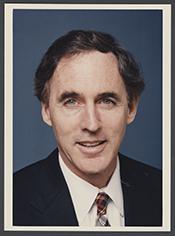
Mr. Speaker, I yield myself such time as I may consume. My colleagues, I rise in support of the DTV Transition Assistance Act, the Senate bill, S. 2607, and urge its immediate passage. By setting…
Mr. Speaker, I yield myself such time as I may consume.
My colleagues, I rise in support of the DTV Transition Assistance Act, the Senate bill, S. 2607, and urge its immediate passage.
By setting February 17, 2009 as the date for full-power broadcasters to transmit exclusively in digital format, the DTV legislation gave industry the needed incentives to prepare for this transition.
The result, 91 percent of broadcasters are transmitting in digital; 68 percent are already on their post-transition channel and 68 percent are already broadcasting at full strength.
As of April 30, 2008, 78 percent of households had all their televisions prepared for the transition, and 91 percent of households had one or more televisions that were prepared for this transition. This means that with more than 9 months still to go, about 10 percent of households were relying exclusively on analog over-the-air broadcasts and needed to take action to receive programming after the transition.
Because low-power translator stations are not required to transition to digital television, our original DTV legislation created a $10 million grant program at the National Telecommunications and Information Administration, NTIA, to help translators convert digital broadcast signals back to analog.
As it turns out, not many requests for money from the conversion fund have really been made. Moreover, even if every translator participated in the program, it looks like we will still have money left over. Therefore, this bill allows some of the $10 million to be used for DTV consumer education, but only if the NTIA determines that not all the money will be needed for the converter box program.
The original DTV legislation also created a second grant program making $65 million available to help low-power stations voluntarily upgrade to digital broadcasting. At the time, it was believed that low- power stations would not upgrade until after full-power stations transitioned in 2009. Consequently, money from the $65 million upgrade fund was not to become available until 2010. It now appears low-power stations intend to upgrade sooner, so this bill makes the upgrade funds available in 2009 instead of 2010.
In conclusion, Mr. Speaker, this is a commonsense bill that will give the NTIA additional flexibility to help ensure that the DTV transition goes as smoothly as possible. I strongly support this legislation, and I urge my colleagues to also support it.
Mr. Speaker, I reserve the balance of my time.
Mr. Speaker, I heard my good colleague from Virginia talk about some suggestions, and his suggestion is that we adopt something that Britain has adopted. But I'm not sure it's necessary because we're having a demonstration project of the digital transition in North Carolina. And I think with that sort of demonstration, I think after that, if we see problems, then probably that's the best time to adjust.
I would be glad to yield.
I would note that certainly his points are well taken, but I think after the Wilmington, North Carolina, demonstration, if it does not work, there is perhaps a possibility of another demonstration. But certainly most of the kinks should be worked out after that first demonstration, and I look forward to taking a very careful look at it.
I reserve the balance of my time.
Mr. Speaker, I have no additional speakers, but I will reserve the balance of my time just until I understand whether my colleague has additional speakers.
Mr. Speaker I would support the bill and urge its passage.
I yield back my time.
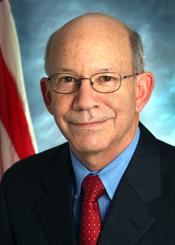
Madam Speaker, I wish to express my strong support for the passage of S. 2607, the DTV Transition Assistance Act, which will aid rural communities by ensuring that low power translators get the…
Madam Speaker, I wish to express my strong support for the passage of S. 2607, the DTV Transition Assistance Act, which will aid rural communities by ensuring that low power translators get the funding needed for digital equipment upgrades. This bipartisan legislation is critical to rural Americans that rely on over the air broadcast television as their main conduit to entertainment, news and even lifesaving information in emergency situations. That is why I joined with Representatives Walden and Boucher, the Co-Chairs of the DTV Caucus, in introducing similar legislation.
Under current law, $65 million has been set aside for the upgrade of low powered translators for the DTV transition. In Oregon alone there are over 400 stations that broadcast over these low powered translators. While this money has been set aside to assist in upgrading these translators, the wording of the statute did not allow the money to be spent until September of 2010, almost 2 years after the transition. This bill would make these funds available on the day of the transition in February of 2009. It would also give the NTIA the authority to use leftover funds from section 3008 of the Digital Television Transition and Public Safety Act of 2005 for grants, contracts, and assistance programs to assist seniors, rural residents, and minorities.
The Digital Television transition is the most sweeping and fundamental change to the television landscape since the advent of color. The advent of color television however, did not require millions of Americans to buy a new television or converter box or risk losing their picture. That fact alone makes the transition to digital television in February of 2009 a tectonic shift in broadcast television.
While this bill is an important fix, many problems still remain. The auctioning off of the newly available spectrum being vacated due to the digital transition has made the government over $19 billion. Despite this massive
collection of funds, the government has only allocated $5 million to educate the public about the transition, which is less than 0.03 percent of the $19 billion in revenue from the auction. The results have been as obvious as they have been preventable. A December 2007 survey by Consumer Reports found that 36 percent of respondents were completely unaware of the transition. How can we tell our constituents that we did everything we could when we spent next to nothing on educating them about the transition?
Instead the Bush Administration has privatized the outreach aspect of the transition, relying on private industry to inform viewers. The results have led to a jumble of different messages from different industries, all looking to benefit from the transition. There are examples of public service announcements supposedly made to inform consumers about the transition instead being thinly veiled advertisements for their own products.
The problems do not stop there. With only a 90 day window to buy convertor boxes before their coupons expire, many rural customers are finding that many stores either do not carry any convertor boxes or they are not carrying a pass through capable converter box that the customer will need in order to get all of their channels. These customers should not be penalized because of where they live.
Madam Speaker, this bill is an important step but it is only a step. We must do more to ensure that when Americans wake up on February 17th 2009, they are not left in the dark.
Mr. President, I rise today to introduce legislation that would better facilitate the DTV transition for rural Americans by making funds for digital upgrades available sooner to low-power television…
Mr. President, I rise today to introduce legislation that would better facilitate the DTV transition for rural Americans by making funds for digital upgrades available sooner to low-power television stations and translators. The reason this is imperative is that we don't want to create another ``digital divide'' where rural and low-income areas are not able to reap the benefits of digital TV as quickly as their urban counterparts.
Under the current statute, the Assistant Secretary for Communications and Information at the Department of Commerce must make payments for the low-power TV and translator upgrade program during fiscal year 2009--October 1, 2008 to September 30, 2009--but may not actually disburse reimbursement payments until after October 1, 2010, which is 20 months past the DTV transition deadline of February 2009.
By having such a long delay for reimbursements, it will inevitably hold up the analog to digital upgrades of low-power TV stations and translators. This would adversely affect viewers since they will not be able to receive the benefits that digital signals offer and hence create this additional ``digital divide'' to these mostly rural and low-income areas where low-power TV and translators typically are situated.
This bill would correct this oversight and change the language to have the Assistant Secretary make payments during the fiscal years 2009 to 2012, and start providing reimbursements for the upgrade program on February 18, 2009, and in doing so will move up the date 20 months to bring the upgrade program more in line with the main deadline of the DTV transition. This will allow LPTV and translators to be reimbursed more quickly for analog to digital equipment upgrades, which can run in the tens of thousands of dollars.
As we all know, in less than 380 days, on February 17, 2009, television broadcasts will transition from analog TV signals to an all- digital system and in doing so begin a new chapter of innovation and viewing experience. The transition will free up scarce broadcast spectrum so that first responders and public safety services have much needed spectrum capacity. It will also provide space for advanced wireless technologies, which will bring us improved broadband and communications services. In addition, the new digital TV signals will provide higher quality video and sound, as well as the opportunity for broadcasters to offer new services such as interactive TV and multicasting, which allows the transmission of several program streams on one broadcast channel.
Consumer awareness of the DTV transition is improving and the Commerce Department announced earlier this month that it had already received requests from more than 2 million households for nearly 4 million converter box coupons--so demand is strong. More and more consumers are realizing the importance and benefits of the DTV transition. We must not unduly prohibit any American from not reaping the tremendous advantages of digital TV and other services that will quickly follow due to the transition. If we don't correct this critical oversight in the current law, we will do just that, once again disadvantaging the areas and people that have the most to gain from this new technology. That is why I sincerely hope that my colleagues join me in supporting the critical legislation.
Mr. President. I yield the floor.

Mr. Speaker, I rise in support of S. 2607, the ``DTV Transition Assistance Act''. This measure will help facilitate the transition to digital television (DTV), a technology which holds great promise…
Mr. Speaker, I rise in support of S. 2607, the ``DTV Transition Assistance Act''. This measure will help facilitate the transition to digital television (DTV), a technology which holds great promise for this country. It will allow for more broadcast programming with better sound and picture quality. It will provide new opportunities for wireless technologies on analog spectrum being vacated by broadcasters. And most importantly, some of this vacated analog spectrum will be used to create a nationwide, interoperable broadband network for first responders.
With the February 17, 2009, DTV transition date slightly more than 7 months away, however, we must ensure that all Americans are prepared for it. S. 2607 takes a step in the right direction by solving some outstanding problems relating to the transition in a thoughtful manner.
Not all television stations will make the transition to digital broadcasting on February 17th. Low-power and translator stations, many of which serve rural, minority, and other underserved communities, do not have a set date by which they must switch to digital. The ``Digital Television Transition and Public Safety Act of 2005'' established a grant program to help often financially constrained low-power television stations acquire the equipment needed to make the transition to digital. S. 2607 makes those funds available beginning in fiscal year (FY) 2009, rather than in FY 2011, as provided by current law. It also extends the availability of funding through FY 2012. These changes will help facilitate the DTV transition for low-power stations so they can offer consumers th benefits of digital broadcasting.
The 2005 Act also established a $10 million program to help translator stations continue providing an analog broadcast signal after February 17, 2009. Such stations are eligible for grants of up to $1,000 toward the purchase of digital-to-analog conversion equipment. That grant program is currently undersubscribed and includes more than enough money to accommodate every translator station. Accordingly, S. 2607 gives the Assistant Secretary of Communications and Information the flexibility to reallocate unspent money from the program to DTV consumer education.
Consumer education is the key to a successful DTV transition, and its importance cannot be overemphasized. Television is the predominant medium through which Americans receive critical public safety information and is one of the chief conduits for news and political discourse, as well as entertainment. Therefore, the most critical aspect of the DTV transition is ensuring that consumers are prepared for it. Congress mandated the DTV transition, and it is its responsibility to protect our constituents by ensuring the transition proceeds as smoothly as possible.
I am pleased to see the House consider this measure, which will contribute to a more successful transition. I strongly support S. 2607 and urge my colleagues to do the same.

I thank the gentleman so much for giving me the time to speak on this important bill. The digital television transition is now 223 days away and many of our constituents are simply not prepared. I'm…
I thank the gentleman so much for giving me the time to speak on this important bill.
The digital television transition is now 223 days away and many of our constituents are simply not prepared. I'm especially concerned about our most vulnerable population, our seniors. Eight million older Americans are in risk of losing their television reception on February 17, 2009.
I've been pleased to work with a number of groups that work directly with seniors, including the National Association of Area Agencies on Aging, the AARP, and the National Council on Aging, to ensure that older Americans are not left in the dark.
In May, Representative G.K. Butterfield joined me and 21 of our colleagues in sending a letter to the National Telecommunications and Information Administration regarding this imminent problem, and I'm pleased that the bill before us today would take some of the necessary steps to ensuring that seniors are prepared.
Seniors could suffer real consequences if their TVs do not operate past February 17, 2009, including isolation from society, anxiety, or mental and physical decline. Imagine your parents or grandparents going to turn on the television on February 18 and finding nothing on the screen.
Also, we have to remember that there are hundreds and thousands of homebound seniors who are unable to go and buy a converter box. Many seniors face considerable physical challenges associated with the transition, and without people to help come in their homes and install these boxes, they're just going to be out of luck. And those seniors that have gotten the converter box may face real technological barriers. Most people have problems setting the clock on their VCRs. I have zeros blinking myself occasionally. Think about the challenge of looking at a converter box and trying to figure out what to do next.
That's why I rise in support of this bill. This legislation will free up funds not being used by the NTIA in the distribution of coupons so they can be used for consumer education and technical assistance.
It further directs NTIA to partner with, provide grants to, and contract with nonprofit organizations and public interest groups to provide for educational and technical assistance to seniors, rural residents, and others who may face difficulties with the digital transition.
Despite these efforts, there are sure to be people who we don't reach and who wake up on February 18 with no signal. I look forward to working with my colleagues to establish any future
funding needed to ensure that these individuals receive needed assistance.
Again, we're 223 days away from the digital television transition. I urge all of my colleagues to work to ensure that our constituents are aware of and prepared for the coming transition.
I want to thank the leadership for bringing this crucial bill to the floor quickly.

Mr. President, I rise with my colleague, Senator Collins, along with Senators Biden and McCain, to introduce legislation that reauthorizes the U.S. Fire Administration, USFA. Established in 1974, the…
Mr. President, I rise with my colleague, Senator Collins, along with Senators Biden and McCain, to introduce legislation that reauthorizes the U.S. Fire Administration, USFA.
Established in 1974, the USFA provides critical support to 30,300 fire departments across our Nation through training, emergency incident data collection, fire awareness and prevention education, and research and development activities. Each year, the USFA trains approximately one million fire and emergency personnel both at the USFA campus in Emmitsburg, Maryland, and through distance learning programs. The USFA also offers vital assistance to Federal Emergency Management Agency and Department of Homeland Security in the development of Federal preparedness and response policies.
The legislation I am introducing today with my colleagues seeks to provide the USFA with proper resources so
the agency may effectively meet the growing responsibilities of the fire service in the 21st century. It contains the following provisions. The USFA Reauthorization Act of 2008 provides $70 million in fiscal year 2009 with 1.3 percent annual increases through fiscal year 2012. The bill expands National Fire Academy training curricula to include issues relevant to urban-wildland interface fires, fires involving hazardous materials, and fire-based emergency medical services. The bill also encourages the expansion of onsite fire training, authorizes up to $5,000,000 annually for necessary technology upgrades to the National Fire Incident Reporting System, authorizes the USFA to expand research activities in relevant topics to urban-wildland interface fires, encourages the USFA to adopt national voluntary consensus standards relevant to firefighter health and safety, and requires the USFA to provide greater coordination with other Federal, State and local agencies on fire prevention and fire-based emergency medical services programs. Finally, the legislation establishes a rotating position at the DHS National Operations Center for State or local fire service officials. This new position will bring the expertise of the fire service to the incident management and information sharing activities of the Center.
I am pleased to say this bipartisan legislation is supported by the Congressional Fire Services Institute, the International Association of Fire Fighters, the International Association of Fire Chiefs, and the National Volunteer Fire Council.
The U.S. Fire Administration performs a critical array of duties that ensure the safety of Americans each day. It is important that we continue to pledge our support to the agency and our Nation's brave firefighters. I look forward to working with my colleagues on this important legislation.
Mr. President, I ask unanimous consent that the text of the bill be printed in the Record.
Show 5 more

Mr. President, data from the Federal Reserve Bank and the Small Business Administration show that the home mortgage crisis is spreading, making it harder and more expensive for small businesses to…
Mr. President, data from the Federal Reserve Bank and the
Small Business Administration show that the home mortgage crisis is spreading, making it harder and more expensive for small businesses to get loans. Specifically, according to the Federal Reserve's survey, more than 30 percent of domestic banks indicated that they have tightened their credit standards for commercial and industrial loans to small businesses over the past three months. That same survey also found that 80 percent of the domestic banks reported tighter lending standards for commercial real estate loans--the highest percentage recorded since the Fed began posing the question 18 years ago.
While that information is troubling, it is not a surprise. So far this fiscal year, the number of loans made through the SBA's largest lending program, the 7(a) loan guaranty program, dropped 14 percent compared with the same period last year, and dollar volume fell six percent. Lending in SBA's 504 loan program, after growing steadily over the last few years, and being up even three months ago, has gone flat. These figures are alarming because, historically, SBA loan activity has increased when the conventional credit market has tightened and their absence or smaller role in financing is a problem. Why? These two loan programs--the 7(a) Loan Guaranty program and the 504 Loan Guaranty program--are the largest source of long-term capital to small businesses in this country. They play an essential role in the continuum of financing to our small businesses.
As we talked to lenders and SBA to try and understand what was causing this trend, we identified several changes we could make to SBA's lending programs to try and stimulate the economy. What could we do to get lenders to start lending again, and how could we make it more affordable for small businesses? The bill I am introducing today--the Small Business Lending Stimulus Act of 2008--incorporates those findings. We made the changes temporary, targeted, and timely. We have evidence that these changes work, because we did something similar, in a bipartisan way, after the terrorist attacks of 9-11, and it stimulated the economy and mitigated job loss and business closures by pumping almost $3 billion into our local economies.
Unfortunately, there is no magic bullet to right the economy, but we need to use every tool at our disposal to mitigate further problems for our economy. The SBA's programs are one effective tool. I hope that my colleagues can get behind this legislation.
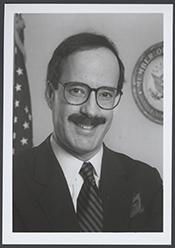
I thank the gentleman, and I rise in support of S. 2607, the DTV Transition Assistance Act. I agree with everything that all my colleagues have said, and I certainly agree with Mr. Boucher that we…
I thank the gentleman, and I rise in support of S. 2607, the DTV Transition Assistance Act.
I agree with everything that all my colleagues have said, and I certainly agree with Mr. Boucher that we really need to help facilitate the digital transition, which is what this bill does. This has been a long time coming, and we're now coming down to the wire. We have only 223 days until analog TV signals will go dark.
In the Energy and Commerce Committee several years ago, I joked and said when people turn on their TV sets on February 17, 2009 and their TV goes dark, many of our political futures will go dark if we don't have a good transition along the way. Since we began this process several years ago, I have been saying repeatedly that we need to make this transition work. That's why I introduced legislation, the National Digital Television Consumer Education Act. My legislation would help to educate consumers about the effects of the digital transition and what they need to do to prepare for it.
So I do agree with Mr. Boucher that we're ill-prepared. Even if people know that it's coming, we also have to make sure that they know how to set up their TV for digital broadcasts.
People need to know how to set up their television for digital broadcasts. They need instructions on how to get the coupons that the government is providing to enable them to get these converter boxes, they need to know where to purchase the converter boxes, how to set them up, and many people need these instructions in languages other than English.
These are very, very huge challenges, and we are not spending nearly enough money to rise to the occasion. This bill is a good bill, but we need other legislation as well to help facilitate the digital transition.
In February, every American must be able to turn on their television and watch a crisp digital broadcast. I urge all of my colleagues to support this bill and other bills we will be providing to ease the digital transition.
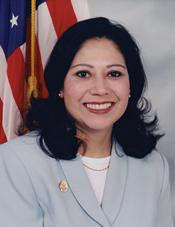
I would like to thank the gentleman from Indiana for recognizing me, and I also want to declare my strong support for S. 2607, the DTV Transition Assistance Act, which will help improve our country's…
I would like to thank the gentleman from Indiana for recognizing me, and I also want to declare my strong support for S. 2607, the DTV Transition Assistance Act, which will help improve our country's transition to digital television, or DTV, as it is known.
This bill ensures that the funds already set aside for the DTV transition are being used more effectively. With leftover funds from a low-power TV grant program, this bill enables the National Telecommunications and Information Administration to allocate an additional $5 to $7 million this year for consumer education in underserved communities, such as seniors, minorities, and in rural areas.
All of the underserved populations, especially Spanish-speaking households, are at the greatest risk of being left out of the DTV transition. According to recent testimony from the NTIA, 40 percent of the calls coming into the converter box coupon call center are from Spanish speakers. There is a demonstrated need for additional education in Spanish-speaking households about DTV, and this additional funding will also help smooth the DTV transition for all Americans.
I also want to urge my colleagues to address the DTV transition issues along the U.S.-Mexican border. While the funding for the bill will help, we need a targeted outreach effort along the border because of access to both analog and digital TV signals from Mexico and the U.S. after the U.S. DTV transition.
I have personally introduced H.R. 5435, the DTV Border Fix Act, and urge my colleagues to please consider cosponsoring this piece of legislation. It will help facilitate those emergency responses so that people on both sides of the border can hear what's happening, but particularly on our side of the border.
I urge the Members today and colleagues to support this bill before us but also to think more importantly about what the next steps are and how to help those underserved communities who don't speak English.
Mr. President, I ask unanimous consent that the Senate proceed to the immediate consideration of Calendar No. 774, S. 2607. I ask unanimous consent that an Inouye substitute amendment which is at the…
Mr. President, I ask unanimous consent that the Senate proceed to the immediate consideration of Calendar No. 774, S. 2607.
I ask unanimous consent that an Inouye substitute amendment which is at the desk be agreed to, the bill as amended be read a third time and passed, the motions to reconsider be laid upon the table, with no intervening action or debate, and that any statements relating to the bill be printed in the Record.

Mr. President, I ask unanimous consent that the text of the bill be printed in the Record.
Mr. President, I ask unanimous consent that the text of the bill be printed in the Record.
Bill Text
6 versions available
        [Congressional Bills 110th Congress]
[From the U.S. Government Printing Office]
[S. 2607 Enrolled Bill (ENR)]

S.2607

One Hundred Tenth Congress

of the

United States of America

AT THE SECOND SESSION

Begun and held at the City of Washington on Thursday,
the third day of January, two thousand and eight

An Act

To make a technical correction to section 3009 of the Deficit Reduction
Act of 2005.

Be it enacted by the Senate and House of Representatives of the
United States of America in Congress assembled,

SECTION 1. SHORT TITLE.

This Act may be cited as the ``DTV Transition Assistance Act''.

SEC. 2. DTV TRANSITION.

(a) In General.--Section 3008(a) of the Digital Television
Transition and Public Safety Act of 2005 is amended--
(1) by inserting ``(1) In General.--'' before ``The Assistant
Secretary''; and
(2) by adding at the end thereof the following:
``(2) Use of funds.--As soon as practicable after the date of
enactment of the DTV Transition Assistance Act, the Assistant Secretary
shall make a determination, which the Assistant Secretary may adjust
from time to time, with respect to whether the full amount provided
under paragraph (1) will be needed for payments under that paragraph.
If the Assistant Secretary determines that the full amount will not be
needed for payments authorized by paragraph (1), the Assistant
Secretary may use the remaining amount for consumer education and
technical assistance regarding the digital television transition and
the availability of the digital-to-analog converter box program (in
addition to any amounts expended for such purpose under 3005(c)(2)(A)
of this title), including partnering with, providing grants to, and
contracting with non-profit organizations or public interest groups in
achieving these efforts. If the Assistant Secretary initiates such an
education program, the Assistant Secretary shall develop a plan to
address the educational and technical assistance needs of vulnerable
populations, such as senior citizens, individuals residing in rural and
remote areas, and minorities, including, where appropriate, education
plans focusing on the need for analog pass-through digital converter
boxes in areas served by low power or translator stations, and shall
consider the speed with which these objectives can be accomplished to
the greatest public benefit.''.
(b) Fiscal Years to Which Applicable.--Section 3009(a) of the
Deficit Reduction Act of 2005 (Public Law 109-171) is amended--
(1) by striking ``fiscal year 2009'' and inserting ``fiscal
years 2009 through 2012''; and
(2) by striking ``no earlier than October 1, 2010'' and
inserting ``on or after February 18, 2009''.

Speaker of the House of Representatives.

Vice President of the United States and
President of the Senate.