Short-term Analog Flash and Emergency Readiness Act

Legislative Activity
Stay on top of the latest movement without scrolling through every action
Became Public Law No: 110-459.
December 23, 2008
View full timeline
Introduced in Senate
October 1, 2008
Sponsor introductory remarks on measure. (CR S10324-10325)
October 1, 2008
Read twice and referred to the Committee on Commerce, Science, and Transportation.
October 1, 2008
Senate Committee on Commerce, Science, and Transportation discharged by Unanimous Consent.
November 20, 2008
Measure laid before Senate by unanimous consent. (consideration: CR S10769-10771)
November 20, 2008
Passed Senate with an amendment by Unanimous Consent.
November 20, 2008
Message on Senate action sent to the House.
November 24, 2008
Received in the House.
December 9, 2008 • 11:04 AM
Referred to the House Committee on Energy and Commerce.
December 9, 2008
Mrs. Capps asked unanimous consent to discharge from committee and consider.
December 10, 2008 • 8:53 PM
Committee on Energy and Commerce discharged.
December 10, 2008
Considered by unanimous consent. (consideration: CR H10943-10944)
December 10, 2008 • 8:53 PM
Passed/agreed to in House: On passage Passed without objection.(text: CR H10943-10944)
December 10, 2008 • 8:53 PM
On passage Passed without objection. (text: CR H10943-10944)
December 10, 2008 • 8:53 PM
Motion to reconsider laid on the table Agreed to without objection.
December 10, 2008 • 8:53 PM
Cleared for White House.
December 10, 2008
Presented to President.
December 12, 2008
Signed by President.
December 23, 2008
Became Public Law No: 110-459.
December 23, 2008
Floor Debate
13 membersWhat members said about S. 3663 on the floor
 GVV
GVV DFJDR
DFJDR HRC
HRC OGH+8
OGH+8
Floor Debate
13 membersWhat members said about S. 3663 on the floor
Mr. President, I rise today to introduce legislation, the Harmonizing America's Energy, Economy, Environment, and National Security Act, that I believe can lead our Nation out of the current energy…
Mr. President, I rise today to introduce legislation, the Harmonizing America's Energy, Economy, Environment, and National Security Act, that I believe can lead our Nation out of the current energy crisis.
Much of the Nation's attention has understandably been focused on the financial turmoil taking place on Wall Street. Since the very beginning, I have been hard at work in addressing the financial crisis and I will be supporting the economic stabilization bill when the Senate votes tonight.
But I will vote with a heavy heart, for I have spent my entire career focusing on eliminating debt at the local, State and Federal level. While deciding to vote for a package of this magnitude feels like being punched in the gut, the thought of what would happen to average Americans if we did nothing is much more painful. I am, however, very pleased to see that any profit we may make off this deal will be used to pay down the national debt.
This is affecting not only Wall Street but Main Street and my street. Ohioans depend on credit to buy a home, drive to work and send their children to school. If this doesn't pass, the possible ramifications are staggering. Imagine if you can, businesses laying off staff or closing completely because they can't make payroll; retirement funds that have already taken a dramatic hit being reduced to nothing; parents unable to get a loan to pay for child's college tuition; families unable to get credit for a car or a house; cities unable to float bonds to build hospitals or schools; and home prices continuing to plummet.
We must act Mr. President. We must set aside our differences and our ideologies and do what is right. But our work cannot stop here. We must make a full-court press to stabilize the housing market and secure our energy supplies. While we have been debating and acting on the financial crisis, our energy crisis has not only continued, but in many ways grown worse. It remains an issue that needs to be addressed sooner rather than later, and if our economy is to quickly recover, a comprehensive energy policy will need to be part of the equation.
I have heard loud and clear from thousands of Ohioans how this energy crisis is directly affecting them and their loved ones. They are expecting that we work together in bipartisan fashion to craft legislation that will address our Nation's long-term energy requirements.
Take for example, the severe fuel supply disruption created by our shortsighted offshore drilling policy and hurricanes Ike and Gustav. Both hurricanes followed paths that paved straight through the heart of our Nation's offshore oil production and home to the bulk of our refining capacity. Due to the frequency of gulf hurricanes, many oil experts have pointed to this as a reason we need to open additional areas of the Outer Continental Shelf outside of the Gulf of Mexico. With 25 percent of our oil production currently taking place within the Gulf of Mexico, gulf hurricanes frequently lead to wild price spikes in the gasoline market as oil rigs and refineries are taken off line to avoid damage and loss of life.
According to the Energy Information Agency, Ike and Gustav lead to a 25 percent drop in our domestic oil production compared to this time last year, from 5.1 billion barrels a day to 3.8 billion barrels per day. The loss in refining capacity cut our gasoline inventories to levels we have not seen since 1967, resulting in widespread fuel shortages that left many in the Southeast driving from gas station to gas station, desperate to find fuel for their cars. Much of the reason why these supply disruptions have not spread across the country is that we have reached out and imported large quantities of gasoline from overseas. Some of which has undoubtedly come from countries like Venezuela, that do not have our best interests at heart.
This situation is cause for concern in its own right, but is also underscored by the current financial crisis and the fact that this is no longer a question about the price of oil. Energy security is a matter of national security.
We have clearly ignored our financial situation for far too long. The national debt stands at $9.6 trillion, almost double the $5.4 trillion debt that existed when the senator came to the Senate in 1999. By the end of 2009, the national debt is expected to have grown to $10.5 trillion. The Congressional Budget Office said the Federal Government will finish the fiscal year with a near-record deficit of $407 billion. These numbers do not include borrowing from the Social Security Trust Fund which would put the overall number close to $600 billion and $700 billion by next year.
We cannot overlook our ballooning national debt. Today, 51 percent of the privately-owned national debt is held by foreign creditors--mostly foreign central banks. Foreign creditors provided more than 70 percent of the funds that the U.S. has borrowed since 2001, according to the Department of Treasury. And who are these creditors?
According to the Treasury Department, the three largest foreign holders of U.S. debt are China, Japan, and OPEC Nations.
This is insane and it has to stop. We cannot afford to allow the countries that control our oil and our debt to control our future.
Americans are hurting from our addiction to oil, I'm not sure they fully realize the extent our national security, and indeed our very way of life, is threatened by our reliance on foreign oil.
Every year we send billions of dollars overseas for oil to pad the coffers of many Nations that wish our demise. In fact, in 2007, we spent more than $327 billion to import oil, and 60 percent of that, or nearly $200 billion, went to the oil-exporting OPEC nations. In 2008, the amount we will spend to import oil is expected to double to more than $600 billion, $360 billion of which will come from OPEC. Let's take a moment to put those import figures into context. When compared to our FY2008 budget for our Nation's defense, which was more than $693 billion, the $600 billion we will spend to import oil in 2008 is nearly equal to our entire defense budget.
There is no question that our dependence on foreign oil has serious national security implications. In addition to funding our enemies--as I just explained--we cannot ignore the fact that much of our oil comes from and travels through the most volatile regions of the world.
A couple of years ago, I attended a series of war games hosted by the National Defense University. I saw firsthand how our country's economy could be brought to its knees if somebody cut off our oil.
In 2006, Hillard Huntington, Executive Director of Stanford University's Energy Modeling Forum testified before the Senate Foreign Relations Committee, and based on his modeling, ``the odds of a foreign oil disruption happening over the next 10 years are slightly higher [than] 80 percent.'' He went on to testify that if global production were reduced by merely 2.1 percent due to some event, that it would have a more serious effect on oil prices and the economy than hurricanes Katrina and Rita.
Let us take a moment to think of our Nation like a business. Our feedstock is oil, and our of competitors control the cost of our oil. We have debt, but our competitors also control our debt. What's to keep our competitors from raising prices, calling in our debt and running us out of business?
I hope this scenario scares you as much as it scares me.
But also keep in mind, that as Congress sat here and twiddle its thumbs over simply expanding domestic drilling within our own borders, Russia and China were actively and aggressively laying claim to energy resources around the globe.
Russia, the world's second biggest oil exporter, has its sights on a large section of the Arctic seafloor that is believed to contain billion of barrels of fuel equivalent. The country has also made moves to control a larger portion of the world's natural gas reserves. Russia, which has significant reserves of natural gas, is considering the creation of a natural gas cartel similar to OPEC. Venezuela and Iran have expressed interest.
Russia has proven it has no qualms with using energy as a weapon. In 1990, Russia tried to suppress independence movements in the Baltics by cutting energy supplies. In all, Russia has used energy as a tool to further their foreign policy goals on no less than six countries. Energy is believed to be one of the driving reasons for Russia's military action in the independent nation of Georgia.
China as well is moving ahead in securing its energy future. In Africa, China is handing out loans and funding
expansive infrastructure projects in an effort to lay claim to lucrative oil reserves. With the help of Chinese investment, Angola recently passed Nigeria to become the largest petroleum producer on the continent.
I am going to be brutally honest with you folks, the future of our country is in jeopardy. We cannot continue to transfer our wealth overseas to this degree without expecting serious consequences. Rather than addressing these national security concerns we have been living the life of Riley, and allowed the environmental movement to run wild.
Congress let them get away with. We let them get away with it Mr. President. Why? Because oil was cheap and so Congress felt no urgency to act. Well, oil is not cheap anymore. While detrimental to our economy and competitiveness, the high price of oil finally spurred some of my colleagues into action and I am proud that Congress has taken some steps to address the energy crisis.
The recently passed fiscal year 2009 Continuing Resolution removed the moratoria on oil exploration in the Outer Continental Shelf and moratorium on regulations for the development of oil shale. Reserves in the Outer Continental Shelf are believed to equal 8.5 billion barrels of oil, and undiscovered resources could equal ten times that. There are currently 800 billion barrels of technically recoverable reserves locked up in our Nation's oil shale. This is three times larger than the total proven oil reserves of Saudi Arabia.
The Senate has also passed a tax extenders package that includes many incentives to develop advanced alternative energies that will lead our country to a future free of oil. Included in the package were popular tax credits for the wind and solar industry that have helped foster strong emerging industries in my home State of Ohio.
Congress needs to continue to act. I believe the Harmonizing America's Energy, Economy, Environment, and National Security Act is the vehicle for a bipartisan effort to develop a meaningful comprehensive energy plan.
Addressing this crisis requires nothing less than a Second Declaration of Independence--to move us away from foreign sources of energy in the near term and away from oil in the long term.
As you know, oil is not easily found nor substituted, and it will remain an integral component to our economy in the short-term. But we must make investments today that will help us achieve our goal tomorrow. To do this I believe we must find more, use less, and conserve what we have.
In order to find more and stabilize our Nation's energy supply, my legislation would encourage the development of oil resources within the Outer Continental Shelf and with regards to our oil shale reserves. It would also open ANWR to responsible development, where it is believed that there is over 10 billion barrels of oil.
While these resources will not physically come online for a number of years, moves to expand development will send a clear signal to the market that we are serious about meeting our future energy demands and begin to drive down the cost of oil because investors will know that gas won't be worth as much in the future and will therefore sell it off today--lowering the cost immediately.
And while we must increase our production of fossil fuels to relieve costs and reestablish our independence in the short term, in the long term we must reduce our demand for oil.
With that goal in mind, it is essential that we explore alternative means to meet our Nation's energy needs.
It is long past time for our government to provide the spark to rekindle our Nation's creativity and innovation. Following Russia's launch of Sputnik, President Kennedy challenged our country to be the first in the world to land a man on the moon. We must now undertake a similar Apollo-like project to establish clean, reliable and domestically abundant energy alternatives and in turn usher in a new era of American freedom and independence.
My legislation would help to fund such a project by setting aside a portion of the federal revenues raised through lease revenues in the Outer Continental Shelf and ANWR to be used for the development of advanced alternative energies, like wind, solar, fuel cells, advanced batteries, and advanced biofuels. It would also set aside funds to be explicitly to boost funding for the Low-Income Home Energy Assistance Program and to pay down our national debt.
The bill will also repeal Section 526, a provision that places our domestic coal-to-liquid industry in jeopardy. We have the largest coal reserves in the world, and at current rates of consumption, U.S. coal deposits will last for more than 240 years.
Coal can provide significant new supplies of affordable synthetic fuels for transportation. A lot of Americans don't understand that many country's get their oil from coal. In fact, South Africa gets nearly 70 percent of their oil from coal. But we are beginning to make advances here. In fact, Baard Energy is planning a CTL and biomass facility in SE Ohio that will produce 53,000 BPD of jet and diesel fuel, and other liquid production from coal and biomass feedstocks.
Last but not least, as we look to increase our supply and spark new innovation, we must also be more responsible with the energy we currently use. My legislation would fund the development of new conservation technologies and practices and would help to disseminate these across the country.
Americans today demand action and they demand we come together in a bipartisan fashion to solve our energy crisis. For 10 years I have been a member of the Environmental and Public Works Committee and for 10 years I have tried to coax Congress into harmonizing our energy, economy and the environment. Congress has refused and now the chickens have come home to roost.
I believe that the best message we can send to OPEC, those investing in the oil market, and indeed the entire world, is that we get it. We must demonstrate that we are going to find more by going after every drop of oil that we can responsibly drill and that we are going to use less by undertaking a new Apollo project to make the U.S. the most oil independent nation in the world.
I envision an America ten years from now where we have enough oil to take care of our needs. I imagine an America that is the least reliant country in the world on oil, an America where our economy is not threatened by our reliance on foreign energy sources. It will be an America that has created hundreds of thousands of jobs through the responsible development of our Nation's resources and the through the creation of new industries in the field of alternative energy.
Wouldn't it be great for our children and grandchildren to one day celebrate the time America put aside its differences and came together to reaffirm its independence a second time and rekindled the American spirit of self reliance, innovation and creativity to usher in new era of prosperity?
Mr. President, I ask unanimous consent that the text of the bill be printed in the Record.
Mr. President, I rise to introduce the Over-the- Counter Swaps Speculation Limit Act, a bill to establish workable speculative position limits that apply to both bilateral over-the- counter swaps…
Mr. President, I rise to introduce the Over-the- Counter Swaps Speculation Limit Act, a bill to establish workable speculative position limits that apply to both bilateral over-the- counter swaps transactions and on-exchange transactions.
The Over-the-Counter Swaps Speculation Limit Act would close the ``over-the-counter swaps loophole'' once and for all by requiring the Commodity Futures Trading Commission--or CFTC--to apply the position limit system to bilateral swaps, not just the on-exchange transactions that are limited today.
Let me explain what the bill would do:
CFTC would enforce ``aggregate'' position limits so that a trader's positions on and off exchange would be combined. Swaps would no longer be exempt from position limits.
CFTC would be allowed to grant hedge exemptions for bone fide hedging. This exemption would be limited to trading that hedges against price risk exposure related to physical transactions in that energy commodity.
Neither institutional investors hedging against inflation, nor swaps dealers hedging their secret dealings would qualify for a hedge exemption.
The bill would give CFTC the power to issue civil fines to enforce position limits when unwinding a speculative position would be disruptive to the marketplace.
This legislation is the missing piece to otherwise comprehensive anti-speculation legislation debated in the Senate in July and adopted by the House of Representatives in September.
Both of the House and Senate bills included vital provisions to protect our markets, including provisions to close the London Loophole by imposing speculation position limits on trading conducted on Foreign Boards of Trade.
It would grant CFTC the authority to collect data and monitor trading in Over-the-Counter Swaps markets, shining the bright light of oversight onto a previously un-watched market.
It would improve the data collection systems at CFTC to distinguish between swaps dealers, institutional investors, and genuine speculators;
It would assure no true speculator is exempted from speculative position limits; and increase CFTC's staffing levels.
Reacting to congressional pressure, the CFTC took many of the steps through administrative action that our bills in Congress would have required.
CFTC largely closed the London Loophole and began monitoring London trading of American crude oil.
CFTC began collecting detailed data on OTC swaps trading, especially by swaps dealers and institutional index traders, and it began monitoring these markets.
CFTC reclassified a major swaps dealer as a speculator and proposed a rulemaking to revise its system for granting speculative limit exemptions.
This is true progress, but the swaps loophole--exempting voice brokered bilateral swaps from the speculative position limit system-- remains in place. Traders are able to hold positions far above speculative position limits simply by executing their trades through a voice broker.
Until this summer, the Federal Government knew very little about OTC swaps, which have been exempt from CFTC oversight since 1993. But thanks to CFTC's increased oversight this summer, published in its September 2008 ``Staff Report on Commodity Swap Dealers and Index Traders,'' we know that traders do in fact use these swaps markets to hold positions above the speculative position limits on regulated exchanges.
The CFTC report found that on a single day in June there were:
``18 noncommercial traders (speculators) in 13 markets who appeared to have an aggregate position . . . that would have been above the speculative limit or an exchange accountability level if all the positions were on-exchange.''
CFTC discovered that a few traders held positions that would have ``significantly exceeded'' an aggregate position limit.
What is the purpose of speculative position limits if traders know they can buy the equivalent product in unlimited quantities from a voice broker?
The Over-the-Counter Swaps Speculation Limit Act puts an end to this flawed system by instructing CFTC to establish a system of aggregate position limits. As the staff report demonstrated, CFTC knows how to calculate such limits.
I believe this legislation avoids the pitfalls of previous efforts in the 110th Congress to limit speculative positions in swaps.
It is simple, granting CFTC the broad mandate to impose aggregate position limits across positions held on registered entities, foreign boards of trade, and OTC markets that impact the price discovery function of a regulated market. It grants the regulator proper discretion to determine which contracts are functionally equivalent and what the limits should be.
It applies speculative position limits only to swaps that impact the price discovery function on regulated markets. By focusing CFTC efforts only on the major, standardized swaps contracts, the bill maintains legal certainty for unique financing agreements and other private bilateral transactions.
The bill also prevents speculators from migrating to less regulated contracts. CFTC will only be allowed to exempt contracts from position limits after it determines that the contract is not functioning as a haven from regulation. CFTC must impose speculative position limits on any contract that: is highly standardized; settles on the price of a contracted traded in a regulated marketplace; has its prices widely published and referenced; or traded in significant volumes.
Finally, the legislation addresses CFTC staff concerns that enforcing position limits on bilateral swaps contracts would be too cumbersome. In recent briefings, CFTC staff argued that the primary reason CFTC was not calling for speculative position limits on swaps is that position limits on swaps would force parties to void existing contracts, which harms the counterparty as much as the trader who is over their limit.
Regulators should not force a trader to break a contract if such action would punish the counterparties as well as the speculator. To address this, this legislation gives CFTC the power to enforce position limits with fines instead of forcing a trader to unwind a position.
Over the past 6 months, OTC swaps markets have been exposed, and it has become increasingly apparent that speculative position limits are both appropriate and feasible in order to protect regulated markets from manipulation and excessive speculation.
The regulated and unregulated energy markets are fully integrated. With traders moving back and forth freely, it is no longer reasonable to believe that bad behavior in swaps can be isolated.
A manipulated swaps market would likely impact the price discovery function of a futures market, and in turn affect consumer prices.
If we want fair play in the energy markets, we cannot continue to instruct the CFTC to swallow its whistle when it sees violations at the Swaps' end of the court.
We need to allow CFTC to call foul when it sees excessive speculation, whether on an exchange or in a voice brokered swaps market.
The Over-the-Counter Swaps Speculation Limit Act would give the CFTC back its whistle. It would allow the Commission to use the speculative position limit system in existence since the 1930s--to reel in excessive speculation in American energy markets.
Mr. President, I ask unanimous consent that the text of the bill be printed in the Record.
Mr. President, I rise today to discuss a very important change that is set to occur all across America on February 17, 2009: The final switch from analog to digital broadcast television called the…
Mr. President, I rise today to discuss a very important change that is set to occur all across America on February 17, 2009: The final switch from analog to digital broadcast television called the DTV, or Digital TV, Transition.
In many respects this is not a new issue. The wheels have been in motion on this change since 2005--spurred by the horrible tragedy of September 11th which starkly highlighted our desperate need for a national, interoperable communications network. The transition to digital TV will free up spectrum for public safety use so the national emergency communications network America needs can be put in place.
But there have been serious concerns about our readiness to make the shift to digital TV, and several of my colleagues and I have been raising red flags about them for years now. Not because we believe the change is a mistake, but because we believe that not enough has been done to prepare, to educate, and to help American consumers so that the screens on their television sets do not go black 88 days from now.
What is the change from analog to digital broadcast? Over-the-air broadcasters will send their signal over digital spectrum, not analog spectrum that is currently used. The change won't affect consumers with cable or satellite TV or those who have a converter box for their older analog TV set. And the switch to digital will improve the definition and clarity of the TV picture.
Why are we making this change? Primarily to modernize our airwaves and use the more efficient digital spectrum for a smarter use of our limited spectrum resources for the public good. The change will, again, free up critically needed spectrum so that we can move toward the nationally interoperable public safety communications network we need. It will also allow over-the-air broadcasters to offer new and innovative programming and provide new spectrum for wireless technologies.
The DTV Act was enacted as part of the Deficit Reduction Act of 2005. It directs the Federal Communications Commission, FCC, to require all full power television stations to cease analog broadcasting following February 17, 2009. That day is 88 days from now. What this means--and let me be very clear--is that any consumer with traditional analog televisions--regular TV sets that use an antenna to get a signal--will not be able to watch free, over-the-air television without taking one of three steps to adapt their TV to receive a digital signal. The most common and least expensive way that consumers can adapt their TV will be to buy a digital-to-analog converter box to hook up to their analog television set. While seemingly a highly technical issue to some, this is no small matter to the 10-13 million Americans who might well lose their TV signal on February 18th of next year.
I firmly believe that our Nation is not ready to make this transition without substantially more involvement from every level of government, the entire communications industry, and willing community organizations across America. At present, most experts agree that the transition will unleash a massive amount of consumer confusion. And when people are cut off from their televisions, it is not just a matter of convenience, but it is a matter of public safety. We simply cannot stand by and let people lose access to emergency alerts and public safety communications.
I am especially concerned because this transition is going to hit our most vulnerable citizens--the poor, the elderly, the disabled, and those with language barriers--the hardest. We risk leaving those who are most reliant on over-the-air broadcast television for their contact with the outside world literally in the dark. These consumers are disproportionately rural.
In 2005, the outgoing administration and its proponents decided to leave almost all of the implementation of the transition to the private sector--broadcasters, cable and satellite companies, and consumer electronics retailers. While there are claims that hundreds of millions of private sector dollars have been spent making Americans aware of the DTV transition, it seems that most Americans have no idea what it really is even if they have heard of it. New surveys suggest more consumers are growing aware of the transition, but that consumers remain confused about what steps they need to take to get ready for it. Consumer Reports has found that 63 percent have major misconceptions about what steps they need to take to prepare.
The recent DTV transition test market of Wilmington, NC demonstrated that, even with extraordinary levels of outreach, some still did not know anything about the DTV transition. I would note that Wilmington received far more attention than any market in West Virginia is likely to receive, or any other part of the country for that matter.
Even in the test market, several thousand people called into the FCC for assistance--they could not set up their converter box, they could not receive certain digital signals, or their antennae needed adjustment--just to name a few of the problems. Consumers, especially the elderly and those with limited English proficiency, are going to need help in managing the transition. On February 18, 2009, those thousands of calls will become millions.
There is no question the transition to DTV could have and should have been far better managed and far better planned. But at this point, we must focus on fixing it, not laying blame.
Last night, I asked unanimous consent for the Senate to take up S. 3663, the Short-term Analog Flash and Emergency Readiness Act, as amended. This piece of legislation will help make sure those consumers who fail to make the DTV transition by February 17, 2009 are not left without access to emergency information. This bill will also allow those consumers to understand what steps they need to take in order to restore their television signals by allowing an analog signal to continue to be broadcast in each regional market for an additional 30 days past February 17th.
Let me be clear: This bill is far from a silver bullet that will fix all the problems associated with the transition.
I can assure my colleagues that the new Democratic leadership in Congress and the White House is committed to protecting the American consumer. Over the next few months, I will work with my colleagues on a more comprehensive plan of action to make sure millions of Americans receive the support and assistance they need to make this transition.
Mr. President, I rise today to introduce the Short- term Analog Flash and Emergency Readiness Act. This simple piece of legislation will help make sure those consumers who fail to make the transition…
Mr. President, I rise today to introduce the Short- term Analog Flash and Emergency Readiness Act. This simple piece of legislation will help make sure those consumers who fail to make the transition to Digital Television, DTV, by February 17, 2009 are not left without access to emergency information. This bill will also allow those consumers to understand what steps they need to take in order to restore their television signals.
I voted against the Deficit Reduction Act of 2005, which directs that on February 18, 2009, over-the-air full-power television broadcasts, which are currently provided by television stations in both analog and digital formats, will become digital only. I voted against this bill in both the Commerce Committee and during its consideration by the full Senate because it failed to address the core policy questions of the implementation of the transition to DTV. Specifically, it did not adequately address the minimization of consumer disruption and the establishment a national interoperable communications network with the analog spectrum that broadcasters were vacating. I was one of only three ``No'' votes in Committee.
When the Commerce Committee passed its portion of the Deficit Reduction Act of 2005, the then-Republican majority on the Committee did not want to spend significant resources on the DTV transition to minimize consumer disruption. Nor, did they want to spend any resources on building a national interoperable public safety communications network. The only thing that mattered to Republicans in 2005 was generating sufficient money to meet our budget reconciliation instructions. Because the Committee failed to set forth coherent policy objectives in 2005, consumers and our Nation's first responders will bear the brunt of that failure.
I believe that many have forgotten why we moved forward with the DTV transition. It was to free up much needed spectrum to create a national interoperable public safety communications network. I know the people of West Virginia strongly support their first responders and would have gladly accepted that transition to make sure that in times of crisis our local police, fire, and emergency response teams could communicate. Instead, the DTV transition has been sold as nothing more than having a better television picture. That is unfortunate because we are making this transition to address a critical public safety need--one identified by the 9/11 Commission.
Unfortunately, the Federal Communications Commission still has not devised a plan to establish this national public safety communications network. The spectrum has been auctioned and the big wireless companies have secured their futures. But our nation's first responders, which should have been this Administration's first priority, are not much closer to achieving interoperable communications.
As my good friend FCC Commissioner Michael Copps has stated, ``the question of public safety is . . . the first obligation of the public servant.'' In a
more perfect world, our nation's first responders would already have access to an interoperable and fully-funded broadband network that makes use of dedicated public safety spectrum. We are still a long way from developing this network for public safety, and that is something of which we all should be ashamed. If we fail to establish this network quickly and in a manner that works for the public safety community, I am afraid we may have lost the opportunity forever.
This Administration has failed consumers as well. In 2005, Congress left almost all of the implementation of the transition to the private sector--broadcasters, cable and satellite companies, and consumer electronics retailers. Although well-heeled industries state that they have devoted hundreds of millions of dollars to making Americans aware of the DTV transition, I am not sure that it is going to minimize the disruption.
The recent DTV transition test market of Wilmington, North Carolina demonstrated that, even with extraordinary levels of outreach, some did not know about the DTV transition. I would note that Wilmington received far more attention than any market in West Virginia is likely to receive, or any other part of the country for that matter.
Even if a consumer was aware of the DTV transition, several thousand people called into the FCC for assistance--they could not set up their box, they could not receive certain digital signals, or their antennae needed adjustment, to name just a few of the problems. Consumers, especially the elderly and those with limited English proficiency, are going to need help in managing the transition.
Among its many shortcomings, the DTV Act did not require the Federal agencies charged with administering the transition to develop a program to assist consumers with attaching the converter boxes to their sets. By contrast, in the United Kingdom, there is an assistance program, known as ``Help Scheme,'' that will assist a many as 7 million households with selecting, installing, and using DTV equipment.
Unfortunately, in the remaining time before the transition, we are not going to be able to replicate the United Kingdom's consumer assistance plan. But, we may be able to take small steps that can help consumers.
My legislation is one such step. It simply allows the FCC to permit analog television signals to be broadcast for thirty days after the transition so that, at a minimum, one station in a market can send a signal explaining what has happened to a consumer's television signal and how to restore that signal. Far more importantly, it will allow the broadcast of emergency information so that people are aware of impending storms, floods, or other emergencies.
This was done in the Wilmington television market and people found it to be beneficial. A hurricane almost hit Wilmington around the time of its DTV transition. Because it was a test market, the government would have had the luxury of postponing the transition if a hurricane struck the region. On February 18, 2009, Americans left in the dark will not have that luxury. They would not know if a Nor'easter is on its way, or catastrophic flooding is occurring, or if a terrorist has once again truck our Nation.
We cannot let that happen. We must pass this legislation before we adjourn for the year.
Mr. President, I rise today to introduce the Short- term Analog Flash and Emergency Readiness Act. This simple piece of legislation will help make sure those consumers who fail to make the transition…
Mr. President, I rise today to introduce the Short- term Analog Flash and Emergency Readiness Act. This simple piece of legislation will help make sure those consumers who fail to make the transition to Digital Television, DTV, by February 17, 2009 are not left without access to emergency information. This bill will also allow those consumers to understand what steps they need to take in order to restore their television signals.
I voted against the Deficit Reduction Act of 2005, which directs that on February 18, 2009, over-the-air full-power television broadcasts, which are currently provided by television stations in both analog and digital formats, will become digital only. I voted against this bill in both the Commerce Committee and during its consideration by the full Senate because it failed to address the core policy questions of the implementation of the transition to DTV. Specifically, it did not adequately address the minimization of consumer disruption and the establishment a national interoperable communications network with the analog spectrum that broadcasters were vacating. I was one of only three ``No'' votes in Committee.
When the Commerce Committee passed its portion of the Deficit Reduction Act of 2005, the then-Republican majority on the Committee did not want to spend significant resources on the DTV transition to minimize consumer disruption. Nor, did they want to spend any resources on building a national interoperable public safety communications network. The only thing that mattered to Republicans in 2005 was generating sufficient money to meet our budget reconciliation instructions. Because the Committee failed to set forth coherent policy objectives in 2005, consumers and our Nation's first responders will bear the brunt of that failure.
I believe that many have forgotten why we moved forward with the DTV transition. It was to free up much needed spectrum to create a national interoperable public safety communications network. I know the people of West Virginia strongly support their first responders and would have gladly accepted that transition to make sure that in times of crisis our local police, fire, and emergency response teams could communicate. Instead, the DTV transition has been sold as nothing more than having a better television picture. That is unfortunate because we are making this transition to address a critical public safety need--one identified by the 9/11 Commission.
Unfortunately, the Federal Communications Commission still has not devised a plan to establish this national public safety communications network. The spectrum has been auctioned and the big wireless companies have secured their futures. But our nation's first responders, which should have been this Administration's first priority, are not much closer to achieving interoperable communications.
As my good friend FCC Commissioner Michael Copps has stated, ``the question of public safety is . . . the first obligation of the public servant.'' In a
more perfect world, our nation's first responders would already have access to an interoperable and fully-funded broadband network that makes use of dedicated public safety spectrum. We are still a long way from developing this network for public safety, and that is something of which we all should be ashamed. If we fail to establish this network quickly and in a manner that works for the public safety community, I am afraid we may have lost the opportunity forever.
This Administration has failed consumers as well. In 2005, Congress left almost all of the implementation of the transition to the private sector--broadcasters, cable and satellite companies, and consumer electronics retailers. Although well-heeled industries state that they have devoted hundreds of millions of dollars to making Americans aware of the DTV transition, I am not sure that it is going to minimize the disruption.
The recent DTV transition test market of Wilmington, North Carolina demonstrated that, even with extraordinary levels of outreach, some did not know about the DTV transition. I would note that Wilmington received far more attention than any market in West Virginia is likely to receive, or any other part of the country for that matter.
Even if a consumer was aware of the DTV transition, several thousand people called into the FCC for assistance--they could not set up their box, they could not receive certain digital signals, or their antennae needed adjustment, to name just a few of the problems. Consumers, especially the elderly and those with limited English proficiency, are going to need help in managing the transition.
Among its many shortcomings, the DTV Act did not require the Federal agencies charged with administering the transition to develop a program to assist consumers with attaching the converter boxes to their sets. By contrast, in the United Kingdom, there is an assistance program, known as ``Help Scheme,'' that will assist a many as 7 million households with selecting, installing, and using DTV equipment.
Unfortunately, in the remaining time before the transition, we are not going to be able to replicate the United Kingdom's consumer assistance plan. But, we may be able to take small steps that can help consumers.
My legislation is one such step. It simply allows the FCC to permit analog television signals to be broadcast for thirty days after the transition so that, at a minimum, one station in a market can send a signal explaining what has happened to a consumer's television signal and how to restore that signal. Far more importantly, it will allow the broadcast of emergency information so that people are aware of impending storms, floods, or other emergencies.
This was done in the Wilmington television market and people found it to be beneficial. A hurricane almost hit Wilmington around the time of its DTV transition. Because it was a test market, the government would have had the luxury of postponing the transition if a hurricane struck the region. On February 18, 2009, Americans left in the dark will not have that luxury. They would not know if a Nor'easter is on its way, or catastrophic flooding is occurring, or if a terrorist has once again truck our Nation.
We cannot let that happen. We must pass this legislation before we adjourn for the year.
Show 8 more
Mr. President, reforming the healthcare system is a top priority for me. I have been on the frontlines in the fight for healthcare for every single American for as long as I have been in public…
Mr. President, reforming the healthcare system is a top priority for me. I have been on the frontlines in the fight for healthcare for every single American for as long as I have been in public service. And every passing day, and year, the task becomes both more urgent and more difficult--success more expensive and failure more costly.
The United States spent about $2.1 trillion on healthcare in 2006, twice what we spent 10 years ago, and half of what we're projected to spend 10 years from now. Preventable and chronic diseases are this century's epidemic. The number of people with chronic conditions is rapidly increasing and it is estimated that if we do not intervene now, by 2025 nearly half of the population will suffer from at least one chronic disease.
The wellness gap also affects health care costs. About 78 percent of all health spending in the United States is attributable to chronic illness, much of which is preventable. Chronic diseases cost the United States an additional $1 trillion each year in lost productivity, and are a major contributing factor to the overall poor health that is placing the Nation's economic security and competitiveness in jeopardy.
Unlike some health care challenges, proven preventive services and programs exist. If effective risk reduction were implemented and sustained, by 2015 the death rate due to cancer could drop by 29 percent. Improved blood sugar control for people with diabetes could reduce the risk for eye disease, kidney disease, and nerve disease by 40 percent. Similarly, blood pressure control could reduce the risk for heart disease and stroke by 33 to 50 percent. Yet, only half of recommended clinical preventive services are provided to adults. About 20 percent of children do not receive all recommended immunizations, with higher rates in certain areas. Nearly 70 percent of people with high blood pressure do not now control it. And racial disparities in the use of prevention exist.
The country faces low use of preventive services because of the low value placed on prevention, a delivery system bent toward fixing rather than preventing problems, and financial disincentives for prevention. Insurers have little incentive to invest in preventive services today that will benefit other insurers tomorrow. This is especially true for those preventive services that reduce chronic diseases that develop over a period of several years or decades. The costs of prevention are incurred immediately but most of its benefits are realized later, often by Medicare. The United States spends only an estimated 1 to 3 percent of national health expenditures on preventive healthcare services and health promotion.
In addition, the workforce to deliver prevention is also insufficient. The supply of providers who are trained to emphasize prevention is shrinking. Between 1997 and 2005, the number of medical school graduates entering family practice residencies dropped by 50 percent. There is an acute shortage of community health workers. Between 25 and 50 percent of the existing Federal, State and local public health workforce is eligible for retirement in the next 5 years. Today, more than 75 percent of the existing public health workforce has no formal public health or prevention training. There is no national, uniform credentialing system for public health or prevention workers that would ensure that these workers are trained in the basics of preventive care.
A system that promoted full use of high-priority prevention could save lives and reduce costs. For example, complete, routine childhood vaccination could save up to $40 billion in direct and societal costs over time. Promoting screenings and behavioral modifications in the workplace can lower absenteeism and, in most cases, health costs to firms. Preventive health care services could reduce government spending on health care. If all seniors recommended to received a flu vaccine did, health costs could be reduced by nearly $1 billion per year. Over 25 years, Medicare could save an estimated $890 billion from effective control of hypertension, and $1 trillion from returning to levels of obesity observed in the 1980s.
So today, I am pleased to introduce The 21st Century Wellness Trust Act. This legislation is a critical part of the broader effort we will undertake next Congress to cover every single American and bring reforms to our delivery system that make it more efficient and improve health outcomes.
The 21st Century Wellness Trust Act would create a Wellness Trust at the Centers for Disease Control and Prevention at the Department of Health and Human Services to refocus the efforts of our healthcare system on prevention and wellness. Through the Trust Fund Board, the Wellness Trust will become the primary payer for priority prevention services, as well as ensure an adequate and appropriately trained and credentialed prevention health workforce. The Trust will also serve as a central source of prevention information and ensure the inclusion of prevention and wellness in the development of a nationwide, interoperable health IT infrastructure.
We cannot afford to wait any longer and I am proud to introduce The 21st Century Wellness Trust Act which will be an important part of the solution. We must undertake reforms that move us from a system of sickness to a system of wellness. From a system that is tilted towards institutional and emergency care to one that not only covers everyone, but is designed to promote prevention of disease and wellness.
Mr. President, I rise today to introduce with my friend from Minnesota, Senator Amy Klobuchar, the Copper Theft Prevention Act of 2008. I am pleased to be working with Senator Klobuchar on this…
Mr. President, I rise today to introduce with my friend from Minnesota, Senator Amy Klobuchar, the Copper Theft Prevention Act of 2008. I am pleased to be working with Senator Klobuchar on this initiative to curb copper theft, which is on the rise in our country and around the world.
We are living in tough economic times where the value of precious metals is at an all time high. Due to worldwide economic growth, particularly in fast-growing China, copper is worth between $3 to $4 a pound. Copper is used in the manufacturing of consumer goods, and the construction, electric utility, and telecommunications industries. Because of the metal's high ductility, malleability, and electrical conductivity, copper has become the benchmark for all types of wiring.
Stolen copper can easily be turned into cash and a very small percentage of people who steal copper are actually caught. It's no wonder why thieves are stealing copper in every form--costing Americans hundreds of thousands of dollars in theft, damage, and threats to safety.
To steal a large amount of copper quickly and safely, thieves target spools on the back of trucks and storage yards. This was evidenced several months ago in Ogden, Utah, when a thief stole a 1,700-pound load of copper from a metal yard apparently using the metal company's Caterpillar excavator to load it into his truck. I am aware of another occurrence in Utah County where a man was arrested for repeatedly stealing copper wiring nearly every week from a construction company. The thief would load his truck with the wire, then sell it anywhere between $800 and $1,200. The actual value of the wire is more than $18,000.
Some of the most dangerous places to steal copper wire are from substations and from utility poles. According to an April 2007 report published by the U.S. Department of Energy entitled, ``An Assessment of Copper Wire Thefts from Electric Utilities,'' thefts at substations and utility poles are
related to the large number of methamphetamine users who
are stealing copper wire. Medical studies have shown that
this drug reduces the ability of the brain to assess risk
before taking action; hence users of this drug are not
concerned about the risks involved in stealing wire from high
voltage substations, utility wires, and transformers. The
people who risk their life to steal copper wire from a
substation typically only receive a few hundred dollars from
the sale of the stolen wire, sufficient for the next drug
fix. Thefts from storage sites and trucks are most likely
done by professional criminal and not the drug abusers.
Storage sites and trucks are also more difficult to break
into than an unguarded substation or utility pole.
We must cut off the incentives that fuel such blatant criminal activity, and I believe the proposed legislation goes a long way in accomplishing this goal. Under the proposed bill, scrap metal dealers would be: required to keep records of copper transactions, including the name and address of the seller, the date of the transaction, the quantity and description of the copper being purchased, an identifying number from a driver's license or other government-issued identification and, where possible, the make, model and tag number of the vehicle used to deliver the copper to the scrap dealer.
Required to maintain these records for a minimum of 1 year from the date of the transaction and make them available to law enforcement agencies for use in tracking down and prosecuting copper theft crimes.
Required to perform transactions of more than $250 by check, rather than cash.
Subject to civil penalties of up to $10,000 for failing to document a transaction or engaging in cash transactions of more than $250.
Let me be clear--the bill does not preempt States from enacting their own laws. Indeed, the proposed legislation provides a baseline from which all States must operate.
On this point, Utah law currently requires anyone selling certain metals to provide identification before the sale is final. Some in Utah would like to tighten the law to include additional regulation and legislators would not be precluded from doing so. Indeed, States can enact more robust legislation as necessary.
I am committed to moving this legislation forward and hope that my colleagues will join our effort to refine and enact this important bill as it moves through the legislative process.

Mr. President, I rise today to introduce an important piece of legislation--the Vietnam Human Rights Act. Over the last several sessions of Congress, legislation addressing the human rights situation…
Mr. President, I rise today to introduce an important piece of legislation--the Vietnam Human Rights Act.
Over the last several sessions of Congress, legislation addressing the human rights situation in Vietnam has been repeatedly introduced but has never been enacted into law.
Like many of my Senate colleagues, I had hoped that strengthening our relationship with Vietnam on the trade and economic front and supporting Vietnam's integration into the international community would dramatically improve Vietnam's human rights record.
But that has not turned out to be the case.
The United States has removed Vietnam from its list of Countries of Particular Concern, granted Vietnam permanent normalized trade relations, and supported Vietnam's bid to join the World Trade Organization, yet Vietnam continues to arrest its citizens for their peaceful advocacy of political views.
It also continues to strictly restrict religious freedom, to harass and detain labor activists, and to refuse its citizens the basic rights of freedom of association, assembly, and expression.
Just last year, Vietnam carried out one of its harshest crackdowns in 20 years against peaceful protestors calling for political change.
The crackdown, which continued through mid-2007, led to the arrest of hundreds of individuals, including Father Nguyen Van Ly, who was sentenced to 8 years in prison.
This crackdown happened shortly before the visit of Vietnamese President Nguyen Minh Triet to the United States last June.
At the end of 2007, the United States Commission on International Religious Freedom summed up Vietnam's recent behavior this way:
Vietnam's overall human rights record remains very poor and
deteriorated in the last year . . . Dozens of legal and
political reform advocates, free speech activists, labor
unionists, and independent religious leaders and religious
freedom advocates have been arrested, placed under home
detention or surveillance, threatened, intimidated, and
harassed.
Now we are witnessing yet another crackdown--this time on Catholic Church members in Hanoi who have been holding prayer vigils to demand the return of properties confiscated after the Communist government took power in the 1950s.
The Vietnamese government has responded to these protests through intimidation, violence, and arrest.
Just last week, Ben Stocking, the Bureau Chief for the Associated Press in Hanoi, was beaten by Vietnamese security forces for photographing one such vigil. It is time for such behavior to stop.
The Boxer bill seeks to improve human rights in Vietnam by shifting the focus of U.S. non-humanitarian foreign aid to a comprehensive approach that does more to address human rights.
The bill specifically requires that any spending increase for U.S. non-humanitarian development, economic, trade, and security assistance to Vietnam be matched by additional funding for programs focusing on human rights, the rule of law, and democracy promotion.
To date, the majority of non-humanitarian U.S. assistance programs to Vietnam have focused on business, trade, and security, and have not effectively addressed human rights abuses.
In addition, the bill outlines objectives for U.S. diplomacy with Vietnam on human rights related issues and encourages Vietnam to release its religious and political prisoners.
The Boxer bill also prohibits Vietnam from having access to the U.S. Generalized System of Preferences, GSP, program until Vietnam improves its labor standards. The GSP program allows developing countries to import certain items into the U.S. duty-free.
While the 110th Congress will shortly come to an end, I wanted to introduce this legislation as a signal to the Vietnamese government that its record on human rights and recent behavior has not gone unnoticed. I intend to reintroduce this legislation very early in the 111th Congress.
Let me be clear. I support a strong bilateral relationship between Vietnam and the United States. But the Vietnamese government must dramatically improve its human rights record in order for our relationship to grow.

Mr. President, today I am introducing the Compensation Fairness Act of 2008 to tighten the rules for the amount of compensation that is deductible as an ordinary and necessary business expense. The…
Mr. President, today I am introducing the Compensation Fairness Act of 2008 to tighten the rules for the amount of compensation that is deductible as an ordinary and necessary business expense. The recent financial crisis has brought the issue of executive compensation to the forefront.
We have all read about the outrageous salaries that many of the chief executive officers of troubled companies have earned over the past few years. Some have increased their pay by increasing the risks their companies take. According to Equilar, a compensation research firm, the CEOs of the 10 largest financial services firms in a survey of 200 companies with revenues of at least $6.5 billion were awarded a combined total of $320 million last year, even though the firms reported mortgage-related losses that totaled $55 billion and that wiped out more than $200 billion in shareholder value. That is unacceptable.
It is not just the financial industry where executive pay has become excessive. For 2006, the CEOs of large U.S. companies averaged $10.8 million in total compensation, more than 364 times the pay of the average U.S. worker. We can learn from what led us to the current situation and one way to make CEOs more accountable is to limit the taxpayer subsidy for executive compensation.
I am pleased that the bailout legislation places limits on the executive compensation of the firms that participate in the Treasury program. I commend Chairmen Dodd and Baucus for their efforts for to place limits on executive compensation part of the solution. However, I believe that executive compensation for all public companies should be reexamined.
Under current law, the allowable deduction for the compensation of the top five highly paid individuals, including the CEO and the chief financial officer, CFO, is limited to $1 million per year. This limitation does not include commissions and performance-based pay. I am concerned that these exceptions have weakened the effectiveness of the limitation and encourage performance-based pay arrangements which could cause executives to manipulate earnings.
The Compensation Fairness Act of 2008 would make several changes to the limitation on deduction for compensation. It would repeal the exceptions for commission and performance-based pay. Under current law, an employee that is covered by the limitation has to be an employee the last day of the year. The legislation would change this to make a covered employee one who is employed at any time during the year. This legislation would retain the $1 million limitation and index it for inflation.
The Compensation Fairness Act of 2008 would not limit the amount of salary an executive can receive, but it would just limit the tax subsidy. Taxpayers should not have to bear the cost of excessive compensation. Warren Buffett, one of the most successful businessmen of all time, has annual salary of $100,000.
Limiting the deduction of executive compensation is just one part of addressing compensation. Earlier this Congress, the Senate passed legislation which would limit the amount of compensation that can be deferred to $1 million. Senator Obama has introduced legislation that I cosponsored and the House has passed which would require annual shareholder approval of a public company's executive compensation plan.
Once we address the current crisis, we need to have a serious debate on executive compensation and the deductibility of compensation should be part of the conversation. I urge my colleagues to consider changing the current tax treatment of compensation.

Mr. Speaker, I ask unanimous consent that the Committee on Energy and Commerce be discharged from further consideration of the Senate bill (S. 3663) to require the Federal Communications Commission…
Mr. Speaker, I ask unanimous consent that the Committee on Energy and Commerce be discharged from further consideration of the Senate bill (S. 3663) to require the Federal Communications Commission to provide for a short-term extension of the analog television broadcasting authority so that essential public safety announcements and digital television transition information may be provided for a short time during the transition to digital television broadcasting, and ask for its immediate consideration in the House.
Mr. Speaker, I rise today in strong support of S. 3663, the Short-term Analog Flash and Emergency Readiness Act.
On February 18, 2009, full-power television stations in the United States will stop broadcasting in analog and transition to all-digital broadcasting. This is undoubtedly an important step forward for our country; it allows us to more efficiently utilize our airwaves, and to lay the groundwork for a nationwide public safety network. However, we must proceed with caution to ensure that segments of our population are not left behind and remain informed in cases of emergency.
That is why I introduced the SAFER Act. This bill creates a program within the FCC that allows for the continuation of analog signals to televisions for 30 days following the DTV transition. It ensures that, once the digital television transition has taken place, unprepared analog televisions will receive a short ``slide''--in English and Spanish--explaining that the digital transition has occurred and what viewers need to do to continue receiving television broadcasts. The bill also allows for emergency communications, such as natural disaster alerts, to be broadcast to unprepared analog televisions. The fires that raged through my congressional district and other parts of southern California last month are an example of alerts that could be broadcast to television viewers who were unprepared for the DTV transition.
According to the GAO, over 17 million households rely exclusively on analog over-the-air television, and while broadcasters, the FCC and others have been working furiously to let them know about the upcoming transition, there will inevitably be some folks left behind. In fact, that is exactly what happened after an FCC ``test'' transition in Wilmington, NC. Despite saturation advertising announcing the change and a geographic topography most conducive to it, nearly 2,000 households woke up to find that their televisions did not work; when extrapolated to the entire Nation this could mean that at least 1.5 million households will wake up on February 18 without a working television.
We also know that certain segments of our population will likely be disproportionately impacted by the digital transition: Latinos, African Americans, and seniors. As someone who represents a congressional district that is 42 percent Latino and has many senior citizens, I find this very troubling. Clearly, we should be doing everything we can to ensure that no Americans are left behind during this important time.
Mr. Speaker, I am grateful to my colleague Senator Rockefeller and his staff for taking leadership on this important bill in the Senate, and to Chairman Dingell and his staff for working closely with us to ensure that no one is left behind by the DTV transition.
I urge my colleagues to support S. 3663, the Short-term Analog Flash and Emergency Readiness Act.
The Senate bill was ordered to be read a third time, was read the third time, and passed, and a motion to reconsider was laid on the table.
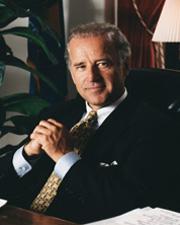
Mr. President, I rise today to introduce the Crime Victims with Disabilities Act of 2008. Adults with disabilities experience violence or abuse at least twice as often as people without disabilities,…
Mr. President, I rise today to introduce the Crime Victims with Disabilities Act of 2008.
Adults with disabilities experience violence or abuse at least twice as often as people without disabilities, and adults with developmental disabilities are at risk of being physically or sexually assaulted at rates four to ten times greater than other adults. In fact, an estimated 5 million crimes are committed annually against persons with developmental disabilities and an estimated 70 percent of these crimes are not reported.
Adding insult to injury, individuals with disabilities suffer additional ``victimization'' within the justice system, due to lack of physical, programmatic, and communications accommodations needed for equal access.
The Crime Victims with Disabilities Act takes a commonsense approach to fixing this problem by providing funds to increase the investigation, prosecution, and prevention of crimes against persons with disabilities and by facilitating collaboration among criminal justice agencies and other agencies and organizations that provide services to people with disabilities to improve services to those who are victimized.
Collaboration among criminal justice agencies and agencies and organizations that provide services to individuals with disabilities is necessary to ensure that crimes are reported and investigated properly, prosecutors are properly trained, appropriate accommodations are provided to disabled victims, and communication between criminal justice agencies and organizations that provide services to individuals with disabilities is effective.
The bill funds a modest grant program that would allow States, units of local government, and Indian Tribes to develop programs to facilitate collaboration among criminal justice agencies and agencies and organizations that provide services to individuals with disabilities for these purposes. The bill authorizes $50,000 for each planning grant and $300,000 for each implementation grant for a total authorization for the grant program of $10 million for the first year.
The bill also authorizes $4 million over 4 years to fund research to assist the Attorney General in collecting valid, reliable national data relating to crimes against individuals with developmental and related disabilities for the National Crime Victims Survey conducted by the Bureau of Justice Statistics of the Department of Justice as required by the Crime Victims with Disabilities Awareness Act. Currently, the Bureau of Justice Statistics does not specifically collect this data, leaving many crimes against persons with disabilities unreported in the survey and making it difficult to address this problem adequately.
The Association of University Centers on Disabilities, the National Center for Victims of Crime, the National Council on Independent Living, the National Disability Rights Network, the National Child Abuse Coalition, Easter Seals, the Arc of the United States, and United Cerebral Palsy have endorsed the bill. I hope my colleagues will join me in supporting this bill which will protect some of the most vulnerable members of our society--individuals with disabilities who are victims of crime.
Mr. President, I ask unanimous consent that the text of the bill be printed in the Record.

Mr. President, today I rise to introduce a bill to enhance the annual leave for Administrative Law Judges, Contract Board of Appeals Judges, and Immigration Law Judges in the Federal Government. I…
Mr. President, today I rise to introduce a bill to enhance the annual leave for Administrative Law Judges, Contract Board of Appeals Judges, and Immigration Law Judges in the Federal Government. I want to thank Senator Pryor for his support of this bill.
Prior to 2004 Federal employees with less than three years of Federal service accrued annual leave at a rate of 4 hours per biweekly pay period. Employees with 3 to 15 years of service accrued leave at a rate of 6 hours per pay period, and those with over 15 years of service accrued leave at a rate of 8 hours.
As part of the Federal Workforce Flexibility Act of 2004, Congress changed the leave accrual rate for new mid-career employees, allowing agency heads to deem a period of qualified non-federal career experience for an individual an equal period of service performed by Federal employee. In addition, the act stated that all senior executives and other senior level employees shall accrue annual leave at the maximum rate of 8 hours for each bi-weekly pay period.
In the past, ALJs, CBAJs, IJs and members of the Senior Executive Service have been treated similarly. However, the Office of Personnel Management is now taking the position that these judges should not receive the same leave benefits as members of the SES since they are not under a pay for performance system. In addition to my general concerns over pay for performance, I believe it is inappropriate for ALJs, CBAJs, and IJs to be in such a system as it could threaten their independence. In fact, ALJs and CBAJs are not allowed to receive bonus awards for this very reason.
Given the shortage of ALJs to adjudicate social security benefits and the need to recruit more immigrations judges, I believe that Congress should act to provide these judges with enhanced leave benefits.
I am pleased that this bill has the support of the Association of Administrative Law Judges, the International Federation of Professional and Technical Engineers, the National Association of Immigration Judges, and the Senior Executives Association.
Mr. President, I ask unanimous consent that the text of the bill be printed in the Record.

Mr. President, I rise in support of legislation that I am introducing today to make sure that those responsible for the financial meltdown of recent days are brought to justice. Joining me on the…
Mr. President, I rise in support of legislation that I am introducing today to make sure that those responsible for the financial meltdown of recent days are brought to justice. Joining me on the bill is my distinguished colleague, Senator Feinstein.
While I congratulate the congressional leadership, especially Chairmen Dodd and Frank, and Senators Reid, McConnell, and Gregg, in crafting the Emergency Economic Stabilization Act of 2008, one issue continues to deeply disturb me and many of my constituents. Specifically, I refer to accountability and the importance of bringing criminals to justice.
In my view, today's economic turmoil did not happen by pure chance, and I am troubled that certain greedy individuals may have crossed the line into criminal activity.
Clearly, no one should reap rewards from this colossal failure, and those responsible on Wall Street should follow the Enron criminals straight to jail. The pursuit and prosecution of those liable for this meltdown must receive the highest possible level of attention, and this legislation dedicates a Special Task Force on Financial Crimes within the Justice Department whose sole mission is to ferret out those directly involved in engineering this catastrophe.
The congressional pursuit of answers--through hearings that Senator Dodd has indicated he will hold--should occur in tandem with the legal investigation and prosecution of those responsible for this debacle. Both must receive the same rigorous attention applied to this rescue package--and not be subsumed by the routine of the day-to-day legislative and criminal investigation process moving forward.
Show 2 more
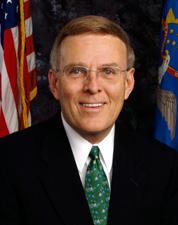
Mr. President, I ask unanimous consent that the Commerce Committee be discharged from further consideration of S. 3663 and the Senate proceed to its consideration. Mr. President, I ask unanimous…
Mr. President, I ask unanimous consent that the Commerce Committee be discharged from further consideration of S. 3663 and the Senate proceed to its consideration.
Mr. President, I ask unanimous consent that a Rockefeller substitute amendment which is at the desk be agreed to; the bill be read a third time and passed; the motions to reconsider be laid upon the table, with no intervening action or debate; and any statements related to the bill be placed in the Record.
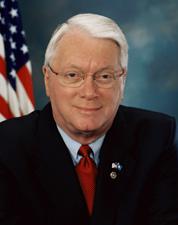
Mr. President, I ask unanimous consent that the text of the bill be printed in the Record.
Mr. President, I ask unanimous consent that the text of the bill be printed in the Record.
Bill Text
5 versions available
        [Congressional Bills 110th Congress]
[From the U.S. Government Printing Office]
[S. 3663 Enrolled Bill (ENR)]

S.3663

One Hundred Tenth Congress

of the

United States of America

AT THE SECOND SESSION

Begun and held at the City of Washington on Thursday,
the third day of January, two thousand and eight

An Act

To require the Federal Communications Commission to provide for a short-
term extension of the analog television broadcasting authority so that
essential public safety announcements and digital television transition
information may be provided for a short time during the transition to
digital television broadcasting.

Be it enacted by the Senate and House of Representatives of the
United States of America in Congress assembled,

SECTION 1. SHORT TITLE.

This Act may be cited as the ``Short-term Analog Flash and
Emergency Readiness Act''.

SEC. 2. COMMISSION ACTION REQUIRED.

(a) Program Required.--Notwithstanding any other provision of law,
the Federal Communications Commission shall, not later than January 15,
2009, develop and implement a program to encourage and permit, to the
extent technically feasible and subject to such limitations as the
Commission finds to be consistent with the public interest and the
requirements of this Act, the broadcasting in the analog television
service of only the public safety information and digital transition
information specified in subsection (b) during the 30-day period
beginning on the day after the date established by law under section
3002(b) of the Digital Television Transition and Public Safety Act of
2005 for termination of all licenses for full-power television stations
in the analog television service and the cessation of broadcasting by
full-power stations in the analog television service.
(b) Information required.--The program required by subsection (a)
shall provide for the broadcast of--
(1) emergency information, including critical details regarding
the emergency, as broadcast or required to be broadcast by full-
power stations in the digital television service;
(2) information, in both English and Spanish, and accessible to
persons with disabilities, concerning--
(A) the digital television transition, including the fact
that a transition has taken place and that additional action is
required to continue receiving television service, including
emergency notifications; and
(B) the steps required to enable viewers to receive such
emergency information via the digital television service and to
convert to receiving digital television service, including a
phone number and Internet address by which help with such
transition may be obtained in both English and Spanish; and
(3) such other information related to consumer education about
the digital television transition or public health and safety or
emergencies as the Commission may find to be consistent with the
public interest.

SEC. 3. LIMITATIONS.

In designing the program required by this Act, the Commission
shall--
(1) take into account market-by-market needs, based upon
factors such as channel and transmitter availability;
(2) ensure that broadcasting of the program specified in
section 2(b) will not cause harmful interference with signals in
the digital television service;
(3) not require the analog television service signals broadcast
under this Act to be retransmitted or otherwise carried pursuant to
section 325(b), 338, 339, 340, 614, or 615 of the Communications
Act of 1934 (47 U.S.C. 325(b), 338, 339, 340, 614, or 615);
(4) take into consideration broadcasters' digital power levels
and transition and coordination plans that already have been
adopted with respect to cable systems and satellite carriers'
systems;
(5) prohibit any broadcast of analog television service signals
under section 2(b) on any spectrum that is approved or pending
approval by the Commission to be used for public safety radio
services, including television channels 14-20; and
(6) not include the analog spectrum between channels 52 and 69,
inclusive (between frequencies 698 and 806 megahertz, inclusive)
reclaimed from analog television broadcasting pursuant to section
309(j) of the Communications Act of 1934 (47 U.S.C. 309(j)).

SEC. 4. DEFINITIONS.

As used in this Act, the term ``emergency information'' has the
meaning such term has under part 79 of the regulations of the Federal
Communications Commission (47 C.F.R. part 79).

Speaker of the House of Representatives.

Vice President of the United States and
President of the Senate.