








IV
111th CONGRESS
2d Session
H. CON. RES. 318
IN THE HOUSE OF REPRESENTATIVES
September 16, 2010
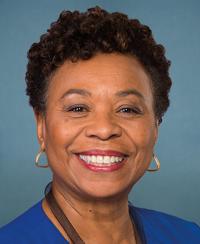
Ms. Lee of California (for herself, Mr. Grijalva, Mr. Moran of Virginia, Ms. Woolsey, Mr. Johnson of Georgia, Mr. Payne, Mr. Carnahan, and Mr. Moore of Kansas) submitted the following concurrent resolution; which was referred to the Committee on Foreign Affairs
CONCURRENT RESOLUTION
Supporting the ideals and objectives of the United Nations Millennium Declaration and related Millennium Development Goals and calling on the President to ensure the United States contributes meaningfully to the achievement of the Millennium Development Goals by the year 2015.
Whereas at the 2000 United Nations Millennium Summit on September 8, 2000, the United States joined 189 nations in adopting the United Nations Millennium Declaration, which set a series of time-bound targets to reduce extreme poverty by 2015 known as the Millennium Development Goals;
Whereas the Millennium Development Goals set measurable targets related to ending hunger and poverty, universal education, gender equity, child health, maternal health, combating HIV/AIDS, environmental sustainability, and global partnership, all to be achieved by 2015, including—
reducing by half the proportion of people living on less than $1 a day;
reducing by half the proportion of people who suffer from hunger;
ensuring that all boys and girls complete a full course of primary schooling;
eliminating gender disparity in primary and secondary education preferably by 2005, and at all levels by 2015;
reducing by two-thirds the mortality rate among children under 5;
reducing by three-quarters the maternal mortality ratio;
achieving, by 2015, universal access to reproductive health;
halting and beginning to reverse the spread of HIV/AIDS;
achieving, by 2010, universal access to treatment for HIV/AIDS for all those who need it;
halting and beginning to reverse the incidence of malaria and other major diseases;
integrating the principles of sustainable development into country policies and programs to reverse loss of environmental resources;
reducing biodiversity loss, achieving a significant reduction in the rate of loss by 2010;
reducing by half the proportion of people without sustainable access to safe drinking water and basic sanitation;
achieving significant improvement in the lives of at least 100,000,000 slum dwellers, by 2020;
developing further an open trading and financial system that is rule-based, predictable, and non-discriminatory and includes a commitment to good governance, development, and poverty reduction nationally and internationally;
addressing the least developed countries’ special needs which includes tariff-free and quota-free access for their exports, enhanced debt relief for heavily indebted poor countries, cancellation of official bilateral debt, and more generous official development assistance for countries committed to poverty reduction;
addressing the special needs of landlocked and small island developing countries;
dealing comprehensively with developing countries’ debt problems through national and international measures to make debt sustainable in the long term;
developing decent and productive work for youth in cooperation with the developing countries;
providing access to affordable essential drugs in developing countries in cooperation with pharmaceutical companies; and
making available the benefits of new technologies, especially information and communications technologies, in cooperation with the private sector;
Whereas the Millennium Development Goals have been agreed to by 192 United Nations Member States including the United States as well as leading international development and financial institutions such as the World Bank, the International Monetary Fund (IMF), and regional development banks;
Whereas the United Nations Millennium Declaration reaffirmed the values and principles of the United Nations General Assembly, including fundamental values of freedom, equality, solidarity, tolerance, respect for nature, and shared responsibility;
Whereas, on March 22, 2002, the United States, the European Union, and other countries concluded the Monterrey Consensus, which included agreement on new development aid commitments, debt relief, fighting corruption, country ownership, and policy coherence to fulfill internationally agreed development goals including those contained in the Millennium Declaration;
Whereas in 2005, the United Nations General Assembly convened a high level meeting known as the “2005 World Summit”, reiterating a determination by both developed and developing nations to ensure the timely and full realization of development goals and objectives including the Millennium Development Goals and recognizing that “development, peace and security and human rights are interlinked and mutually reinforcing”;
Whereas at the 2005 World Summit, developing nations committed to the development and implementation of national plans to achieve the Millennium Development Goals, and identified good governance and the rule of law as “essential for sustained economic growth, sustainable development and the eradication of poverty and hunger”;
Whereas nearly one decade after the signing of the United Nations Millennium Declaration, the international community has made significant progress in addressing the root causes of extreme poverty, particularly in the areas of global health, education, and safe drinking water;
Whereas net official development assistance by the United States, totaling $28,700,000,000 in 2009, has roughly tripled since 2001;
Whereas the United States was the leading source of remittances, which totaled $34,700,000,000 in 2008;
Whereas in the developing world as a whole, enrollment in primary education rose from 83 to 88 percent from the year 2000 to 2007;
Whereas the deaths of children under 5 declined from 12,600,000 to 9,000,000 annually, from the year 1990 to 2007;
Whereas from 2001 to 2008, new HIV infections declined by 16 percent globally, and in 2006, the annual number of AIDS deaths began to decline for the first time since the earliest reported cases of the HIV/AIDS epidemic;
Whereas access to lifesaving antiretroviral therapy (ART) to treat HIV/AIDS continues to increase, and an estimated 5,000,000 people are now receiving AIDS treatment, or about one-third of those currently in need;
Whereas based off the 1990 estimate for global drinking water coverage of 77 percent, studies indicate that the world is ahead of schedule in reducing by half the proportion of the global population without sustainable access to safe drinking water;
Whereas the lasting impacts of the global economic crisis, food, and natural resource price volatility, the persistence of conflict, and rising scarcity of food and water resources have increased the vulnerability of the world’s poor, and threaten to impede or even reverse progress made in improving and protecting the health, environment, physical, and economic security of those suffering from extreme poverty;
Whereas the United Nations Department of Economic and Social Affairs indicates that in June 2009, progress was either insufficient, absent, or deteriorating for more than half of key targets related to compliance with the United Nations Millennium Development Goals;
Whereas gaps in strategy, implementation, policies, capacity, and resources have resulted in regional disparities inconsistent with the spirit of the Millennium Declaration to uphold the international community’s collective responsibility and duty “to all the world’s people, especially the most vulnerable”;
Whereas according to the United Nations Department of Economic and Social Affairs, 100 percent of key targets in sub-Saharan Africa fall into underperforming categories;
Whereas the World Bank estimates that in 2005, 1,400,000,000 people across the globe, and more than one-quarter of the developing world’s population, were experiencing extreme poverty, living on less than $1.25 a day;
Whereas the United Nations Food and Agriculture Organization (FAO) estimates that the number of undernourished people in the world rose to 1,020,000,000 in 2009, equivalent to 15 percent of the world population and representing an increase of roughly 200,000,000 people from 1990;
Whereas in 2007, 72,000,000 children were denied the right to education, half of these children having never seen the inside of a classroom;
Whereas the agreed upon target for eliminating gender disparities in primary and secondary education by 2005 has already been missed;
Whereas recent estimates indicate that 342,000 to half a million women and girls, nearly all of them in developing countries, die each year as a result of obstetric complications during pregnancy, during childbirth, or in the weeks following delivery, the vast majority of which are preventable or treatable with quality reproductive health services;
Whereas in 2006, 1,400,000,000 people remained without access to basic sanitation, which has been tied to the need for improvements in health and the quality of the environment;
Whereas studies indicate that more than 20 percent of all known mammals, 35 percent of freshwater fish species, 25 percent of reptiles, and 70 percent of plant species around the world are under threat of extinction due to a variety of factors including loss of habitat, change in climate, invasive species, over-hunting or harvesting, pollution, and disease;
Whereas President Obama has committed to doubling United States foreign assistance to $50,000,000,000;
Whereas, on May 5, 2009, President Obama announced a new Global Health Initiative, pledging $63,000,000,000 over 6 years, to strengthen national health systems and better integrate and coordinate the delivery of health services across a range of existing programs with a particular focus on improving the health of women, newborns, and children through programs addressing infectious diseases such as HIV/AIDS, nutrition, maternal and child health, neglected tropical diseases, safe water, and sanitation;
Whereas, on July 10, 2009, Secretary of State Hillary Rodham Clinton announced that the United States Department of State and United States Agency for International Development will conduct the first Quadrennial Diplomacy and Development Review to provide short-, medium-, and long-term blueprints for a whole-of-government approach to diplomacy and development including a clear statement of objectives, necessary tools and resources, and expected results;
Whereas, on August 31, 2009, President Obama signed a Presidential Study Directive (PSD) on Global Development Policy, which authorizes a United States Government-wide review of global development policies and procedures;
Whereas, on September 25, 2009, Secretary of State Hillary Rodham Clinton announced a new Global Food Security Initiative “to sustainably reduce chronic hunger, raise the income of the rural poor, and reduce the number of children suffering from under-nutrition”, for which President Obama has pledged $3,500,000,000 over 3 years;
Whereas, on January 6, 2010, United States Secretary of State Hillary Rodham Clinton declared development a “strategic, economic, and moral imperative” and called for “elevat[ing] development as a central pillar of our foreign policy”;
Whereas, on April 21, 2010, Secretary of Defense Robert Gates expressed in writing to the Senate Budget Committee, “the work performed by diplomatic and development professionals helps build the foundation for more stable, democratic and prosperous societies”;
Whereas United Nations Secretary General Ban-Ki Moon has indicated his intention to make 2010 the “year of the Millennium Development Goals”, with a particular focus on sustainable development;
Whereas broad-based country- and community-ownership, including the engagement of marginalized populations and vulnerable groups such as women, are critical to the long-term success of development programs aimed at reducing extreme poverty;
Whereas efforts to improve health and governance, expand access to education, address gender disparity, empower women and girls, sustain and develop global partnerships, and ensure environmental sustainability will not be successful in isolation and are all essential and mutually reinforcing activities in the fight to eradicate extreme poverty;
Whereas at the opening of the 65th Session of the General Assembly of the United Nations from September 20, 2010, to September 22, 2010, global leaders will convene a high-level summit, the largest gathering of heads of state since the 2000 United Nations Millennium Summit, to review the implementation of the 2000 United Nations Millennium Declaration and redouble efforts to meet the Millennium Development goals;
Whereas, on September 24, 2009, President Obama affirmed the United States “will support the Millennium Development Goals, and approach next year's summit with a global plan to make them a reality. And we will set our sights on the eradication of extreme poverty in our time”;
Whereas, on July 30, 2010, the United States Agency for International Development, the lead United States agency responsible for administering nonmilitary foreign assistance, released “The United States’ Strategy for Meeting the Millennium Development Goals” to be guided by four imperatives to leverage innovation, invest in sustainability, track development outcomes and not just dollars, and enhance the principle and practice of mutual accountability;
Whereas in preparation for the 2010 high-level summit, and in recognition of the vital role of indigenous and international civil society, the private sector, and Diaspora networks in reviewing and implementing strategies for sustainable development, from June 14, 2010, to June 15, 2010, the United Nations convened “Informal Interactive Hearings of the General Assembly with Non-governmental organizations, Civil society organizations and the Private sector”;
Whereas studies indicate that a majority of the people of the United States support United States efforts abroad to improve health, build climate resilience, and reduce hunger and poverty in poor countries, including by increasing public funding to achieve the Millennium Development Goals; and
Whereas the strong support of individuals, businesses, and philanthropic organizations across the United States for foreign assistance programs and the achievement of the Millennium Development Goals demonstrates United States values and ideals, including the compassion, generosity, and openness to the exchange of ideas and knowledge of the people of the United States: Now, therefore, be it
That Congress—
supports the ideals and objectives of the United Nations Millennium Declaration and related Millennium Development Goals and targets including to eradicate extreme poverty and hunger, achieve universal primary education, promote gender equality and empower women, reduce child mortality, improve maternal health, combat HIV/AIDS, malaria, and other diseases, ensure environmental sustainability, and develop a global partnership for development;
commends the progress made to date through international efforts to reduce instances of poverty, hunger, disease, and environmental degradation, as well as the sustained commitment of the international community to build upon these achievements in future years;
acknowledges the achievements of developing nations that have prioritized principles of accountability and inclusive ownership in the design and execution of development-related programs and the contribution of these efforts to the universal realization of the Millennium Development Goals;
recognizes the critical importance of global development programs and partnerships to the national security of the United States;
calls on the President to ensure the United States contributes meaningfully to the achievement of the Millennium Development Goals, and specified targets therein, by the year 2015, including by providing the global plan that was affirmed on September 24, 2009, and that supports the goals and commitments of the 2010 Millennium Development Goals Summit;
commits to work with and support the Administration in its efforts to accomplish by 2015 the goals and targets set forth in the United Nations Millennium Declaration and related Millennium Development Goals, including by providing the necessary resources to achieve these development objectives;
encourages the President to recommend and work in coordination with Congress to implement reforms to United States foreign assistance programs in order to achieve the Millennium Development Goals;
requests that the President’s forthcoming United States development policy include benchmarks, timelines, and resource estimates to guide the implementation, monitoring, and evaluation of these efforts;
commends private sector institutions as well as indigenous and international civil society organizations seeking to hold their governments accountable to the achievement of the Millennium Development Goals by 2015; and
urges all responsible nations within the international community to uphold their commitment to meet the Millennium Development Goals, including through actions to improve governance and the rule of law, expand debt relief programs, provide additional resources and technical assistance, and promote sustainable and responsible trade opportunities in order to support development efforts in the poorest nations.