Madam Speaker, I move to suspend the rules and pass the joint resolution (H.J. Res. 86) recognizing the 60th anniversary of the outbreak of the Korean War and reaffirming the United States-Korea…
Madam Speaker, I move to suspend the rules and pass the joint resolution (H.J. Res. 86) recognizing the 60th anniversary of the outbreak of the Korean War and reaffirming the United States-Korea alliance, as amended.
Madam Speaker, I ask unanimous consent that all Members may have 5 legislative days to revise and extend their remarks and include extraneous material on the resolution under consideration.
Madam Speaker, I rise in strong support of this joint resolution, and I yield myself such time as I may consume.
This resolution before us today, House Joint Resolution 86, recognizes the 60th anniversary of the outbreak of the Korean War and reaffirms the strong United States-Republic of Korea alliance. This resolution will help ensure that the bonds we forged in blood during the Korean War will never be forgotten.
Today, the United States and Republic of Korea relationship is stronger than ever, encompassing social, cultural, economic, security and diplomatic relations. Last year's joint vision statement between our two nations provided an important reminder to the importance of the bilateral relationship between our two countries. Our two countries are working as closely as ever on the problems of North Korea, which is critically important since North Korea continues its provocations, including nuclear and missile tests and just recently the sinking of the South Korean ship, the Cheonan, which resulted in the deaths of some 46 sailors from this tragedy.
With President Lee chairing the G-20 meeting this year in South Korea, this is certainly indicative of South Korea's prominence in international trade and economic development. For our part, Madam Speaker, I have long supported the Korea-U.S. Free Trade Agreement to further such growth. I continue to hope that the Congress will also pass this free trade agreement as soon as possible because it will reinforce U.S.-Korean ties and create American jobs. And for the benefit of my colleagues, I want to note that this free trade agreement with South Korea will provide somewhere between $11 billion and $20 billion in export trade between our two countries which will be of tremendous benefit to both our countries.
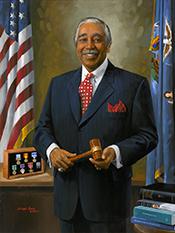
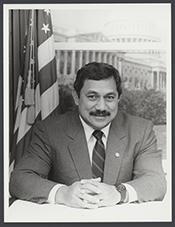
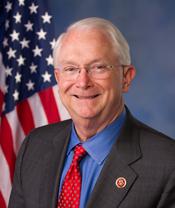
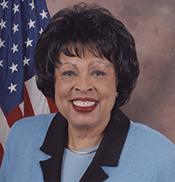
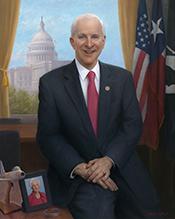
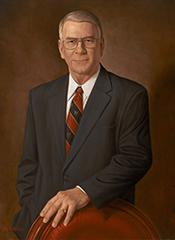
I also want to thank my dear friend, the gentleman from New York, Congressman Charles Rangel, for his service to our country during the Korean War, for his long and able service in the House of Representatives, and for his authorship of this important resolution. I also want to note our other colleagues who are also veterans of the Korean War, Congressman John Conyers of Michigan, Congressman Samuel Johnson of Texas, and Congressman Howard Coble of North Carolina. My apologies if I may have left out other Members. It was certainly not intentional, Madam Speaker, but I also want to thank them as well.
Congressman Rangel fought in the Korean War from 1950 to 1952 as a member of the 503rd Battalion, an all-black artillery unit, in the 2nd Infantry Division. In late November 1950, his unit was engaged in heavy fighting in North Korea; and at the Battle of Kunu-ri, Congressman Rangel was part of a vehicle column that was trapped and attacked by the Chinese Army.
During that attack, he was injured in the back by shrapnel from a Chinese bomb shell. In subzero weather, members of the 503rd Battalion looked to Rangel, then just a private first class, for his leadership. During 3 days of freezing weather, he led approximately 40 men from his unit out of the Chinese encirclement.
When asked about his experience in battle, Congressman Rangel commented, ``That was the coldest place, ever, in the whole world. We lost a lot of guys who froze to death in their sleeping bags.'' Nearly half of the 503rd Battalion were killed in the overall battle. And might I mention, a battalion is composed of about 600 soldiers. So you can imagine if 50 percent of the 503rd Battalion were killed in the Korean War.
Congressman Rangel was later recognized for his courage and awarded a Purple Heart for his wounds and the Bronze Star for Valor for his heroic efforts. In addition, he was awarded the Presidential Unit Citation, the Republic of Korea Presidential Unit Citation and three battle stars.
In summing up his experience, Congressman Rangel once said, ``Since Kunu-Ri--and I mean it with all my heart--I have never, never had a bad day.''
I might also note, Congressman John Conyers from Michigan served for 2 years in the Michigan National Guard starting in 1950. With the onset of the Korean War, he joined the U.S. Army and fought for 1 year as a second lieutenant in the U.S. Army Corps of Engineers. For his service, he was awarded both combat and merit citations.
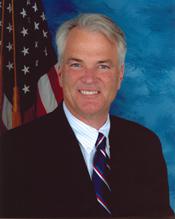
Congressman Sam Johnson began his 29-year career in the U.S. Air Force at the early age of 20. During the Korean War, he was stationed just 25 miles away from the front lines and flew 62 combat missions in his F-86 Saber jet fighter. In his plane, Shirley's Texas Tornado, named after his dear wife, Congressman Johnson scored one MiG fighter kill, one probable kill and one damaged. He flew on combat missions with Buzz Aldrin and John Glenn, and when he shot down the Russian MiG, he was so low on fuel that he actually had to glide back to Seoul. He went on to continue his outstanding military career through the Vietnam War as director of the Air Force Fighter Weapons School, known as Top Gun, and was one of the two authors of the air tactics manual revolutionizing military air dominance by incorporating three- dimensional flight.
Our good friend, Congressman Howard Coble, meanwhile, served in the Coast Guard from September 1952 until September 1956, and was deployed to Korean waters during the war.
I ask all of my colleagues to join me in honoring the sacrifices of these gentlemen, our colleagues, Congressman Rangel, Congressman Conyers, Congressman Johnson, and Congressman Coble, and the sacrifices of all of the other 1.8 million Americans who fought in the Korean War, as well as in recognizing the vital importance of the U.S.-Korean alliance by supporting this resolution; and also noting as a matter of history that over 30,000 of our soldiers died from that terrible conflict in South Korea.
Committee on Armed Services,
U.S. House of Representatives,
Washington, DC, June 15, 2010.
Hon. Howard Berman,
Chairman, Committee on Foreign Affairs, House of
Representatives, Rayburn House Office Building,
Washington, DC.
Dear Chairman Berman: I am writing to you concerning H.J.
Res. 86, recognizing the 60th anniversary of the outbreak of
the Korean War and reaffirming the United States-Korea
alliance. This measure was referred to the Committee on
Foreign Affairs, and in addition to the Committee on Armed
Services, and Veterans' Affairs, for a period to be
subsequently determined by the Speaker, in each case for
consideration of such provisions as fall within the
jurisdiction of the committee concerned.
Our Committee recognizes the importance of H.J. Res 86, and
the need for the legislation to move expeditiously.
Therefore, while we have a valid claim to jurisdiction over
this legislation, the Committee on Armed Services will waive
further consideration of H.J. Res 86. I do so with the
understanding that by waiving consideration of the
resolution, the Committee on Armed Services does not waive
any future jurisdictional claim over the subject matters
contained in the resolution which fall within its Rule X
jurisdiction.
Please place this letter and a copy of your response into
the Congressional Record during consideration of the measure
on the
House floor. Thank you for the cooperative spirit in which
you have worked regarding this matter and others between our
respective committees.
Very truly yours,
Ike Skelton,
Chairman.
Madam Speaker, as a veteran of the Vietnam War, I am deeply honored to yield all the time he needs to the gentleman from New York (Mr. Rangel), the author of this resolution.
Madam Speaker, I continue to reserve the balance of my time.
Madam Speaker, how much time do I have left on this side?
Madam Speaker, I would like to certainly compliment and thank our distinguished veterans of the Korean War, now Members, our colleagues here in this institution, for not only sharing with us their experiences, but the fact that this close relationship that we have with the Republic of Korea should never be lessened in any way.
It's been my privilege over the years to have visited the Republic of Korea, visited with their leaders. And the outstanding results of now South Korea becoming one of the great economic powers of Southeast Asia, I might say, is mainly because of our close economic ties. I also want to note the fact that the number one electronic company in the world is in South Korea. Also, the number one shipbuilding company is in South Korea.
I sincerely hope that in the coming months we will be able to continue to negotiate successfully the proposed free trade agreement that was done previously by the previous administration and negotiators. It's my understanding that as a result of this proposed free trade agreement we stand to gain at least somewhere between $11 to $20 billion in exports of our products to South Korea if we get an approval of this proposed agreement.
I also want to note, as a matter of a little history, and complement what my friend from New York has stated about the people and the good leaders of South Korea. My own personal experience while serving in Vietnam, I tell you, you really know who your real friends are. The fact that there were 50,000 South Korean soldiers fighting alongside American soldiers in Vietnam, now that is where you really know who your real friends are. The leaders and the people of South Korea came and joined us in that terrible conflict that our Nation was confronted with in fighting communism.
It's also my understanding that in the coming months, the President of Korea will be presiding over the G-20 meeting of 20 of the most prominent countries economically, and hopefully there will be better solutions given to the economic demise that not only the world is faced with now, especially the contributions that the 20 countries can offer in solving some of the serious economic problems that we are confronted with today.
I gladly yield to the gentleman from New York.
I thank the gentleman for his comments.
I might also note, Madam Speaker, that out of some 15 million Asian Pacific Americans, we have well over 2 million Korean Americans as part of the fiber of our great democracy that have made tremendous contributions to our country. I wanted to just note that for the record.
I reserve the balance of my time.
Madam Speaker, I have no further speakers, but I do want to say for the record again, on behalf of a grateful Nation, to extend our heartfelt gratitude and thanks to the gentleman from New York, Mr. Rangel, Mr. Johnson, Mr. Coble, and Mr. Conyers for their contributions, and especially as veterans of the Korean War.
I yield back the balance of my time.
Madam Speaker, I object to the vote on the ground that a quorum is not present and make the point of order that a quorum is not present.