Mr. Speaker, I yield myself such time as I may consume. I thank my colleague from Florida for yielding us the time on this rule, and I also want to say that I thank very much the chairman of the…
Mr. Speaker, I yield myself such time as I may consume.
I thank my colleague from Florida for yielding us the time on this rule, and I also want to say that I thank very much the chairman of the Judiciary Committee, Mr. Conyers, for his help yesterday in the Rules Committee meeting on incorporating a suggestion that I made into the manager's amendment. It didn't make it in this bill in the form of an amendment, but he was very kind to include that, and I think it made this bad bill a little bit better.
I want to say that my colleague from Florida has made some very eloquent comments about why this rule should be adopted and why the underlying bill is such a good bill. However, those of us on this side of the aisle have some clear concerns about this rule and about the bill and what it is going to be doing to our economy.
We heard yesterday a lot of numbers that were very, very difficult to pin down. In fact, I tried very hard, knowing I was going to handle this rule this morning, because I wanted to try to get a handle on the number of people that we are talking about.
We heard the number 14 million. We heard 14 million now and more later. But we also heard that what this bill will do will be to allow the bankruptcy system to handle about 30,000 new cases per year. My guess is that while this bill claims not to be needing a lot more money in that area, that eventually our colleagues across the aisle are going to come back asking for more money to deal with this issue.
But what I want to talk about today a little bit is both the process and about the reason why the rule should not be adopted and the bill should not be adopted. 94 percent of the people in this country are now paying their mortgages and paying them on time. What's going to happen if this bill is passed is that those people, and people in the future, are going to be punished. We are continually punishing the people who play by the rules and rewarding the people who don't play by the rules. It is a real shame that we have come to that place in our society because we don't want to set that as the norm for what we're doing in this country, because we've always had the rule of law and we've operated very well. What separates us from most other countries is that.
And yet, now we're going to say to people, it's okay if you go out, misrepresent your position in terms of being able to pay for your mortgage or do any kinds of things like that, and then we'll bail you out. It will be okay for us to do that. And that, basically, is what this bill is, the message that we're sending.
But let me talk just a bit about the process that was involved in bringing this rule to us. We had a very lively debate in the Rules Committee yesterday. The chairman of the Financial Services Committee told us that he was very willing to accept some of the amendments that had been offered. They might not exactly fit in the Financial Services Committee, but he was willing to work with some of our Members to make those fit.
We had 20 amendments offered, Republicans did. Only one of those amendments was accepted to be offered today, and it looks like we may have a problem with that amendment once it is offered.
We are trying very hard to be bipartisan. We want to work with the majority on helping the people in this country who are truly hurting, who have played by the rules and who are being hurt by the economy, through no fault of their own. However, what this bill, again, is going to do is it is keeping us from being bipartisan. We have to be opposed to the rule and opposed to the bill because they've put together bills that should not be put together. Many of us could probably support the Financial Services part of this bill, but we would be very concerned about the Judiciary part of it. But no, the majority has to lump them all together and create a situation that denies our ability to be bipartisan.
A couple of the rules that were offered yesterday and in the various committees that Chairman Frank said he was willing to have a debate on was a rule offered by Representative Neugebauer which would amend the servicer safe harbor provisions to provide that unsuccessful plaintiffs would pay all the attorney's fees and any legal costs incurred by the defendant.
Another one by Congresswoman Capito would exempt the Federal Housing Administration, Veterans Administration Loan Guaranty Program
and Guaranteed Rural Housing Loans from adjustments to the terms of the loan in bankruptcy. These already are very, very lenient programs and, supposedly, all the work has been done so that there would not be the need to go to bankruptcy.
Also, Congressman Hensarling offered, I offered on his behalf, three excellent amendments that would, I think, help with the issue of responsibility and accountability. The President talks a lot about that, but when it comes down to implementing those things in legislation, we see nothing coming from the majority on those issues.
Let me mention the Hensarling amendments which were denied, and we can't even vote on them. One would exclude from participation in the HOPE for Homeowners Program any borrower whose original loan was a zero down payment loan. Many of these people are treating these homes that they bought like rental property. They have no investment in them, and so when the economy goes south or the home is not worth as much as they thought it was worth, they just walk away from it. That's no sense of responsibility. We're just, again, rewarding irresponsibility.
Another amendment by Congressman Hensarling would exclude from participation in the HOPE for Homeowners Program any borrower whose original loan documentation did not include verification of the amount and source of income. A lot of these loans were given out to people who did not bring information on their income. That seems a logical thing to do. Most people, again, who are paying their mortgages are people who paid something down and then were able to show that they could pay for the home ultimately.
And then the third one would have excluded from participation in the HOPE for Homeowners Program any borrower who has a family income that exceeds 125 percent of the area median income for where they live. Republicans are usually the ones criticized for helping wealthy people, but this bill is going to allow millionaires to be able to get help. We don't think that that's the right thing to do.
Those were three very logical amendments that were turned down. As I said, only one out of 20 of our amendments was accepted. So we think that this is a bad rule. We think it's a bad bill and we're going to urge our colleagues to vote ``no'' on it.
Mr. Speaker, I reserve the balance of my time.
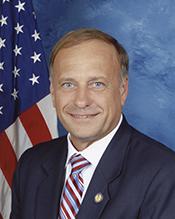
Mr. Speaker, I would now like to recognize for 5 minutes my distinguished colleague from Iowa (Mr. King) to discuss the amendment that he had written that I offered last night in the Rules Committee, which was rejected. And I think he will share some very enlightening comments with us.
Mr. Speaker, I mentioned before that 94 percent of the American people are paying their mortgages and are paying them on time, and they don't understand why this is happening and why they should be burdened with having to pay off the mortgages of people who are not being responsible and who are not being held accountable.
I want to share with you an article that came out in The Washington Post last December about the HOPE Program and about the situation that we're dealing with. When I read the article, it made me realize that our colleagues across the aisle are simply not in touch with reality. They don't have any idea about how the real world works. Most of them have not been in business. Most of them have not had to meet a payroll. They're living sort of in a Never Never Land, and I'm going to quote some things from this article that, I think, will help the public understand what that is.
There is criticism about the bill from the HUD Secretary. Now, that HUD Secretary was in the last administration, and there is a lot of blame back and forth between Congress and the executive branch. This is what the HUD Secretary said:
``What most people don't understand is that this program was designed to the detail by Congress.''
So that bill was passed. The bill setting up the HOPE Program was passed under the Democratic Congress. It also shows how off their numbers are in so many cases when they make predictions. They said the 3-year program was supposed to help 400,000 borrowers avoid foreclosure, but between October and December of last year, only 312 applications had come into the program.
Let me tell you a little bit about why that is the case and why, I think, people who irresponsibly got mortgages to begin with continue to look for bailouts and continue to look for welfare. This is basically expanding the welfare program in our country by passing this bill. Here is what one of the people said who is working with those people who might benefit from the program:
``Getting the lenders to agree has been our biggest challenge,'' said Peyton Herbert, director of the foreclosure services at HomeFree-USA, a housing counseling firm in Hyattsville.
This is what he says. This is the ridiculous way that these folks respond to this. He says, ``The lenders want dollar for dollar what's owed on that loan or something close to it. That's the fly in the ointment.''
Imagine that. People who loan other people money want them to pay it back dollar for dollar. Isn't that an unusual situation? But that's the way most of us operate in this country. However, most of these people who got these loans and who are in trouble now got them because they never expected to pay them back. They expected somebody to bail them out. They weren't honest when they got the loans, and now they're going to be bailed out by this legislation.
The other thing, which is just mind-boggling to me, is how the press writes these. Okay. ``The number one impediment is the lenders will redo their loans if the people promise to pay them back.'' Now, that's the way it usually operates, but the article goes on to say, ``The list of impediments goes on.''
That's the attitude of The Washington Post. There is an impediment given out there to the people who want to redo their loans. Do you know what that impediment is? That the people who are getting these loans, if their home increases in value, they have to split that value with the Federal Government, which is underwriting their loan, if they sell the home; and the people don't want to do that.
Again, there is no sense of responsibility. We didn't hear the President the other night talk about personal responsibility, personal accountability. He uses those words a lot, but he never pins them on anybody. It's just unbelievable that that's the attitude that people have. They could be getting help that already exists out of the HOPE Program, but they don't do it because
they don't want to pay the money back, and they don't want to share the increase in value with the Federal Government, which is underwriting their mortgage, if they ever sell the home.
Again, I think they're living in a Never Never Land. They think that they're due this money for free. They've been taught to live in a welfare society. We're continuing the welfare mentality. We're going back to welfare that was done away with when the Republicans took over the Congress in 1995. That is not what the American people want.
Mr. Speaker, I reserve the balance of my time.
Mr. Speaker, I want to say there is another issue here related to process that, I think, we need to talk about.
Many people say that the American people's eyes glaze over when we talk about the process here and that they don't really care, but I think we showed a couple of weeks ago that they do care and that they're watching and that they're paying close attention to what's going on in Congress, because the American people believe in fair play, and they believe that we should play by the rules.
So often, Congress passes bills and exempts itself. It often passes rules, and the majority exempts itself. One of the ways that Congress is exempting itself or that the majority is exempting itself right now on this bill, on this rule, is with something they call PAYGO. Now, the majority party 2 years ago made a big splash and got a lot of great publicity, saying, ``Everything is going to be pay as you go.'' It's abbreviated PAYGO. ``We're not going to do any more spending unless we cut spending somewhere else. We want to be diligent.''
They criticized Republicans for years on the deficit. They criticized Republicans for spending too much money. They were going to show that they were different. Yet what have they done every time they've gotten a major bill they've wanted to pass? They've just waived the PAYGO rules. It's real simple, and it usually doesn't get a lot of publicity because they got all that great publicity for saying that they weren't going to do that, but that's what's happening here, ladies and gentlemen. The PAYGO rules have been waived on this bill.
They don't want to show the American people how again they're abusing their own rules, how they're being unfair to the American people because they're saying one thing and they're doing another. They say, We want to bring down the deficit. We want to curtail spending. What they're actually doing, as I said earlier, is bringing back the old welfare system. We saw that with the stimulus bill. We saw it with the appropriations bill. It's back to the old style of welfare. We don't have to ask people to work to draw welfare payments. No. Let's just get rid of that. Let's extend the payments. Let's increase the payments. Let's put more people on welfare. That's exactly what this bill does. We're simply going to be increasing welfare.
The way they do that is to say, By passing this bill, we don't have to show how we're not increasing the deficit, so we'll just waive that rule, and nobody is going to notice it. Well, I think the American people are noticing that. I think they are paying attention.
Again, the majority of the American people who are paying their mortgages, who are playing by the rules, who are going to work every day, and who are doing their jobs are getting sick and tired of the increase in the welfare system again. Here you go. The Democrats have been in charge of the Congress for a little over 2 years, and what do we see but a massive increase in welfare.
I appreciate my colleague talking about the President saying he was going to be responsible, that he was going to be held accountable, but you know, we've not seen anything written into legislation so far. I've asked about that. Again, I appreciate very much Chairman Conyers putting a little piece in this bill about accountability. I think that was good.
We're going to look at bankruptcy judges, see if they're abusing their power, make sure we have some idea of what they're going to be doing. We give them 2 years to make that report--it's plenty of time-- but I have great concern over the fact that the majority party has waived the PAYGO rules on this bill. That's a part of what they're doing, and I think the American people are concerned about that, too.
Mr. Speaker, I reserve the balance of my time.
Mr. Speaker, I reserve my time.
Mr. Speaker, could I inquire of the gentleman from Florida if he has any more speakers?
Mr. Speaker, I will reserve the balance of my time.
Mr. Speaker, you know, we hear all this talk about bipartisanship. Bipartisanship to the other side, to the majority party, means do it my way. That's what bipartisanship means to them. Bipartisanship to us means how about we have a discussion? How about we bring up some amendments and have some votes on them? If you're so sure that your position is right, bring those amendments up for a vote. Let's see what kind of votes they're going to get. No. They won't even allow amendments to be voted on. That's not bipartisanship.
We had 20 amendments offered for this bill. Only one was accepted. That's not bipartisanship. Bipartisanship would be, again, bringing up lots of Republican amendments. Let them be voted on. Again, people who are sure of their position aren't afraid of having votes on alternative points of view.
Again, the American people are watching us. They're watching this Congress, and we know the Congress is putting off some tough votes they don't want to deal with right now because they know the American people are watching. And you know, that's one of the best things that I think has come out of last year's election and, perhaps, the economic uncertainty.
People are suffering. Republicans are concerned about that. We want to do everything we can to help those people who are suffering. But what this Congress has done so far hasn't helped those people who are suffering. It hasn't helped the people who are working and lost their jobs through no fault of their own.
We want bipartisanship, but it should be true bipartisanship. It's not ``do it our way or do it not at all.''
You know, I respect my colleague from California who just spoke and said that this bill doesn't cost taxpayers anything; it only costs the lenders. Well, who are the lenders? They're banks that are owned by stockholders. Those, the last time I looked, were taxpayers. They're the real taxpayers. That, again, is part of the out-of-this-world mentality that the people on the other side of the aisle have. It doesn't cost anybody.
I had people in my office and they said, ``Oh, this bill doesn't cost anything.'' I said, ``Pardon me? You mean they're going to cram down the mortgages, they're going to reduce the amount of the mortgages? Who's going to pay the difference between the original amount and the cramdown amount?''
``Oh, those are the bankers. But it just means they won't be as rich as they were before.''
That's not the way this country operates. ``Cramdown'' is the right name for the people talking about part of this legislation. That's exactly what it is. And what are we doing here?
You know, the New York Post--not exactly known as the most conservative newspaper in the world--calls it the Foreclosure Five. What we are doing is we are bailing out people in five States. And is it any surprise that those five States are California, Nevada, Arizona, Florida, and Michigan? Where is the leadership in the majority party? California and Nevada. Is it surprising?
This is just more earmark legislation, ladies and gentlemen. More earmarks. We're bailing out these five States.
This is not a crisis of a national proportion. This is a personal matter, not a national crisis.
Falling home prices are not the problem. Home prices went up tremendously for several years. Everybody knew that was going to have to come to a halt. Again, people living in this world knew that. People who had a real-world mentality understood that. But if you're living in Never Never Land, if you're living on the welfare mentality, then you assume you can behave any way you want to and somebody is going to bail you out. And that's what this legislation does.
Lots of newspaper articles and magazines have said, ``What this plan is doing is undercutting the banking and private sectors, and hurt many honest, hardworking people.'' That's a commentary from the Street. Over and over and over again we hear, ``we're subsidizing bad behavior,'' an article in the National Review. And that's exactly what this legislation does, it subsidizes bad behavior.
This is a sham. It is hurting average Americans who pay their bills, who do their work. You know, I think that the majority party has an addiction to spending other people's money, and that's what this does. Again, saying it doesn't cost the taxpayers anything is ridiculous. It's going to cost the taxpayers a lot of money, both directly and indirectly. And I want to say that this is a bad bill, it's a bad rule, and I want to urge my colleagues to vote ``no.''
Mr. Speaker, I yield back the balance of my time.
Mr. Speaker, on that I demand the yeas and nays.