I would like to thank the gentlelady from Ohio, first of all, for her leadership in helping to share with our colleagues hour after hour enormously important issues facing not only the United States…
I would like to thank the gentlelady from Ohio, first of all, for her leadership in helping to share with our colleagues hour after hour enormously important issues facing not only the United States but facing the world. And I join her this evening.
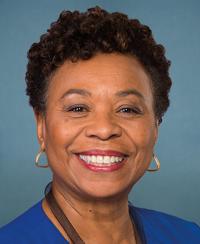
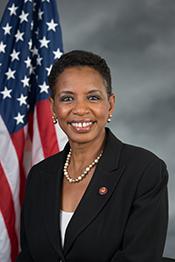
And I was very appreciative of joining with my chairperson of the Congressional Black Caucus, who I just saw at another meeting who was able to be here, Congressman Barbara Lee. I want to thank her for her leadership. The chairperson of my Subcommittee on Africa and Global Health, Chairman Donald Payne, who speaks volumes about Africa, and as well, chairs the Foreign Affairs Task Force, of which I am a member of the Congressional Black Caucus; and one of our great leaders as well, Congresswoman Gwen Moore. I know there were probably others that were here, and I did not get a chance to see them on the floor. But I do want to acknowledge that this is an important hour for us. And I am pleased to be able to join my colleague.
Let me just suggest that there are many ways that we can look at Liberia, Haiti, and Sudan. And it is my intent because I think we have talents here in the United States, Representatives of African nations, that, frankly, we don't get a chance to interact with as much as we would like. And I am going to accept the challenge given to me to host a meeting of African ambassadors that our colleagues will have a chance to sit down with and hear their story, their insight certainly on the issues that we're now raising, particularly Liberia and Sudan-- obviously Haiti is in the Caribbean, and I will speak to that issue.
But let me tell you why I want to offer that suggestion. And the reason is because I sat down with one of our distinguished ambassadors last week who mentioned that with all of the meetings on the economy, the worldwide crisis in the economy, interestingly enough, the Continent of Africa is not on the agenda.
We heard an eloquent speech by Prime Minister Brown, and all of us were moved by his passion and his values, the Prime Minister of Great Britain. And I am told that he is as eloquent and as energized before his own Parliament and in international meetings as he was with us in the joint session.
And we are very blessed, if you will, by having an administration that has the cultural nexus and the heart and the intellect to be concerned about these issues. President Obama has been received overwhelmingly, his election, on the continent. I think we are poised to be of a gigantic opportunity to do what Prime Minister Brown has charged us to do: Don't forget the impoverished. Don't forget the journey we were on trying to address the question of poverty. And that was a big issue as it relates to Africa.
Now, of course, the economy has come and there may be donor nations who have made pledges who have not completed their pledges, but Africa still has the same concerns and therefore, it will be very important to hear from these ambassadors on the issues that we're talking about, which I expect to talk about here tonight.
For example, our esteemed president of Liberia who came out of the World Bank and who has a great respect of not only women of this country, but certainly of our administration and our past administration. She came to Liberia after Charles Taylor in a country that was void of infrastructure, void of water, void of--when I say ``water resources,'' infrastructure that would have clean running water; void of infrastructure that would have utilities or any mode of, if you will, phone, utility service; void of operating school systems. So we know that she has made great strides, and I have details here.
But at the same time, we are well aware that she needs more resources. We have to have this on the agenda. We have to be able to partnership with the African Union, for example, strengthen it as the African Union attempts to develop its own mission and mandate on how it addresses the issue of conflict.
So I think if I said anything about Liberia, there are certainly two major points: one, the Liberian Americans, but Liberia and the new president, Mrs. Johnson, is someone who has the, if you will, the monetary knowledge because of her experience here in the United States and her training in some of the financial structures of our country, but, also, the will to do it.
We must not forget Liberia in its journey toward economic independence, but it is a microcosm of the needs of the continent.
I also want to thank the administration, President Obama, for heeding the cry of many Members who wrote a letter about Liberian Americans. I'm told by our chairperson, Chairperson Payne, Liberian Americans will be here in the Congress or on the West steps to highlight their plight of continued TPS status, deferred, if you
will, deportation that has been going on and on and on.
We have got to solve that. That is something we can look to as we reform immigration. Many times when we discuss immigration, people start thinking it's not their problem, it's a global problem, it's a problem that faces many different ethnic groups. And we all need to come together as a family and fix it so people can be here legally; they can pay taxes; they can, in essence, be separated from those who want to do them harm.
So I want to put Liberia in the eye of the storm as it relates to the economy, and the challenge that the ambassador gave me was why don't you consult with us who are here and let us tell you the economic impact on the continent, what we need to be involved.
The second is, of course, Sudan and I might have been one of the last CODELs, congressional delegations, of three that were able to actually get into Darfur, into the camps. And I had spent time in Chad as well some years back before I was able to get into Darfur. I've been denied--it's a very long story of how long it took, and I frankly didn't know whether I'd get in the time that I went since we were among those who got arrested in front of the Sudanese embassy.
But we went into those camps, and the key thing that I want to say to the distinguished gentlelady is how valuable the NGOs were. They were literally the lifeline of the camps. They were a lifeline of the children. They were the lifeline of the women. And the women were the anchor of the camps because any man that would venture out to try to be a supportive family member, to provide income, would be killed by the janjaweed, or whatever the conflicts, they were targets. And so, mostly, it would be the women. Tragically, the women would be raped, and so things are not well.
And the complete disregard that the leadership of Sudan, the President of Sudan, has for the indictment, for the world family, there is no respect there. And we have a challenge, and we have got to be able to match the will of this country and our foreign policy, our belief in democracy, our belief in the security of children and family and the ability to live on your land without threat and danger and murder and pillage, we've got to the match that with the will of the countries on the continent, the African countries, the heads of States.
This is a new day now. This is in essence an America that has a commonality, that people are not only interested and are sacrificing on behalf of Sudan and the crisis there, but likewise, we have an administration that accounts Susan Rice, who is the U.N. envoy who I worked with on the crisis between Ethiopa and Eritrea. She is a committed and knowledgeable person about the world but particularly about Africa, and I count on her wisdom. I count on the wisdom of the Secretary of State, Hillary Rodham Clinton, and I count on that foreign policy team, along with the envoy that our President has just selected, Major Scott Gration, that adds to the team that can now focus on Sudan but also focus on the continent of Africa.
I join in denouncing the treatment of our, if you will, NGOs. Just about a year or so ago, we lost a valiant State Department employee that was killed in Sudan, and I frankly have never gotten over it, and I offer my deepest respect and sympathy to his family. It was a horrific act.
And so it is important that we put our foot down on the atrocities that has occurred in Sudan, and people should understand, people are in Darfur because they have been moved off of their land. You can't help to rebuild this area, irrigate it, give people--these are farming people. Don't tell them, well, just go to the city and get another life, get a life. These people have lived on their land, and they have bothered no one. They've raised their families, and now they're being literally torn apart.
Southern Sudan, that tried to get on its feet, that has a lot of oil, it's still in conflict between the Khartoum government and Sudan. Southern Sudan, who has all the oil and cannot seem to get an agreement, to my current knowledge--and I may have need of some additional update to my current knowledge--has not been able to solve the distribution of the oil moneys, and so they're suffering. This is an immediate crisis that needs to be fixed.
As it relates to Haiti, let me again mention the work of the Congressional Black Caucus. We have been working on Haiti for, I don't know, as long as I've been here, but we have had wonderful conversations with President Preval who is a committed and dedicated leader, who is looking for funding for infrastructure, funding, if you will, to rebuild after the terrible onslaught of hurricanes that they had in the last year, 2008. He is looking to work with us and the Congressional Black Caucus in the appropriations process, and we're looking to work with him.
Haiti is a wonderful ally of the United States. We can never pay them for the blood that they shed standing alongside us in the Revolutionary War, and their victory was our victory. Our victory was their victory, and they're hardworking people. You can see that here in the United States, and you can see that obviously in Haiti.
And so what I think, as I close, that you selected hot spots that symbolize the need for us to be engaged, and as I said, finally with respect to immigration, Haiti, too, so many distraught cases of Haitians treated unfairly in the United States because they don't have the parity that happens when Cubans are fleeing persecution as is defined. Haitians have been fleeing persecution, economic persecution, political persecution, who are here and cannot return back. I want them to get parity, and any immigration bill that I have any hands on, it will be part of that bill.
And so I think it is extremely important, Mr. Speaker, that we look at these issues and be assured that we work on behalf of all of these people. It is our commitment to make their lives better by our statements here today on the floor, but also our collaboration to continue to work on the issues that impact people's lives and as well the quality of life. We need to save lives and we certainly need to save them.
I just want to put on the record that I am working with a Haitian teacher who has suffered so much. She teaches math. She's well- respected. She had a court order that said she was not going to be deported. It's a long story, but I simply want to let the Haitians in Houston know we have not forgotten her, and we want her to stay united with her family.
Thank you very much for your leadership.
Mr. Speaker, I am pleased to rise in support of Sudan, Liberia and Haiti. These are three of the most troubled nations in the world, desperately in need of support from other nations, including the United States.
sudan and darfur
I am pleased that President Obama has appointed a Special Envoy to Sudan. Major General Scott Gration is both a humanitarian and a professional soldier. He has proudly served our country but more importantly brings to this position the experience and gravitas necessary to lead our mission.
The United States has for most of our history been a leader among nations in attempting to help foment democracy and bring peace to warring parties in regions throughout the world.
Sudan's western region of Darfur has been embroiled in violent conflict since 2003, which has brought a weighty death toll and displaced over 2 million people. Just recently, Darfur rebels killed 200 people near the capitol city of Khartoum. With violence continuing to worsen in the region, I call on the international community to renew it's commitment to finding a solution to the conflict in Darfur.
In 2007, I had the chance to lead a Congressional Delegation to the region of Darfur to see the first hand devastation that has swept through the region.
As Chair of the Congressional Children's Caucus, I am very concerned about the displaced children who suffer due to the lack of nutrition and access to clean water. Additionally, child mortality remains a significant problem throughout the region. I am also concerned that the global food crisis could exacerbate the conflict, placing more children at risk.
We, as a Global community, must unite to address this issue. Let us not let race, religious ties, or bureaucratic systems hinder us from fight for the people of Darfur. As a member of the House Foreign Affairs Committee, I will continue to work towards a solution for the ongoing conflict in Darfur. We must remain steadfast to gaining peace in the region.
Darfur has been embroiled in a deadly conflict for over four years. During that time, at least 400,000 people have been killed; more than 2 million innocent civilians have been
forced to flee their homes and now live in displaced-persons camps in Sudan or in refugee camps in neighboring Chad.
And more than 3.5 million men, women, and children are completely reliant on international aid for survival. Not since the Rwandan genocide of 1994 has the world seen such a calculated campaign of displacement, starvation, rape, and mass slaughter.
Since early 2003, Sudanese armed forces and Sudanese government- backed militia known as ``Janjaweed'' have been fighting two rebel groups in Darfur, the Sudanese Liberation Army/Movement (SLA/SLM) and the Justice and Equality Movement (JEM).
The stated political aim of the rebels has been to compel the government of Sudan to address underdevelopment and the political marginalization of the region. In response, the Sudanese government's regular armed forces and the Janjaweed--largely composed of fighters of Arab nomadic background--have targeted civilian populations and ethnic groups from which the rebels primarily draw their support--the Fur, Masalit and Zaghawa.
The Bush Administration recognized these atrocities--carried out against civilians primarily by the government of Sudan and its allied Janjaweed militias--as genocide. Antonio Guterres, the United Nations High Commissioner for Refugees, has described the situation in Sudan and Chad as ``the largest and most complex humanitarian problem on the globe.''
The Sudanese government and the Janjaweed militias are responsible for the burning and destruction of hundreds of rural villages, the killing of tens of thousands of people and rape and assault of thousands of women and girls.
With much international pressure, the Darfur Peace Agreement was brokered in May 2006 between the government of Sudan and one faction of Darfur rebels. However, deadlines have been ignored and the violence has escalated, with in-fighting among the various rebel groups and factions dramatically increasing and adding a new layer of complexity to the conflict.
This violence has made it dangerous, if not impossible, for most of the millions of displaced persons to return to their homes. Humanitarian aid agencies face growing obstacles to bringing widespread relief. In August 2006, the UN's top humanitarian official Jan Egeland stated that the situation in Darfur is ``going from real bad to catastrophic.'' Indeed, the violence in Darfur rages on with government-backed militias still attacking civilian populations with impunity.
On July 30, 2004, the UN Security Council adopted resolution 1556 demanding that the government of Sudan disarm the Janjaweed. This same demand is also an important part of the Darfur Peace Agreement signed in May of 2006.
On August 31, 2006, the Security Council took the further step of authorizing a strong UN peacekeeping force for Darfur by passing resolution 1706. Despite these actions, the Janjaweed are still active and free to commit the same genocidal crimes against civilians in Darfur with the aid of the Sudanese government.
International experts agree that the United Nations Security Council must deploy a peacekeeping force with a mandate to protect civilians immediately. Until it arrives, the under-funded and overwhelmed African Union monitoring mission must be bolstered. And governments and international institutions must provide and ensure access to sufficient humanitarian aid for those in need.
The Darfur Accountability and Divestment Act of 2006, H.R. 180, sponsored by my colleague Barbara Lee would require: The Securities and Exchange Commission's (SEC) Division of Corporate Finance and the U.S. Treasury to require all companies listing securities on United States capital markets, either directly or through a parent or subsidiary company, including partly-owned subsidiaries, having business operations in a country with a genocide declared by the Department of State or Congress, to disclose the nature of their business operations.
The United States Government (federal) to prohibit contracts with multi-national business enterprises if: They maintain business relationships and investments with national, regional and local governments involved in genocide; and they participate in business activities with any warring parties or rebel groups perpetrating genocide. States and Cities that have divested or are in the process of divesting State and City funds from companies that conduct business in Sudan; and United States colleges and universities that have divested their funds from, or placed restrictions on investments of their funds in, companies that conduct business in Sudan.
The Government Accountability Office (GAO) to investigate the existence and extent of all Federal Retirement Thrift Investment Board investments with national, regional and local governments involved in genocide; or business activities with any warring parties perpetrating genocide; or related to debt-obligations issued by the government of Sudan.
Also, the Chairman of the Securities and Exchange Commission is charged with maintaining and publishing a list of the names of the business enterprises identified by the Securities and Exchange Commission as having ties with perpetrators of genocide.
It also reasserts Section 11 of the Darfur Peace and Accountability Act (stripped from the Senate version) that nothing in that act or any other provision of law shall be construed to preempt any State law that prohibits investment of State funds, including State pension funds, in or relating to the Republic of the Sudan.
liberia
Mr. Speaker, A part of the world that has been neglected for many years is West Africa. And one of the gems of this region is Liberia. I am pleased that Liberia's temporary protective order was extended.
Temporary Protected Status (TPS) is the statutory embodiment of safe haven for those aliens who may not meet the legal definition of refugee but are nonetheless fleeing--or reluctant to return to--potentially dangerous situations.
There are numerous regions throughout the world where discrete and insular minorities might need this type of relief. TPS is blanket relief that may be granted under the following conditions: there is ongoing armed conflict posing serious threat to personal safety; a foreign state requests TPS because it temporarily cannot handle the return of nationals due to environmental disaster or there are extraordinary and temporary conditions in a foreign state that prevent aliens from returning, provided that granting TPS is consistent with U.S. national interests.
The Secretary of Homeland Security in consultation with the Secretary of State, can issue TPS for periods of 6 to 18 months and can extend these periods if conditions do not change in the designated country. To obtain TPS, eligible aliens report to U.S. Citizenship and Immigrant Services (USCIS) in the Department of Homeland Security (DHS), pay a processing fee, and receive registration documents and a work authorization. The major requirements for aliens seeking TPS are proof of eligibility. The regulation specifies grounds of inadmissibility that cannot be waived, including those relating to criminal convictions and the persecution of others.
The United States currently provides TPS or deferred enforced departure (DED) to over 300,000 foreign nationals from a total of seven countries: Burundi, El Salvador, Honduras, Liberia, Nicaragua, Somalia, and Sudan. Liberians have had relief from removal for the longest period, first receiving TPS in March 1991 following the outbreak of civil war. Liberians currently have DED until March 31, 2009, and has now been extended by the Obama Administration.
Liberia is Africa's oldest republic, but it became better known in the 1990s for its long-running, ruinous civil war and its role in a rebellion in neighboring Sierra Leone. By the late 1980s, arbitrary rule and economic collapse culminated in civil war when Charles Taylor's National Patriotic Front of Liberia (NPFL) rebels overran much of the countryside, entering the capital in 1990 and killing then President Samuel Doe. In 1995, a peace agreement was signed, leading to the election of Mr. Taylor as president. Another war began in 1999, escalated in 2000, and ended in 2003.
It pitted the forces of Charles Taylor, elected president in 1997 after Liberia's first civil war (1989-1997), against two armed anti- Taylor rebel groups. It also destabilized neighboring states, which accepted Liberian refugees and, in some cases, hosted anti-Taylor forces and became targets of the Taylor regime.
In 2003, Mr. Taylor--under international pressure to quit and hemmed in by rebels--stepped down and went into exile in Nigeria.
A transitional government headed by Chairman Gyude Bryant steered the country towards elections in 2005. Around 250,000 people were killed in Liberia's civil war, and many thousands more fled the fighting. The conflict left the country in economic ruin and overrun with illegal weapons. 15,000 U.N. peacekeepers were deployed to help in stabilizing the country.
Liberia held elections in October 2005, with a presidential runoff in November, a key step in a peace-building process following its second civil war in a decade. Ellen Johnson Sirleaf, an economist, won the presidential runoff vote, with 59.4 percent of votes cast and took office in mid-January 2006, becoming the first female president of an African country.
Most observers viewed the vote as orderly, free and fair. It fulfilled a key goal of an August 2003 peace accord that had ended the second civil war and led to an ongoing, U.S.-aided post-war transition process, which is bolstered by the multifaceted peacekeeping and development-focused U.N. Mission in Liberia (UNMIL).
Liberia's security situation is stable but subject to periodic volatility. Liberia's economy and state structures remain devastated by war. Humanitarian conditions are improving.
Liberia receives extensive U.S. post-war reconstruction and security sector reform assistance. In March 2006, former President Taylor was arrested in Nigeria and transferred to the U.S.-supported Special Court for Sierra Leone (SCSL) to face war crimes charges. He was later transferred to The Hague, the Netherlands, where he is on trial by the