To designate the facility of the United States Postal Service located at 116 North West Street in Somerville, Tennessee, as the "John S. Wilder Post Office Building".

Legislative Activity
Stay on top of the latest movement without scrolling through every action
Became Public Law No: 111-128.
January 29, 2010
View full timeline
Introduced in House
March 31, 2009
Referred to the House Committee on Oversight and Government Reform.
March 31, 2009
Committee Consideration and Mark-up Session Held.
May 6, 2009
Ordered to be Reported by Unanimous Consent.
May 6, 2009
Mr. Lynch moved to suspend the rules and pass the bill.
June 3, 2009 • 10:19 AM
Considered under suspension of the rules. (consideration: CR H6081-6084)
June 3, 2009 • 10:19 AM
DEBATE - The House proceeded with forty minutes of debate on H.R. 1817.
June 3, 2009 • 10:19 AM
At the conclusion of debate, the Yeas and Nays were demanded and ordered. Pursuant to the provisions of clause 8, rule XX, the Chair announced that further proceedings on the motion would be postponed.
June 3, 2009 • 10:44 AM
Considered as unfinished business. (consideration: CR H6168-6169)
June 4, 2009 • 12:07 PM
Passed/agreed to in House: On motion to suspend the rules and pass the bill Agreed to by the Yeas and Nays: (2/3 required): 420 - 0 (Roll no. 302).(text: CR 6/3/2009 H6081)
June 4, 2009 • 12:15 PM
On motion to suspend the rules and pass the bill Agreed to by the Yeas and Nays: (2/3 required): 420 - 0 (Roll no. 302). (text: CR 6/3/2009 H6081)
June 4, 2009 • 12:15 PM
Motion to reconsider laid on the table Agreed to without objection.
June 4, 2009 • 12:15 PM
Received in the Senate and Read twice and referred to the Committee on Homeland Security and Governmental Affairs.
June 8, 2009
Committee on Homeland Security and Governmental Affairs referred to Subcommittee on Federal Financial Management, Government Information, Federal Services, and International Security.
July 16, 2009
Committee on Homeland Security and Governmental Affairs. Ordered to be reported without amendment favorably.
December 16, 2009
Committee on Homeland Security and Governmental Affairs. Reported by Senator Lieberman without amendment. Without written report.
December 17, 2009
Placed on Senate Legislative Calendar under General Orders. Calendar No. 242.
December 17, 2009
Passed Senate without amendment by Unanimous Consent. (consideration: CR S13660-13661)
December 21, 2009
Cleared for White House.
December 21, 2009
Message on Senate action sent to the House.
December 22, 2009
Presented to President.
January 20, 2010
Signed by President.
January 29, 2010
Became Public Law No: 111-128.
January 29, 2010
Voting History
1 vote recorded • Roll call available
Floor Debate
17 membersWhat members said about H.R. 1817 on the floor
 MES
MES LD
LD EP
EP SFLMB+12
Floor Debate
17 membersWhat members said about H.R. 1817 on the floor
I thank the gentleman and my friend from Florida for yielding time. I speak in opposition to the rule. I want to thank Chairman Thompson, Subcommittee Chair Sheila Jackson-Lee for their bipartisan…
I thank the gentleman and my friend from Florida for yielding time. I speak in opposition to the rule. I want to thank Chairman Thompson, Subcommittee Chair Sheila Jackson-Lee for their bipartisan effort. In fact, this is a bipartisan bill and one that there's really no fundamental reason to vote against.
In fact, some of the amendments we're voting on today, such as people being able to retrieve their cell phones, are very nice. The one on people with hip replacements is very important to me. I have three of the four biggest orthopedic companies in the United States--in fact, in the world--in my district. And Chairman Oberstar and others who go through the machinery with hip replacements have concern on how we do that.
But, you know, it doesn't matter very much if you can find your cell phone or get through security easier if you die. And one of the problems here is I had offered an amendment before the Rules Committee that would have had added an important layer of security for the U.S. commercial aviation to the TSA Authorization Act. Unfortunately, on a party line vote my amendment was not made in order.
My amendment was very simple. In fact, I was shocked. I thought the debate in committee was going to be whether we were going to ask for just a voice vote or a recorded vote to make sure everybody was recorded. Instead, it was challenged. So I brought it to the committee.
It's very simple. It requires TSA to place any detainees held at Guantanamo Bay on the No Fly List. Now I think they ought to stay at Guantanamo, but it looks like I have lost that debate.
They may be coming in the United States. We have released some around the world. Many of them have already committed terrorist acts since then or reaffiliated.
But whether you agree with it or not, it seems so simple and fundamental that, if they're released in America, they ought to go on a No Fly List. For crying out loud, we have all kinds of people on the No Fly List. Why would we not automatically place somebody who is released in the United States on the No Fly List?
It is essential that we guarantee the security of the American people. The TSA Authorization bill is one of the first opportunities we have to take meaningful steps to ensure that any Gitmo detainee released in the United States is a threat to the American public and doesn't get on an airplane.
My amendment closes a potential terrorist loophole. Actually, it's not a loophole. It's a fly hole. It is so huge that it puts all of us at risk.
I offered this amendment during committee markup. Unfortunately, it was gutted by a second degree amendment. It wasn't compromised, it wasn't changed. Basically, it went right back to the current policy we have. It was totally gutted.
The Gitmo prisoners released in the United States may or may not be added to the No Fly List under this bill. It's an interesting thing. There's an option that they could be added to the No Fly List, but there's no guarantee under this bill. It was not a compromise amendment. It was a gutting amendment.
So the committee never had a choice of whether to vote. They voted unanimously on the majority side to not allow my amendment to be voted on and gutted it, saying it would be up in the air.
The transfer or release of any of these detainees is a matter of homeland security. We need to have a serious debate about whether it's appropriate to bring them on U.S. soil, where they will be kept, what will happen if they're released in the United States. But even the President's own administration has noted that any Gitmo detainees released in the United
States would need additional security and monitoring.
In May, Homeland Security Secretary Janet Napolitano stated before the Committee on Homeland Security that DHS would take efforts ``to ensure that Americans are confident in their safety'' and recognized that the Department had a role ``to provide information on what protections are needed in the homeland should Gitmo detainees be released.''
That same day, FBI Director Robert Mueller testified before Congress that bringing Gitmo detainees into the U.S., even to maximum security prisons, poses significant security risks, including radicalization of other inmates.
All I'm asking is they be placed on a No Fly List. Why wouldn't we? Maybe my amendment should have said at least they get denied an aisle seat. I mean, I don't understand this at all.
Despite earlier confirmation by Defense Secretary Gates that the Chinese Uyghurs would be released in the U.S. as soon as the final details are complete, the Solicitor General filed a brief with the Supreme Court on Friday arguing that these individuals should not be brought into the United States since they are associated with a terrorist group. They were associated with the East Turkistan Islamic Movement and they were funded and trained by al Qaeda in Afghanistan, yet they were going to release these 11 in northern Virginia so they could get on the airplanes going out of Reagan Airport. What is wrong with this? We need a guarantee that that's not going to happen.
Despite the concerns of the public and the uncertainty within his own administration, the President is forging ahead with a plan to bring some of these detainees to the United States. Even if they are transferred from Gitmo to a U.S. prison, they could fall under constitutional protections allowing for their release. And this is a very real possibility with existing precedent. Then it will be even harder to put them on a No Fly List.
Based on a Supreme Court ruling, DHS is forced to release illegal aliens, including many dangerous ones, after 180 days.
How can we be assured that Gitmo detainees will be treated differently? The simplest way to do this is to say you will automatically be placed on a No Fly List. No debate. You're automatically on there if you are a detainee.
The detainees held at Gitmo are not low-risk, innocent people. They are they worst of the worst. Most of the Gitmo detainees are violent radicals, hardened on the battlefield and willing to die or kill for their cause.
According to DOD, 74 of the 530 transferred from Gitmo are confirmed or suspected to have returned to the battlefield since we have released them. Some have carried out attacks. This includes Abdallah Saleh al- Ajimi. Ajimi was arrested along the Pakistan-Afghan border in December 2001, fighting alongside al Qaeda. He was transferred from Gitmo to Kuwait in November 2005. In 2008, he joined several others in a suicide bombing in Iraq, killing more than a dozen people.
This is somebody who was released from Gitmo, one of the early releasees. The ones we have now, we would deem not safe enough to release. This is somebody who we released.
According to the Department of Defense, ``He was apparently living a productive life in Kuwait. It was unknown what motivated him to conduct a suicide attack.''
In this second poster, this is Said Ali al-Shihri. Shihri was captured in Pakistan in December 2001. He was transferred from Gitmo to Saudi Arabia in November 2007. He fled to Yemen, declaring himself the deputy director of al Qaeda in Yemen, and is a prime suspect in the December 2008 bombing of the U.S. Embassy in Yemen.
This is one we released. This is not one of the 530 who we're still holding because they were too dangerous to release.
The security concerns and lack of a clear plan from this administration demonstrate an absolutely clear need for proactive restrictions on detainee freedom to travel within the U.S. should they be transferred here. Congress must play an active role in ensuring that any detainees released in U.S. communities do not pose a threat.
A Gallup Poll released this week found that by a ratio of 3:1, respondents oppose moving detainees to the U.S. prisons. I don't think we need a poll to find out whether they want them next to them on an airplane. In Indiana, we have an expression: You can count them on one hand and have enough fingers left to bowl.
Other than people in Congress, I can't imagine anybody who wants these people who are released on planes next to them. They make a mockery of ``Fly the Friendly Skies.'' One slogan is ``Fly with Friends.'' Another slogan is ``Lower Fares, Fewer Restrictions.''
I mean, think of the airline slogans with this. My favorite is Delta says, ``Delta Gets You There.'' They're going to need to add, ``Maybe.''
If we don't have this protection, we are vulnerable. This is a matter of national security. As important as this bill is, as important as these amendments are, our number one responsibility is guaranteed safety.
I do not understand. I simply do not understand why my friends on the majority side don't even want to have a vote to say, not keep them in prison, not keep them in Guantanamo. This is about a vote should they automatically be placed on the No Fly List.
Mr. Speaker, we are dealing with so many important issues in this bill, but there are none as important as the issue of whether the actual people getting on board with you are terrorists, which is the fundamental thing we should be concerned about.
My amendment said: the Assistant Secretary, in coordination with the Terrorist Screening Center, shall include on the No Fly List any individual who was a detainee housed at the Naval Station Guantanamo Bay, Cuba, on or after January 1, 2009. For purposes of this clause, the term ``detainee'' means an individual in the custody or under the physical control of the United States as a result of armed conflict.
That is all in the bill. So what happened in committee? I sat on committee. It was not unanimous. I abstained. I supported the bill, but I could not support a bill with this kind of terrorist fly-through in it.
The words that were added were ``after a final disposition has been issued by the President.''
These people are all lawyered up. They are fighting every process to hold them. Many of them, probably, will win, partly because we don't want to go into open court, having to release the information of how we got the information of why they're there, because--guess what? People are getting beheaded. They're exposing our entire lines of tracking information, so some will get out on that basis. Some will get out on the basis that their countries won't take them back.
It also says here: ``the final disposition.'' Well, if they're released in the United States, lawyered up and on trial, I don't want people here who are involved in blowing us up and who have been fighting and killing our soldiers. These people who are still there are the ones we haven't already released. I earlier gave examples of people who were released, those who have gone back in, meaning, already, 20 or 30 percent of them have been re-involved.
Now, a final disposition can take anywhere from 2 years to a decade to forever. Then there is a final disposition by the President. Well, what if they're just plain released?
Do you think you're really going to be able to hold them if they've been released? The courts may very well rule we can't even hold them in the United States.
This amendment and anybody who goes to the legislative intent will hear the debate. The debate was not about whether or not they were all going to be placed on the No Fly List. The debate was about whether I was prejudging the people who were in Gitmo. Legislative intent will show that this amendment was meant to keep some people from being added to the No Fly List.
Any legislative intent will show that, in committee, the intent here was to say: Souder was trying to prejudge the people in Gitmo in that they shouldn't be on a No Fly List and that some of those people should be on a No Fly List. It's indisputable. It's in the Record.
So, unless we change the bill, this is a gutting amendment that does not put people on the No Fly List. It is current law which says that the President has the opportunity to put them on a No Fly List.
I will yield to the gentlewoman from Texas.
Reclaiming my time, I agree with the gentlewoman. If there is any logic in the world, not a single person here is not going to be on the No Fly List, but we have no assurances. We can't predict what the courts are going to do. We can't predict that.
We can't predict what any President or any Attorney General is going to do at any given moment. Even if this goes 8 to 10 years and even if the current President serves two terms, we can't predict it. The fact is that my amendment predicted it.
It says, if you are released in the United States, you are automatically on a No Fly List. There was at least enough risk.
Poor Congressman John Lewis keeps getting on these lists, and we keep trying to get him off. You can see what a mess sometimes our lists are. It ought to be, if you're in Guantanamo--this is simple. We have their names. We have their fingerprints. We know who they are. We know that they are potential risks. Why would you resist? Just put them on a No Fly List. Why take the gamble here?
I would yield to the gentlewoman.
Reclaiming my time, we do not know anything. The only way we know it is to put it into law. We are speculating and are hopeful. Logic would suggest that my amendment is not needed. But in watching what has happened in America today, guess what? The American people look at Congress; they look at the executive branch, and they don't often see common sense at times.
Furthermore, particularly as we head into an era where courts are going to go, perhaps, more on feelings rather than on law, this is a risky time period. We need to make it clear-cut--absolutely--if you're in Guantanamo.
Now, we've already released a bunch, and a whole bunch of them are coming back and are hitting us. At the very least, if we're not going to keep them in prison, if we're not going to keep them in Guantanamo, at the very least, this Congress needs to guarantee you will absolutely, certainly, 100 percent--not hopefully, not maybe, not probably--100 percent not get on an airplane out of Reagan Airport, sitting next to us, with the ability to blow up this Capitol building and the White House.
Mr. Speaker, first I'd like to thank my friend, the gentleman from Colorado (Mr. Perlmutter) for the time. And I yield myself such time as I may consume. First, Mr. Speaker, if I may, I'd like to…
Mr. Speaker, first I'd like to thank my friend, the gentleman from Colorado (Mr. Perlmutter) for the time. And I yield myself such time as I may consume.
First, Mr. Speaker, if I may, I'd like to remember and ask the House to recall that today is June 4. Twenty years ago a massacre occurred in Beijing. Thousands of students and other pro-democracy activists were murdered. Subsequently, they were rounded up, those who had not been murdered, who had been in the square, and thrown in dungeons and tortured. And so it's been 20 years, but we cannot forget.
The regime is still in power there. They haven't had much reason to regret their murders and their systematic oppression of the people. But over you, in something that distinguishes this Congress, we read the words ``In God We Trust.'' And I do. I trust that justice will be done, and that those who committed the murders at Tiananmen Square in June of 1989 will be brought to justice. We can never forget, Mr. Speaker.
With regard to the rule being brought forth today, bringing forth important legislation to the floor today, in order to protect our transportation systems after the cowardly attacks of September 11, 2001, Congress passed and President Bush signed into law on November 19, 2001, the Aviation and Transportation Security Act. That legislation created the Transportation Security Administration, TSA, improving
aviation security and restoring public confidence in air travel.
The underlying legislation that's being brought forth today for consideration by the Congress, by this rule, authorizes $7.6 billion in appropriations for the TSA during the fiscal year 2010, and provides a 6 percent across-the-board increase for fiscal year 2011.
In their report to Congress, the 9/11 Commission criticized the existing process for allocation of Federal homeland security grants. The report recommended that, ``Homeland security assistance should be based strictly on an assessment of risks and vulnerabilities,'' and that the distribution of the grants ``should not remain a program for general revenue sharing.'' I have long worked to make certain that homeland security assistance follows the recommendations of the 9/11 Commission and that funds are distributed through risk-based assessments. As such, I am pleased that this legislation requires TSA to update Congress on its implementation of a risk-based system for allocating security resources.
The underlying legislation would establish an Aviation Security Advisory Committee to assist and make recommendations to the Secretary with issues pertaining to aviation security. It also establishes an Air Cargo Working Group to provide recommendations for the implementation of the cargo screening initiatives proposed by the TSA to meet the 100 percent air cargo screening mandates set forth in the ``Implementing Recommendations of the 9/11 Commission Act.''
I am pleased there is a provision that provides for the reimbursement of airports that took the initiative and used their own funding to install explosive detection systems after the September 11 terrorist attacks. Those airports installed the systems after receiving assurances from the Federal Government that they would be reimbursed for these expensive yet very important protection systems. Unfortunately, after all these years, we're still waiting for the Federal Government to provide the promised reimbursement. I congratulate our colleague, Mr. Bilirakis, for having this important provision included in the legislation.
While I plan to support the underlying legislation, Mr. Speaker, I must express concerns that the legislation was really rushed to the floor by the majority. On such an important issue as the safety of our transportation systems, one would think the majority would want the input of the very agency affected by the legislation. And yet it decided it was more important to move forward than to wait until the administration, the new administration, had selected a TSA administrator who could provide Congress the necessary input and new ideas on how Congress can improve the agency. So the majority, it can be said, used excessive haste to rush the bill to the floor.
On Thursday, May 14, the majority announced that the House would consider the Transportation Security Administration reauthorization bill the week of May 18. However, at the time of the announcement, the legislative language of the bill was nowhere to be found.
The majority kept the text, as you know upon which amendments are based or can be based, hidden under lock and key until late on Monday, May 18. And just as they released the text, they set a hard and fast deadline of 5 p.m. on Wednesday, May 20, for Members to submit their amendments. What this did was give Members, in effect, one business day to read the legislation that reauthorizes the TSA and draft and submit amendments. The majority justified their short amendment deadline by saying that the Rules Committee was going to meet the next day, Thursday, to report a rule for amendments, with the idea that the bill would be on the floor on Friday, May 22.
But the House decided to leave for the Memorial Day district work period on Thursday evening, without considering the TSA bill, and rather than allowing Members more time to review the bill, the majority pushed ahead, eliminating the opportunity for Members to further review the legislation and propose amendments to improve it.
I bring this up, Mr. Speaker, because it is not an anomaly on the majority's part, but it's business as usual. Since the majority took power in Congress in January 2007, Members have been given an average of one business day or less to submit amendments than we did when we were in the majority.
And that's important because it's important for people here representing their constituents to have time to read legislation before having to introduce amendments to try to improve the legislation.
I am pleased that the majority agreed to allow an amendment that I introduced in the Rules Committee for consideration. However, there were other amendments from Members on both sides of the aisle that were blocked.
For example, the majority blocked an amendment by Representative Souder that would require the TSA to place all of the detainees held at the Guantanamo Bay detention facility on the no-fly list, an amendment that I'm sure would have overwhelming support on the floor.
So I would simply urge the majority to allow an open process, as it promised in its campaign, and not just on noncontroversial legislation such as this one. This is legislation, in terms of the merits of the legislation, it was brought forth in a bipartisan manner within the committee. The chairman, Mr. Thompson, is known to work in a very respectful and bipartisan manner with all of the members of his committee, and I think all of us are grateful for that and commend him for it.
So I would urge, though, that not only on noncontroversial legislation but also on upcoming, for example, health care and climate change legislation, that openness be allowed in the House. It's important. It's, I think, required by the spirit of the democratic process. So both of these upcoming pieces of legislation, energy, health care, they will obviously have far-reaching consequences for our constituents and for the economy, and so I would hope that on such important issues the majority does not block the opportunity for Members of the House to bring forth their amendments seeking to improve the legislation.
I reserve the balance of my time.
Mr. Speaker, it's my pleasure to yield 5 minutes to a distinguished colleague who works ceaselessly for the security of the American people. Unfortunately, a very important amendment that he came to the Rules Committee on to be made in order, was denied on a party line vote by the majority, the gentleman from Indiana (Mr. Souder).
I yield 3 additional minutes.
Mr. Speaker, I yield again 2 minutes to the distinguished gentleman from Indiana (Mr. Souder), who is extremely concerned about this issue, and rightfully so.
I yield the gentleman an additional 2 minutes.
Mr. Speaker, we reserve the balance of our time.
Mr. Speaker, I would ask my friend if he has any other speakers.
Mr. Speaker, at this point I would like to thank everybody who has participated in this debate. I think it's been very fruitful, and I think it's been important.
I mentioned before that when I first spoke on this legislation that process is important because it affects fairness, obviously, but it also affects legislation. We are dealing today--we are bringing to the floor legislation that I am sure will pass by an overwhelming majority on a bipartisan basis. It's important legislation. It's been drafted through the committee process in a bipartisan fashion, and that's commendable.
I mentioned that on legislation like this--and quite frankly, also, on legislation that's coming to the floor soon that's more controversial--openness, as much as possible, is advisable. We saw an amendment described by Mr. Souder that is important because it basically, as it was explained by Mr. Souder, his interventions would take out of the hands of the President the ultimate determination of whether somebody currently held at the detention center in Guantanamo could be placed or not on the No Fly List, and it would say that automatically those people would be on the No Fly List. And that's important. It's an example of why process is important because being denied--Mr. Souder is being denied the opportunity to present the amendment. I think that's unfortunate.
Anyway, as I say, the underlying legislation is one that I'm certain will pass with great bipartisan support. And again, I reiterate my gratitude to all colleagues who have debated on the rule, and, obviously, I look forward to the debate on the underlying legislation.
Having said that, I yield back my time.
Mr. Speaker, on that I demand the yeas and nays.
Mr. Speaker, by direction of the Committee on Rules, I call up House Resolution 474 and ask for its immediate consideration. Mr. Speaker, for purposes of debate only, I yield the customary 30 minutes…
Mr. Speaker, by direction of the Committee on Rules, I call up House Resolution 474 and ask for its immediate consideration.
Mr. Speaker, for purposes of debate only, I yield the customary 30 minutes to the gentleman from Florida (Mr. Lincoln Diaz- Balart). All time yielded is for purposes of debate only.
General Leave
I ask unanimous consent that all Members be given 5 legislative days in which to revise and extend their remarks on House Resolution 474.
Mr. Speaker, I yield myself such time as I might consume. House Resolution 474 provides for consideration of H.R. 2200, the Transportation Security Administration Authorization Act of 2009. This legislation is a much-needed fix to an agency tasked with maintaining security in some of our most important facilities. The urgency is clear, especially since many programs under TSA have not been altered or revised since their original authorization in the Aviation and Transportation Security Act passed immediately after the attacks on September 11, 2001.
Since that time, we have seen threats against our transportation systems change dramatically. We've seen attacks against rail and mass transit systems in London, Madrid and Mombai. As a result, this legislation broadens the focus of TSA to address more than just aviation security, which, for years, received an overwhelming majority of funding and manpower.
So this bill triples the funding for surface transportation systems. I'm pleased to say this increased attention to surface transportation is done in consultation with consumer groups to ensure security provided at subway stations and other facilities does not turn the daily commute into a daily mess.
In addition, we create a much-needed position of Deputy Assistant Secretary for Surface Transportation to give a voice to that component of TSA.
Another significant advance in this bill is its risk assessment allocation method. According to the FAA, there are 561 certified airports in the United States, including commercial and general aviation. Moreover, there is an untold number of bus terminals, subway stations, and rail facilities in the United States. The security of the American people demands TSA's limited resources be directed toward the modes and facilities which face the greatest risk.
This bill directs the TSA administrator to adopt a policy whereby funding is allocated based upon risk, not merely based on population or some other criteria.
Regarding aviation security, the bill provides for a strengthened perimeter security program at our Nation's airports. It also provides a pilot program for biometric identification access systems at seven airports for airport employees. And in many cases, security experts have found canines can provide unparalleled detection of narcotics and explosive materials. So this bill provides for 250 canine detection teams, and an amendment by Representative Doc Hastings of Washington will provide for even more.
There are plenty of other positive steps this legislation makes. But what I believe is most important about this bill is the way it has made its way through the House. The bill has been developed over several months with a great amount of input from majority and minority Members, labor and business and independent analysis. The bill passed out of the Homeland Security Committee without any dissenting votes, and as it comes to the floor, 14 substantive amendments will be debated. Of those 14, eight are Republican amendments and six, obviously, are from the Democratic side.
I had the privilege to serve on Homeland Security, Mr. Speaker, and it is with pride that I say I found that committee to be among the most bipartisan committees in the House of Representatives. The efforts by Chairman Thompson and Ranking Member King to work for the protection of the United States work well within the committee and allow for bipartisan effort from both sides.
The rule will provide for ample debate on this important bill and allow Members to vote on many proposals to improve it. This bill is a great example of bipartisan cooperation to address a problem our Nation wishes us to address. The security of our Nation's passengers require sensible solutions, and this bill provides them just that.
I urge a ``yes'' vote on the rule and the underlying bill.
I reserve the balance of my time.
Mr. Speaker, I appreciate the comments of my friend from Florida. I think they would have more weight on maybe another bill than this one, where clearly there has been bipartisan effort from the very beginning. The bill has been in the works for a long time, and it passed out of the committee without objection.
So with that, I would yield 5 minutes to the chairman of the Homeland Security Committee, Mr. Bennie Thompson of Mississippi.
I yield the gentleman 2 more minutes.
Mr. Speaker, how much time on each side remains?
Thank you. I'd say to my friend from Indiana, I appreciate his concerns, and virtually everything that he is concerned about is in the bill. And I think it's important that I read from section 405, found on page 87, where it says, ``The Assistant Secretary, in coordination with the Terrorist Screening Center, shall include on the No Fly List any individual who was a detainee housed at the Naval Station, Guantanamo Bay, Cuba, on or after January 1, 2009, after a final disposition has been issued by the President.
``For purposes of this clause, the term `detainee' means an individual in the custody or under the physical control of the United States as a result of armed conflict.''
So virtually everything he talked about is in this bill already, and that's why the bill came out of Homeland Security without opposition.
With that, I yield 5 minutes to the chairwoman of the Subcommittee on Transportation Security, the gentlewoman from Texas (Ms. Jackson-Lee).
I yield another 30 seconds.
Mr. Speaker, again, to my friend from Indiana, I don't think the language in the bill could be any clearer about these detainees and their being part of the No Fly List.
I am going to now yield 2 minutes to my friend from New York (Ms. Clarke), who is a member of the Homeland Security Committee.
Mr. Speaker, I would inquire of the time remaining on both sides.
I would like to yield 2 minutes to another member of the committee, to my friend from Texas (Mr. Al Green).
Mr. Speaker, I would like to yield 2 minutes to another member of the committee, the gentlewoman from Arizona (Mrs. Kirkpatrick).
Mr. Speaker, I would like to yield 3 minutes to my friend from Oregon (Mr. DeFazio).
I yield the gentleman 1 more minute.
We do not.
Mr. Speaker, I thank my friend from Florida and I appreciated today's debate as well.
I would ask that House Resolution 474 be passed this morning, that the rule be passed.
This is a bill, H.R. 2200, involving transportation security. It's been a bill that has been long in the making and long overdue, and it is time to move forward with this piece of legislation.
The bill itself was developed over several months with a great amount of input from majority and minority Members, labor and business, and independent analysis. We heard from Representative Green about all of the input that went in from various perspectives and the fact that everyone was heard.
The bill passed out of the Homeland Security Committee without any dissenting votes. We've heard Mr. Souder complain that his amendment was modified to include the President of the United States. I mean, obvious reflection of separation of powers has to be part of the bill. Otherwise, it's exactly what he wanted. And it does not allow detainees of Guantanamo to come into the United States. They will become part of the No Fly List if they were ever detained at the Naval Station Guantanamo Bay. So the language is clear with respect to his concerns.
The bill, as it comes to the floor, will have 14 substantive amendments debated: eight by Republicans; six by Democrats. This rule will provide for ample debate on this important bill and allow Members to vote on many proposals to improve it. The bill is a great example of bipartisan cooperation. It addresses the need for risk-based determinations, surface transportation and biometrics.
I would urge, Mr. Speaker, a ``yes'' vote on the rule and on the underlying bill. I urge a ``yes'' vote on the previous question.
Announcement by the Speaker Pro Tempore
I yield back the balance of my time, and I move the previous question on the resolution.
The previous question was ordered.
Madam Speaker, I move to suspend the rules and pass the bill (H.R. 1817) to designate the facility of the United States Postal Service located at 116 North West Street in Somerville, Tennessee, as…
Madam Speaker, I move to suspend the rules and pass the bill (H.R. 1817) to designate the facility of the United States Postal Service located at 116 North West Street in Somerville, Tennessee, as the ``John S. Wilder Post Office Building''.
Madam Speaker, I ask unanimous consent that all Members may have 5 legislative days within which to revise and extend their remarks.
Madam Speaker, I now yield myself such time as I may consume.
Madam Speaker, as chairman of the House subcommittee with jurisdiction over the United States Postal Service, I am pleased to present H.R. 1817 for consideration. This legislation will designate the United States postal facility located at 116 North West Street in Somerville, Tennessee, as the ``John S. Wilder Post Office Building.''
Introduced by Representative Marsha Blackburn on March 31, 2009 and reported out of the Oversight Committee by unanimous consent on May 6, 2009, H.R. 1817 enjoys the support of the entire Tennessee delegation.
A longtime resident of Somerville, Tennessee, John Shelton Wilder admirably devoted over 40 years of his life to public service, including over 30 years as the Lieutenant Governor of the State of Tennessee.
Born on June 3, 1921 in Fayette County, John Wilder attended the University of Tennessee College of Agriculture and subsequently received his juris doctor at the Memphis State University Law School. A distinguished United States Army veteran of World War II, Mr. Wilder also served as a member of the Fayette County Quarterly Court, known also as the county commission, for 18 years.
In 1958, Mr. Wilder was first elected to the Tennessee State Senate as a Democrat representing senate district 26, which included Chester, Crockett, Fayette, Hardin, McNairy, and Wayne Counties. While he did not run for reelection in 1960, Mr. Wilder returned to the State senate in 1966.
Following the adoption of a State constitutional amendment that extended the length of terms in the State senate in Tennessee to 4 years, Mr. Wilder was elected to his first 4-year term in 1968 and was subsequently re-elected to nine consecutive terms until his retirement in March of 2008.
In 1971, Mr. Wilder's senate colleagues elected him speaker of the State senate, a position that under the State constitution also granted him the title of Lieutenant Governor. And notably Mr. Wilder became the first Tennessee Lieutenant Governor in almost 50 years to serve under a Governor of a different political party, Republican Winfield Dunn.
While the Tennessee General Assembly had not traditionally maintained its own staff or its own offices prior to Mr. Wilder's tenure, State senate Speaker Wilder undertook a variety of efforts to enhance the State legislature's standing, including the construction of General Assembly offices.
Mr. Wilder also made a unique mark by retaining the lieutenant governorship of Tennessee for over 30 years. Notably, the State had not previously seen an individual serve more than three consecutive terms as speaker of the State senate since 1870. In contrast to other elected officials in his position, Mr. Wilder never sought higher office. And he often stated that ``the speaker likes being speaker.'' In fact, Mr. Wilder's service as Lieutenant Governor from 1971 until 2007 is regarded as one of the longest Lieutenant Governor tenures in United States history.
During his simultaneous service as Lieutenant Governor and as State senate speaker, Mr. Wilder was widely admired for his unrivaled and genuine commitment to bipartisanship. Mr. Wilder routinely awarded chairmanships to both Democratic and Republican members. And in 1987, Mr. Wilder, a Democrat, even earned the Republican Caucus's nomination for Lieutenant Governor.
Mr. Wilder's commitment to bipartisanship, for the benefit of the citizens of Tennessee, was further evidenced by his retirement announcement in March of 2008. In that address, Mr. Wilder encouraged his colleagues to ``be statesmen, to do what is good and right for this State of Tennessee and leave partisan politics out of it.'' Mr. Wilder further noted the destructive nature of partisan politics and emphasized that the success of the State of Tennessee greatly depended on legislators voting their conscience, absent the influence of partisan politics.
Madam Speaker, let us honor this dedicated public servant, John Shelton Wilder, through the passage of this legislation to designate the Somerville, Tennessee, post office in his honor. And I urge my colleagues to join me in supporting H.R. 1817.
I reserve the balance of my time.
Madam Speaker, at this time, I would like to yield 5 minutes to the gentleman from the Ninth District of Tennessee (Mr. Cohen).
Madam Speaker, I don't believe we have any further speakers at this time, but I will continue to reserve our time.
Madam Speaker, I do want to bring this discussion back to the point at hand and this bill that seeks to honor Governor Wilder. And I would hope that, in taking the moment to dedicate this post office--and I chair this committee, and we do name a lot of post offices here. As a matter of fact, I think sometimes we'll run out of names before we run out of post offices. But I do think that this is one that is so well deserved because of the wonderful career of bipartisanship, and it disappoints me greatly that people would take away the focus of this dedication to harp on a bunch of hot air about some other issues that are going to have plenty of time to be debated.
This is a moment that we have to honor this gentleman, Governor Wilder, for his wonderful accomplishment, and in all the testimony here given this morning by his closest friends and his strongest advocates, he is one of the most bipartisan leaders that we have had in this country, and he has held that position as Lieutenant Governor for over 30 years. So I want to make sure that he gets the recognition that he deserves.
I want to congratulate Mrs. Blackburn for being the lead sponsor of this, and Mr. Cohen and all of the House Members, both Republican and Democrat, on behalf of the Tennessee delegation for the wonderful work that they've done.
And I ask all of my colleagues to join with us in giving due honor to Governor Wilder by naming this post office in Somerville, Tennessee, in his name.
I yield back the balance of our time.
Madam Speaker, I want to thank my colleague from Massachusetts for his wonderful words about Governor Wilder. I will tell you, though, we probably are having Governor Wilder and some of his friends…
Madam Speaker, I want to thank my colleague from Massachusetts for his wonderful words about Governor Wilder. I will tell you, though, we probably are having Governor Wilder and some of his friends listening in Somerville, Tennessee, today who are saying, we need an interpreter on that one so that they can understand that wonderful New England accent to our Southern ears. Thank you so much for those gracious words.
It is indeed an honor to stand and to recognize Governor Wilder. And as the gentleman from Massachusetts said, today is his birthday. He is 88 years old today, so it is wonderful that we are having this resolution come forward today and that we are able to designate the post office in Somerville, Tennessee, for this dedicated public servant.
He chose to be a Democrat, but he legislated from the center. And it is so amazing when you look at his career and all that he accomplished, because, Madam Speaker, he chose to build a bipartisan conservative governing coalition. And he really took a great amount of pride in the fact that he established that for the State of Tennessee. Indeed, when you look at the fact that the legislature in the State of Tennessee is a coequal branch with the executive branch, you see Governor Wilder's handprints on this.
Those of us who had the opportunity to serve in the State senate and serve with Governor Wilder did have the opportunity to participate in the way he addressed that coalition. He really is the embodiment of ``public service.'' And as has been stated, he served under the leadership of both parties.
He served as Lieutenant Governor when our now senior Senator, Senator Alexander, was Governor. Lieutenant Governor Wilder was indeed the Lieutenant Governor under his time of service. And indeed Governor Wilder is the one who granted Governor Alexander an extra 3 days on his term when Governor Wilder moved forward with what he called ``impeachment Tennessee style'' for the incumbent Governor who was in place prior to Senator Alexander taking the reins as Governor of our State.
Indeed, Lieutenant Governor Wilder served as Lieutenant Governor when my predecessor in the Seventh Congressional District seat, former Congressman and former Governor Don Sundquist, was in office. So Lieutenant Governor Wilder has a storied career. I also have the opportunity to serve as his Member of Congress now. And when he was in the State senate and speaker of the senate and Lieutenant Governor, I shared the representation of many of those west Tennessee counties with Governor Wilder.
So he has truly had such an incredible career in public service that it is an honor for me to be able to stand here and to recognize him and to make certain that we in this body pay tribute to him by naming that post office for him there in Somerville, Tennessee. I know some of my colleagues have come to the floor to speak on this resolution. And, Madam Speaker, as we all know, in the State of Tennessee, anyone who serves in public office has sought the advice of John Wilder. So whether you served with him in the State senate or not, everyone went to him for advice and counsel as to how they would carry forth their public duties and how they would serve in the State of Tennessee.
So I thank the gentleman from California for yielding. I thank the gentleman from Massachusetts for his very kind words. And I thank my colleagues for joining me on my bill, H.R. 1817, to appropriately honor and recognize our former Lieutenant Governor.
I rise today to pay tribute to John S. Wilder, former Lieutenant Governor of Tennessee, and to express my support of H.R. 1817, legislation to have a Postal Service office building in Somerville, Tennessee named the ``John S. Wilder Post Office Building.''
Mr. Wilder commendably served the state of Tennessee for just shy of fifty years, in part as a member of the Tennessee Senate and as Lieutenant Governor of Tennessee. He served as Lieutenant Governor of Tennessee and Speaker of the Tennessee Senate from 1971 to 2007, becoming both the longest serving Lieutenant Governor and the longest serving head of a legislative body in United States history. For his extraordinary life achievements, I today honor a man who through example has exhibited devotion to his community and to the state of Tennessee.
Today, June third, Mr. Wilder celebrates his eighty-eighth birthday. The first born son of Martha and John Wilder, John Shelton Wilder grew up in Fayette County. He enlisted in the army and served our country during World War II. After the war, he attended the University of Tennessee School of Agriculture, and then enrolled in Memphis State University, now the University of Memphis, from where he obtained a degree in law.
Mr. Wilder was first elected to the Tennessee Senate in 1959. In January 1971, the Tennessee Senate elected Mr. Wilder to be the Speaker of the State Senate, which also made him Tennessee's Lieutenant Governor. During his tenure in the Tennessee Senate, Mr. Wilder was noted for his exceptional leadership skills and his ability to cross party lines
in garnering the support of both Republicans and Democrats. His reputation with both parties enabled him to be continuously re-elected Lieutenant Governor every four years from 1971 until 2007.
Moreover, he served as a state senator until 2007 concluding his remarkable career in public service.
Mr. Wilder has been a member of many commissions, association and committees, including the Southern Legislative Conference Executive Committee, the Tennessee Judicial Council, Tennessee Industrial and Agricultural Development Commission, and the National Conference of State Legislatures Legislative Leaders. In addition to his legislative work, he has an active business career as director of Health Management and Cumberland Savings Bank, chairman of the board of Cumberland Bank Shares and First Federal Bank FSI Holding Company, and he continues to participate in the management of Longtown Supply Company, a family owned cotton business founded in 1887. Additionally, he has worked as an attorney in the town of Somerville.
Mr. Wilder has been an extraordinary public servant for nearly fifty years. With gratitude for his service to the state of Tennessee, I ask all members to join me in support of H.R. 1817.
Show 8 more

I thank the manager of the bill, and I also thank him for his knowledge as a very able member formerly of the Homeland Security Committee and Subcommittee on Transportation Security, Mr. Perlmutter,…
I thank the manager of the bill, and I also thank him for his knowledge as a very able member formerly of the Homeland Security Committee and Subcommittee on Transportation Security, Mr. Perlmutter, for his continued interest.
I also would like to rise to support the rule and, of course, the underlying bill and to acknowledge the chairman of the full committee, Mr. Thompson, and the ranking member of the full committee, Mr. King, and my ranking member, Mr. Dent. This is truly a bipartisan effort.
The act is a product of months of negotiation, give-and-take, including Republican stakeholders, labor organizations, and industry groups, the Government Accountability Office, and the Department of Homeland Security's Inspector General's office.
It provides a new look and a new face to surface transportation security enhancements and particularly addresses the concerns of 9/11 from the point of view of having a comprehensive security program for the United States of America.
I am glad that it increases by three times the FY 2009 funding for surface transportation security. It authorizes an additional 200 surface transportation security inspectors for FY 2010, and an additional 100 inspectors for FY 2011.
It establishes the Surface Transportation Security Inspection Office within TSA to train and manage inspectors to conduct and assist for security activities in surface transportation systems. And I'm glad that it creates a Transit Security Advisory Committee to facilitate stakeholder input to TSA on surface transportation policy.
Every morning, millions of Americans rise and go to work on surface
transportation facilities, and yet we have not paid the attention necessary to ensure that when we talk about a comprehensive security for this Nation, we truly mean comprehensive.
I am glad for the fact that we now have our eye on surface transportation. The men and women who use commuter rail, the men and women who use subways and undergrounds and elevated rail systems like in our older cities can at least experience the idea that we are concerned.
I traveled to Mumbai, India, to see the ravaging, if you will, of the terrorist acts that occurred around Thanksgiving of 2008. This is a bill overdue.
I'm delighted, of course, that we have moved on some issues dealing with airport security and screening enhancements. I'm delighted that we have directed TSA to develop a strategic, risk-based plan to enhance security of airport perimeter access controls. I am always so glad that we're paying attention to general aviation, and my subcommittee will hold a hearing on that as we move forward to extend the security of general aviation.
But also in this bill, in particular, we deal with security of the perimeter of airports. We provide flight training, self-defense training for our cabin officers, if you will, our flight attendants. It's long overdue. It's an issue that I have worked on for a number of years, and it is in this bill, where our flight attendants are being trained. And we have a wonderful compromise and working relationship with our airlines and the flight attendants.
Also, we have found that we have been slowed in technology. There are a multitude of devices that have been created to secure America. But the science and technology department or area of the Department of Homeland Security has been slow in producing, if you will, the approval for these technologies.
In this bill we now have a process, a roadmap, if you will, for our inventiveness so that these particular products, many of them coming from small and minority and women-owned businesses, can follow a process, get approved, and provide for the security of America.
We have enhanced the use of canine detection resources. And I, in fact, support the Hastings amendment that is in place to provide the added utilization of canine detection teams, the Hastings-Rogers- Jackson-Lee amendment.
We are also very supportive of the Hastings from Florida amendment that, within 6 months of enactment, requires TSA to submit a report to Congress on complaints and claims received by TSA for loss of property in baggage screening areas.
We have to be respectful of the idea of security but also of the rights of our particular citizens. We look forward, as we move forward with this bill, to make sure that it covers a variety of areas. Those areas, again, address the question of a Federal flight deck officer program, requiring additional training, and it directs TSA to develop a security training program for all air cargo.
Finally, Mr. Speaker, I believe that we have addressed this question of both international and domestic air cargo by suggesting that we will work with the administration to make sure that we have within a 2-year period 100 percent screening for all of our baggage no matter where it comes from.
I ask my colleagues to support the rule.
Will the gentleman yield?
The gentleman is, first of all, correct in the severity of the question, but I do want the gentleman to know that it's speculation to suggest that they might be released.
The language says they will be on a No Fly List with the final disposition of the President. More importantly, those individuals will not be holding visas, and they will not be holding passports. We have enhanced our security internationally. It is without probability of any kind that they will be coming into the United States, and those who are under lawyering, as you say, will be under lawyering, handcuffed and moved around the country. We will have this ability with your language, which I congratulate the gentleman on, as the final disposition of the FBI, of the CIA and of the military intelligence. Give us the list, and they will be on a No Fly List.
Would you yield for just a moment, Mr. Souder?
We are in agreement that these individuals are outrageous for the very reasons that you are saying. They will not be released willy-nilly into the United States. They will not be dispatched out by any court. They are going to be under military tribunals. The system is being worked out. As you well know, no one voted against this in the committee because we know that we have a process that will allow them to be on a No Fly List.
Mr. Speaker, I rise to support the rule for the Transportation Security Administration Authorization Act, H.R. 2200. I would also like to thank my colleague, Mr. Perlmutter from Colorado, who until…
Mr. Speaker, I rise to support the rule for the Transportation Security Administration Authorization Act, H.R. 2200. I would also like to thank my colleague, Mr. Perlmutter from Colorado, who until this session was a member of that committee and is eminently qualified to talk about homeland security issues.
As I stated, this rule reflects a bipartisan rule process in which more than half of the proposed amendments were made in order. And more than half of the amendments, Mr. Speaker, that we are considering today are sponsored by my Republican colleagues.
H.R. 2200 is the first authorization bill for all of the Transportation Security Administration since TSA was established in 2001. It authorizes over $15.6 billion in appropriations to the Transportation Security Administration for fiscal year 2010 and 2011.
The product of months of bipartisan negotiations, H.R. 2200 was drafted with significant contributions from both Democratic and Republican members of the committee, industry stakeholders, labor representatives, the Government Accountability Office, and the Department of Homeland Security Inspector General's office.
With the change in administration, TSA is at a crossroads. It has to decide how to allocate its resources going forward and who it wants to be.
For the first 8 years, TSA acted like the Aviation Security Administration more than a Transportation Security Administration. This bill takes important steps to bring greater resources and support for the much-neglected surface transportation security mission.
On the aviation side, this bill greatly improves aviation security, and not
only commercial aviation but also general aviation. Specifically, the bill establishes an Aviation Security Advisory Committee, an Air Cargo Working Group, and a General Aviation Security Working Group to ensure robust and meaningful stakeholder input.
Also, Mr. Speaker, in the area of general aviation, the bill authorizes $10 million for a new grant program to enhance perimeter security, airfield security, and terminal security at general aviation facilities. And I fully support and believe this provision will be strengthened even more with the passage of an amendment that the gentleman from Arizona (Mr. Flake) is expected to offer. It will require the issuance of these grants to be competitive and risk-based. The allocation of scarce Federal funds, specifically those from TSA, should be based on risk. Section 102 of the bill actually requires TSA to report to Congress on the extent to which it is allocating transportation security resources on the basis of risk.
The bill, Mr. Speaker, also is forward-looking and makes great strides, most notably with respect to biometrics. During the recess, I had the opportunity to observe how other countries are using biometric technology to increase security. I strongly believe that greater deployment of biometric equipment can help to address some of our most vexing security challenges. This is why I am pleased to include a provision authorizing the development of a biometric system for law enforcement officers who fly armed.
This bill, Mr. Speaker, also includes provisions on the Registered Traveler and Transportation Worker Identification Credential programs, TSA's two main biometric programs.
Another amendment that the rule makes in order is sponsored by my good friend from North Carolina, Mr. Butterfield. The amendment would enhance the underlying bill by adding facial and iris recognition to TSA's biometric toolbox.
On the surface transportation side, this bill enhances surface transportation security by authorizing a tripling of funding over fiscal year 2009. These new resources would help support a newly created Surface Transportation Security Inspection Office. This office would be responsible for training and managing inspectors that work in the field and assist surface transportation operators with security inspections.
Additionally, Mr. Speaker, this bill authorizes 300 more surface transportation security inspectors over the next 2 years and Visible Intermodal Prevention and Response Teams, called VIPER teams, to do security operations in mass transit and other surface systems.
Thank you, Mr. Perlmutter.
H.R. 2200 also authorizes the creation of a Transit Security Advisory Committee, or TSAC, a Passenger Carrier Security Working Group, and a Freight Rail Security Working Group to provide robust stakeholder input to TSA on security policies that impact this sector. Given TSA's limited experience in this sector, I would expect it to be relying heavily on these groups.
Another major provision that I was particularly pleased to include would streamline the security licensing for truckers. Ms. Jackson-Lee, lead sponsor of this bill, and I have been working with our committee colleague, Mr. Lungren, for years on this issue, and finally we have a vehicle to move key provisions in the SAFE Trucker Act. These provisions address redundant background security checks which we have learned are draining of financial resources on transportation workers.
I'm committed to marking up H.R. 1881, the Transportation Security Workforce Enhancement Act of 2009, later this summer, which will provide collective bargaining rights for the TSA workforce. To me, the unfinished business of the 9/11 Act was the granting of these rights to the men and women who are the backbone of TSA. I'm hopeful that these changes in the White House and at the front office at DHS will ensure that we are successful this time around.
In closing, Mr. Speaker, I ask my colleagues to support the rule and the underlying bill.
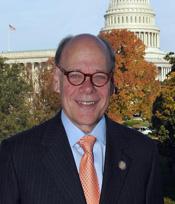
Madam Speaker, I want to thank the Speaker, and Mr. Lynch and Congressperson Blackburn for bringing this to the floor and for extending the time. I particularly want to thank Congresswoman Blackburn…
Madam Speaker, I want to thank the Speaker, and Mr. Lynch and Congressperson Blackburn for bringing this to the floor and for extending the time.
I particularly want to thank Congresswoman Blackburn for initiating this concept because John Wilder deserves recognition, and he deserves recognition by having this post office named for him. We name post offices quite frequently for people, people that deserve it. But John Wilder put Fayette County on the map. And when you put a county on the map, the post office in those small counties is the place where the county is. That's where mileage is measured from and people congregate and political gatherings occur and all that.
John Wilder was my friend, is my friend, and has had an unbelievable contribution to the people of Tennessee. I know it's been discussed how many years he served as Lieutenant Governor, longest-serving elected official in the free world of a legislative body, and how much he accomplished.
I served in the Tennessee State Senate with John Wilder for 24 years. I think one of his most significant moments came before I knew him, at a time when there was segregation in the South and there were efforts to penalize black farmers in Fayette County, an instance that John Wilder refers to it, and many people do who remember it, as Tent City.
And there were attempts to take advantage of the sharecroppers and to force them in certain ways, and John Wilder didn't go along with the establishment and he stood up for civil rights, and he stood with the black farmers in Fayette County, the African American tenant farmers, and refused to punish those black tenant farmers by evicting them or calling in their crop loans. That's a moment that John Wilder refers to when he speaks, and I believe, for those who are people of conscience, people in the civil rights movement throughout the Midsouth remember John Wilder for that principled stand. It was a stand by which men were known.
One of the other things that John Wilder did that is most significant is he instituted a system in Tennessee where our judges were taken out of the political spectrum to the extent possible and put into a selection system. The Wilder plan, which survived an attempt to eliminate it in this general assembly, has served Tennessee well, provides that appellate judges are selected, not elected but selected, and that that meets the provisions of our State constitution and allows for judges who are not well known by the public to be chosen by a merit process. They have to stand for approval elections at the public ballot, the general election, but they are chosen not initially in contests where people have to go raise money and campaign on name recognition, but are selected based on their qualifications as submitted through a panel and chosen by the Governor from a list of three and then stand for reelection. And I think all but one of those people have been approved by the electorate and maintained. So his stand for civil rights and his stand for meritocracy in the judiciary are the two things I think John Wilder has done that are most, most admirable of the many.
He also set up a Board of Education for the State to help K-12 and to put some common sense into the education processes in our State. No things are more important than civil rights, education, and a fair and impartial judiciary, and John Wilder stood for all of those.
He's been a lawyer and respected in the courtroom. He's a farmer. He's a banker. He has interests in just about any business that's important to west Tennessee, and anything that got done in west Tennessee, rural west, and Memphis included, John Wilder had a stamp on it.
There's a tower at the University of Memphis known as the John Wilder Tower because he was most instrumental in securing funds for the University of Memphis, which is the great State university in west Tennessee.
John Wilder helped me in my career, appointed me chairman of the State and Local Government Committee, for which I served, I think it was, 12 years in that body. And although there were times when he was not as enthusiastic about the Tennessee education lottery as I was, at the end, there were 22 votes on the board in the Tennessee Senate to provide, give the people the right to vote on a lottery provision that had been banned in our constitution since the early 1800s, and that vote, with those essential 22 votes, every one was necessary, Governor John Wilder was one, Congresswoman Marsha Blackburn was another, Congressman Lincoln Davis was another, led to students in Tennessee having the opportunity to go to school.
I thank John Wilder. I thank Congresswoman Blackburn for bringing this, and I'm proud to be a cosponsor of the John Wilder Post Office.
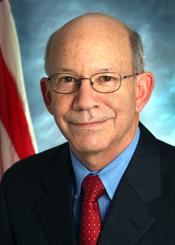
Mr. Speaker, I introduced my first bill to enhance screening of aviation in 1987. I saw the extraordinary deficiencies of the system back then, fought for two decades with the airline industry, and…
Mr. Speaker, I introduced my first bill to enhance screening of aviation in 1987. I saw the extraordinary deficiencies of the system back then, fought for two decades with the airline industry, and it took a horrible tragedy to transform the system. Even 2 years before that bill, Mr. Lipinski and I looked at the workforce--minimum wage, high turnover, some of them were illegal aliens--and said we ought to Federalize the screening workforce. We need a better system. Again, the airlines fought. Again, it took a tragedy.
Well, now, out of that we have developed the potential for a better system. This bill will move it along tremendously, both in aviation and surface security that we need to protect our Nation. This bill represents tremendous progress, tripling the funding for surface transportation and the oversight program that will require that airlines give meaningful training to flight crews--something that some of the airlines still aren't doing. They say it costs too much.
We will have new standards for foreign repair stations. We have a huge loophole. Most of our planes--or many of them--are getting maintenance overseas where there is no security. Just imagine what a terrorist operative could do to sabotage one of our planes over there. It helps with the last line of defense. Our Federal Flight Deck Officer program. And it makes other tremendous improvements.
I am a bit bemused by the gentleman from Indiana alleging that this bill somehow might allow some terrorist to somehow--who is known--not be on the No Fly List. We've got a whole bunch of really bad people in prison, not just down in Guantanamo but in our super-maximum security prisons here; some who attacked the Twin Towers before 9/11. The guy called the Unibomber. Guess what? They're not on the No Fly List because they aren't going anywhere. And if they did escape, they certainly wouldn't be flying under their own name. So we don't routinely put people who are in super maximum security prisons on a No Fly List.
But what the bill says if and when any one of those people who was detained at Guantanamo is in any way capable of getting out and getting on an airplane: If they're sent to a foreign nation for disposition and we don't know what that disposition would be, their name must go on the No Fly List. So his arguments about somehow we're undermining security or threatening the public are particularly puzzling to me. As one who has advocated long and hard for enhanced security, I'm a bit insulted by that.
Now, we need better technology for the Federal workforce to use at the point where they screen passengers. And one of those things is a walk-through device where you'll be able to see any concealed contraband on the person. That is a tremendous step forward. They've been using it in Heathrow for years now. It's an option at Heathrow.
You can either be very intrusively frisked at Heathrow-- and I have had the experience; it's not great, and it's much more intrusive than here--or you can walk through that screening device. More than 85 percent of the people choose to walk through the screening device. And as we've proposed it here, it has extraordinary privacy protections. The person monitoring the dumbed-down image of the person's body will be remote from the actual screening area, won't be able to see that person. It's dumbed down. It's not very revealing. And this is a step forward that will enhance our security.
There are ways now to smuggle devices onboard, and we've got to deal with them. And this is one of them.
We also have to deal better with liquids and explosives, a major threat. We need to get more equipment deployed--and this committee has pushed hard and there was money in the stimulus bill--and there will be more authorization here to get better equipment to our screeners so they can detect threats before they get on our planes.
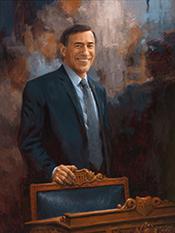
Madam Speaker, it is with great pleasure that I yield such time as she may consume to the gentlewoman from Tennessee, the author of the bill, Marsha Blackburn. Madam Speaker, at this time it is my…
Madam Speaker, it is with great pleasure that I yield such time as she may consume to the gentlewoman from Tennessee, the author of the bill, Marsha Blackburn.
Madam Speaker, at this time it is my pleasure to introduce yet another friend of the former Lieutenant Governor, Jimmy Duncan, a member of the committee and a fellow Tennesseean. I yield him such time as he may consume.
Madam Speaker, I yield myself such time as I may consume.
Madam Speaker, it is with great pleasure that I join with the other Members, primarily of the Tennessee delegation, who so aptly are wishing a happy birthday to the Governor today on his 88th birthday. And I do support strongly the naming of this post office after a public servant of such a unique character and longevity of service.
And now that we have dispensed with this portion, the suspension, the noncontroversial part, as is the tradition of this committee, sometimes we make a point of other things on this allocated time. And today I believe that it's appropriate to speak about the impending, before August, cap-and-tax scheme that has been proposed by the Speaker and is likely to come to a vote.
We on this side of the aisle are deeply concerned about a system which is designed to raise the cost of all utilities in America, with no offset, no offset, for the ultimate CO2 that is likely to be created by moving those jobs overseas. It's very clear that cap-and- tax, if not uniform and enforced, would simply move American jobs overseas. And the bill, which is being considered by the Global Warming, otherwise sometimes called the Junket Committee here, is in fact something that I oppose, and I oppose because it is very clear that we cannot, in this body, simply make a decision that we're going to stop producing a certain amount of CO2 in the United States. And this, I might mention, while Air Force One consumes an incredible amount of CO2 or produces an incredible amount of CO2 while flying empty over New York City.
The world and the air around us is not isolated. If we go forward with a cap-and-trade initiative that is not globally enforced by every single nation, we simply are pollution laundering. We're saying we're going to have cleaner cars here, we're going to have cleaner this here, and yet CO2 will be produced in other places. Already it is very clear that China, for every single product it produces, is more energy intensive than the same product produced in the United States. Literally, when you import the same product from China that would otherwise be made here, although it may be cheaper, it produces more CO2 and a great many other pollutants.
I've been to China. I've been to Hanoi. I have been to many of these countries, and what I generally see are leaves blackened from the burning of coal, with not even scrubbers, much less any sequestration.
So, Madam Speaker, as we do not disagree one bit on the naming of this post office, this side of the aisle has to make it very clear that we do object to the present form that is being proposed without any real inclusion of Republicans and with the American jobs at stake.
And with that, I would yield back the balance of my time.
Madam Speaker, on that I demand the yeas and nays.
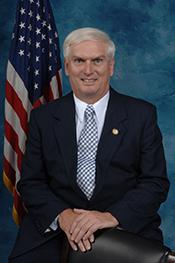
Madam Speaker, I thank the gentleman from California for yielding me this time, and I want to express my appreciation also to my colleague from Tennessee, Congresswoman Blackburn for bringing this…
Madam Speaker, I thank the gentleman from California for yielding me this time, and I want to express my appreciation also to my colleague from Tennessee, Congresswoman Blackburn for bringing this legislation to the floor, very appropriate legislation.
I have come here to express my great admiration and respect for Governor Wilder, in addition to the very kind things that my colleagues, the gentleman from the 9th District, Congressman Cohen, has said, and also what Congresswoman Blackburn has said.
The hills and mountains and valleys of east Tennessee are very, very different from the flat lands of west Tennessee, but we're all Tennesseeans. And even though my district in east Tennessee is very far from Governor Wilder's district in west Tennessee, still, I have known of his work for our State for many years now, and I have great respect for that.
I also have seen him in action each year for many, many years, hosting the annual legislative luncheon at the University of Tennessee. And Governor Wilder did so much for the University of Tennessee, his alma mater and my alma mater.
I read a few years ago that less than 20 percent of the people in the State legislative bodies around the country have served, that less than 20 percent have served more than 12 years. And so turnover in legislative bodies is at a higher rate or level than any time in our history, contrary to what some people think. So anyone who serves in office for such a long number of years as Governor Wilder has really accomplished something that very few people have done in our history. And you don't serve in office for as long as he did without helping thousands and thousands of people and doing many, many good things, both for individual citizens and for the State as a whole.
And so I just wanted to come here briefly. I did not have the privilege of serving in the State senate, as Congressman Cohen and Congresswoman Blackburn did. I never served with Governor Wilder, but I certainly met with him many times and saw him at different inaugurations and at various
events in Nashville and in my hometown of Knoxville. And so I appreciate Governor Wilder, and I admire and respect him, as I said earlier.
And I thank the gentlelady from Tennessee for bringing this legislation to the floor.
Mr. Speaker and my colleagues, I would like to just highlight today section 201 of H.R. 2200, the Transportation Security Administration Authorization Act of 2009, which requires the TSA to establish…
Mr. Speaker and my colleagues, I would like to just highlight today section 201 of H.R. 2200, the Transportation Security Administration Authorization Act of 2009, which requires the TSA to establish a system to verify that all cargo transported on passenger aircraft operated by an air carrier or by a foreign air carrier inbound to the United States be screened for explosives within 2 years of its enactment.
Notwithstanding the contrary rhetoric we have heard from the opponents of H.R. 2200, the committee is taking the responsible, necessary steps to implement the cargo screening requirement originally authorized in the 9/11 Act by requiring that all cargo transported between the United States airports on passenger planes be screened by August of 2010, by maintaining the commitment to screen inbound cargo, by responding in a timely manner to the needs of the TSA rather than taking a wait-and-see approach until 2010, and by dedicating the committee to receiving monthly briefings on the program so that the necessary oversight is exercised to ensure that TSA will meet the 2010 deadline and the deadline for inbound cargo created by this provision.
The previous administration's delay and confusion have disadvantaged TSA and have necessitated this action.
I am committed to achieving 100 percent screening of all cargo transported on passenger planes. This is arguably the largest screening vulnerability given that all passengers, their carry-ons and checked baggage currently get screened.
I would like to thank Chairman Thompson and Ranking Member King for their vigilance and leadership, and I would like to thank subcommittee Chairwoman Sheila Jackson-Lee and the ranking member for their diligence and leadership on this authorization.
As a member of the New York delegation, as one who serves on this committee and as one who holds very vivid memories of the most devastating airliner-based attack on U.S. soil, I kindly ask my colleagues to support the rule of H.R. 2200 as well as the underlying bill.
Thank you, Mr. Perlmutter. I want to thank Chairman Thompson for his leadership. I am reminded, friends, that there is a difference between leadership and management. A manager wants to do things…
Thank you, Mr. Perlmutter.
I want to thank Chairman Thompson for his leadership. I am reminded, friends, that there is a difference between leadership and management. A manager wants to do things right, and a leader wants to do the right thing.
Chairman Thompson has not only wanted to get this right procedurally; he has wanted to make sure that we do the right thing. He has proceeded on the premise that there is safety in the counsel of the multitudes. Everybody who wanted to be heard was heard on this bill. Labor was heard. Industry was heard. Republicans were heard. Democrats were heard. Everybody who wanted to be heard was heard. I know of no one who wanted to be heard at the subcommittee level more than the Honorable Sheila Jackson-Lee, who was not heard. There was nobody on the committee who had an issue that was not embraced and heard. I was there. What I'm about to say is not something that I know from secondhand, or secondarily. I don't know it tertiarily and I don't know it quarternarily. I know this from being there in person.
This issue about the prisoners at Guantanamo Bay was aired adequately, sufficiently, totally, completely, and absolutely. The man who spoke, who is my friend and who is a man I respect greatly, had his issue heard, and he did not vote against it. He did not vote against it. He was the only abstention. My brothers and sisters on the Republican side supported this as well. I say ``brothers and sisters'' because I believe there is just one race--the human race--and we're all related. We're probably cousins if we're not brothers and sisters. But my point is this:
This was totally, completely and absolutely thoroughly aired. Everybody had a say. I am going to support the rule because I support the notion that there is safety in the counsel of the multitudes and that the multitudes were heard.
Show 4 more
Madam Speaker, I rise in support of this resolution, which honors a long-time leader in our state, whose career has been distinguished and historic. John Shelton Wilder was first elected to the…
Madam Speaker, I rise in support of this resolution, which honors a long-time leader in our state, whose career has been distinguished and historic.
John Shelton Wilder was first elected to the Tennessee State Senate in 1958, and, in 1971, was chosen by his Senate colleagues to serve as Senate Speaker and Lt. Governor. He served in these capacities until 2006, making him the longest-serving leader of a state legislative body anywhere in this country. Because of his trademark bipartisanship and his insistence in wanting ``the Senate to be the Senate,'' the Tennessee State Senate accomplished many things under Lt. Governor Wilder's leadership.
I had the honor of serving alongside Lt. Governor Wilder in the General Assembly when I served in the Tennessee House of Representatives. During my time in this body, I have been honored to represent some of the same counties that Lt. Governor Wilder represented in the Tennessee Senate. I know firsthand how dedicated he has always been to serving the public and helping families in West Tennessee and across our state.
Madam Speaker, I hope you and our colleagues will join us in supporting this resolution to honor Lt. Gov. John S. Wilder--known to many of us in Tennessee simply as ``Governor Wilder''--for his long public service.
Mr. Speaker, I am proud to speak in support of this rule and in support of the underlying bill, which has been the product of lengthy, bipartisan negotiations. It contains contributions from…
Mr. Speaker, I am proud to speak in support of this rule and in support of the underlying bill, which has been the product of lengthy, bipartisan negotiations. It contains contributions from stakeholders throughout the private sector and government.
Before I continue, I want to take a moment to recognize the hard work and dedication of the TSA leadership and of their employees who work day in and day out to help keep our country safe. Thank you.
This bill is important because it allows us to take a look at TSA and to
address any problems that have arisen over the past 8 years. One of the concerns this bill addresses is the matter of whole-body imaging, or
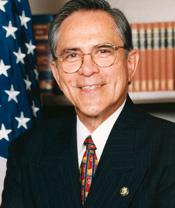
Mr. Speaker, on rollcall No. 301, had I been present, I would have voted ``yea.''
Mr. Speaker, on rollcall No. 301, had I been present, I would have voted ``yea.''
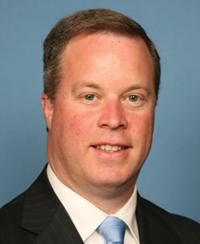
Mr. Speaker, on rollcall No. 302, had I been present, I would have voted ``yea.''
Mr. Speaker, on rollcall No. 302, had I been present, I would have voted ``yea.''
Bill Text
6 versions available
        [Congressional Bills 111th Congress]
[From the U.S. Government Publishing Office]
[H.R. 1817 Enrolled Bill (ENR)]

H.R.1817

One Hundred Eleventh Congress

of the

United States of America

AT THE SECOND SESSION

Begun and held at the City of Washington on Tuesday,
the fifth day of January, two thousand and ten

An Act

To designate the facility of the United States Postal Service located at
116 North West Street in Somerville, Tennessee, as the ``John S. Wilder
Post Office Building''.

Be it enacted by the Senate and House of Representatives of the
United States of America in Congress assembled,
SECTION 1. JOHN S. WILDER POST OFFICE BUILDING.
(a) Designation.--The facility of the United States Postal Service
located at 116 North West Street in Somerville, Tennessee, shall be
known and designated as the ``John S. Wilder Post Office Building''.
(b) References.--Any reference in a law, map, regulation, document,
paper, or other record of the United States to the facility referred to
in subsection (a) shall be deemed to be a reference to the ``John S.
Wilder Post Office Building''.

Speaker of the House of Representatives.

Vice President of the United States and
President of the Senate.