




I
111th CONGRESS
1st Session
H. R. 2935
IN THE HOUSE OF REPRESENTATIVES
June 18, 2009
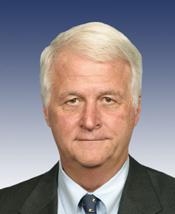
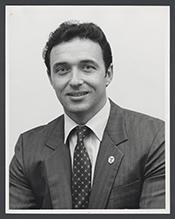
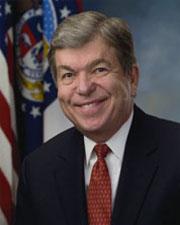
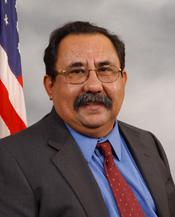
Mr. Delahunt (for himself, Mr. Blunt, Mr. Farr, Mr. Conyers, Mr. Barton of Texas, Mr. Ross, Mr. Smith of Texas, Mrs. Capps, Ms. Berkley, Ms. Castor of Florida, Mr. Bonner, Mr. Radanovich, Ms. Schakowsky, Mrs. Bono Mack, Mr. Coble, Mr. Sessions, Mr. Van Hollen, Mr. Luetkemeyer, Mr. Rooney, and Ms. Titus) introduced the following bill; which was referred to the Committee on Energy and Commerce, and in addition to the Committees on the Judiciary and Homeland Security, for a period to be subsequently determined by the Speaker, in each case for consideration of such provisions as fall within the jurisdiction of the committee concerned
A BILL
To establish a nonprofit corporation to communicate United States entry policies and otherwise promote tourist, business, and scholarly travel to the United States.
Short title; table of contents
Short title
This Act may be cited as the Travel Promotion Act of 2009
.
Table of contents
The table of contents for this Act is as follows:
Sec. 1. Short title; table of contents.
Sec. 2. The Corporation for Travel Promotion.
Sec. 3. Accountability measures.
Sec. 4. Matching public and private funding.
Sec. 5. Travel Promotion Fund fees.
Sec. 6. Investment of Funds.
Sec. 7. Prohibition on use of funds.
Sec. 8. Assessment authority.
Sec. 9. Amendments to the International Travel Act of 1961.
Sec. 10. Definitions.
Sec. 11. GAO study.
The Corporation for Travel Promotion
Establishment
The Corporation for Travel Promotion is established as a nonprofit corporation. The Corporation shall not be an agency or establishment of the United States Government. The Corporation shall be subject to the provisions of the District of Columbia Nonprofit Corporation Act (sec. 29–301.01 et seq., D.C. Official Code), to the extent that such provisions are consistent with this section, and shall have the powers conferred upon a nonprofit corporation by that Act to carry out its purposes and activities.
Board of Directors
In general
The Corporation shall have a board of directors of 11 members, appointed by the Secretary of Commerce, but not before consultation with the Secretaries of Homeland Security, State, and Education, as appropriate, each of whom is a United States citizen, and of whom—
one shall have appropriate expertise and experience in the hotel accommodations sector;
one shall have appropriate expertise and experience in the travel distribution sector;
one shall have appropriate expertise and experience in the restaurant sector;
one shall have appropriate expertise and experience in the retail sector, or small business sector;
one shall have appropriate expertise and experience in the attractions sector;
one shall have appropriate expertise and experience in the passenger air sector;
one shall have appropriate expertise and experience in the car rental sector;
one shall have appropriate expertise and experience as an official of a city convention and visitor’s bureau;
one shall have appropriate expertise and experience as an official of a State Tourism Office;
one shall have appropriate expertise and experience in immigration law and policy, including visa requirements and United States entry procedures; and
one shall have appropriate expertise and experience in the cruise line sector.
Incorporation
The members of the initial board of directors shall serve as incorporators and shall take whatever actions are necessary to establish the Corporation under the District of Columbia Nonprofit Corporation Act (sec. 29–301.01 et seq.).
Term of office
The term of office of each member of the board appointed by the Secretary shall be 3 years, except that, of the members first appointed—
3 shall be appointed for terms of 1 year;
4 shall be appointed for terms of 2 years; and
4 shall be appointed for terms of 3 years.
Vacancies
Any vacancy in the board shall not affect its power, but shall be filled in the manner required by this section. Any member whose term has expired may serve until the member’s successor has taken office, or until the end of the calendar year in which the member’s term has expired, whichever is earlier. Any member appointed to fill a vacancy occurring prior to the expiration of the term for which that member’s predecessor was appointed shall be appointed for the remainder of the predecessor’s term. No member of the board shall be eligible to serve more than 2 consecutive full terms.
Election of chairman and vice chairman
Members of the board shall annually elect one of their members to be chairman and elect 1 or more of their members as a vice chairman or vice chairmen.
Status as federal employees
Notwithstanding any provision of law to the contrary, no member of the board may be considered to be a Federal employee of the United States by virtue of his or her service as a member of the board.
Compensation; expenses
No member of the board shall receive any compensation from the Federal Government or the Corporation by virtue of his or her service as a member of the board. Each member of the board shall be paid actual travel expenses and per diem in lieu of subsistence expenses when away from his or her usual place of residence, in accordance with section 5703 of title 5, United States Code.
Officers and Employees
In general
The Corporation shall have an Executive Director, and such other officers as may be named and appointed by the board for terms and at rates of compensation fixed by the board. No individual other than a citizen of the United States may be an officer of the Corporation. The corporation may hire and fix the compensation of such employees as may be necessary to carry out its purposes. No officer or employee of the Corporation may receive any salary or other compensation (except for compensation for services on boards of directors of other organizations that do not receive funds from the Corporation, on committees of such boards, and in similar activities for such organizations) from any sources other than the Corporation for services rendered during the period of his or her employment by the Corporation. Service by any officer on boards of directors of other organizations, on committees of such boards, and in similar activities for such organizations shall be subject to annual advance approval by the board and subject to the provisions of the Corporation’s Statement of Ethical Conduct. All officers and employees shall serve at the pleasure of the board.
Nonpolitical nature of appointment
No political test or qualification shall be used in selecting, appointing, promoting, or taking other personnel actions with respect to officers, agents, or employees of the Corporation.
Nonprofit and Nonpolitical Nature of Corporation
Stock
The Corporation shall have no power to issue any shares of stock, or to declare or pay any dividends.
Profit
No part of the income or assets of the Corporation shall inure to the benefit of any director, officer, employee, or any other individual except as salary or reasonable compensation for services.
Politics
The Corporation may not contribute to or otherwise support any political party or candidate for elective public office.
Sense of Congress regarding lobbying activities
It is the sense of Congress that the Corporation established under this Act should not engage in any lobbying activities with any employee or branch of the Federal Government in favor of or in opposition to any political issue.
Duties and Powers
In general
The Corporation shall develop and execute a plan to—
provide useful information to foreign tourists, business people, students, scholars, scientists and others interested in traveling to the United States, including the distribution of material provided by the Federal Government concerning entry requirements, required documentation, fees, processes, and information concerning declared public health emergencies to prospective travelers, travel agents, tour operators, meeting planners, foreign governments, travel media and other international stakeholders;
identify and address perceptions in other countries regarding United States entry policies that tend to limit attempts to travel to the United States;
maximize the economic and diplomatic benefits of travel to the United States by promoting the United States of America to world travelers through the use of, but not limited to, all forms of advertising, outreach to trade shows, and other appropriate promotional activities; and
identify opportunities and strategies to promote tourism to rural and urban areas equally.
Specific powers
In order to carry out the purposes of this section, the Corporation may—
obtain grants from and make contracts with individuals and private companies, State, and Federal agencies, organizations, and institutions;
hire or accept the voluntary services of consultants, experts, advisory boards, and panels to aid the Corporation in carrying out its purposes; and
take such other actions as may be necessary to accomplish the purposes set forth in this section.
Open Meetings
Meetings of the board of directors of the Corporation, including any committee of the board, shall be open to the public. The board may, by majority vote, close any such meeting only for the time necessary to preserve the confidentiality of commercial or financial information that is privileged or confidential, to discuss personnel matters, or to discuss legal matters affecting the Corporation, including pending or potential litigation.
Major campaigns
The board may not authorize the Corporation to obligate or expend more than $25,000,000 on any advertising campaign, promotion, or related effort unless—
the obligation or expenditure is approved by an affirmative vote of at least 2/3 of the members of the board present at the meeting;
at least 6 members of the board are present at the meeting at which it is approved; and
each member of the board has been given at least 3 days advance notice of the meeting at which the vote is to be taken and the matters to be voted upon at that meeting.
Fiscal accountability
Fiscal year
The Corporation shall establish as its fiscal year the 12-month period beginning on October 1.
Budget
The Corporation shall adopt a budget for each fiscal year.
Annual audits
The Corporation shall engage an independent accounting firm to conduct an annual financial audit of the Corporation’s operations and shall publish the results of the audit.
Accountability measures
Objectives
The Board shall establish annual objectives for the Corporation for each fiscal year subject to approval by the Secretary, in consultation with the Secretary of Homeland Security and the Secretary of State. The Corporation shall establish a marketing plan for each fiscal year not less than 60 days before the beginning of that year and provide a copy of the plan, and any revisions thereof, to the Secretary.
Budget
The board shall transmit a copy of the Corporation’s budget for the forthcoming fiscal year to the Secretary not less than 60 days before the beginning of each fiscal year, together with an explanation of any expenditure provided for by the budget in excess of $5,000,000 for the fiscal year. The Corporation shall make a copy of the budget and the explanation available to the public and shall provide public access to the budget and explanation on the Corporation’s website.
Annual Report to Congress
The Corporation shall submit an annual report for the preceding fiscal year to the Secretary of Commerce and the Secretary of Homeland Security for transmittal to Congress on or before the 15th day of May of each year. The report shall include—
a comprehensive and detailed report of the Corporation’s operations, activities, financial condition, and accomplishments under this Act;
a comprehensive and detailed inventory of amounts obligated or expended by the Corporation during the preceding fiscal year;
a detailed description of each in-kind contribution, its fair market value, the individual or organization responsible for contributing, its specific use, and a justification for its use within the context of the Corporation's mission;
an objective and quantifiable measurement of its progress, on an objective-by-objective basis, in meeting the objectives established by the board;
an explanation of the reason for any failure to achieve an objective established by the board, and any revisions or alterations to the Corporation’s objectives under subsection (a);
a comprehensive and detailed report of the Corporation’s operations and activities to promote tourism in rural and urban areas; and
such recommendations as the Corporation deems appropriate.
Matching public and private funding
Establishment of Travel Promotion Fund
There is hereby established in the Treasury
a fund which shall be known as the Travel Promotion Fund
.
Funding
First year
For the period beginning on October 1, 2009, and ending on September 30, 2010, from amounts deposited in the general fund of the Treasury from fees under section 217(h)(3)(B)(i) of the Immigration and Nationality Act (8 U.S.C. 1187(h)(3)(B)(i)), the Secretary of the Treasury shall make available not more than $100,000,000 to the Corporation. The Secretary of the Treasury shall make at least quarterly transfers to the Corporation to cover its initial expenses and carry out its functions under this Act.
Subsequent years
For each of fiscal years 2011 through 2014, from amounts deposited in the general fund of the Treasury from fees under section 5, the Secretary of the Treasury shall transfer not more than $100,000,000 to the Fund, which shall be made available to the Corporation, subject to subsections (c), (d), and (e), to carry out its functions under this Act. Transfers shall be made by the Secretary of the Treasury at least quarterly on the basis of estimates by the Secretary of the Treasury, determined in consultation with the Board, of contributions made to the Corporation by non-Federal sources, and proper adjustments shall be made in amounts subsequently transferred to the extent prior estimates were in excess or less than actual contributions from non-Federal sources.
Matching Requirement
In general
The Secretary of the Treasury shall make available to the Corporation at least quarterly from amounts available in the Travel Promotion Fund—
for fiscal year 2011, twice the amount that will be collected from non-Federal sources by the Corporation pursuant to section 4(b)(2) of this Act and not to exceed $100,000,000; and
for subsequent fiscal years, an amount equal to the amount that will be collected from non-Federal sources by the Corporation pursuant to section 4(b)(2) of this Act and not to exceed $100,000,000.
Goods and services
For the purpose of determining the amount of matching funds, other than money, available to the Corporation—
the fair market value, as determined by the Corporation, of goods and services (including advertising) contributed to the Corporation for use under this Act may be included in the determination; but
the fair market value of such goods and services may not account for more than 80 percent of the matching requirement for the Corporation in any fiscal year.
Right of refusal
The Corporation may decline to accept any contribution in kind that it determines to be inappropriate, not useful, or commercially worthless.
Grant offset
For a given fiscal year, the Secretary of the Treasury shall reduce the total amount of funding to be transferred to the Corporation from the Travel Promotion Fund by the amount of Federal grants received by the Corporation pursuant to section 2(e)(2)(A) to be used during that fiscal year.
Limitation
The Corporation shall not expend funds or obligate to expend funds that will exceed total amounts received by the Corporation for a given fiscal year.
Carryforward
Federal funds
Amounts transferred to the Fund under subsection (b)(2) shall remain available until expended.
Matching funds
Any amount received by the Corporation from non-Federal sources in fiscal year 2010, 2011, 2012, 2013, or 2014 that cannot be used to meet the matching requirement under subsection (c)(1) for the fiscal year in which such funds were collected may be carried forward and treated as having been received in the succeeding fiscal year for purposes of meeting the matching requirement of subsection (c)(1) in such succeeding fiscal year.
Travel Promotion Fund fees
Section 217(h)(3)(B) of the Immigration and Nationality Act (8 U.S.C. 1187(h)(3)(B)) is amended to read as follows:
Fees
In General
No later than September 30, 2009, the Secretary of Homeland Security shall establish a fee for the use of the System and begin assessment and collections of that fee. The initial fee shall be the sum of—
$10 per travel authorization; and
an amount that will ensure recovery of the full costs of providing and administering the System, as determined by the Secretary of Homeland Security.
Disposition of Amounts Collected
Amounts collected under clause (i)(I) shall be credited to the Travel Promotion Fund established by section 4 of the Travel Promotion Act of 2009. Amounts collected under clause (i)(II) shall be transferred to the general fund of the Treasury and made available to pay the costs incurred to administer the System.
Report
The Secretary of Homeland Security shall submit a report to Congress if the fee authorized by clause (i)(I) is not collected as authorized. The report shall include a plan for collecting the fee in the most expeditious manner.
Sunset of travel promotion fund fee
The Secretary may not collect the fee authorized by clause (i)(I) for fiscal years beginning after September 30, 2014, unless Congress has authorized the Secretary to continue to collect the fee authorized by clause (i)(I).
.
Investment of Funds
Pending disbursement pursuant to a program, plan, or project, the Corporation may invest funds received by the Corporation only in obligations of the United States or any agency thereof, in general obligations of any State or any political subdivision thereof, in any interest-bearing account or certificate of deposit of a bank that is a member of the Federal Reserve System, or in obligations fully guaranteed as to principal and interest by the United States. The Secretary of the Treasury shall reduce the total amount of funding for a given fiscal year to be transferred from the Travel Promotion Fund to the Corporation by the amount of interest earned by the Corporation as a result of its investments pursuant to this section for the preceding fiscal year.
Prohibition on use of funds
No funds raised by the Treasury Department’s Travel Promotion Fund or the Corporation for Travel Promotion may be used to directly promote or advertise a specific corporation.
Assessment authority
In general
Except as otherwise provided in this section, the Corporation may impose an annual assessment on United States members of the travel and tourism industry. The Corporation shall determine—
the industry segments that will be included in the initial assessment referendum;
the target assessment level for the initial referendum;
the percent of funds to be levied against each industry category and segment, based, to the extent possible, on quantifiable industry data, and bearing an appropriate relationship to the benefit derived from travel and tourism by those industry segments; and
the assessment methodology and rate of assessment within each industry segment, that may include, but is not limited to, a percentage of gross revenue or a per transaction charge.
Initial assessment limited
The Corporation may establish the initial assessment after the date of enactment of the Travel and Tourism Promotion Act at no greater, in the aggregate, than $20,000,000.
Referenda
In general
The Corporation may not impose an annual assessment unless—
the Corporation submits the proposed annual assessment to members of the industry in a referendum;
the assessment is approved by a majority of those voting in the referendum; and
the Corporation determines the results of the referendum on the basis of weighted voting apportioned according to the anticipated financial contribution made by each voting entity.
Procedural requirements
In conducting a referendum under this subsection, the Corporation shall—
provide written or electronic notice not less than 60 days before the date of the referendum; and
describe the proposed assessment or increase and explain the reasons for the referendum in the notice.
Collection
In general
The Corporation shall establish a means of collecting the assessment that it finds to be efficient and effective. The Corporation may establish a late payment charge and rate of interest to be imposed on any person who fails to remit or pay to the Corporation any amount assessed by the Corporation under this Act.
Enforcement
The Corporation may bring suit in Federal court to compel compliance with an assessment levied by the Corporation under this Act.
Investment of funds
Pending disbursement pursuant to a program, plan, or project, the Corporation may invest funds collected through assessments, and any other funds received by the Corporation, only in obligations of the United States or any agency thereof, in general obligations of any State or any political subdivision thereof, in any interest-bearing account or certificate of deposit of a bank that is a member of the Federal Reserve System, or in obligations fully guaranteed as to principal and interest by the United States.
Amendments to the International Travel Act of 1961
Powers and duties of Secretary of Commerce
Section 201 of the International Travel Act of 1961 (22 U.S.C. 2122) is amended—
in the first sentence of the matter preceding paragraph (1)—
by striking
and by the United States National Tourism Organization Act of
1996
; and
by striking
United States National Tourism Organization
and inserting
Corporation for Travel Promotion (established by section 3 of the Travel
Promotion Act of 2008)
;
in paragraph (4), by striking United
States National Tourism Organization
and inserting Corporation
for Travel Promotion
; and
by adding at the end the following:
Such plan may not include a comprehensive international advertising campaign relating to critical tourism functions.
.
Tourism Policy Council
Membership
Subsection (b) of section 301 of the International Travel Act of 1961 (22 U.S.C. 2124) is amended—
by striking paragraphs (8) through (10);
by redesignating paragraph (11) as paragraph (13);
by inserting after paragraph (7) the following new paragraphs:
The Secretary of Homeland Security.
The Commissioner of U.S. Customs and Border Protection of the Department of Homeland Security.
The Assistant Secretary of U.S. Customs and Immigration Enforcement of the Department of Homeland Security.
The Secretary of Education.
; and
in paragraph (13)
(as redesignated by subparagraph (B) of this paragraph), by inserting ,
in consultation with other members of the Council
at the end before the
period.
Meetings
Subsection (d) of such section is amended to read as follows:
The Council shall meet not less than 2 times a year. For the purposes of conducting business, each member of the Council may appoint a designee to represent such member during one or more meetings of the Council.
.
Involvement of Federal agencies and departments
Subsection (e) of such section is amended by adding at the end the following new paragraph:
Members of the Council shall provide the Corporation for Travel Promotion with timely information regarding documentation and procedures required for admission to the United States and regarding strategies planned by any Federal department or agency to promote travel to the United States for tourism, business, study, scholarship, scientific exchange, or other purposes, so that the Corporation for Travel Promotion may better conduct its communications and promotion activities.
.
Annual report
Subsection (g)(3) of
such section is amended by striking United States National Tourism
Organization
and inserting Corporation for Travel
Promotion
.
Applicability of Federal Advisory Committee Act
Subsection (h) of such section is amended
by striking President of the United States National Tourism
Organization
and inserting President of the Corporation for
Travel Promotion
.
Repeal of authorities relating to the United States Travel and Tourism Promotion Advisory Board
Section 210 of the Department of Commerce and Related Agencies Appropriations Act, 2003 (contained in title II of division B of Public Law 108–7; 117 Stat. 78–79; 22 U.S.C. 2122 note) is amended—
by striking subsections (b) through (d); and
by redesignating subsection (e) as subsection (b).
Definitions
In this Act, the following definitions apply:
Board
The term Board means the board of directors of the Corporation.
Corporation
The term Corporation means the Corporation for Travel Promotion established by section 2.
Fund
The term Fund means the Travel Promotion Fund established by section 4.
Secretary
Except as otherwise expressly provided, the term Secretary means the Secretary of Commerce.
GAO study
In General
Not later than 90 days after the date of enactment of this Act, the Government Accountability Office shall initiate a study to assess barriers to entry into the United States by foreign travelers. The GAO shall consult with the Department of Homeland Security, including U.S. Immigration and Customs Enforcement and Customs and Border Protection, the Department of Commerce, and the Department of the Treasury, as necessary.
Report
Not later than 1 year after the date of enactment of this Act, the GAO shall report the findings to the appropriate Congressional committees. The report shall include—
the GAO’s findings on specific barriers to entry into the United States by foreign travelers; and
recommendations for initiatives that may reduce those barriers.