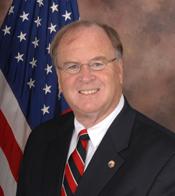
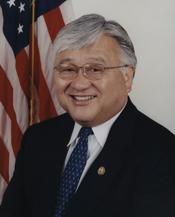
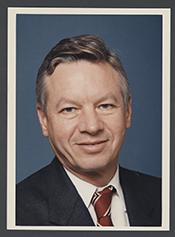
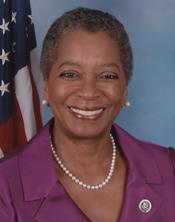
Mr. Speaker, I rise on behalf of my colleagues in Congress who are return Peace Corps volunteers--Congressman Petri, Congressman Honda, Congressman Driehaus, and Congressman Garamendi. Fifty years…
Mr. Speaker, I rise on behalf of my colleagues in Congress who are return Peace Corps volunteers--Congressman Petri, Congressman Honda, Congressman Driehaus, and Congressman Garamendi.
Fifty years ago this October in a predawn address, then-Presidential candidate, John F. Kennedy, challenged students at the University of Michigan to give 2 years of their lives to improve America's image by serving abroad.
This impromptu exhortation ultimately set the stage for the Peace Corps, redefined U.S. global engagement, and elevated American moral standing at the height of the Cold War.
The idea ignited the public imagination and the executive branch initiated the program rapidly. Losing no time, President Kennedy ordered Sargent Shriver to do a feasibility study. Sargent Shriver said at the time, ``We received more letters from people offering to work in or to volunteer for the Peace Corps, which did not then exist, than for all other existing Federal agencies.''
I was one of those early recruits who found in the Peace Corps an avenue for national service. And just as 8,000 current volunteers are doing today around the world, I did many years ago in Medellin, Colombia, South America.
As a member of the Peace Corps, you wake up in a distant country, without any modern amenities, and start working with your neighbors to prioritize community projects. You labor shoulder-to-shoulder to make those projects a reality. And in the process, you build hope and understanding and demonstrate American generosity.
The understanding is a two-way street. When I was in Colombia, I learned as much as I taught. I took away as much as I gave.
When I was in Colombia, my mother passed away from cancer. My father brought my two sisters to visit me to have a family reunion. My youngest sister, Nancy, 17-years-old, a junior in high school, was killed in an accident. She was thrown from a horse. Her death was avoidable. Better health care, a better hospital could have saved her.
I was angry at Colombia, at sort of Third World poverty, at my community, and at myself for having brought my family to visit me.
I stuck with it, though, and over time with reflection, I came to terms with my anger. It was not Colombia. It was not Colombian doctors who flew hundreds of miles in the middle of the night to try to save her. It was not my community in Colombia. When the landing strip was too dark for a plane to land, members of the community put out burning lanterns to guide the plane in. They consoled me. They took care of our family.
It was poverty, the grinding poverty that still exists today, that exposes women and men, young and old, to enormous vulnerabilities.
I might add that those vulnerabilities aren't protected by an American passport or an American ability to find monetary solutions. If you're stuck in an underserved, poverty part of the world with a crisis in front of you, you have to deal with the tools at hand.
I committed then at that moment, and throughout my life, to work to end the culture of poverty. My life was changed. It was the Peace Corps that changed me.
My story is one of a quarter of a million volunteer stories and millions of more Peace Corps stories if you talk to the communities that receive the volunteers.
Peace Corps was then, and continues to be today, a story of the goodness of the United States of America. Next year, Peace Corps will celebrate its 50th anniversary.
In anticipation of this momentous occasion, the 111th Congress is poised to take action on two very important measures to honor the Peace Corps. First, the House will vote today to celebrate a half century of the Peace Corps with a commemorative work in the District of Columbia. The commemorative work authorized by this bill is compliant with both the letter and the intent of the Commemorative Works Act. It costs zero taxpayer dollars, not a penny.
This bill provides a space where the creation of the Peace Corps will find its place in American history. It will be a modest commemorative work, a place to contemplate the spirit of hope that gave rise to the idea of sending a cadre of Americans into the world to serve their country by serving the poorest and most vulnerable in the world. It commemorates the creation of a unique form of public service that seeks peace through international service, people-to-people diplomacy, and cross-cultural understanding.
I appreciate the work of Chairman Rahall and Chairman Grijalva and their staffs; the minority staff and Mr. Doc Hastings, and I particularly would like to recognize the staffs of both of the majority and minority committee members who helped bring this bill to the floor.
Later this year we'll have another opportunity to show our appreciation for the Peace Corps when we vote for the House funding for Peace Corps in the FY11 State, Foreign Operations Appropriations Act. The House has met the President's ask of $446 million, the subcommittee marked it at that, which can renew the promise of the Peace Corps in anticipation of its 50th anniversary.
President Obama has directed the Peace Corps to aggressively reform programming and training and open up and expand missions around the world, specifically in North Africa, Central Asia, and the Middle East. Just as President Kennedy did 50 years ago, President Obama inspired a Nation with his call to service. He has redefined the way the United States engages with the world, emphasizing direct communication and people-to-people diplomacy. Peace Corps represents those ideals at a time when diplomacy is a global imperative.
Please join me in voting for H.R. 4195 to commemorate the 50th anniversary of the Peace Corps and allow a commemorative mark to be done at no cost to the taxpayers.