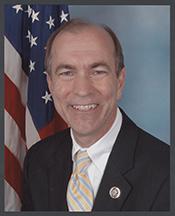
Mr. Speaker, I yield myself such time as I may consume. (Mr. CAMP asked and was given permission to revise and extend his remarks.) Mr. Speaker, this bill contains many positive features but also…
Mr. Speaker, I yield myself such time as I may consume.
(Mr. CAMP asked and was given permission to revise and extend his remarks.)
Mr. Speaker, this bill contains many positive features but also some negative ones, and thus, I reluctantly plan to oppose it.
Like my friend on the other side of the aisle, I'm pleased to see that it does include some tax relief, albeit limited, for small businesses, including provisions championed by both Republicans and Democrats. I'm also pleased, unlike earlier versions of this legislation, the most objectionable revenue raiser, a provision that could provoke retaliation by other countries and that even the Obama administration officials warned would violate our international treaty obligations, has been dropped from this bill. But despite those positive features, I will be voting against this bill for several important reasons.
First, while the tax relief in here is welcome, it's not enough and won't actually help small businesses create the jobs we need to reduce our stubbornly high unemployment rate. While I would certainly support further lowering taxes on small businesses, the last thing they need is higher taxes, which is exactly what they are facing from this Congress.
Just last month, the majority pushed through an $11.2 billion tax hike on certain small businesses that would subject their profits to employment taxes, and at the end of 2010, all individual income tax rates, as well as taxes on dividends and capital gains, are scheduled to rise dramatically. Because so many small businesses pay taxes at the individual level, the fear of these increases is chilling expansion and hiring and, therefore, job creation. So the majority's record on tax policy affecting small businesses is spotty at best.
Second, this bill, like others before it, provides a stark reminder of the majority's view of the Ways and Means Committee as an ATM machine to fund other spending. Here, the majority is seeking to generate $7.1 billion in additional tax revenue but would only provide $3.6 billion in tax relief over the next decade. The rest of the money raised will be used to offset the cost of another bill, H.R. 4297, which was reported by the Financial Services Committee, that creates another TARP-like program. Some might call it TARP III.
While I'm glad the majority found offsets that are less economically damaging than some that have previously passed the House, the practice of using permanent changes in tax receipts to fund temporary spending is disappointing and portends further and larger tax hikes in the future, perhaps as soon as the end of this month when the majority hopes to complete action on a financial system reform bill.
Mr. Speaker, especially with the unemployment rate continuing to hover near 10 percent, our small businesses, the engine of economic growth and job creation, need help, but this bill isn't enough, and it takes us further down the dangerous road of higher spending our Nation cannot afford.
I reserve the balance of my time.
Mr. Speaker, I yield myself such time as I may consume.
I just want to respond to my friend from Michigan, the chairman, and say it's really about the reality of this legislation, not just the rhetoric. And while excluding capital gains on the sale of small business stock is a great provision, the problem is this is drafted so narrowly that the small businesses have to be C corporations. And as we know, only a fraction of small businesses will be considered qualified small businesses to take advantage of this provision. This is the largest piece of this so-called ``small business relief'' bill. And while it's great to talk about, the reality of it is going to be very limited.
As I said in my statement, there are some positive things in this bill. Obviously, closing the Black Liquor 3 loophole is something I support, but on balance, because the bill isn't really going to do anything to create jobs, A, and, B, because there are, again, going to be temporary provisions that are paid for with permanent tax increases, and, third, the revenue raiser on the estate tax area on the Grantor Retained Annuity Trust is really one that ought to be reserved for when we have to deal with estate tax reform. As you know, the law has expired. There are bills moving through the Congress to reinstate the estate tax. This really is appropriate to that area.
I think it is absolutely unconscionable that we've gone all this time with no estate tax, with everyone understanding that the majority is going to create a retroactive death tax bill that's going to try to come back through the beginning of the year. This is where that provision should be.
So, again, I reluctantly oppose this bill. I think there are some good things
in it; unfortunately, they don't go far enough.
I now yield 2 minutes to the distinguished member of the Ways and Means Committee, the gentleman from Illinois (Mr. Roskam).
Mr. Speaker, I yield myself such time as I may consume.
This bill is going to spend taxpayers' money. I believe we have an obligation, if we're going to spend taxpayers' money, that we do it effectively. On Friday night, the Treasury released a report that in 2015 our debt will exceed the gross domestic product of this country. We've had expert testimony before the Debt Commission that said when your debt gets to 90 percent of GDP, you lose 1 percent off economic growth, which translates into 1 million jobs.
This bill, because of how narrowly focused it is, how narrowly drafted it is, virtually no small businesses will take advantage of the exclusion of capital gains because they have to be C corporations. And if there is one trend we've seen, it's that businesses are being organized as passed-through entities now. That's how America, particularly small business America, is being organized. So while this is great rhetoric, this bill isn't going to be effective in doing anything.
And let me just say, I heard the former chairman say that Republicans just say no. On the health care bill, we had a viable alternative. In fact, I will say the vote on the health care bill was bipartisan opposition, only majority partisanship support for that legislation. Whether it's been stimulus or health care or energy, we have had viable alternatives on the floor that we have brought forward. On this particular bill, I think that better work could have been done, more effective work could have been done. And, frankly, in this era of the highest debt ever this country has seen, I think we have an obligation that if we're going to spend taxpayers' dollars, it's done in an effective way and a way that gets results, and this bill falls short.
I reserve the balance of my time.
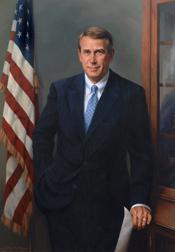
At this time, I yield the customary 1 minute to the distinguished minority leader, the gentleman from Ohio (Mr. Boehner).
Mr. Speaker, I reserve the balance of my time.
Mr. Speaker, I continue to reserve the balance of my time.
I yield myself such time as I may consume, Mr. Speaker.
I agree with much of what some of the speakers have said today about the importance of small business and the job creation that small business has been responsible for. You can see statistics where 80 percent of the job creation in recent years has been because of small business. Certainly, if we're going to recover as an economy, small business will lead the way, and needs to recover. And we've seen over the past few years the way small business has been organized. Increasingly,
they're pass-through entities. The vast majority of small businesses are pass-through entities.
So what does the majority do? They pass a small business bill that doesn't apply to the majority of small businesses. This provision here, which is the bulk of the bill that excludes capital gains on the sale of certain small business stocks, only applies to qualified small businesses. Well, what is a qualified small business? A C corporation. That's how most large businesses are organized. So this bill won't do anything.
Again, while we have record debt, the largest in the history of this country, well over $13 trillion and an estimate from the Treasury Department that, in 2015, the debt will exceed the size of the entire economy of the United States for the first time in history--before we spend taxpayer dollars, we ought to do it in a way that's effective.
There are things that we could do for small business. I will say the majority has made this bill better than it was the first time by dropping some of the controversial provisions that would have potentially caused our trading partners to retaliate against us. Obviously, closing the black liquor provision is something that I think every Republican supports as well. That's a good thing. But the fact that this legislation is not where it should be doesn't mean that we should just look the other way and pass it, because it doesn't meet the standard that this Congress should be meeting in this difficult economic time.
I yield 1 minute to the gentleman from New Jersey (Mr. Garrett).
I thank the gentleman for those comments. He makes a very important point.
In closing, I just want to say that we look at the costs that the individual mandate particularly is going to hit hard on small businesses and how difficult that's going to make it for them to continue to be able to expand and hire workers. And we know that the small business health care tax credit is virtually a fraud; that 90 percent of small businesses won't be able to qualify for that because, again, that's so narrowly drafted that there's the rhetoric of being able to say, Aren't we doing all these great things? But the reality is there's nothing there.
Let me just say that at the end of 2010, when all the individual income tax rates increase, as well as on dividends and capital gains, that's going to hit small business particularly hard because most small businesses file as individuals. And that's going to make it much more difficult for them to expand. It's going to make it much more difficult for them to hire and much more difficult for job creation to occur.
Also, I would say that another difficult problem is that this bill, while it generates $7 billion in tax revenue, it only provides about $3.5 billion in tax relief. So, again, taxes are being raised permanently for temporary spending in other parts of our economy, and it's my understanding that most of that extra revenue will be used to help pay for another TARP-like program--TARP III as some call it-- that's going to be coming our way.
So, again, with our unemployment rate continuing to be at a lingering 10 percent, the difficulty our small business, the engines of economic growth and job creation are facing, the help they need, this bill is not enough. Again, it takes us down a road of higher spending that our Nation cannot afford at this time.
With that, I yield back the balance of my time.