Mr. Speaker, by direction of the Committee on Rules, I call up House Resolution 1146 and ask for its immediate consideration. Mr. Speaker, for the purposes of debate only, I yield the customary 30…
Mr. Speaker, by direction of the Committee on Rules, I call up House Resolution 1146 and ask for its immediate consideration.
Mr. Speaker, for the purposes of debate only, I yield the customary 30 minutes to the gentleman from Florida (Mr. Lincoln Diaz-Balart). All time yielded during consideration of the rule is for debate only. I yield myself such time as I may consume.
General Leave
Mr. Speaker, I also ask unanimous consent that all Members be given 5 legislative days in which to revise and extend their remarks on House Resolution 1146.
Mr. Speaker, House Resolution 1146 provides for the consideration of H. Con. Res. 248, directing the President, pursuant to section 5(c) of the War Powers Resolution, to remove the United States Armed Forces from Afghanistan. The rule provides 3 hours of general debate in the House, with 90 minutes controlled by Representative Kucinich and 90 minutes controlled by the Committee on Foreign Affairs. The rule waives all points of order against consideration of the concurrent resolution and provides that the concurrent resolution shall be considered as read.
Mr. Speaker, this is an important day, and an important debate, in the House of representatives. Last summer, I had the privilege of traveling to Afghanistan and meeting with our brave troops. They are an incredible group of people, proud of their accomplishments, thoughtful and candid about the challenges that confront them. They deserve to know that we are thinking about them and do not take their lives or their fate for granted. It has been far too long since Congress had a full and open debate on the issue of U.S. policy in Afghanistan.
In 2001, I voted, along with the vast majority of my colleagues, to go after the terrorists who attacked us on September 11th. I believe we must have a comprehensive strategy to counter the global threat posed by al Qaeda and its affiliates, no matter where they are in the world-- Afghanistan, Pakistan, Somalia, Yemen, North Africa, and elsewhere. But I also believe that we have serious challenges right here at home. Millions of Americans are out of work. Our economy is just now beginning to emerge from the worst recession in decades. Our schools, our health care, our tax code, our infrastructure--all must be updated for the 21st century if we are to create a better America.
Mr. Speaker, the war in Afghanistan has cost U.S. taxpayers well over $200 billion--none of it paid for. None of it paid for. All of that money has been added on to our debt. And those costs will continue to rise as we fund increasing troop levels and provide the necessary care to our veterans when they return home. Our policy has drastically changed in those 8 years. We are no longer just going after the bad guys. We are engaged in a massive ``nation-building'' effort in Afghanistan.
Now, I certainly don't believe we should abandon the Afghan people. But instead of nation-building in Afghanistan, I'd like to do some more nation-building here at home.
Our allies in Afghanistan, the Karzai government, do not inspire confidence.
The recent election there was characterized by widespread fraud and corruption. Just 10 days ago, Mr. Karzai unilaterally rewrote the election law to ensure that he can handpick the members of the election monitoring commission that oversees voting irregularities. Talk about the fox guarding the chicken coop.
Over 1,000 U.S. servicemen and women have sacrificed their lives in Afghanistan. Over 670 more lives have been lost by our NATO military allies. Thousands more have been wounded, many severely, in ways that will affect the rest of their lives. Suicide and post-traumatic stress among our troops and veterans continue to increase at alarming rates.
Mr. Speaker, last summer I authored an amendment to require the administration to develop an exit strategy for our military involvement in Afghanistan. While my amendment did not carry the day, I believe it demonstrated to the administration that an open-ended commitment was not sustainable. As we know, President Obama outlined such a strategy in his speech at West Point. And I believe it is essential that we in the Congress work to keep the administration to its word. We must fulfill our constitutional responsibilities by making sure that taxpayer funds are spent wisely and with complete accountability and transparency for every dime and every dollar. No more Halliburton and Blackwater scandals. No more projects where fat-cat middlemen walk off with all the money while the Afghan people go without hospitals, schools, roads, or food.
Mr. Speaker, I hope that this is just the first--not the last--debate that we have on the House floor this year over our policy in Afghanistan. The issue is simply too important. The future at stake is too grave. We have sacrificed too much--in the lives and well-being of our soldiers, in the cost to our economy--to wait another year or 2 or 3 for Congress to do its job. We must continue to ask the hard questions and demand straight answers.
I reserve the balance of my time.
Mr. Speaker, I yield myself such time as I may consume.
I appreciated the gentleman from Florida's comments. He spent a great deal of time trying to compare Iraq to Afghanistan. I would remind my colleagues that Iraq and Afghanistan are very, very different countries, different cultures, different levels of education and a different history of centralized government. In Afghanistan, there is no tradition, there is no history of a centralized government. Comparing Iraq to Afghanistan is not comparing apples to oranges. It's like comparing apples to Volkswagens. There is no comparison. And we could have a debate about Iraq, but that should be on a separate day, and we could talk about whether there were any weapons of mass destruction; but today we're here talking about Afghanistan.
I think this is important, and it's an important discussion because this Congress, with the exception of a few amendments that got very little time, has not had a debate or a discussion in this Chamber on Afghanistan since after September 11, 2001. And our policy has changed in a number of different ways over those years, and we still have not had a debate or a discussion on Afghanistan.
So today, hopefully, we will. And my hope is that in this Chamber, where lots of Members talk all the time and very few Members listen, that this may be a day for Members to listen. It is important that we get this right, especially for the men and women who we have deployed over there.
At this time, Mr. Speaker, I would like to yield 2\1/2\ minutes to the gentlewoman from Maine (Ms. Pingree), a member of the Rules Committee.
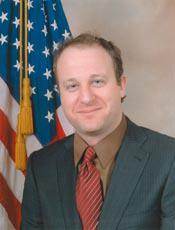
At this point, Mr. Speaker, I yield 2 minutes to the gentleman from Colorado (Mr. Polis), a member of the Rules Committee.
Mr. Speaker, I yield 2 minutes to the gentleman from Texas (Mr. Doggett).
I yield the gentleman 1 additional minute.
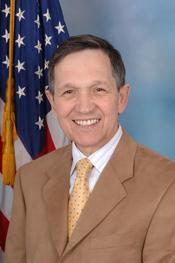
Mr. Speaker, at this time I yield 3 minutes to the gentleman from Ohio (Mr. Kucinich), the author of the resolution.
Mr. Speaker, at this time I yield 3 minutes to the gentleman from Oregon (Mr. Blumenauer).
Mr. Speaker, there is nothing wrong with demanding our troops come home, including forcing that debate by using the privileges of the war powers resolution. There is nothing unpatriotic in demanding that our troops and their families, their neighbors and their communities be told when they are coming home. And Mr. Speaker, there is every reason to debate how we go after al Qaeda and how we create a flexible, mobile, global strategy able to track, find, counter, and strike al Qaeda cells wherever they might be. And there is no reason to run away from a debate over whether 100,000 boots on the ground in Afghanistan is the best strategy to eliminating al Qaeda once and for all.
I do not doubt that our brave military men and women can and will achieve military successes in battle after battle after battle. But are Afghanistan's tribal disputes going to be solved on the battlefield or at the political negotiating table? And if it is going to take a political solution to resolve centuries of grievances, then who is willing to stand at the front of this Chamber and declare how many American lives that is worth?
Mr. Speaker, President Obama has said he will begin to bring our troops home next July, but he didn't say when the job will be complete. Representative Kucinich says let's bring them home by New Year's Eve, this year. We must continue to debate this issue, debate it today, debate it on the supplemental, debate it on defense bills.
Let's debate it when we are begging for resources so our kids can go to quality schools, when we are trying to find the money so every American has a decent job and affordable health care, so we can maintain our roads and our bridges and our waterways, so we can guard our ports and our borders, so we can keep our cops on the beat and our seniors safe in their homes. Let's debate the war in Afghanistan, how we will pay for it, how it will end, when it will end, and when our sons and daughters, husbands and wives, friends and neighbors will be able to come home.
Let us continue to ask the hard questions and demand straight answers until we get it right and all our troops are safely home.
Mr. Speaker, I urge a ``yes'' vote on the rule and on the previous question.
I yield back the balance of my time, and I move the previous question on the resolution.
The previous question was ordered.