Mr. Speaker, by direction of the Committee on Rules, I call up House Resolution 1203 and ask for its immediate consideration. Mr. Speaker, I claim time in opposition. Mr. Speaker, I yield myself such…
Mr. Speaker, by direction of the Committee on Rules, I call up House Resolution 1203 and ask for its immediate consideration.
Mr. Speaker, I claim time in opposition.
Mr. Speaker, I yield myself such time as I may consume.
Technically, this point of order is about whether or not to consider this rule and, ultimately, the underlying legislation. In reality, it's about blocking much-needed health care reform in this Nation. Those who oppose the process don't want any debate or votes on health care itself. They just want to make reform go away.
I know my colleagues on our side will vote ``yes'' so we can consider this important legislation on its merits and not stop it on a procedural motion. Let's stop wasting time on parliamentary loopholes because those who oppose the legislation can vote against it on final passage. We must consider the rule. We must pass this important legislation today.
I reserve the balance of my time.
Mr. Speaker, I submit for the Record a 1-page document explaining why the requirements in the bill are not unconstitutional.
Attack: The individual responsibility requirement is
unconstitutional.
Response: The arguments that have been raised against the
constitutionality of an individual responsibility requirement
are meritless. For over 70 years, the Supreme Court has
recognized that Congress has the authority under the Commerce
Clause to regulate activities that have a substantial effect
on interstate commerce, which includes buying and selling
health insurance. The requirement for individuals to
contribute to their own health insurance coverage is clearly
constitutional.
Over 70 years of Supreme Court precedent has recognized
that, under the Commerce Clause, Congress can regulate
activities that have a substantial effect on interstate
commerce. A requirement that individuals purchase health
insurance is both commercial and economic in nature--indeed,
few things are more critical to our nation's economic health.
The failure of individuals to obtain health insurance has a
substantial effect on our national economy. The U.S. spends
over $2 trillion dollars on health care each year--more than
$7,000 per person and more than 16 percent of our GDP. The
economy loses billions of dollars every year because of the
costs of treatment for uninsured Americans. And currently,
individuals can forego buying insurance, leaving hospitals--
and ultimately Americans who do buy insurance--on the hook
for expensive emergency procedures. That drives up insurance
premiums for all Americans.
Mandating health insurance affects interstate commerce in
several ways. Covering more people will reduce the price of
insurance by addressing free-riders who rely on emergency
care and other services without paying for all the costs,
which drives up costs for people with insurance. It will also
ensure an insurance pool with a full cross section of healthy
and sick subscribers, which will help keep down costs for
everyone.
Even the conservative Supreme Court has recognized that the
federal government has broad authority to regulate under the
Commerce Clause. In 2005, the Court held that the federal
government can prohibit medical marijuana grown at home and
consumed personally under the Commerce Clause (Gonzalez v.
Raich). Justice Scalia, no fan of expansive claims of
Congressional power, even voted to affirm Congress' authority
to regulate in that case. Certainly health insurance coverage
has a greater effect on the national economy than people
growing medical marijuana in their backyard.
Congress also has authority to impose an individual
responsibility requirement under its Power to Tax and Spend
for the General Welfare (Article 1, sec. 8, cl. 1) and the
Necessary and Proper Clause (Art. 1, sec. 8, cl. 18.).
Now I am so happy to introduce and yield 2 minutes to Mr. Kennedy, the gentleman from Rhode Island, who is not only a valued Member of this House but whose father, as we know, devoted his congressional life to health care for all Americans.
Mr. Speaker, I yield 2 minutes to the gentleman from Vermont (Mr. Welch).
Mr. Speaker, I am pleased to yield 1 minute to the gentleman from California (Mr. Farr).
Mr. Speaker, I yield 1 minute to the gentlewoman from Texas (Ms. Jackson Lee).
Mr. Speaker, I yield 1 minute to the gentleman from Illinois (Mr. Hare).
Mr. Speaker, I yield 1 minute to the gentleman from Wisconsin (Mr. Kagen).
Mr. Speaker, let me yield 45 seconds to the gentleman from Pennsylvania (Mr. Fattah).
Mr. Speaker, I want to urge my colleagues to vote ``yes'' on this motion to consider so we can debate and pass the important legislation today.
I yield back the balance of my time.
Mr. Speaker, I rise in opposition to the point of order.
Mr. Speaker, I yield myself such time as I may consume.
My friends on the other side of the aisle are attempting to use a purely technical violation of the earmark identification rule to try and block the House from even considering the rule and the underlying legislation. In fact, the Budget Committee did include an earmark statement in their committee report.
However, a minor technical error in that statement made the legislation subject to a point of order. The Budget Committee has since filed two clarifying earmark statements in the Congressional Record. Clearly these statements, as well as the initial statement in the committee report, should show that it does not violate the spirit of the earmark rule. I have copies of these statements for any Members who need clarification.
The rule and the underlying legislation deserve to be debated on the merits, not stopped by purely procedural motions. I urge my colleagues to vote ``yes'' so we can consider this important legislation, so important to the American people. Let's not waste any more time.
I reserve the balance of my time.
I am happy to tell you that. The final bill will not have State-specific provisions. The provisions that are in apply to multiple States, and a provision in the education portion of the reconciliation bill regarding State-owned banks is being struck by the manager's amendment.
Mr. Speaker, I yield 2 minutes to the gentlewoman from Florida (Ms. Castor).
If we can use your time.
Yes.
I am sorry, I couldn't hear.
Mr. Speaker, I am happy to yield 1 minute to the gentleman from Michigan (Mr. Kildee).
Mr. Speaker, I am pleased to yield 1 minute to the gentlewoman from California (Ms. Lee).
Mr. Speaker, I yield 2 minutes to the gentleman from Rhode Island (Mr. Langevin).
(Mr. LANGEVIN asked and was given permission to revise and extend his remarks.)
Mr. Speaker, I yield 1 minute to the gentlewoman from California (Ms. Chu).
Mr. Speaker, I yield 1 minute to the gentleman from Georgia (Mr. Scott).
Mr. Dreier, it is absolutely true that the Senate bill does contain those things. It has already been passed and requires no further action in the Senate.
What we will do today is pass the bill, which will then be sent to the President and become law. We will this afternoon pass the reconciliation----
Please let me answer.
No, you don't.
You don't know that.
Mr. Speaker, I yield myself 1 minute.
Yes, the Senate bill will become law today, followed by the reconciliation bill which contains the amendments to the law, which contains what everybody here wants us to take out. The best way that they can achieve their ends of removing the things that are objectionable from the Senate bill is to support reconciliation. And let's see if you can do it.
I reserve the balance of my time.
Parliamentary Inquiries
Mr. Speaker, I did not address the Senate. I want that to be clearly on the record.
I yield 30 seconds to the gentlewoman from the Virgin Islands, Dr. Christensen.
I reserve the right to close, and I will reserve the balance of my time unless it is given up on the other side.
Mr. Speaker, I do not.
Mr. Speaker, again I want to urge my colleagues to vote ``yes'' on this motion to consider so that we may debate and pass this important legislation today.
Mr. Speaker, I am certain that I heard you say that the gentleman's time has expired. Is that not correct?
Mr. Speaker, for the purpose of debate only, I yield the customary 30 minutes to the gentleman from California (Mr. Dreier), and all time yielded during consideration of the rule is for debate only.
General Leave
I ask unanimous consent that all Members have 5 legislative days within which to revise and extend their remarks and insert extraneous material into the Record.
Mr. Speaker, these have been solemn days and not just because of the important legislation before us. Yesterday just steps away from where we are now standing, a group of protesters engaged in dangerous and derogatory behavior toward four of our Members. I believe the attacks yesterday were a step back for this country, a stark reminder of where we used to be and a reminder of how much further we must travel to fulfill the promise of equality.
It was only 2 weeks ago that my colleague from Georgia, John Lewis, marked the 45th anniversary of Bloody Sunday in Selma, Alabama, and yet this civil rights icon was accosted yesterday while walking here to cast a vote. The use of racist, homophobic and inflammatory rhetoric and reports that the protesters who were gathered on our east terrace plaza attempted to spit on a Member of Congress is heartbreaking. This type of display should alarm every American and encourage us to work harder to put aside the hateful divisions and to come together to bridge the volatile spirit that is tearing apart our country.
The anger isn't just contained outside the Capitol. Last week someone hurled a brick through the window of my district office in the dark of night. We must step back to remind ourselves of why we are here.
I would like to show an incredible document given to me this week by the National Archives from the collection of Franklin Delano Roosevelt's original records. As the father of Social Security, Roosevelt has an honored place in this battle to create a national insurance plan for our country. This message, dated January 23, 1939, over 70 years ago, entitled, ``To the United States Congress of the United States,'' talks plainly about the need of this government to provide health care for its citizens. It was recognized at the time that a comprehensive health care program was required as an essential link to our national defenses against individual and social insecurity. Roosevelt wrote: ``The health of the people is a public concern; ill health is a major cause of major suffering, economic loss and dependency; good health is essential to the security and progress of the Nation.''
I would like to read directly because I think the familiarity is overwhelming: ``I have been concerned by the evidence of inequalities that exist among the States as to personnel and facilities for health services. There are
equally serious inequalities of resources, medical facilities and services in different sections and among different economic groups. These inequalities create handicaps for parts of the country and the groups of our people which most sorely need the benefits of modern medical science.
``The objective of a national health program is to make available in all parts of our country and for all groups of our people the scientific knowledge and skill at our command to prevent and care for sickness and disability; to safeguard mothers, infants and children; and to offset through social insurance the loss of earnings among workers who are temporarily or permanently disabled.''
I will tell you, Mr. Speaker, that reading from that piece of paper with his hand notes scribbled on it absolutely takes my breath away, but it is a reminder that eyes of history are watching us. Future generations will look at what we do today, and it will be a guidepost to who we were as a people.
The effort to reform the health care system goes back to at least Theodore Roosevelt, that great President who campaigned in 1912 by promising: ``We pledge ourselves to work increasingly in State and Nation for protection of home life against the hazards of sickness.''
Still later, Harry Truman tackled reforms, as did President Clinton, during the nineties, a battle that I was here for. Before that, the last broad legislative rewrite was led by President Richard Nixon. It's remarkable to me that even after all these years, our final bill may end up being less progressive than the plan that Nixon would have supported, yet still the forces of the other side whip up opposition.
I want to share a story I heard from a constituent in Buffalo. I will be very brief because these heartbreaking stories are nationwide. But it is about a young man who moved from New York to California. In California, his insurance only allowed him to visit the emergency room for seizures. When he got to New York, his insurance did not cover that at all except in New York City, so his father has to drive him back and forth from Buffalo to New York City. And he said, We are slowly going poor.
Our bill covers an estimated 32 million Americans in a fiscally responsible way that improves Medicare benefits, holds insurance companies accountable, and helps small business owners with coverage. We are finally gaining ground against insurance special interests. Small businesses, the backbone of our economy will get tax credits if they make health care coverage available for their workers. We offer free preventive care for people on Medicare. We help people who have retired at 55, 10 years before they are eligible for Medicare. And we ban the lifetime and yearly limit on coverage.
All of these provisions have the potential to transform the way that we deliver health care in the country. The fight has been long and contentious, and the public has been grievously and purposefully lied to. This week the Congressional Budget Office, which is nonpartisan and objective and unbiased, estimates that we will cut the deficit by $143 billion over the next 10 years and $1.2 trillion over the following 10. What do our opponents say? That we can't afford this legislation. The fact of the matter is we can't not afford to do this legislation. For the 100 years we've worked toward this goal and all the obstacles, we are here today to do our job. And Harry Truman said, ``If you can't stand the heat, get out of the kitchen.''
Well, I consider the Rules Committee as the kitchen of the of House of Representatives, and I am proud to be the cook. And I am proud to stand up and say that this bill is the right thing to do, and the time to act is now. I am delighted to vote ``yes'' today.
I reserve the balance of my time.
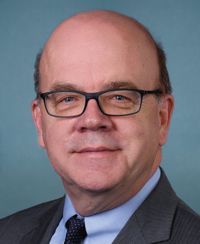
Mr. Speaker, I am pleased to yield 3 minutes to the gentleman from Massachusetts (Mr. McGovern), a member of the Rules Committee.
Mr. Speaker, I yield 3 minutes to the gentleman from Florida (Mr. Hastings), a member of Rules.
Mr. Speaker, I'm delighted to yield 3 minutes to a member of the Rules Committee and a gentlewoman from California (Ms. Matsui).
Mr. Speaker, I'm pleased to yield 3 minutes to the gentleman from California (Mr. Cardoza), a member of the Rules Committee.
Mr. Speaker, I yield 2 minutes to the gentleman from Colorado (Mr. Perlmutter), a member of the Rules Committee.
Mr. Speaker, I am delighted to yield 2 minutes to the gentlewoman from Maine, a member of the Rules Committee, Ms. Pingree.