I thank the chairwoman of the Rules Committee for yielding me this time, my friend, Ms. Slaughter. Madam Speaker, I yield myself such time as I may consume. Madam Speaker, this will be the 34th time…
I thank the chairwoman of the Rules Committee for yielding me this time, my friend, Ms. Slaughter.
Madam Speaker, I yield myself such time as I may consume.
Madam Speaker, this will be the 34th time I have handled a rule on the House floor, and this will be the 34th time I have yet to handle one open rule this session of Congress. In fact, over the 130-plus rules this Congress, we have not yet debated an open rule. I guess I could add the word yet, but I would presume that moving forward during this session of Congress I don't think we expect to. What a shame, Madam Speaker.
I don't believe that closing debate or limiting amendments or shutting down Members of Congress who are elected by their colleagues and peers back home to come and represent them, whether they are Republicans or Democrats, makes a lot of sense. As a matter of fact, I think it's wrong. Yet today here we are again with my handling of the 34th time this session a closed rule.
I would once again question this agenda. I would question the agenda of the majority party, the Democratic Party, that we already know is about taxing, spending, and more rules and regulations, and more debt to this great Nation. But I think that it's important to look at how bad process delivers a bad outcome. And today that's exactly what we're looking at again, another flawed process to bring something to this floor that should be treated more respectfully than the topic that it is.
But I am going to use my time also to talk about some Republican ideas. One thing I have the opportunity today, Madam Speaker, is to call for a vote on the previous question to allow for this week's YouCut winner. We've over the weeks heard about YouCut.
YouCut is a Republican idea that's an online idea. It's a voting tool, a tool where people who are back home have an opportunity to pick what they consider to be wasteful government spending, something which this Congress is incapable of doing because the agenda does not allow for making wiser choices or even feedback from our colleagues about how we would cut and make this government more efficient. Over a million Americans have voted this week alone.
This week's YouCut winner is the elimination of subsidies to first- class seats on Amtrak's long-distance routes. This initiative would yield $1.2 billion in savings over 10 years. And these people who have voted are hardworking Americans who are paying attention to what we're doing here in Washington. They don't want to have their tax dollars subsidize first-class travel on Amtrak.
I have long advocated for reforming Amtrak, especially the long- distance routes. These routes lose money year after year after year. They continue to receive money from the Federal Government, and Amtrak has no incentive to improve their operations as long as Uncle, that's Uncle Sam, is willing to pay.
This Congress I have introduced H.R. 5377, a bill that would require Amtrak to eliminate service on long-distance routes whose total direct costs are more than twice the revenue. That is, where the costs are more than twice the revenue that comes in, the Federal Government should not be paying for that. The taxpayers should no longer be footing the bill for Amtrak's inefficiencies. And today you're going to have a chance to hear from the Republicans about how we think we ought to streamline this government and provide savings to the taxpayer.
Additionally, we're here today to discuss H.R. 1264, which would expand the National Flood Insurance Program, known as NFIP, to include wind storm insurance coverage. But once again today, based upon the agenda that this Democratic majority has, it would create a massive new government program to offer government-paid coverage backed with taxpayer dollars. And while this legislation may be well-intended, I have no doubt that it would have a crushing impact on a very fragile U.S. job market that would add billions to the Federal deficit. That's why we're talking about YouCut today.
We're talking about YouCut today because the bill we're getting ready to pass here in just a few minutes is not even paid for. And our friends in the majority keep talking about, oh, we pay for things. We make the tough decisions. Well, another day in Washington where another tough decision is not being made by the leadership of this House, and the agenda of taxing and spending and more debt and long-term destruction of the free enterprise system is exactly what's on the floor of the House today with this bill.
Transferring these liabilities from the private sector to the NFIP would be fiscally irresponsible. The NFIP currently owes the U.S. Treasury over $18 billion--yet we're going to give them some more, we're going to empower them some more--the amount that it's been forced to borrow from the American taxpayers to pay claims and expenses in excess of the premiums collected.
Since 2006, the Government Accountability Office has included the NFIP on its list of high-risk government programs in need of comprehensive reform. And here today we're empowering a program that's on the high-risk series and encouraging them to do more business, taking business from the free enterprise system.
Additionally, the Property and Casualty Insurance Association of America, known as PCI, estimates that the legislation will eliminate 41,775 private-sector jobs so that Uncle Sam and the government can add jobs.
Madam Speaker, that is the hallmark of this Democrat majority. It is to empower the government against the free enterprise system. We saw this in May numbers, when the May numbers came out, 431,000 net new jobs. And our friends in the Democrats come down every day and say, Look at us, look at all these jobs we're creating. Yeah, 431,000 jobs in May, but of that figure 400,000 were government jobs. They were census jobs, they were temporary
jobs, and you're trying to fool this country. In Texas, if we were in the Texas legislature, that would be deceptive advertising. It should be deceptive advertising in Washington and be against the law.
With an unemployment rate at 9.5 percent and a loss of over 3 million jobs since January of 2009, now is not the time to be diminishing more. That's 41,775 jobs is the estimate. By increasing the taxpayers' exposure also, this program is $22.1 billion in premiums that could be taken out of our economy. But it doesn't stop there. More than $20 billion of investment in mutual, municipal, State, and local bonds will completely dry up. A line of business that the free enterprise system handled that the government did not need to. And government at all levels, State, Federal, and local, will lose billions in tax revenue from the free enterprise system.
During the last Congress, the Senate rejected this proposal by a vote of 74 to 19. Even the administration, shockingly, even the administration voiced opposition to adding wind to the NFIP, citing concerns that it would threaten the long-term viability of the program. Exactly right. It's called bankruptcy. Never forget the taxpayer is there, so it probably won't go bankrupt.
With the current Federal crisis, the financial crisis, and the government crisis, and record unemployment, why would the majority party be pushing for legislation to make unemployment worse? Or would this simply be to help the U.S. Treasury? I don't know. But either way it's government jobs. And I guess we should be careful and not complain too much, because I guess Uncle Sam needs the help.
Madam Speaker, the voices of the American public have been clear. Americans want pro-growth solutions that will encourage job creation and investment and that would keep Americans competitive with the world. Instead, today we find 41,000 more jobs that will dry up in the free enterprise system, jobs back home.
This legislation further diminishes not only these jobs but adds billions of dollars to our national debt. That is the hallmark of this administration and this Congress: more taxing, more spending, more taking of jobs from the free enterprise system to the government, and perhaps worst of all, a debt we may never, ever pay for.
When my friends on the other side of the aisle start to promote positive solutions instead of federalizing more sectors of our free enterprise system, they can count on receiving our support. I can't do it today. Today's another vote.
I reserve the balance of my time.
Madam Speaker, at this time I would like to yield 3 minutes to the gentleman from Richmond, Virginia, the minority whip, the favorite son from Virginia (Mr. Cantor).
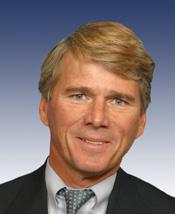
Madam Speaker, at this time I would like to yield 3 minutes to the gentleman from Clarendon, Texas (Mr. Thornberry).
Madam Speaker, the gentleman from Texas (Mr. Thornberry) makes a great point, and we can today on the floor of this House of Representatives add to this bill with its own merits by saying let's also, as we're adding billions of dollars, at least simplify government and cut a billion off of what it does. It makes sense to me, and I applaud the gentleman from Texas (Mr. Thornberry) for his great YouCut suggestion.
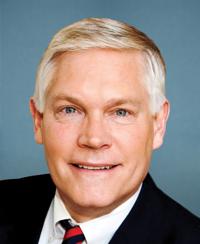
At this time, Madam Speaker, I would like to yield 2 minutes to the gentleman from Wheaton, Illinois, Pete Roskam.
Madam Speaker, I would like to ask the gentlewoman if she has any further speakers.
I wanted to ask the gentlewoman if she had additional speakers. I received a good answer. Thank you very much. I appreciate the gentlewoman.
I have about 45 or 50 more speakers, and I will consume my time.
I have a number of speakers. We did not receive enough time in this rule to be able to provide enough time for our speakers. It's a very important topic for us, and I understand that you don't have any speakers, but we've got a bunch. So, yes, ma'am, I do intend to use my time.
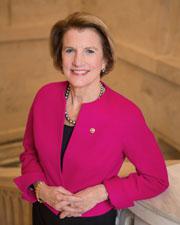
Madam Speaker, at this time I would like to yield 3 minutes to the gentlewoman from West Virginia (Mrs. Capito).
Madam Speaker, you know, it sounds like the gentlewoman from West Virginia gave us a good way to think of things, and that is, too much of a good thing may not be good.
What this rail service is about, Amtrak, I believe, is a pretty good idea, but too much of a good thing, where you can't properly manage it or pay for it, where it gets larger than what the mission statement is, is a bad problem. And, you know, Madam Speaker, the Republicans are on the floor of the House today and we're called to Washington every week and we can handle that, but day after day after day after day after day after day after day we handle small ideas and little issues.
Today, we're handling an issue that the gentleman from Mississippi deeply believes in and, in fact, he will have an opportunity not only to have his ideas on the floor but he will get a vote on those ideas. Republicans have now, in our fourth year, been saying to this Speaker and this majority leader and this Democratic majority that we believe that this body is entitled to have an agenda that the majority wants.
But we believe it should be balanced. We believe it should include some tough decision-making, not just more spending, not just pet projects, but, rather, things which will empower people back home to have confidence in what we are doing here in Washington. And Republicans have, once again today, through YouCut, through the leadership of our minority whip, Eric Cantor, presented ideas on this floor and every single Member will have an opportunity to vote on that.
Republicans believe that we should have to make tough decisions. Republicans believe that you ought to come and read the bill. Republicans believe that that Rules Committee that's up there, if you say your agenda is going to be open and honest, that you ought to mean it. Republicans believe that there ought to be an opportunity for Members to come and have their ideas heard.
We are taking seriously what we think is a duty and an obligation to come and talk about how we can make our jobs that we do more serious by streamlining, providing feedback to Federal money that's being spent. It's an incredible amount of money that not only is being spent out of this town but way too little, if any, is about reforming and making the government more efficient. We think that that's what we should be about.
We think that we should be about providing ideas, giving money to this government, but with the expectation of performance that would allow streamlining and efficiencies and not giving away services at less than what their real cost is.
I reserve the balance of my time.
By the way, the gentleman from Mississippi is a very dear friend of mine with whom I engage on a regular basis. I just want the gentleman to know that while I know that under Speaker Pelosi we don't have any process with appropriations to strike or amend any appropriations bills, for 12 years I brought an Amtrak cut bill to this floor. So I will be providing that information, and I look forward to the gentleman joining me as soon as we get a Republican majority that will allow that to take place on the floor of this House, an open process.
Madam Speaker, I yield 4 minutes to the gentleman from Savannah, Georgia (Mr. Kingston).
Madam Speaker, I yield myself the balance of my time.
I appreciate the gentlewoman from New York for not only this time but getting through this thing.
Madam Speaker, as you can see, Republicans, and at least one Democrat, have a lot to talk about. I wish we had more time today. Republicans would have liked a lot more time to make sure that we could talk about not only this bill, but the implications that are on the floor.
Republicans continue to offer, Madam Speaker, commonsense solutions to rein in the current spending spree, a spending spree that's now in its fourth year by this Democrat majority. We, like the American people, would like transparency and accountability and common sense, creation of jobs, not the extension of unemployment benefits that are not paid for.
We believe in people having jobs, and if this majority were serious and if this administration were serious, they would do the things that work rather than the things that don't work. They are doing things that don't work, Madam Speaker, and that is what this Democrat majority will be held accountable for. It's really a sad thing to hear person after person who has lost his job, and people whom I know, and to see the malaise this country is in.
Madam Speaker, I ask unanimous consent to insert the text of the amendment and extraneous materials immediately prior to the vote on the previous question.
The legislation before us today brings more uncertainty to the long-term solvency of the NFIP. This legislation risks more American jobs and adds more to our State, local, and Federal deficits. It is true, as the gentleman spoke of, that States take this on. It is a State's responsibility, not the Federal Government's, but that is part of what this agenda is all about. For this reason, I encourage a ``no'' vote on the previous question.
Madam Speaker, on that I demand the yeas and nays.
Madam Speaker, I demand a recorded vote.