Mr. Speaker, I move to suspend the rules and agree to the resolution (H. Res. 971) expressing the sense of the House of Representatives regarding guidelines for breast cancer screening for women ages…
Mr. Speaker, I move to suspend the rules and agree to the resolution (H. Res. 971) expressing the sense of the House of Representatives regarding guidelines for breast cancer screening for women ages 40 to 49.
Mr. Speaker, I ask unanimous consent that all Members may have 5 legislative days in which to revise and extend remarks and include extraneous material in the Record.
Mr. Speaker, I yield to myself such time as I may consume.
Mr. Speaker, I rise today in support of House Resolution 971. This resolution expresses the sense of the House of Representatives that the U.S. Preventive Services Task Force guidelines would not prohibit an insurer from providing coverage for mammography services beyond those recommended by the task force.
It further states that these guidelines should not be used by insurers to deny coverage for these services.
It also expresses the sense of the House that the National Cancer Institute should continue to invest and provide leadership regarding research to develop more effective screening tools and strategies for improving the detection of breast cancer.
On November 16, 2009, the U.S. Preventive Services Task Force issued a series of six recommendations regarding breast cancer screening, three of which pertain to mammography screening among women of various age groups. At a recent hearing in our Energy and Commerce Committee's Health Subcommittee, the task force representatives acknowledged that they should have done a better job communicating their findings to the public. Unfortunately, this failure in communication has led to much concern and confusion about what their findings and recommendations are and what the implications would be.
Mr. Speaker, this task force is not suggesting that women in their forties forego mammography. The task force is recommending that women in their forties determine when to begin screening and base this decision on a conversation with their doctors or health providers. And we can all agree that women in their forties should have access to mammography if these women and their physicians decide it's right for them. I think we can also agree that while mammography is still the best tool that we have to detect breast cancer in its earliest stages, it is, by every means, an imperfect tool. We need continued research into more effective screening tools and strategies to improve the detection of breast cancer.
Breast cancer is the second most common cancer among United States women, and it is the leading cause of cancer death for women between the ages of 29 and 59. This year, new cases of breast cancer among American women will reach an estimated 192,370, and over 40,000 women will die from breast cancer this year. The American Cancer Society estimates that one in 8 women will have invasive breast cancer at some point in her lifetime. These statistics illustrate that breast cancer
continues to be a major health issue, despite recent declines in breast cancer mortality rates.
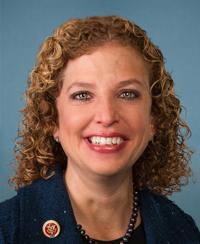
But beyond these statistics, cancer is a very personal situation for many of us in this Chamber, whether it has affected a mother, a daughter, a wife, a friend, a colleague or, as it has for me, my own sister. I want to commend my colleague, Debbie Wasserman Schultz, for introducing this resolution and for being so forthcoming about her very personal experience being diagnosed with and treated for breast cancer.
I reserve the balance of my time.
Mr. Speaker, I wish to remind my colleagues that in the health reform bill, as it was considered in the House of Representatives, once the essential benefits package is established, it acts as a floor, not as a ceiling. And with regard to preventive services, the bill says that recommended items and services with a grade of A or B from the U.S. Preventive Services Task Force shall be covered as part of the essential benefits package, with no cost- sharing, and that the Secretary may approve such coverage, regardless of what the task force or the benefits advisory committee says.
And at this point I'm very pleased to yield to Representative Wasserman Schultz, the sponsor of this legislation, 5 minutes.
Mr. Speaker, may I require of the remaining time on this side?
At this time, it's my pleasure to acknowledge and I yield to the Congressman from New York (Mr. Engel) 2\1/2\ minutes.
Mr. Speaker, I would remind my colleague that at the hearing 2 weeks ago at the Energy and Commerce Committee, the breast cancer stakeholders were asked a simple question: Would H.R. 3962, the health reform bill, help women with breast cancer? Every witness on that panel, including the American Cancer Society, Komen, the National Breast Cancer Coalition, the American College of Physicians, every witness on the panel agreed that this bill, the health reform bill, will help women to prevent and women who already have breast cancer.
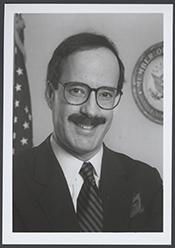
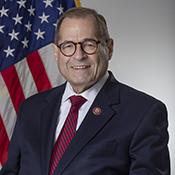
And at this point, I'm very pleased to yield 2 minutes to my colleague and a big supporter of the Breast Cancer Caucus, Jerry Nadler.
Mr. Speaker, I am very pleased at this point to yield 1 minute to our colleague from Indiana (Mr. Donnelly).
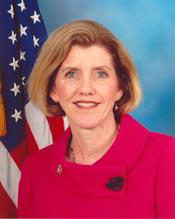
Mr. Speaker, I am now pleased to yield 1 minute to our colleague from Pennsylvania (Mrs. Dahlkemper).
I am pleased to yield the gentlewoman an additional 30 seconds.
Mr. Speaker, may I inquire again as to the time that remains on our side.
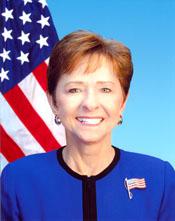
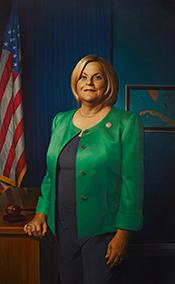
Mr. Speaker, at this point, I am very pleased to yield 1 minute to our colleague from Florida (Ms. Kosmas).
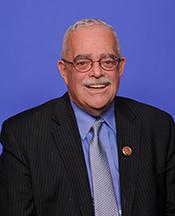
I am pleased now to introduce and to acknowledge my colleague from Virginia, Congressman Connolly, for 1 minute.
I have two additional speakers.
I am very pleased to yield 1 minute to our colleague from Colorado, Congresswoman Markey.
I am now pleased, Mr. Speaker, to yield to our colleague from Illinois, Congresswoman Halvorson, 1 minute.
Mr. Speaker, in yielding back our time, I remind our colleagues that the truth is, when enacted into law, H.R. 3962 will result in millions of uninsured Americans receiving their first mammogram and will no longer face being dropped by their insurance company if they are diagnosed with cancer.
I wish to acknowledge and thank the leader of this resolution for her hard work, our colleague, Representative Wasserman Schultz.
Ms. DeLAURA. Mr. Speaker, I urge my colleagues to support this resolution, H.R. 971, which helps to clarify much of the unnecessary furor over mammograms we have experienced of late.
The recent breast cancer recommendations by the U.S. Preventive Services Task Force effectively said that women ages 40 to 49 should have a conversation with their doctors before deciding to have a screening mammograms. In other words, they were to attempt to put as much information as possible in the hands of women and their doctors, so they can assess their own risk and benefit.
Now, whatever decision women come to on this important matter, they need two things to ensure they have access to mammography should they decide to get screened: One is a quality health coverage so they have a doctor they can go speak to. And the second is coverage for mammograms and other important preventative services. And, of course, some women will need coverage for treatment if a cancer is found.
This is why I support this resolution, which argues that insurers should not deny coverage for mammograms for women ages 40 to 49 who decide to get screened. This is also why I support comprehensive health insurance reform, so that women can afford health care in the first place, and get coverage for that mammograms and any follow-up treatment they might need.
We must redouble our efforts across the board to ensure that Americans are getting the appropriate preventive screenings. Right now, according to the Centers for Disease Control and Prevention, only 25.9 percent of women ages 50 to 64 have received all the recommended preventive care for breast, cervical, and colorectal cancer, as well as influenza. Under health reform, women would finally get the preventive care they need.
In the meantime, there is a great need for more information, more research, and more scientific innovation to help women prevent, detect, and fight breast cancer, the second leading cause of cancer deaths among women. This resolution also urges the National Cancer Institute to continue to invest in research toward more effective screening tools and strategies for improving detection of breast cancer.
For all of these reasons, I strongly urge my colleague to support this resolution. Mammography is not perfect, but right now it is the best method we have to detect this killer in our midst. We need to make sure that as many women as possible have access to this important, life-saving procedure, and that better, safer screening procedures will soon be forthcoming.
I yield back the balance of my time.
Mr. Speaker, on that I demand the yeas and nays.