Mr. Speaker, this is indeed a sad day and a solemn day. As indicated by my colleagues on the floor of the House, however, it is an obligation of this body. I'd like to acknowledge the chairman of the…
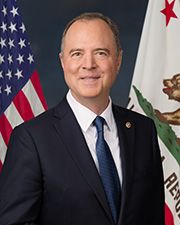
Mr. Speaker, this is indeed a sad day and a solemn day. As indicated by my colleagues on the floor of the House, however, it is an obligation of this body. I'd like to acknowledge the chairman of the Impeachment Task Force, Congressman Schiff, for his leadership,
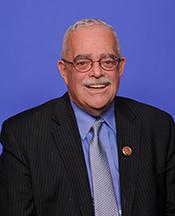
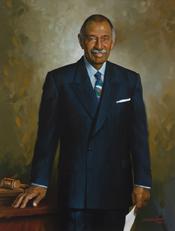
but also for his balance and temperament in a very serious challenge that we have in providing the guideposts and the moral guideposts for a number of tough issues that deal with our Federal Judiciary and a number of other instances where impeachment is in fact the authority of this body and the Constitution. I'd like to acknowledge the ranking member, Mr. Goodlatte; the chairman of the full committee, Mr. Conyers; and the ranking member, Mr. Smith.
This is an instance where you would have hoped that we would have had a different outcome. But as my colleagues have so articulately expressed, there was a long pattern that many of us found very disturbing. Judge Thomas Porteous seemingly began these actions without reproof while he was a State district judge, soliciting and accepting cash and other things of values from attorneys practicing before him, and failing to recuse himself from a prominent case in which those attorneys were involved.
As a State judge, he repeatedly accepted things of value from bail bondsmen in exchange for setting bonds at levels to increase profits for the bail bondsmen and, after becoming a Federal judge, assisting them in forming corrupt relationships with other State judges. The pattern continued.
As a Federal judge, he fraudulently concealed his personal bankruptcy, income, assets, gambling activities, gambling debts, and in violation of court order, incurring additional gambling debt while his bankruptcy proceeding was pending.
He fraudulently concealed, in his FBI background check and on his Senate questionnaire, the corrupt relationships with attorneys and bail bondsmen.
I think it is worth noting that Judge Porteous began his career as a State court judge, but because of the concealment of these activities, he was then nominated to the Federal bench. In the essence of being nominated, let me be very clear, one could have personally taken one's self out of the running for a bench as high and as sacred as a Federal Judiciary. That is a lifetime appointment, but at no time during the time that his nomination was put before the President of the United States, the United States Senate, did Judge Porteous think that his previous behavior did not warrant him ascending to the Federal bench. That saddens me. Maybe we need to look more at counseling individuals who are seeking or have the opportunity to be nominated to these high offices. Maybe they need that to understand the flaws or failures in their character or performance.
Again, fraudulently concealing in his FBI background check and on his Senate questionnaire the corrupt relationships with the attorneys and bail bondsmen, evidence that the committee was able to see when questions were asked whether there was anything in your background that would warrant you not being able to be appointed to the Federal bench, this judge did not answer truthfully.
The Department of Justice attempted to reprimand, and their complaint indicated that the instances of Judge Porteous' dishonesty in his own sworn statements and court filings, his decade-long course of conduct in soliciting and accepting streams of payments and gifts from litigants and lawyers with matters before him, and his repeated failure to disclose those dealings to interested parties and the court all render him unfit as an Article III judge, that is, a Federal judge.
Although the Department did not seek criminal charges for reasons that involve partly the statute of limitations, their complaint indicated that his actions would render him unfit as an Article III judge. The Fifth Circuit also moved to take the maximum disciplinary action allowed by law against Judge Porteous, suspending him for 2 years or until Congress takes final action on the impeachment proceedings.
Unfortunately and sadly, that day has come, and as we had asked, through the task force, for the opportunity for Judge Porteous to have due process, and that is to give him the opportunity to speak before the task force and, the alternative, to allow witnesses to come on his behalf, none of that was accepted. So today I rise on the floor of the House to accept the findings of our task force and the vote of our committee in full and ask this body to address the concern by sending this to the United States Senate for hearings on impeachment. This is a resolution to suggest that the Articles of Impeachment should be passed to the United States Senate under our constitutional process.
Again, this is a sad day and a solemn day. But sadly, this indicates that a behavior of an individual who has achieved one of the highest offices in the land, that is, of the Article III courts, judge for life on the Federal bench, deserves, if you will, to be recommended for impeachment.
I ask for a vote of ``yes'' on the resolution.
Mr. Speaker, I rise in support of H. Res 1031, a resolution setting forth four Articles of Impeachment against G. Thomas Porteous, Jr., judge of the U.S. District Court for the Eastern District of Louisiana, for high crimes and misdemeanors. I would like to thank our Judiciary Chairman Conyers for shepherding this bill through the Judiciary Committee so that justice can be served.
The Judiciary Committee was charged with determining whether federal Judge Thomas Porteous should be impeached for the following: soliciting and accepting cash and other things of value from attorneys practicing before him and failing to recuse himself from a prominent case in which those attorneys were involved; as a State judge, repeatedly accepting things of value from bail bondsmen in exchange for setting bonds at levels to increase profits for the bail bondsmen and, after becoming a federal judge, assisting them in forming corrupt relationships with other State judges; as a federal judge, fraudulently concealing, in his personal bankruptcy, income, assets, gambling activities, and gambling debts and, in violation of court order, incurring additional gambling debt while his bankruptcy proceeding was pending; and fraudulently concealing, in his FBI background check and on his Senate questionnaire, the corrupt relationships with the attorneys and bail bondsmen.
As a federal judge, Judge Thomas Porteous's number one responsibility under the oath that he is sworn to is to ensure that the laws of the land under the United States Constitution are protected and supported. The Justice Department investigated whether or not Judge Porteous broke his oath. In May 2007, the Department of Justice and the Federal Bureau of Investigation completed a multi-year criminal investigation of Judge Porteous and submitted a formal complaint of judicial misconduct to the U.S. Court of Appeals for the Fifth Circuit.
Although the Department decided not to seek criminal charges for reasons including statute of limitations issues and other factors impacting prosecution, the complaint stated that the investigation uncovered evidence that ``indicates that Judge Porteous may have violated federal and state criminal laws, controlling canons of judicial conduct, rules of professional responsibility, and conducted himself in a manner antithetical to the constitutional standard of good behavior required of all federal judges.'' The complaint concluded that ``the instances of Judge Porteous's dishonesty in his own sworn statements and court filings, his decade-long course of conduct in soliciting and accepting a stream of payments and gifts from litigants and lawyers with matters before him, and his repeated failures to disclose those dealings to interested parties and the Court all render him unfit as an Article III judge.''
Mr. Speaker, there was also an investigation by the Fifth Circuit. The Fifth Circuit appointed a Special Investigatory Committee to investigate the allegations. Hearings were held at which Judge Porteous, representing himself, made statements, cross-examined witnesses, and called witnesses on his own behalf. Based on the Special Committee's report concluding that Judge Porteous had engaged in conduct which might constitute grounds for impeachment, the Judicial Conference voted unanimously to certify the matter to the U.S. House of Representatives, based on substantial evidence that Judge Porteous had repeatedly committed perjury, willfully and systematically concealed information from litigants and the public, violated several criminal statutes and ethical canons, and made false representations with the intent to defraud.
The Fifth Circuit also moved to take the maximum disciplinary action allowed by law against Judge Porteous, suspending him for two years or ``until Congress takes final action on the impeachment proceedings.''
As Members of the House Judiciary Impeachment Task Force, my colleagues were directed by the House to determine whether there was sufficient evidence to impeach Judge Porteous for the alleged crimes for which he was being charged. As part of the initial investigation, our staff interviewed over 65 individuals, deposed approximately 25 witnesses under oath, and obtained documents
from various sources, including from witnesses, the 24th Judicial Court in Jefferson Parish, Louisiana, and the Department of Justice.
After the initial investigatory phase, the task force held four separate hearings over five days in November and December 2009 in order to determine whether Judge Porteous's conduct provides a sufficient basis for impeachment and to develop a record upon which to recommend whether to adopt Articles of Impeachment.
The first task force hearing focused on allegations of misconduct in relation to Judge Porteous presiding over the case In re: Liljeberg Enterprises, Inc. The record reflects that Judge Porteous was engaged in a corrupt kickback scheme with the law firm of Amato & Creely, that he failed to disclose his relationship with the firm, and that he denied a motion to recuse himself from the case despite the firm's representation of one of the parties. The kickback scheme involved appointing Mr. Creely as a curator in hundreds of cases, with fees amounting to approximately $40,000 paid to the Amato & Creely firm, approximately half of which was paid back to Judge Porteous. Judge Porteous made intentionally misleading statements at the recusal hearing, intended to minimize the extent of this personal relationship with the firm. The record also reflects that Judge Porteous engaged in corrupt conduct after the bench trial and while the case was under advisement, by soliciting and accepting things of value from attorneys at the firm, including $2,000 in cash. This corrupt relationship and his conduct as a federal judge have brought his court into scandal and disrepute and demonstrate that he is unfit for office.
The second task force hearing focused on allegations that Judge Porteous repeatedly made false and misleading statements, including the concealment of debts, under oath and in disregard of a bankruptcy court's orders. The record reflects that as a federal judge, he knowingly and intentionally made material false statements and representations under penalty of perjury and repeatedly violated a court order in his case. This included using a false name and post office box to conceal his identity as a debtor in the case; concealing assets, preferential payments to certain creditors, and gambling losses and debts; and incurring new debts while the case was pending in violation of the court's order.
The third task force hearing focused on allegations that Judge Porteous engaged in a corrupt relationship with bail bondsman Louis Marcotte and his sister Lori. The record reflects that as part of this corrupt relationship, Judge Porteous solicited and accepted numerous things of value, including meals, trips, and home and car repairs, for his personal use and benefit, while at the same time taking official actions to improperly benefit the Marcottes. This included setting, reducing, and splitting bonds for the Marcottes while on the State bench, and improperly setting aside or expunging felony convictions for two Marcotte employees. Judge Porteous also used the power and prestige of his office to assist the Marcottes in forming relationships with State judicial officers and others. Judge Porteous also knew and understood that Louis Marcotte made false statements to the FBI in an effort to assist his appointment to the federal bench.
Fourth Hearing--False and Misleading Statements in Confirmation; Expert
Views
At the fourth hearing, the Task Force received testimony from a panel of constitutional scholars on whether Judge Porteous's conduct renders him unfit to hold office and provides a sufficient basis for impeachment. The scholars considered not only allegations that were the subject of the previous hearings, but also the record reflecting that Judge Porteous had knowingly made material false statements about his past to both the U.S. Senate and to the FBI in connection with his nomination to the federal bench in order to conceal corrupt relationships. In addition, Judge Porteous knew that another individual made false statements to the FBI in an effort to assist his appointment to the federal bench. Judge Porteous's failure to disclose these corrupt relationships deprived the U.S. Senate and the public of information that would have had a material impact on his confirmation. The panel of experts testified that making these materially false statements. clearly constituted impeachable conduct, as did the conduct established in the previous task force hearings.
The task force invited Judge Porteous to testify, but he declined the offer. In addition, the task force afforded the opportunity for Judge Porteous and his counsel to request that the task force hear from a witness or witnesses that they wish to call. Judge Porteous's counsel informed the task force that they did not wish to avail themselves of that opportunity. The task force permitted Judge Porteous's counsel to participate in the hearings on behalf of his client and to question the witnesses. This was an extraordinary prerogative that was granted to counsel.
After the task force concluded that the full record established that Judge Porteous should be impeached for high crimes and misdemeanors, we met on January 21st and unanimously voted in favor of recommending four Articles of Impeachment for consideration by the House Judiciary Committee. These Articles were subsequently introduced in the House in the form of H. Res. 1031. On January 27th, the House Judiciary Committee individually approved each Article unanimously and ordered H. Res. 1031 favorably reported by a rollcall vote of 24-0.
Mr. Speaker, today we must determine whether we fulfill our duty to uphold the laws of the Constitution and allow justice to be served or whether we will condone what has been determined by my colleagues on the judiciary committee as impeachable actions. As a member of the Impeachment Task Force, I had an opportunity to see firsthand the evidence that was presented in this case and believe that Judge Porteous should be impeached for his actions.
Mr. Speaker, I strongly support H. Res. 1031 and urge my colleagues to join me in upholding the laws of our great nation.